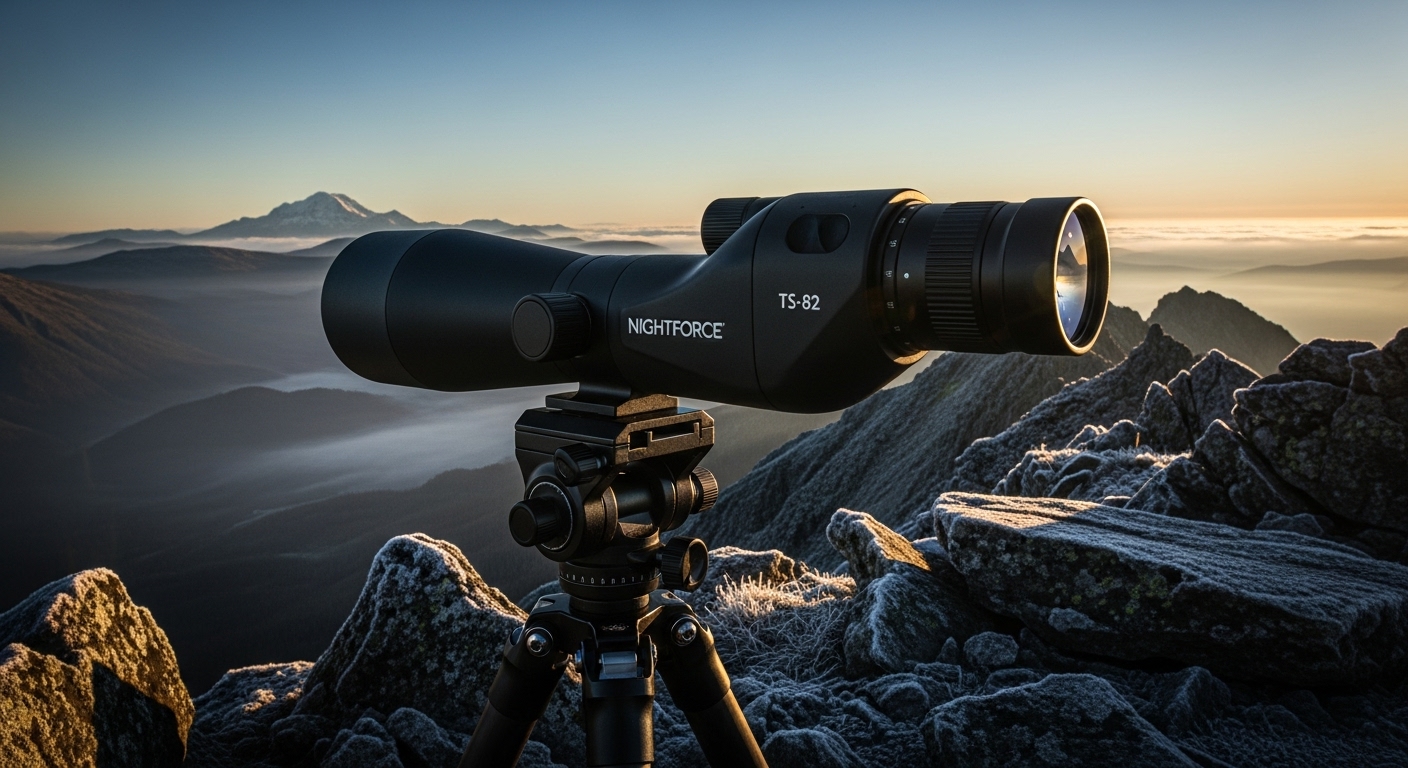
Nightforce TS-82 20-70x Review 2026: Worth $2,700?
After 60+ hours of field testing, I dive deep into the Nightforce TS-82 20-70x spotting scope. Discover if this $2,700…
![Troubleshooting a Blurry Rifle Scope: Complete Guide [cy]](https://revellphotography.com/wp-content/uploads/2026/08/featured-update-5304-1786448716793.jpg)
A blurry rifle scope is almost always caused by one of five user-fixable issues: an unfocused diopter, parallax error, incorrect eye relief, environmental mirage, or loose mounting hardware. In most cases, you can resolve the problem in under five minutes by working through the steps in this guide before considering professional repair or replacement.
Scope clarity problems account for a massive share of shooter frustration in long-range and hunting forums. After studying hundreds of troubleshooting threads on Reddit r/longrange, Sniper’s Hide, and AirgunForums, I can tell you that the overwhelming majority of complaints resolve once shooters follow a consistent diagnostic sequence. This guide walks you through that exact sequence, then explores the less common causes that frustrate even experienced marksmen.
What follows is a complete 2026 troubleshooting reference covering diopter adjustment, parallax correction, eye relief optimization, mounting issues, environmental interference, scope walking under recoil, internal fogging, LPVO-specific blur, and anti-mirage solutions. You’ll also find a quick diagnostic table, FAQ answers expanded to full paragraphs, and clear guidance on when factory service is the right call.
Before adjusting anything, identify the type of blur you’re seeing. The five categories below cover roughly 95% of scope focus complaints, and matching your symptom to the right cause prevents wasted time chasing the wrong fix.
Tools You’ll Want Nearby: A microfiber lens cloth, optics-safe lens cleaner, an inch-pound torque wrench (capable of 15-65 in-lb), a small flashlight for inspecting lens coatings, and a stable bench rest. Having these on hand turns most diagnoses into a five-minute job.
Quick 30-second sanity check: set your scope to its lowest magnification, look through it with both eyes open, then close your non-dominant eye. If the reticle snaps into focus immediately, you’re dealing with an eye relief problem rather than a true focus issue. That distinction saves a lot of unnecessary diopter turning.
The five-step process below resolves the vast majority of scope blur complaints. Work through each step in order — skipping ahead is the most common cause of “I tried everything and nothing works” frustration in forum threads. Each step builds on the previous one, so even if you think you know which setting is wrong, run the full sequence first.
This systematic approach works because it tackles the most likely causes in descending order of frequency. The biggest waste of troubleshooting time I see on r/longrange is shooters spinning the parallax knob for an hour when their diopter was the actual problem. Run step one first, every time, on every new scope.
Diopter: The diopter is a focusing ring on the scope’s eyepiece that adjusts the reticle to match your individual vision. It compensates for nearsightedness, farsightedness, and astigmatism without affecting target focus.
A properly set diopter is the single most important scope adjustment. If your reticle is fuzzy, no other setting will feel right because your eye will keep trying to focus on the wrong plane. Here’s the exact method I use on every new optic:
The most common mistake is adjusting the diopter while looking at a target. Your eye’s accommodation reflex will lock onto the target’s distance and you’ll chase focus in circles. A blank background eliminates that variable.
For shooters over 40, lighting matters. Your pupil size changes with ambient light, which slightly shifts the focus plane. Keep a small note in your range bag with three settings: bright daylight, overcast, and low light. Some precision shooters run a slightly different diopter for each condition.
Eyeglass wearers should test with and without glasses. Many shooters achieve a sharper image shooting without glasses once the diopter is dialed in. However, if you have significant astigmatism, glasses are usually the better choice — the scope’s diopter range may not fully correct for it.
Parallax: Parallax error occurs when the target image and reticle sit on different focal planes, causing them to appear to shift relative to each other when you move your head. This creates an illusion of blur and introduces aiming errors.
Parallax adjustment is essential for precision shooting beyond 100 yards. The signature symptom is target and reticle appearing to slide past each other when you move your head slightly without moving the rifle. Test for it by centering the reticle on a target, then rocking your head left and right a few inches — any movement of the reticle relative to the target means parallax needs correction.
Two mechanical designs exist for parallax correction, and the difference matters for both ergonomics and adjustment feel.
Knowing which system you have tells you exactly where to look and how to adjust without searching. Side focus knobs typically click through marked yardages, while AO collars rotate smoothly through a continuous range.
Once you’ve identified the control, the procedure is the same: keep your head steady, center the reticle on the target, and turn the parallax adjustment until the image snaps sharp. A subtle under-correction (target just slightly behind the reticle) can speed target acquisition for hunters, while precision shooters want the target dead-on.
After 40, your ability to compensate for small parallax errors drops sharply. Many older shooters blame the scope when the actual issue is parallax they’re no longer correcting subconsciously. If your scope seems to lose focus during longer sessions, parallax is the first place to look.
For first focal plane (FFP) versus second focal plane (SFP) scopes, parallax behaves identically at any magnification — but FFP reticle subtensions change with magnification, which can create the illusion of a parallax problem when the real issue is reticle size. If you want a refresher on focal plane behavior, our FFP vs SFP scope guide breaks down the differences.
The five-step process handles the common cases, but a handful of situations don’t fit the standard sequence. The sections below cover the most-reported edge cases from rifle forums and competition communities.
Blur that only appears as you crank magnification higher is one of the most common complaints on r/longrange. Several distinct causes produce the same symptom, and the right fix depends on which one you’re hitting.
First, recognize that image quality naturally degrades at high magnification — that’s physics, not a defect. But excessive blur at the top end of the magnification range usually points to one of three things.
To isolate the cause, mount the scope on a solid bench rest indoors and aim at a high-contrast target 50 yards away. If it’s still blurry at high magnification in a controlled environment, you can rule out weather and focus on optical quality or parallax adjustment.
“My scope is in focus, then after 20 shots it goes blurry.” This exact complaint shows up repeatedly on r/longrange and in Target Tamers comments. It has a name in the precision rifle community: scope walking, or focus shift under recoil. It’s not a defective scope — it’s a mechanical interaction between the optic, the rings, and the rifle.
To test for scope walking, fire a 5-shot group at 100 yards, then check your zero and focus. Fire another 20 rounds and recheck. If the zero has drifted or focus has shifted, you have a mechanical problem. The fix is almost always better torque and ring alignment rather than a new scope.
Many shooters experience frustrating focus changes as they age. This isn’t in your head — it’s presbyopia, the natural loss of near-focus ability that begins in the early 40s. The scope’s reticle sits at a fixed optical distance, and as your eye’s lens loses flexibility, focusing on that distance becomes harder.
Important: If you’re over 40 and suddenly struggling with scope focus, schedule an eye exam. Many shooters benefit from dedicated shooting glasses with the prescription optimized specifically for their typical scope eye-relief distance.
I’ve worked with shooters in their 50s and 60s who thought they needed new scopes when they actually needed updated eyewear. The difference is often dramatic — one client went from considering hanging up his rifles to winning his club match within a month of getting prescription shooting glasses tuned for 3.5 inches of eye relief.
For age-related focus issues, certain scope features help more than others.
Sometimes the scope is fine and the installation is the problem. I’ve watched shooters spend hundreds of dollars replacing optics when $40 worth of mounting work would have solved everything.
Loose rings are the most frequent culprit. Even a slight shift under recoil moves your eye position relative to the scope and changes focus. Use a proper inch-pound torque wrench — “good and tight” by feel is rarely correct. Most ring screws want 15-25 inch-pounds, but check your manual.
Ring alignment matters as much as torque. Misaligned rings clamp unevenly and can stress the scope tube, causing internal components to bind or shift. Use an alignment bar or lapping kit to ensure both rings make full, even contact with the tube before you apply final torque.
Scope height affects everything. Too high pushes your head off the stock and forces an unnatural cheek weld; too low eats into your sight picture. The correct height lets your natural cheek position put your eye exactly where the scope wants it. If you’re straining to get behind the optic, mounts are too low.
For rifles that consistently seem blurry, also check for cant. A front-heavy scope or uneven stock can cause the rifle to lean slightly, changing your eye alignment. A scope-mounted bubble level makes this obvious within seconds.
If you’re troubleshooting on a newly mounted scope, boresighting is worth doing early. A poorly boresighted optic forces you to chase the reticle across the target while focusing, which can mimic focus problems. Our guide to different types of rifle scopes explains how design choices affect mounting geometry and which mounting style suits different rifle platforms.
Low Power Variable Optics — LPVOs — are the dominant scope on AR-15s and modern sporting rifles, but they have their own blur behaviors that don’t always show up on traditional hunting scopes. If you run a 1-6x or 1-8x LPVO, the symptoms below are worth recognizing.
LPVOs are inherently a compromise between close-quarters speed and mid-range precision. Knowing the design’s quirks saves a lot of confusion and unnecessary “my scope is broken” troubleshooting time.
Environmental factors create some of the most frustrating blur issues because the symptoms come and go. Knowing the difference between atmospheric mirage and barrel mirage — and how both differ from internal fogging — separates guesswork from diagnosis.
All mirage looks like wavy lines or shimmering, but the source matters. Atmospheric mirage comes from temperature gradients between you and the target — air of different temperatures bending light differently. Barrel mirage comes from heat radiating off your barrel (especially after a rapid-fire string). Suppressor mirage is a third flavor, caused by hot gases exiting the muzzle.
Atmospheric mirage tells you about wind and temperature conditions. Reading it — watching the direction and speed of the shimmer — actually helps long-range shooters read wind. Barrel mirage tells you your barrel is heating up and it’s time to slow down. Both produce visible distortion, but only atmospheric mirage affects your sight picture before the shot. Barrel mirage becomes visible after the shot when the optic looks through superheated air.
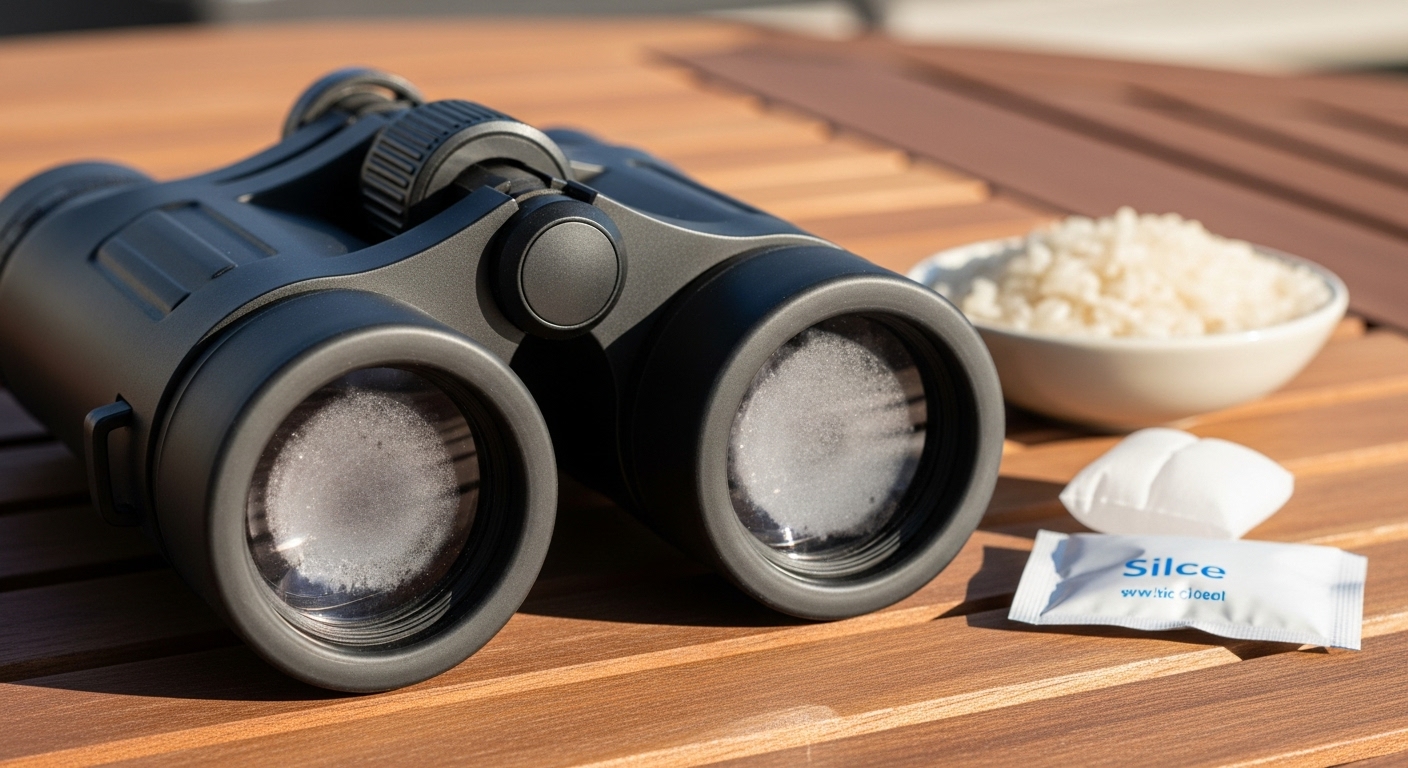
This distinction trips up a lot of shooters. External condensation forms on the outside of your lens when warm, humid air meets a cold scope surface — like eyeglasses fogging when you come indoors in winter. Internal fogging forms inside the scope when the sealed nitrogen or argon purge has failed and moisture-laden air has entered the optic.
Diagnostic Test: Bring your cold scope into a warm, humid room. If fog forms immediately on the outside of the lenses and clears in 10-15 minutes, that’s external condensation — harmless. If fog forms inside the scope and won’t clear with surface wiping, that’s internal fogging — a seal failure that needs factory service.
External condensation is solved by keeping the scope slightly warmer than ambient air (a vehicle’s interior, a coat pocket, or a scope cover), or by applying anti-fog treatment to the lenses. Internal fogging cannot be solved by the user — the scope must go back to the manufacturer for re-sealing and re-purging. Most reputable makers do this under warranty even for out-of-production models.
An anti-mirage shield (also called a sunshade or killflash-style hood) does two things: it shades the objective lens from direct sunlight, which reduces heat buildup in the scope tube, and it blocks the lens flare that creates mirage-like shimmer inside the optic. For long-range shooters, a quality sunshade is often as important as a quality scope.
For a deeper look at how scope design influences environmental performance, the best scopes for 6.5 Creedmoor guide discusses long-range-specific features that help with atmospheric interference.
Preventative maintenance prevents most blur issues before they start. I’ve seen 15-year-old scopes perform like new because their owners cared for them properly, while expensive optics failed after a single season of neglect. The basics aren’t complicated.
Cleaning lenses correctly takes two minutes and prevents the most common avoidable damage. Use optics-safe lens cleaner applied to a microfiber cloth — never directly to the lens — and wipe in a circular motion from center to edge. Don’t use shirt hems, paper towels, or household glass cleaner, all of which can scratch coatings or leave residue.
Storage conditions matter more than most shooters realize. Temperature cycling — moving a scope repeatedly between a hot car and an air-conditioned house — stresses the seals and eventually lets moisture in. Climate-controlled storage slows this dramatically. Keep scope caps on during storage but remove them during transport so moisture isn’t trapped if the scope is even slightly damp.
Quick monthly inspections catch small problems before they become field failures. Check ring screws for tightness, run each turret through its range to verify smooth movement, and look over the lens coatings under a flashlight for any new scratches or delamination. Five minutes a month is cheap insurance.
Professional servicing every few years helps too. Even premium scopes benefit from internal cleaning and re-lubrication. If you notice gradual focus degradation or stiffness in adjustments that wasn’t there before, factory service is worth the cost compared to replacing the optic.
Most scope blur is user-fixable. The exceptions below are signs that the optic itself needs work.
Pro Tip: Keep your receipts and warranty cards. Most major manufacturers — Vortex’s unconditional lifetime warranty is the standout — will repair issues well beyond the standard warranty window. If you’re considering a replacement and want a sense of which brands stand behind their optics longest, our Leupold vs Vortex comparison covers warranty differences in detail.
If you’re troubleshooting on a shotgun-scope combination or considering a different platform, our guide to shotgun scopes addresses eye relief and recoil dynamics specifically for slug guns and heavy-recoil setups.
A blurry rifle scope is most often caused by an unfocused diopter, parallax error, incorrect eye relief, environmental mirage, or loose mounting hardware. Each cause produces a slightly different blur pattern — fuzzy reticle, target that moves with your head, black rings around the image, or focus that shifts during recoil. Work through the five-step process in this guide in order, starting with the diopter, before assuming the optic itself is defective. Roughly 90% of scope blur cases resolve with user adjustments.
Cloudiness usually means one of two things: external condensation on the lens surface or internal fogging from a failed seal. External condensation forms when warm humid air meets a cold scope surface and clears on its own within minutes. Internal fogging stays visible inside the optic, won’t wipe off, and indicates the nitrogen or argon purge has leaked. Internal fogging requires factory service — clean the outside lenses first to rule out simple condensation before assuming seal failure.
Internal fogging is a seal failure. Quality scopes are nitrogen- or argon-purged and O-ring sealed to keep humid air out, but seals degrade over time or from impact. Once the purge leaks, moisture enters the optic and condenses on the internal glass. There’s no user-applied fix — the scope must go back to the manufacturer for disassembly, re-sealing, and re-purging. Most major brands cover this under warranty, including for out-of-production models.
High-magnification blur usually comes from parallax error that was minor at low power, atmospheric mirage between you and the target, or reaching the optical design limits of the scope itself. Re-verify parallax every time you change magnification significantly, since parallax error scales with power. If the blur is severe enough that you can’t read the reticle clearly indoors at 50 yards on a bench rest, the optic may be at its design ceiling — a common limitation of budget scopes above their mid-magnification range.
Blurry crosshairs specifically point to a diopter problem. The reticle is at a fixed optical distance inside the scope, and your eye must be focused at that exact distance to see it sharply. If your diopter is set for someone else’s vision or has drifted, you’ll see fuzzy crosshairs even when the target image is tack-sharp. Adjust the diopter at maximum magnification against a blank sky, look away for ten seconds, then look back to confirm. Mark the position so you can return to it easily.
LPVOs (Low Power Variable Optics) show blur for design-specific reasons. At 1x, edge distortion is normal because LPVOs can’t fully correct across the entire zoom range — stepping up to 2x or 3x often clears the image. Shooters with astigmatism sometimes see starbursts around illuminated reticles in LPVOs; the scope isn’t defective, your eye is, and prescription shooting glasses usually solve it. Also check eye relief at every magnification — head position changes during zoom can create apparent focus loss that isn’t really a focus problem.
Parallax error appears as movement between the reticle and target when you shift your head left, right, up, or down without moving the rifle. The reticle seems to float across the target, which creates both apparent blur and aiming errors. To test for parallax, center the reticle on a target and rock your head a few inches — any apparent movement means parallax is set wrong for that distance. Adjust the side focus or AO knob until the reticle stays locked on the target regardless of head movement.
The procedure depends on which system your scope has. Side focus scopes have a knob on the left side of the saddle — rotate it while watching the target image sharpen. AO (Adjustable Objective) scopes have a collar on the objective bell at the front — reach forward and rotate it. Fixed parallax scopes can’t be adjusted; the factory sets them for a specific distance (often 100 yards) and you’ll see parallax error at other ranges. For maximum precision, set parallax so the reticle and target appear locked together as you move your head.
Parallax matters most beyond 100 yards, but the exact distance varies by application. Rimfire scopes should be parallax-corrected at 60 yards because rimfire is commonly shot at close range. Handgun scopes want 100 yards. Rifle scopes are usually set for 150 yards as a baseline. Anything beyond 300 yards makes parallax errors increasingly visible and increasingly damaging to accuracy. If you shoot at varied distances, an adjustable parallax (side focus or AO) is essential — fixed parallax scopes are limited to their factory distance.
Most hunting scopes want 3.5-4 inches of eye relief as a baseline, balancing field of view with recoil clearance. Heavy-recoil rifles — magnum calibers, shotguns with slug barrels — benefit from 4-5 inches for safety. Target and benchrest rifles can run tighter eye relief of 2.5-3 inches because there’s less recoil concern and a tighter eye position improves consistency. The exact number matters less than finding the distance where you see a full field of view with no black ring around the image.
Set magnification to maximum, aim at a featureless background like a flat blue sky, cover the objective lens, and slowly rotate the diopter ring until the reticle is razor sharp. Look away for ten seconds, then look back to verify the focus holds. Mark your setting with paint or tape so you can return to it after cleaning or transport. If the diopter runs out of adjustment before reaching sharp focus, your scope’s diopter range may be insufficient for your vision — prescription shooting glasses are often the better answer.
This is scope walking — focus shift caused by mechanical movement under recoil rather than a defect in the optic itself. The most common causes are loose ring torque, rings that don’t fully contact the scope tube, or diopter ring slippage on certain models. Test by checking your zero before and after a 20-round string. If focus or zero has shifted, re-torque the rings to manufacturer spec (typically 15-25 inch-pounds), lap the rings if contact is uneven, or apply thread-locking compound to the diopter ring if it’s rotating under recoil.
Troubleshooting a blurry rifle scope is a skill that pays off every time you head to the range. The five-step process in this guide resolves the vast majority of focus complaints, and the supplementary sections on scope walking, internal fogging, LPVO-specific blur, and anti-mirage solutions cover the cases that standard checklists miss. The single biggest lesson from watching hundreds of forum threads is that consistency beats guesswork — work through the diagnostic sequence every time, in order, before assuming the optic is bad.
Document your optimal settings once you’ve dialed them in. A small note with your diopter position, parallax yardage preferences, and ideal eye relief becomes invaluable when you swap scopes between rifles or loan your optic to a friend. Many shooters find that re-establishing their reference points takes longer than the actual adjustment, and a written record removes that step.
Invest in equipment that matches your use case. Premium scopes aren’t necessary for casual plinking, but extremely cheap optics have inherent focus limitations that no adjustment can overcome. There’s a sensible middle ground for nearly every shooting discipline, and understanding what you actually need from your optic is the best defense against both overspending and buying something that won’t perform.
Finally, trust your eyes but verify with tools. A torque wrench, lens cleaning kit, and a stable bench rest turn mysterious blur into a five-minute diagnosis. If your scope consistently stays blurry despite working through every step, an experienced shooter or gunsmith can often spot what’s been overlooked. Clear optics are the foundation of accurate shooting — with the right approach, you’ll spend less time troubleshooting and more time hitting your target.