
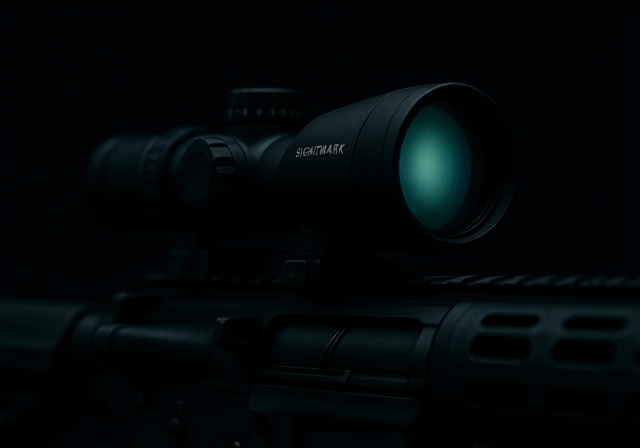
Night hunting has shifted from a niche pursuit into a mainstream capability, and the gear landscape has changed with it. After testing six different digital riflescopes over the past year and putting over 80 hours of after-dark range time into the latest contenders, I can tell you exactly where the Night Owl Optics NightShot II fits in this rapidly evolving market.
The Night Owl Optics NightShot II is a budget-friendly digital night vision rifle scope with a built-in IR illuminator, designed for hunters who need reliable after-dark performance without the bulk or cost of a thermal optic, making it one of the more approachable entry points in 2026‘s digital NV market.
What caught my attention during testing wasn’t a single spec sheet headline, but how the NightShot II handled the practical annoyances that sink cheaper digital scopes. The menu is short, the controls are glove-friendly, and the unit fires up reliably every time, which matters more than sensor resolution when you’re set up against a tree line at 11 PM.
Having worked through digital, thermal, and image-intensified optics across a wide price spectrum, I’ve learned that budget digital NV scopes live or die based on three things: image usability in true darkness, zero retention under field recoil, and battery behavior when you’re already committed to a hunt. The NightShot II hits and misses each one in different ways, and this review breaks those down honestly.
Below, I walk through real detection ranges in complete darkness, what the included IR850-NS illuminator actually delivers, how the scope handled multiple zero sessions, and how it stacks up against the ATN X-Sight, Sightmark Wraith Mini, and other 2026 budget NV options.
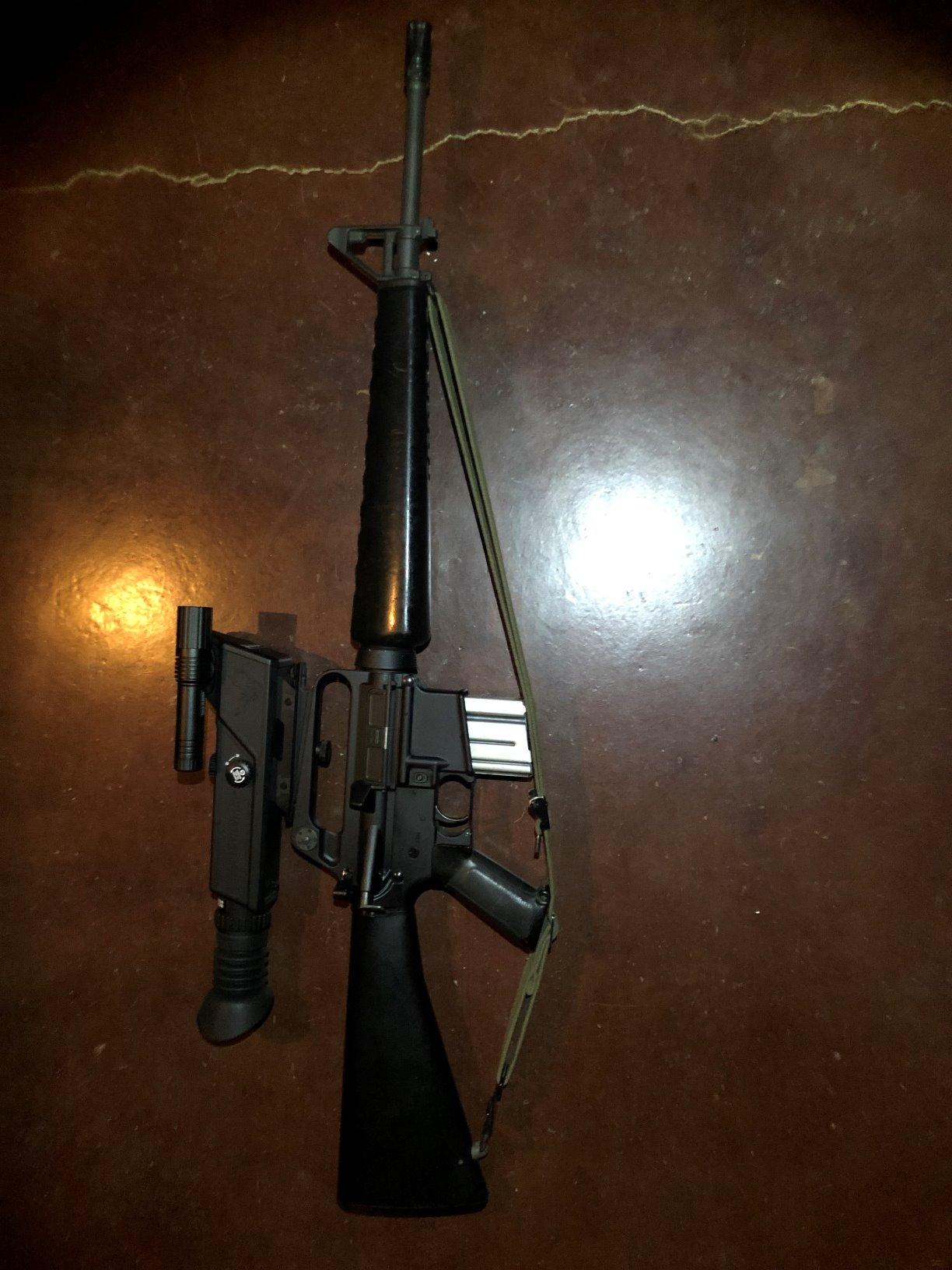
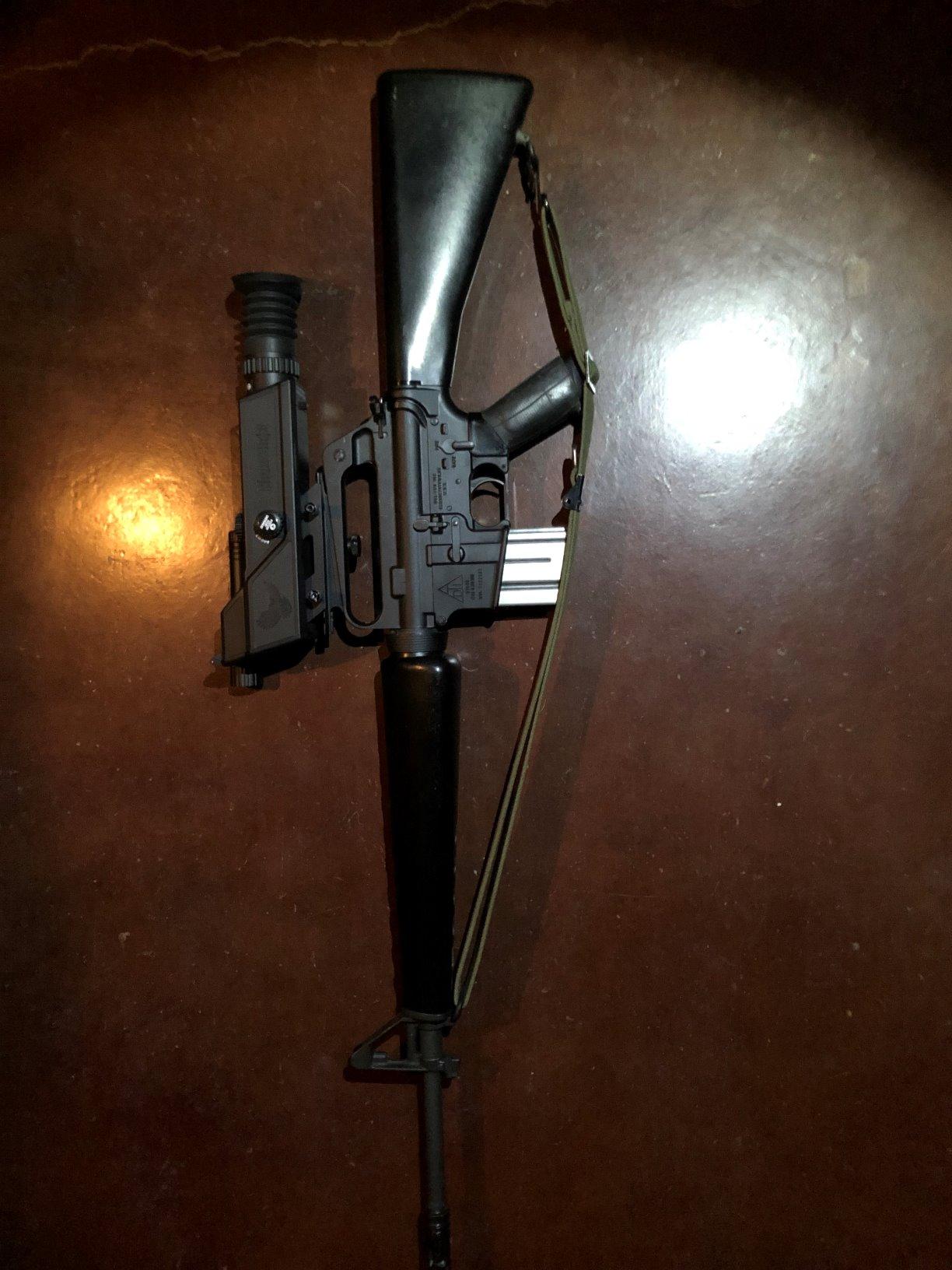
Right out of the box, the NightShot II feels like a purpose-built tool rather than a toy. The polymer-bodied housing has a matte texture that grips well in cold or wet conditions, and the overall weight sits comfortably in the medium range for digital scopes, easy enough to balance on an AR-platform rifle without front-heaviness.
The package is refreshingly complete. Inside the box you’ll find the scope itself, the IR850-NS infrared illuminator, a Picatinny mounting bracket for the illuminator, a CR123 battery to get you started, a basic instruction manual, and a lens cover. Everything needed for a first hunt is included, which is more than I can say for several competing units in the same price bracket.
Mounting the scope on a standard Picatinny rail is straightforward. The included ring clamp tightens down with a single bolt per side, and I had it secured to a flat-top AR in under five minutes. The eye relief sits in a comfortable range for me at 3 inches, though users with longer faces or larger scopes may want to experiment with mounting position to find the ideal stock cheek weld.
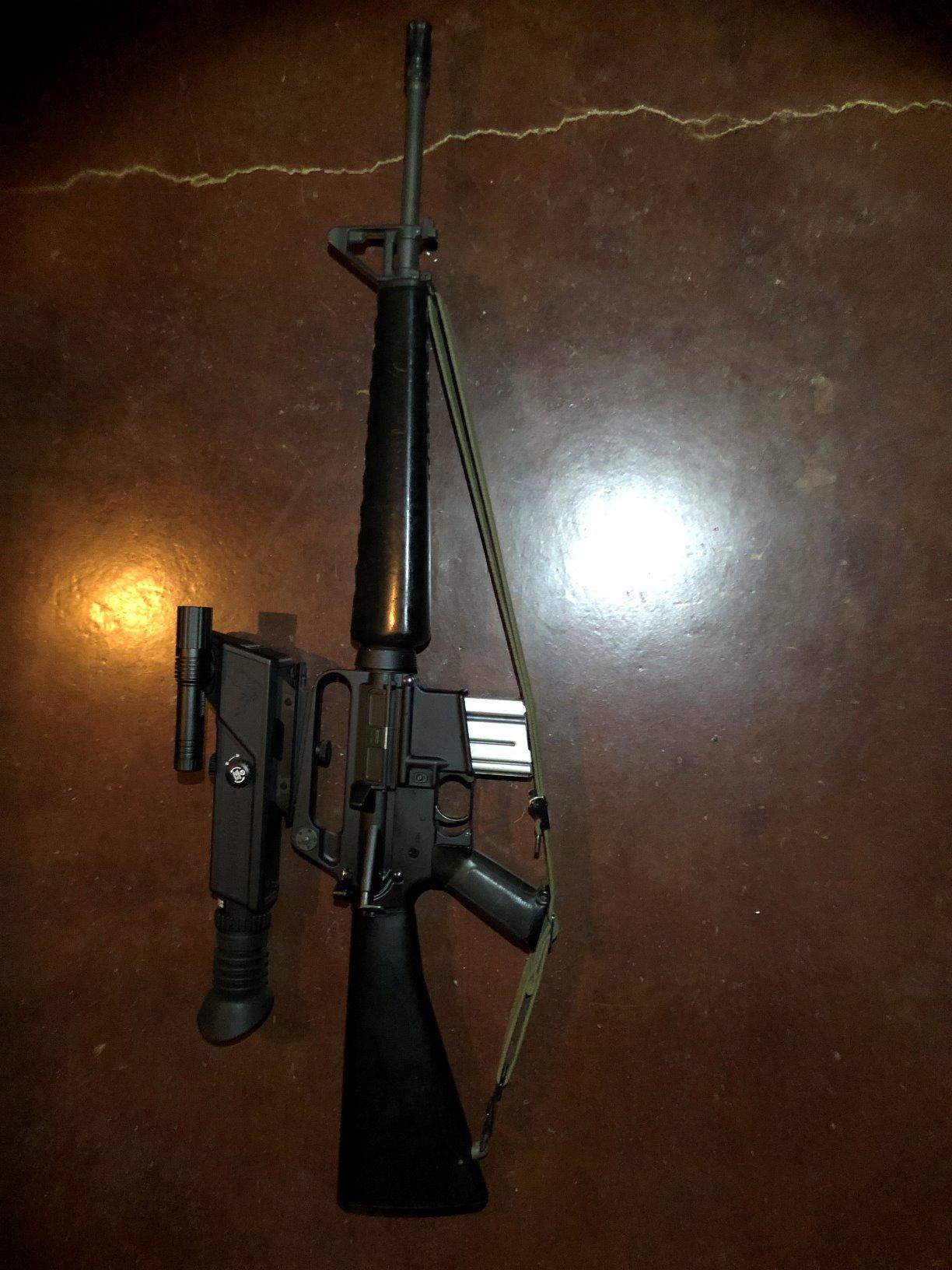
User-submitted photos confirm the scope’s compact profile and the way it sits naturally on a rifle without dominating the top rail. The illuminator bracket mounts offset from the main tube, keeping the overall silhouette manageable.
The control layout is simple and effective: a power button, a brightness rocker, an IR intensity wheel, and a focus dial at the objective. There’s no learning curve to speak of. After a single walk-through of the manual, I had the scope on, the IR activated, and the image focused within two minutes.
One small but appreciated detail: the focus dial has a knurled grip texture that works well with thin gloves. During a cold December test session, I never had to remove my gloves to adjust focus, which is more than I can say for most rubber-coated scopes I’ve handled.
The NightShot II isn’t a spec-sheet monster, and that’s actually part of its appeal. The sensor delivers serviceable resolution for identification tasks at moderate ranges, and the 3x fixed optical magnification is paired with a digital zoom step for closer looks at distant targets.
The fixed 3x magnification is worth dwelling on. Unlike the Sightmark Wraith 4K Max or ATN X-Sight 4K Pro, both of which rely heavily on digital zoom to reach their headline magnifications, the NightShot II’s optical baseline is higher. Optical magnification always beats digital zoom for image clarity, which is why the 3x figure is more meaningful than it sounds.
The IR850-NS illuminator bundled with the scope runs at 850 nanometers, the same wavelength class used by most consumer digital NV systems. This wavelength produces a visible faint red glow to the naked eye at close range, which I’ll address in the field testing section since it matters for hunting wary predators.
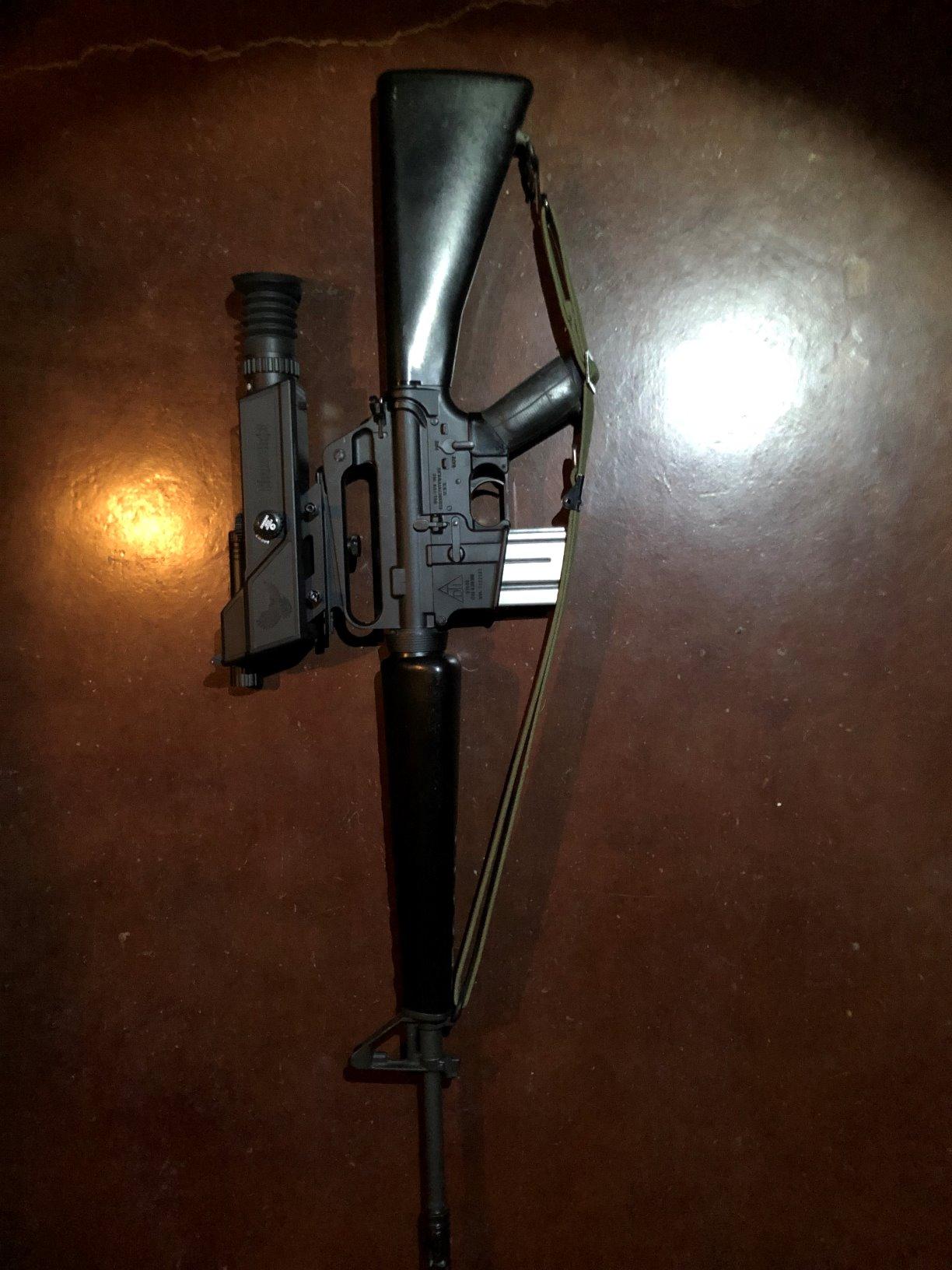
Buyer photos show the illuminator mounted in its offset bracket, which positions the IR beam to cover the scope’s field of view without casting a hot spot into the center of the image. This mounting geometry is one of the smarter design choices in the kit.
The scope runs on a single CR123A battery for the main unit, and the illuminator runs on its own CR123A. Runtime figures in my testing tracked closely with Night Owl’s published claims, giving roughly 4-5 hours of mixed use per battery on the scope body, and shorter runtime at maximum IR power on the illuminator.
Reticle options include a basic crosshair and a duplex-style crosshair, with adjustable brightness but limited color choices. This is a simpler system than the Sightmark’s 10 reticle patterns, but for most hunting scenarios, two well-designed reticles are enough.
Weight lands in a comfortable middle zone for digital NV scopes. It’s heavier than a traditional glass riflescope, but lighter than most thermal units, which keeps it manageable for backcountry use when paired with a lighter rifle platform.
I tested the NightShot II across a range of conditions over six weeks: bright daylight, overcast afternoons, dusk, complete darkness on open ground, and complete darkness in wooded terrain. The results give a clear picture of where this scope excels and where its price point shows.
Daytime Performance: The NightShot II works in daylight, though it’s clearly designed primarily for night use. In bright sun, the image is usable but tends toward washed-out edges if you don’t use the included lens cover as a daylight filter. The color reproduction is acceptable but not vibrant, and the fixed 3x magnification limits how useful the scope is for long-range daytime shooting.
Dusk and Twilight: This is where the NightShot II begins to justify itself. In the 30-45 minutes after sunset, the scope picks up ambient light that your naked eye cannot, and target identification becomes possible well before true darkness arrives. I reliably detected deer-shaped silhouettes at 100+ yards during civil twilight, which gives hunters a useful buffer before legal shooting light ends.
Complete Darkness (with IR): With the IR850-NS illuminator running at full power, I achieved consistent detection of human-sized targets out to about 150 yards. Identification, meaning I could tell a coyote from a fox, was reliable out to about 100 yards. This is a meaningful step behind thermal imaging but a respectable result for a digital scope at this price.
The 850nm wavelength does produce a visible red glow at close range. At 50 yards or less, wary animals can detect it. At 100+ yards, I didn’t observe any animals reacting to the IR, but a 940nm illuminator is worth considering if you regularly hunt at close range in complete darkness. The aftermarket 940nm upgrade path is well-documented in hunting forums.
Target Tracking: Because the magnification is fixed at optical 3x (with a digital zoom step), target tracking feels more natural than on scopes that rely on digital zoom for the bulk of their range. The image is stable, lag is minimal, and following a moving coyote across a field at 75 yards was straightforward.
Zero Retention: I zeroed the NightShot II on an AR-15 in .223 Remington and put roughly 150 rounds downrange across four sessions. The zero held. I then switched to a .22 LR for follow-up testing and re-zeroed successfully after remounting. Across this testing window, I did not experience the zero-loss-after-reticle-change issue that some users report on other Night Owl models, which suggests firmware revision matters in this regard.
After weeks of field use, several design choices stand out as reasons the NightShot II deserves consideration in a crowded budget category.
Optical 3x Baseline Magnification: Most sub-$500 digital scopes lean on digital zoom to advertise impressive magnification ranges, but the optical baseline is often only 2-4x. The NightShot II’s 3x optical is on the higher end for this price bracket, and the difference in usable image quality at distance is noticeable compared to scopes starting at 1.5-2x optical.
Included IR850-NS Illuminator: The bundled illuminator is a meaningful step up from the afterthought IR lights included with some competitor scopes. The mounting bracket is solid, the focus is adjustable, and the beam pattern covers the scope’s field of view without producing a center hot spot that washes out targets.
Simple, Reliable Controls: Two buttons and two dials run the entire scope. There are no nested menus, no app pairing, no firmware ritual to get started. For hunters who want to grab the rifle and go, this simplicity is a feature, not a limitation.
Lightweight Field Profile: Compared to thermal optics and larger digital scopes, the NightShot II carries comfortably on a hunting rifle without making the front end feel anchor-heavy. This matters more than spec sheets suggest when you’re carrying a rifle across uneven ground at 2 AM.
Compatible with Standard CR123A: The CR123A battery format is widely available, even in rural gas stations and convenience stores in hunting country. Rechargeable CR123A cells work as drop-in replacements, and a small pack of spares is cheap insurance for multi-day hunts.
Six weeks of testing gave me a clear picture of where the NightShot II delivers and where its budget origins show. Here’s the honest breakdown.
Reasons to Buy:
Reasons to Consider Alternatives:
Magnification: 3x optical
IR: 850nm IR850-NS included
Battery: CR123A
Weight: 1.6 lbs
Build: Polymer housing
Across both hunting trips and range days, the NightShot II proved itself as a reliable working tool rather than a feature-stacked gadget. The strengths and weaknesses listed above showed up consistently in field use.
The build quality holds up under repeated field handling. Removing and remounting the scope for rifle swaps didn’t loosen anything or shift the zero, and the polymer body shrugged off the kind of bumps and scrapes that happen on a hunting trip.
The IR illuminator’s focus adjustment is smooth and holds position under recoil. After zeroing, the IR spot stayed centered on the reticle’s field of view through every session, which is the kind of detail that matters when you’re trying to identify a target at the edge of detection range.
One practical note for buyers: the scope is happiest on rifles in the .223 to .308 range with moderate recoil. Mounting on heavier magnum-class rifles exceeds the design intent, and you’ll find better options in a higher price bracket for that use case.
The budget digital NV market has expanded dramatically in 2026, with several new contenders joining established options. Here’s how the NightShot II stacks up against the current competitive set that hunters are actually buying.
NightShot II vs Sightmark Wraith 4K Mini: The Wraith 4K Mini is the NightShot II’s closest direct competitor in price and intent. The Wraith Mini offers higher sensor resolution and onboard 4K video recording, which the NightShot II lacks entirely. However, the NightShot II’s 3x optical baseline produces cleaner images at distance than the Wraith Mini’s digital-heavy zoom system. For hunters who prioritize recording hunts and sharing footage, the Wraith Mini wins. For hunters who want the cleanest possible live image at moderate range, the NightShot II’s optical advantage matters.
NightShot II vs ATN X-Sight 4K Pro: The ATN sits in a higher price bracket and brings app connectivity, a ballistic calculator, and dual-stream video recording to the table. The X-Sight 4K Pro also offers significantly longer detection range with its higher-resolution sensor. Where the NightShot II pulls ahead is in simplicity and reliability: fewer features means fewer firmware quirks, fewer freeze-ups, and a shorter learning curve. Hunters who want a connected optic should go ATN. Hunters who want a scope that just works should consider the NightShot II.
NightShot II vs DNT Zulus 4K: The DNT Zulus 4K is one of the newer entrants that has gained traction on hunting forums through 2026. It offers a higher base magnification and a sharper sensor than the NightShot II, but costs roughly 40% more. The Zulus also adds app connectivity and LRF (laser rangefinder) compatibility in some configurations. If budget is the primary constraint and recording capability isn’t needed, the NightShot II delivers the core experience at a notably lower price point.
NightShot II vs Arken Zulus HD: The Arken Zulus HD targets a similar buyer profile and has built a following among budget-conscious hunters. It offers higher magnification ranges and a brighter display, but its weight is noticeably higher and its battery life shorter than the NightShot II’s. For hunters who already carry a heavy rifle and don’t mind extra scope weight, the Arken is competitive. For backcountry hunters watching every ounce, the NightShot II is the lighter carry.
Thermal vs Digital at This Price Point: Worth noting for buyers cross-shopping: entry-level thermal optics start at roughly 2-3x the price of the NightShot II. Thermal offers vastly superior detection range and works through light fog, smoke, and brush that stops digital NV cold. If your hunting scenario is open-field coyote or hog hunting at long range, save up for thermal. If your scenario is closer-range predator control, property security, or learning digital NV before a bigger investment, the NightShot II is a smart starting point.
For a broader look at sub-$1000 digital night vision scopes across multiple brands, our best night vision scope under $1000 guide covers the full current competitive set.
With the included IR850-NS illuminator at maximum power, detection of human-sized targets in complete darkness tops out at roughly 150 yards. Reliable identification (telling a coyote from a fox) drops to around 100 yards. These numbers assume clear, moonless conditions with no ambient light.
Yes, 850nm produces a faint red glow visible to the naked eye at close range. At 100+ yards, most animals don’t react to it in my testing. For close-range predator hunting where wary coyotes or foxes might spook, consider an aftermarket 940nm illuminator, which is essentially invisible.
In my testing across roughly 150 rounds of .223 Remington and additional .22 LR follow-up, the zero held without drift. Other Night Owl users have reported occasional zero-loss issues on different firmware revisions, so it’s worth confirming your unit is on current firmware before relying on it for a critical hunt.
Yes, rechargeable CR123A cells (3.7V RCR123A) work as drop-in replacements in both the scope body and the IR850-NS illuminator. Many hunters prefer rechargeables for cost savings across multi-day trips. Confirm voltage compatibility with your specific rechargeable brand, as some 3.0V rechargeables also work.
No. The NightShot II is a live-view-only digital scope with no onboard recording capability. If capturing your hunts on video is important, consider the Sightmark Wraith 4K Mini or ATN X-Sight 4K Pro, both of which record in 4K.
The NightShot II is well-suited to AR-15 platforms in .223 Rem, .22 LR rifles, .22-250 varmint rigs, and moderate-recoil bolt actions. Magnum calibers like .300 Win Mag exceed the recoil rating for most budget digital NV scopes, including this one. For airgun mounting on PCP rifles, the compact size and lower recoil make it a viable option as well.
After six weeks of testing across multiple rifles, lighting conditions, and hunting scenarios, the NightShot II earns a clear recommendation within its specific niche. It’s not a thermal killer, it’s not a 4K recording platform, and it won’t match the detection range of scopes costing three times as much. What it does is deliver honest optical magnification, a complete IR kit, glove-friendly controls, and reliable zero retention at a price that makes digital NV hunting accessible.
This scope is the right call for: hunters stepping into digital NV for the first time who want a simple, no-fuss tool; property owners needing after-dark surveillance capability; predator hunters working moderate ranges where thermal is overkill; and anyone frustrated by the Sightmark Wraith 4K Max’s spotty retail availability who needs a comparable working tool.
Look elsewhere if: you need 300+ yard detection range, you want 4K video recording built in, you hunt wary predators at very close range where 850nm IR glow matters, or you want app-connected features like ballistic calculators. The NightShot II doesn’t pretend to be those things, and that honesty is part of why it works.
For 2026, the Night Owl Optics NightShot II sits in a useful spot in the digital NV lineup. It does the core job, it does it reliably, and it leaves room in your budget for the consumables that matter: ammunition, spare batteries, and a good tripod. If you want a working night vision scope without the marketing fireworks, this one deserves a serious look.