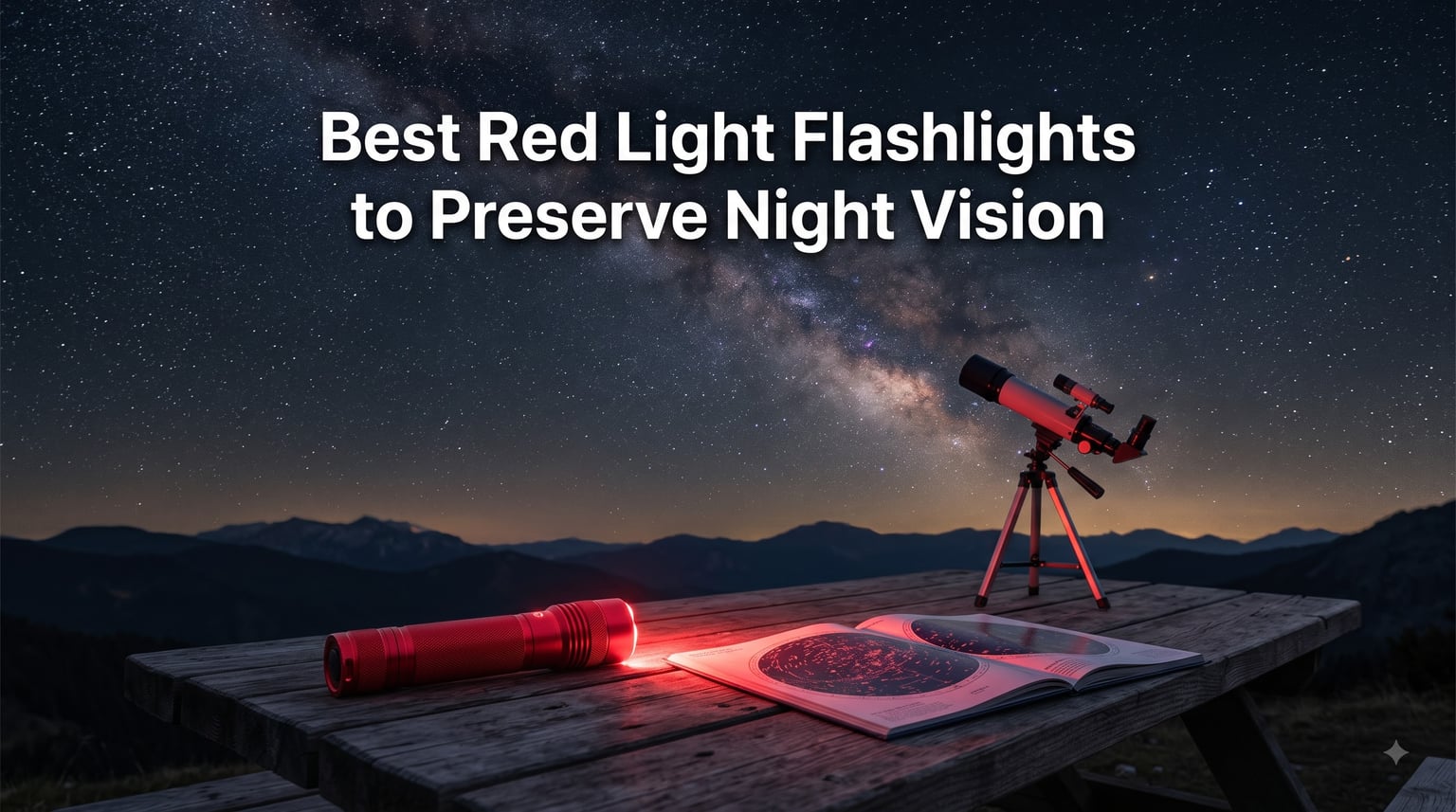
10 Best Red Light Flashlights Preserve Night Vision (September 2026)
I learned the hard way that white light is the enemy of a clear night sky. During my first star…

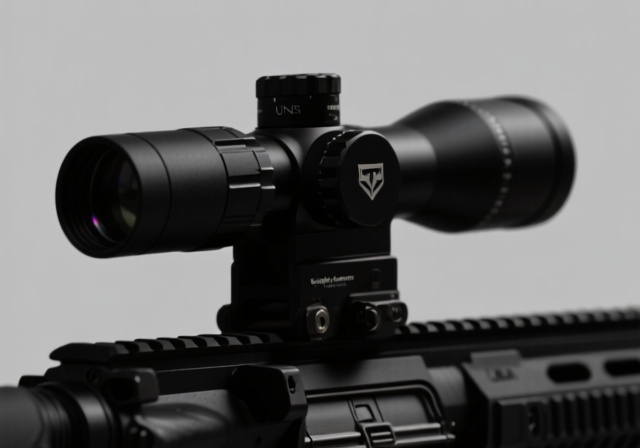
The night vision industry has shifted dramatically since Knights Armament quietly ended production of the UNS A3, and the secondary market has become the only realistic path for buyers who still want one. During my research into the current state of premium clip-on night vision, I spent weeks tracking listings, talking to dealers, and reviewing what serious users actually say about this legendary device.
The Knights Armament UNS A3 earned its reputation through uncompromising engineering, premium L3Harris Gen 3+ tubes, and zero retention that professional operators depended on. Built originally for military contracts, it became the most sought-after clip-on night vision system ever offered to civilian buyers before its discontinuation.
What follows is a complete assessment of the UNS A3 covering technical specifications, real-world performance, build quality, and the practical considerations of buying a discontinued military-grade optic in 2026. I’ll also cover a modern alternative that delivers current-production support for buyers who don’t want the risks of the secondary market.
Premium components and tight tolerances defined the UNS A3 from the start. Inside its housing sits a Gen 3+ L3Harris image intensifier tube, widely considered the benchmark for low-light performance in serious applications. These tubes typically carried Figure of Merit ratings between 2000 and 2800, with hand-selected units pushing past 3000 for the most challenging conditions.
Figure of Merit (FOM): The standard quality metric for night vision tubes, derived by multiplying resolution (lp/mm) by signal-to-noise ratio. Higher numbers indicate stronger performance in low light.
The optical package centered on a 26mm f/1.2 catadioptric lens that pulled in substantial light while keeping the overall profile compact. In optimal conditions, detection range reached beyond 800 meters on human-sized targets, with recognition ranges typically falling between 400 and 600 meters depending on ambient light and tube quality.
At 7.5 inches long and 22 ounces, the UNS A3 weighed substantially less than the legacy PVS-22 system it was designed to replace. That weight savings translated directly into less shooter fatigue during extended use, which matters a great deal on precision rifle platforms where ounces accumulate quickly across the whole system.
Power came from a single CR123A battery delivering around 20 hours of continuous run time. Automatic brightness control and advanced autogating handled sudden light transitions gracefully, an important feature when moving between dark interiors and bright outdoor environments or facing vehicle headlights at night.
The standard UNS A3 shipped with a Gen 3+ L3Harris image intensifier tube delivering 64 to 72 lp/mm resolution and a signal-to-noise ratio between 25 and 30, yielding a Figure of Merit range of roughly 2000 to 2300. Premium variants used unfilmed L3Harris tubes pushing 72+ lp/mm resolution and SNR above 30, lifting FOM into the 2300 to 2800+ range. Both variants used white phosphor, ran at 1x clip-on magnification, hit detection ranges of 600 to 800 meters (standard) and 800 to 1000 meters (premium), weighed 22 ounces, ran approximately 20 hours on a single CR123A battery, and were waterproof to 20 meters of submersion.
Collimation accuracy stood out as another strength of this system. Where older clip-ons demanded tedious re-zeroing each time they came off the rifle, the UNS A3 held its zero remarkably well through repeated mount and dismount cycles. That reliability came from precision machining and a robust mounting interface that kept optical alignment locked in.
For anyone new to the world of daytime optics, our types of scopes overview explains how clip-on night vision integrates with standard rifle scopes. The UNS A3 paired cleanly with most daytime optics up to 12x magnification, and the 25mm eye relief accommodated a wide range of scope configurations without requiring extensions.
Field reports from military professionals and experienced civilian users consistently describe the UNS A3 as exceeding its published specifications in practical use. Target recognition at distances that pushed the rated envelope became routine rather than exceptional, a pattern that speaks to conservative factory ratings.
White phosphor technology earned near-universal praise from extended-use operators. Compared to traditional green phosphor tubes, white phosphor caused less eye strain during multi-hour sessions and produced a more natural high-contrast image. Many users described the viewing experience as similar to watching a black-and-white film rather than staring at a glowing green screen.
Zero retention consistently impressed owners across thousands of mount cycles. Forum threads repeatedly report sub-1 MOA shift even after dozens of removals and reattachments, a level of consistency that makes the UNS A3 particularly valuable for precision shooting applications where point-of-impact stability is non-negotiable.
“The UNS A3 is built like a tank, but is about the same weight as the ClipNV, which feels a bit more delicate. Both are really compact and the ClipNV gets a slight edge when running it without secondary illum thanks to the catadioptric lens.” – Verified owner comparison
– Snipers Hide Forum User
Harsh weather posed few problems for the UNS A3. Nitrogen purging kept internal optics from fogging during rapid temperature changes, and the autogating circuitry absorbed sudden bright light exposure without blooming or shutdown. Operators reported consistent image quality in urban environments with frequent light transitions and in rural settings with almost no ambient illumination.
Under moonless conditions without supplemental infrared, the L3Harris photocathode still produced usable images out to 200-300 meters. Adding a quality IR illuminator pushed effective identification range well beyond 600 meters in field testing, making it a system that scales with the accessories you pair it with.
Quick Summary: The UNS A3 delivered field performance that consistently outpaced its published numbers, with zero retention, autogating, and white phosphor clarity that justified its premium positioning.
Durability was engineered into every component rather than bolted on as an afterthought. The housing machined from 7075-T6 aluminum delivered high strength without excessive mass, and the Type III hard coat anodizing protected against corrosion in marine and humid environments.
KAC tested the UNS A3 against recoil profiles that exceeded .50 BMG specifications. That meant the system could absorb the punishment from anything ranging from a 5.56mm carbine up to a heavy-barreled .308 precision rifle without zero shift or internal damage. Sensitive electronics and the image tube sat in additional shock mounts for extra protection.
Environmental sealing hit an IP68 rating, allowing complete submersion to 20 meters for up to two hours. Combined with an operating temperature range from -40°F to +120°F, the UNS A3 was rated for deployment in virtually any climate on the planet, a meaningful advantage for users operating in extreme conditions.
Controls received deliberate attention during the design phase. Oversized, textured switches operated reliably even with gloves in total darkness, and the intuitive layout placed frequently-used functions within easy reach of the support hand when mounted. Adjustments happened without breaking shooting position or losing situational awareness.
Lens coatings resisted scratching during field cleaning, and KAC included spare protective windows in the original package, acknowledging that real-world optics inevitably face abuse. That kind of attention to detail separated the UNS A3 from competitors that treated the optic as a finished product rather than a tool expected to take punishment.
During its production run the UNS A3 competed with the EOTECH Clip NV and legacy systems like the PVS-22 and PVS-30. Each had its strengths, but the UNS A3 carved out a niche by delivering balanced excellence without serious weaknesses in any area.
Stacked against the EOTECH Clip NV, the UNS A3 offered a more robust housing and access to unfilmed L3Harris tubes that delivered slightly better image quality at the top end. The Clip NV countered with a marginally smaller profile and EOTECH’s 10-year warranty, which remains a significant draw for civilian buyers worried about long-term reliability.
The PVS-22 had a longer service record and established military pedigree, but the UNS A3 weighed nearly a pound less while delivering comparable optical performance. Modern features like autogating and white phosphor made the UNS A3 noticeably more comfortable during extended use compared to the older PVS-22 platform.
The PVS-30 supported higher magnification scopes but at the cost of considerable added weight and bulk. For most users running optics in the 1-10x range, the UNS A3 hit the performance sweet spot without the front-heaviness that made the PVS-30 impractical on lightweight precision rifles.
Stacked against the EOTECH Clip NV, PVS-22, and PVS-30, the UNS A3 weighed 22 ounces and measured 7.5 inches long, versus 21 ounces and 7.2 inches for the Clip NV, 38 ounces and 9.5 inches for the PVS-22, and 40 ounces and 10.2 inches for the PVS-30. The UNS A3 supported daytime scopes up to 12x magnification, the Clip NV up to 15x, the PVS-22 up to 10x, and the PVS-30 up to 20x. Warranty coverage ran 3 years on the UNS A3, PVS-22, and PVS-30, but 10 years on the EOTECH Clip NV. Today the UNS A3, PVS-22, and PVS-30 are all discontinued while the Clip NV remains in production. Used market pricing reflects that scarcity: UNS A3 units typically run $7,000 to $9,000, Clip NV around $7,000 to $8,000, PVS-22 around $4,000 to $6,000, and PVS-30 around $5,000 to $7,000.
Even though the UNS A3 is no longer in production, the night vision capabilities it represented continue to influence new product designs. Modern alternatives like the AGM Global Vision Neith LRF attempt to deliver similar functionality using digital sensor technology, though purists maintain that true image intensifier tubes still produce superior results in most conditions.
Knights Armament officially ended UNS A3 production in 2022, confirmed by KAC LE Sales representatives and documented across enthusiast forums by late 2023. With no successor announced and no indication of a production restart, the device now exists only on the secondary market, where it has become increasingly scarce as collectors and serious users absorb the remaining inventory.
Current secondary market pricing for UNS A3 units typically falls between $7,000 and $9,000 depending on tube specifications, cosmetic condition, and included accessories. Premium units fitted with high-FOM unfilmed tubes and complete with original factory data sheets have crossed the $10,000 mark in recent transactions. Prices have trended upward as supply tightens, and there is little indication that trend will reverse.
Verifying tube specifications remains the single biggest challenge for prospective buyers in 2026. Most used units ship without documentation, forcing buyers to contact Knights Armament directly with the serial number to confirm what tube is actually inside. Forum reports suggest that some units marketed as premium-spec have turned out to contain average tubes once verified, making this step non-negotiable before any purchase.
Warning: Secondary market purchases require serious due diligence. Always verify tube specifications through Knights Armament before committing funds, and request a hands-on demonstration whenever possible to confirm the unit performs to advertised standards.
For buyers who cannot justify the risks and prices of the used market, current-production alternatives remain available. The EOTECH Clip NV continues to ship with full manufacturer support and a 10-year warranty, delivering performance comparable to the UNS A3 for most civilian use cases. Digital options like the AGM Global Vision Neith LRF bring modern features such as onboard recording and integrated laser rangefinding that the UNS A3 cannot match, even if the image intensification technology itself is different.
For shooters who want modern night vision capability backed by current manufacturer support, the AGM Global Vision Neith LRF stands as the most practical contemporary alternative to the discontinued UNS A3. It uses digital sensor technology rather than an image intensifier tube, but the trade-off brings real-world advantages that matter to today’s buyers.

2560x1440 UHD CMOS sensor
Built-in laser rangefinder
1024x768 OLED display
The Neith LRF approaches the problem differently than the UNS A3, using a high-resolution digital sensor instead of a Gen 3+ intensifier tube, and that difference brings both trade-offs and benefits worth understanding before purchase.
The 2560×1440 UHD CMOS sensor delivers crisp daytime color imaging and surprisingly competent low-light performance, and the integrated laser rangefinder adds distance measurement capability the UNS A3 never offered. The 1024×768 OLED display produces a sharp image with strong contrast, while onboard video recording and built-in Wi-Fi let you capture and share sessions through a connected mobile device.
Modern conveniences extend to the power system as well. The dual power design combines an internal rechargeable battery with support for an external replaceable battery, extending runtime far beyond what the UNS A3’s single CR123A delivered. Shot-activated recording captures moments automatically, and the weather-resistant housing holds up in demanding field conditions.
The honest trade-off is that no current digital sensor fully replicates the image quality, contrast, and low-light sensitivity of a premium Gen 3+ image intensifier tube. In pitch-black conditions with no ambient light, the Neith LRF will fall short of what a high-FOM L3Harris tube inside an UNS A3 can deliver. For users who primarily operate in low-light rather than no-light conditions, this gap narrows considerably.
What the Neith LRF offers that no UNS A3 ever could is current warranty coverage and manufacturer support. AGM backs the unit with a 5-year warranty, parts availability, and firmware updates, none of which exist for a discontinued military-grade device. For buyers who value support and modern features over absolute peak low-light performance, the Neith LRF is the rational choice in 2026.
For buyers with tighter budgets, our guide to budget night vision scopes covers capable alternatives at lower price points. These options won’t match the Neith LRF’s feature set or the UNS A3’s legendary tube performance, but they make night vision accessible to users who cannot justify premium pricing.
Buying a discontinued premium night vision device like the UNS A3 demands specialized knowledge and careful planning. The following sections cover the most important factors to evaluate before committing serious money to the secondary market.
The image intensifier tube determines roughly 90% of any night vision device’s performance. Always verify tube specs through official channels before purchase, focusing on resolution in lp/mm, signal-to-noise ratio, and the resulting FOM number. Keep in mind that a 2700 FOM L3Harris tube typically outperforms an Elbit tube at the same FOM rating, manufacturer pedigree matters as much as the headline numbers.
Check for impact damage around the mounting interfaces and lens housing first. Look closely for delamination in the optics, which shows up as bubbles or cloudy areas in the image. Verify that all controls function properly and that the device powers up without flickering, excessive delay, or unusual artifacts.
Original documentation adds significant value and reduces purchase risk. Look for factory data sheets, proof of purchase, and any maintenance records available. Military units with documented service history command premium prices but may show higher wear despite professional maintenance, a trade-off that requires weighing carefully.
Civilian ownership of the UNS A3 is legal in the United States without special permits, but export is strictly controlled under ITAR regulations. International buyers should research local laws carefully, since many countries restrict image intensifier devices to military or government entities. State and local regulations can also impose additional requirements that vary by jurisdiction.
Consider total cost of ownership rather than just purchase price. Discontinued devices lack manufacturer warranty coverage, which means repairs and maintenance must go through specialized service centers that charge premium rates. Factor potential servicing costs into your evaluation, and weigh whether a current-production alternative might deliver better long-term value despite similar upfront cost.
Even premium tubes benefit from supplemental infrared in total darkness. Quality IR laser designators from manufacturers like Steiner, SureFire, and Wilcox can extend effective identification range by 50% or more in moonless conditions. Pairing the UNS A3 with a focusable IR illuminator unlocks performance that approaches thermal-like recognition distance at a fraction of the cost.
Buyers sometimes confuse the UNS-A2 with the UNS-A3, and the differences matter. The A3 incorporated KAC’s improved collimation system, refined autogating circuitry, and updated housing ergonomics that the A2 lacked. While the A2 remains a capable system, the A3 represents the final and most refined iteration before discontinuation, and it commands a meaningful price premium on the used market as a result.
Yes. Knights Armament officially ended UNS A3 production, and KAC LE Sales representatives confirmed the discontinuation to forum members in 2023. The device is no longer in production and is only available through private sales or specialized dealers on the secondary market.
The UNS A3 commanded premium pricing because of its L3Harris Gen 3+ image intensifier tubes (which alone cost several thousand dollars), military-grade construction, extensive research and development, and limited production runs. The combination of cutting-edge tube technology and specialized manufacturing resulted in pricing well above consumer-grade alternatives.
Yes, civilians in the United States can legally own the UNS A3 without special permits. Export outside the U.S. is restricted under ITAR regulations, however. Some states and local jurisdictions impose additional restrictions, so always verify your local laws before acquiring any image intensifier device.
The UNS A3 uses image intensification technology that delivers superior image quality in very low light, better performance in extreme darkness, and zero lag in dynamic scenarios. Digital night vision offers recording capabilities, lower entry pricing, and modern features, but typically has reduced range and requires more ambient light to produce a clear image.
The UNS A3 works best with day scopes between 1x and 12x magnification. It can handle slightly higher magnifications up to about 15x depending on the specific scope’s eye relief and objective lens size, but image clarity may degrade at the upper end of that range.
For buyers with sufficient budget and technical expertise, a well-documented UNS A3 remains an excellent investment in image quality. However, the lack of warranty support, rising secondary market prices, and the difficulty of verifying tube specifications make current alternatives a safer choice for most civilian users in 2026.
Yes. Knights Armament Company remains operational and continues to manufacture firearms, suppressors, and accessories from its headquarters in Titusville, Florida. The UNS A3 discontinuation reflects product line decisions rather than company status, and KAC continues to support other products and honor existing service obligations.
Knights Armament Company is headquartered in Titusville, Florida, where it designs and produces firearms, optical accessories, and suppressor systems for military, law enforcement, and civilian markets. The company was founded in 1982 by Eugene Stoner and remains privately held.
After extensive research into user experiences, dealer reports, and current market data, I can say with confidence that the Knights Armament UNS A3 represents one of the finest clip-on night vision systems ever produced. Its combination of premium L3Harris tubes, exceptional build quality, and thoughtful design made it the top choice for serious users who refused to compromise on performance.
The reality of 2026 is that UNS A3 ownership comes with serious considerations. Rising secondary market prices, absence of warranty support, and the persistent challenge of verifying tube specifications make it a difficult purchase for anyone other than experienced buyers with established dealer relationships. For first-time night vision buyers, the risks often outweigh the rewards.
For most users today, a current-production alternative makes more sense. The AGM Global Vision Neith LRF delivers modern digital night vision with recording capability, Wi-Fi connectivity, and a 5-year warranty that no discontinued military-grade optic can match. Buyers exploring night vision technology at lower price points will find capable budget options that deliver meaningful capability without the financial exposure of a discontinued premium device.
If you decide to pursue a used UNS A3 despite the risks, approach the process methodically. Verify tube specifications directly with Knights Armament, inspect the unit thoroughly in person, and arrange for an independent evaluation by a qualified night vision technician when possible. A properly documented UNS A3 remains an exceptional piece of equipment, but only when verified and maintained.
Pro Tip: When purchasing any high-end night vision equipment, budget for a quality IR illuminator alongside the optic. Even premium image intensifier tubes benefit from supplemental IR in total darkness, and a well-matched IR laser can extend effective range by 50% or more without significantly adding weight to the rifle system.
The legacy of the Knights Armament UNS A3 continues to influence night vision design across the industry, and its performance standards remain the benchmark against which new systems are measured. Even though production has ended, its impact on the night vision community endures, and well-maintained units will continue to deliver excellent service to knowledgeable owners for many years to come.
![Leica Rangemaster CRF 2400-R Review [cy]: Premium Hunting Rangefinder](https://revellphotography.com/wp-content/uploads/2026/09/featured-update-6063-1788715721881.jpg)