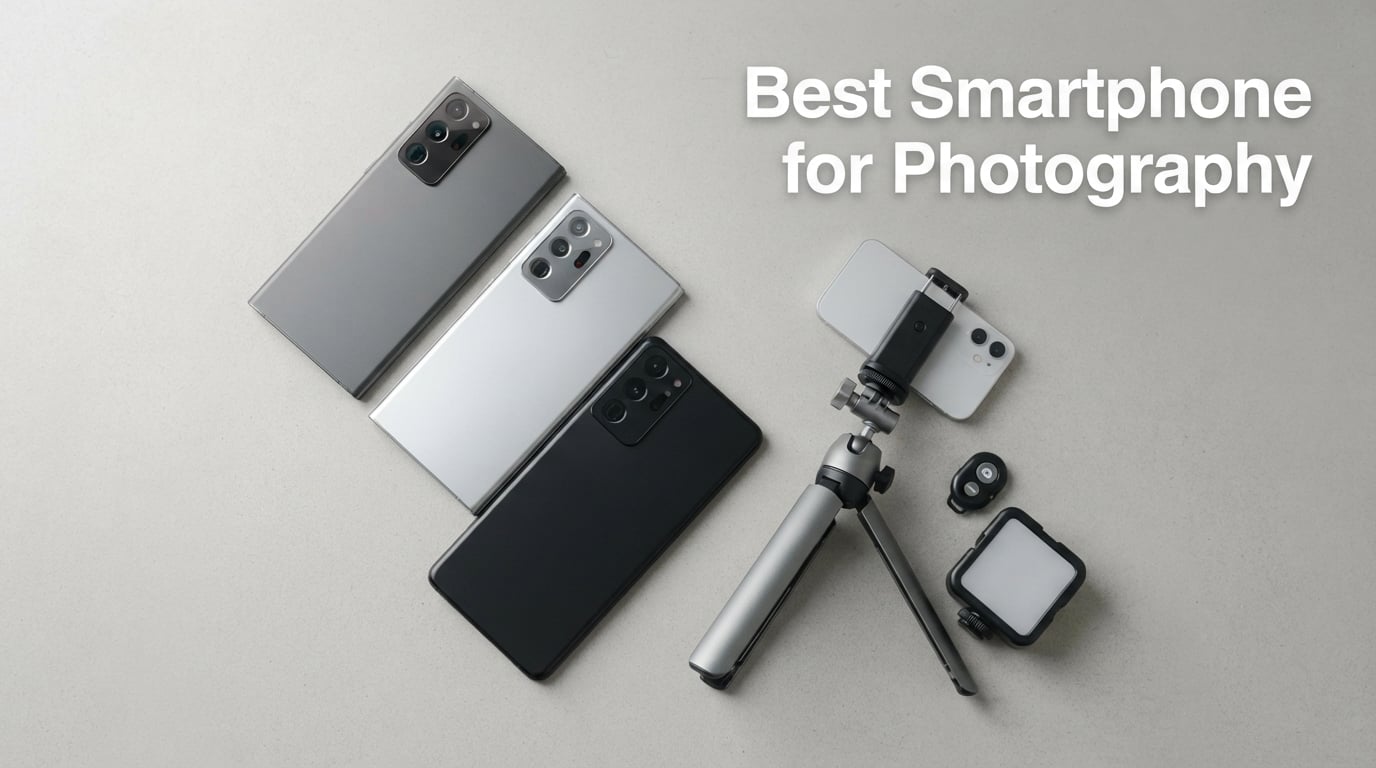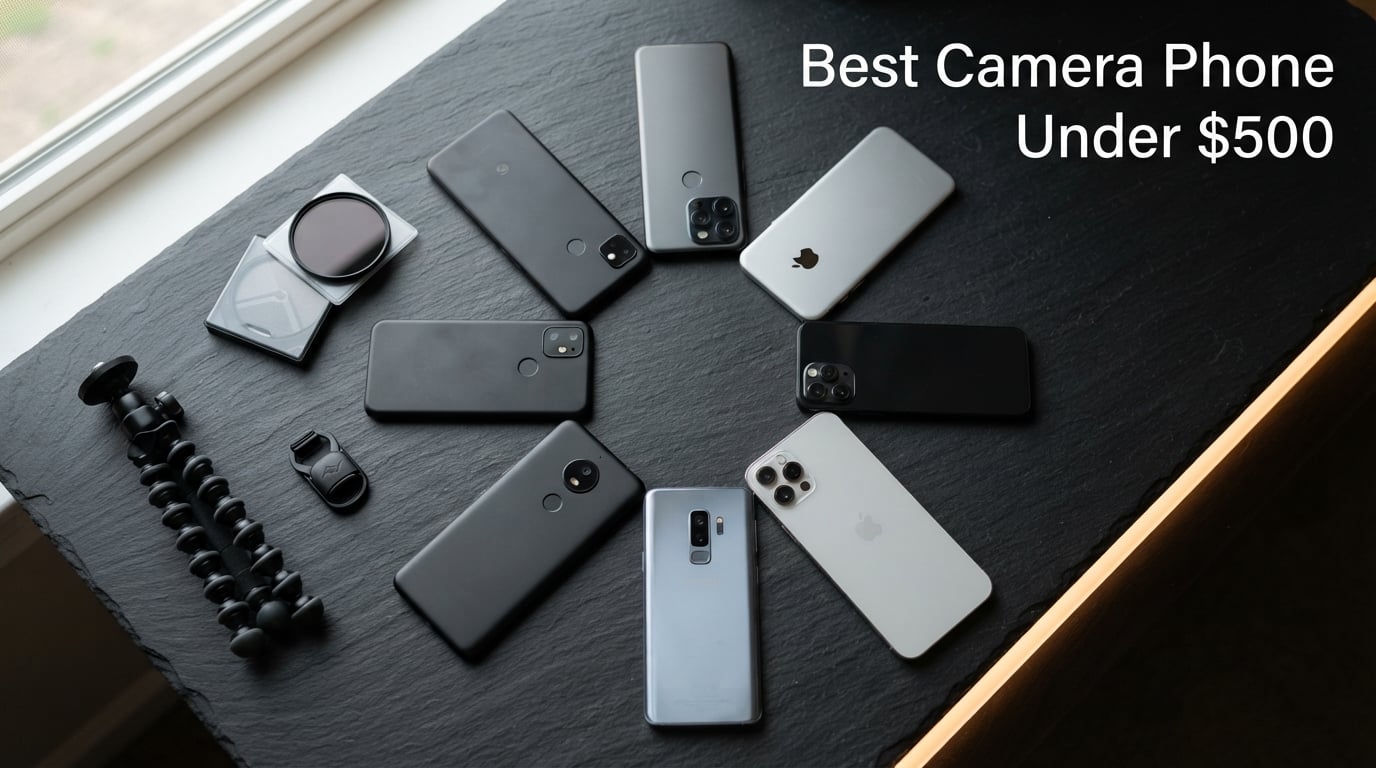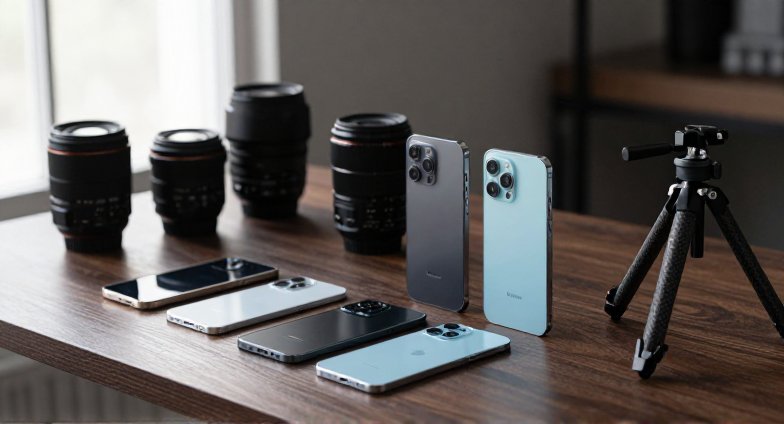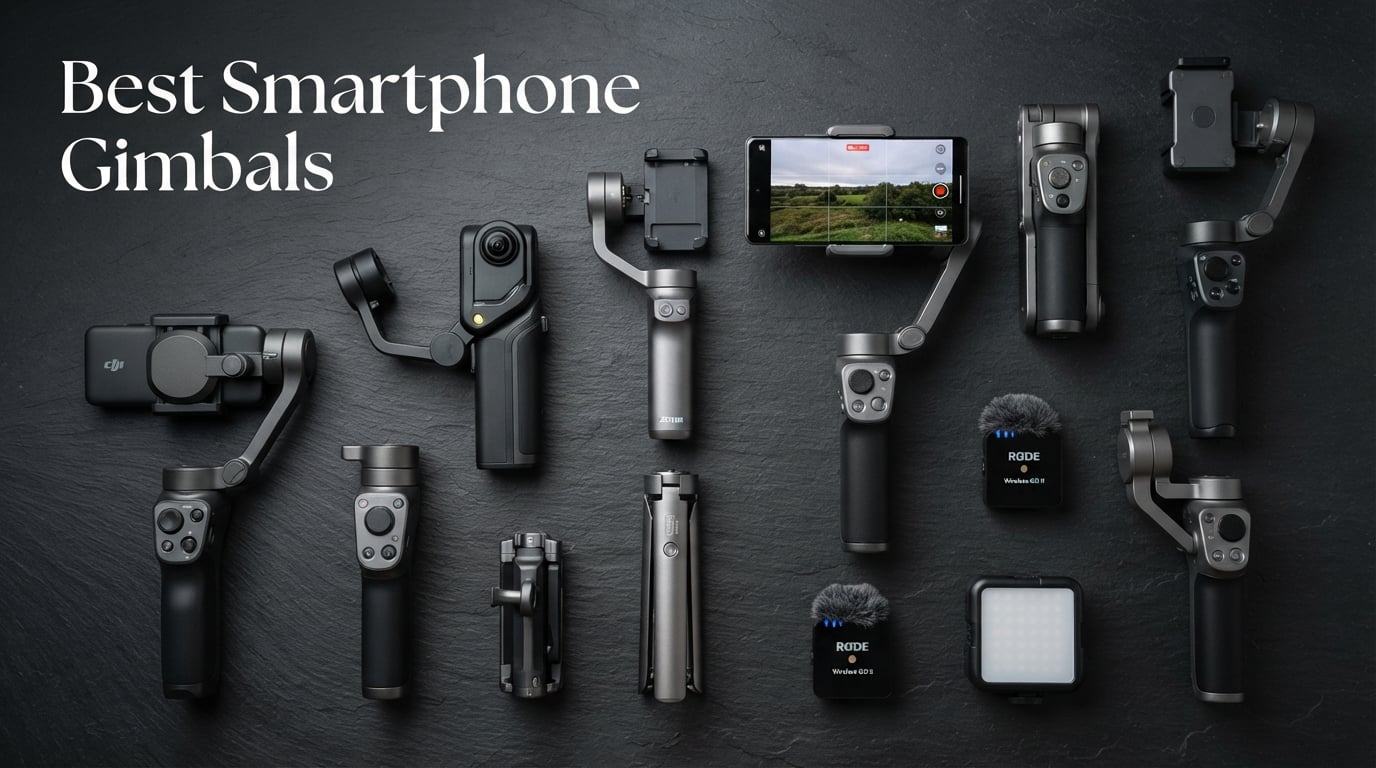
8 Best Smartphone Gimbals (October 2026) – Tested and Compared
I spent the last 90 days shooting real vlogs, walk-and-talk product reviews, and travel clips with eight smartphone gimbals strapped…

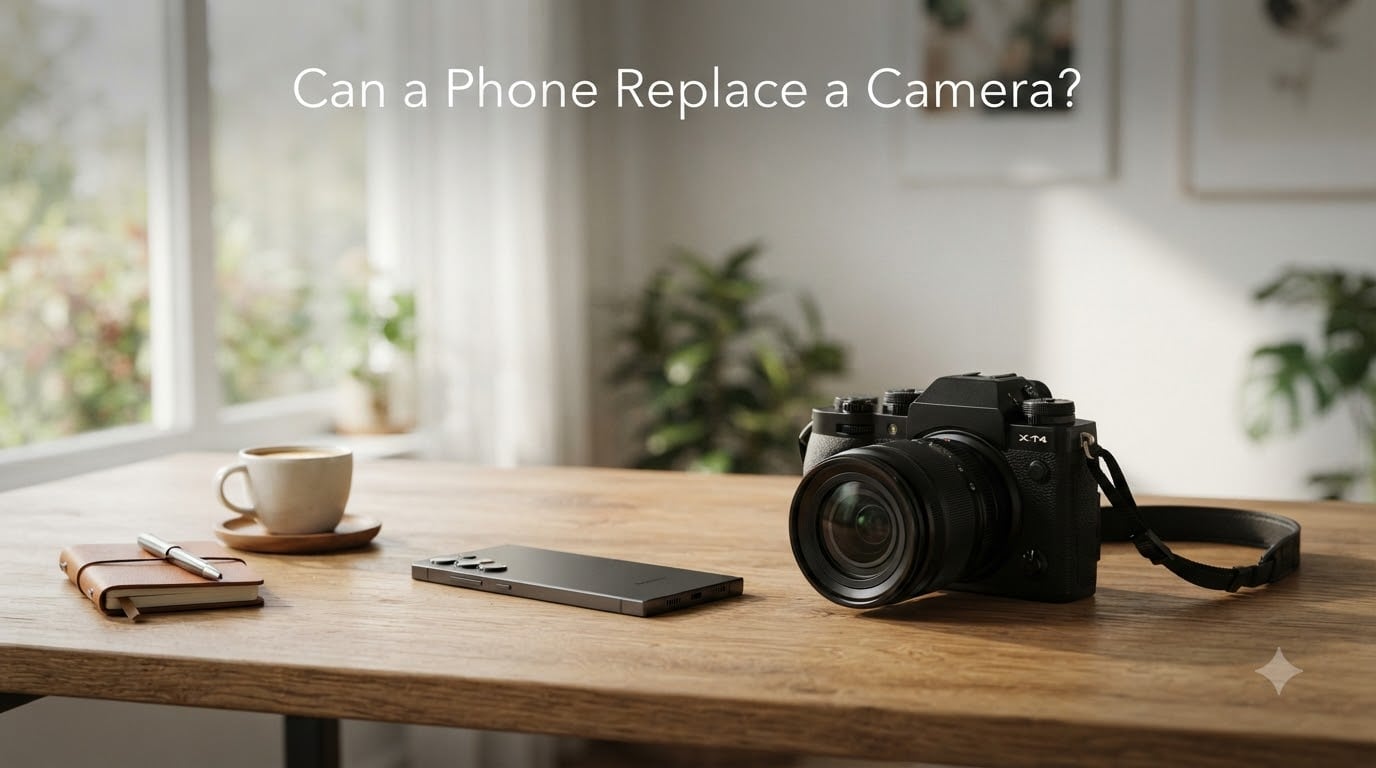
Can a phone replace a camera? For casual shooters posting to Instagram, scrolling through vacation albums, and capturing daily life with family and friends, yes – modern smartphones genuinely are good enough. For anyone printing larger than A3, shooting fast sports, or working as a paid professional, the answer is still no. The truth sits in the middle, and understanding where that line falls saves you from overspending on gear you do not need or settling for a phone when a dedicated camera would clearly do better.
Our team has been testing cameras and phones side by side for over a decade. We have shot weddings, wildlife, and product work on both formats, and we have watched the gap narrow year after year. In this 2026 guide, we will walk you through the real differences – not marketing claims – so you can decide which tool fits your actual photography.
If you want to go straight to a specific camera question, our gear and equipment reviews cover related topics that complement this discussion.
A phone can replace a camera for everyday use, social media, travel snapshots, and casual portraits. It cannot fully replace a dedicated camera for professional work, large prints, wildlife photography, fast sports, or situations that demand precise manual control. The real question is not which device wins overall – it is which device wins for the specific image you are trying to make.
Think of it this way: a phone is a brilliant generalist that lives in your pocket and uses software to compensate for hardware limits. A dedicated camera is a specialist tool with hardware advantages that no software patch can fully replicate. Each excels in different situations, and pretending one tool replaces the other ignores what each does best.
For roughly 80 percent of the photos most people take, the phone is more than sufficient. The remaining 20 percent – the prints on your wall, the magazine cover, the wildlife shot from 200 meters away – is where the dedicated camera earns its keep.
The biggest gap between a smartphone and a dedicated camera is the sensor. Phone sensors typically measure around 1/1.3 inch (about 9.4mm x 7.1mm), while a mirrorless camera with an APS-C sensor measures roughly 23.6mm x 15.7mm, and full-frame sensors measure 36mm x 24mm. That is a 4x to 13x difference in surface area, and it directly affects how much light the sensor captures.
More light means less noise, more dynamic range, and better color depth. When you push a phone sensor to ISO 3200 indoors, you get grainy, smudged details. The same shot on a full-frame camera stays clean and detailed. This is not a software problem – it is physics, and it is the single biggest reason dedicated cameras remain relevant.
Megapixels are not the deciding factor here. A 12MP phone sensor with tiny pixels cannot match a 24MP full-frame sensor with larger pixels, even though the phone sounds more advanced on paper. The pixel size on a phone is roughly 1.7 microns, while on a full-frame camera it is often 4-5 microns or larger. Each larger pixel collects more light and produces a cleaner signal.
Optical zoom is another clear win for dedicated cameras. A phone typically achieves 3x or 5x optical zoom through multiple fixed lenses, then uses digital zoom (which crops and upscales) for anything beyond that. A dedicated camera with a 70-200mm or 100-400mm lens delivers true optical reach at any focal length, with no quality loss.
Dynamic range – the ability to capture detail in both shadows and highlights in a single shot – is roughly 12-14 stops on a modern flagship phone and 14-16 stops on a full-frame camera. That difference matters for landscape photography at sunrise or sunset, where you want detail in both the bright sky and the dark foreground.
Phones fight back against their smaller sensors with computational photography, and the results are genuinely impressive. Every time you press the shutter, your phone captures multiple exposures in milliseconds, aligns them, merges the data, removes noise, sharpens details, adjusts color, and produces a final image that often looks better than what the small sensor alone could deliver.
Night mode is the clearest example. A phone with a tiny sensor can produce a sharp, bright image of a dimly lit street that would require a tripod and 30-second exposure on a camera. The phone stacks 9-15 frames in 2-3 seconds, aligns them pixel by pixel, and uses AI to reduce motion blur and noise. The result is a usable photo in conditions that would have been impossible just five years ago.
Portrait mode uses depth mapping – usually from a secondary lens or a time-of-flight sensor – to artificially blur the background. A dedicated camera with a fast prime lens at f/1.4 produces similar background blur optically, but the phone achieves it through software. In good light, the phone’s version looks nearly identical to the optical version. In challenging light, you start to see edge artifacts around hair and glasses.
HDR processing is another computational win. Phones automatically merge shadow and highlight data to produce images where both the sky and the foreground are properly exposed. Many dedicated cameras now do this too, but phones do it instantly and automatically, with no editing required.
The trade-off is that computational photography produces what some photographers call the “crunchy” or “over-processed” look – images that look sharp on the phone screen but show telltale signs of heavy processing when viewed at 100 percent on a larger display. Dedicated cameras produce a more natural file that holds up better under heavy editing.
Pick up a dedicated camera after using a phone for years, and the difference is immediate. There is a real grip, a physical shutter button with proper travel, a viewfinder you press your eye against, and dedicated dials for aperture, shutter speed, and ISO. The whole experience is designed around taking photos.
A phone is designed around a screen. You tap to focus, swipe to zoom, and tap a small on-screen button to capture. It works, but it is not as fast or as precise. When a bird takes flight or a child blows out birthday candles, those milliseconds of shutter lag and imprecise grip matter.
Weight distribution matters too. A dedicated camera balances the lens across your palm and shoulder. A phone is held with fingertips at arm’s length, which produces shaky images at slow shutter speeds. Image stabilization helps, but it cannot fully replace the stability of a proper grip.
The viewfinder is more than nostalgia. On a bright sunny day, a phone screen washes out and you cannot see your subject clearly. A dedicated optical or electronic viewfinder stays visible in any light and lets you see exactly what the sensor sees, without reflections or glare.
For social media, a phone is more than enough. Instagram, Facebook, and TikTok compress everything anyway, so the marginal quality difference between a phone and a dedicated camera disappears entirely. A well-lit phone shot often looks better than a poorly lit camera shot, regardless of the gear.
For travel photography, the phone wins on convenience. You always have it. You do not have to worry about weight, theft risk, or standing out as a tourist with a visible camera. Most casual travel photos – food, street scenes, group shots, sunsets – look great on a modern flagship phone.
For street photography, the phone is increasingly the tool of choice. Street photographers love the discreet form factor, the silent shutter, and the ability to shoot from the hip. Many award-winning street photos in 2026 were taken on phones.
For family snapshots and everyday moments, the phone is the clear winner. Spontaneous moments happen fast, and missing them while pulling out a dedicated camera defeats the purpose. The best camera is the one you have with you, and that is almost always your phone.
For quick sharing, the phone wins on workflow. You shoot, edit, and post in seconds. A dedicated camera workflow involves transferring files, importing to a computer, editing, exporting, and finally sharing. For real-time sharing, the phone is unmatched.
For professional work – weddings, commercial shoots, magazine covers, product catalogs – dedicated cameras are still the industry standard. Clients pay for reliability, and that means gear that has been tested in every condition and that produces consistent, editable files. A phone is a backup, not a primary tool for paid work.
For large prints above A3 size (roughly 11×17 inches), a dedicated camera is essential. The math is straightforward: a 12MP phone image at A3 print size shows visible pixelation when viewed up close. A 24MP or 45MP full-frame camera produces prints 3-4 feet wide with no quality loss.
For wildlife photography, the optical reach of a dedicated camera with a telephoto lens is critical. A phone’s 10x digital zoom cannot match the sharpness of a 600mm lens. For bird photography, distant mammals, or any shot requiring reach, a dedicated camera is the only realistic option.
For sports photography, you need fast burst rates, reliable autofocus tracking, and high ISO performance. A flagship phone might shoot 10 frames per second, but a dedicated camera shoots 20-30 frames per second with accurate focus on the subject throughout. That difference determines whether you capture the peak action.
For low-light photography without flash – concerts, indoor events, astrophotography – a dedicated camera with a large sensor and fast lens is far superior. A full-frame camera at ISO 6400 produces cleaner images than a phone at ISO 1600, and the gap grows as light drops.
For video work, particularly cinema-style productions, dedicated cameras offer better dynamic range, cleaner high-ISO footage, professional audio inputs, and the ability to use cinema lenses. A phone can shoot excellent video for social media, but professional video production still requires dedicated gear.
One issue nobody talks about enough is the distraction factor. Pull out a dedicated camera and you are in photography mode – focused, intentional, present. Pull out your phone and you are one swipe away from email, social media, texts, and a dozen other apps competing for your attention.
For casual snapshots, this does not matter. For deliberate photography – street work, portraits, landscapes, anything that requires patience and observation – it is a real problem. The phone invites interruption at exactly the moment you need sustained focus.
Many professional photographers report that dedicated cameras improve their work not just because of better optics, but because the act of using a camera puts them in a different mental mode. The phone is for connection; the camera is for seeing. Separating those two activities produces better images.
This is also why Gen Z has driven a revival of vintage film cameras. Young photographers are tired of computational processing, notification distraction, and instant sharing. They want something slower, more intentional, and more focused. A dedicated camera – even an old film point-and-shoot – provides that.
Here is a cost reality most phone-versus-camera comparisons ignore. The average smartphone is replaced every 2-3 years, often because the camera module is one of the most-touted upgrade features. A dedicated camera body can last 10+ years, and lenses last even longer – often decades.
Over 5 years, you might spend on two to three flagship phones. That total easily exceeds the cost of a high-end mirrorless camera body and two or three lenses. The dedicated camera then continues to work for another 5-10 years with minimal additional investment.
Phone camera improvements each generation are often incremental – slightly better low-light, slightly more zoom, slightly faster autofocus. The dedicated camera you buy today will still produce excellent images in 2030, while your phone from 2026 will feel dated by 2028.
Resale value tells the same story. A flagship phone loses 50-60 percent of its value in the first year. A camera body holds 70-80 percent of its value for years, and quality lenses often appreciate.
Start with what you actually do. If 90% of your photography is casual – family, friends, travel, social media – a flagship phone is all you need. Save the money and use what you already have. If you print large, shoot professionally, or pursue specific genres like wildlife or sports, invest in a dedicated camera.
For most people, the right answer is both. Use your phone for daily life and casual moments. Add a dedicated camera when you want to push into a specific genre, print larger, or develop a deeper photographic practice.
Buy the best glass you can afford if you go the dedicated camera route. A mid-range camera body with excellent lenses outperforms a flagship body with kit lenses every time. Lenses outlast bodies, and they have a bigger impact on image quality.
Whatever you choose, learn the gear you have. Technique matters more than equipment. A skilled photographer with a phone produces better images than an unskilled photographer with the most expensive camera. Master exposure, composition, and light first, then upgrade gear when your skills demand it.
A phone can replace a dedicated camera for casual photography, social media, travel snapshots, and everyday moments. It cannot fully replace a dedicated camera for professional work, large prints, wildlife, sports, or situations requiring precise manual control. The best choice depends on what you shoot and how you use the final images.
In good conditions, modern flagship phones produce images that look nearly identical to entry-level DSLR photos when viewed on a phone screen or social media. In challenging conditions – low light, high ISO, fast action – DSLRs and mirrorless cameras still produce noticeably cleaner, sharper, more editable files due to larger sensors and better optics.
Dedicated cameras offer larger sensors for better low-light performance, true optical zoom at any focal length, faster burst rates for sports, longer battery life for extended shoots, tactile manual controls, professional audio inputs for video, weather sealing for harsh conditions, and the ability to print at large sizes without quality loss.
DSLRs and mirrorless cameras are objectively better than phone cameras for image quality, especially in challenging conditions. However, better does not mean necessary for everyone. For casual use and social media, a phone camera is more than sufficient. Better only matters if your final use case demands the higher quality.
No current smartphone fully beats a DSLR or mirrorless camera in pure image quality. The closest competitors are the latest flagship phones with large 1-inch sensors – such as the Sony Xperia Pro-I or Sharp Aquos R9 – which produce DSLR-like results in good light but still fall short in low light and optical reach.
So, can a phone replace a camera? For most people, most of the time, yes. The phone in your pocket today is more capable than the dedicated camera from a decade ago, and for the vast majority of casual photography, the difference does not matter.
For the photographers who push into specialized genres, professional work, or large prints, a dedicated camera remains the right tool. Not because phones are bad – they are extraordinary – but because physics still matters, and a larger sensor with quality optics will always outperform a smaller sensor with software tricks in the situations that matter most.
Our advice in 2026: start with what you have, learn it deeply, and upgrade only when your work demands it. The best camera is the one you actually use, and the one you actually use is almost always the one in your pocket.