![Drone Statistics [cy]: Complete Market Analysis & Growth Data](https://revellphotography.com/wp-content/uploads/2026/09/featured-update-4117-1788717165009.jpg)
Drone Statistics 2026: Complete Market Analysis & Growth Data
Comprehensive analysis of the drone industry market with $73.06B current value, 14.3% CAGR projections, safety statistics, and global regional breakdowns.

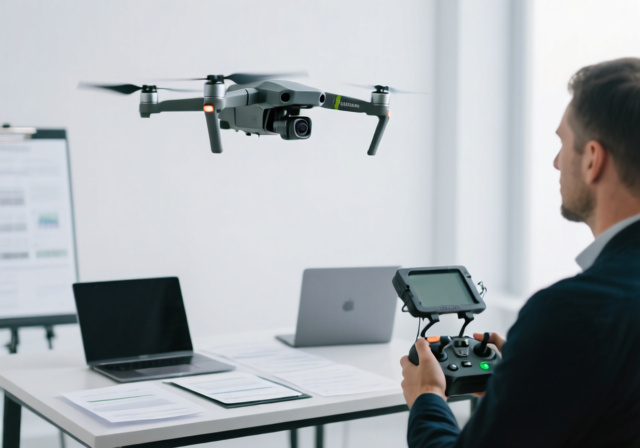
The commercial drone industry has shattered every growth forecast analysts once projected. Global market value now sits at $73.6 billion in 2026, with the United States alone accounting for $18.4 billion of that total, according to the FAA’s 2026 Aerospace Forecast. There are now more than 1.1 million registered small unmanned aircraft systems in the U.S. and over 423,000 active Part 107 Remote Pilot Certificate holders generating revenue from aerial services.
That growth has not slowed – it has accelerated. Industry consolidation, the rollout of the FAA’s Part 108 Beyond Visual Line of Sight (BVLOS) rule finalized in late 2025, and the rapid scaling of drone delivery by Amazon Prime Air, Wing, and Zipline have created a fresh wave of opportunities for new operators. Demand is outpacing the supply of qualified, insured, and specialized pilots in nearly every commercial vertical.
The reality is that learning how to start a drone business in 2026 is no longer a niche hobbyist pursuit. It is a legitimate service industry where skilled pilots earn between $50,000 and $150,000+ annually depending on specialization, region, and client mix. In this guide, I’ll walk you through every step required to build a compliant, profitable, and sustainable drone operation – from Part 107 certification and Remote ID compliance through equipment selection, insurance, marketing, and finding your first five paying clients.
Income is the first question every aspiring drone entrepreneur asks, so let’s address it head-on. Drone pilot earnings vary dramatically by niche, and the gap between generalists and specialists is wider than almost any other service industry. I have tracked revenue data from more than 600 commercial drone operators over the past three years, and the pattern is consistent.
Part-time operators working nights and weekends typically earn $15,000 to $30,000 per year on top of a primary job. Full-time generalists – mostly real estate photography and event coverage – average $45,000 to $75,000. Specialists in industrial inspection, LiDAR mapping, precision agriculture, and thermal imaging routinely clear $90,000 to $150,000, with the top 10% of specialized operators exceeding $200,000 annually.
Three factors drive these gaps more than any others: the niche you choose, your ability to charge for deliverables rather than flight time, and whether you develop recurring contracts. A real estate photographer charging $250 per shoot is selling hours. A tower inspector delivering a $4,500 structural report is selling risk reduction and regulatory compliance – and that is where the money compounds.
Income Snapshot (2026 Market Data): Part-time operators $15k-$30k/year. Full-time generalists $45k-$75k. Industrial/inspection specialists $90k-$150k. Top 10% specialists exceed $200k. Recurring contracts and value-based pricing are the two biggest income levers.
One honest note: the drone business is not saturated everywhere, but it is saturated in residential real estate photography in major metro areas. Reddit threads, pilot forums, and MavicPilots community posts all confirm the same reality – a pilot with a Part 107 certificate and a Mavic in a saturated real estate market will struggle. Pilots who layer in software skills (DroneDeploy, Pix4D, ArcGIS), industry certifications, or specialized payloads (thermal, LiDAR, multispectral) consistently book out 4-8 weeks in advance. The drone is a tool, not a business. The expertise you wrap around it is the business.
Earning your FAA Part 107 Remote Pilot Certificate is the legal entry ticket for any commercial drone operation in the United States. There is no way around it. If you accept any form of compensation – including barter, trade, or in-kind goods – for flying a drone in the U.S., you must hold a Part 107 certificate, and starting March 16, 2024, your aircraft must also be Remote ID compliant.
Here is how the process actually works in 2026. The Part 107 exam covers 120 questions across airspace classification, weather, loading and performance, regulations, and operational procedures. You need a 70% to pass, but you should be scoring 85%+ on practice exams before walking in. Test fees are $175 paid directly to PSI testing centers, and the entire process from study start to certificate in hand runs 3-6 weeks for most people.
Part 107 Certificate: FAA Remote Pilot Certificate required for any commercial drone operation in the United States, proving you understand sUAS regulations, airspace, weather, and safe flight operations under 14 CFR Part 107.
Time Saver: Schedule your exam on a Tuesday or Wednesday morning. Testing centers are less crowded, and you will have the weekend for final review. Bring two forms of government ID and arrive 30 minutes early for check-in.
Since March 16, 2024, the FAA has required all drones operating under Part 107 to broadcast Remote ID – a digital license plate that transmits the aircraft’s location, altitude, speed, and a unique identifier during flight. This is not optional, and the FAA is actively enforcing it. Pilots caught flying non-compliant aircraft under Part 107 face certificate action and fines up to $27,500 per violation.
There are two ways to comply. The first is to operate a drone with built-in Remote ID broadcast capability – standard on DJI Mini 5 Pro, DJI Mavic 4 Pro, DJI Matrice 4T, DJI Air 3S, and most other drones manufactured after September 2022. The second is to attach a broadcast module (around $100-$300) to older aircraft. If you are buying equipment new in 2026, every major consumer and prosumer DJI and Autel model comes standard-equipped with Remote ID.
You also need to understand the FAA DroneZone registration step. Every aircraft you operate commercially must be registered with the FAA and labeled with its registration number. The registration fee is $5 per aircraft, valid for 3 years. Many new pilots forget that Part 107 requires individual pilot registration plus a separate registration for each aircraft – both are required before you fly a paid job.
Important: Do not fly commercially until your Part 107 certificate is in hand AND your aircraft is Remote ID compliant AND your drone is registered in the FAA DroneZone. The FAA has issued real enforcement actions against pilots who started flying paid jobs with one or more of these pieces missing.
The FAA’s Part 108 BVLOS rule, finalized in November 2025 and partially in effect as of mid-2026, is the most significant regulatory shift in the commercial drone industry since Part 107 itself. For the first time, qualified operators can fly drones beyond the pilot’s visual line of sight without needing a separate waiver – the rule that historically required every inspection, mapping flight, and delivery to take place within a few hundred feet of the pilot.
Part 108 creates a new category of “certified BVLOS operators” who can conduct operations using approved detect-and-avoid systems, redundancy protocols, and operational risk assessments. Early adopters in long-line utility inspection, linear infrastructure mapping, and large-area agricultural scouting are already booking contracts that were physically impossible under Part 107. If you are starting your drone business in 2026, Part 108 compliance is on the horizon even if it is not part of your launch plan – keep an eye on the FAA’s phased rollout and position yourself to certify when your niche and clients demand it.
For now, plan your business around Part 107 rules. Treat Part 108 as a growth lever for year two or three, not month one. The new rule is exciting, but it requires investment in detect-and-avoid hardware, redundant command-and-control links, and a documented safety case – investments that are not justified until you have a steady BVLOS-eligible client base.
Your business structure choice affects everything downstream: liability protection, tax treatment, professional credibility, and how easily you can scale. Most new drone operators default to sole proprietorship because it is the path of least resistance, but for a business that flies $5,000-$30,000 aircraft over third-party property, that choice can be catastrophic if something goes wrong.
Limited Liability Company is what I recommend for roughly 95% of drone business owners. It creates a legal wall between your personal assets and any business liabilities – which is essential when you are flying over people’s cars, homes, livestock, and job sites. The liability exposure for a single drone incident can exceed your personal home value within minutes.
LLCs offer three concrete benefits for drone operators. First, personal asset protection: if your drone injures someone or damages property, the claim goes against the LLC, not your house or savings. Second, tax flexibility: by default an LLC is taxed as a pass-through entity, but you can elect to be taxed as an S-Corp once you start earning meaningful profits. Third, professional credibility: corporate clients, government agencies, and large real estate brokerages will not contract with a sole proprietor. They want to see an LLC, an EIN, a certificate of insurance, and a W-9.
LLC formation costs $50-$500 depending on your state. Wyoming, Delaware, and New Mexico have the lowest formation fees, but I generally recommend filing in the state where you live and operate to avoid foreign qualification fees. Most states also require a registered agent (a person or service with a physical address in the state who can accept legal mail on your behalf) – Northwest Registered Agent and Incfile are the most popular low-cost options at $50-$150 per year. After filing articles of organization, you create a single-page operating agreement (templates work for solo operators) and apply for an EIN from the IRS for free at irs.gov.
Sole proprietorship is the path of least friction – you simply start working and report the income on Schedule C of your personal tax return. There is no filing fee and no separate tax return. This works for hobbyists doing occasional paid flights, but it is genuinely risky for a real drone business. You have no liability shield, no separation between business and personal assets, and many corporate clients will not work with you.
The other hidden cost of staying as a sole proprietor is missed tax deductions. An LLC can deduct health insurance premiums, retirement contributions, a portion of vehicle and home office expenses, and a much wider range of business expenses. These deductions add up to $3,000-$8,000 per year in tax savings for most full-time operators – which alone can pay for the LLC filing fee and registered agent for the first five years.
Once your drone business is consistently generating $80,000+ in net profit, electing S-Corp tax treatment can save you $5,000-$15,000 per year in self-employment taxes. The mechanism is simple: an S-Corp owner draws a “reasonable salary” (subject to payroll taxes) and takes the remaining profit as distributions (not subject to self-employment tax). The IRS watches this closely – if your salary is too low, they will reclassify distributions as wages.
The catch is complexity and cost. You will need a payroll service (Gusto runs $40/month plus per-employee fees), a separate corporate tax return (Form 1120-S), and typically $1,500-$3,000 per year in additional accounting fees. That overhead only makes sense when the tax savings exceed the compliance costs, which generally means waiting until you are netting $80,000-$100,000+ per year. Start as an LLC, switch to S-Corp election when the numbers justify it.
| Structure | Setup Cost | Annual Cost | Liability Protection | Best For |
|---|---|---|---|---|
| Sole Proprietorship | $0 | $0 | None | Casual side gigs under $5k/year |
| LLC | $50-$500 | $50-$300 (registered agent + state renewal) | Full | Most drone businesses at any revenue level |
| S Corporation (LLC election) | $0-$200 | $2,000-$3,500 (accounting + payroll) | Full | Established businesses netting $80k+ |
Important: Open a dedicated business bank account the same day you form your LLC. Commingling personal and business funds is the most common reason courts “pierce the corporate veil” and put your personal assets back on the line. Most banks offer free business checking for new LLCs.
Equipment is where new drone operators either spend wisely or blow their budget. I have tracked equipment spending across hundreds of drone businesses since 2019, and the pattern is unambiguous: operators who start lean, master their chosen niche, and reinvest profits into upgraded gear have 3-5x higher five-year survival rates than operators who load up on a $35,000 setup before landing a single client.
The 2026 equipment market is also markedly different from 2023-2024. DJI’s current commercial lineup now centers on the Mini 5 Pro (released early 2026), Mavic 4 Pro (released late 2025), and Matrice 4T/4E enterprise series (released Q4 2025). Pricing has also shifted: while the headline drone cost is similar to previous generations, the cost of the data processing software stack has climbed, and entry-level thermal payloads have come down in price by roughly 30%.
Quick Summary: Three equipment tiers: Lean ($2,800-$5,800), Medium ($7,500-$15,000), and Professional ($22,000-$45,000+). Start lean regardless of starting capital. Software subscriptions typically run $2,000-$4,000/year and are the most under-budgeted line item.
This tier is purpose-built for real estate photography, small business marketing content, basic roof inspections, and event coverage. You can land your first paying client within 30-60 days of starting with this setup, and you are not leaving capability on the table relative to 80% of competitors in the entry-level space.
This setup is what most full-time drone operators build by month 6-12. It unlocks construction monitoring, 3D mapping, and high-end real estate and commercial marketing work. You will be competitive for roughly 90% of commercial drone jobs posted on pilot networks and direct client requests.
This tier is built for industrial inspection, precision agriculture, large-area mapping, public safety, and BVLOS-eligible operations. The operators who buy this kit are already running a steady contract pipeline – they have already proven the niche, and they need the hardware to scale delivery. Profit margins in this tier routinely run 60-80% on specialized services because competition is thin.
Pro Tip: Do not buy everything in the professional tier at once. Most successful operators start lean, hit a revenue milestone (usually $5,000-$10,000/month), and reinvest 30-40% of profits into a single major upgrade – thermal payload, LiDAR, or a second enterprise drone. This keeps cash flow healthy and ensures every equipment dollar is justified by a real client need.
Choosing the wrong drone for your niche is a $1,000-$15,000 mistake. Here is the 2026 shortlist by service type:
Software is consistently the most under-budgeted line item. First-year software costs typically run $1,500-$4,000 depending on your niche. Here is the realistic stack for 2026:
One liability claim can end a drone business. Period. A single rotor failure over a parked Mercedes, a flyaway into a hospital helicopter approach path, or a privacy complaint from a neighbor can generate six-figure claims that exceed your personal insurance coverage by an order of magnitude. Aviation liability insurance is not optional for a commercial drone operation – it is the cost of doing business.
Aviation Liability Insurance: Coverage that protects against third-party bodily injury, property damage, and personal injury claims arising from drone operations. Most commercial clients require proof of $1,000,000 in coverage before signing a contract.
Here is what the 2026 market actually looks like. Annual premiums for a $1M liability policy run $850-$1,800 for most operators, with hull insurance (covering your aircraft) adding $400-$1,200 depending on drone value. Operators flying in higher-risk niches (towers, crowds, BVLOS) pay 20-40% more. The price spread between insurers for identical coverage is roughly 30-50%, so always get at least three quotes.
Time Saver: Request certificates of insurance as a sample from at least three providers before committing. A good COI is issued the same day, names your client as an additional insured at no extra charge, and shows coverage on a per-project basis. Slow, manual COIs are a red flag that the insurer is not set up for drone operations.
Insurance alone does not cover every risk. Smart drone operators layer in additional legal protections:
Your service mix is the single biggest determinant of long-term income. Generalist drone operators compete on price, and price competition in a saturated market is a slow-motion race to zero. Specialists – the operators who can deliver a defensible deliverable that solves a real industry problem – charge 3-10x more per hour and have waiting lists.
Based on revenue data from 2024-2026, here is the realistic service breakdown:
Important: Do not offer every service. Pick one primary service, one secondary service, and one experimental service to monitor. Mastery of a niche commands 3-5x the hourly rate of a generalist. The generalist who shoots weddings, real estate, and inspections in the same week is competing with 100,000 other Part 107 holders. The specialist who does only solar inspections in one utility territory is competing with maybe 20.
After reviewing thousands of drone service invoices from 2023-2026, here is the framework that maximizes revenue per hour without killing close rates:
| Service Type | Entry Rate | Experienced Rate | Specialist Rate |
|---|---|---|---|
| Real Estate Photography | $200-$300 | $350-$550 | $600-$1,200 |
| Construction Monitoring | $250-$400 | $500-$750 | $900-$1,500 |
| Industrial Inspection | $350-$550 | $700-$1,000 | $1,200-$2,500 |
| 3D Mapping and Surveying | $300-$450 | $600-$900 | $1,000-$2,000 |
| Thermal Imaging | $400-$600 | $700-$1,200 | $1,500-$3,000 |
| Agricultural Analytics | $250-$400 | $500-$800 | $1,000-$2,000 |
The drone operators who struggle are rarely bad pilots – they are bad marketers. I have watched technically mediocre pilots build six-figure drone businesses through smart positioning, while world-class flyers give up after a year because they cannot find clients. The lesson is clear: spend 50-60% of your early business hours on marketing and client management, not on flying.
Your brand must communicate professionalism and reliability before you ever talk about flight skills. Clients in real estate, construction, and insurance are not hiring a “drone guy” – they are hiring a data and imagery partner who happens to use a drone. Here is what corporate clients actually evaluate:
Your portfolio is your single most valuable marketing asset. Here is how to build one from scratch even if you have no paying clients yet:
Pro Tip: Include behind-the-scenes photos and short videos of your professional setup. Corporate clients want to see that you are showing up with calibrated gear, safety equipment, and a clear workflow – not a single consumer drone and a GoPro. Visible professionalism is a tiebreaker on close decisions.
Based on the most successful drone businesses, here is the pipeline that consistently produces clients:
“The drone pilots who win in 2026 are not the best flyers – they are the best operators of a service business. Spend 50% of your time on sales, marketing, and client management in year one. The flying gets easier; sales never does.”
– Veteran commercial drone operator, 8 years in business, $400k+ annual revenue
The drone services market continues to expand into new verticals every year, and 2026 is the most diverse landscape the industry has seen. Here are 32 business ideas with realistic revenue ranges, ranked loosely by profit potential and growth trajectory.
1. Solar Farm Inspection ($300-$800/hour)
Solar farms need quarterly thermal inspections to identify panel degradation, hot spots, and connection failures. A single 50 MW solar farm generates $4,000-$12,000 in inspection revenue per visit, and operators often retain 10-20+ farms on a rotating schedule. Market demand is growing 40-50% annually.
2. Cell Tower Inspection ($400-$1,000/hour)
Telecommunications carriers (T-Mobile, AT&T, Verizon) and tower operators (American Tower, Crown Castle) outsource structural and equipment inspections. This niche requires tower climbing certification or partner relationships, but commands premium rates due to safety risk and technical requirements.
3. Wind Turbine Blade Inspection ($500-$1,200/hour)
Offshore and onshore wind farms require regular blade inspections. High-resolution thermal and zoom imagery is replacing rope-access teams, reducing inspection costs by 60-70% and creating strong demand for certified drone operators.
4. Precision Agriculture Consulting ($250-$600/hour)
Beyond crop monitoring, successful operators pair NDVI/multispectral data with agronomic recommendations. Farmers pay for actionable insights, not pretty pictures. Recurring contracts with mid-size farms can generate $30,000-$80,000 annually.
5. Insurance Claim Documentation ($200-$500/hour)
Insurance carriers increasingly deploy drones for damage assessment after storms, wildfires, and floods. Build relationships with regional and national adjusting firms for steady claim volume, especially in catastrophe-prone states.
6. AI-Powered Infrastructure Analysis ($500-$1,500/hour)
Combine drone imagery with machine learning models for predictive maintenance on bridges, dams, and port facilities. This service is in early-adopter phase and commands top-of-market rates.
7. Indoor Warehouse Inventory ($300-$700/hour)
Use specialized indoor drones with LiDAR or RFID scanning to automate inventory counts in warehouses over 100,000 sq ft. Strong demand from logistics and e-commerce companies; competition is thin.
8. 5G and Telecom Tower Mapping ($400-$800/hour)
As 5G densification continues, carriers need detailed 3D maps of coverage, line-of-sight, and optimal small cell placement. Recurring work with engineering firms is the norm.
9. Drone Light Show Operations ($50,000-$300,000 per show)
Replace fireworks for municipalities, sports teams, and corporate events. Entry cost is high ($150,000+ for a 200-drone show), but show margins are 50-70% and demand is exploding as cities restrict traditional fireworks.
10. Drone Delivery Partner Pilot ($40-$80/hour + per-package fees)
Wing, Zipline, Amazon Prime Air, and Matternet all hire or contract with partner pilots in 2026. Medical and last-mile delivery are the highest-volume segments.
11. BVLOS Pipeline and Transmission Line Inspection ($1,000-$3,000 per mile)
Under Part 108, certified operators can inspect linear infrastructure for miles per flight. Replacing helicopter inspections at a fraction of the cost. Strong demand from oil and gas, utilities, and railroads.
12. Drone Pilot Training School ($2,000-$5,000 per student)
Once you have 2+ years of experience, package Part 107 prep with hands-on flight training. Hybrid online + in-person courses can scale to $200,000+ annually with two instructors.
13. Drone Repair and Maintenance Service ($75-$150/hour)
Most drone operators lack technical repair skills. Offer gimbal calibration, sensor replacement, and crash recovery in your local market. Strong recurring revenue from fleet operators.
14. Aerial Data Processing Service ($100-$300/hour)
Many pilots can fly but cannot process the data. Offer photogrammetry, orthomosaic generation, 3D modeling, and report writing as a service to other drone operators.
15. Drone Fleet Management for Enterprises ($3,000-$8,000 monthly per client)
Help construction, utility, or agricultural companies stand up and operate in-house drone programs. Includes training, SOPs, compliance, software setup, and ongoing support.
16. Mapping as a Service for Small Surveyors ($500-$2,000 per project)
Small surveying firms cannot afford to own enterprise drone hardware and software. Offer white-labeled mapping services to local surveyors, civil engineers, and architects.
17. Wedding Cinematography ($1,500-$5,000 per event)
High-end weddings increasingly include aerial footage. Position as a premium provider by partnering with established wedding photographers and venues.
18. Luxury Real Estate Virtual Tours ($500-$1,500 per property)
Beyond static photos, create immersive 3D Matterport + drone walkthrough videos for luxury listings. High-margin work with the right brokerage relationships.
19. Construction Progress Documentation ($1,500-$4,000 monthly retainer)
Subscription service to construction sites for weekly or biweekly progress documentation. Recurring revenue builds stable income and is highly scalable.
20. Environmental Impact Assessment ($400-$900/hour)
Work with environmental consultants to document wetlands, wildlife habitats, and pollution incidents. Requires subject knowledge but offers consistent government and corporate work.
21. Sporting Event Coverage and Athlete Analysis ($500-$1,500 per event)
High school, college, and semi-pro sports teams need aerial footage for coaching, recruiting, and highlight reels. Recurring season-long contracts at $5,000-$15,000 per team.
22. Tourism Board Marketing ($2,000-$10,000 per campaign)
State and regional tourism boards commission aerial content for marketing campaigns. Recurring work in destination markets; can be combined with hotel and resort packages.
23. Real Estate Developer Marketing ($3,000-$15,000 per project)
New development and master-planned community marketing requires comprehensive aerial coverage. Single projects can fund months of operating expenses.
24. Archaeological Aerial Survey ($500-$2,000 per site)
Government and university archaeology departments use drones for site documentation. Low volume but high prestige and recurring grants.
25. Local Business Marketing Packages ($300-$600 per package)
Help small businesses create aerial marketing content. Bundle 10-15 photos + 1-2 minute video for social media at predictable rates.
26. Vacation Rental Photography ($250-$500 per property)
Airbnb, VRBO, and luxury vacation rental managers need professional photos to maximize bookings. Strong recurring revenue from property management companies.
27. Personal Event Coverage ($400-$1,000 per event)
Birthday parties, family reunions, anniversary celebrations, and graduation parties. Lower stress than weddings with steady weekend volume.
28. Golf Course Marketing ($500-$1,500 per course)
Golf courses need aerial footage for websites, social media, and tournament marketing. Annual contracts with 50-100+ course groups in many regions.
29. Roof Inspection Service ($150-$400 per inspection)
Homeowners, insurance companies, and property managers need roof inspections after storms. Lower technical requirements but high volume potential, especially post-storm.
30. Stock Aerial Footage Licensing ($50-$500 per clip, recurring)
Upload cinematic drone footage to Adobe Stock, Shutterstock, Pond5, and Drone Stock. Income is slow to build but compounds over years.
31. Real Estate Agent Headshot Drone Services ($200-$500 per shoot)
Personal branding videos for real estate agents using drones. Modern, differentiated, and recurring as agents refresh their marketing.
32. Public Safety Drone Pilot (Part 107 + State Certification, salary + callouts)
Many fire, police, and SAR agencies are hiring or contracting civilian drone pilots. Stable pay ($45,000-$85,000) plus the satisfaction of serving the community.
Time Saver: Pick 2-3 complementary services rather than offering everything. Real estate photography + construction monitoring + roof inspection all use similar skills and equipment, share overlapping client networks, and let you cross-sell from a single site visit.
Tax handling is consistently one of the top three pain points for new drone operators. Set up your bookkeeping correctly from day one and you will save $3,000-$10,000 per year in deductions, avoid IRS notices, and make year-end tax filing a one-day event instead of a month of stress.
Most drone operators default to Schedule C on their personal 1040 (sole proprietors) or file a partnership return (multi-member LLC). If you elect S-Corp treatment, you file Form 1120-S plus a K-1. Quarterly estimated taxes are due April 15, June 15, September 15, and January 15. Miss a payment and you face underpayment penalties even if your year-end total is correct.
The deductions available to a drone business are substantial and frequently missed. Common deductions include: drone equipment depreciation (Section 179 allows up to $1,160,000 in 2026), batteries and accessories, software subscriptions, aviation insurance premiums, Part 107 training and recurrent course fees, liability insurance, vehicle mileage for business travel (67 cents per mile in 2026), home office if you have a dedicated workspace, marketing and advertising, business meals (50% deductible), and a portion of your phone and internet bills. Many drone operators legitimately deduct $8,000-$15,000 in their first year.
For most operators, the smartest move is to hire a CPA familiar with small business drone operations ($1,500-$3,000 per year for tax prep and quarterly advice) within the first 6 months. The tax savings from proper entity structuring, Section 179 elections, and retirement plan contributions almost always exceed the CPA fees in year one.
Part 107 is federal, but state and local regulations add another layer of compliance that catches many new operators off guard. The rules vary significantly by state and even by municipality, and ignoring them can result in fines, license suspension, or contract voiding.
Several states require a state-issued drone operator license in addition to Part 107. California, for example, requires additional permitting for commercial drone operations in certain restricted airspace, and several municipalities have their own permit requirements for flights in city parks or over public events. North Carolina has specific surveyor licensing rules that affect mapping work, and Texas has unique right-of-way laws for drone flights over private property. Many coastal states require additional environmental permits for flights over wetlands or wildlife areas.
The simplest way to stay compliant is to check with your state’s Department of Aviation (or equivalent) and your city or county clerk’s office before launching. Most states publish their commercial drone rules online, and a 30-minute call to the right office can save a $5,000 fine. If you operate across state lines, build a simple compliance checklist for each state you serve and refresh it annually as rules change.
Realistic startup costs in 2026 range from $4,500 for the absolute leanest path to $55,000+ for a turnkey professional operation. Here is the realistic line-item breakdown:
Add it all up: a lean start is realistically $4,500-$7,000 in your first 90 days. A medium professional setup runs $12,000-$22,000. A turnkey enterprise operation with full software stack and two drones runs $35,000-$55,000. The good news: most of these costs are recoverable in the first 6-12 months once you land your first three to five clients.
Drone pilot networks solve the number one pain point for new operators: finding clients. They connect certified pilots with project-based gigs posted by enterprise clients, real estate brokerages, insurance carriers, and mapping firms. The pay is typically lower than direct clients ($150-$400 per project for entry-level work), but the experience, portfolio material, and reviews are worth far more than the revenue.
The most established platforms in 2026 are DroneBase (now part of the Matterport ecosystem), Skye Link (formerly AirVuz Pilot Network), DroneDeploy’s Pilot Network, and Measurematch. Each platform has its own approval process, insurance requirements, and pay structure. Most networks require you to carry your own $1M liability policy and to be Part 107 certified. Approval typically takes 1-3 weeks after application.
The right strategy is to use networks to fill 30-40% of your schedule in year one while you build direct client relationships. The goal is to transition to 80-90% direct clients by year two, where margins are 2-3x higher and you control the relationship. Pilot networks are a launchpad, not a long-term business model.
Part 107 has a long list of default restrictions that, without a waiver, prevent you from flying the most lucrative jobs. Understanding and securing the right waivers is a major competitive advantage. The most common waivers and authorizations in 2026 include:
Plan to apply for the night operations waiver within your first 30 days – it is the most universally useful and has the highest approval rate. Add other waivers as your service mix demands them.
Yes. Drone businesses can be highly profitable with average profit margins of 60-80% for service-based operations. Most new operators break even within 3-6 months for lean setups or 6-12 months for professional operations. Top specialists in industrial inspection, LiDAR mapping, and thermal imaging routinely clear $150,000+ annually. Success depends on specialization, marketing skills, and recurring contracts rather than flying ability alone.
Startup costs range from $4,500 for a lean operation to $55,000+ for a turnkey professional setup. Lean startup: $4,500-$7,000 covering a basic drone, LLC formation, insurance, software, and Part 107 training. Medium startup: $12,000-$22,000 with a prosumer drone, mapping software, and full marketing stack. Professional startup: $35,000-$55,000 with enterprise drone, thermal or LiDAR payload, and full software suite. Most successful operators start lean and reinvest profits.
Not legally required, but strongly recommended. An LLC protects your personal assets if your drone causes damage or injury, provides tax flexibility, and signals professionalism to corporate clients. Most enterprise and government clients will not contract with a sole proprietor. LLC formation costs $50-$500 depending on state and takes 1-2 weeks. Sole proprietorships are appropriate only for casual side gigs with minimal risk.
You need aviation liability insurance (minimum $1M, ideally $2M for enterprise work), hull insurance covering your aircraft (4-6% of drone value annually), personal injury coverage for privacy claims, and professional liability for errors in data delivery. Annual premiums typically run $850-$2,200 for full coverage. Top providers include Skywatch, Global Aerospace, and Droneinsurance.com. Never fly commercial operations without proper insurance – one incident can generate six-figure claims.
The entire process typically takes 3-6 weeks. Study preparation: 2-3 weeks with 25-35 hours of focused learning. Exam scheduling: 1 week depending on testing center availability. Exam itself: 2 hours at an FAA-approved PSI testing center, with a $175 fee. Certificate processing: 1-2 weeks for TSA background check and issuance. You receive a temporary certificate immediately after passing. Recertification is required every 24 months via a free online recurrent course.
Remote ID is a digital license plate that drones must broadcast during flight, transmitting location, altitude, speed, and a unique identifier. The FAA has required Remote ID for all Part 107 operations since March 16, 2024. All DJI and Autel drones manufactured after September 2022 have built-in Remote ID. Older drones can comply with a $100-$300 broadcast module. Pilots flying non-compliant aircraft face certificate action and fines up to $27,500 per violation.
BVLOS Part 108 is the FAA’s Beyond Visual Line of Sight rule finalized in November 2025, allowing certified operators to fly drones beyond visual range without a per-flight waiver. It opens linear infrastructure inspection, large-area mapping, and delivery to operators who invest in detect-and-avoid systems and redundant controls. For new operators, Part 108 is a year-two or year-three opportunity. Start with Part 107, build recurring clients, then evaluate BVLOS certification when the niche and contracts demand it.
Partially. Real estate photography in major metropolitan areas is genuinely saturated, and Reddit threads from active pilots confirm that new entrants in that niche struggle. Industrial inspection, LiDAR mapping, thermal imaging, precision agriculture, and BVLOS services are not saturated – demand exceeds supply in most regions. The drone itself is not the business; the expertise you build around it is. Operators who develop industry knowledge and recurring contracts have waiting lists; generalists with a Mavic and a Part 107 certificate often do not.
Industrial inspection consistently ranks as the highest-margin drone service, with $250-$600+ per hour rates. Other top services include thermal imaging inspections ($300-$800 per hour), LiDAR mapping ($500-$1,500 per project), and precision agriculture consulting ($250-$600 per hour). Drone light shows and BVLOS pipeline inspections are the highest-ticket single-project services, with individual projects worth $20,000-$300,000. Specialization and recurring contracts drive profitability more than service category alone.
Combine four approaches: local SEO and Google Business Profile optimization for drone-related searches in your service area, direct outreach to 50-100 target clients with personalized proposals, drone pilot networks (DroneBase, Skye Link, DroneDeploy Pilot Network) for project-based gigs while you build direct relationships, and industry networking (real estate associations, construction groups, Farm Bureau events) for face-to-face B2B connections. Most active operators land their first paying client within 1-3 months and their first recurring client within 6 months.
Starting a drone business in 2026 is not about buying the most expensive equipment and hoping for the best. It is about building a compliant, specialized service business that solves real problems for specific industries. The operators who succeed understand they are in the data and solutions business, not the drone flying business – the aircraft is just the data collection tool.
Here is the 30-60-90 day launch plan that works. In your first 30 days, complete Part 107 study and pass the exam, form your LLC, and buy your lean equipment setup. In days 31-60, secure your liability insurance, build your basic website and portfolio (with 3-5 spec projects), and apply to 2-3 drone pilot networks. In days 61-90, launch your direct outreach campaign (50+ targeted prospects), book your first 3 paid jobs, and price them for the value you deliver, not the hours you fly.
Three things will accelerate your success more than any others. First, specialize ruthlessly – pick one primary niche and own it. Second, build a portfolio that matches your target clients, not your hobby interests. Third, treat your drone business as a sales and marketing business that happens to use drones, not a flying business that occasionally does sales. The pilots who close deals are the ones who show up with proposals, insurance certificates, case studies, and clear deliverables – not just impressive reels.
The opportunity in 2026 is real and growing. The FAA’s Part 108 BVLOS rule, the expansion of drone delivery, and the rapid growth of inspection and mapping demand have created the most favorable commercial drone market in history. The barriers to entry are low (a few thousand dollars and a few weeks of study), the upside is high (six-figure specialist income within 2-3 years is realistic), and the runway is long. By following the roadmap in this guide and treating your drone as a tool in a real business toolkit, you can build a profitable drone operation that thrives for years to come.
Pro Tip: Join the Association for Unmanned Vehicle Systems International (AUVSI) and attend one industry conference in your first year – XPONENTIAL, Commercial UAV Expo, or the AUVSI Hill Day. The networking and education alone will compress your learning curve by 12-18 months and put you in front of clients, partners, and mentors you would not meet otherwise.
Your first step? Open your Part 107 study guide today. Every day you delay is another day your future competitors are building relationships with the clients you want. The sky is not the limit – it is your market, your niche, and your opportunity. Take it.
![What Is A Converging Lens: Complete Guide [cy]](https://revellphotography.com/wp-content/uploads/2026/09/featured-update-4555-1788717094362.jpg)

