
Neptune Facts: Complete Guide to the Solar System’s Windiest Planet
Discover the most fascinating Neptune facts, from its mathematical discovery and extreme winds to its mysterious moons and unique place…

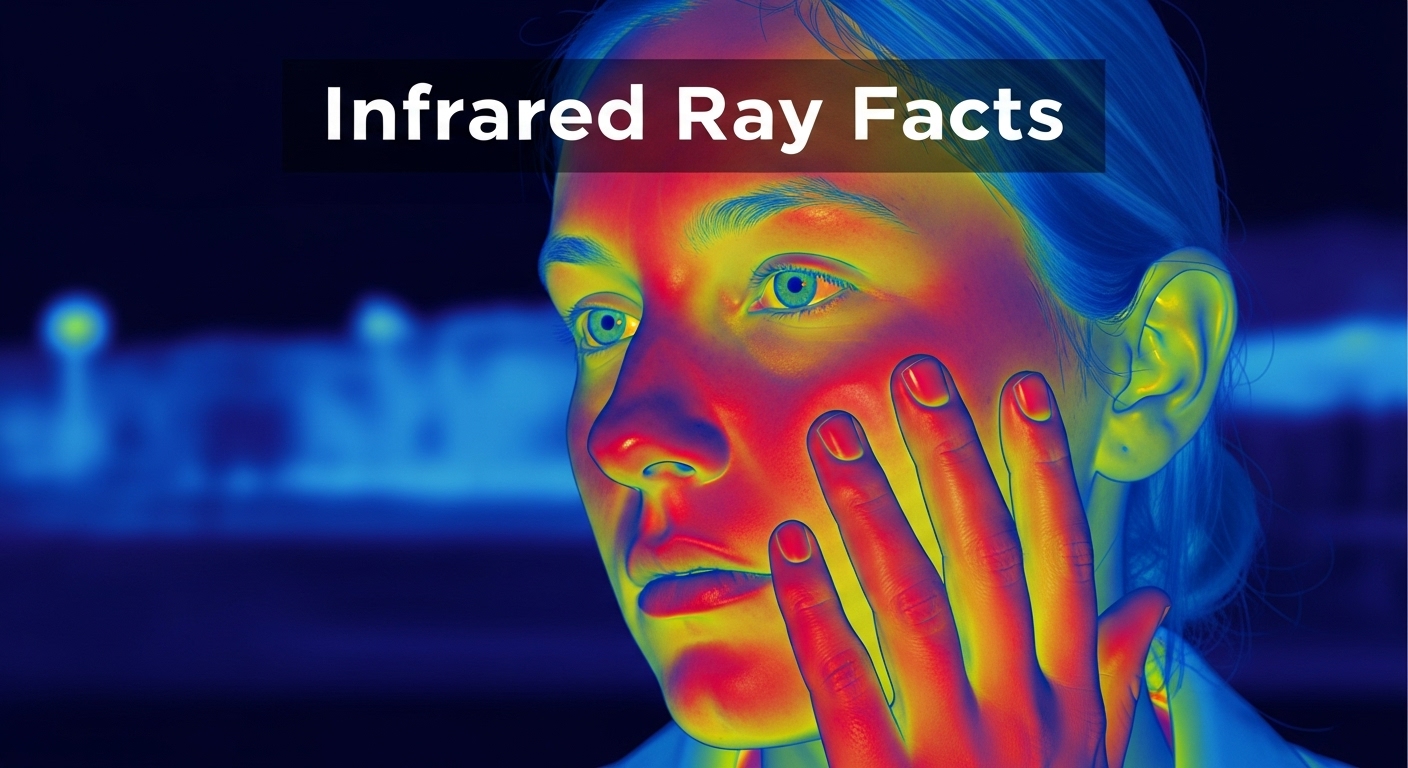
Infrared radiation is electromagnetic energy with wavelengths between 700 nanometers and 1 millimeter, longer than visible light but shorter than microwaves, invisible to human eyes yet detectable as warmth on your skin. This form of energy surrounds us constantly, emitted by every object above absolute zero, and it plays a crucial role in everything from the remote control on your coffee table to the space telescope peering into the origins of our universe.
Have you ever wondered why your television remote works without any visible connection? Or how thermal imaging cameras can reveal people lurking in complete darkness? The answer lies in infrared radiation, an invisible spectrum of energy that our eyes cannot detect but our skin perceives as heat. While visible light occupies just a tiny slice of the electromagnetic spectrum, infrared fills the vast territory beyond red wavelengths, bridging the gap between visible light and microwave radiation.
After years of studying electromagnetic phenomena and speaking with researchers across physics, astronomy, and medical fields, I have found that infrared remains one of the most practical yet misunderstood forms of energy. This comprehensive guide covers everything you need to understand about infrared rays, from their accidental discovery in 1800 to cutting-edge applications in medicine, astronomy, and environmental monitoring. You will learn how infrared works at the molecular level, why it feels like warmth, and how organisms from pit vipers to vampire bats have evolved to detect this invisible energy in ways humans never could.
Infrared radiation permeates our daily environment, yet most people remain unfamiliar with its fundamental characteristics. Here are the most important facts everyone should understand about this invisible form of energy:
The story of infrared’s discovery reads like a classic tale of scientific serendipity, a breakthrough that came from questioning assumptions and paying careful attention to unexpected results. In the year 1800, Sir William Herschel, already renowned for his discovery of the planet Uranus, was conducting experiments designed to understand the nature of sunlight and its component colors. His specific goal was to measure temperature differences across the visible spectrum.
Herschel set up a simple but elegant apparatus: a glass prism positioned to separate sunlight into its rainbow of colors, with thermometers placed in each color band to record temperature readings. As expected, the thermometers in violet light showed the lowest temperatures while those in red light registered the highest. But Herschel, driven by scientific curiosity, made a decision that would change physics forever.
He placed an additional thermometer just beyond the red portion of the spectrum, in a region where no visible light appeared. The reading exceeded even those in the red band, registering an even higher temperature in apparent darkness. Herschel had discovered that beyond the visible red light existed invisible radiation capable of transferring heat. He initially termed these rays “calorific rays,” though the name infrared eventually became standard.
What makes Herschel’s discovery so remarkable is the simplicity of his experimental apparatus. Using nothing more sophisticated than a prism, standard thermometers, and sunlight, he revealed an entirely invisible dimension of the electromagnetic spectrum. I have recreated versions of this experiment in educational settings, and the reaction of students when they observe warmth in a seemingly dark space never fails to generate genuine scientific wonder.
Herschel’s methodology demonstrates a valuable lesson for scientific inquiry: his discovery came from testing beyond the expected boundaries rather than accepting initial results as conclusive. By refusing to assume that invisible regions contained nothing of interest, he opened an entirely new field of study that today powers everything from thermal cameras to space-based observatories.
Infrared radiation operates through a mechanism called molecular excitation. When infrared photons encounter molecules in materials like skin, fabric, or air, they transfer their energy directly to those molecules, causing them to vibrate more rapidly. This increased molecular vibration manifests as heat, which our nervous system interprets as the sensation of warmth.
This thermal mechanism distinguishes infrared from visible light, which primarily affects electrons in atoms rather than causing bulk molecular motion. The energy carried by infrared photons happens to match the natural vibrational frequencies of many common molecules, making infrared particularly effective at heating substances containing water, organic compounds, and many plastics.
Thermal Radiation: Electromagnetic radiation emitted by objects due to their temperature. All matter above absolute zero emits thermal radiation, with infrared comprising the primary form for objects at everyday temperatures ranging from ice to human bodies.
Detection of infrared energy ranges from simple to sophisticated methods. At the most basic level, human skin contains nerve endings that detect infrared as warmth, though we cannot pinpoint its direction or intensity without instruments. Advanced detection utilizes semiconductors whose electrical properties change when heated by infrared, and modern thermal cameras employ microbolometer arrays containing thousands of tiny temperature sensors arranged in a grid pattern to create detailed heat maps.
One remarkable property of infrared radiation is its ability to penetrate certain materials while being blocked by others. Infrared passes readily through many plastics, thin fabrics, and atmospheric haze that would scatter or block visible light. This characteristic explains why your TV remote works through plastic casings and why thermal cameras can sometimes see through light fog and smoke.
The physics governing infrared emission follows Planck’s law, which describes exactly how the intensity and wavelength distribution of radiation depends on an object’s temperature. Hotter objects emit more infrared overall and do so at shorter average wavelengths. This principle enables engineers to design infrared heaters that efficiently transfer energy and detectors sensitive enough to sense a person’s body heat from kilometers away.
The infrared region of the electromagnetic spectrum is far from uniform. Scientists divide it into three distinct regions, each with unique physical properties and practical applications. Understanding these divisions helps explain why different infrared technologies behave so differently.
| Region | Wavelength Range | Key Properties | Common Applications |
|---|---|---|---|
| Near-Infrared (NIR) | 0.78-2.5 micrometers | Behaves most like visible light, highly reflective | Fiber optic communications, remote controls, medical imaging, agricultural analysis |
| Mid-Infrared (MIR) | 2.5-50 micrometers | Strong molecular absorption bands | Chemical spectroscopy, greenhouse gas detection, environmental monitoring, laser surgery |
| Far-Infrared (FIR) | 50-1000 micrometers | Strong thermal effects, readily absorbed by water | Thermal imaging cameras, infrared heating, space-based astronomy, weather forecasting |
Near-infrared behaves more similarly to visible light than other infrared regions. It reflects strongly off many surfaces and can be detected with modified silicon sensors similar to those in digital cameras. The light-emitting diodes in television remotes produce near-infrared energy, blinking coded signals that travel through air and plastic to reach your TV’s receiver. Fiber optic communication networks also utilize near-infrared because it travels through glass fibers with minimal signal loss.
Mid-infrared is where chemical detection becomes powerful. Many molecules exhibit characteristic absorption patterns in this wavelength range, essentially having unique “fingerprints” that spectroscopy can identify. Security scanners use this property to detect explosive materials, while environmental satellites measure atmospheric concentrations of greenhouse gases including carbon dioxide and methane by analyzing how they absorb mid-infrared from the sun.
Far-infrared represents what most people picture when thinking of heat radiation. Objects at everyday temperatures emit the bulk of their infrared energy in this region, and these wavelengths are strongly absorbed by water and organic molecules. Far-infrared therapy lamps, thermal imaging systems, and space-based astronomical observatories all operate primarily in this range.
The choice of which infrared region to utilize depends entirely on the intended application. Each region offers distinct advantages: near-infrared provides efficient transmission and compatibility with standard sensors, mid-infrared enables chemical identification and environmental sensing, while far-infrared excels at thermal detection and heating applications.
Infrared technology has become woven into the fabric of modern life, often in ways most people never notice. The television remote control represents one of the most ubiquitous applications. Tiny infrared LEDs inside remotes blink thousands of times per second, transmitting digital command codes through the air to receivers in your television. Despite appearing simple, these systems employ sophisticated coding schemes to prevent interference from other infrared sources in the same room.
Thermal imaging has transformed how professionals inspect buildings, fight fires, and diagnose medical conditions. Building inspectors utilize thermal cameras to identify insulation deficiencies, air leaks, and moisture intrusion by revealing temperature patterns invisible to the naked eye. Firefighting teams use the same technology to navigate through smoke-filled environments and locate victims by their body heat. In medicine, thermography detects inflammation and circulation abnormalities by creating detailed heat maps of the body’s surface.
The James Webb Space Telescope, launched in December 2021, represents the most advanced application of infrared astronomy to date. By observing the universe in infrared wavelengths, Webb can peer through cosmic dust clouds that block visible light, witnessing the formation of stars and planetary systems in regions previously hidden from view. The telescope’s infrared instruments detect light that originated over 13 billion years ago, from the first galaxies that formed after the Big Bang.
Earth observation satellites rely heavily on infrared sensors to monitor our planet’s atmosphere and surface. Instruments like the Moderate Resolution Imaging Spectroradiometer aboard NASA’s Terra and Aqua satellites use infrared channels to measure land surface temperatures, detect forest fires, track volcanic activity, and monitor sea surface temperatures that influence weather patterns. The GOES-R series of weather satellites employs infrared imaging to forecast severe storms, track hurricane development, and provide continuous monitoring of atmospheric conditions.
Industrial processes utilize infrared heating for applications including paint drying, plastic welding, food processing, and semiconductor manufacturing. Infrared heaters offer precise, controllable heating without requiring contact with the material being processed. Quality control inspectors use infrared sensors to monitor equipment temperatures, detect overheating bearings, and optimize manufacturing efficiency.
The connection between infrared and night vision represents one of the most practical applications of invisible radiation. Modern night vision scopes use sophisticated image intensifier tubes that amplify available light, including near-infrared wavelengths, to create visible images from minimal illumination. Many systems also incorporate infrared illuminators that provide additional invisible light for operation in complete darkness.
Two distinct approaches dominate night vision technology. Image intensification amplifies ambient light, including reflected near-infrared, to produce recognizable images with relatively low light requirements. Thermal imaging, alternatively, detects the far-infrared radiation naturally emitted by all warm objects, creating images based entirely on temperature differences without requiring any ambient light whatsoever.
Security systems extensively deploy both technologies. Passive infrared sensors detect changes in heat patterns to trigger motion-activated lights and alarms. Security cameras equipped with infrared LEDs automatically switch to night vision mode when ambient light drops, illuminating scenes with light invisible to human eyes but visible to the camera’s sensors.
The infrared illuminator technology in these systems has evolved significantly from early implementations. First-generation systems used simple incandescent infrared lamps that consumed substantial power and betrayed their location through visible red glow. Modern systems employ efficient LED arrays that can illuminate extended ranges while remaining virtually undetectable to the naked eye.
While humans cannot see infrared radiation, numerous animal species have evolved sophisticated sensory systems to detect and utilize this invisible energy. These biological infrared detectors represent remarkable examples of evolutionary adaptation, allowing predators to locate prey and navigate environments using heat signatures alone.
Pit vipers, including rattlesnakes, copperheads, and boas, possess specialized infrared-detecting organs that function like biological thermal imaging cameras. These snakes feature hollow sensory pits located between their eyes and nostrils, each containing a membrane packed with thousands of infrared-sensitive nerve endings. When warmblooded prey animals approach, the temperature difference between the prey’s body heat and the cooler background creates a thermal image on these membranes.
Research published in scientific journals has demonstrated that pit vipers can detect temperature differences as small as 0.003 degrees Celsius, enabling them to strike accurately at prey even in complete darkness. The snake’s brain combines visual information from eyes with thermal data from pit organs, creating a merged sensory picture of the environment. Studies have shown that some species can detect prey from distances exceeding one meter purely through infrared detection.
The mechanics of pit organ detection involve specialized ion channels called TRPA1 receptors, which respond to temperature changes rather than photons like conventional visual systems. When infrared energy warms these channels, they trigger nerve signals that the snake’s brain interprets as spatial heat patterns. This biological infrared detection exemplifies how evolution has solved sensing challenges through entirely different mechanisms than human vision.
Vampire bats have evolved another remarkable form of infrared detection, specifically adapted for locating blood vessels close to their prey’s skin surface. The common vampire bat and other species possess specialized infrared-detecting organs in their facial structures, enabling them to sense the radiant heat emitted by blood flowing through capillaries just beneath the skin.
These bats use a combination of echolocation to locate suitable feeding sites and infrared detection to identify areas with abundant blood supply near the skin surface. The infrared sense allows precise targeting of blood vessels, minimizing the prey’s awareness of the feeding process and reducing defensive reactions that could harm the bat.
Certain fish species have also developed infrared detection capabilities, though their mechanisms differ from those found in snakes and bats. Some fish possess specialized photoreceptor proteins that extend into the infrared range, allowing them to detect longer wavelengths than typical vertebrate vision systems can perceive.
Research has identified several fish species with visual pigments sensitive to near-infrared wavelengths, possibly enabling them to detect thermal signatures from bioluminescent organisms or perhaps even subtle temperature variations in their underwater environment. The specific evolutionary advantages of this capability remain an active area of scientific investigation.
Given infrared’s association with heat and its presence in sunlight and artificial lighting, questions about safety naturally arise. The answer depends critically on the intensity of exposure, duration of contact, and specific wavelength region involved. In everyday circumstances, the infrared radiation we encounter presents no health risk whatsoever.
Low-level infrared exposure from sources like television remotes, ambient room heating, and ordinary sunlight is completely harmless. Human bodies themselves constantly emit and absorb infrared radiation as part of normal thermal regulation processes. The thermal energy we receive from warm objects and sunlight represents natural exposure levels that humans have encountered throughout history without adverse effects.
The eyes deserve special consideration regarding infrared exposure. Unlike skin, which can withstand considerable heat before sustaining damage, eye tissue lacks pain receptors capable of warning of dangerous exposure. The cornea and lens can focus infrared energy directly onto the retina, potentially causing damage without any accompanying sensation of pain or discomfort.
High-intensity infrared sources including industrial furnaces, certain laser systems, and prolonged direct sun viewing require protective measures. Workers in industrial settings involving infrared heating equipment follow established safety protocols including the use of protective eyewear specifically designed to block the relevant infrared wavelengths.
Safety Tip: Never look directly at strong infrared sources like industrial heaters, furnaces, or laser equipment. Always use appropriate protective eyewear when working with high-intensity infrared equipment.
Regulatory organizations including the Occupational Safety and Health Administration and the American Conference of Governmental Industrial Hygienists have established exposure limits for occupational infrared exposure. These limits vary according to wavelength and exposure duration, with stricter limits applying to shorter wavelengths that penetrate eye tissue more readily. Adherence to these guidelines ensures safe use of infrared technology across industrial and medical applications.
Infrared rays are electromagnetic radiation invisible to human eyes but detectable as heat. They span wavelengths from 700nm to 1mm, were discovered in 1800 by William Herschel, are emitted by all objects above absolute zero, and power technologies from TV remotes to space telescopes.
An infrared ray is electromagnetic radiation with wavelengths longer than visible red light but shorter than microwaves. It falls between 700 nanometers and 1 millimeter on the electromagnetic spectrum and cannot be seen by human eyes but can be detected as warmth and by specialized thermal equipment.
Three major uses of infrared rays are: 1) Thermal imaging for night vision, firefighting, and medical diagnostics, 2) Remote controls and short-range wireless communications, and 3) Heating applications in industrial processes, food processing, and therapeutic devices.
Infrared radiation ranges from 700 nanometers to 1 millimeter in wavelength, placing it between visible light which spans 400-700nm and microwaves which extend from 1mm upward. This size range allows infrared to penetrate certain materials like thin plastics while remaining invisible to human eyes.
Infrared radiation penetrates skin and underlying tissue, causing molecular vibrations that generate warmth. This can increase local circulation, relieve muscle tension, and promote tissue relaxation. At normal exposure levels from sunlight or ambient sources, infrared produces the pleasant sensation of warmth without causing tissue damage.
Infrared radiation feels like gentle warmth penetrating your skin and underlying tissues. Unlike the surface heating produced by contact with hot objects, infrared warmth often feels deeper and more enveloping, similar to the sensation of sunlight warming your face on a cool morning.
The main disadvantage of infrared radiation is its limited ability to penetrate certain materials including glass, water, and solid walls. High-intensity infrared exposure can cause eye damage or skin burns if safety precautions are not followed. Additionally, infrared signals can experience interference from environmental heat sources.
No, infrared radiation cannot pass through solid walls, glass, or most opaque materials. While it can penetrate some thin plastics and certain fabrics, walls and standard window glass effectively block infrared radiation, which is why thermal cameras cannot see through building structures.
Pit vipers including rattlesnakes and boas do not technically see infrared the way they see visible light, but they detect infrared radiation through specialized pit organs located between their eyes and nostrils. These sensory pits contain heat-sensitive nerve endings that create thermal images of their surroundings, enabling them to locate warm-blooded prey in complete darkness.
Several animal species can detect infrared radiation including pit vipers such as rattlesnakes and copperheads which use facial pit organs, vampire bats which have infrared sensors in their faces for locating blood vessels, and certain fish species that possess visual pigments sensitive to near-infrared wavelengths.
Yes, vampire bats use infrared detection as part of their feeding strategy. Specialized infrared-sensitive organs in their facial region help them locate blood vessels close to their prey’s skin surface. This allows them to find optimal feeding sites with abundant blood supply while minimizing the prey’s awareness of the feeding process.
Infrared radiation represents one of the most versatile and accessible forms of electromagnetic energy in our universe. From Herschel’s accidental discovery using simple thermometers and a glass prism to the James Webb Space Telescope revealing galaxies billions of light-years away, infrared technology has fundamentally transformed how humanity perceives and interacts with the world around us.
What makes infrared particularly valuable is its dual nature as both scientifically significant and practically accessible. Unlike some electromagnetic phenomena requiring massive laboratories or extreme conditions to study, infrared can be detected with simple equipment and even felt directly by human skin. This accessibility has driven countless innovations across fields as diverse as medicine, astronomy, environmental science, and consumer electronics.
Looking forward, infrared applications continue expanding into new territories. Emerging developments include more sensitive infrared detectors for astronomical research, improved environmental monitoring systems for climate science, and advanced medical imaging techniques for earlier disease detection. Quantum infrared detectors promise even greater sensitivity for security and scientific applications.
Understanding infrared radiation reveals a hidden dimension of our physical world that surrounds us constantly yet remains invisible to our senses. Every warm object in your environment, every technological convenience that responds to remote control, and every thermal image of your surroundings represents infrared radiation at work. By expanding human perception into this invisible spectrum, we have unlocked capabilities that would have seemed miraculous to previous generations.
The next time you feel warmth from sunlight streaming through a window, operate a television remote, or encounter a thermal image revealing heat patterns invisible to ordinary vision, remember that you are experiencing infrared radiation. This invisible power shapes vast portions of our technological world while continuing to reveal the hidden secrets of our universe, from the formation of distant galaxies to the subtle thermal signatures of animals evolved to detect heat in ways humans never could.


![What Is A Condenser On A Microscope: Complete Guide [cy]](https://revellphotography.com/wp-content/uploads/2026/08/featured-update-4553-1786201130633.jpg)