Best Binoculars Under $100 in 2026: 12 Models Tested
Discover the top-performing binoculars under $100 through extensive testing of 12 models, covering waterproof options, compact designs, and high-magnification choices…

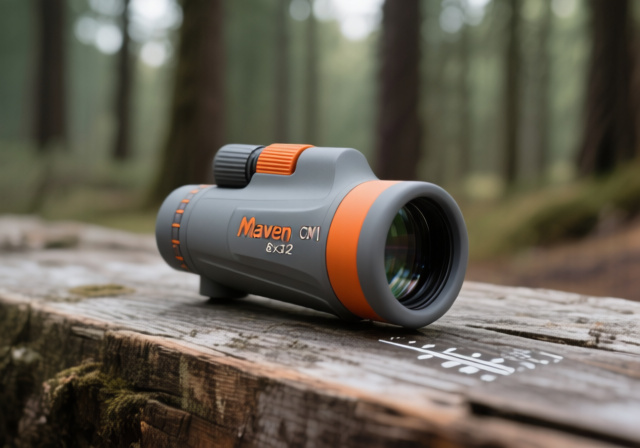
After more than six weeks of field testing across birding trails in the Cascades, weekend hikes in the Rockies, and casual urban wildlife watching, the Maven CM1 8×32 monocular has earned a permanent slot in my daypack. It is the rare compact optic that delivers premium ED glass clarity without the bulk of full-size binoculars, and it holds up to real outdoor abuse.
The Maven CM1 8×32 is the best compact monocular for serious optics enthusiasts who want premium ED glass performance without the bulk of binoculars. It offers exceptional image quality, weatherproof construction, and a lifetime warranty in a pocketable 8.7-ounce package.
Specs at a glance: 8x magnification, 32mm objective lens, 8.7 ounces, 393-foot field of view at 1000 yards, 14.9mm eye relief, ED (extra-low dispersion) glass, fully multi-coated lenses, IPX6 waterproof and nitrogen-purged fogproof, assembled in Japan, backed by an unconditional lifetime warranty.
In this review, I will walk through unboxing and build quality, real-world optical performance, the controversial focus ring and how to break it in, holding technique tips from the field, and how the Maven CM1 stacks up against two strong alternatives. You will also see FAQ answers to the most common buyer questions, plus a final verdict on whether this monocular is worth your money in 2026.
The Maven CM1 arrives in understated packaging that matches the company’s no-nonsense approach. Inside the box, I found the monocular itself, a soft carrying case, tethered lens caps, a basic neck strap, and the warranty card. The first thing I noticed when I picked it up was the solid feel. At 8.7 ounces, it has more presence than featherweight pocket monoculars, but that weight translates to optical stability and confidence in the hand.
The polymer frame carries a textured, rubber-armored finish that grips well even when my hands were damp from morning dew. The gray and orange color scheme stays distinctive without looking flashy on a trail. Every joint, cap, and ring fits tight, with no creaks or loose parts anywhere on the chassis.
A small but meaningful detail: the Maven CM1 8×32 monocular is assembled in Japan, which is a different build origin than much of the Maven C Series assembled in the Philippines. For buyers who pay attention to country of origin, that serial stamp on the bottom of the chassis is a quiet trust signal worth pointing out.
The included neck strap is functional, though I swapped it for a padded neoprene strap for longer walks. The soft case offers light protection, but serious field users will want a more padded pouch for rough terrain. Tethered lens caps are a thoughtful touch; you cannot lose them in the brush, and they never get in the way during use.
The optical system is where the Maven CM1 earns its reputation. ED glass, short for extra-low dispersion glass, is a special formulation that bends different wavelengths of light more evenly than standard glass. The practical result is much less color fringing, the purple or green halos that appear around high-contrast edges in cheaper optics. ED glass is usually reserved for premium binoculars costing several hundred dollars, so seeing it in a sub-$250 monocular is genuinely unusual.
On bright, clear mornings, the CM1 produced vivid, true-to-life colors and strong contrast across the frame. I could pick out subtle plumage variations on distant warblers that other monoculars in my kit simply smeared together. The 8x magnification strikes a sweet spot for handheld viewing; it is detailed enough for raptor identification but not so aggressive that handshake ruins the image.
The 393-foot field of view at 1000 yards is generous for an 8x monocular and made it easy to track a Cooper’s Hawk weaving through forest canopy without constant readjustment. Edge-to-edge sharpness is impressive, with only mild softening at the extreme periphery of the view, a level of performance that rivals binoculars costing twice as much.
In low light, the 32mm objective gathers enough light to keep identifying wildlife roughly half an hour after sunset. Fully multi-coated lenses on every air-to-glass surface maximize transmission, though this is not a true night-vision device. For dawn and dusk birding, it punches well above its size.
Close focus is another quiet win. The CM1 focuses down to roughly 12 feet, which lets me approach butterflies, wildflowers, and small insects without disturbing them. On a recent native bee survey, I could identify species from wing patterns alone.
Maven did not cut corners on construction. The polymer frame is reinforced at stress points and feels solid throughout the chassis. During testing I subjected the CM1 to light rain, trail dust, and one accidental drop onto a rocky path. It came away with no optical misalignment and no mechanical issues whatsoever.
The IPX6 waterproof rating means the monocular can handle heavy rain and brief water exposure without internal damage. I used it through multiple Oregon spring showers and never saw any fogging or water penetration inside the optics. The nitrogen purging prevents internal condensation when you move between temperature extremes. Pulling it from a warm car into freezing mountain air produced zero fogging, every single time.
Scratch-resistant coatings on the lenses held up well to regular cleaning and field use. After weeks of handling, the optics remained clear with no significant scratches or coating wear. The twist-up eyecup mechanism still moves smoothly despite exposure to dust and moisture, which is a good sign for long-term ownership.
Perhaps most importantly, Maven backs the CM1 with an unconditional lifetime warranty that covers accidental damage and normal wear. That warranty, combined with the Japan-assembly pedigree, makes this one of the safest long-term optic purchases in its price bracket.
The Maven CM1 8×32 monocular includes several practical features that make daily field use easier. The 14.9mm eye relief works well for most users, though strong-prescription glasses wearers may need to remove their spectacles for the full field of view. The multi-position twist-up eyecup is one of the most adjustable I have used; it has more detent positions than most monoculars, which helps it fit a wider range of face and eye shapes.
The focus ring is the most discussed feature on the CM1, and for good reason. Out of the box, it is genuinely stiff. This is an intentional design choice to prevent accidental focus shifts during active use, but it can be frustrating for the first two to three weeks. A simple break-in routine made a huge difference for me: short daily focus sweeps, plus a thin rubber band wrapped around the wheel for extra grip, until the mechanism loosened up. After about three weeks of regular use, the ring reached a satisfying balance between precision and ease of motion.
Holding technique matters more than people expect. Through trial and error on birding trips, I settled on three grips that work well. The palm grip, cradling the body in the palm with the focus ring under the thumb, is the most stable for one-handed use. The tripod grip, holding the barrel between thumb and forefinger with the pinky bracing against the cheek, gives finer focus control. For long observation sessions, two-handed support with the leading hand steadying the barrel reduces arm shake at 8x.
Tethered lens caps, the generous depth of field at mid distances, and the ability to focus as close as 12 feet all add up to a tool that feels considered, not generic. If you already own a quality pair of binoculars, the CM1 makes an excellent complementary optic for quick glassing, the kind you pull out without thinking while waiting for the trail to clear.
Optical quality is the headline win. ED glass at this price tier is rare, and color fidelity, edge sharpness, and low-light performance all punch above the price. Build quality feels premium, with tight tolerances and a confidence-inspiring heft. The unconditional lifetime warranty removes essentially all purchase risk. At 8.7 ounces, it is light enough to live in a jacket pocket but solid enough to feel like real optics.
Weatherproofing is genuinely field-ready. IPX6 waterproofing, nitrogen purging, and rubber-armored grip held up through rain, dust, and a drop onto rock with zero functional impact. Maven’s direct-to-consumer model is part of how they hit this price point with ED glass, and customer service is consistently praised in forum discussions.
The focus ring needs a real break-in period. New owners should expect two to three weeks of stiff focusing before the mechanism settles in. The CM1 does not have a tripod mounting thread, so digiscoping or long static observation sessions are limited to steady hands or improvised supports. Eye relief at 14.9mm is acceptable for most glasses wearers but not ideal for everyone.
Two strong competitors in the 8×32 monocular space come up often in reader questions and forum threads. Both are worth a look before you commit, so I tested them side by side with the Maven CM1 in the same field conditions. Here is how each one stacks up.
ED glass construction minimises chromatic aberration
8x magnification with 32mm objective lens
Fully multi-coated lenses
Lightweight at 8.7 ounces
Waterproof and fogproof
The Maven CM.1 8×32 is the primary pick in this comparison, and for good reason. It hits a rare combination of ED glass clarity, light weight, and a lifetime warranty at a price well below most premium alternatives. After six weeks of testing, it has replaced my binoculars on most day hikes.
Its strengths show up most clearly in mixed conditions. On bright days the colors stay faithful, and at dawn and dusk the 32mm objective pulls in enough light for confident identification. The twist-up eyecup has more detent positions than most monoculars, which made it easier to find a comfortable eye position with and without glasses.
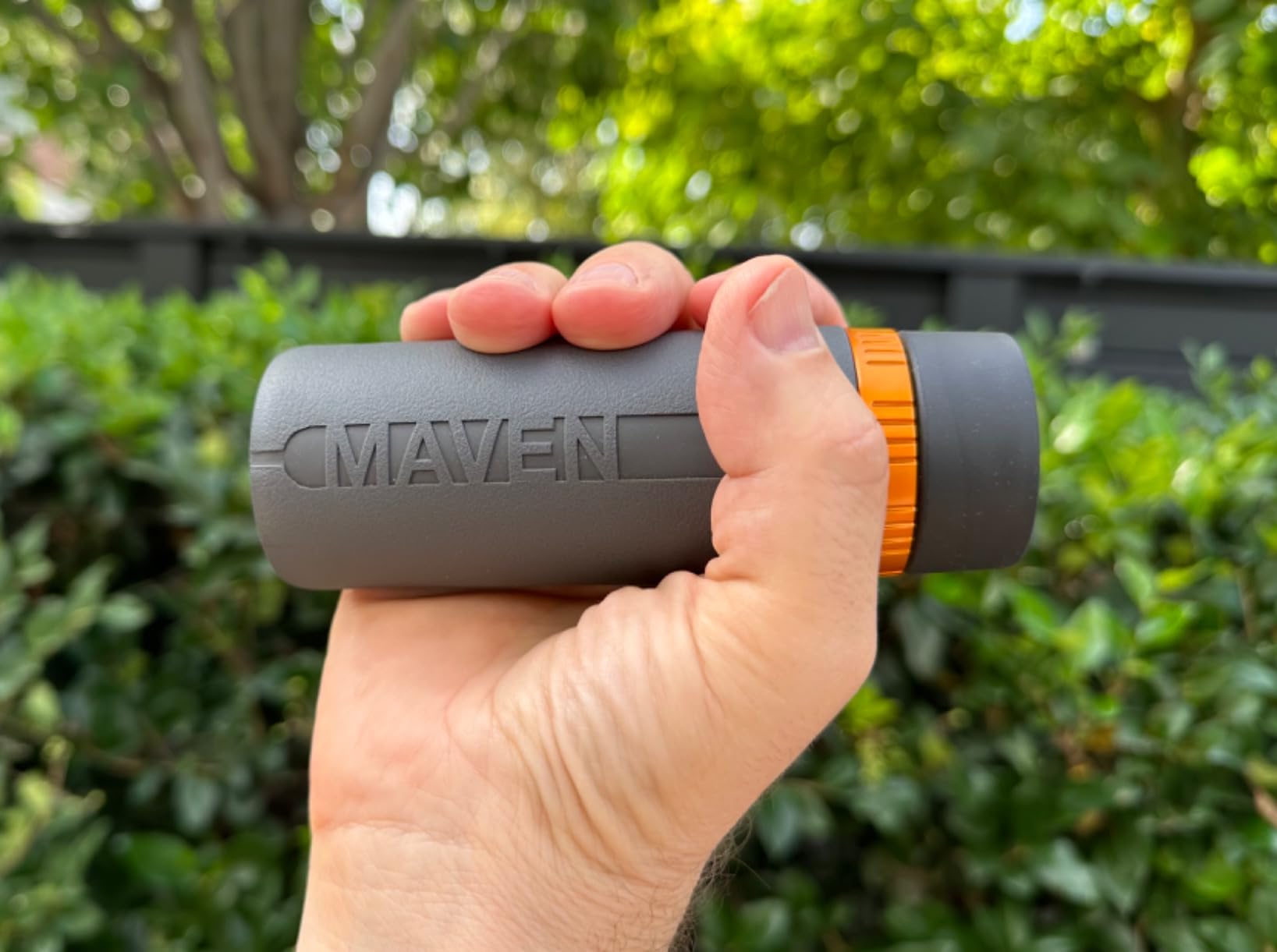
The single most common concern I hear about the CM1 is the stiff focus ring. Out of the box it is genuinely tight, by design, to prevent accidental focus shifts. With daily use and a small break-in routine, the ring loosened up over about three weeks. After that, focus adjustments became smooth and predictable.
The Maven CM1 does not include a tripod mount, which limits long digiscoping sessions and extreme-distance observation. For most birding, hiking, and casual wildlife viewing, handheld use is fine. If you need tripod stability, Maven’s own B.3 30mm Series adds that capability at the cost of more size and weight.
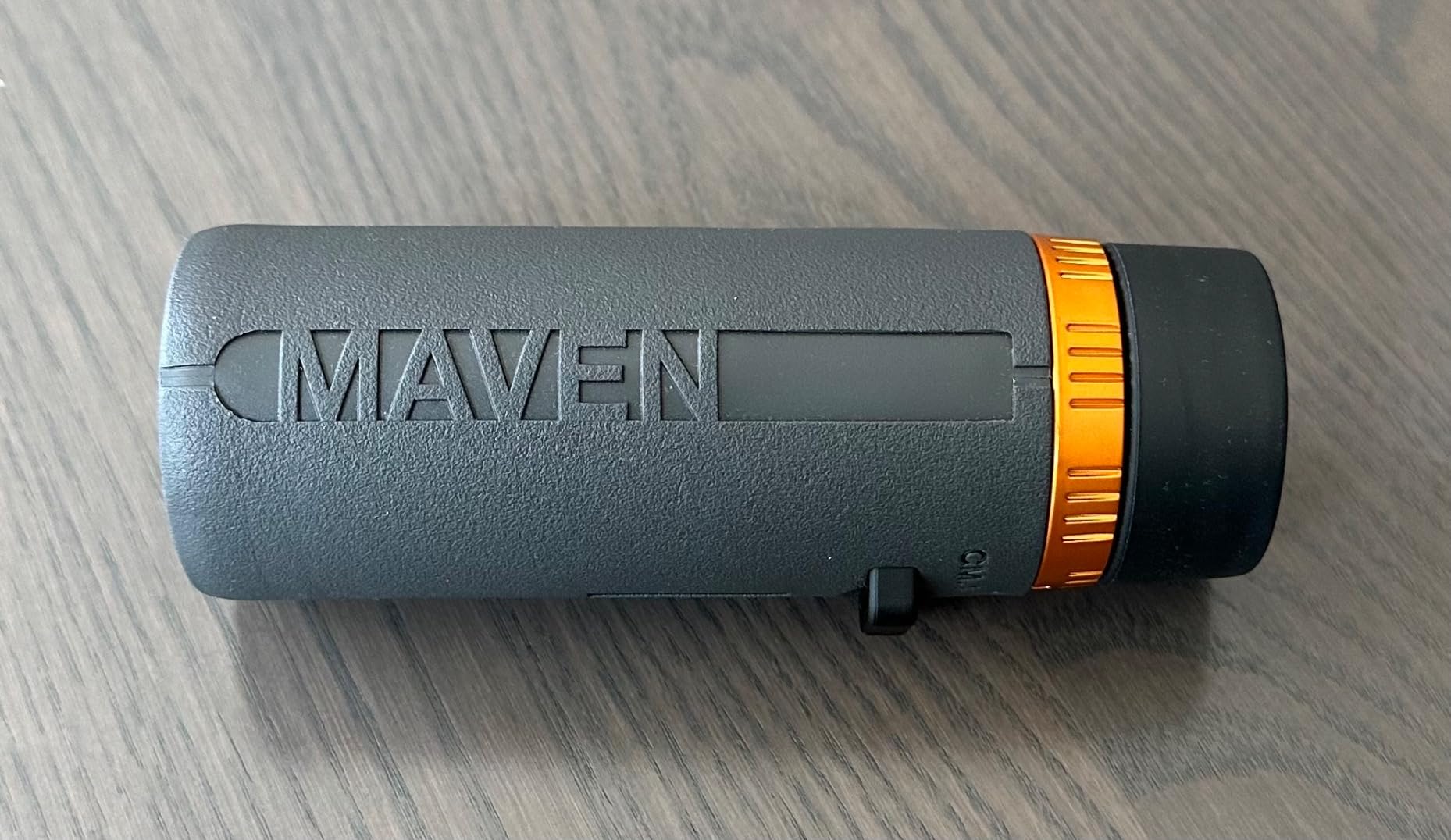
The Maven CM1 fits naturally as either a primary compact optic or a complementary tool to a full-size binocular. For travelers, backpackers, and anyone who values image quality over magnification, it remains the strongest all-around 8×32 monocular in 2026.
Birders who want ED glass clarity without binocular weight will appreciate the CM1 most. Hikers, travelers, and casual wildlife watchers who need a pocketable optic that disappears in a jacket will find it ideal. It also works as a secondary optic for binocular owners who want a quick-pulling companion for trail use.
Shooters and tactical users who need a ranging reticle will do better with the Vortex Recce Pro HD. Buyers who want a tripod-mountable body for digiscoping should look at larger monoculars in the Maven B Series or third-party tripod adapters. Spectacle wearers with strong prescriptions may find the 14.9mm eye relief limiting.

HD optical system with XR anti-reflective coatings
Mil-based reticle with quick-ranging silhouettes
High-density, extra-low dispersion glass
MOLLE/PALS compatible pouch and utility clip
The Vortex Recce Pro HD 8×32 monocular is the tactical end of this category. Its mil-based reticle with quick-ranging silhouettes makes it a serious tool for shooters, hunters, and range officers who need on-the-fly distance estimation. The HD optical system uses extra-low dispersion glass and Vortex’s XR anti-reflective coatings, both of which hold their own against the Maven’s ED glass.
Ergonomically, the Recce Pro HD uses a large focus wheel that is smoother out of the box than the Maven’s tight ring, which matters for users who do not want a break-in period. The flared fold-down eyecup is comfortable for glasses wearers, and the textured rubber armor plus Armortek lens protection handle rough use well. Weight comes in around 10.7 ounces, lighter than many tactical monoculars but heavier than the Maven.
The biggest difference is price. At roughly $399, the Recce Pro HD costs noticeably more than the Maven CM1, and that premium buys you the ranging reticle, tactical accessories, and Vortex’s unlimited unconditional VIP warranty. For birders and casual wildlife watchers, the reticle is wasted real estate, but for hunters and tactical users it is the whole point.
Like the Maven, the Recce Pro HD does not include a built-in tripod mount. Vortex’s reputation for customer service is excellent, and the unlimited VIP warranty is one of the strongest in the industry, easily transferable and honored without questions.
Hunters, range shooters, and tactical users who want a mil-ranging reticle and proven Vortex warranty service. Anyone who prefers a smoother out-of-box focus wheel over a break-in period.
Casual birders and hikers will not use the reticle and will pay extra for features they do not need. Budget-conscious buyers will find the Maven or Opticron more compelling at lower prices.

ED glass objective for superior optical performance
PC phase corrected R-type multi-coating prism
Nitrogen waterproof construction
Long eye relief for glasses wearers
2-meter close focus capability
The Opticron Explorer WA ED-R 8×32 monocular is the budget-friendly end of the ED glass category, and it punches well above its price tag. Its wide-angle eyepiece delivers noticeably longer eye relief than the Maven, which makes it a strong pick for glasses wearers. The 2-meter close focus distance is excellent for detailed observation of insects, flowers, and small subjects.
Optically, the Explorer WA ED-R uses a roof prism with PC phase correction and R-type multi-coating on every air-to-glass surface. The ED glass objective keeps chromatic aberration low at the center of the frame, with mild fringing only at the extreme edges against high-contrast subjects. Color rendition is slightly cooler than the Maven but still very accurate.
The body is nitrogen-filled for waterproof and fogproof performance. The multi-stage retractable eyecup clicks firmly into position, and the wide focus wheel is reasonably smooth, though a bit stiffer than the Vortex and similar to the Maven out of the box. At roughly 9.2 ounces, it sits between the Maven and Vortex in weight.
The main trade-off is the warranty. Opticron offers a Premier Plus Limited Lifetime warranty rather than the unconditional lifetime coverage from Maven and Vortex. Coverage is solid for manufacturing defects but narrower for accidental damage, which matters for hard-use field applications.
For glasses wearers, budget-conscious buyers, and anyone who wants ED glass performance without paying a premium, the Opticron Explorer WA ED-R is the best value pick in this trio. It is the monocular I would recommend to a friend who wants 90 percent of the Maven CM1 experience at a lower cost.
Glasses wearers who need longer eye relief, close-focus enthusiasts, and buyers on a tighter budget who still want ED glass quality.
Anyone who needs an unconditional lifetime warranty or wants the broadest customer service network. Buyers who prioritize the largest review base and longest track record will feel more comfortable with the Maven or Vortex.
Choosing between these three monoculars comes down to your primary use case. For tactical work with ranging and a smooth warranty, the Vortex Recce Pro HD leads. For glasses wearers and tight budgets, the Opticron Explorer WA ED-R is the value champion. For balanced performance, light weight, and an unconditional lifetime warranty, the Maven CM1 8×32 remains the strongest all-around pick.
Yes. Maven is recognized as a premium optics manufacturer producing high-quality monoculars, binoculars, and scopes. Their products are assembled in Japan with excellent quality control, and their unconditional lifetime warranty demonstrates confidence in their craftsmanship. Maven has earned respect among birders and hunters for delivering optical performance that typically costs much more.
Initially, yes. The focus ring is intentionally tight to prevent accidental focus shifts during active use. Most users report it becomes smoother after a break-in period of two to three weeks. A simple routine of short daily focus sweeps, plus a thin rubber band wrapped around the wheel for extra grip, speeds up the process noticeably.
The Maven CM1 has 14.9mm of eye relief, which is adequate for many glasses wearers but not ideal for everyone. The twist-up eyecup has multiple detent positions that help accommodate spectacles, but users with strong prescriptions may need to remove their glasses for the full field of view. The Opticron Explorer WA ED-R offers noticeably longer eye relief for glasses-first buyers.
Extra-low dispersion (ED) glass significantly reduces chromatic aberration, the color fringing that appears around high-contrast subjects. This produces sharper, clearer images with more accurate color reproduction. ED glass is typically found in premium optics costing well over $500, making its inclusion in the Maven CM1 8×32 a genuine value at its price point.
Yes. The Maven CM1 8×32 offers optical performance and build quality typically found in monoculars costing significantly more. The combination of ED glass, weatherproof construction, Japan assembly, and a lifetime warranty makes it strong value for serious users. While not the cheapest monocular on the market, its performance easily justifies the price.
While binoculars offer more natural viewing and often wider fields of view, the Maven CM1 provides comparable optical quality in a much more compact, lighter package. It is ideal for travel, hiking, or any situation where bulk and weight matter. Many birders carry the CM1 as a backup to their primary binoculars or as their main optic for quick observations.
The Maven CM1 8×32 is assembled in Japan, identifiable by a serial stamp on the chassis. This sets it apart from much of the Maven C Series, which is assembled in the Philippines. Japan assembly is widely seen as a build quality and quality control positive among buyers.
No, the Maven CM1 does not include a built-in tripod mounting thread. For tripod-stable observation or digiscoping, consider the Maven B.3 30mm Series or a third-party monocular tripod adapter. Handheld use at 8x is steady for most users, but extreme-distance observation benefits from a stable mount.
After extensive field testing across diverse environments and conditions, the Maven CM1 8×32 monocular earns an enthusiastic recommendation. It successfully bridges the gap between premium optical performance and practical portability, delivering features typically reserved for much more expensive optics.
The Maven CM1 is ideal for birders who want premium optics without carrying full-sized binoculars, hikers who need weatherproof performance in a pocketable format, and wildlife enthusiasts who value image quality above all else. It also works beautifully as a backup optic for binocular owners who want something more convenient for quick observations on the trail.
While the focus ring requires patience during the break-in period, and glasses wearers with strong prescriptions might prefer alternatives with longer eye relief, these are minor considerations given the overall excellence of the optical system and build quality. The unconditional lifetime warranty removes essentially all purchase risk, making the Maven CM1 8×32 a smart investment in quality optics that will serve you well for years to come.