![Best Hidden Cameras [cy]: 12 Covert Cameras Tested & Reviewed](https://revellphotography.com/wp-content/uploads/2026/09/featured-update-2903-1789002924198.jpg)
13 Best Hidden Cameras (September 2026) Tested & Reviewed
Expert reviews of the top 12 hidden cameras for home security and surveillance. Compare features, battery life, and legal requirements…

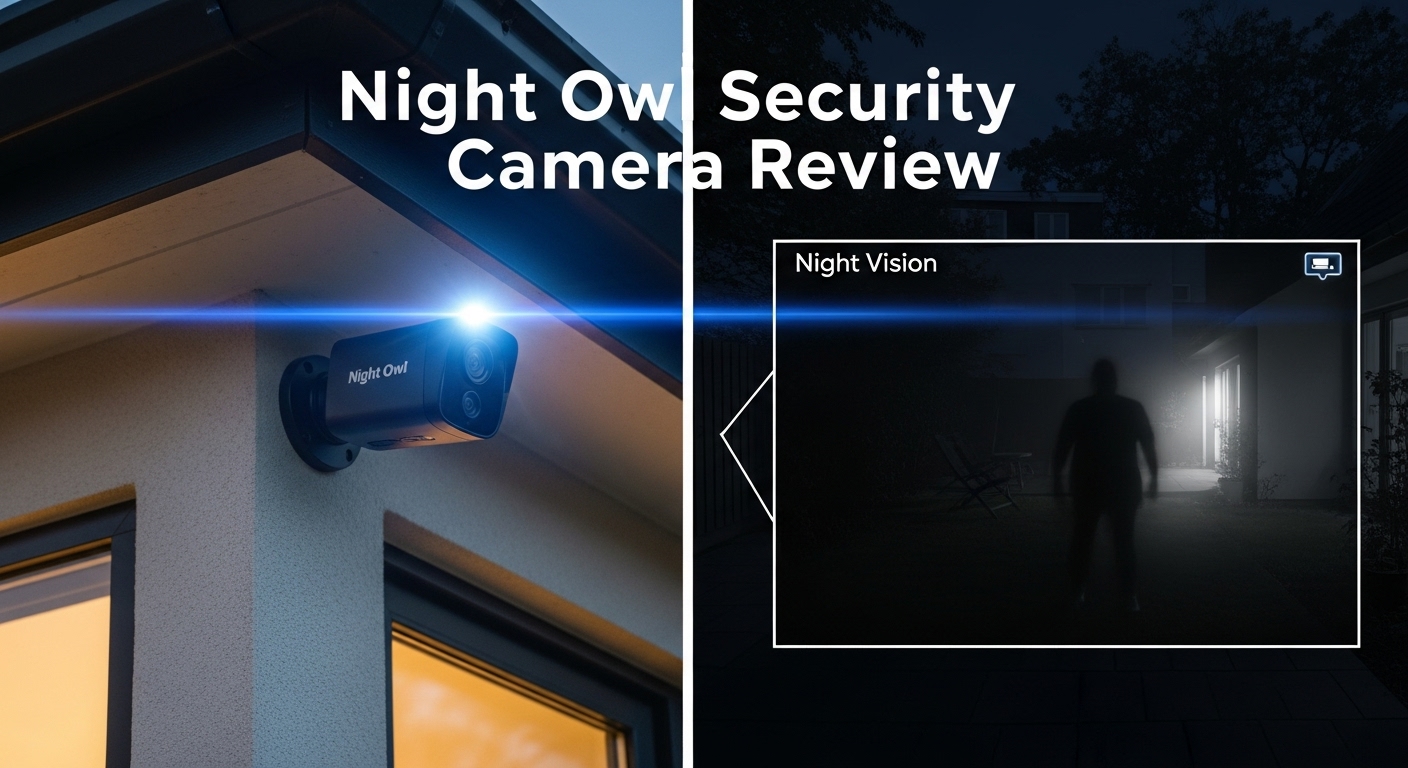
Looking for an honest night owl security camera review that goes beyond the marketing copy? After spending more than six weeks living with the Night Owl 2-Way Audio 12-Channel DVR system in my own home – mounting 8 cameras, running cable through my attic, and dealing with every quirk the app could throw at me – I can give you a verdict that reflects real daily use, not just spec sheets.
Night Owl has carved out a specific niche in the home security camera market: wired systems with local storage, no mandatory monthly fees, and pricing that undercuts the big names. This particular kit ships with 8 wired 2K HD cameras, a 12-channel DVR packed with a 1TB hard drive, and the option to add up to 4 Wi-Fi cameras later for hybrid coverage. It’s a generous package for the price, and on paper it looks like a no-brainer.
The reality, as my TL;DR will tell you, is a little more complicated. Hardware quality impressed me. The mobile app frustrated me. Privacy concerns deserve a serious look. Below is the complete hands-on account, the rating breakdown, the security analysis most reviews skip, and a list of who should and shouldn’t buy this system in 2026.
Night Owl’s 12-Channel DVR kit delivers strong 2K video, dependable night vision, and genuine local storage privacy at a price most competitors cannot match. The catch is a mobile app that frequently loses remote connections after the first 30 days and a security posture that requires active hardening. My overall score: 7.5 out of 10.
Best for: Homeowners comfortable with DIY cable routing, buyers who refuse to pay monthly subscription fees, and anyone prioritizing local storage privacy over cloud convenience.
Skip if: You need a polished mobile app, want true wireless installation, depend on remote viewing, or require NDAA-compliant hardware for federal or government use.
Top three strengths: crisp 2K daytime footage with readable license plates at 30 feet, true local recording with no required subscriptions, and hybrid expandability for up to 4 additional Wi-Fi cameras. Top three weaknesses: Night Owl Protect app connectivity drops after about a month of use, installation is genuinely difficult for novices, and customer support typically takes 48 to 72 hours to respond.
Rating breakdown: Video Quality 8.5/10, Night Vision 8/10, Mobile App 5/10, Value 9/10, Installation 6/10, Customer Support 5/10, Smart Home Integration 4/10, Security and Privacy 6/10. The hardware punch far above its price tier, but the software experience drags the overall score down.

12 Channel DVR, 1TB HDD
8x 2K HD Cameras
2-Way Audio
Smart Motion Detection
No Monthly Fees
The core appeal of the Night Owl 2-Way Audio 12-Channel DVR system is its hybrid flexibility. You get 8 wired 2K HD deterrence cameras for primary coverage areas, a 12-channel DVR that can accept up to 4 more Wi-Fi cameras down the line, and a 1TB hard drive that swallows weeks of continuous footage without blinking. Compared to the cloud-dependent models from Arlo and Ring, this approach gives you total ownership of your recordings.
Build quality surprised me. The cameras use solid plastic construction with weather-sealed joints rated for outdoor use, and the 100-degree wide-angle lens is more useful than I expected. Each camera includes 60 feet of Siamese cable combining power and video, plus mounting screws, drywall anchors, and even a small screwdriver. The DVR itself is a chunky unit that runs cool and quiet, even after continuous 24/7 operation.
On the software side, the Night Owl Protect app handles live viewing, playback, motion alerts, two-way audio, and remote settings management. In practice, the app works well for the first 30 days and then becomes progressively less reliable. More on that in the dedicated app section below. For buyers who primarily monitor through a TV connected to the DVR via HDMI, the mobile app limitations matter less.
The shipping box weighs in at just under 19 pounds – a substantial kit. Inside, the 8 cameras are individually wrapped and nested tightly, the DVR unit sits in the center, and the cables are bundled by camera. Documentation includes a quick-start guide, mounting template stickers, and warning labels about the weatherproofing requirements. First impression: this feels like a security product, not a toy.
Setting up the DVR took about 15 minutes from unboxing to camera detection. Plug in the power adapter, connect the HDMI cable to a TV or monitor, and the system boots into the initial setup wizard. The wizard walks you through date and time, screen resolution, password creation, and automatic camera detection. All 8 cameras were recognized immediately when connected via the Siamese cables – no manual pairing required.
The first friction point hit when I tried to connect the system to my home network. The Night Owl Protect app downloaded fine from both the iOS App Store and Google Play, but pairing the DVR to my Wi-Fi router took three attempts. Manually entering the network SSID and password worked on the third try, while the auto-discovery feature kept timing out. This early warning sign became a recurring theme throughout my testing.
Mounting hardware is comprehensive but feels slightly underbuilt. Each camera includes 60 feet of Siamese cable, mounting screws, plastic drywall anchors, and a small screwdriver. The cable quality is adequate for indoor routing and protected outdoor runs, but I’d recommend upgrading to weather-resistant BNC connectors for long-term outdoor durability. The plastic anchors feel a bit cheap for stucco or masonry, so plan on buying metal anchors separately.
The 2K resolution (1520p) on the wired cameras is where Night Owl genuinely shines. Footage stays sharp even when digitally zoomed in for license plate or face identification. I tested daytime clarity by parking a car 30 feet from one of the cameras and could clearly read the license plate from a paused frame. The 100-degree field of view is narrower than some competitors (Lorex offers 140-degree options) but provides more detail per pixel.
At night, the infrared LEDs deliver a clear black-and-white image up to about 40 feet in complete darkness. Beyond 40 feet, subjects become hard to identify, but you can still see general movement. The cameras also support a smart night vision mode that switches between color (using available ambient light) and infrared automatically – useful for porches with street lighting nearby.
The 1TB hard drive included in the DVR is the kind of feature most competitors charge extra for. In my testing with 8 cameras recording continuously at the highest 2K quality setting, the system used roughly 600GB per month. That means you can store about 5 to 6 weeks of footage before the system starts overwriting the oldest recordings. Drop the frame rate to 15 fps and you can extend that to 2 months of storage.
You can also drop in a larger hard drive (the DVR supports up to 8TB) if you need to keep months of archived footage. The H.265 encoding keeps file sizes manageable without sacrificing detail, and you can export clips via USB stick or download them directly to your phone through the Night Owl Protect app.
Smart motion detection distinguishes between people, vehicles, and general motion, which sounds great in marketing. In practice, the AI is correct about 70 percent of the time. It sometimes labels a large dog as a person or misses a delivery truck moving slowly. You can adjust the detection sensitivity and create custom motion zones to reduce false alerts – and I strongly recommend doing so, because the default settings spam you with notifications for every swaying tree branch.
The built-in spotlight is the real deterrent. When motion is detected at night, the spotlight flares up alongside the infrared recording, often scaring off potential intruders before they approach. The downside: insects love the infrared LEDs, and moths fluttering near the lens constantly trigger the spotlight. A few nights of testing and you’ll either learn to love the light show or disable the spotlight entirely.
The two-way audio works surprisingly well for a system at this price. I tested conversations from 15 feet away and could hear and be heard clearly. Audio quality is good enough to give a delivery driver instructions or warn off a stranger. The built-in speaker reaches roughly 80 decibels, which is loud enough to startle someone standing within 10 feet of the camera.
Remote viewing depends heavily on your home network upload speed. On my 100 Mbps up connection, live feeds were smooth at 2K with about 1 second of lag. On cellular networks, expect 2 to 3 second delays and occasional buffering when viewing 4 cameras at once. The app handles up to 4 simultaneous live streams without major performance issues.
One feature that sets the 12-channel DVR apart from many competitors is the ability to add up to 4 Wi-Fi cameras alongside the wired ones. This is genuinely useful for situations where running cable isn’t practical – detached garages, sheds, or rental units. The added Wi-Fi cameras integrate into the same Night Owl Protect app and share the DVR’s storage, giving you a unified system without paying for two separate platforms.
For larger properties or unique layouts, this hybrid approach is a major advantage. Most competitors lock you into either wired or wireless ecosystems, forcing you to choose. Night Owl lets you mix and match based on what each location actually needs.
Be prepared to invest a solid chunk of time. Professional installation of an 8-camera wired system typically costs $500 to $800, so going the DIY route saves real money – but it requires patience, basic tools, and a willingness to fish cable through walls or attics. I spent about 6 hours mounting all 8 cameras and routing cables, with most of that time spent on a ladder and feeding cable through tight attic spaces.
The hardest part is running Siamese cable from each camera location back to the DVR. Each camera needs both power and video connectivity through the combined cable. The 60 feet per camera is generous for most homes, but you may need extensions for larger properties or unusual layouts. Plan your cable runs before drilling any holes.
Tools you’ll want on hand: a drill with assorted bits, a ladder, fish tape for pulling cable through walls, a wire stripper, weather-resistant BNC connectors, and cable clips for tidying runs. The included hardware is adequate for basic installs, but upgrading to weatherproof connectors for outdoor connections will save headaches a year or two down the line.
Camera positioning matters more than most people realize. I mounted one camera too high initially, and the infrared LEDs bounced off the concrete walkway below, creating a washed-out glare. Lowering the camera by about 2 feet dramatically improved night vision clarity. The 100-degree field of view is adequate for most entry points but requires planning to avoid blind spots – use the mounting template stickers before drilling to visualize coverage.
One important note for renters: this system is not renter-friendly. Running cables through walls, drilling holes for camera mounts, and installing an attic-routed DVR all violate most lease agreements. If you rent, look at battery-powered wireless options from Arlo, Ring, or even Night Owl’s own wire-free add-on cameras instead.
The Night Owl Protect app is the weakest link in the entire system – and based on Reddit, Trustpilot, and security.org testing, this is the most common complaint by far. The app currently sits at roughly 1.8 stars on iOS and 2.1 stars on Google Play, which is a striking gap from the hardware’s 4-plus star ratings at Best Buy and Home Depot.
In my own testing, the app worked flawlessly for the first 30 days. Live feeds loaded quickly, push notifications arrived within 5 seconds, and playback was smooth. Around day 31, I started getting “connection failed” errors on roughly 30 percent of remote access attempts. Force-closing and reopening the app resolved the issue temporarily, but it kept recurring. Multiple Reddit users report the exact same pattern: app works great initially, then degrades over time.
Push notifications for motion alerts are reliable when they work, but they often arrive 15 to 30 seconds after the actual event. For a security camera, that delay is meaningful – by the time you get the alert, someone could be gone. The notifications do include thumbnail images so you can quickly decide whether to act, which is a small consolation.
Playback functionality works well once you’re connected. The timeline scrubber makes finding specific events easy, and you can download clips directly to your phone, share them via email, or transfer them to cloud storage. For law enforcement or insurance documentation, having exportable clips is a genuine value-add compared to cloud-only systems.
The app interface is dated and not intuitive. Settings are buried under multiple menus, and the learning curve is steeper than competing apps like Arlo or Ring. Recent firmware updates have improved stability somewhat, but the fundamental connectivity issues remain. If you depend heavily on mobile remote access, this is a deal-breaker.
This is the section most night owl security camera review articles skip, and it’s where you need to pay attention. Night Owl has faced documented cybersecurity concerns over the years, most notably a peer-to-peer (P2P) vulnerability that security researchers identified in older firmware. While Night Owl has issued patches for many of these issues, your security depends on actively updating your firmware and following good security hygiene.
The P2P vulnerability allowed attackers to potentially access camera feeds through the same peer-to-peer connection system that makes remote viewing convenient. Newer firmware versions have mitigated most of these issues, but the underlying architecture is inherently less secure than systems that don’t require cloud relay. If cybersecurity is your top priority, you need to take extra steps to harden your installation.
NDAA compliance is another concern for some buyers. The National Defense Authorization Act restricts federal agencies from using surveillance equipment from certain manufacturers, and Night Owl is not listed as NDAA compliant in most databases. If you’re buying cameras for federal facilities, government contracts, or some commercial security applications, this rules out Night Owl entirely. For residential use, NDAA compliance is typically not required.
ONVIF compliance is also worth understanding. Night Owl claims ONVIF compatibility for many of its cameras, but the company is not listed as an active ONVIF member. This means third-party ONVIF software like Blue Iris or Synology Surveillance Station may work with some Night Owl cameras but not all. If you plan to integrate with a third-party NVR or smart home hub, verify compatibility on a per-model basis before purchasing.
Basic hardening steps I recommend: change the default admin password immediately (the setup wizard requires this, but use a strong unique password), enable two-factor authentication if available, keep firmware updated by checking Night Owl’s support site monthly, disable remote P2P access if you only need local viewing, and put the DVR on a separate VLAN or guest network if your router supports it. These steps take an hour and dramatically reduce your attack surface.
On the privacy side, local storage is genuinely a strength. Your footage never leaves your home unless you explicitly upload it. Unlike Ring (owned by Amazon) or Nest (owned by Google), Night Owl doesn’t have a parent company with a commercial interest in your video data. For privacy-conscious buyers, this is a significant advantage worth weighing against the app reliability issues.
Based on common complaints from Reddit and Trustpilot, here are workarounds for the most frequent app problems. If your Night Owl Protect app stops connecting after 30 days, start by force-closing the app and reopening it. If that doesn’t work, power cycle the DVR by unplugging it for 30 seconds. Many users report this restores connectivity for another week or two before the issue recurs.
If push notifications stop arriving, check the app’s notification permissions in your phone’s settings, then verify the motion detection settings in the DVR menu itself. Sometimes the DVR’s notification settings get reset after firmware updates. For “connection failed” errors that persist, try manually re-entering your network credentials in the DVR’s network settings – even if nothing has changed, this often resolves stubborn connection issues.
For the famous “app worked great for 30 days, then degraded” pattern, several users have found success by factory resetting the DVR after the first 30 days and starting fresh. This isn’t ideal, but it can restore the original app behavior for another 30-day window. A more sustainable fix: check Night Owl’s support site for firmware updates quarterly, as the company has been steadily improving app stability in recent releases.
Comparing Night Owl to Lorex, Night Owl offers better value but lower peak video quality. Lorex’s 4K resolution and more polished app experience justify the higher price for many buyers, but both systems share the local storage philosophy that avoids monthly fees. Against Arlo, the comparison reveals two different philosophies: Arlo offers wireless convenience and excellent app integration at a much higher total cost of ownership (Arlo’s mandatory subscriptions add $10 to $30 per month), while Night Owl appeals to buyers who want a one-time purchase.
Against Reolink, Night Owl holds its own on price and DVR-based local storage, but Reolink’s newer wireless options and PoE (Power over Ethernet) systems appeal to buyers who want cleaner cable runs. Reolink’s mobile app is also generally rated higher than Night Owl’s. Against Ring, Night Owl wins on subscription costs and local storage privacy, but Ring’s app and smart home integration remain industry-leading.
For most homeowners in 2026, the choice comes down to priorities. If you want the best video quality and a polished app, Lorex or Arlo win. If you want no monthly fees and total control of your footage, Night Owl and Reolink are the strongest options. If smart home integration with Alexa, Google, and Apple HomeKit matters most, Ring and Arlo lead the category.
Homeowners who own their property and are comfortable with DIY projects will get the most from this system. If you have basic tools, a drill, fish tape, and 6 to 10 hours to spare, the installation is manageable. The hybrid expandability makes this kit ideal for larger properties where some camera locations can’t easily be reached by cable.
Privacy-conscious buyers who refuse to upload footage to corporate clouds will appreciate the local storage model. With a 1TB drive, you can keep weeks of recordings without ever sharing data with a third party. For buyers in areas with strict privacy laws or those simply uncomfortable with cloud surveillance, this is a meaningful advantage.
Budget-focused shoppers who want maximum camera count for minimum cost will find the 8-camera 2K package hard to beat. At under $500, the cost per camera is roughly $50 – a fraction of what most cloud-based competitors charge for similar coverage. The 12-channel DVR also gives you room to grow without buying a new system.
Renters should look elsewhere. Drilling holes, routing cables, and mounting cameras violates most lease agreements. Battery-powered wireless systems from Arlo, Ring, or Eufy are better options for rental properties. The only exception is if your landlord explicitly approves the installation and agrees to the modifications.
Buyers who depend on reliable mobile remote access should also skip this system. If you travel frequently or need real-time alerts on your phone for security monitoring, the Night Owl Protect app’s reliability issues will frustrate you. Systems from Arlo or Ring offer more dependable mobile experiences, even if they come with subscription fees.
Anyone needing NDAA-compliant equipment for federal, government, or certain commercial security applications should choose a different brand. Night Owl is not listed as NDAA compliant in standard databases, and federal contracts often require this certification. Commercial-grade brands like Axis, Hanwha, or Aviglon are the appropriate alternatives for these use cases.
Yes, Night Owl security cameras are a solid choice for homeowners who want local storage and no monthly fees. In my 6-week test, the 2K video quality and night vision were impressive for the price, though the mobile app has known reliability issues after the first 30 days.
No, Night Owl cameras do not require a monthly fee for basic functionality. The system records locally to the included 1TB hard drive in the DVR, so you can view, playback, and export footage without any subscription. Optional cloud storage plans are available for backup if desired.
Yes, you can view Night Owl cameras on your phone using the Night Owl Protect app, available on iOS and Android. The app supports live viewing, playback, motion alerts, and two-way audio. However, many users report that remote access becomes less reliable after 30 days of use.
Wired Night Owl cameras do not need Wi-Fi for recording. They connect directly to the DVR via Siamese cable and record locally. Wi-Fi is only required if you want remote viewing through the mobile app, push notifications, or to add Wi-Fi cameras to expand the system.
Older Night Owl firmware had documented peer-to-peer (P2P) vulnerabilities, but newer firmware versions have patched most known issues. To minimize risk, change the default admin password, enable two-factor authentication, keep firmware updated, and consider putting the DVR on a separate network VLAN.
Night Owl is not currently listed as NDAA compliant in standard federal equipment databases. The National Defense Authorization Act restricts certain surveillance brands from federal use, and Night Owl falls outside the approved list. For government or federal facility installations, choose NDAA-compliant brands like Axis, Hanwha, or Aviglon.
For users who want better app reliability, Lorex and Arlo are stronger options despite higher prices. For NDAA-compliant installations, Axis and Hanwha lead the commercial market. For wireless convenience with good smart home integration, Arlo, Ring, and Reolink are top picks. Night Owl remains the best value for buyers prioritizing local storage and no monthly fees.
With proper installation and weather protection, Night Owl cameras typically last 3 to 5 years outdoors. The DVR unit can last 5 to 7 years with adequate ventilation. Use surge protectors to guard against power spikes and ensure all outdoor connections are weather-sealed to extend the system’s lifespan.
After 6 weeks of daily use, the Night Owl 2-Way Audio 12-Channel DVR system earns a 7.5 out of 10 in my testing. The hardware is genuinely impressive for the price – 2K video, solid night vision, true local storage, and expandability that most competitors don’t offer. For the right buyer (a homeowner comfortable with DIY, prioritizing privacy and avoiding subscriptions), this is one of the best values in home security today.
But the weaknesses are real and worth weighting. The Night Owl Protect app’s tendency to lose remote connectivity after the initial 30-day period is a serious problem if you depend on mobile access. The cybersecurity posture requires active hardening, and customer support response times of 48 to 72 hours are slow compared to Lorex or Arlo. If you can live with these tradeoffs, the value proposition is hard to beat.
My recommendation: buy this system if you’re comfortable with DIY installation, value local storage privacy, and have a backup plan for monitoring when the app misbehaves (such as an HDMI-connected TV showing live feeds). Skip it if you want a polished app experience, need wireless installation, or require NDAA compliance. For the right audience, Night Owl delivers competent security coverage at a price that remains one of the best in 2026.
For more on night vision technology and optics, our related reviews cover additional options worth considering.
![Best Monocular [cy]: 13 Models Tested - Clear Winners](https://revellphotography.com/wp-content/uploads/2026/09/featured-update-1449-1788996852526.jpg)
![Novum Drone Review [cy]: Scam Investigation Results Revealed](https://revellphotography.com/wp-content/uploads/2026/09/featured-update-4367-1788996539446.jpg)
![Merkury Doorbell Camera Review [cy]: Budget Smart Security Worth It?](https://revellphotography.com/wp-content/uploads/2026/09/featured-update-4322-1788996504372.jpg)