ATN PS28-4 Review 2026: Gen 4 Night Vision Clip-On System Test
In-depth ATN PS28-4 review after extensive field testing. Discover if this Gen 4 night vision clip-on system delivers premium performance…

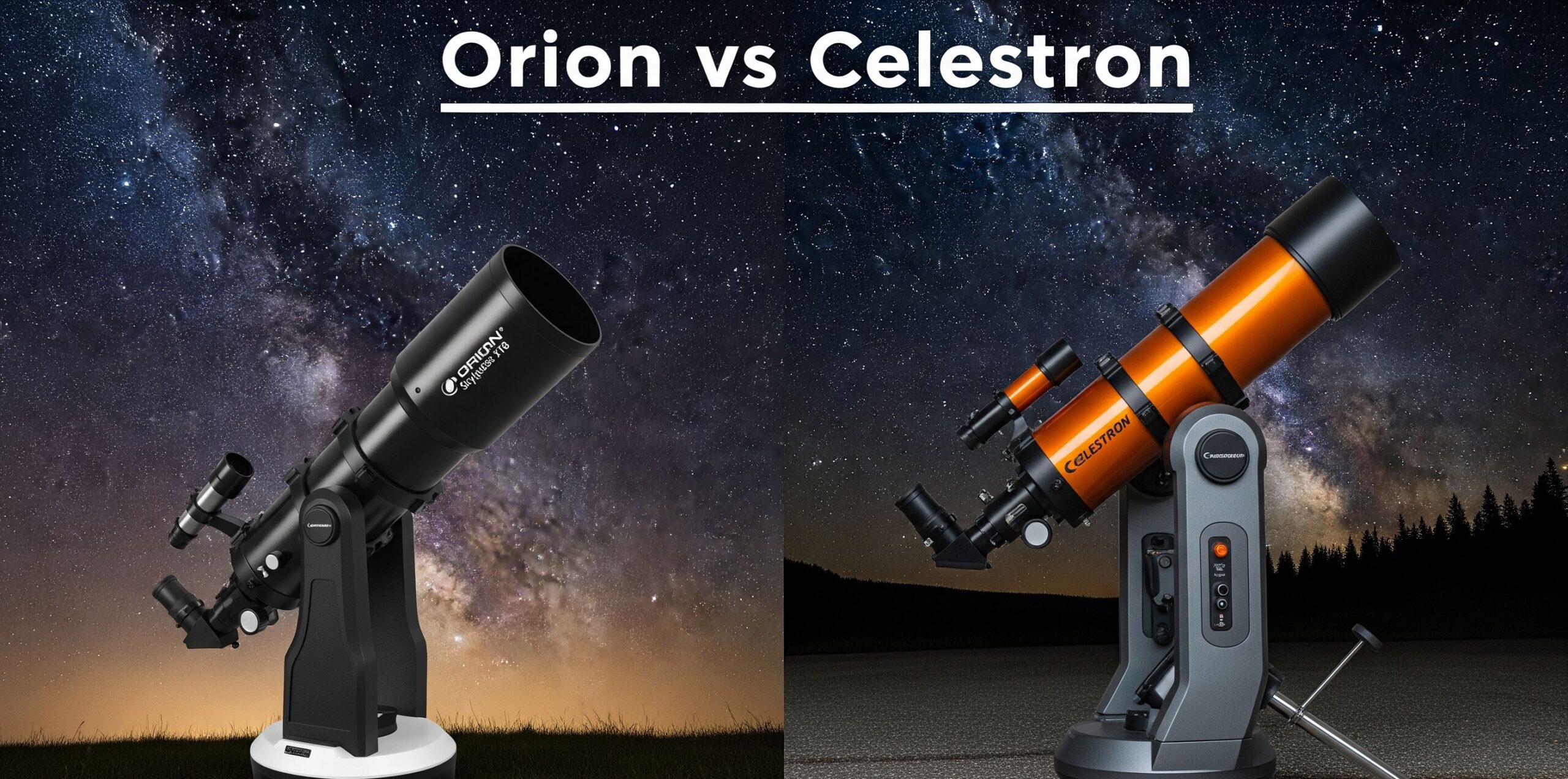
The amateur astronomy landscape shifted dramatically in mid-2024 when Orion Telescopes, a brand that served stargazers for nearly five decades, announced the cessation of its operations. This closure left a significant void in the telescope market, particularly for astronomers who valued the company’s philosophy of maximum aperture per dollar and straightforward, manually-operated instruments. For anyone comparing Orion vs Celestron telescopes in 2026, the decision now carries different weight than it did just two years ago. Celestron remains the dominant player in the consumer telescope space, while Orion’s legacy lives on through thousands of well-built instruments now circulating in the used market. Understanding how these two companies diverged, where they excelled, and what options remain available will help you make an informed choice for your astronomical journey.
If you need a quick overview before diving into detailed analysis, this side-by-side comparison highlights the key differences between these two historic telescope manufacturers.
| Feature | Orion | Celestron |
|---|---|---|
| Company Status | Ceased operations July 2024 | Active (established 1964) |
| Headquarters | Santa Cruz, California (closed) | Torrance, California |
| Warranty | 1-year (no longer honored) | 2-year (transferable on some models) |
| Primary Specialty | Dobsonian reflectors | Schmidt-Cassegrain telescopes |
| Technology Approach | Manual push-to systems | Computerized GoTo systems |
| Entry-Level Options | Used market only | StarSense Explorer series |
| Mid-Range Sweet Spot | SkyQuest XT series (used) | NexStar SE series |
| Advanced Offerings | Etonoma, apochromatic refractors (used) | EdgeHD, Advanced VX, CPC |
| Best For | Maximum aperture value, simplicity | Portability, astrophotography, tech features |
| Price Range | $50-$3,000+ (used only now) | $100-$15,000+ |
Note: Orion Telescopes ceased operations in July 2024. While their products remain excellent choices on the used market, new purchases and warranty support are no longer available. Celestron continues serving astronomers with comprehensive product lines and ongoing development.
Choosing between these two historic telescope brands requires understanding not just what they offered, but how the landscape has shifted since Orion’s closure. The debate among astronomy enthusiasts has evolved from “which should I buy new?” to “where should I look, and what should I consider?” This buyer’s guide will walk you through the key decision factors in 2026.
Before examining specific models, consider what you want to observe. Planetary observers often gravitate toward Celestron’s Schmidt-Cassegrain designs, which excel at high magnification views of Jupiter’s cloud bands and Saturn’s rings. Their longer focal ratios produce higher contrast for planetary detail, and the compact optical tube makes them practical for balcony astronomers or those with limited storage space.
Deep-sky enthusiasts traditionally preferred Orion’s large-aperture Dobsonians, which gather more light for viewing faint galaxies and nebulae. The larger the primary mirror, the more light your telescope collects, revealing ever fainter objects in the cosmos. In 2026, many astronomers find themselves choosing based on whether they prioritize portability (Celestron’s compact SCTs) or maximum aperture per dollar (Orion Dobsonians available used).
Astrophotographers face yet another set of considerations. Celestron’s German equatorial mounts and EdgeHD optics provide the flat field and precise tracking required for long-exposure deep-sky imaging. Orion’s Dobsonians, while excellent for visual observation, were not designed with astrophotography in mind due to their alt-azimuth mounts. If you’re serious about photographing nebulae and galaxies, Celestron’s integration of optical quality and mount stability makes them the more practical choice in 2026.
Celestron pioneered computerized GoTo technology in consumer telescopes, making their NexStar series incredibly popular among beginners who want to find objects quickly. Their SkyAlign technology lets you align the telescope using any three bright objects – you don’t even need to know their names. The telescope’s database contains tens of thousands of celestial objects, and the motors automatically point the instrument toward your chosen target.
Orion focused more on manual “push-to” systems like IntelliScope, which guide you to objects without motors. This approach appealed to purists who enjoy the hunt but still want assistance locating challenging targets. Instead of motors, IntelliScope used a small computer that calculated positions based on encoder readings from the altitude and azimuth bearings. The experience felt more hands-on while still providing useful guidance.
The smartphone revolution has also changed the game. Celestron’s StarSense Explorer series uses your phone’s camera and specialized app to analyze the sky and provide guided navigation. This approach combines the intelligence of traditional GoTo with the accessibility of modern mobile technology. Meanwhile, smart telescopes from companies like Unistellar and even Celestron’s own Origin have pushed the boundaries further, offering entirely app-controlled experiences with image enhancement built in.
Both brands built their reputations on solid construction, though with different philosophies. Orion’s Dobsonians featured simple, robust designs with minimal electronics to fail. Their XT series became legendary for reliability – many units from the 1990s still perform flawlessly today. The wood or molded plastic base, cardboard or steel tube construction prioritized function over form, resulting in instruments that could withstand years of use.
Celestron’s computerized models incorporate more technology, which means more potential failure points but also more features. Their optical quality, particularly in the NexStar SE series, remains consistently excellent across production runs. The fork-mounted design of many Celestron SCTs provides good stability, though the motorized altitude and azimuth adjustments require power to operate.
Maintenance represents another consideration. Orion’s simpler designs were easier to collimate (align the mirrors) and required minimal ongoing care. Celestron’s Schmidt-Cassegrain designs occasionally need collimation adjustments as well, though the process is generally straightforward. For astrophotographers, the tracking accuracy of Celestron’s equatorial mounts far exceeds what manual Dobsonians can provide, making the additional complexity worthwhile.
The models discussed below represent what were considered the flagship offerings from each brand. Since Orion has closed, these comparisons now serve primarily as educational references for understanding the different philosophies each company pursued. For Orion products, the recommendation has shifted to “buy used if you know what to look for.” For Celestron, these same categories represent actively supported product lines that continue to evolve in 2026.
The Orion SkyQuest XT8 Classic Dobsonian and Celestron NexStar 8SE represent fundamentally different approaches to amateur astronomy. Understanding what each offered helps frame your purchasing decisions in 2026, whether you’re considering a used XT8 or a new Celestron equivalent.
The Orion SkyQuest XT8 Classic Dobsonian delivered maximum aperture for your dollar with a simple, stable mount that required no power. Its 203mm mirror gathers 78% more light than 6-inch models, revealing intricate details in galaxies and resolving globular clusters into pinpoint stars. The f/5.9 focal ratio made it particularly effective for deep-sky observation, offering a wide field of view that suited nebulae and galaxy clusters well.
The Celestron NexStar 8SE takes a different approach, mounting the same 8-inch aperture in a compact Schmidt-Cassegrain design on a computerized fork mount. This telescope automatically locates and tracks over 40,000 celestial objects, making it ideal for those who want to spend more time observing and less time hunting. The f/10 focal ratio provides higher magnification potential for planetary observation, though the narrower field of view makes it less ideal for wide deep-sky sweeps.
Modern Alternatives: For buyers seeking the Orion experience today, Sky-Watcher’s 8-inch Dobsonian telescopes offer similar specifications with modern quality control. Apertura’s AD8 provides premium accessories bundled with the telescope, making it an attractive alternative for those who want the large-aperture Dobsonian experience without hunting for used gear.
What Users Say:
XT8 owners praised its rock-solid stability and bright views, though some found the manual operation limiting for photography. NexStar 8SE users loved the GoTo convenience but noted the need for power supply and occasional alignment issues. On forums like Reddit and Cloudy Nights, the consensus remains split: those who prioritize aperture and simplicity gravitate toward the Dobsonian philosophy, while those who value technology and versatility choose Celestron.
For beginners seeking technological assistance without breaking the bank, these models represented innovative solutions that lowered the barrier to entry for hobbyist astronomy. Both aimed to solve the same problem: helping newcomers find objects in the vast night sky without years of experience.
The Orion StarBlast 6i IntelliScope combined a 150mm tabletop reflector with a computerized object locator that guided you to targets using directional arrows – no motors required. The system calculated where the telescope needed to point based on encoder readings, and you simply pushed the telescope until the arrows indicated you were on target. This approach preserved the tactile experience of manual astronomy while adding helpful guidance.
Celestron’s StarSense Explorer DX 130AZ revolutionized beginner astronomy by using your smartphone as a real-time star chart. Simply dock your phone, launch the app, and follow the on-screen arrows to your target. The 130mm reflector provides sharp views while the technology makes finding objects incredibly intuitive. The smartphone integration means you get regular app updates with new features and object databases.
In 2026, Celestron continues developing the StarSense Explorer line, with the technology now available across multiple aperture sizes. The original 130AZ remains in production with updated companion apps. For those seeking Orion-like experiences, the Sky-Watcher Heritage 150mm tabletop Dobsonian offers similar size and portability, though without the computerized guidance system.
Moving up in aperture and capability, the 10-inch class represents the sweet spot for serious visual observers. The Orion SkyQuest XT10’s massive light grasp reveals subtle details invisible in smaller instruments – spiral arms in galaxies, intricate nebula structures, and countless stars in clusters. The Dobsonian mount keeps costs reasonable while maintaining stability that inspires confidence during observation sessions.
Celestron’s Advanced VX 8″ EdgeHD targets a different audience – those interested in astrophotography. The EdgeHD optics eliminate edge-of-field aberrations while the German equatorial mount provides precise tracking for long exposures. Though more complex to set up and operate, this combination opens doors to serious deep-sky imaging that the XT10 simply cannot support.
For 2026 buyers, the choice between these philosophies remains clear. Visual observers seeking maximum aperture should look at Sky-Watcher’s 10-inch Dobsonian offerings or Apertura’s AD10, which provide similar light-gathering capability with modern warranty support. Astrophotographers should consider Celestron’s Advanced VX or CPC lines with EdgeHD optics, which continue to represent the gold standard for amateur imaging setups under $5,000.
Since Orion Telescopes ceased operations, acquiring their instruments now requires navigating the used market. Several reputable platforms specialize in astronomy equipment, each with distinct advantages and potential pitfalls.
Cloudy Nights represents the largest online community for amateur astronomers, and their classifieds section sees daily listings of Orion equipment. The advantage here is the community verification aspect – sellers with established forum histories have reputations that reduce fraud risk. You can often communicate directly with sellers to ask questions about equipment condition, collimation history, and reasons for selling.
AstroMart provides a focused marketplace specifically for astronomy equipment, attracting serious hobbyists who maintain their gear properly. Orion telescopes listed here typically command fair prices reflecting actual market conditions. The platform’s specialization means less general merchandise clutter and more relevant listings for telescope buyers.
The Reddit telescopes community offers both a weekly buying/selling thread and individual listings. The advantage here is transparency – post histories reveal a lot about sellers, and the community often provides input on fair pricing. Beginners asking questions receive guidance from experienced members, making this particularly valuable for first-time used telescope purchases.
General marketplaces offer broader selection and potential bargains but require more vigilance. On eBay, verify seller ratings and read all description details carefully – some Orion items are vintage collectibles worth significant money. Facebook Marketplace offers local pickup convenience, letting you inspect equipment before purchasing. Always ask about collimation history, storage conditions, and whether the finder scope and eyepieces are included.
When evaluating used Orion equipment, start with the mirrors. Check for scratches, chips on the edges, or signs of moisture damage. The primary mirror should reflect uniformly – any dark spots or blemishes affect performance. Collimation screws should move freely without binding, and the focuser should operate smoothly without excessive play.
Dobsonian bases should sit flat and stable, with bearings that allow smooth movement. The altitude and azimuth motions should feel controlled – too stiff indicates binding, too loose suggests worn components. For computerized Orion models like the IntelliScope versions, verify the hand controller powers on and the encoders read correctly when you rotate the tube.
Used prices for Orion telescopes have stabilized since the initial post-closure surge. Expect to pay 70-85% of original retail for equipment in excellent condition with original accessories. Mint examples with boxes and documentation occasionally command premiums, particularly for discontinued items like the Orion EON 130mm refractor. Budget accordingly and remember that quality eyepieces often represent better value than cheap telescopes with good optics.
With Orion no longer producing new telescopes, Celestron remains the primary option for astronomers seeking fresh equipment with warranty support. Their 2026 lineup spans from entry-level StarSense Explorer models to advanced astrophotography rigs, with several notable additions since the original comparison article.
The Celestron Origin represents the company’s boldest step into smart telescope territory. This all-in-one imaging system combines a 6-inch Rowe-Ackermann Schmidt astrograph (RASA) with embedded computing, WiFi, and integrated storage. The system autonomously captures deep-sky images and processes them in real-time, producing results that rival expensive dedicated imaging setups. For beginners wanting professional-quality astrophotography without years of technical learning, the Origin offers unprecedented accessibility.
At approximately $4,000, the Origin occupies a premium position but includes everything needed to start imaging immediately: telescope, mount, camera, computer, and processing software. The StarSense technology handles alignment automatically, and the Celestron Origin app guides users through capture sessions with suggested targets based on local sky conditions and location.
Celestron’s StarSense Explorer line has expanded significantly, now offering smartphone-guided telescopes across multiple optical designs and aperture sizes. The series includes:
The StarSense app continues receiving updates, adding new features and object databases. Recent updates improved the alignment procedure speed and added constellation tours that educate beginners about sky geography while guiding them to targets.
The NexStar Evolution represents Celestron’s refined take on the computerized SCT, integrating WiFi and battery power into the mount for truly portable GoTo operation. Available in 6″, 8″, and 9.25″ apertures, these models feature improved motors over the original SE series, reducing periodic error and providing smoother tracking. The built-in lithium battery provides approximately 10 hours of continuous operation, making them ideal for star parties and remote observation sessions without generator power.
Celestron’s German equatorial mount lineup continues serving astrophotographers with models ranging from the portable Advanced VX to the heavy-duty CGX-L. The EdgeHD optical tubes have seen incremental improvements in coatings and baffling, maintaining their position as the premier choice for imaging applications. The 8″ EdgeHD on an Advanced VX remains the de facto recommendation for beginners entering serious astrophotography, offering a balance of capability and cost.
The smart telescope category has exploded since the original comparison article, representing a fundamental shift in amateur astronomy accessibility. These instruments combine optics, cameras, computing, and software into unified systems that require minimal technical knowledge to operate effectively.
Three platforms dominate the smart telescope conversation in 2026, each taking a different approach to the same goal of making deep-sky imaging accessible.
The choice among these depends primarily on budget and serious intent. The Origin produces genuinely impressive results that can stand alongside dedicated imaging rigs costing twice as much. The eQuinox 2 offers an excellent middle ground with strong community features. The Seestar S50 provides an unbeatable introduction to astrophotography concepts, though serious deep-sky photographers will quickly outgrow its limitations.
Traditional telescope manufacturers like Celestron are responding to this category by integrating smart features into conventional designs. The StarSense Explorer series represents this hybrid approach, offering smartphone guidance without fully committing to the all-in-one imaging system format. In 2026, astronomers have more options than ever for accessing the night sky, whether through traditional manual instruments, computerized GoTo systems, or fully integrated smart telescopes.
The telescope market has undergone significant restructuring following Orion’s closure and broader economic pressures affecting consumer spending on hobby equipment. Understanding current pricing helps buyers make informed decisions about when and where to purchase.
Celestron’s StarSense Explorer series continues dominating this segment in 2026. The StarSense Explorer 80mm refractor offers exceptional value for casual observation and terrestrial use at around $200. Moving up, the 114mm and 130mm reflectors provide progressively more aperture for the same smartphone-guided experience. Sky-Watcher’s entry-level Dobsonians and refractors compete effectively in this range, offering traditional designs without the smart features at similar price points.
Used Orion equipment in this range has stabilized. A well-maintained StarBlast 4.5 or 6i typically sells for $150-$250 depending on included accessories. The Orion IntelliScope hand controller adds value for those preferring the push-to approach over smartphone apps.
This sweet spot included Orion’s XT8 and XT10 Dobsonians, now only available used. Well-maintained XT8 units command $400-$550, while XT10s sell for $550-$750. The condition variance is significant – a poorly stored telescope with misaligned mirrors may cost more in restoration than the savings justify.
Celestron’s NexStar 6SE and 8SE remain available new and represent safe purchases with full warranty support. The 6SE at approximately $700 offers a compact Schmidt-Cassegrain experience, while the 8SE at around $1,000 provides additional aperture for deep-sky work. The StarSense Explorer 8″ Dobsonian at approximately $800 competes directly with the used XT8 market, offering new equipment with Celestron’s warranty.
Celestron’s Advanced VX 8″ EdgeHD combination at approximately $2,200 remains the standard recommendation for serious astrophotography beginners. This package includes everything needed to start imaging, though many photographers eventually upgrade to the CPC or CGX-L mounts for increased payload capacity and rigidity.
The Celestron Origin at $3,999 has created a new category above traditional mid-range setups. For imaging-focused astronomers unwilling to learn traditional equipment operation, the Origin delivers professional results with minimal complexity. Competing directly, Unistellar’s eQuinox 2 at $2,699 provides a compelling alternative for those prioritizing ease of use over ultimate image quality.
Used Orion prices have settled following the initial post-closure spike. Quality examples now sell at fair market value reflecting their actual capability rather than speculative premiums. Sky-Watcher and Apertura Dobsonians have seen modest price increases due to component cost pressures, but competition remains healthy. Celestron has held prices steady on core products while selectively updating the StarSense Explorer line.
Holiday sales events, particularly around Black Friday and the winter holiday season, continue offering the best opportunities for new purchases. Celestron’s annual promotions typically include package deals bundling telescopes with additional eyepieces and accessories at attractive discounts.
Understanding these companies’ histories provides context for their design philosophies and the current state of the amateur astronomy equipment market. Both companies shaped how generations of stargazers experienced the hobby.
Celestron, founded in 1964 by Tom Johnson, revolutionized amateur astronomy by making Schmidt-Cassegrain telescopes affordable. Their C8 became the longest continuously produced telescope in history, with manufacturing evolution from Japan to Taiwan and eventually to China under Synta Technology Corporation ownership. Today, Celestron operates from Torrance, California, maintaining design and quality control while leveraging global manufacturing for cost efficiency.
Orion Telescopes began in 1975 when Tim Gieseler started selling telescopes from his garage in Santa Cruz, California. The company became employee-owned in 2017, emphasizing customer service and value throughout its operations. Unfortunately, Orion ceased operations in July 2024 due to various market pressures, ending nearly 50 years of serving amateur astronomers. Their closure highlights the challenging economics of niche hobby retail in the age of e-commerce and mass-market alternatives.
The Synta connection deserves clarification. Both Celestron and Orion used telescopes manufactured by Synta Technology Corporation of China. This shared manufacturing source means some Orion and Celestron products share similar quality levels and component suppliers. Sky-Watcher, another prominent Dobsonian brand, also uses Synta manufacturing, explaining why their quality control and Orion’s Dobsonians feel similar.
Regarding Meade Instruments: Meade filed for bankruptcy in 2024 and underwent restructuring. The company’s status remains uncertain, with production sporadic and future plans unclear. The statement in the original article about Meade “also closed as of 2024” requires nuance – while the original company structure collapsed, assets were acquired and some limited production resumed under new ownership. However, buyers should approach Meade purchases cautiously given the uncertainty surrounding warranty support and ongoing availability.
Warranty coverage has become a critical differentiator since Orion’s closure. For new purchases, Celestron offers a 2-year warranty on telescopes and accessories, with lifetime coverage on many binoculars. Their technical support remains available via phone, email, and live chat, with most users reporting positive experiences. The warranty covers defects in materials and workmanship but is non-transferable for basic coverage.
Orion’s warranty support has ended entirely with the company’s closure. This represents a significant risk for used Orion purchases – if something fails mechanically or optically, you’re responsible for repair costs. Some third-party repair shops still service Orion telescopes, though turnaround times can be lengthy and costs significant. Before purchasing used Orion equipment, factor potential future repair costs into your budget analysis.
Alternative brands offer varying warranty terms. Sky-Watcher provides standard 2-year warranties on their products. Apertura typically includes longer coverage periods as part of their customer-focused approach. Explore Scientific stands out with transferable warranties on many products, making used equipment purchases more attractive since coverage transfers to new owners.
Both companies pushed telescope technology forward in different ways, creating distinct innovation legacies that persist in 2026.
Celestron’s innovations include:
Orion’s contributions focused on mechanical excellence and value optimization:
Through decades of refinement, each brand developed specialties that defined their market position. Celestron became synonymous with Schmidt-Cassegrain telescopes, perfecting the compact design that fits substantial aperture into portable packages. Their fork-mounted SCTs balance visual observation with astrophotography potential, and the optical quality in their premium lines remains consistently excellent.
Orion mastered the Dobsonian reflector, offering more aperture per dollar than any other design. Their XT series Dobsonians became the standard against which others are measured. They also excelled at refractors for wide-field viewing and quality accessories at reasonable prices. The Orion name on a telescope signaled good value and reliable performance rather than cutting-edge technology.
In 2026, Celestron continues advancing SCT technology with improved coatings, better motors, and integrated computing. Sky-Watcher and Apertura have essentially inherited Orion’s Dobsonian philosophy, producing similar instruments with modern quality control and warranty support. The expertise that went into Orion’s Dobsonians lives on in these alternative brands, even as the original company no longer exists.
Astronomy forums reveal consistent patterns in user experiences that pure specifications cannot capture. These community insights reflect real-world usage over years of observation sessions.
Celestron NexStar owners frequently mention the convenience of GoTo technology but note the learning curve for alignment and the need for power. Many report years of reliable service with proper care. The optical quality receives universal praise, particularly for planetary observation. Forums like Cloudy Nights and Reddit’s r/telescopes community contain thousands of threads documenting successful years-long experiences with Celestron SCTs.
Orion telescope users emphasized the brand’s value proposition and customer service. The simplicity of Dobsonian mounts meant fewer mechanical issues. Many astronomers started with Orion and remained loyal customers, purchasing multiple telescopes as their interests evolved. The sudden closure left many feeling the loss of a trusted partner in their astronomy journey.
Community sentiment regarding Orion’s closure remains mixed. Some regret not purchasing more equipment while the company existed. Others note that the used market has actually worked out reasonably well, with quality instruments becoming available as original owners upgrade or exit the hobby. The consensus suggests that Orion’s legacy lives on through its telescopes still providing excellent views under dark skies worldwide.
With Orion’s exit and Meade’s uncertain status, several alternative brands have gained prominence in the telescope market. These companies offer products spanning the same range Orion once covered.
The telescope industry continues evolving in 2026, with several trends reshaping how amateur astronomers access and experience the night sky. Understanding these directions helps buyers make forward-looking decisions.
Smart telescopes from companies like Celestron, Unistellar, and ZWO represent the most significant shift in amateur astronomy equipment in decades. These all-in-one systems democratize astrophotography by handling technical complexities that traditionally required years of learning. In 2026, second-generation smart telescopes address many first-generation limitations, with larger apertures, better cameras, and improved processing algorithms.
Traditional manufacturers are responding by adding smart features to conventional designs. Celestron’s StarSense technology bridges the gap, offering smartphone guidance without the fully integrated imaging system approach. This hybrid category will likely expand as manufacturers balance accessibility with the flexibility that traditional telescopes provide.
Orion’s closure and Meade’s difficulties reflect broader pressures on niche hobby retailers. E-commerce competition, overhead costs, and shifting consumer priorities have consolidated the telescope industry around fewer players. Celestron’s dominant position provides stability but reduces consumer choice. New entrants like Unistellar and ZWO bring fresh approaches but lack the decades of brand trust that Celestron enjoys.
The market will likely see further consolidation around companies that successfully balance traditional quality with modern technology integration. Brands that fail to adapt to smart telescope trends may find themselves increasingly marginalized, while those that successfully bridge traditional and new approaches will capture market share.
The closure of major brands has stimulated growth in the used telescope market. Platforms like Cloudy Nights, AstroMart, and specialized Facebook groups see increased activity as sellers liquidate Orion and Meade equipment and buyers seek bargains. This trend benefits financially-conscious buyers but requires more knowledge to evaluate equipment condition remotely.
Quality vintage telescopes, particularly apochromatic refractors and premium reflectors, have seen price appreciation as collectors recognize their enduring value. The Orion name on certain discontinued products has actually increased collector interest, suggesting that some Orion equipment may appreciate over time rather than simply depreciate.
For new purchases in 2026, Celestron represents the safe choice with ongoing support and wide availability. Their range covers every skill level and interest, from smartphone-guided beginners’ scopes to professional-grade astrophotography rigs. Consider these guidelines based on your specific situation:
Choose Celestron if you:
Consider used Orion or alternatives if you:
Consider smart telescopes if you:
Based on common search queries, here are answers to the questions astronomers ask most frequently about Orion vs Celestron telescopes.
Neither brand is universally ‘better’ – they excel in different areas. Celestron leads in computerized GoTo technology, Schmidt-Cassegrain optics, and ongoing support. Orion excelled at Dobsonian reflectors offering maximum aperture per dollar. Since Orion closed in 2024, Celestron is the only option for new purchases with warranty support.
Orion Telescopes ceased operations in July 2024, ending nearly 50 years of serving amateur astronomers. The company was employee-owned and closed due to various market pressures affecting the niche hobby retail sector.
Yes, Orion was an excellent telescope brand known for quality construction, good value, and strong customer service. Their Dobsonian telescopes set standards for the industry. Even though the company closed, thousands of Orion telescopes remain in use and represent solid purchases on the used market when properly evaluated.
Orion telescopes are only available on the used market since the company closed. Recommended sources include Cloudy Nights classifieds, AstroMart, r/telescopes on Reddit, eBay, and Facebook Marketplace. When buying used, verify equipment condition carefully and factor potential repair costs into your budget.
Celestron is the better choice for astrophotography. Their German equatorial mounts provide precise tracking, and EdgeHD optics deliver flat fields ideal for imaging. Orion’s Dobsonians were designed primarily for visual observation and lack the tracking capability needed for long-exposure photography.
For beginners buying new, Celestron’s StarSense Explorer series offers the best combination of quality, features, and accessibility. The StarSense Explorer 130mm DX provides substantial aperture with smartphone-guided object location. For those open to used equipment, an Orion StarBlast or SkyQuest XT can provide excellent value.
Smart telescopes like Celestron Origin, Unistellar eQuinox 2, and ZWO Seestar S50 offer unprecedented accessibility for astrophotography beginners. They produce impressive results with minimal technical knowledge. However, they represent a different category than traditional telescopes and limit customization potential. They’re worth considering if you prioritize imaging results over traditional observing techniques.
Several manufacturers produce high-quality telescopes in 2026. Celestron leads for Schmidt-Cassegrain and computerized systems. Sky-Watcher and Apertura excel in Dobsonian reflectors. Explore Scientific produces premium refractors. Higher-end options include Takahashi, Astro-Physics, and PlaneWave for those with larger budgets and serious astronomical interests.
The Orion vs Celestron comparison in 2026 differs fundamentally from previous years. Celestron stands as the clear choice for anyone purchasing new equipment, offering comprehensive product lines, warranty support, and ongoing development. Their innovations in GoTo technology, smart telescope integration, and astrophotography systems keep them at the industry forefront.
Orion’s legacy lives on through the thousands of telescopes still providing excellent views under dark skies worldwide. For budget-conscious buyers willing to navigate the used market, Orion’s Dobsonians and refractors represent exceptional value when properly evaluated. The company’s philosophy of maximizing aperture per dollar continues through brands like Sky-Watcher and Apertura, which essentially inherited Orion’s approach to telescope design and value engineering.
The right choice depends on your priorities, budget, and astronomical goals. Choose Celestron if you value technology, support, and versatility. Consider used Orion equipment if you prioritize aperture and value, and have the knowledge to evaluate pre-owned telescopes. Explore smart telescopes if you want immediate results with minimal learning curve.
Whatever path you choose, both companies contributed enormously to amateur astronomy, and their instruments have introduced countless people to the wonders of the night sky. The telescopes you consider in 2026 represent decades of refinement from both manufacturers, each pursuing different philosophies toward the same goal: connecting humanity with the cosmos.