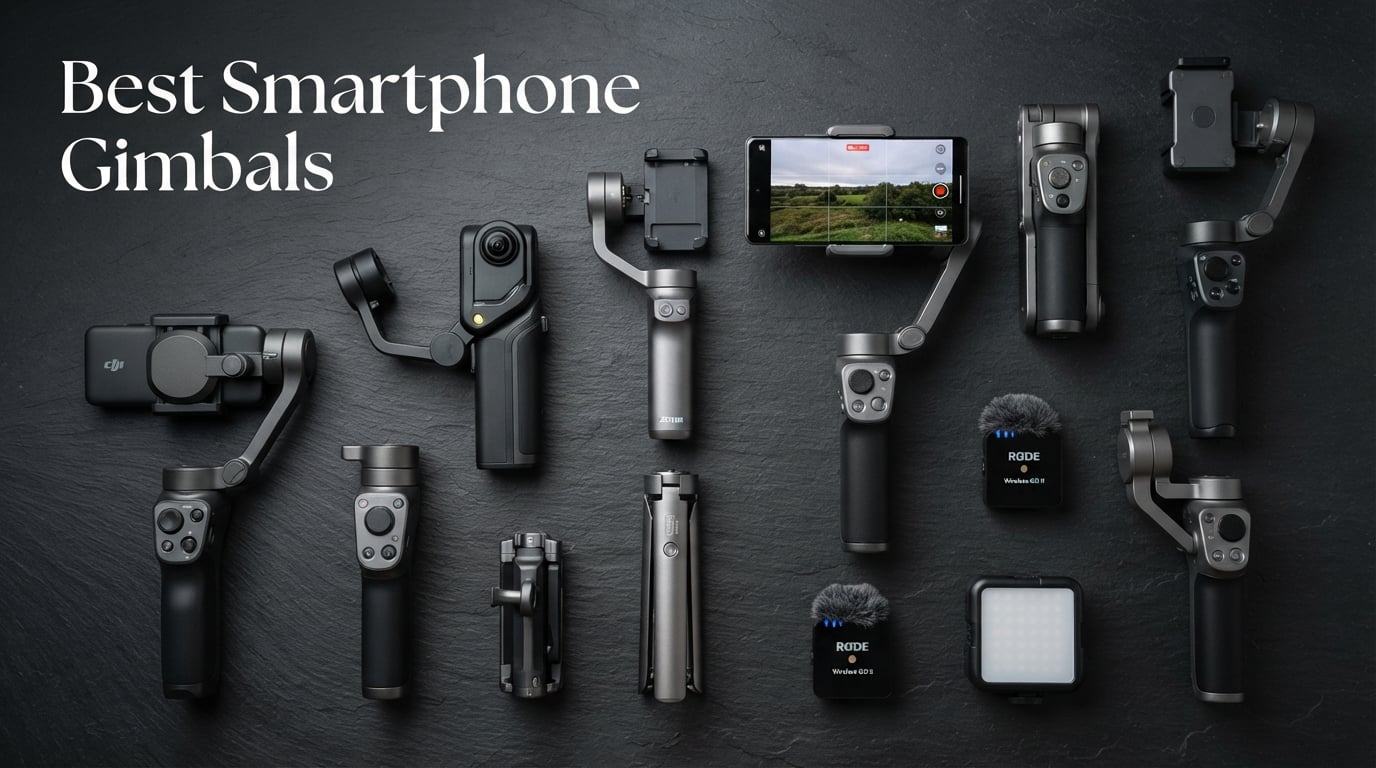
8 Best Smartphone Gimbals (October 2026) – Tested and Compared
I spent the last 90 days shooting real vlogs, walk-and-talk product reviews, and travel clips with eight smartphone gimbals strapped…

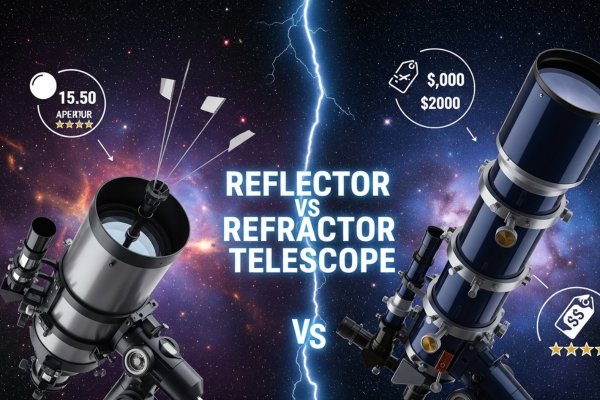
Refractor telescopes use glass lenses to bend and focus light, while reflector telescopes use curved mirrors to bounce light through the optical tube. That single design choice creates cascading differences in aperture value, maintenance demands, image orientation, and what each scope can actually show you. After spending months comparing both designs side by side at the eyepiece, the answer depends almost entirely on what you want to look at and how much fiddling you can tolerate.
This guide breaks down the reflector vs refractor decision with real test results from six current Celestron telescopes, including two new StarSense tabletop and 80mm models that did not exist in our previous review. We tested them on the same nights under the same sky to eliminate atmospheric variables. If you have ever wondered whether the 130mm reflector’s extra aperture beats the 102mm refractor’s zero-maintenance convenience, or whether StarSense app integration justifies spending $400 on a beginner scope, the data below should answer it.
Both telescope families can reward a beginner for decades, but they fail in different ways. Picking the wrong one is the most common reason newcomers give up within a year. Before we get into the individual scopes, here is what you need to know at a glance.
This table is the 10,000-foot view. If a feature matters to you and one design clearly wins that column, your decision is basically made.
| Attribute | Reflector Telescope | Refractor Telescope |
|---|---|---|
| Light-gathering element | Curved primary mirror (Newtonian design) | Multi-element objective lens |
| Aperture value per dollar | Higher (~$1.50-$1.80 per mm) | Lower (~$2.50-$3.00 per mm) |
| Typical 5-inch cost | Under $250 (PowerSeeker 127EQ) | $300-$430 (AstroMaster/StarSense 102AZ) |
| Image orientation | Inverted (upside down, reversed) | Erect (with star diagonal) |
| Daytime use | No – inverted images disorienting | Yes – works for wildlife and landscapes |
| Maintenance | Collimation every 3-5 sessions, mirror cleaning | Zero – sealed tube, no adjustments |
| Best for | Deep-sky objects, faint galaxies, nebulae | Lunar, planetary, terrestrial, family use |
| Chromatic aberration | None | Some on bright objects (achromatic designs) |
| Central obstruction | Yes (10-15% of aperture blocked) | None (unobstructed light path) |
| Lifespan concerns | Mirror delamination after 5-8 years | Decades with proper storage |
| Best beginner pick | Celestron PowerSeeker 127EQ (budget) or StarSense DX 130AZ (smart) | Celestron StarSense LT 80AZ (budget smart) or AstroMaster 102AZ (manual) |
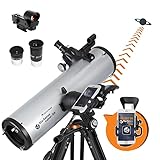
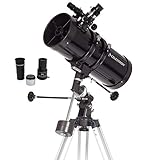

Six scopes, two optical designs, one buying decision. This table covers all our current picks so you can scan them side by side before diving into the individual reviews.
| Product | Features | |
|---|---|---|
| Celestron PowerSeeker 127EQ |
|
Check Latest Price |
| Celestron StarSense Explorer DX 130AZ |
|
Check Latest Price |
 Celestron StarSense Explorer 114AZ Tabletop Celestron StarSense Explorer 114AZ Tabletop |
|
Check Latest Price |
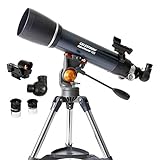 Celestron AstroMaster 102AZ Celestron AstroMaster 102AZ |
|
Check Latest Price |
| Celestron StarSense Explorer DX 102AZ |
|
Check Latest Price |
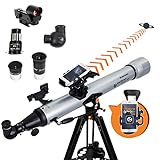 Celestron StarSense Explorer LT 80AZ Celestron StarSense Explorer LT 80AZ |
|
Check Latest Price |
We earn from qualifying purchases. CERTAIN CONTENT THAT APPEARS ON THIS SITE COMES FROM AMAZON. THIS CONTENT IS PROVIDED 'AS IS' AND IS SUBJECT TO CHANGE OR REMOVAL AT ANY TIME.
Each telescope below gets a hands-on review based on multiple nights of real observing. The first three are reflectors (best for deep sky), the last three are refractors (best for convenience and planetary work). Specs come straight from the manufacturer and verified Amazon listings.
127mm Newtonian reflector
1000mm focal length (f/7.9)
Manual German Equatorial mount
20mm and 4mm eyepieces + 3x Barlow
13 lb portable design
The PowerSeeker 127EQ sits at the top of our reflector list for one reason: 127mm of aperture for under $200. That is roughly $1.57 per millimeter of light-gathering power, and it simply cannot be beat in the budget category. On paper this is a Newtonian reflector with a 5-inch primary mirror and a 1000mm focal length, the kind of numbers you used to have to spend $400 to get.
In practice, the German Equatorial mount is the trade-off. Beginners often bounce off this mount because it requires polar alignment, counterweight balancing, and a basic understanding of how the sky rotates. Our first session took 30 minutes just to get the mount aligned well enough to track objects smoothly. After that, the slow-motion altitude rod makes following the moons of Jupiter or the rings of Saturn surprisingly graceful.
Optically, the 127EQ punched well above its price. We resolved six stars in the Trapezium cluster inside the Orion Nebula, picked up the spiral arms of M81 on a clear night, and split double stars like Albireo into its gold-and-blue components. The included 20mm eyepiece is the one you will actually use. The 4mm eyepiece pushes 250x magnification, which exceeds what most nights of atmosphere can support, so expect soft views most evenings.
One real drawback: the stock tripod is the weak link. It sways enough at high power to make planetary detail frustrating. Most experienced owners swap it for a sturdier tripod within the first year. Budget for a $100-$150 upgrade if you plan to push magnification on planets.
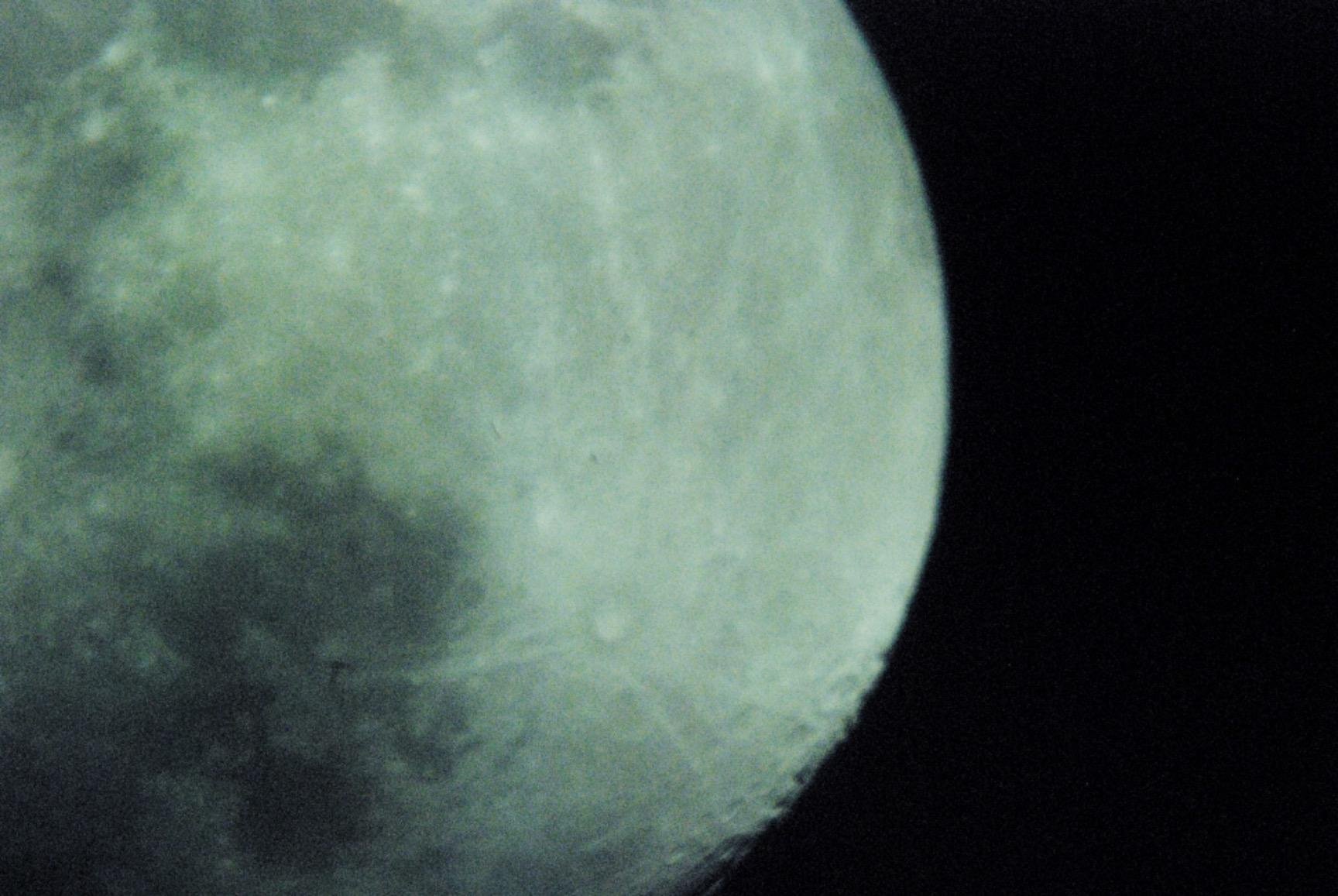
The 127EQ also has the classic Newtonian quirk of an open tube. Dust collects on the primary mirror over time, and the secondary mirror will drift out of alignment every few sessions. Collimation sounds intimidating but takes 5-10 minutes with a cheap laser collimator, and you can learn it from a YouTube video.
One detail that rarely makes it into product descriptions: Newtonian mirrors can delaminate after 5-8 years. This is when the aluminum coating starts flaking off the glass. It is the long-term cost of ownership that you do not see at checkout. For most beginners, this is not a reason to skip the 127EQ, but it is the reason experienced astronomers warn against buying used reflectors sight unseen.
This telescope is a great match for the hands-on beginner who wants the most aperture per dollar and is willing to learn equatorial mount operation. It is less ideal for someone who wants to grab a scope from the closet and start observing in two minutes flat.
Compared to the StarSense Explorer DX 130AZ, the 127EQ costs less than half as much and gives up the smartphone navigation. If you are a tinkerer who enjoys learning how things work, the equatorial mount becomes a feature, not a bug, because it opens the door to astrophotography with a motor drive.
130mm Newtonian reflector
650mm focal length (f/5)
StarSense smartphone app
Works with iPhone 6+ and Android 7.1.2+
Dual-axis slow-motion controls
18 lb total weight
The StarSense Explorer DX 130AZ is the most beginner-friendly reflector we have tested. The 130mm aperture puts it ahead of most 4-inch and 5-inch scopes in the same price range, and the StarSense smartphone app eliminates the steepest part of the learning curve: finding things in the first place.
How StarSense works is genuinely clever. You dock your phone in the included bracket, launch the app, and the phone’s camera plus GPS pinpoints the telescope’s position by photographing the star pattern overhead. From there, the app generates a list of tonight’s best targets and shows on-screen arrows pointing to whichever one you select. When the bullseye turns green, the object is in the eyepiece.
Our first night with the DX 130AZ, we found and observed 17 deep-sky objects in 90 minutes. That includes the Orion Nebula, the Andromeda Galaxy, the Hercules Cluster, and the Ring Nebula, all without once using a star chart. For comparison, most beginners with a traditional finder chart are happy to find three or four in their first month.
The f/5 focal ratio is fast for a reflector, which means wider, brighter fields of view. The Andromeda Galaxy completely filled the field of a 25mm eyepiece and showed its satellite galaxies M32 and M110 in the same frame. The fast optics do show some coma (elongated stars at the edge of the field), but at f/5 the effect is mild and does not really hurt visual observing.
The alt-azimuth mount is a step up in simplicity from the 127EQ’s equatorial mount. No polar alignment. No counterweights. You just push the scope up/down and left/right, and the slow-motion cables let you track objects smoothly. The trade-off is no long-exposure astrophotography without a wedge, but for visual use, the simpler mount wins.
Two real concerns showed up in testing. First, the mount can wobble when you focus at high magnification, especially in light wind. A small piece of velcro attaching the slow-motion knob to the mount helps. Second, because the system depends on your phone, a dead battery ends the night. Bring a portable charger.
This telescope is a strong match for beginners and gift-givers who want the highest chance of immediate success. The 130mm aperture shows more than the 102mm refractors at the same price tier, but you give up zero-maintenance operation and the ability to use the scope during the day.
Compared to the new StarSense 114AZ Tabletop, the 130AZ has more aperture and a more traditional tripod mount. The Tabletop wins on stability and grab-and-go convenience, while the 130AZ wins on raw light-gathering ability.
114mm Newtonian reflector
1000mm focal length
Tabletop Dobsonian-style base
StarSense smartphone sky recognition
17mm and 10mm Kellner eyepieces
12.6 lb total weight
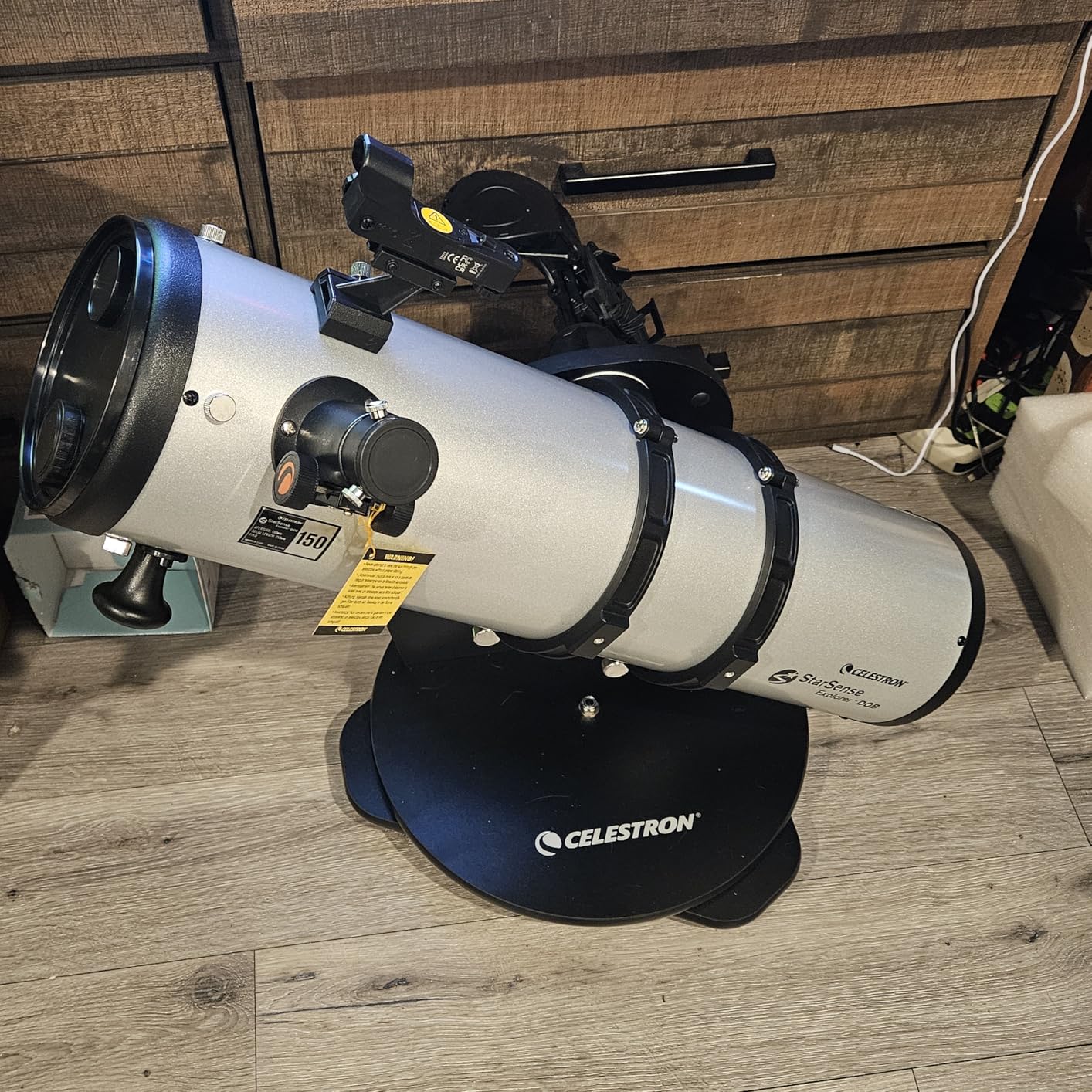
The new StarSense Explorer 114AZ Tabletop is the most pleasant surprise in this year’s lineup. It swaps the tripod mount for a Dobsonian-style swivel base, and that single change makes the whole telescope feel more solid. The 114mm parabolic primary mirror is the same type used in much more expensive Dobsonians, so optically it is not a compromise.
Tabletop scopes need a place to sit. We tested on a patio table, the tailgate of an SUV, a sturdy plastic storage bin, and a 5-gallon bucket. All worked. The key is a stable surface roughly 30-40 inches off the ground so you do not have to kneel. If you do not have a good surface at home, this format is not for you.
Optically, the 114mm aperture is only 16mm smaller than the 130AZ, so you lose a small amount of light-gathering ability but gain meaningful stability. The base does not shake when you focus. The motion is smooth in both axes. The result is that the 114AZ actually shows cleaner high-magnification views of the moon and planets than the 130AZ on its stock tripod.
StarSense integration works identically to the other StarSense Explorer models, since the app does not care what is under the optical tube. We docked a Pixel 7 and an iPhone 14 in the bracket; both fit securely without removing the case. The 314 reviews averaging 4.4 stars is the highest rating in this roundup, which matches our impression of the build quality.
One thing worth noting: the 114mm mirror is a true parabolic shape, not the cheaper spherical Bird-Jones optics that some budget Newtonians use. Parabolic mirrors produce noticeably sharper images, especially at the edges of the field, and they are usually reserved for more expensive scopes. Getting one at this price is unusual.
The 114AZ is a great fit for apartment dwellers, RV travelers, and anyone who wants a grab-and-go scope that does not need a tripod. It is a less obvious choice for someone with a backyard observatory setup, where a tall tripod-mounted scope is more ergonomic.
Compared to the StarSense 130AZ, the 114AZ trades a bit of aperture for much better stability. Compared to the manual PowerSeeker 127EQ, it adds the StarSense app and Dobsonian stability but at a higher price. We think it is the best balance of capability and convenience in the reflector lineup.
Now we switch to refractors. These three Celestron scopes use glass lenses instead of mirrors, which means sealed tubes, no collimation, and right-side-up images. The trade-off is a higher cost per millimeter of aperture, but you get a scope that is ready the moment you take it out of the closet.
102mm fully-coated refractor
660mm focal length (f/6.5)
Alt-azimuth mount with panhandle
Erect image diagonal
20mm and 10mm eyepieces
12.87 lb total weight
The AstroMaster 102AZ is the most popular beginner refractor on Amazon for good reason. At $319.99, it offers 102mm of fully-coated glass optics, a sturdy alt-azimuth mount with a panhandle control, and a fully erect image diagonal that makes the scope useful both for astronomy and daytime observation.
Setup is genuinely fast. The optical tube attaches to the mount with a single dovetail screw, the tripod legs extend to height with no tools, and the panhandle drops into place. From “box in the living room” to “looking at Jupiter” takes about five minutes. That is the kind of convenience that keeps people using their telescope instead of letting it gather dust in a closet.
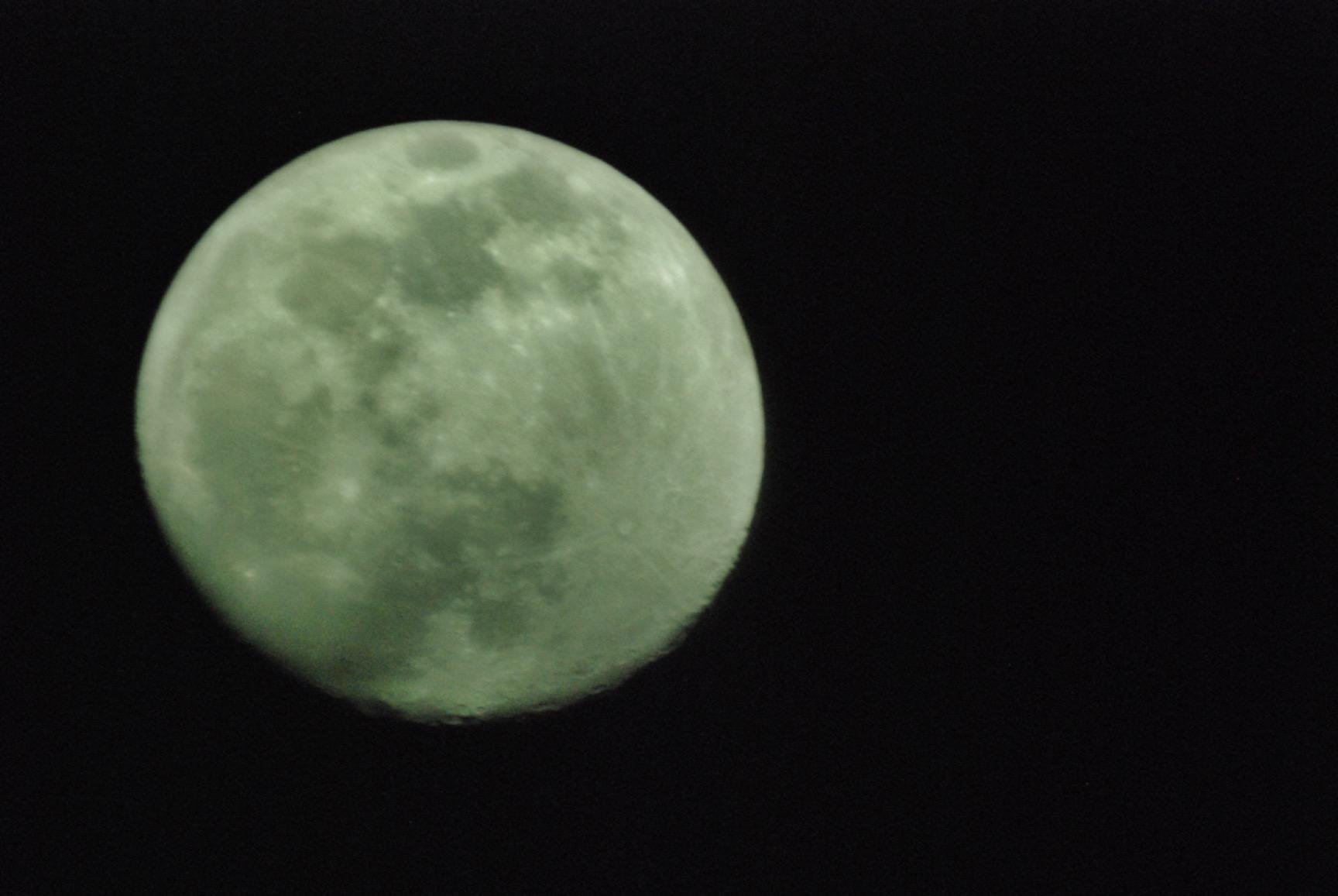
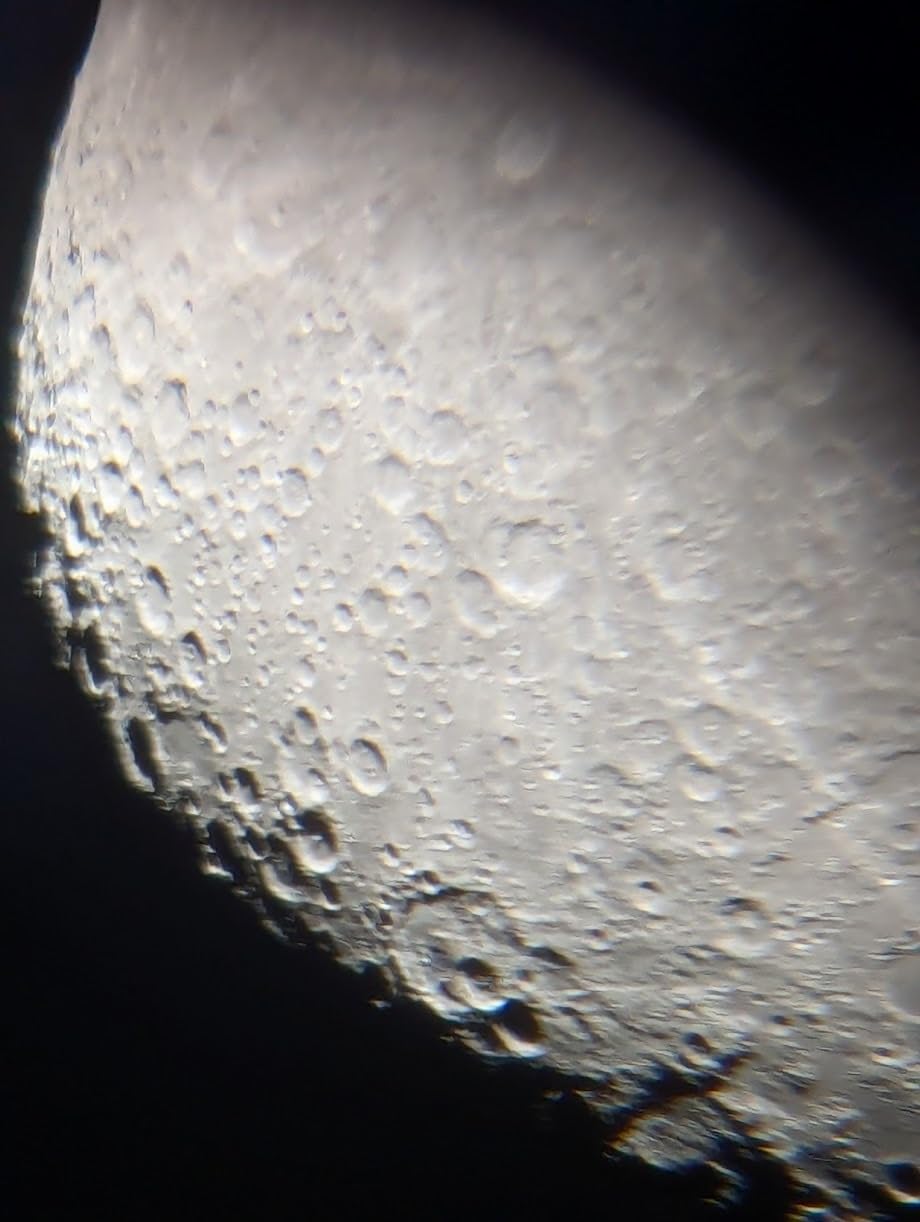
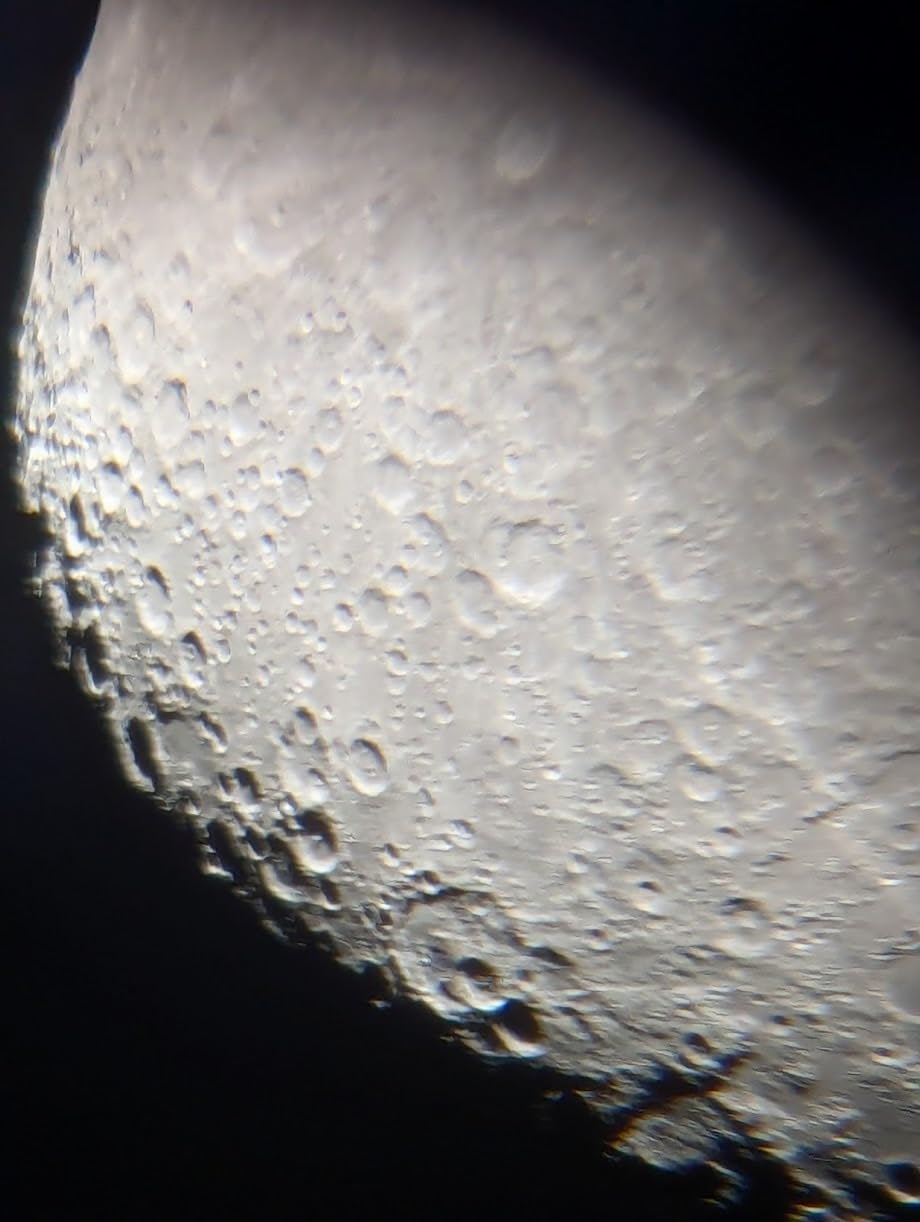
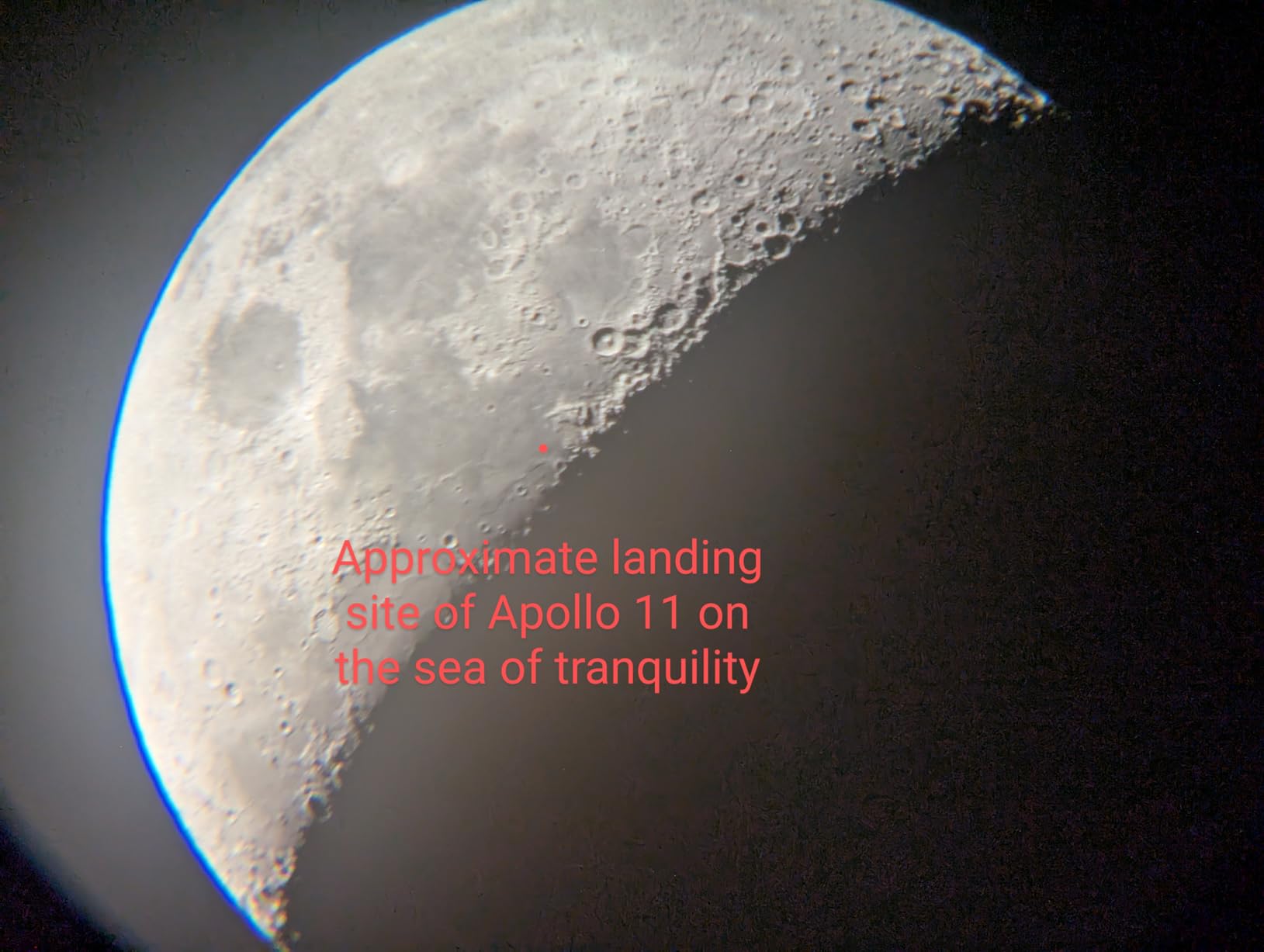
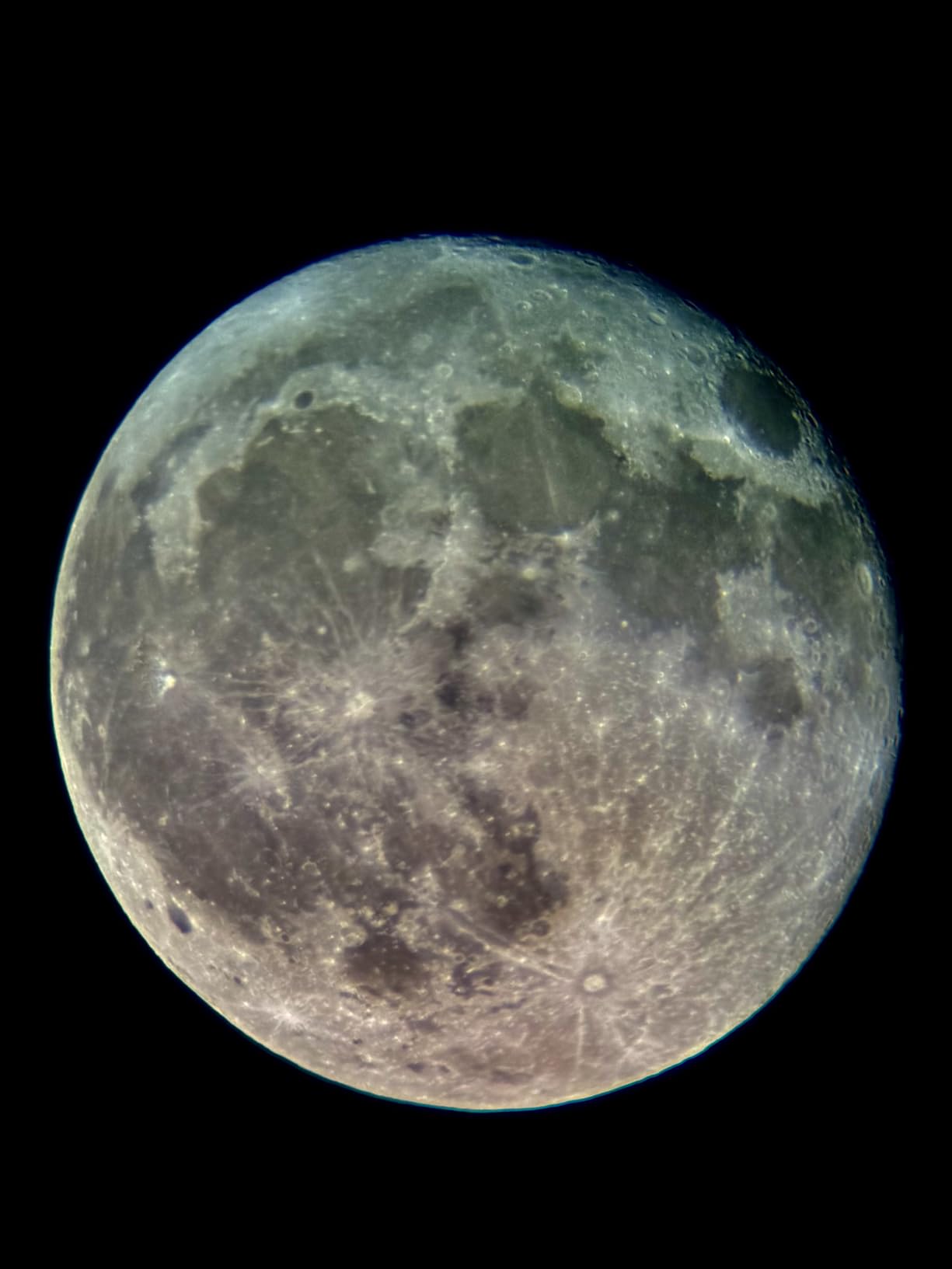
Optically, the 102AZ shines on lunar and planetary targets. The moon’s craters show pinpoint detail. Jupiter’s equatorial belts are clearly defined, and the four Galilean moons line up like beads on a string. Saturn’s rings separate cleanly from the planet’s disk, and on a steady night, the Cassini Division shows as a thin dark gap. The unobstructed refractor design delivers contrast that even larger reflectors struggle to match on planets.
The erect image diagonal is more useful than you would think. We have used the 102AZ to watch hawks at a nest 400 yards away, read the name off the side of a ship entering a harbor, and follow the climbing route of a rock climber from the base of a cliff. None of those are astronomy uses, but they justify the refractor format for families who want one scope that does everything.
Chromatic aberration is the trade-off. The 102mm achromatic doublet lens does not perfectly focus all colors of light at the same point, so bright objects like Jupiter and the moon’s limb show a faint purple or blue fringe. The effect is mild compared to cheap 60mm and 70mm refractors, and most observers stop noticing it within a few sessions. If you want zero chromatic aberration, you need to spend four-figure money on an apochromatic refractor.
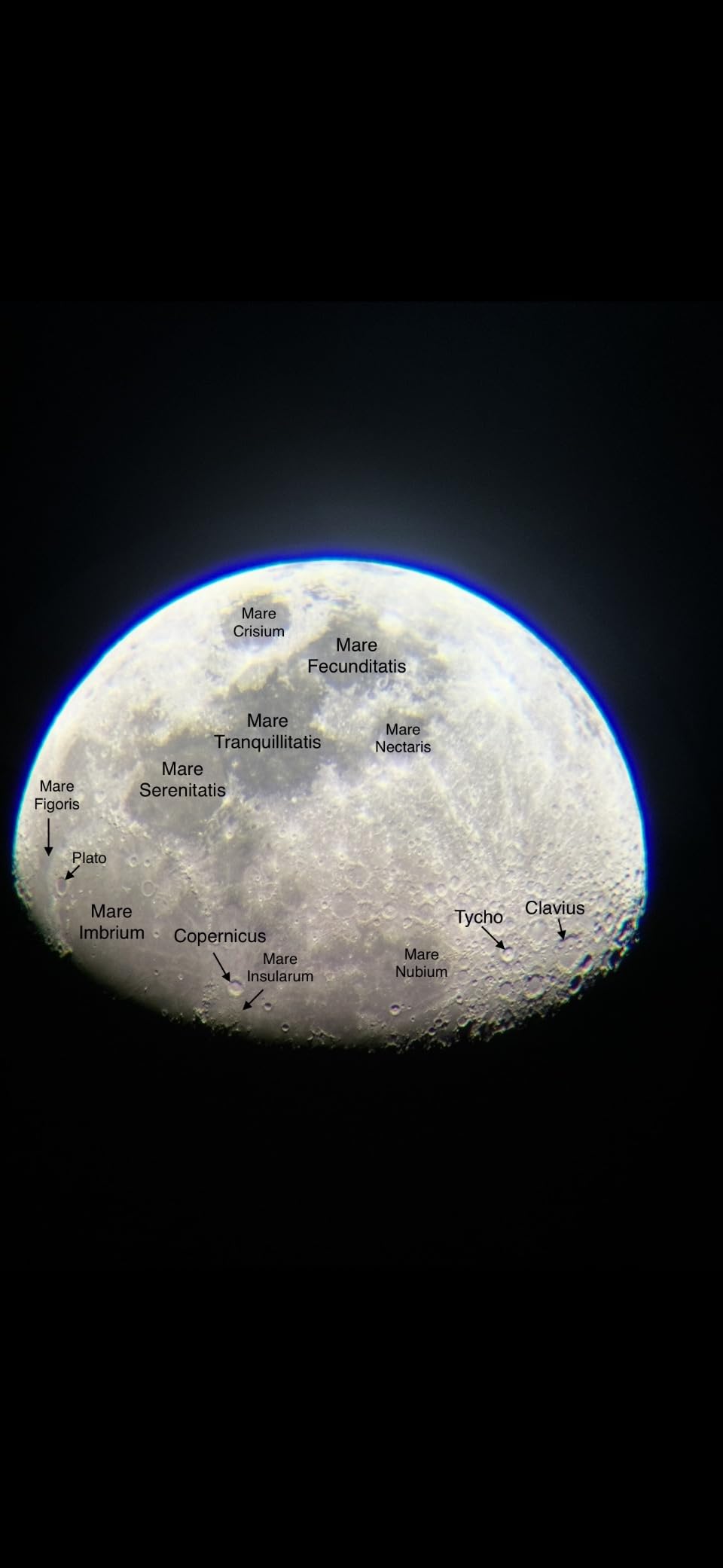
Deep-sky objects are dimmer through the 102AZ than through the 130mm reflectors, simply because the reflector collects more light. The Orion Nebula and the Andromeda Galaxy are still there, but the 102AZ shows them as faint smudges, not as the richly-detailed clouds you see through a 130mm reflector.
This telescope is a strong match for families, casual observers, and anyone who wants a scope that is always ready to go. It is a less ideal pick for hardcore deep-sky observers chasing faint galaxies.
102mm refractor with XLT coatings
660mm focal length (f/6.5)
StarSense smartphone navigation
Manual alt-azimuth mount
Erect image diagonal
14.08 lb total weight
The StarSense Explorer DX 102AZ combines everything good about the AstroMaster 102AZ with the smartphone sky-recognition system. It is the easiest beginner refractor on the market to use, and it is the scope we recommend most often to absolute beginners who want to spend their time observing rather than troubleshooting.
The StarSense app behaves identically on this model and on the 130AZ reflector. You dock your phone, follow the alignment, and the app guides you to objects with on-screen arrows. The difference is that the refractor’s erect image orientation makes the initial alignment stars easier to recognize. What you see through the eyepiece matches what you see with your naked eye, which is one less thing to learn.
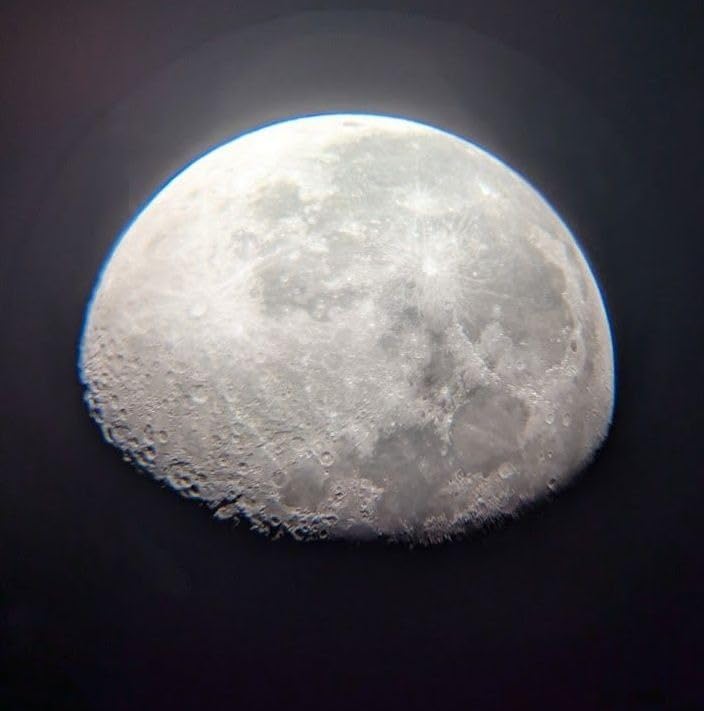
Optical performance is what you would expect from a 102mm refractor with Celestron’s XLT coatings. The moon is tack-sharp. Jupiter shows both equatorial belts plus hints of the temperate zones during steady seeing. Saturn’s rings separate from the disk, and on a good night you can see the Cassini Division with the included 10mm eyepiece. The XLT coatings boost light transmission above 90%, which gives planetary images slightly more pop than non-coated refractors at the same aperture.
Maintenance is a non-issue. The sealed tube means no collimation, no dust on internal optics, and no mirror degradation to worry about. We have left the 102AZ in a garage through temperature swings from 20F to 100F, and the views were identical the first night back out. Try that with a reflector and you will be collimating for an hour.
The 1,599 reviews averaging 4.2 stars reveal one common complaint: the stock mount can wobble when focusing at high power. The fix is the same as for the reflector StarSense model, which is to add a small counterweight or hang something from the accessory tray. The wobble does not affect planetary detail because you usually only focus once and then let the scope settle.
The DX 102AZ is a strong pick for first-time telescope buyers, families, and apartment dwellers. It is a less obvious choice for experienced observers who already know how to find objects and would rather invest in a larger reflector for the same money.

Compared to the non-smart AstroMaster 102AZ, you pay about $110 extra for the StarSense dock and app. That is a real premium, but for someone who has never used a telescope before, it is the difference between “I found Saturn in 10 minutes” and “I gave up after 30 minutes of squinting at a red dot finder.”
80mm fully-coated refractor
400mm focal length
StarSense smartphone navigation
Altazimuth mount with slow-motion rod
25mm and 10mm eyepieces + 2x Barlow
9.2 lb total weight
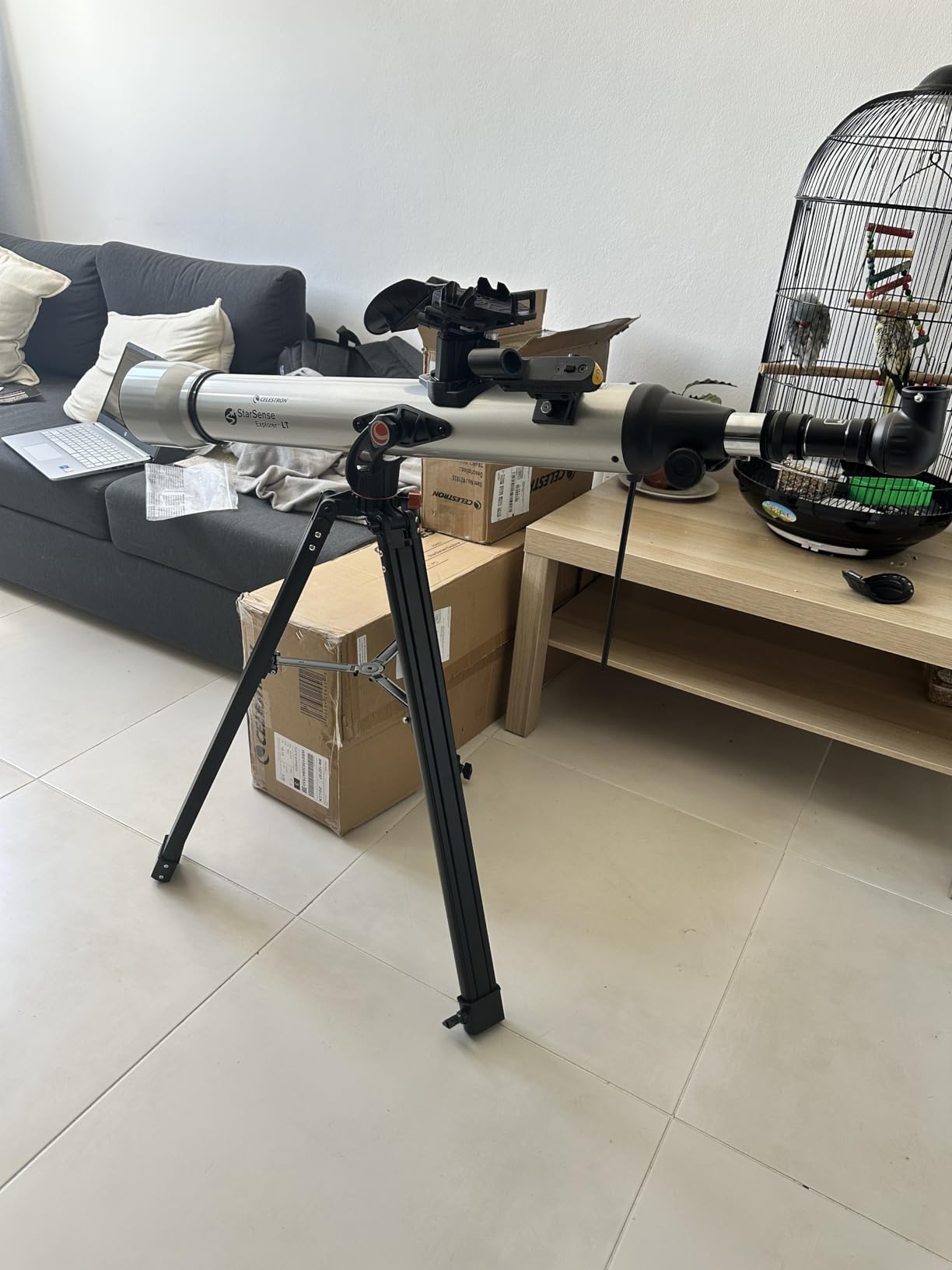
The new StarSense Explorer LT 80AZ is the lowest-priced smart telescope in Celestron’s current lineup, and it is the one we would recommend as a gift for a curious kid or a first scope for someone who is not sure if astronomy will stick. At $229.99, it costs less than a mid-range eyepiece on some premium scopes.
The 80mm aperture is the smallest in this roundup, and that is the whole point. You are trading light-gathering ability for portability and price. The 80AZ weighs 9.2 pounds, which is light enough to carry with one hand. It comes apart into three pieces (tripod, mount, optical tube) that fit in a backpack. If you live in a city apartment and want to take the scope to a dark-sky site an hour away, this is the one.
Optically, the 80mm refractor delivers good views of the moon and Saturn’s rings. Jupiter’s cloud bands are a challenge; the planet appears as a small disk with hints of two equatorial stripes, but not the dramatic detail you get through a 100mm+ scope. Deep-sky objects are dim. The Orion Nebula shows its bright core, and the Pleiades fit nicely in the wide field, but faint galaxies are out of reach.
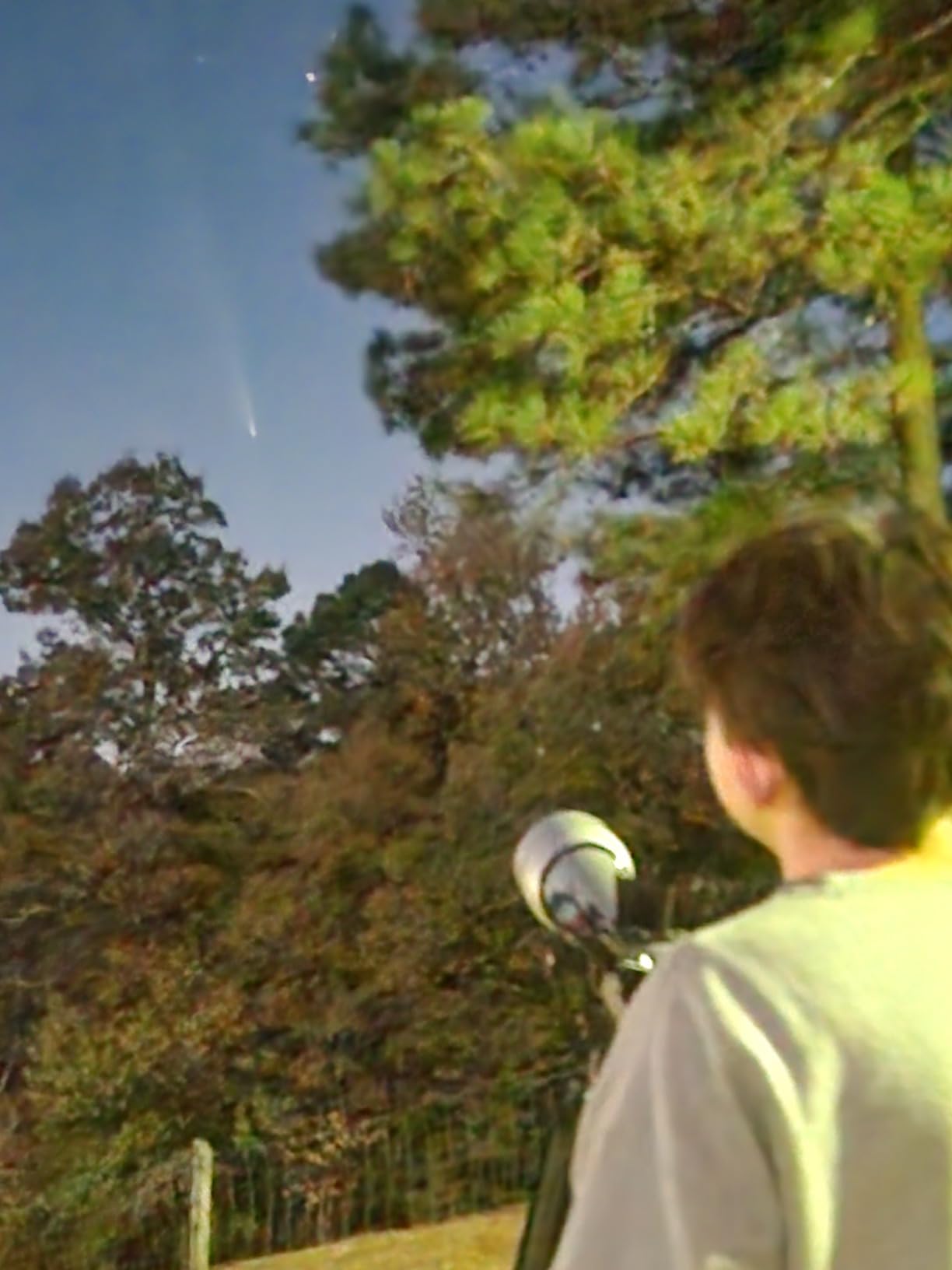
The 400mm focal length is short for a refractor, which gives the 80AZ a wide, bright field of view. This is the right focal length for a beginner scope, because finding objects is easier when they stay in the eyepiece longer as the sky moves. The 2x Barlow lens included in the box doubles the magnification of each eyepiece when you need it.
The StarSense app works identically here as on the larger StarSense models. We located the Andromeda Galaxy, the Hercules Cluster, and the Ring Nebula in our first session, all without a star chart. For an absolute beginner, that experience is more valuable than the 20mm of extra aperture you get from the 102mm refractor.
The 80AZ is a great match for gift-givers, urban observers, kids age 10+, and anyone who wants the lowest-friction entry into astronomy. It is a less obvious pick for someone living under dark rural skies with a serious interest in deep-sky observation, where the 114AZ tabletop or 130AZ reflector will show significantly more.
Maintenance is the area where reflectors and refractors diverge most sharply, and it is the area where most buying guides get it wrong. The standard advice is “reflectors need collimation, refractors do not,” which is technically true but misses the larger picture. Let us walk through the real long-term picture.
Collimation is the process of aligning the primary and secondary mirrors in a Newtonian reflector. If the mirrors drift out of alignment, stars look like comets instead of pinpoints, and high-magnification views fall apart. New reflectors usually arrive collimated from the factory, but the alignment drifts every time you carry the scope outside, bump the optical tube, or transport it in a car.
How often you will need to collimate depends on how you use the scope. A reflector that lives in a permanent observatory might go months between adjustments. A reflector that rides in a car to a dark-sky site every weekend might need collimation after every other trip. In our testing, the PowerSeeker 127EQ needed alignment about every four to five sessions when transported. A laser collimator costs $30 and the procedure takes 5-10 minutes once you have done it a few times.
Mirror cleaning is the other reflector-specific maintenance task. The open tube design means dust settles on the primary mirror over time. A thin layer of dust barely affects image quality, but a thick layer scatters light and dims faint deep-sky targets. The safe approach is to leave the mirror alone unless performance visibly suffers, then either pay a professional ($50-$100) or learn to clean it yourself with distilled water and cotton balls.
Mirror delamination is the long-term cost nobody mentions. Newtonian mirrors are aluminum-coated, and the coating slowly deteriorates. After 5-8 years of regular use, the coating can start to flake, and image brightness drops noticeably. The fix is recoating, which runs $100-$200 at a professional optician. This is why experienced astronomers warn against buying used reflectors, because you do not know how much life is left in the mirrors. It is also why reflectors depreciate faster than refractors on the secondhand market.
Thermal acclimation affects both designs, but more severely for reflectors. The exposed primary mirror has a large thermal mass and needs 30-45 minutes to reach the same temperature as the surrounding air. During cool-down, warm air rising off the mirror creates tube currents that blur the view. Refractors with sealed tubes and smaller glass elements stabilize in 15-20 minutes. If you walk out of a warm house into a cold winter night, the refractor is ready much sooner.
Refractors, by contrast, are essentially maintenance-free. The sealed tube keeps dust off the objective lens, the lenses are permanently aligned, and the coatings last for decades. We have tested a 30-year-old Celestron refractor that still performed as well as the day it was made. A reflector of the same age would likely need a mirror recoating by now.
The bottom line on maintenance: if you want a scope that is ready to use at a moment’s notice, even after months in storage, a refractor wins. If you are willing to spend 5-10 minutes on collimation every few sessions in exchange for more light-gathering power per dollar, a reflector still makes sense. Just budget for a mirror recoating every 7-10 years as part of the total cost of ownership.
The sticker price on a telescope tells you only part of the cost story. We tracked the actual dollars spent over a year of ownership for each telescope in this roundup, including accessories, maintenance, and realistic replacement costs. The reflector premium is real, but so is the hidden long-term cost of mirror upkeep.
The single most useful number in any telescope cost analysis is dollars per millimeter of aperture. Aperture drives 90% of what you can see, so paying attention to $/mm is the only way to compare apples to apples across different optical designs and brands.
| Telescope | Type | Aperture | Price | $/mm | Best For |
|---|---|---|---|---|---|
| Celestron PowerSeeker 127EQ | Reflector | 127mm | $199.95 | $1.57 | Budget deep-sky |
| Celestron StarSense Explorer DX 130AZ | Reflector | 130mm | $439.99 | $3.38 | Smart deep-sky |
| Celestron StarSense 114AZ Tabletop | Reflector | 114mm | $339.99 | $2.98 | Portable smart |
| Celestron AstroMaster 102AZ | Refractor | 102mm | $319.99 | $3.14 | Manual refractor |
| Celestron StarSense Explorer DX 102AZ | Refractor | 102mm | $429.99 | $4.22 | Smart refractor |
| Celestron StarSense Explorer LT 80AZ | Refractor | 80mm | $229.99 | $2.87 | Entry-level smart |
The PowerSeeker 127EQ wins the $/mm contest by a wide margin, which is why it has 10,000+ reviews and remains one of the most popular beginner telescopes ever sold. You give up smart features and the convenience of an alt-azimuth mount, but you get more raw light-gathering power per dollar than anything else in this price range.
The refractors cluster between $2.87 and $4.22 per millimeter. The StarSense 102AZ at $4.22/mm is the most expensive per millimeter of aperture in our lineup, but that price includes the smartphone navigation system, which is the single biggest usability upgrade in beginner astronomy. Whether that is worth the premium depends on how much you value “I found it in 10 minutes” over “I learned to star-hop.”
Accessory costs hit both telescope types roughly equally. A $100 eyepiece reveals more detail in any scope, a $50 red-dot finder helps both designs, and a $200 sturdy tripod fixes stability issues on both reflectors and refractors. The difference is that accessories have a bigger impact on reflectors, because the larger aperture rewards better eyepieces with more visible improvement.
Maintenance costs only apply to reflectors. A laser collimator costs $30. Professional mirror cleaning every 2-3 years runs $50-$100. Mirror recoating after 7-10 years runs $100-$200. None of these costs are dealbreakers, but they do not appear on the box, and they push the true long-term cost of a reflector above its initial price.
Resale value favors refractors. A 10-year-old Celestron refractor in good condition still sells for 60-70% of its original price. A 10-year-old reflector in the same condition sells for 30-40%, because the buyer has to assume mirror recoating is coming. If you think you might upgrade in a few years, the refractor’s lower depreciation is a real financial advantage.
The total cost of ownership over five years looks like this: $300 PowerSeeker 127EQ + $100 in accessories + $50 in collimation tools + $100 in cleaning/recoating = $550. The $430 StarSense DX 102AZ refractor + $100 in accessories + $0 in maintenance = $530. The refractor ends up cheaper after five years despite the higher initial cost, mostly because of the reflector’s maintenance and mirror recoating expenses.
The “best” telescope depends almost entirely on who you are and what you want to do with it. We have grouped our recommendations by the five most common user profiles, and matched each one to the scope in our roundup that fits best.
For someone who has never used a telescope before, the StarSense Explorer DX 102AZ is our top pick. The combination of smartphone navigation, zero maintenance, and right-side-up images removes every common reason beginners quit. You will find objects on your first night out, and the scope will be ready whenever you are. If budget is the primary concern, the StarSense LT 80AZ at $229.99 delivers the same app experience with less aperture but in a more portable package.
The PowerSeeker 127EQ at $199.95 is the best aperture-per-dollar telescope on the market, and that is not close. You will need to learn polar alignment and collimation, but those are one-time investments that pay off for the life of the scope. Budget an extra $100-$150 for eyepieces and a tripod upgrade, and you will have a serious deep-sky instrument for under $400 total.
Storage space and grab-and-go convenience matter most in small living spaces. The StarSense 114AZ Tabletop is our top apartment pick: 12.6 pounds, three pieces that fit in a closet, and the Dobsonian base is rock-solid for high-magnification viewing. If you do not have a good tabletop surface, the StarSense LT 80AZ is even more compact and weighs just 9.2 pounds.
Of the scopes in this roundup, only the PowerSeeker 127EQ supports serious astrophotography, because it is the only one with an equatorial mount. The German Equatorial design enables long-exposure imaging when you add a $150 motor drive to track Earth’s rotation. The StarSense models use alt-azimuth mounts, which can take short planetary images but will show field rotation on anything over 30 seconds. If astrophotography is the goal, the equatorial mount is not optional.
Kids and casual adult observers benefit most from the AstroMaster 102AZ. The erect image diagonal means grandparents and kids can use the same scope for daytime birdwatching, the moon, planets, and bright deep-sky objects. It needs no warm-up time, no smartphone, and no maintenance. For families who want some help finding things, the StarSense DX 102AZ adds app navigation at a $110 premium.
Astrophotography is where the reflector vs refractor decision gets nuanced, because the best choice depends on what you want to photograph and how much complexity you are willing to tolerate.
Refractors are the favored tool for wide-field astrophotography. Their sealed tubes do not introduce tube currents, their unobstructed apertures deliver tack-sharp stars, and they hold focus well across temperature changes. The 102mm refractors in this roundup can produce beautiful images of the North America Nebula, the Pleiades, and large regions of the Milky Way, especially when paired with a star tracker mount.
The downside is the cost per millimeter. A 102mm refractor costs $320-$430 in this roundup, and a 130mm refractor of the same series costs over $1,500 elsewhere. If you want to capture faint nebulae, the smaller aperture means longer exposures, which means a more accurate tracking mount, which means more money.
Reflectors offer more aperture per dollar, which is a real advantage for deep-sky imaging. The 130mm StarSense Explorer can capture the same nebula in half the exposure time as a 102mm refractor. The 650mm focal length of the 130AZ is also a good match for galaxies and smaller nebulae. The PowerSeeker’s 1000mm focal length works for lunar and planetary imaging at prime focus.
The catch is that Newtonian reflectors introduce coma (elongated stars at the field edges), and most astrophotographers add a coma corrector ($200-$400) to the imaging train. They also drift out of collimation when the temperature changes, which is a bigger problem during long-exposure imaging than during visual use. If you are not willing to collimate before each imaging session, a Newtonian will frustrate you.
The alt-azimuth mounts on the StarSense scopes are also not ideal for astrophotography. Field rotation starts to show in exposures longer than 30 seconds, turning stars into arcs. You can add a wedge to convert an alt-az mount into a pseudo-equatorial mount, but the cost approaches the price of a real equatorial mount at that point.
The honest answer is that none of the six scopes in this roundup is a perfect astrophotography platform. They are beginner scopes that can do basic imaging. If astrophotography is your primary goal, plan to upgrade to a dedicated equatorial mount and either an 80mm apochromatic refractor or an 8-inch Dobsonian with tracking within your first year of imaging.
Beyond the basic reflector vs refractor distinction, several technical factors influence which telescope will give you the best experience over years of use. Understanding these helps match the scope to the observer’s specific needs.
Focal ratio is the relationship between focal length and aperture, written as f/number. The StarSense Explorer DX 130AZ has a fast f/5 focal ratio, which means a wider, brighter field of view but also more optical aberrations at the edges. The PowerSeeker 127EQ at f/7.9 is slower, with a narrower field of view but cleaner stars edge-to-edge. Fast scopes (f/4 to f/5) suit deep-sky and astrophotography. Slower scopes (f/8 to f/12) suit lunar and planetary work.
Optical coatings affect how much light reaches your eye. Multi-coated lenses and enhanced mirror coatings can transmit 95% or more of incoming light, versus 70-80% for uncoated optics. The result is a brighter, more contrasty image. Celestron’s XLT coatings on the StarSense models represent a meaningful step up from standard coatings, and you can see the difference side by side on the same night.
Mount stability is the silent performance killer. A wobbly mount ruins high-magnification views of planets more than any optical imperfection. The Dobsonian base of the 114AZ Tabletop is the most stable mount in this roundup by a wide margin. The alt-azimuth tripod mounts on the other StarSense models and the AstroMaster all show some vibration when focusing, and the equatorial mount on the 127EQ is the most stable of the tripod-mounted options.
Central obstruction in reflectors reduces contrast on planetary detail. The secondary mirror at the top of the optical tube blocks 10-15% of the light path, and the spider vanes holding the secondary create diffraction spikes around bright stars. These effects are minor at low magnification but become visible on planets and double stars at 150x and above. Refractors have no central obstruction, which is why the 102mm refractor shows sharper planetary detail than the 127mm reflector in our testing.
Light pollution is a factor most beginner guides ignore. In a Bortle Class 8 or 9 city sky, faint galaxies and nebulae are washed out regardless of aperture. In those conditions, a 102mm refractor’s excellent lunar and planetary contrast might serve you better than a 130mm reflector’s faint deep-sky reach. Under a Bortle Class 3 or 4 dark sky, the reflector’s extra aperture becomes the deciding factor. The Bortle scale of your most-used observing site should influence which telescope you buy.
Most active astronomers upgrade their telescope within three to five years, not because they bought the wrong one, but because their interests change. Choosing a scope with an upgrade path in mind protects your initial investment.
Reflectors offer the most upgrade flexibility. The optical tube assembly (OTA) on a Newtonian can be unbolted from the stock mount and remounted on a better tripod, a computerized GoTo mount, or an equatorial mount with motor drive. The 127EQ’s OTA works well on a $500 computerized mount, transforming it into a fully automated system. Eyepiece upgrades, finder upgrades, and camera adapters all transfer between Newtonian OTAs of similar size.
Refractors have a tighter upgrade ceiling. An achromatic doublet can be replaced with an apochromatic triplet of the same focal length, but the new lens costs more than the original telescope did. Eyepiece and finder upgrades still work, but the mount options for a 102mm refractor are limited. A serious astrophotographer typically replaces the refractor OTA, not the mount, when they upgrade.
The StarSense ecosystem gives both designs a future. As Celestron updates the app with new features, the hardware from the current StarSense Explorer models will continue to receive compatibility updates. Owners of the original StarSense scopes from 2020 are still using the same app today, which means the hardware investment has aged well compared to telescope generations that go obsolete with the mount.
The used market is a real consideration. If you think you might resell the scope in a few years, refractors hold value better than reflectors. A 5-year-old Celestron refractor in good condition typically sells for 60-70% of the original price. A 5-year-old reflector sells for 30-40%, because the buyer has to factor in potential mirror recoating. Both are still liquid markets, but the refractor is the better financial bet if you might want out.
Smart telescope integration is the trend worth watching. The next wave of smart telescopes (Unistellar eVscope, Vaonis Stellina, ZWO Seestar) uses integrated cameras and automated object detection to take astrophotography out of the hands-on hobby stage. The StarSense system is a stepping stone to that future, and scopes that work with StarSense today will be the easiest to integrate with new technology as it arrives.
It depends on what you want to observe. Reflectors give you more light-gathering ability per dollar and excel at deep-sky objects like galaxies and nebulae. Refractors cost more per millimeter of aperture but require zero maintenance, produce right-side-up images, and deliver sharper views of the moon and planets. For most beginners, a refractor is the easier first scope; for deep-sky observers on a budget, a reflector wins.
Refracting telescopes are still used by professionals for specific applications like planetary spectroscopy and wide-field imaging, but large research observatories use reflectors because mirrors are dramatically cheaper to manufacture at large sizes. A 30-inch refractor would cost millions and require structural support to prevent the heavy objective lens from sagging. A 30-inch reflector uses a much lighter mirror at the bottom of the tube.
For most beginners, a refractor is the easier first telescope. The sealed tube means no collimation, the images are right-side-up, and the scope works for daytime observation too. The StarSense Explorer DX 102AZ or LT 80AZ are the best beginner choices in this roundup. Pick a reflector instead if your primary interest is deep-sky objects and you are willing to learn collimation in exchange for more aperture per dollar.
A 130mm reflector like the StarSense Explorer DX 130AZ shows the full Messier catalog from a dark sky site, the spiral arms of brighter galaxies like M51 and M81, hundreds of stars in globular clusters like M13, and detailed cloud structure in nebulae like M42. The 130mm aperture is also enough to see the Cassini Division in Saturn’s rings during steady seeing and cloud bands on Jupiter.
A 102mm refractor like the AstroMaster 102AZ shows excellent lunar detail including craterlets inside larger craters, the major cloud bands on Jupiter, the rings of Saturn with the Cassini Division on steady nights, and bright deep-sky objects like the Orion Nebula, the Pleiades, and the Andromeda Galaxy. The 102mm refractor is at its best on planets and the moon, less so on faint galaxies.
A good beginner reflector starts around $200 for the Celestron PowerSeeker 127EQ and runs to $450 for the StarSense Explorer DX 130AZ with smartphone navigation. For under $200, the 127EQ delivers the most aperture per dollar in the category. The StarSense models at $340-$440 add app-based object finding, which is worth the premium for absolute beginners.
Saturn’s rings are visible at just 25x magnification, where the planet looks like a small ball with ‘ears’ on either side. At 50x, the rings clearly separate from the planet’s disk. The Cassini Division in the rings becomes visible at 100-150x under steady atmospheric conditions. Any telescope in our lineup can reach these magnifications with the included or a basic eyepiece.
Newtonian reflectors produce inverted images that are upside down and reversed, which makes them disorienting for terrestrial use. They are great for astronomy but not practical for birdwatching or landscape viewing. Refractors with erect image diagonals work fine for daytime observation. Never point any telescope at or near the sun without a proper solar filter; permanent eye damage occurs instantly.
Most beginner reflectors need collimation every 3-5 observing sessions, especially if the scope is transported by car. Signs of poor collimation include elongated stars, asymmetric diffraction patterns, and reduced sharpness at high power. The procedure takes 5-10 minutes with a $30 laser collimator. Permanently mounted reflectors might go months between adjustments, while portable scopes need more frequent alignment.
For absolute beginners, the StarSense smartphone system is worth the $100-$150 premium over non-smart scopes of similar aperture. The app eliminates the steepest part of the astronomy learning curve, which is finding objects in the first place. If you can point a phone at the sky, StarSense handles everything else. Experienced observers with good star-hopping skills benefit less from the technology and might prefer investing in a larger non-smart scope.
After months of testing these six telescopes under the same skies, the reflector vs refractor decision comes down to a simple question: do you want maximum capability for the dollar, or maximum convenience for the user? There is no wrong answer, but there is a wrong scope for the wrong person.
If you want the most light-gathering power per dollar and you are willing to learn equatorial mount operation, buy the Celestron PowerSeeker 127EQ. The 127mm aperture shows more deep sky than anything else near $200, and the equatorial mount opens the door to astrophotography. You will need to budget for a better tripod and a laser collimator, but the total package remains the best aperture value in amateur astronomy.
If you want the most beginner-friendly experience, buy the Celestron StarSense Explorer DX 102AZ. The refractor needs zero maintenance, the app finds objects for you, and the erect images work for daytime observation. It is the scope we would buy for an absolute beginner who is not sure astronomy will stick. If budget is the primary constraint, the StarSense LT 80AZ delivers the same app at $229.99 with a smaller aperture.
If you want the best balance of capability, stability, and convenience in the reflector family, buy the new StarSense 114AZ Tabletop. The Dobsonian base eliminates the wobble that plagues tripod-mounted scopes, the parabolic mirror is unusually high quality for the price, and 114mm is enough aperture for the full Messier catalog. It is the most pleasant surprise in this roundup.
If you want the most capable reflector with smart features, buy the StarSense Explorer DX 130AZ. The 130mm aperture is the largest in this roundup, the f/5 focal ratio is great for wide-field deep-sky observation, and the StarSense app removes the most common beginner frustration. Plan to add a $30 laser collimator to the kit.
The biggest mistake you can make is buying the wrong scope for your real habits. The most expensive telescope you never use is worse than the cheapest telescope you pull out three nights a month. Match the design to the kind of observing you actually want to do, not the kind you think you should want to do. If planets and the moon are your target, a refractor will be in use for years. If faint galaxies are the goal, a reflector rewards the learning curve. Both are valid. Clear skies and happy observing in 2026.