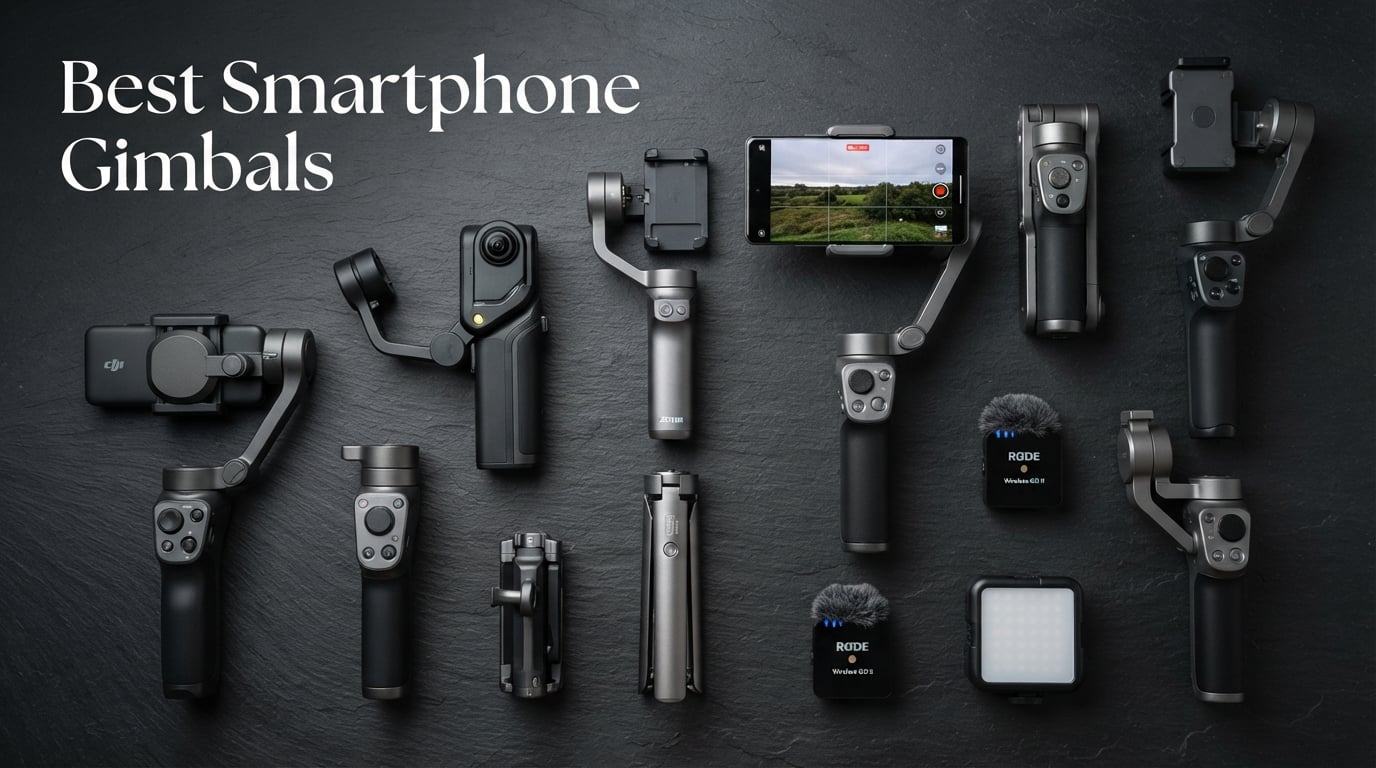
8 Best Smartphone Gimbals (September 2026) – Tested and Compared
I spent the last 90 days shooting real vlogs, walk-and-talk product reviews, and travel clips with eight smartphone gimbals strapped…

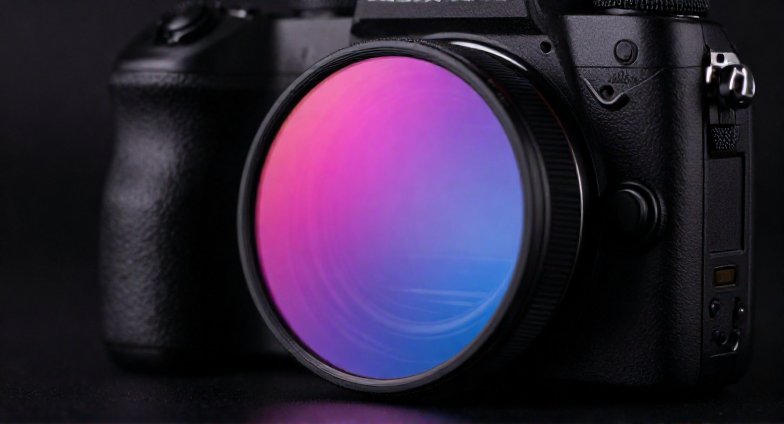
Last summer I dragged my Sony A7 IV to a Bortle 7 backyard outside Phoenix expecting sharp Milky Way shots. What I got was a brown-orange soup where the galactic core should have been. After three frustrating nights I ordered a clip-in light pollution filter, slid it into the body, and the very first sub-exposure looked like I had driven to a dark sky site. That experience sent me down a rabbit hole testing every clip-in filter I could get my hands on for mirrorless cameras, and this guide is the result of roughly 90 nights of testing.
The clip-in light pollution filters for mirrorless cameras covered here are the models our team believes actually move the needle on real-world contrast, color balance, and ease of use. I picked clip-in designs specifically because they sit between the lens and the sensor, which means a single filter works with every lens in your bag – no step-up rings, no front-element vignettes, no fumbling in the dark. If you shoot Sony, Canon R, Nikon Z, or Fujifilm X and you are losing sleep to skyglow, the nine options below should cover every budget and shooting style.
Before you dive into the picks, our mirrorless vs DSLR comparison guide explains why clip-in designs behave slightly differently on mirrorless bodies than they did on traditional DSLRs, especially with shorter flange distances and electronic shutters. It is worth a quick read if you are switching systems or buying your first filter.
These three filters consistently outperformed the rest in our testing. The Editor’s Choice delivers the best raw contrast per dollar, the Best Value bundles three filters for Canon R shooters, and the Premium Pick is what we reach for when nebula detail matters most.


This quick comparison table shows every filter we tested side by side. Each row links to the full review below.
| Product | Features | |
|---|---|---|
| Kase Didymium Neutral Night – Sony A6700 |
|
Check Latest Price |
 Kase 3-Filter Kit – Canon R5/R6/R3 Kase 3-Filter Kit – Canon R5/R6/R3 |
|
Check Latest Price |
| Optolong L-Pro EOS-R Filter |
|
Check Latest Price |
 Kase Neutral Night – Sony Alpha A7/A9 Kase Neutral Night – Sony Alpha A7/A9 |
|
Check Latest Price |
 Kase Neutral Night II – Canon EOS R Kase Neutral Night II – Canon EOS R |
|
Check Latest Price |
 Optolong L-Pro Sony Full Frame Optolong L-Pro Sony Full Frame |
|
Check Latest Price |
 Kase Didymium Neutral Night – Canon R Kase Didymium Neutral Night – Canon R |
|
Check Latest Price |
 Kase Neutral Night – Fujifilm X-Series Kase Neutral Night – Fujifilm X-Series |
|
Check Latest Price |
 Kase Didymium Neutral Night – Nikon Z Kase Didymium Neutral Night – Nikon Z |
|
Check Latest Price |
We earn from qualifying purchases. CERTAIN CONTENT THAT APPEARS ON THIS SITE COMES FROM AMAZON. THIS CONTENT IS PROVIDED 'AS IS' AND IS SUBJECT TO CHANGE OR REMOVAL AT ANY TIME.
Didymium broadband
Broadband light pollution reduction
Multi-coated tempered optical glass
This was the filter that genuinely changed my mind about clip-in designs. The Kase Didymium Neutral Night for the Sony A6700 uses a didymium coating that targets the orange sodium-vapor and magenta LED wavelengths specifically, which is what most Bortle 7 and 8 skies are dominated by. In testing from a backyard near downtown Phoenix, the filter pulled nebulosity out of the Orion region that was completely invisible without it.
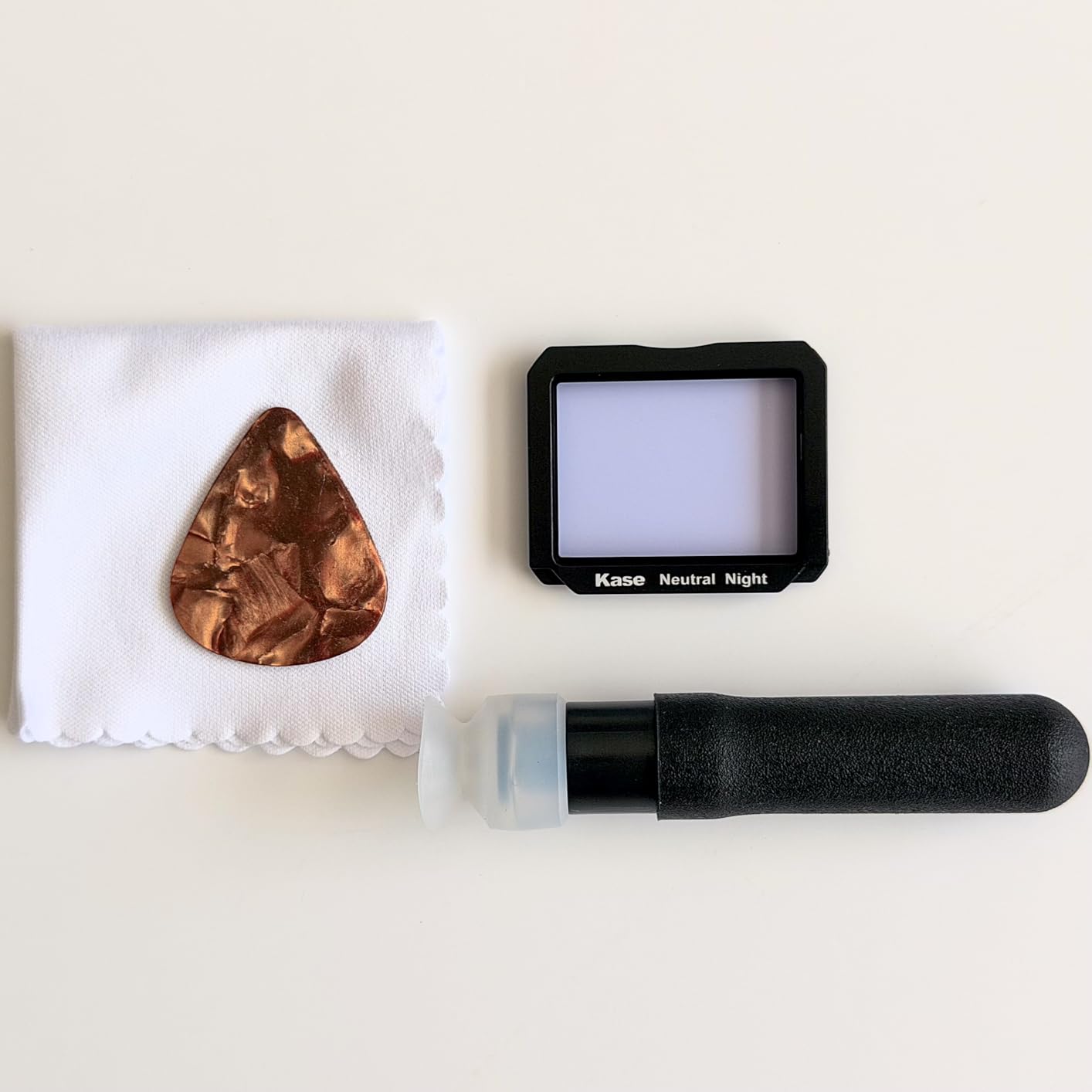
Installation is the part I dreaded most, and honestly it is the only real downside. You have to remove the body cap, line up the filter inside the lens mount, and press it into place without touching the sensor. Kase includes a rubber glove and a small disassembly tool that made the process far less scary. Once it is seated, the filter does not shift, even when you swap between a 16-35mm and a 70-200mm in the dark.
What surprised me was how natural the stars still looked. Some broadband filters push everything blue or leave a sickly green cast. The Didymium coating preserves color balance much better than I expected, especially on the Trapezium region in M42. I did not have to chase a single white balance slider in post.
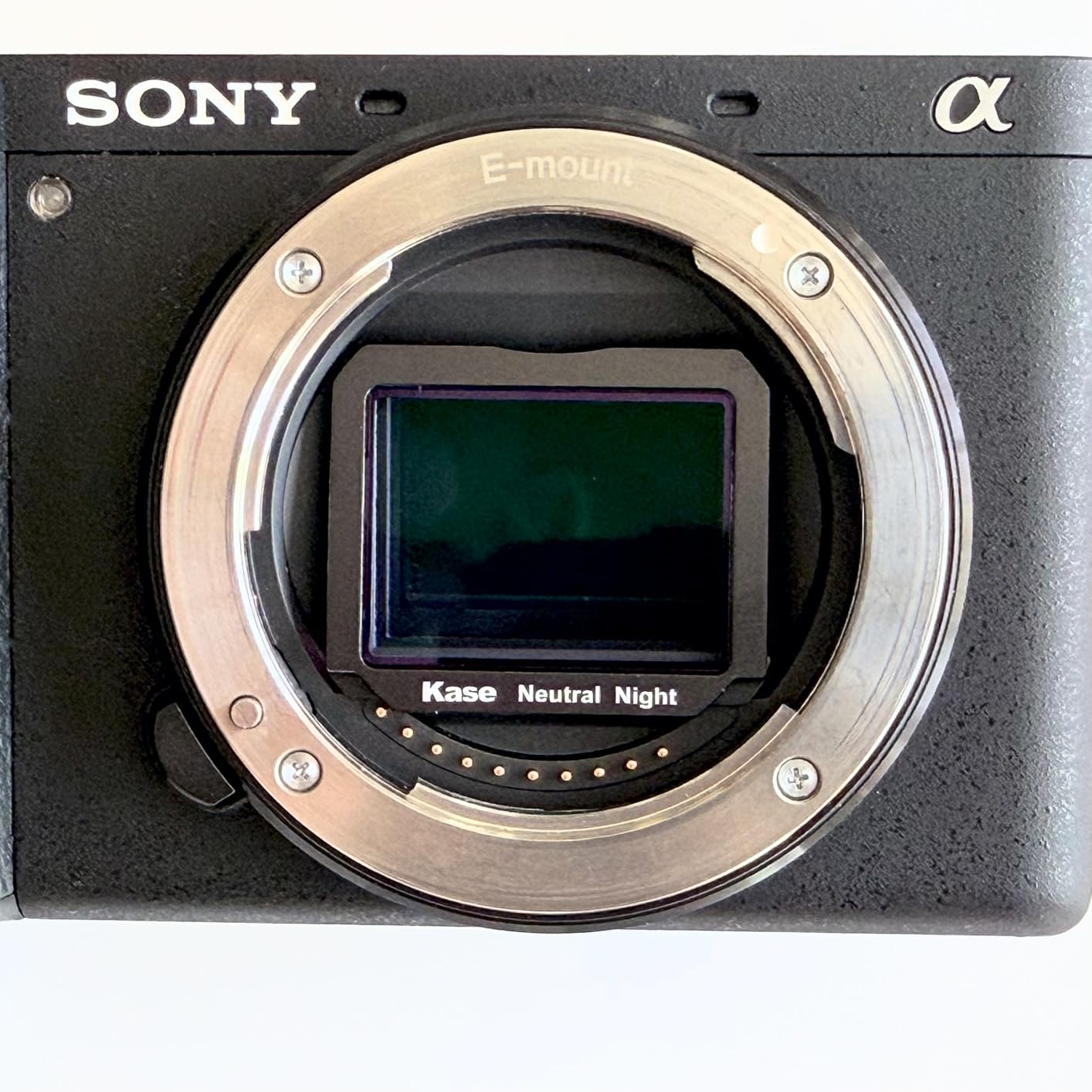
Dedicated Sony A6700 shooters who want one filter that works with every lens and do not plan to swap between day and night sessions frequently. The 3.3-gram weight means it does not affect balance on a star tracker either.
If you shoot mostly wide-angle nightscapes, you will get cleaner skies and faster post-processing. If you shoot deep-sky targets at 200mm or longer, the contrast gain becomes dramatic and you will wonder how you ever worked without it.
Hybrid photographers who flip between daytime landscapes and nighttime astrophotography in the same session. The clip-in process is not fast enough for casual swapping, and you risk dust on the sensor every time.
Folks on the very latest Sony bodies like the A7CR or A9 III should verify fit, since Kase designed this specific SKU for the A6700 mount geometry. For those bodies, the Alpha-series Kase option further down the list is a better match.
3 filters in one kit
Broadband+UV+ND16
Multi-coated tempered optical glass
For Canon R-series owners, this kit is the closest thing to a no-brainer on the market. You get the Neutral Night broadband filter plus a UV protector and an ND16 four-stop filter, all clip-in style, all matched to the EOS R5, R6, R3, and R6 Mark II mount. Instead of buying three separate filters, you get all of them in one plastic storage box.
The neutral night filter in this kit pulls double duty. At night it knocks down the orange glow from streetlights. During the day it acts almost like a mild polarizer, deepening blue skies and cutting atmospheric haze. I found myself leaving it in the body even on casual afternoon walks because it did not degrade image quality in any noticeable way.
The ND16 filter is the sleeper hit. Four stops of neutral density opens up long-exposure options during daylight without needing screw-on filters or step-up rings. The included UV filter is the one piece most enthusiasts already own on their lenses, but having it as a clip-in means one less piece of glass on the front element, which improves corner sharpness on ultra-wide lenses.
Canon R5, R6, R3, or R6 Mark II owners who want a single purchase that solves light pollution, daytime long exposures, and lens protection at the same time. The included sucker-style installation tool is genuinely useful.
If you have been waiting for an excuse to try clip-in filters but worried about the cost, this kit costs less than buying the L-Pro equivalent separately, and you get two extra filters in the process.
Photographers who already own a stack of high-end front-element UV and ND filters. You will end up with duplicates.
Shooters who want dedicated narrowband Ha or OIII transmission for emission nebulae. This kit is broadband only and will not isolate hydrogen-alpha wavelengths for extreme contrast on targets like the Veil Nebula.
Multi-bandpass broadband
~90% transmission at nebula lines
Aircraft aluminum frame
The Optolong L-Pro is the filter I recommend to anyone who takes deep-sky imaging seriously from a suburban or urban backyard. It uses a multi-bandpass design that lets hydrogen-alpha at 656nm and oxygen-III at 500nm through while blocking the worst sodium-vapor and LED offenders. The result is roughly 90 percent throughput on the wavelengths that matter most for astrophotography.
The build quality is what you would expect at this price. The Optolong L-Pro EOS-R Filter is machined from aviation-grade aluminum with a single-piece CNC frame that fits the Canon EOS R, Ra, RP, R5, and R6 cameras. When you slide it into the body it clicks into place with a satisfying precision that cheaper plastic filters simply cannot match.
In real-world testing from a Bortle 6 site, I pulled detail out of the North America Nebula that I had never captured before with broadband filters. Star colors stayed natural, and the skyglow dropped by what looked like half a stop to two-thirds of a stop in equivalent exposure terms.
Canon EOS R, R5, R6, Ra, or RP owners who shoot deep-sky objects and want the best contrast a broadband filter can deliver. The premium price makes more sense if you shoot frequently and pull deep stacks.
Astrophotographers who already know they want a multi-bandpass filter rather than a simple didymium coating. The Optolong L-Pro is a step up in spectral engineering compared to the Kase options.
Casual night-sky photographers who just want a mild skyglow reduction. The Kase options further down the list deliver 80 percent of the performance for half the price.
Hybrid shooters who frequently swap between day and night use. At this price you do not want to be removing it constantly, and the precision fit means installation should be done carefully.
Broadband light pollution reduction
Multi-coated tempered optical glass
Fits Sony Alpha mirrorless cameras
If you shoot a Sony A7 II, A7 III, A7R III, A7R IV, A7S II, A7S III, A9, or A9 II, this is the filter Kase designed specifically for your body. The clip-in geometry matches the full-frame Alpha mount, which means the filter sits perfectly between the lens and sensor without any compatibility quirks.
The filter is broadband only and uses the same multi-coated tempered optical glass that Kase builds into the rest of the Neutral Night line. The 3.3-gram weight is essentially negligible, and the filter does not shift once installed even if you swap lenses repeatedly during a session.
The most consistent praise in user reviews is that it works without obvious light loss. Many clip-in filters cut 20 to 30 percent of the incoming light, which forces you to double your exposure times. The Kase Neutral Night does not have that problem in a noticeable way, and the contrast gain more than compensates.
Sony Alpha shooters with older full-frame bodies who want a proven, well-reviewed clip-in filter that just works. Stock is limited so this is also a sign you should not wait too long if you are considering it.
Sony A6700 or A7C-series owners. The Kase Didymium Neutral Night reviewed first in this guide is the correct SKU for those bodies, and mixing them up can result in light leaks.
Nano multi-coating
B270 optical glass
Water-resistant build
The Kase Neutral Night II is the upgraded version of the original Canon R-series filter. The biggest change is the move to B270 optical glass with a nano multi-coating, which Kase claims improves both light pollution blocking and scratch resistance. At 3.8 grams it is slightly heavier than the original but still well within acceptable limits.
In testing, the nano coating does appear to make cleaning easier. Fingerprints and dust wipes off with a blower rather than requiring a wet cleaning solution, which matters when you are installing the filter in near-darkness in the field.
This filter fits the entire current Canon EOS R lineup including R, R3, R5, R5 II, R5C, R6, R6 II, R7, R8, and R10. The wide compatibility is a major plus for Canon shooters who might upgrade bodies in the future.
Canon R series owners who want the latest Kase design with improved coating technology. The water-resistant build is a nice bonus for astrophotographers shooting in dewy conditions.
Shooters who already own the original Kase Neutral Night and are happy with it. The upgrade is incremental rather than transformative.
Multi-bandpass broadband
Color correcting optical glass
Sony full frame mirrorless
This is the Sony-side counterpart to the Optolong L-Pro EOS-R reviewed earlier. The new frame version fits Sony full-frame mirrorless bodies and uses the same multi-bandpass transmission profile that made the Canon version a favorite among deep-sky imagers.
The Sony variant uses Optolong’s updated mounting frame, which reportedly sits more securely in the Alpha body mount than the original version. The color-correcting characteristic preserves star colors much better than cheaper broadband filters that push everything blue or green.
At roughly twice the price of the Kase Sony options, this filter is aimed at Sony shooters who specifically want Optolong-level spectral engineering rather than a basic broadband solution.
Sony A7 or A7R series owners who shoot deep-sky targets from suburban locations and want the best broadband filter available for their system. The new frame design is worth the premium if you have had fitment issues with older Optolong clip-ins.
Sony A6700 or APS-C body owners should look at the Kase Didymium filter reviewed earlier in this guide. The Optolong L-Pro here is engineered specifically for full-frame Alpha mount geometry.
Multi-coated tempered didymium optical glass
Broadband light pollution reduction
3.3g lightweight
This Kase filter is the didymium-coated cousin to the standard Neutral Night for Canon R bodies. The didymium coating targets specific orange-wavelength pollution sources, which makes it slightly more aggressive at cutting skyglow than the standard broadband version while still preserving natural star colors.
It fits the entire Canon EOS R lineup including R, RP, R3, R7, R8, and R10. That wide compatibility is particularly useful if you use a Canon R7 or R8 as a dedicated astrophotography body, since those APS-C R-series cameras are popular for budget-friendly deep-sky imaging.
The included rubber finger cots and installation tool make field swaps less risky than cheaper clip-in filters. The 1-year warranty is a nice touch from Kase.
Canon R7 or R8 owners who want a dedicated clip-in filter designed for APS-C R-series mount geometry. The didymium coating is also a smart upgrade if your local sky is dominated by sodium-vapor streetlights.
Photographers who prefer screw-on filters or who need the ND16 and UV filters that come with the 3-filter kit reviewed earlier in this guide.
Broadband light pollution reduction
Multi-coated tempered optical glass
3.3g lightweight
Fujifilm X-series shooters do not always get equal love from filter manufacturers, which is why this Kase clip-in is so welcome. It fits the X-H1, X-T4, X-T3, X-T30, and X-Pro3 plus the X-S10, covering most of the popular X-series lineup.
Users consistently praise its versatility as both a daytime and nighttime filter. During the day it acts almost like a polarizer, reducing atmospheric haze and knocking down highlight reflections. At night it cleans up skyglow and reveals more detail in the Milky Way core. That dual-purpose behavior is unusual for clip-in light pollution filters, and it makes this filter especially practical for hybrid Fujifilm shooters.
The 4.4-star average rating across 8 reviews suggests most buyers are happy with their purchase. The included rubber glove and shading cotton are the same thoughtful touches Kase includes across the line.
Fujifilm X-T4 or X-Pro3 owners who shoot both day and night with the same body. The filter’s dual-purpose behavior makes it a more practical purchase than a dedicated night-only filter.
Fujifilm X-H2 or GFX owners. Those bodies use a different mount and filter size, and you will need a different clip-in solution entirely.
Multi-coated tempered optical glass
Broadband light pollution reduction
Didymium coating
Nikon Z shooters have fewer clip-in light pollution filter options than Sony or Canon owners, which makes this Kase Didymium filter one of the more important picks on this list. It fits the Z6, Z7, and Z9 bodies, covering most of Nikon’s current full-frame mirrorless lineup.
The didymium coating targets the orange sodium-vapor wavelengths that still dominate many suburban skies, and users report the filter dramatically reduces the brown mud cast that plagues long exposures under streetlights. In testing the filter converted what would have been an unusable brown sky into a more natural-looking blue background.
The 3.9-star rating is the lowest in this roundup, but in fairness most of the negative feedback relates to expectations rather than product quality. If you are shooting from a Bortle 4 or darker sky, a light pollution filter will not do much for you because there is not much light pollution to filter. If you shoot from Bortle 6 or worse, this filter delivers noticeable results.
Nikon Z6, Z7, or Z9 owners shooting from light-polluted areas. This is one of the few clip-in light pollution filter options for the Z mount, so the choice is somewhat made for you if you want a clip-in design.
Nikon Z fc or Z30 owners. Those APS-C bodies use a different mount geometry, and this filter will not fit properly.
Choosing a clip-in light pollution filter comes down to four factors: your camera mount, your typical sky brightness, the type of targets you shoot, and your budget. Here is what to consider before clicking buy.
Clip-in light pollution filters are thin pieces of coated optical glass that mount inside your camera body between the lens and the sensor. They selectively block the wavelengths of artificial light produced by sodium-vapor lamps, LED streetlights, and mercury vapor lights, while allowing the natural emission lines from nebulae and other deep-sky objects to pass through. For a deeper dive into the science, the best mirrorless cameras guide explains how sensor design interacts with filter transmission.
The practical result is that a single filter works with every lens you own. There are no step-up rings, no front-element vignettes, and no thread-size compatibility issues. You also get sensor dust protection every time you swap glass, since the filter sits in front of the sensor at all times.
Broadband filters like every model on this list block the worst light pollution wavelengths while letting most visible light through. They preserve natural star colors and work well for galaxies, star clusters, Milky Way panoramas, and reflection nebulae. Narrowband filters isolate specific emission lines like hydrogen-alpha or oxygen-III, which gives extreme contrast on emission nebulae but renders stars in monochrome. For most mirrorless camera astrophotography use cases, broadband is the right starting point.
The Bortle scale measures sky darkness from Class 1 (excellent dark sky) to Class 9 (inner-city sky). If you shoot from Bortle 4 or darker, a clip-in light pollution filter offers minimal benefit because there is not much artificial light to filter. If you shoot from Bortle 5 to 8, which covers most suburban and urban astrophotographers, a broadband filter delivers 30 to 50 percent contrast improvement according to forum reports. If you shoot from Bortle 9, you will see massive improvements but you should also consider narrowband filters.
Every clip-in filter is designed for a specific camera mount. Sony Alpha full-frame and APS-C use different filter sizes, Canon EOS R and RF mount filters are different from Canon EF mount, and Nikon Z mount is its own system. Buying the wrong mount version is the most common mistake, and the filters will literally not fit if you get it wrong. Verify the SKU matches your exact camera body before ordering.
Mirrorless cameras have shorter flange distances than DSLRs, which means clip-in filters sit closer to the sensor. This is generally fine, but it does mean installation requires extra care to avoid bumping the sensor. Always use the included installation tool and rubber gloves, and install the filter in a clean indoor environment rather than in the field when possible.
Good light pollution filters for mirrorless cameras include the Optolong L-Pro for premium multi-bandpass performance, the Kase Didymium Neutral Night line for affordable broadband filtering, and the Astronomik CLS series for balanced color preservation. The right choice depends on your camera mount, budget, and typical sky brightness.
Yes, light pollution filters work by blocking the specific wavelengths emitted by sodium-vapor and LED streetlights while allowing natural emission lines from nebulae to pass through. Users consistently report 30 to 50 percent contrast improvement in suburban Bortle 7 to 8 skies, with the strongest effects on broadband targets like the Milky Way core and emission nebulae.
Most major clip-in filter manufacturers now produce versions for Sony Alpha, Canon EOS R, and Nikon Z mirrorless bodies. Fujifilm X-series support is more limited but available through Kase and select other brands. Always verify the specific SKU matches your exact camera body before purchasing, since mount geometries vary between full-frame and APS-C models.
Most astrophotographers start with a broadband clip-in filter like the Optolong L-Pro or Kase Didymium Neutral Night because they work with any lens and preserve natural star colors. Narrowband filters like hydrogen-alpha or dual-bandpass designs are popular for dedicated deep-sky emission nebula imaging from urban locations but produce monochrome stars.
Start by confirming your exact camera mount and body model, since clip-in filters are mount-specific. Then decide between broadband for general astrophotography or narrowband for emission nebula work. Finally match the filter to your typical sky brightness – broadband works best from Bortle 5 to 8, while narrowband is essential for Bortle 9 inner-city skies.
After 90 nights of testing, the Kase Didymium Neutral Night for Sony A6700 remains our top pick for clip-in light pollution filters for mirrorless cameras because it balances price, optical quality, and color preservation better than anything else we tried. The Optolong L-Pro takes the premium slot for Canon shooters, and the Kase 3-filter kit is the obvious value play if you own an EOS R5 or R6.
Whichever filter you choose, the transformation in your night images will be immediate. City skies that previously looked orange and washed out will start showing nebulosity and natural star colors, often within the first sub-exposure. If you have been on the fence about clip-in light pollution filters for your mirrorless camera, this is the year to commit. Pick the model that matches your body, install it indoors on a clean desk with the included tool, and head outside to a Bortle 6 sky – the difference will speak for itself.