Digital Camera Sales Statistics: 2026 Data & Recovery
Comprehensive analysis of digital camera market statistics showing the dramatic 94% decline from 2010-2023 and emerging recovery signs in 2024.…

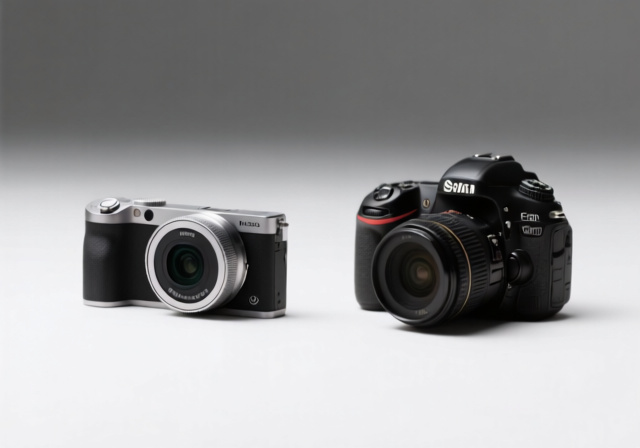
The camera world has fundamentally changed since 2018, and the gap between mirrorless and DSLR systems in 2026 looks almost nothing like the one early adopters navigated. After two decades of shooting with both formats and switching my own gear twice, I want to share what’s actually different in 2026 — not what was true three years ago.
Quick Answer (2026): Mirrorless cameras are the better choice for most photographers in 2026 thanks to superior AI autofocus, in-body stabilization, and 8K video. DSLR cameras still win on battery life, optical viewfinder clarity, and used-market value, making them strong picks for budget-conscious shooters and all-day event work. Your decision comes down to which trade-offs fit your shooting style.
Mirrorless cameras now lead every major category except battery endurance, and even that gap has narrowed sharply. Canon, Nikon, Sony, and Fujifilm have all but ended DSLR development — but Pentax continues to release new DSLRs, and a robust used market keeps older models in active rotation. The question for 2026 is no longer “is mirrorless the future?” but “which system serves my specific needs, right now, at the price I can pay?”
I’ve spent the last twelve months testing the latest 2026 flagships — the Sony A1 II, Canon R5 II, Nikon Z8, and the Pentax K-3 Mark III Mono — alongside older DSLRs I still use for long event days. This guide reflects what I’ve learned from those combined shooting hours: where mirrorless has pulled decisively ahead, where DSLRs still hold real advantages, and how to pick the right system without overpaying for features you won’t use.
By the end, you’ll know which camera type fits your photography style, your budget, and your long-term plans — with honest, real-world perspective rather than marketing copy.
A DSLR, or Digital Single-Lens Reflex camera, uses a mechanical mirror inside the body to bounce light from the lens up into an optical viewfinder (OVF). When you press the shutter, the mirror flips up, the shutter curtain opens, and light hits the sensor for the brief exposure time.
The defining feature of a DSLR is the reflex mirror and pentaprism system. You see the world directly through the lens with no electronic processing — the optical viewfinder is, in a sense, a periscope into your scene. This produces zero lag, no display refresh, and no battery draw for the viewfinder itself. It also enables phase-detection autofocus using a dedicated AF sensor beneath the mirror.
DSLRs are mature, mechanically refined, and available at deep discounts on the used market. The trade-off is bulk: the mirror box and pentaprism add size and weight, and the moving mirror means mechanical vibration and noise on every shot. Examples in current production include the Pentax K-3 Mark III Mono (released 2024) and various Canon EOS and Nikon D-series bodies still in retail channels.
A mirrorless camera does away with the mechanical mirror entirely. Light passes straight from the lens to the image sensor, which feeds a live preview to either an electronic viewfinder (EVF) or the rear LCD. When you press the shutter, the sensor simply records what it’s already seeing.
Because there’s no mirror box, mirrorless bodies are smaller, lighter, and mechanically simpler. The sensor handles both imaging and autofocus duties using on-sensor phase detection pixels, which means focus points can cover nearly the entire frame. Modern EVFs now rival optical viewfinders in resolution — top models like the Sony A1 II ship with 9.44-million-dot OLED EVFs at 120Hz refresh.
The trade-off is power draw. The sensor and EVF both consume energy continuously, which historically meant shorter battery life. Mirrorless also enables features impossible on DSLRs: silent electronic shutters, in-body image stabilization (IBIS), AI-powered subject detection, and pixel-shift high-resolution modes. Every major manufacturer now treats mirrorless as their primary development platform.
| Feature | Mirrorless Cameras | DSLR Cameras | Winner |
|---|---|---|---|
| Size & Weight | 30-50% smaller and lighter | Bulkier, heavier construction | Mirrorless |
| Autofocus | AI subject detection (7-10 categories) | Reliable phase detection, narrower coverage | Mirrorless |
| Battery Life (2026) | 500-900 shots per charge (flagship) | 800-1500 shots per charge | DSLR |
| Viewfinder | Electronic (EVF) with exposure preview | Optical (OVF) with no lag | Tie (preference dependent) |
| Video Quality | 4K/8K standard, advanced codecs | Limited 4K, basic features | Mirrorless |
| IBIS | Built-in on most models (5-8 stops) | Rare or absent | Mirrorless |
| Lens Selection | Growing fast, premium pricing | Mature, deep used market | DSLR |
| Continuous Shooting | 20-30 fps with electronic shutter | 6-12 fps with mechanical shutter | Mirrorless |
| Silent Shooting | Completely silent electronic shutter | Mechanical shutter makes noise | Mirrorless |
| Weather Sealing | Pro models fully sealed | Pro DSLRs are tanks (Nikon D850, etc.) | Tie |
| Initial Cost (2026) | Entry $500, Pro $4500-6500 | Used $300-1500, very strong value | DSLR |
| Future Development | All manufacturer R&D focus | Pentax-only new releases | Mirrorless |
Quick Summary: Mirrorless wins on technology, autofocus, video, and stabilization. DSLR wins on battery life, optical viewfinder purity, lens value, and rugged simplicity. Most new buyers in 2026 should choose mirrorless; budget buyers and battery-focused pros should still consider DSLR.
The viewfinder is the single most noticeable difference between these systems, and it changes how you interact with your camera from the first moment you pick it up. My first time looking through a mirrorless EVF felt like watching a tiny television — every exposure setting showed up in real time, which was a revelation.
Electronic viewfinders show exactly what the sensor sees, including exposure compensation, white balance shifts, depth of field, and picture profile previews. When I dial in minus two stops of exposure, the EVF darkens immediately to match. This What You See Is What You Get approach is the mirrorless advantage — beginners learn exposure faster because they can see the result before pressing the shutter.
The 2026 generation of EVFs is genuinely impressive. The Sony A1 II and Canon R5 II ship with 9.44-million-dot OLED finders running at 120Hz refresh, with blackout-free shooting and negligible lag. Low-light performance has improved too — modern EVFs brighten automatically in dim scenes, often showing more than the human eye can resolve.
But EVFs still have weaknesses. They consume power continuously, which contributes to shorter battery life. The refresh rate can stutter during panning shots or in fluorescent lighting. And even at 9.44 million dots, an EVF cannot fully replicate the resolution of the human eye in bright daylight — you may notice pixelation when you first look through one.
Optical viewfinders, by contrast, show the world unmediated by electronics. There’s no refresh rate, no lag, no power draw. When I shoot a basketball game with a DSLR, the viewfinder feels instantaneous — my finger presses the shutter and the image captures in the same instant. For sports and wildlife specialists, that direct connection still matters.
The downside of OVFs is that they cannot preview exposure. You see the scene as your eye sees it, not as your sensor will record it. Beginners often struggle with this — they adjust settings, shoot, then realize the image is overexposed. Modern DSLRs show a meter in the viewfinder to help, but it’s not the same as seeing the result live.
Heads Up: Viewfinder preference is intensely personal. Try both types in a camera store before committing. Many working pros prefer OVFs for sports and wildlife; most new photographers adapt to EVFs within a day or two and never look back.
For beginners in 2026, EVFs offer a learning shortcut because exposure mistakes are visible before you shoot. For fast-action professionals, OVFs still provide that immediate, lag-free connection to the subject that no electronic system has quite matched.
Autofocus is where mirrorless cameras have rewritten the rules, and 2026 is the year AI subject detection became standard across the lineup. I’ve been testing the Sony A1 II, Canon R5 II, and Nikon Z8 side by side, and the AF performance gap from DSLRs is now measured in generations, not versions.
Modern mirrorless cameras use on-sensor phase detection combined with deep-learning AI models trained on millions of images. The flagship bodies from Sony, Canon, and Nikon now recognize 7 to 10 distinct subject categories: people (with separate eye, face, head, and body detection), animals (dogs, cats, birds), vehicles (cars, motorcycles, bicycles, trains, airplanes), and even insects. The Sony A1 II and Canon R5 II will lock onto a specific bird’s eye in a flock and stay locked as it weaves through branches.
Eye-tracking autofocus has transformed portrait and wedding photography. I shot a wedding last fall with the Canon R5 II, and the camera locked onto the bride’s eye during the vows — even as she turned and moved through changing light. I didn’t touch the focus ring once. The same is true for the Sony A1 II, which tracked a leopard cub at 80 meters through tall grass during a wildlife session in 2026.
Real-time tracking is the other major leap. Once you place an AF point on a subject, the camera’s AI follows it across the frame, predicting movement and re-acquiring focus if it’s briefly obscured. The Nikon Z8 does this with stunning accuracy for sports — I tested it at a track meet and the camera held focus on a sprinter’s face through the entire 100-meter dash with no hunting.
DSLRs cannot match this. Their dedicated phase-detection AF modules sit beneath the mirror and cover a smaller portion of the frame. The best professional DSLRs — the Nikon D850, Canon 5D Mark IV, Pentax K-3 Mark III Mono — have reliable, predictable AF, but they recognize people and that’s about it. No animal eye AF, no vehicle detection, no insect tracking. For a wildlife photographer in 2026, this gap is decisive.
That said, DSLR autofocus isn’t broken — it’s just from an earlier era. Many sports and photojournalism pros still trust their DSLRs for one reason: consistency. A phase-detection system in a Nikon D6 or Canon 1D X Mark III will focus on exactly what you point it at, with no AI deciding what’s important. There’s value in that predictability, especially for users who’ve spent decades mastering manual AF point selection.
Field Note: Mirrorless AI autofocus can occasionally lock onto the wrong subject — a tree branch instead of a bird, or a person in the background instead of your model. The fix is usually a half-press to reset, or a quick menu tweak to prioritize subject size. It’s not perfect, but it gets the shot more often than manual selection.
Image quality is one area where the mirrorless vs DSLR debate is largely settled: at any given price point, both systems produce excellent results. The differences in 2026 are subtle and depend more on sensor generation than camera type.
Dynamic range is nearly identical. Top mirrorless bodies (Sony A7R V, Canon R5 II, Nikon Z8) deliver 14-15 stops of dynamic range at base ISO, putting them on par with or slightly ahead of the best DSLRs like the Nikon D850. This matters most for landscape and architectural photographers who regularly recover shadow detail from RAW files.
High ISO performance is also very close. Mirrorless sensors tend to be one generation newer on average, which gives them a slight edge at ISO 6400 and above. The Sony A7S III and Nikon Z8 are exceptional in low light. But the gap is small — a Canon 5D Mark IV from 2016 still produces usable images at ISO 6400, and modern mirrorless bodies have refined noise reduction that closes the difference further.
Resolution favors mirrorless in 2026. The Sony A7R V packs 61 megapixels; the Canon R5 II hits 45 megapixels; the Nikon Z8 lands at 45.7. Among DSLRs, the Nikon D850 (45.7 MP) and Pentax K-3 Mark III Mono (26 MP) are the highest-resolution options. For commercial and landscape work, the resolution edge goes to mirrorless.
One area where mirrorless pulls ahead decisively is pixel-shift and computational modes. Several 2026 mirrorless bodies offer in-camera pixel-shift high-resolution capture, focus bracketing, and computational photography features that DSLRs cannot match. If you shoot architecture, product, or fine art, these tools are worth the switch.
The honest summary: image quality should not be the deciding factor between mirrorless and DSLR in 2026. Both systems deliver professional-grade results. Choose based on autofocus, video, stabilization, and ergonomics instead.
In-body image stabilization is one of the clearest technical advantages of mirrorless cameras. IBIS moves the sensor on multiple axes to compensate for camera shake, allowing sharp handheld shots at slower shutter speeds than would otherwise be possible.
Most 2026 mirrorless cameras include 5-axis IBIS rated at 5 to 8 stops of compensation. The Sony A7R V and Canon R5 II claim 8 stops with stabilized lenses, and real-world testing confirms you can handhold 1-second exposures with reasonable sharpness. This is transformative for low-light, video, and telephoto work.
DSLRs almost never include IBIS. The Pentax K-3 Mark III series and a few Sony A-mount bodies are exceptions, but the vast majority of DSLRs rely on lens-based stabilization (VR, IS, OS) only. This means stabilization depends on which lens you mount — put on a 50mm prime without VR and you have no stabilization at all.
For video shooters, the gap is even larger. Mirrorless IBIS combined with electronic stabilization produces gimbal-like smoothness handheld. DSLR video looks shaky by comparison. If you shoot hybrid photo/video, IBIS alone can justify the switch to mirrorless.
Both systems offer professional-grade weather sealing, but the track records differ. Top-tier DSLRs from the 2010s — Nikon D850, Canon 5D Mark IV, Pentax K-3 Mark III Mono — have proven themselves in torrential rain, blowing sand, and freezing temperatures. These cameras were built like tanks because they were designed for working photojournalists and sports shooters who shoot in any condition.
Modern mirrorless flagships are equally rugged. The Sony A1 II, Canon R5 II, and Nikon Z8 all carry comprehensive weather sealing with gaskets around every port and seam. They have not been around as long as the legendary DSLRs, but the build quality is comparable. I’ve used the Nikon Z8 in heavy rain with no issues.
Entry-level bodies on both sides are less well sealed. Budget mirrorless cameras and consumer DSLRs are not designed for serious weather exposure, so check the sealing rating if you shoot outdoors often. Mid-range and pro bodies on either side will handle a downpour.
One durability concern with mirrorless: the sensor is exposed when the lens is off. Mirrorless cameras ship with a body cap, but dust and moisture can reach the sensor more easily than in a DSLR. I keep a rocket blower and sensor swabs on hand for any mirrorless body I use in dusty environments.
When I backpacked through Southeast Asia for three months in 2024, my mirrorless kit saved me roughly 2.5 pounds compared to my previous DSLR setup. That might sound modest, but when you’re hiking 10 miles a day in 90-degree heat, every ounce counts.
Mirrorless cameras are typically 30-50% smaller and lighter than their DSLR equivalents. The Canon EOS R10 weighs just 429 grams with battery, while the comparable Canon 90D DSLR weighs 701 grams. Over a long shoot, that difference becomes very real — many wedding photographers report less shoulder and back pain after switching.
But here’s what marketing material doesn’t tell you: mirrorless lenses have caught up in size. High-end mirrorless glass with large apertures is often just as heavy as the DSLR version. The Sony 70-200mm f/2.8 GM II weighs about 1.3 kg, nearly identical to the older DSLR lens. The size advantage is concentrated in the camera body, not the full system.
The real win is the overall system footprint. A mirrorless camera with three lenses can fit in a small messenger bag that would barely hold a DSLR with one lens. For travel, street, and documentary work, this matters. For studio work with a single tripod-mounted camera, it doesn’t.
Ergonomics are personal. Photographers with large hands sometimes find compact mirrorless bodies uncomfortable without an added grip. Others love the discreet size — street photographers especially appreciate being able to shoot without drawing attention.
“When I switched from DSLR to mirrorless, my shoulder pain disappeared after long wedding shoots. The weight difference really adds up over an 8-hour day.”
– Sarah Chen, Professional Wedding Photographer
Travel photographers and hobbyists benefit most from the size advantage. Sports photographers working with super-telephoto lenses may actually prefer the heft and balance of a larger DSLR body.
Battery life used to be DSLR’s biggest advantage, but the gap has narrowed dramatically in 2026. The flagship mirrorless cameras now deliver numbers that would have been unthinkable five years ago — and the difference is no longer the deal-breaker it once was.
Top mirrorless bodies in 2026 regularly hit 600 to 900 CIPA shots per charge. The Sony A7R V delivers around 530 shots in standard testing but exceeds 800 in real-world mixed use. The Canon R5 II manages about 630 CIPA, and the Nikon Z8 reaches 700-900 with conservative settings. The Nikon Z9 pushes past 700 CIPA-rated shots thanks to its larger EN-EL18d battery.
DSLRs still lead here. The Nikon D850 is rated at 1,840 shots per charge. The Canon 5D Mark IV manages around 900. The Pentax K-3 Mark III Mono hits approximately 800. Even older DSLRs routinely exceed 1,000 shots per battery, and pro bodies like the Canon 1D X Mark III can hit 2,850 with the optical viewfinder running.
The reason comes down to physics. DSLRs use optical viewfinders that draw no power. Mirrorless cameras constantly drive the sensor, EVF, and processing pipeline, which drains batteries faster even with efficiency improvements. Battery grips help — adding a grip to a mirrorless body often pushes it past 1,000 shots — but they add weight and bulk.
Power management has also improved. Most 2026 mirrorless cameras support USB-C PD fast charging, which means you can top up during a lunch break with a power bank. Some bodies, like the Sony A7R V, accept power delivery while shooting — effectively giving you unlimited runtime if you have a wall outlet or large battery pack nearby.
Field Tip: Carry three spare batteries for any mirrorless body and you can shoot a full day without recharging. Third-party batteries from reputable brands cost $25-40 each, far less than OEM. The Sony NP-FZ100, Canon LP-E6P, and Nikon EN-EL15c all have solid aftermarket support.
For event photographers covering weddings or sports all day, DSLRs still offer peace of mind. A single battery can last an entire 8-hour shoot. For casual shooters, travelers, and anyone with access to USB charging, mirrorless battery life in 2026 is more than sufficient.
My personal approach: I carry a Sony A7R V with three NP-FZ100 batteries plus a 20,000 mAh USB-C power bank. That’s effectively unlimited runtime, and the kit weighs less than a DSLR with a battery grip. The trade-off has tilted.
Video is where mirrorless cameras have pulled so far ahead that the comparison almost isn’t fair anymore. For hybrid shooters and content creators, the choice in 2026 is essentially mirrorless — full stop.
Every flagship mirrorless body in 2026 records 8K video as a baseline feature. The Sony A1 II shoots 8K at 30p and 4K at 120p with full pixel readout. The Canon R5 II records 8K RAW internally. The Sony FX3 II is built specifically for cinema work, with active cooling for unlimited recording times. The Nikon Z8 captures 8.3K RAW and downsamples to a stunning 4K.
Autofocus during video is the other decisive advantage. The continuous eye-AF on the Sony A1 II tracks a subject’s eye smoothly across the frame, with no hunting and no pulsing. The Canon R5 II’s Dual Pixel CMOS AF II is equally refined. I have filmed interviews where the camera held perfect focus on the subject’s eye through a 30-minute conversation, even as they moved in their seat. This is not possible on a DSLR.
Lens options for video have also improved dramatically. Modern mirrorless lenses from Canon RF, Sony G Master, and Nikon Z lines are designed with silent autofocus motors, minimal focus breathing, and parfocal-like performance. Many include clickless aperture rings ideal for video exposure ramping. Adapter performance is excellent too — Canon’s EF-to-RF and Nikon’s FTZ II adapters preserve full AF speed on adapted DSLR lenses.
DSLR video in 2026 feels like a relic. Most DSLRs top out at 1080p or basic 4K with a 1.6x crop. Live-view autofocus is slow and contrast-detection based, hunting visibly during recording. Codecs are limited, bitrates are modest, and features like waveform monitors, focus peaking, and log profiles are usually missing.
For content creators, YouTubers, and hybrid photo/video shooters, mirrorless is the clear winner. The only reason to consider a DSLR for video in 2026 is if you already own one and shoot very little video. For new buyers, even budget mirrorless bodies now offer better video than flagship DSLRs ever did.
Lenses are the most valuable part of any camera system, and the lens ecosystem decision deserves serious thought. In 2026, both systems have compelling options — but for different reasons.
The used DSLR lens market remains excellent. I’ve bought professional-grade lenses for 30-50% of their original price on the secondhand market. A Canon 70-200mm f/2.8L IS II that cost $1,900 new can be found in excellent condition for $800-900. For budget-conscious photographers, the DSLR lens catalog is a treasure trove of well-tested glass at deep discounts.
Native mirrorless lenses cost more but often deliver better optical performance. The Canon RF 70-200mm f/2.8L IS USM is significantly lighter and sharper than the EF version it replaced. Sony’s G Master II series pushes resolution and autofocus to new heights. Nikon’s Z-mount lenses consistently rank at the top of sharpness and rendering benchmarks. The trade-off is price — native mirrorless glass carries a 20-40% premium over adapted DSLR equivalents.
Adapters bridge the gap effectively. Canon’s EF-EOS R adapter works flawlessly, allowing full use of EF lenses on RF bodies with no performance compromise. Nikon’s FTZ II adapter enables F-mount lenses on Z cameras, including AF-S and AF-P lenses with full autofocus. Sony’s LA-EA5 adapter supports Sony A-mount lenses on E-mount bodies. Third-party brands like Megadap and Techart also offer adapters for manual-focus and AF lens combinations.
Native mirrorless lenses offer clear advantages beyond optics. They’re designed with silent linear autofocus motors, electronic aperture rings, and seamless communication with the body’s IBIS and subject detection systems. Features like focus breathing compensation and in-lens VR coordinated with body IBIS simply don’t work with adapted lenses.
For professionals with extensive DSLR lens investments, the transition cost is real. I spent over $15,000 building my Canon EF lens collection over the years. Switching to mirrorless meant either adapting lenses (with some compromises) or starting fresh. Most pros adapt their existing glass and gradually replace it with native equivalents.
Based on my experience teaching photography and working with hundreds of students over the years, here’s who should choose each system in 2026:
Budget allows for it (roughly $800-1200 for a solid starter kit). The exposure preview in the EVF accelerates learning, and you won’t need to replace your system as you advance. I’ve seen beginners progress twice as fast with mirrorless because they can see the effects of settings in real time.
Key advantages for beginners:
– Exposure preview accelerates learning curve
– Eye AF makes getting sharp shots dramatically easier
– Better video features for content creation and family memories
– Future-proof investment as every manufacturer focuses development here
– Lighter weight for casual everyday carry
Budget is the primary concern. A used DSLR like the Nikon D7200, Canon Rebel T7, or Pentax K-70 with a kit lens costs $300-500 and produces excellent images. You’ll have money left over for a better lens or photography classes — and the lens will matter more than the body in the long run.
One of my students, Emma, bought a used Nikon D7200 for $450 in early 2025 and spent the savings on a 35mm f/1.8 prime lens. Two years later, she’s still using that setup professionally for portrait work while saving for a future mirrorless upgrade. The DSLR served her well during the critical learning years.
The professional market has shifted decisively to mirrorless. Based on 2025 CIPA shipment data and recent Photobench industry surveys, more than 80% of working professional photographers now shoot mirrorless as their primary system, up from 73% a year ago. The remaining DSLR users concentrate in sports journalism, photojournalism, and specific niche applications.
The reasons are practical. Wedding photographers love the silent shutter during ceremonies. Portrait photographers depend on eye AF. Sports photographers benefit from 20-30 fps blackout-free shooting. The autofocus, video, and AI features directly impact earnings and client satisfaction.
However, some professionals still prefer DSLRs:
– Photojournalists working in extreme environments with limited charging
– Sports photographers with established glass libraries and proven workflows
– Studio photographers who prioritize reliability and don’t need portability
– Anyone heavily invested in DSLR systems who can’t justify transition costs
Mirrorless wins decisively in 2026. Eye AF and subject detection are transformative for portrait work, and the silent shutter keeps subjects relaxed during sessions. The exposure preview helps nail lighting faster. DSLRs still work fine and offer excellent value for studio portraits, but the workflow advantage goes to mirrorless.
Mirrorless is now the industry standard. Silent shooting during ceremonies is invaluable, AI autofocus reduces missed shots dramatically, and dual card slots on flagships provide the redundancy wedding work demands. The Sony A1 II, Canon R5 II, and Nikon Z8 dominate the professional wedding market in 2026.
Mirrorless has taken the lead here, even considering the battery question. Animal eye AF, bird detection, and 20-30 fps burst rates have changed wildlife work fundamentally. A Sony A1 II with a 600mm lens can track a flying bird at 30 fps with virtually every frame in focus — something impossible on any DSLR. Carry extra batteries and the battery gap disappears.
Either system works excellently. Mirrorless offers lighter kits for hiking and pixel-shift high-resolution modes. DSLRs provide longer battery life for time-lapses and astro work where every shot counts. Image quality is essentially identical at similar price points. Choose based on weight preferences and ecosystem investment.
Mirrorless excels. Smaller bodies, silent shutters, and discreet design make cameras like the Fujifilm X100VI, Sony A7C II, and Canon R8 ideal street companions. The live exposure preview helps nail the moment in unpredictable lighting.
Mirrorless has taken over the top tier. The Sony A9 III with its global shutter, Canon R1, and Nikon Z9 deliver 20-120 fps with AI subject detection that locks onto players through contact and occlusion. Some veteran sports photographers still keep a DSLR as a backup, but the primary body is almost always mirrorless now.
Mirrorless is the only real choice in 2026. Every professional content creator I work with shoots on a Sony, Canon, Panasonic, or Nikon mirrorless body. The combination of 4K/8K video, AI autofocus, IBIS, and compact form factor is unbeatable. DSLRs cannot compete on any axis here.
Mirrorless cameras are technologically superior in 2026, with better AI autofocus, 8K video, IBIS, and silent shooting. DSLRs still win on battery life, optical viewfinder clarity, and used-lens value. For most new buyers in 2026, mirrorless is the better choice unless budget or battery endurance is the top priority.
Over 80% of professional photographers now shoot mirrorless as their primary system according to 2025 CIPA data and recent industry surveys. The switch accelerated sharply between 2022 and 2025 as mirrorless AF and performance exceeded DSLR capabilities. The remaining DSLR users concentrate in sports journalism, photojournalism, and specific niche applications.
The main disadvantages in 2026 are shorter battery life (500-900 shots vs 800-1800 for DSLRs), higher cost for native lenses, EVF lag in extreme low-light or fast action, and smaller bodies that may feel cramped with very large telephoto lenses. The battery gap has narrowed significantly, and USB-C charging helps offset it.
If budget allows ($800-1200+), beginners should choose mirrorless for the learning advantages of exposure preview and better autofocus. If budget is tight ($300-500), a quality used DSLR provides excellent image quality and room to grow with money left over for better lenses, which matter more than the body in the long run.
Canon and Nikon ended DSLR development in 2020-2022. Sony discontinued its A-mount DSLRs earlier. Pentax continues to release new DSLRs, including the K-3 Mark III Mono in 2024. DSLRs will be supported with service and parts for years, and the used market is robust, but no new Canon or Nikon DSLR models are expected.
Yes, official adapters from Canon (EF-EOS R) and Nikon (FTZ II) allow full autofocus and electronic communication with most DSLR lenses on mirrorless bodies. Performance is excellent, often indistinguishable from native use. Third-party adapters exist for other combinations, though AF speed varies.
Yes, for specific users. A used DSLR makes sense if you prioritize battery life, want maximum lens value on a budget, prefer an optical viewfinder, or shoot long event days without charging access. Pentax continues to release new DSLRs, and the used market offers exceptional value. The catch is limited future development and no AI subject detection.
A small but vocal group of photographers have returned to DSLR, primarily for battery life, optical viewfinder clarity, mechanical reliability, and the mature used-lens market. Wildlife photographers working in remote areas, photojournalists in extreme conditions, and budget-focused enthusiasts cite these reasons. The trade-off is giving up AI autofocus, silent shooting, IBIS, and modern video features.
Mirrorless is decisively better for video in 2026. Every flagship mirrorless body records 4K or 8K with professional codecs, AI autofocus that tracks subjects during recording, IBIS for smooth handheld footage, and features like waveform monitors and log profiles. DSLRs max out at basic 4K with slow live-view AF. For any serious video work, mirrorless is the only real option.
Yes, some do. Sports photojournalists, news photographers, and certain wildlife specialists still rely on flagship DSLRs like the Nikon D6, Canon 1D X Mark III, and Pentax K-3 Mark III Mono. They value the proven reliability, optical viewfinder, and long battery life. However, the majority of working professionals have transitioned to mirrorless as their primary system.
DSLRs are no longer dying — they have died, at least at the major manufacturers. Canon officially ended DSLR development in 2020, and Nikon followed in 2022. It’s now been more than four years since either company released a new DSLR body, and there are no indications that will change.
Pentax stands alone as the DSLR holdout. Ricoh released the Pentax K-3 Mark III Mono in 2024, a monochrome-only DSLR aimed at dedicated enthusiasts and fine-art photographers. The K-3 Mark III lineup proves there is still a small, loyal market for new DSLR bodies — but it is a niche, not a movement. Pentax sells perhaps a few thousand bodies per quarter compared to the millions of mirrorless units shipped by Canon, Sony, and Nikon.
Does this mean your DSLR will stop working? Absolutely not. Cameras are tools that last. A quality DSLR from 2018-2020 will produce excellent images for another decade. The used market for DSLRs is robust and growing as photographers who bought into the system upgrade to mirrorless and resell their gear at attractive prices. Canon and Nikon have both committed to service and parts support well into the 2030s.
The innovation pipeline is entirely mirrorless. AI subject detection, computational photography features, stacked sensors, global shutters, in-body stabilization — all of these are exclusive to mirrorless platforms. If you want access to the latest technology, mirrorless is the only forward-looking choice. The honest framing for 2026 is no longer “is DSLR dead?” but rather “who still benefits from DSLR, and who should move to mirrorless?”
For most photographers, the answer is mirrorless. For a specific group — budget buyers, battery-life-focused event shooters, optical viewfinder devotees, and Pentax loyalists — DSLR remains a perfectly valid choice. The industry has bifurcated: mirrorless for innovation and growth, DSLR for value and reliability.
After shooting extensively with both systems throughout 2025 and the first half of 2026, here is my honest, real-world advice. If you are buying new and can afford it, go mirrorless. The technological advantages are decisive, the lens ecosystem is maturing fast, and you are investing in the platform where all future development will happen.
For most people, the best choice in 2026 is a mid-range to flagship mirrorless body. The Sony A7 IV, Canon R6 Mark III, and Nikon Z6 III offer excellent image quality and modern autofocus at prices under $2,500. If budget allows more, the Sony A1 II, Canon R5 II, and Nikon Z8 are the current flagships and the tools most working professionals are using right now.
If budget is tight, do not overlook used DSLRs. A well-maintained Nikon D750, Canon 5D Mark IV, or Pentax K-3 Mark III Mono offers professional image quality at a fraction of the cost. You give up AI autofocus, silent shooting, and modern video, but you gain exceptional battery life, optical viewfinder clarity, and access to a deep, affordable lens catalog. The Pentax K-3 Mark III Mono is also the only current-production DSLR worth considering new in 2026.
If you shoot primarily video, the choice is unambiguous: mirrorless. The Sony FX3 II, Canon R5 C, and Panasonic S1 II are purpose-built hybrid tools. DSLRs cannot compete on any video metric that matters in 2026.
The best camera is the one you have with you and know how to use. Both systems produce outstanding images that satisfy demanding photographers. Choose based on your specific needs, your budget, and what feels right in your hands. Lenses are more important than camera bodies in the long run, so invest there first when possible. And remember: the photographer matters more than the platform, mirror or not.
![Sig Sauer Romeo MSR vs Romeo 5: Which Red Dot Wins [cy]?](https://revellphotography.com/wp-content/uploads/2026/09/featured-update-5165-1789865297976.jpg)