Best Lightroom Export Settings for Instagram 2026: Pro Guide
I have lost count of how many beautifully edited photos I have watched turn muddy the second they hit the…

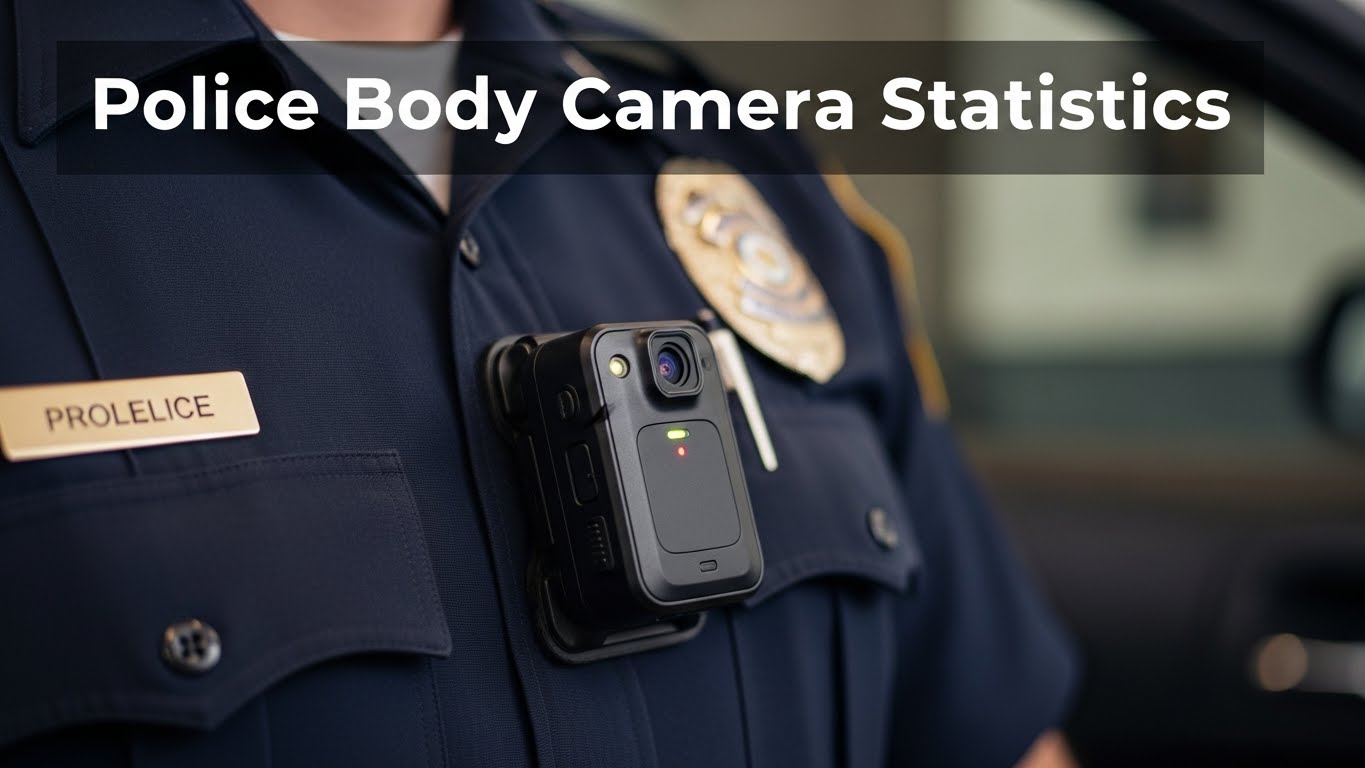
The landscape of American law enforcement has undergone a profound transformation over the past decade. Police body-worn cameras (BWCs) have shifted from experimental technology to standard equipment, fundamentally reshaping how police interactions are documented and reviewed. This comprehensive police body camera statistics analysis examines the latest data from 2026, drawing on authoritative sources including the Bureau of Justice Statistics, National Institute of Justice, and peer-reviewed research studies.
What makes this analysis particularly relevant now is the rapid acceleration in adoption rates. Recent Bureau of Justice Statistics data reveals that 82% of general-purpose law enforcement agencies have acquired body-worn cameras as of 2023—a dramatic increase from just 33% in 2013. This surge represents one of the fastest technology adoptions in law enforcement history, driven by federal funding initiatives, state mandates, and growing public demand for police accountability.
The impact of this technology extends far beyond simple video recording. Body cameras influence police behavior, affect complaint resolution, change litigation outcomes, and reshape public trust in law enforcement. However, the research presents a nuanced picture—not all studies show positive outcomes, and the effectiveness of BWC programs depends heavily on implementation quality, policy frameworks, and departmental culture.
This analysis explores police body camera statistics across multiple dimensions: current adoption patterns, measurable impacts on behavior and complaints, cost-benefit considerations including return on investment, the evolving legal landscape, technical capabilities, and what the research actually shows about effectiveness versus popular perception. Understanding these statistics is crucial for policymakers, law enforcement leaders, and citizens seeking evidence-based insights into this transformative technology.
The adoption trajectory of police body-worn cameras represents one of the most significant technological shifts in modern law enforcement. Bureau of Justice Statistics data from the Law Enforcement Management and Administrative Statistics (LEMAS) survey reveals that 82% of general-purpose law enforcement agencies had acquired body-worn cameras by 2023. This marks a substantial increase from the 47% adoption rate reported in earlier surveys and demonstrates the accelerating pace of implementation across the United States.
Department size remains a critical factor in adoption rates. Large police departments serving populations over 1 million have achieved near-universal adoption at 95%, while agencies with 500+ officers report 93% implementation. Mid-sized departments with 100-499 officers show 85% adoption rates, and smaller departments with 50-99 officers have reached 70% implementation. Even departments with fewer than 50 officers have seen significant growth, reaching 55% adoption as agencies prioritize this technology regardless of size.
The growth curve has been dramatic. In 2013, only about 33% of local law enforcement agencies utilized any form of body-worn camera technology. By 2016, that number had grown to approximately 60%, and the momentum has continued accelerating. This growth stems from multiple factors: the 2014 federal allocation of $263 million to help 50,000 officers acquire BWCs, state-level mandates requiring implementation, and substantial public demand for increased transparency in policing.
Regional patterns reveal interesting variations in adoption. Western states lead the nation with 88% adoption, followed by the Northeast at 82%, the Midwest at 78%, and the South at 75%. Urban departments demonstrate 95% adoption compared to 80% in suburban areas and 55% in rural departments. This urban-rural divide reflects differences in budget capacity, community pressure for transparency, and the scale of policing challenges faced by different jurisdictions.
The market for body-worn cameras continues robust expansion. Industry analysts estimate the current annual market value at approximately $1.8 billion, with year-over-year growth rates of 18-22%. Major manufacturers like Axon (formerly Taser) and Digital Ally dominate the landscape, though newer entrants are bringing innovation in areas like AI-powered footage analysis, improved battery life, and enhanced low-light performance. Projections suggest that adoption will reach 95% across all department sizes by 2028, effectively making BWCs standard equipment in American law enforcement.
Implementation depth varies significantly among adopting agencies. Some departments have comprehensive programs with full officer deployment, strict activation policies, and dedicated footage review teams. Others have limited deployments for specific units or situations, reflecting budget constraints or phased implementation approaches. This variation in implementation quality has important implications for the effectiveness statistics reported in research studies.
The funding landscape for body camera programs continues to evolve. While the initial federal surge provided critical seed funding, ongoing costs now fall primarily to state and local budgets. Some states have created dedicated grant programs, while others fold BWC costs into general law enforcement appropriations. The financial sustainability of these programs remains a key concern, particularly for smaller departments struggling with storage costs and personnel requirements for footage management.
The relationship between body-worn cameras and police behavior has been the subject of extensive research, with results that are more nuanced than commonly portrayed. While early studies suggested dramatic improvements in officer behavior, the National Institute of Justice’s comprehensive meta-analysis reveals a more complex picture. The CrimeSolutions rating system, which evaluates programs based on rigorous research standards, categorizes many BWC outcomes as showing “No Effects”—meaning studies failed to find statistically significant differences between treatment and control groups.
However, this seemingly negative finding requires important context. The “No Effects” rating often reflects methodological challenges rather than true lack of impact. Randomized control trials—the gold standard for research—face significant obstacles when studying police behavior. Officers cannot always be randomly assigned to camera or no-camera groups for the same encounters. Activation policies vary widely, compliance is inconsistent, and the mere presence of a camera program may influence department-wide behavior, contaminating control groups.
Despite these research challenges, several key findings emerge from the data. Citizen complaints typically decrease following BWC implementation, with reductions ranging from 17% to 60% across different studies. The Las Vegas Metropolitan Police Department study found a 37% reduction in complaints, while research in Phoenix showed a 23% decrease. These reductions likely reflect multiple factors: genuine behavior change from both officers and citizens (the “civilizing effect”), faster resolution of complaints when footage exists, and citizens being less likely to file frivolous complaints knowing video evidence may contradict their claims.
Use of force incidents show similarly mixed results. Some departments report significant reductions, while others show no statistically significant change. The Rialto, California study—frequently cited in media coverage—found a 59% reduction in use of force incidents. However, subsequent attempts to replicate these findings have produced inconsistent results. This variation may reflect differences in baseline behavior, policy implementation, organizational culture, or the specific ways cameras are deployed and used within each department.
One of the most consistent findings across studies is the exonerative value of body camera footage. Departments report that video evidence frequently clears officers accused of misconduct. Forum discussions among law enforcement personnel emphasize this benefit, noting that defense attorneys often dislike body cameras because they “overwhelmingly show police are not the problem 99% of the time.” This protection against false allegations represents one of the strongest officer support arguments for BWC programs and contributes significantly to officer morale and willingness to embrace the technology.
The impact extends beyond individual incidents to broader organizational culture. Departments with mature BWC programs report improved training outcomes as actual encounters provide authentic teaching material. Review of footage helps identify best practices, reveals areas needing improvement, and creates opportunities for coaching based on real rather than hypothetical situations. This application for training and professional development has become increasingly important as departments seek to maximize the value of their investment in camera technology.
Data from the Police Executive Research Forum indicates that 59% of Americans believe body cameras increase cooperation with police, suggesting that the technology positively affects community perceptions. This improved cooperation can lead to more effective policing and better crime resolution rates. However, this benefit depends heavily on community trust in the fairness of footage access policies and the perceived legitimacy of review processes.
The research also reveals important implementation factors that influence effectiveness. Programs with clear, consistent activation policies show stronger results than those leaving activation to officer discretion. Departments that regularly review footage for accountability and training purposes see greater behavioral impacts than those using cameras primarily for evidence collection after incidents occur. Leadership commitment, officer buy-in, and community involvement in policy development all correlate with more positive outcomes.
The financial investment required for body camera programs extends far beyond the initial equipment purchase, creating substantial budget challenges for many departments. Equipment costs range from $400-$1,200 per unit, with an average cost of approximately $800 per camera. For a medium-sized department with 200 officers, this translates to an initial investment of $160,000 just for the cameras themselves. Large departments with thousands of officers face multimillion-dollar upfront equipment costs.
Storage costs represent the most significant ongoing expense and often the most underestimated budget item. Annual storage costs per officer range from $1,000-$2,500, depending on retention requirements, video quality settings, and whether departments use on-premise servers or cloud-based solutions. These costs have been gradually decreasing at about 10% annually as storage technology improves and competition increases among providers, but they remain a substantial long-term budget commitment for most departments.
The return on investment analysis reveals encouraging news. Research indicates that for every $1 spent on body camera programs, departments save approximately $4 in litigation costs. These savings come from fewer lawsuits going to trial, quicker settlements when liability is clear, and the ability to resolve many complaints informally without legal action when video evidence provides clear documentation of events. This 4:1 return on investment makes body cameras one of the most cost-effective policing interventions available, particularly in jurisdictions facing significant civil litigation costs.
Implementation costs extend beyond equipment and storage to include critical but often overlooked expenses. Training programs typically cost $500-$1,500 per officer, covering not just camera operation but also legal requirements, privacy considerations, and footage management procedures. Policy development requires $25,000-$100,000 in legal and administrative time to create comprehensive frameworks addressing activation requirements, data retention, public access requests, and officer privacy protections.
Ongoing maintenance represents another significant cost category. Departments should budget 15-20% of equipment value annually for repairs, replacements, and technology upgrades. Camera units have limited lifespans, typically 3-5 years of regular use before requiring replacement. Batteries degrade with repeated charging cycles, mounting hardware breaks, and technology advances make older models obsolete. These recurring costs catch many departments by surprise after initial implementation budgets are exhausted.
Personnel costs for footage management frequently exceed initial estimates. Most departments need dedicated staff to manage redaction requests, coordinate with prosecutors on evidence sharing, respond to public records requests, and maintain the technical infrastructure. Large departments may need multiple full-time positions for these functions, while smaller departments struggle to add these responsibilities to existing staff without hiring additional personnel.
Small departments face particular challenges with these costs. With limited budgets and fewer officers to spread fixed costs across, rural and small-town agencies often struggle to implement comprehensive programs. Some have turned to regional cooperatives or shared storage solutions to reduce expenses. Others delay implementation or deploy cameras only to specific units rather than department-wide. These disparities raise equity concerns, potentially creating two-tiered systems where citizens in wealthy jurisdictions receive the transparency benefits of body cameras while those in poorer areas do not.
The funding model for ongoing program sustainability remains a challenge for many departments. While federal grants supported initial implementation, long-term costs fall primarily to state and local budgets. Economic downturns or competing budget priorities can put established programs at risk. Some departments have had to reduce retention periods, limit camera deployments, or defer equipment replacements due to budget constraints, potentially undermining program effectiveness and public trust.
The legal landscape for police body-worn cameras continues evolving rapidly as states grapple with balancing transparency, accountability, privacy, and practical implementation concerns. Nine states currently have statewide requirements for police body cameras: Colorado, Connecticut, Delaware, Illinois, Louisiana, Maryland, New Jersey, New Mexico, and South Carolina. This represents an increase from the eight states previously reported, with New Mexico joining the growing list of states mandating BWC use across their jurisdictions.
Another 15 states have pending legislation that would mandate BWC use, indicating a clear trend toward statewide standardization. These proposals vary significantly in scope and requirements, with some establishing comprehensive mandates and others creating limited requirements for specific situations or officer categories. The legislative momentum suggests that statewide requirements will continue expanding in the coming years, potentially creating a patchwork of different standards across the country.
State laws vary dramatically regarding key aspects of BWC programs. California’s Senate Bill 1421 (The Right To Know Act) and Assembly Bill 748 provide specific guidelines for footage access and public disclosure, balancing transparency interests with privacy concerns. These laws have become models other states reference when developing their own regulations, though each state adapts the framework to local legal traditions and policy priorities.
Data retention requirements differ by jurisdiction, creating significant compliance challenges for departments operating across state lines. Requirements range from 90 days to 5 years depending on the type of incident and evidentiary value. These differing requirements significantly impact storage costs and infrastructure needs, as departments must maintain systems capable of complying with the most stringent retention rules they face.
Privacy considerations feature prominently in state legislation. Laws must balance transparency and accountability with the privacy rights of officers, citizens, and bystanders who may be recorded during police encounters. Some states require blurring of faces or redaction of identifying information before public release of footage. Others exempt entire categories of encounters from public records laws, particularly those involving minors, medical emergencies, or sensitive crime scenes.
Activation policies vary significantly by state and jurisdiction. Some states mandate continuous recording during all citizen interactions, while others allow officer discretion with specific required triggers. Common activation requirements include traffic stops, use of force incidents, searches and seizures, and encounters with emotionally disturbed individuals. These policy differences have important implications for effectiveness, as research shows that consistent activation correlates with stronger behavioral impacts.
Officer access to footage before writing reports remains a contentious policy area. In 2019, 92% of departments allowed officers to view footage before submitting statements, a practice that some critics argue undermines accountability. However, law enforcement leaders argue that viewing footage improves report accuracy and helps officers recall details accurately under stressful conditions. This debate continues evolving as departments refine their policies based on practical experience and emerging best practices.
Major cities with BWC mandates represent 85% of the top 50 U.S. cities, indicating widespread urban adoption even without state requirements. These local implementations often serve as models for other jurisdictions developing their own programs. Cities like Los Angeles, New York, Chicago, and Houston have developed comprehensive policy frameworks addressing activation, retention, access, and privacy that smaller jurisdictions frequently adapt to their local needs.
Current body camera technology incorporates sophisticated features designed to capture reliable evidence while meeting the practical demands of police work. Standard specifications across major manufacturers include HD video recording (1080p or higher), H.264 compression for efficient storage, frame rates of 30-60 fps for smooth playback, and wide-angle lenses with 120-140 degree fields of view. These technical specifications ensure that footage captures critical details while maintaining manageable file sizes for storage and transmission.
Pre-event buffering represents one of the most valuable technical features. Cameras continuously record 30-60 seconds of video into temporary memory before activation, allowing them to capture the moments leading up to an incident. This feature provides crucial context for evaluating incidents, as it captures what triggered an officer’s decision to activate full recording. Without pre-event buffering, critical interactions that precede formal activation would be lost, potentially undermining the evidentiary value of recordings.
GPS location tagging and timestamp validation have become standard features, providing metadata that helps authenticate footage and establish chains of custody. GPS coordinates track officer locations during recordings, while tamper-resistant digital signatures verify that footage has not been altered. These authentication features are crucial for evidentiary purposes, ensuring that video can withstand challenges in court proceedings and maintain its value for accountability and prosecution.
Audio capabilities have evolved significantly, with most cameras now capturing clear audio even in noisy environments. Noise cancellation technology helps filter background sounds, while multiple microphones provide stereo recording that can help determine sound direction. Some models include wearable microphones that can be placed on officers’ shoulders to improve audio quality during struggles or when cameras are partially obstructed.
Emerging technologies are transforming BWC capabilities in ways that would have seemed futuristic just a few years ago. AI-powered footage analysis can automatically flag incidents based on visual and auditory cues, categorize events by type, and even detect use of force patterns that might require supervisor review. These intelligent systems help departments manage the overwhelming volume of footage generated, ensuring that important recordings receive appropriate attention despite limited personnel resources.
Real-time streaming capabilities represent another significant advancement, allowing supervisors to monitor critical situations as they unfold. This feature enables immediate backup coordination, provides real-time intelligence during developing incidents, and creates additional safety benefits for officers working alone. However, live streaming raises privacy concerns for some, particularly when it involves broadcast before subjects are aware they are being recorded.
Future developments promise to further enhance BWC capabilities. 5G connectivity will enable faster data transmission, higher quality streaming, and more reliable cloud-based services. Enhanced battery life through advanced battery technology and power management systems will support extended shifts without requiring mid-shift changes. Improved low-light performance using infrared and advanced sensor technology will ensure quality footage in night operations and indoor environments with challenging lighting conditions.
Automatic activation triggers based on various sensors are becoming increasingly sophisticated. Beyond traditional triggers like weapon discharge or activating emergency lights, newer systems can detect voice stress patterns, physical exertion levels, and even specific sounds associated with dangerous situations. These automatic triggers help ensure critical incidents are captured even when officers cannot manually activate cameras, addressing one of the key limitations of discretionary activation policies.
Public support for police body cameras remains consistently high across demographic groups, making BWCs one of the most broadly supported police reform measures in contemporary America. Cato Institute research finds that 89% of Americans support requiring police officers to wear body cameras to record their on-duty interactions. This near-universal support crosses political, racial, and geographic lines, reflecting rare consensus in an era of deep polarization around many policing issues.
The demographic breakdown of support reveals interesting patterns. Support reaches 93% among Democrats and 85% among Republicans, showing the broad bipartisan appeal of transparency measures. Age groups show relatively consistent support, with younger Americans (18-34) at 91%, middle-aged Americans (35-54) at 89%, and older Americans (55+) at 87%. Racial and ethnic groups all show strong majority support, though with some variation: African Americans at 92%, Hispanic Americans at 90%, and white Americans at 88%.
Support among law enforcement officers, while lower than public support, remains substantial at approximately 66%. This gap between public and officer support highlights some of the implementation challenges faced by departments. Officers express concerns about constant scrutiny, equipment burdens, potential disciplinary use of footage, and the perception that cameras reflect distrust of their professionalism. However, officer support typically increases after implementation as officers experience the exonerative value of footage and recognize that cameras often protect them from false allegations.
Civil rights organizations generally view body cameras as positive accountability tools, though they advocate for specific policies regarding activation, public access, and privacy protection. Organizations like the American Civil Liberties Union support BWC programs but emphasize that cameras must be accompanied by strong policies ensuring consistent activation, reasonable public access rights, and protection against using footage for generalized surveillance purposes beyond accountability.
Community perspectives reveal nuanced views shaped by local experiences and historical relationships with law enforcement. While supporting the technology generally, community members express concerns about privacy, selective recording, and inconsistent access to footage. Communities of color, in particular, emphasize that cameras alone cannot address systemic bias or problematic policing practices—they must be part of broader reform efforts including training, accountability, and community oversight.
Legal professionals hold varied perspectives on body cameras. Prosecutors value the clear evidence that strengthens cases and improves plea bargaining positions. Defense attorneys recognize that footage often undermines their clients’ claims, though they also appreciate when video exonerates wrongly accused defendants. Civil liberties lawyers worry about mission creep and the potential for cameras to become surveillance tools beyond their intended accountability functions.
Successful implementations typically involve robust community engagement in policy development. Departments that include community representatives in crafting activation policies, access procedures, and retention guidelines build greater trust and acceptance for their programs. This collaborative approach helps address community concerns while creating policies that reflect local values and priorities rather than one-size-fits-all approaches.
The following statistics summarize key findings from the police body camera research landscape as of 2026. These figures represent the most current data available from authoritative sources including the Bureau of Justice Statistics, National Institute of Justice, peer-reviewed research studies, and law enforcement surveys.
Adoption Rates: 82% of general-purpose law enforcement agencies have acquired body-worn cameras as of 2023, up from 47% in earlier surveys and 33% in 2013. Large departments (500+ officers) show 95% adoption, while departments with 100-499 officers show 85% adoption. Small departments (under 50 officers) have reached 55% adoption. Urban departments demonstrate 95% adoption compared to 80% in suburban areas and 55% in rural departments.
Behavioral Impact: Citizen complaints typically decrease 17-60% following BWC implementation, though individual study results vary significantly. Use of force incidents show mixed results, with some departments reporting significant reductions and others showing no statistically significant change. The National Institute of Justice’s CrimeSolutions rating system classifies many BWC outcomes as “No Effects,” reflecting methodological challenges rather than true lack of impact.
Financial Impact: Equipment costs range from $400-$1,200 per camera, with annual storage costs of $1,000-$2,500 per officer. The return on investment shows $4 saved in litigation costs for every $1 spent on body camera programs. Implementation costs include training ($500-$1,500 per officer), policy development ($25,000-$100,000), and ongoing maintenance (15-20% of equipment value annually).
Public Support: 89% of Americans support requiring police officers to wear body cameras. Support crosses political lines (93% of Democrats, 85% of Republicans) and demographic groups (92% of African Americans, 90% of Hispanic Americans, 88% of white Americans). Among law enforcement officers, 66% support body camera technology.
Policy Coverage: Nine states have statewide BWC requirements: Colorado, Connecticut, Delaware, Illinois, Louisiana, Maryland, New Jersey, New Mexico, and South Carolina. Another 15 states have pending legislation. Major cities with BWC mandates represent 85% of the top 50 U.S. cities. Data retention requirements range from 90 days to 5 years depending on jurisdiction and incident type.
Implementation Quality: In 2019, 92% of departments allowed officers to view footage before writing reports. Departments with clear activation policies show stronger results than those using officer discretion. Only a small percentage of captured footage is reviewed for accountability purposes, with most reviewed only for specific incidents or evidence collection. Regular footage review for training and accountability correlates with better outcomes.
Technical Features: Standard specifications include 1080p HD video, H.264 compression, 30-60 fps frame rates, and 120-140 degree field of view. Pre-event buffering typically captures 30-60 seconds before activation. GPS tagging and timestamp validation provide authentication metadata. Emerging features include AI-powered footage analysis, real-time streaming, and automatic activation triggers.
Research shows mixed results on body cameras’ impact on accountability. While many departments report significant decreases in citizen complaints (17-60% reductions), the National Institute of Justice’s meta-analysis finds that many studies show no statistically significant effects on use of force or other behavioral outcomes. This reflects methodological challenges rather than true lack of impact. The most consistent benefits are complaint resolution through objective evidence and officer exoneration from false allegations. Effectiveness depends heavily on implementation quality, policy frameworks, and consistent activation rather than just camera presence.
No, most body cameras have multiple recording modes and are not continuously recording. They typically feature a pre-event buffer capturing 30-60 seconds before activation, but officers must manually activate full recording for most interactions. Some departments use automatic triggers for events like weapon discharge, vehicle pursuits, or use of force situations. Activation policies vary significantly by department and state, with some jurisdictions requiring recording for all citizen interactions and others leaving activation largely to officer discretion. Compliance with activation policies remains a challenge for many departments.
Public support for police body cameras is extremely high at 89%, making it one of the most broadly supported police reform measures. Support crosses political lines (93% of Democrats, 85% of Republicans) and demographic groups (92% of African Americans, 90% of Hispanic Americans, 88% of white Americans). The public views cameras as tools for increasing transparency, providing objective evidence, and building trust between police and communities. However, support is accompanied by concerns about privacy, selective recording, and consistent access to footage.
Policies vary significantly by department and state. Some jurisdictions explicitly allow citizens to request camera activation, while others leave activation solely to officer discretion. In states with mandatory recording laws, officers may be required to activate cameras during specific types of interactions like traffic stops or use of force incidents. However, officers maintain control over recording in most situations, and failure to activate upon request does not automatically invalidate an encounter or its outcomes. Some departments have implemented citizen request policies, while others have explicitly rejected such requirements to maintain officer discretion.
Total costs include equipment ($400-$1,200 per camera), annual storage ($1,000-$2,500 per officer), training ($500-$1,500 per officer), policy development ($25,000-$100,000), and ongoing maintenance (15-20% of equipment value annually). A medium-sized department typically invests $200,000-$1,000,000 initially, with ongoing costs representing a significant percentage of annual budgets. However, research shows a positive return on investment: for every $1 spent on body camera programs, departments save approximately $4 in litigation costs through fewer lawsuits, quicker settlements, and more effective complaint resolution.
As of 2023, 82% of general-purpose law enforcement agencies have acquired body-worn cameras, according to Bureau of Justice Statistics data. This represents a dramatic increase from 33% in 2013. Adoption varies significantly by department size: large departments (500+ officers) show 95% adoption, mid-sized departments (100-499 officers) show 85% adoption, and small departments (under 50 officers) show 55% adoption. Urban departments demonstrate 95% adoption compared to 80% in suburban areas and 55% in rural departments. Projections suggest that adoption will reach 95% across all department sizes by 2028.
Research shows that body cameras typically reduce citizen complaints, though the magnitude varies significantly across studies. Reported reductions range from 17% to 60%, with specific studies finding 37% reductions in Las Vegas and 23% in Phoenix. This decrease likely reflects multiple factors: genuine behavior change from both officers and citizens (the “civilizing effect”), faster resolution of complaints when footage exists, and citizens being less likely to file frivolous complaints knowing video evidence may contradict their claims. The exonerative value of footage also helps resolve complaints quickly when video evidence clearly shows what occurred.
Nine states currently have statewide requirements for police body cameras: Colorado, Connecticut, Delaware, Illinois, Louisiana, Maryland, New Jersey, New Mexico, and South Carolina. Another 15 states have pending legislation that would mandate BWC use. State laws vary significantly regarding activation policies, data retention requirements, public access, and privacy protections. Additionally, 85% of the top 50 U.S. cities have BWC mandates even in states without statewide requirements. The trend clearly continues toward statewide standardization, with more states considering requirements each legislative session.
Police body cameras have evolved from experimental technology to standard equipment in American law enforcement over the past decade. The police body camera statistics analyzed in this comprehensive review reveal a technology that has achieved near-universal adoption, with 82% of agencies now utilizing BWCs. However, the impact data presents a more nuanced picture than the initial optimism suggested, with research showing mixed results on many outcomes despite strong public support and measurable benefits in specific areas.
The most consistent benefits appear in complaint resolution and officer protection. Citizen complaints typically decrease following implementation, and footage frequently exonerates officers facing false allegations. The financial analysis reveals a compelling return on investment, with $4 saved in litigation costs for every $1 spent on body camera programs. These practical benefits help explain why officer support has grown to 66% despite concerns about constant scrutiny and equipment burdens.
As adoption approaches 95% across all department sizes by 2028, the focus is shifting from whether to implement BWCs to how to optimize their effectiveness. The National Institute of Justice’s finding that many studies show “No Effects” does not indicate failure but rather highlights the complexity of measuring behavioral change and the importance of implementation quality. Programs with consistent activation policies, regular footage review, strong leadership commitment, and community engagement show more positive outcomes than those lacking these elements.
The future of police body camera statistics and programs lies in smarter implementation rather than just broader deployment. AI-powered footage analysis will help departments manage growing data volumes while identifying patterns and incidents requiring attention. Improved policies will balance transparency with privacy, accountability with fairness, and public access with protection for vulnerable populations. Integration with other law enforcement technologies will create more comprehensive systems for evidence management and accountability.
The continued evolution of body camera technology will play an increasingly important role in building trust between police and communities, improving accountability mechanisms, and enhancing the effectiveness of law enforcement across the United States. However, realizing this potential requires moving beyond treating cameras as standalone solutions and instead integrating them into broader reform efforts encompassing training, policy, community engagement, and organizational culture change. The statistics show that body cameras are powerful tools, but their ultimate impact depends on how thoughtfully they are implemented within the complex context of American policing in 2026.