
Infrared Ray Facts 2026: Complete Guide to Properties & Uses
Discover essential infrared ray facts, from Herschel's accidental discovery to cutting-edge applications in night vision, medicine, and space exploration. Learn…

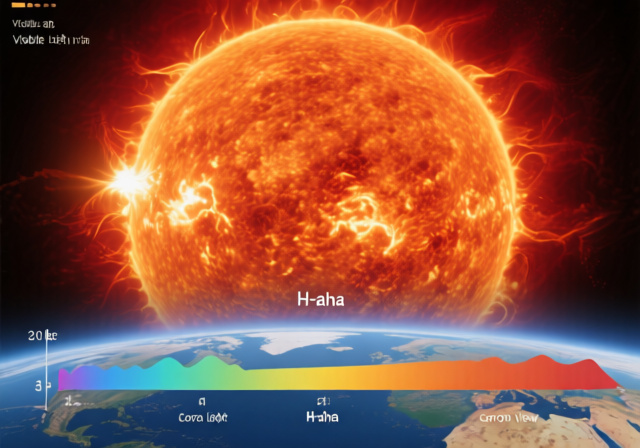
Few objects in our sky command as much attention as the Sun, that luminous sphere hanging overhead each day. This star at the center of our solar system has captivated humanity since our earliest ancestors looked upward. Understanding the Sun goes beyond casual curiosity—it touches everything from the photography equipment we use to the very survival of life on Earth.
Our Sun is a middle-aged yellow dwarf star, roughly 4.6 billion years old, sitting about 93 million miles from Earth. That distance might sound immense, but in cosmic terms, we practically share the same neighborhood. Light from the Sun’s surface reaches us in just over eight minutes, meaning we see our star as it existed moments ago, not as it exists right now.
The Sun contains approximately 99.86 percent of all matter in our solar system, making it absolutely dominant in terms of mass and gravitational influence. Every planet, asteroid, and comet orbits our star according to its gravitational pull. Without this stellar engine, Earth would be a frozen, lifeless rock hurtling through the void of space.
This guide explores every significant aspect of our closest star. From its blistering core where nuclear fusion occurs to its extended corona visible during total eclipses, we examine the science, history, and practical implications of solar study. Whether you are an astronomy enthusiast, a photographer seeking to understand natural light, or simply curious about our place in the cosmos, these Sun facts will transform how you view our daytime star.
The Sun is classified as a G-type main-sequence star, frequently called a yellow dwarf, though it actually appears brilliantly white when viewed from space without atmospheric interference. This classification places it among the most common types of stars in the Milky Way galaxy, yet our Sun possesses characteristics that make it uniquely suited to supporting life on Earth.
At 4.6 billion years of age, the Sun has reached a stable middle age in its stellar evolution. It formed from a collapsing cloud of interstellar gas and dust approximately 4,600,000,000 years ago, eventually reaching temperatures and pressures sufficient to ignite nuclear fusion in its core. That fusion process continues today, converting hydrogen into helium and releasing enormous amounts of energy that eventually escape as the sunlight warming our planet.
The Sun completes one rotation on its axis roughly every 27 Earth days at its equator, though the polar regions rotate more slowly, taking closer to 35 days. This differential rotation creates shearing forces that twist and amplify magnetic fields, ultimately giving rise to the complex solar activity that affects Earth in numerous ways.
Unlike solid planets, the Sun exists as a massive sphere of plasma, the fourth state of matter where electrons are stripped from their parent atoms. This plasma behavior allows the Sun to generate magnetic fields of extraordinary strength—thousands of times more powerful than Earth’s magnetic field—and creates phenomena impossible anywhere on our planet.
Important Safety Note: Never observe the Sun without proper solar filtration. Permanent eye damage can occur within seconds of direct viewing without appropriate protection. Use only ISO 12312-2 certified solar filters.
Comprehending the Sun’s scale challenges human intuition built for terrestrial scales. The Sun’s diameter measures approximately 865,000 miles, which translates to roughly 109 times Earth’s diameter. If we imagine fitting Earths inside the Sun like spheres in a container, approximately 1.3 million Earths could occupy our star’s volume.
The Sun’s mass reaches approximately 2 x 10^30 kilograms, making it 333,000 times more massive than Earth. This enormous mass creates gravitational pull strong enough to maintain stable orbits for eight planets, countless asteroids, and comets that have traveled through our solar system for billions of years.
Distance from the Sun to Earth averages 93 million miles, close enough to provide abundant energy but far enough to maintain conditions suitable for life. Light traveling at 186,000 miles per second covers this distance in 8 minutes and 20 seconds, meaning we always see the Sun as it existed over eight minutes in the past.
For photographers, this distance creates the angular size we observe in our sky—approximately 0.5 degrees, or about the size of a dime held at arm’s length. This specific angular diameter produces the golden hour lighting conditions prized in portrait and landscape photography, and it enables total solar eclipses when the Moon’s smaller apparent size happens to perfectly align with the Sun’s.
| Measurement | Sun | Earth | Ratio |
|---|---|---|---|
| Diameter | 865,000 miles | 7,918 miles | 109:1 |
| Mass | 2 x 10^30 kg | 6 x 10^24 kg | 333,000:1 |
| Volume | 1.4 x 10^27 m³ | 1.1 x 10^21 m³ | 1.3 million:1 |
| Surface Gravity | 274 m/s² | 9.8 m/s² | 28:1 |
The Sun operates at temperature ranges utterly alien to human experience. At its core, where nuclear fusion occurs, temperatures reach approximately 27 million degrees Fahrenheit—hot enough that atoms lose their electrons entirely and atomic nuclei collide with sufficient force to fuse together.
Paradoxically, the Sun’s visible surface, called the photosphere, measures a relatively cool 10,000 degrees Fahrenheit. This 2,700-fold temperature drop over a thin layer puzzles scientists. Understanding these temperature gradients matters for photographers because the photosphere’s temperature determines the color spectrum of sunlight we receive.
The most perplexing temperature anomaly involves the corona, the Sun’s outer atmosphere, which reaches approximately 2 million degrees Fahrenheit—vastly hotter than the surface below it. This coronal heating problem remains one of solar physics’s greatest unanswered questions, suggesting mechanisms beyond simple heat conduction transfer energy into the outer atmosphere.
Each solar layer exhibits distinct temperature characteristics:
Nuclear Fusion: The process where hydrogen atomic nuclei merge under extreme pressure and temperature to form helium, releasing enormous energy according to Einstein’s E=mc squared equation. This process powers the Sun and, ultimately, virtually all life on Earth.
The Sun’s chemical composition reflects its stellar nature and formation conditions. Hydrogen constitutes approximately 74 percent of the Sun’s mass, providing the fuel for nuclear fusion. Helium accounts for about 24 percent, created as fusion byproduct. The remaining two percent includes trace amounts of oxygen, carbon, neon, nitrogen, magnesium, iron, and silicon.
The Sun’s composition determines its behavior as a nearly perfect blackbody radiator, emitting light across the full visible spectrum. This full-spectrum emission produces the high color rendering index that photographers value in natural sunlight, allowing accurate color reproduction in images.
Every second, the Sun converts roughly 600 million tons of hydrogen into helium. The mass difference—about 4 million tons per second—converts directly to energy following Einstein’s famous equation. This energy powers everything from photosynthesis in plants to the weather systems shaping our planet.
The proton-proton chain fusion process follows these steps:
This fusion process has operated for 4.6 billion years and will continue for approximately another 5 billion years, providing stable conditions for life on Earth. The consistency of this process explains why sunlight quality remains reliable for photographers and why conditions for life have remained favorable throughout human history.
The Sun’s layered structure resembles an onion, with each zone performing specific functions in energy transport and magnetic field generation. The journey energy takes from the core to the surface spans enormous distances and timescales that dwarf human experience.
The core extends to approximately 25 percent of the Sun’s radius but contains roughly half its total mass. Here, temperatures and pressures permit nuclear fusion to occur continuously. Energy generated here faces a tortuous path outward through multiple layers before finally escaping as the sunlight we observe.
The radiative zone stretches from the core outward to about 70 percent of the solar radius. Within this zone, energy travels via photon absorption and re-emission in a process resembling a random walk. A single photon generated in the core may take 100,000 years to reach the photosphere, scattered and re-absorbed countless times along the way.
The convection zone occupies the outer 30 percent of the Sun’s radius, where temperatures drop enough for plasma to transport energy through convection currents. Hot plasma rises toward the surface, cools, and sinks back downward, creating convection cells visible as granulation patterns on the photosphere. These granules, each roughly the size of Texas, represent the tops of massive convection currents.
The photosphere marks the visible surface of the Sun, the layer from which sunlight finally escapes into space. Despite being called a “surface,” this region spans hundreds of kilometers and appears sharp only because of its opacity. From Earth, we see this layer as the bright disk of the Sun.
Above the photosphere lies the chromosphere, a thin layer normally hidden by the photosphere’s brightness but visible as a red rim during total solar eclipses. This layer displays dramatic structures including solar prominences and filaments that can extend for tens of thousands of miles above the solar surface.
The corona extends millions of kilometers into space, forming the solar wind that permeates our entire solar system. This superheated outer atmosphere, visible during total eclipses as a pearly white glow, continues to puzzle scientists with temperatures exceeding those of the surface below—a phenomenon central to heliophysics research.
Quick Summary: The Sun consists of six main layers: the core where fusion occurs, the radiative zone where energy moves via photons, the convection zone where plasma carries heat upward, the photosphere we see as the solar surface, the chromosphere visible during eclipses, and the corona extending into space as the solar wind.
The Sun’s surface hosts a constantly changing landscape of magnetic phenomena, plasma eruptions, and dark sunspots that wax and wane according to the solar cycle. Understanding this solar activity matters not only for scientists but for anyone dependent on satellite communications, GPS navigation, or power grid reliability.
Sunspots represent cooler, darker regions on the photosphere where intense magnetic fields suppress convection, reducing heat transport from below. These temporary features, some larger than Earth itself, appear dark only by contrast with the brighter surrounding surface. The number of visible sunspots follows an approximately 11-year cycle called the Schwabe cycle, alternating between periods of maximum sunspot activity and relatively calm periods of solar minimum.
Solar flares erupt when magnetic energy stored in the Sun’s atmosphere releases suddenly, producing intense bursts of radiation across the electromagnetic spectrum. A single solar flare can release energy equivalent to billions of nuclear bombs, emitting X-rays and extreme ultraviolet radiation that reaches Earth in about eight minutes, affecting satellite electronics and radio communications.
Coronal mass ejections (CMEs) represent the most powerful eruptions in our solar system, expelling billions of tons of magnetized plasma into space at speeds reaching millions of miles per hour. When these CMEs encounter Earth’s magnetosphere, they can trigger geomagnetic storms capable of disrupting power grids, damaging satellites, and producing spectacular aurora displays visible at unusually low latitudes.
The solar wind continuously flows outward from the Sun in all directions, a stream of charged particles (mostly electrons and protons) traveling at speeds between 250 and 750 kilometers per second. This plasma creates the heliosphere, an enormous bubble extending beyond Pluto that protects our solar system from galactic cosmic radiation.
Solar Cycle 25 began in December 2019 and is expected to reach its peak around 2026, according to NASA predictions. During solar maximum, the Sun exhibits increased sunspot counts, more frequent solar flares and CMEs, and enhanced aurora activity on Earth. This current cycle has already produced several significant space weather events affecting communications and power infrastructure.
Humanity’s understanding of the Sun has transformed dramatically thanks to dedicated solar observation missions. These robotic explorers study our star from distances impossible from Earth, gathering data that revolutionize heliophysics and space weather prediction.
NASA’s Parker Solar Probe, launched in 2018, represents humanity’s closest approach to the Sun, designed to orbit within 4 million miles of the solar surface—closer than any previous spacecraft. The probe must withstand temperatures reaching 2,500 degrees Fahrenheit while collecting data about the solar wind’s origin and the corona’s magnetic field structure. By 2026, Parker had already transmitted unprecedented measurements of solar activity and provided insights into the coronal heating problem.
The European Space Agency’s Solar Orbiter mission, launched in February 2020, combines remote sensing observations with in-situ measurements while orbiting as close as 26 million miles from the Sun. What distinguishes Solar Orbiter is its ability to image the Sun’s polar regions, regions difficult or impossible to observe from Earth’s orbital plane. These polar observations are crucial for understanding the Sun’s global magnetic field and the origins of the solar wind.
Both missions address fundamental questions in heliophysics: Why is the corona so much hotter than the photosphere? How does the solar wind originate and accelerate? What drives the 11-year solar cycle? Data from these spacecraft continue to reshape our understanding of solar physics and space weather prediction capabilities.
Other solar missions contribute unique perspectives. NASA’s Solar Dynamics Observatory provides continuous imaging of the entire solar disk in multiple wavelengths. The Solar and Heliospheric Observatory (SOHO), a joint ESA-NASA mission operating since 1995, has revolutionized our understanding of the Sun’s internal structure and coronal mass ejections. Together, these observatories form an comprehensive surveillance network monitoring our star around the clock.
Space weather—the Sun’s influence on Earth’s magnetosphere and upper atmosphere—affects modern technology in ways most people never consider. From GPS navigation to electrical power distribution, our technological infrastructure depends on conditions in the space environment shaped by solar activity.
Satellites in Earth orbit face multiple hazards from solar activity. Intense solar flares increase atmospheric density at satellite altitudes, causing satellites to experience increased drag that gradually lowers their orbits. Solar proton events can damage satellite electronics and solar panels, degrading performance over time. During active solar periods, satellite operators must frequently adjust orbits and manage radiation exposure to sensitive components.
GPS and navigation systems rely on signals traveling through Earth’s ionosphere, a region whose density varies with solar activity. Solar flares cause sudden ionospheric disturbances that degrade GPS accuracy or even render it temporarily unusable. Aviation routes over polar regions, where GPS coverage is limited, become particularly hazardous during intense solar proton events when communications and navigation systems experience interference.
Power grid operators monitor space weather closely because geomagnetic storms induced by coronal mass ejections can overwhelm transformer equipment. When rapidly changing magnetic fields interact with long transmission lines, induced currents can cause protective devices to trip or, in severe cases, damage transformers requiring months to replace. The Quebec blackout of 1989, triggered by a geomagnetic storm, demonstrated this vulnerability on a continental scale.
The most powerful geomagnetic storm in recorded history occurred in September 1859, known today as the Carrington Event. British astronomer Richard Carrington observed a massive solar flare and subsequently recorded a geomagnetic storm that produced auroras as far south as the Caribbean. Telegraph systems across Europe and North America experienced severe disruptions, with some telegraph offices reporting fires caused by induced currents.
A Carrington-level event today would cause far more widespread damage, potentially affecting millions through power outages, satellite failures, and communications disruptions. Power grid operators, satellite companies, and government agencies now maintain space weather monitoring systems and contingency plans, recognizing that solar activity represents a genuine threat to critical infrastructure.
Historical Note: The Carrington Event of 1859 remains the benchmark for extreme space weather events. Auroras were visible in Cuba, Hawaii, and across the southern United States. Modern infrastructure, entirely dependent on electronics and electrical systems, would face challenges unprecedented in scope if a similar event occurred today.
Our Sun occupies a specific location within the Milky Way galaxy that shapes our cosmic perspective. Positioned within the Orion Arm, a minor spiral arm between the Sagittarius and Perseus arms, the Sun orbits the galactic center at approximately 515,000 miles per hour.
One complete orbit around the Milky Way’s center takes approximately 230 million years, a duration called a galactic year. Since forming 4.6 billion years ago, the Sun has completed roughly 20 circuits around the galactic center. The last time our solar system occupied its current position in the galaxy, the dinosaurs had not yet appeared on Earth.
The Sun’s position within the galaxy influences conditions for life through several mechanisms. Our location between spiral arms places us in a relatively quiet region, away from the dense star clusters and intense radiation environments common near galactic centers where supernovae and stellar collisions occur more frequently. This galactic “suburb” location has provided relatively stable conditions for life to develop and evolve over billions of years.
Our galaxy itself contains between 100 and 400 billion stars, making the Sun one of many similar stars. Most G-type main-sequence stars in the galaxy are older or younger than our Sun, but many share similar characteristics. The Sun is neither unusually large, small, hot, nor cold by stellar standards—yet it produces the exact conditions necessary for life on our planet.
The Sun formed approximately 4.6 billion years ago from a collapsing cloud of gas and dust, possibly triggered by a nearby supernova explosion that compressed interstellar material. For the past 4.6 billion years, the Sun has existed as a stable main-sequence star, generating energy through hydrogen fusion in its core.
Main-sequence stars like our Sun exist in a stable state where the inward pull of gravity balances the outward pressure from fusion reactions. This stability has provided consistent solar output throughout human history, enabling the development of complex life on Earth. The Sun’s current position on the main sequence represents the longest and most stable phase of a star’s life.
In approximately 5 billion years, the Sun will exhaust the hydrogen fuel in its core. Without hydrogen fusion to maintain pressure, gravity will compress the core while the outer layers expand, transforming the Sun into a red giant. During this phase, the Sun’s diameter may extend beyond Mars’s current orbit, engulfing Mercury, Venus, and possibly Earth.
After the red giant phase, lasting several hundred million years, the Sun will shed its outer layers as a planetary nebula, dispersing most of its mass into space. The remaining core, a white dwarf approximately the size of Earth but containing half the Sun’s mass, will slowly cool over trillions of years, eventually becoming a cold, dark stellar remnant.
The Sun’s evolution as a stellar object operates on timescales incomprehensible to human experience. However, this long-term perspective provides reassurance about near-term stability. The Sun’s consistent behavior over millions of years ensures reliable conditions for human civilization, provided we manage our planet’s resources responsibly during our brief existence in cosmic time.
Observing the Sun safely requires strict adherence to safety protocols and appropriate equipment. Unlike night sky photography where exposure times can extend for hours, solar observation demands specialized filtration that reduces the Sun’s intensity by a factor of 100,000 or more.
Proper solar filters must meet ISO 12312-2 international safety standards, indicating they reduce sunlight to safe viewing levels. These filters appear as metallic sheets or coating films that appear nearly opaque, yet through them, the Sun appears sharply defined and detailed. Never use regular sunglasses, smoked glass, photographed film, or homemade filters for solar viewing.
For photography, dedicated solar filters for cameras and telescopes enable capture of solar granulation, sunspots, and during eclipses, the spectacular corona. White-light solar photography reveals sunspots and granulation patterns, while specialized H-alpha telescopes operating at specific wavelengths can capture prominences, filaments, and other features invisible in white light.
Safe solar observation methods include pinhole projection, where sunlight passes through a small aperture to project an inverted image onto a surface. Solar eclipse glasses, properly certified, permit direct viewing of partial phases during eclipses. These methods provide educational opportunities without requiring expensive equipment.
For those interested in expanding their astrophotography skills, solar photography offers unique challenges and rewards. The Sun’s brightness enables short exposure times and high frame rates for lucky imaging techniques, revealing details that change over minutes as convection cells evolve and sunspots rotate across the disk. Our solar eclipse photography guide provides detailed instructions for capturing total eclipse events safely and effectively.
Professional solar photographers often employ specialized instruments like H-alpha telescopes that isolate specific wavelengths of red hydrogen-alpha light. These instruments reveal the dynamic chromosphere with its prominences, spicules, and filament channels—structures invisible with broadband white-light filters. Such equipment represents significant investment but opens an entirely different view of our nearest star.
The Sun is 4.6 billion years old, contains 99.86 percent of solar system mass, sits 93 million miles from Earth, has a diameter of 865,000 miles, rotates every 27 days, reaches 27 million degrees Fahrenheit at its core, consists of 74 percent hydrogen, powers all life on Earth, follows an 11-year activity cycle, will last another 5 billion years, generates energy through nuclear fusion, has a surface temperature of 10,000 degrees Fahrenheit, contains sunspots larger than Earth, produces solar wind traveling 400 km/s, creates auroras during active periods, appears white from space, influences Earth’s climate, has a magnetic field reversing every 11 years, will expand into a red giant in 5 billion years, and contains enough energy to sustain human civilization for billions of years.
The Sun does not have a formal astronomical name like stars with catalog designations. Ancient Romans called it Sol, while Greeks named it Helios, giving us words like solar and heliocentric. Astronomers refer to it simply as the Sun, or Sol when distinguishing it from other stars. In stellar catalogs, it appears as HD 131077, though this technical designation sees no common use.
The Sun’s core reaches 27 million degrees Fahrenheit, hot enough for nuclear fusion. The visible surface, called the photosphere, measures only 10,000 degrees Fahrenheit. This enormous temperature difference exists because core energy takes thousands of years to reach the surface. Strangely, the corona or outer atmosphere reaches 2 million degrees Fahrenheit, much hotter than the surface below—a puzzle called the coronal heating problem.
The Sun consists primarily of hydrogen at 74 percent by mass and helium at 24 percent. The remaining 2 percent includes trace amounts of oxygen, carbon, neon, nitrogen, magnesium, iron, and silicon. This composition differs from rocky planets like Earth because lighter elements dominate throughout the Sun’s volume, with heavier elements either settling toward the core or being expelled by solar wind.
Approximately 1.3 million Earths could fit inside the Sun by volume. By diameter comparison, 109 Earths placed side by side would span the Sun’s width. By mass comparison, the Sun equals 333,000 Earth masses. These figures help convey the Sun’s enormous scale, though they cannot truly communicate the immense difference between planetary and stellar sizes.
No, the Sun lacks sufficient mass to end as a supernova. Supernova events require stars at least eight times more massive than our Sun. Instead, in about 5 billion years, the Sun will expand into a red giant, eventually shedding its outer layers as a planetary nebula. The remaining white dwarf core, about Earth-sized but containing half the Sun’s mass, will slowly cool over trillions of years.
Sunspots are temporary dark regions on the Sun’s photosphere created by intense magnetic activity that inhibits convection. These magnetic fields reduce surface temperature to 3,000-4,500 degrees Fahrenheit compared to surrounding areas at 10,000 degrees, making them appear dark by contrast. Individual sunspots can last from days to months and often occur in pairs or groups linked by magnetic field loops.
The Sun formed approximately 4.6 billion years ago, determined through radioactive dating of meteorites and comparison with stellar evolution models. The Sun is currently middle-aged, having used roughly half its hydrogen fuel. Another 5 billion years of stable fusion remain before dramatic changes begin as the Sun exhausts its core hydrogen.
Solar flares occur when magnetic energy stored in the Sun’s atmosphere suddenly releases, accelerating charged particles along magnetic field lines and emitting radiation across the electromagnetic spectrum. They originate in active regions around sunspot groups where magnetic fields become twisted and stressed. The energy released equals billions of nuclear bombs, affecting Earth’s ionosphere within minutes of eruption.
Solar Cycle 25, the current sunspot cycle, began in December 2019 and is predicted to peak around 2026 according to NASA forecasts. During solar maximum, sunspot counts increase, solar flares and coronal mass ejections become more frequent, and aurora displays occur more often and at lower latitudes. We are currently approaching this solar maximum period.
The Carrington Event of September 1859 represents the most powerful geomagnetic storm in recorded history. British astronomer Richard Carrington observed a massive solar flare on September 1, and just days later, a geomagnetic storm struck Earth, inducing currents in telegraph lines that caused fires and system failures. Auroras appeared as far south as the Caribbean. A similar event today would severely damage modern electrical and satellite infrastructure.
Heliophysics is the scientific study of the Sun and its influence throughout the solar system, encompassing the solar corona, solar wind, planetary magnetospheres, and the interactions between solar radiation and planetary environments. This field combines solar physics, space plasma physics, and aeronomy to understand how the Sun affects planets, spacecraft, and ultimately human technology and civilization.
Understanding the Sun transforms our perspective on our place in the cosmos. From its 4.6-billion-year history to its critical role sustaining life on Earth, our nearest star represents the most significant celestial body for human civilization. The Sun’s consistent output, predictable cycles, and enormous power provide the foundation for virtually all human activity.
Whether you capture golden hour portraits, observe sunspots through a filtered telescope, or simply appreciate the warmth on your skin during a summer day, the Sun remains central to human experience. The solar facts presented here provide a foundation for deeper exploration—from understanding space weather impacts on modern technology to planning aurora photography expeditions.
As we approach solar maximum during Solar Cycle 25 in 2026, opportunities for solar observation and aurora photography increase. Monitor space weather forecasts, invest in proper filtration equipment, and never risk eye damage by observing the Sun unsafely. Keep exploring, keep learning, and let these Sun facts inspire your next astronomical adventure.


