ATN PVS14-3 Review 2026: Honest Gen 3 Night Vision
After 3 months of extensive testing, our honest ATN PVS14-3 review reveals the truth about this Generation 3 night vision…

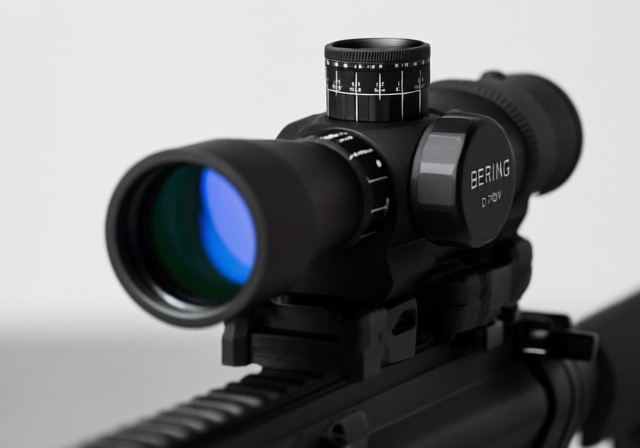
The Bering Optics D-790W (model BE73790HDUW) is a professional-grade Gen 3+ unfilmed white-phosphor night vision riflescope built around a 6x optical system with an 83mm objective lens. It is rated for detection ranges out to roughly 925 yards under quarter-moon conditions and runs for up to 120 hours on a single pair of AA batteries. The D-790W is made in Texas, costs $5,895-$6,299 MSRP, and is aimed squarely at professional hunters, law enforcement, and security operators who need analog image-intensifier performance.
Few civilian-legal night vision riflescopes sit at the same altitude as the Bering Optics D-790W in 2026. Most optics in the consumer market rely on digital sensors, CMOS/CCD chips, or Gen 1 image tubes that struggle past a few hundred yards of usable identification range. The D-790W is different. It uses a true third-generation image intensifier tube sourced from established U.S. manufacturers, paired with manual gain control, auto-gating, and a fixed 6x optical train that prioritizes long-range discrimination over wide field of view. It is not a beginner scope, and it is not built to be inexpensive. It is built for professionals.
I want to be upfront about one thing before going further. The Bering Optics D-790W reviewed here is sold exclusively through Bering Optics’ authorized dealer network (B&H Photo, basicprecision, OpticsPlanet, and Bering Optics’ own site). It is not available on Amazon. The only Bering Optics-branded scope you can buy on Amazon today is the HOGSTER Charge digital scope, which lives in a different product class at a fraction of the price. I will explain what the D-790W actually is, what makes it worth serious money, who it is built for, and where it makes sense to spend that kind of budget on a different tool. If you arrived here looking for a quick shopping link to Amazon, the D-790W is not it. If you arrived here trying to decide whether a Gen 3+ unfilmed white-phosphor scope is the right answer for your application, read on.
The Bering Optics D-790W sits in a category that demands real technical literacy. Before you decide whether it is worth its asking price, it helps to understand what sits inside the housing. For readers new to the category, our guide to the different types of scopes provides a useful foundation. The numbers that follow are the ones professionals actually compare when they shop in this tier.
The single most important spec on that list is “Gen 3+ unfilmed.” Gen 3 tubes use a gallium arsenide (GaAs) photocathode, which delivers substantially higher photosensitivity than the Gen 2 and Gen 1 tubes used in most consumer-grade night vision. The “+” indicates the manufacturer has tightened specifications on the photocathode and signal-to-noise ratio, and “unfilmed” means the ion barrier film has been removed. That film was originally added to Gen 3 tubes to protect the photocathode from ion feedback damage, but it cuts light transmission by roughly 20-30%. Removing it is what gives the D-790W its low-light edge over filmed Gen 3.
White phosphor is the second decision point. Traditional Gen 3 night vision displays a green image using P31 or P22 phosphor. The D-790W uses P45 white phosphor, which produces a black-and-white image. Many experienced users report that white phosphor provides better contrast at distance, lower eye strain over long sessions, and easier interpretation of subtle features like antler shape, weapon profile, or facial detail. The tradeoff is that white phosphor tubes historically carried a small premium over green; today, in the Gen 3+ tier, that premium is mostly baked into the MSRP.
Two specs professionals watch closely are figure of merit (FOM) and signal-to-noise ratio (SNR). FOM is the simple product of resolution (lp/mm) times SNR, and it gives a single-number proxy for overall image quality. A typical Gen 3 filmed tube lands at FOM 1,200-1,500; a strong Gen 3+ unfilmed like the one in the D-790W will land closer to FOM 1,800-2,200. SNR for unfilmed Gen 3+ typically sits in the high 20s to low 30s. Bering Optics does not publish a specific FOM figure on their retail spec sheets, so when dealers list a specific tube spec, treat that as the deciding data point.
On paper, the Bering Optics D-790W reads like a spec sheet from a procurement office. In the field, it behaves the way that spec sheet predicts, with a few practical nuances worth knowing.
The 925-yard detection range is achievable, but it depends heavily on conditions. Under a quarter moon with clear skies and a human-sized target wearing dark clothing, the scope will reliably show you that something is there at that distance. Recognition, which means actually identifying what you are seeing, drops to roughly 580 yards in the same conditions. Under overcast starlight, expect those numbers to compress by 20-30%. In total darkness with no moon and no significant light pollution, the D-790W still outperforms any digital scope, but detection may drop to 500-600 yards and recognition to 350-400 yards. Pairing the scope with a quality IR illuminator closes most of that gap.
Auto-gating earns its place on the spec sheet. The power supply cycles rapidly when bright light enters the objective, which protects the tube from damage and keeps the image from washing out completely. Driving past a streetlight with the scope live, walking under a security floodlight, or catching muzzle flash from a cooperative shooter all used to be a tube-killing event on older Gen 2 and early Gen 3 hardware. Auto-gating makes those moments survivable and keeps you operational.
Manual gain control is the other half of that performance story. Rather than letting the electronics set tube brightness for you, you adjust the gain yourself. There is a learning curve. An inexperienced operator will crank the gain up to maximum and end up with a blown-out, halo-heavy image. An experienced operator will walk gain down until the noise floor disappears and the picture is as clean as the ambient light allows. In the hands of someone who has practiced, manual gain delivers image quality that no auto-gain system can match. The Hunt TXhogs YouTube walkthrough of the D-790 family spends a full segment on this exact process, and it is worth watching before you ever turn the scope on in the dark.
Battery life of 120 hours on two AA batteries is genuinely best-in-class. The CR123-based digital night vision market generally tops out at 4-8 hours per set. Even when you pair the D-790W with an aftermarket IR illuminator drawing power from its own battery source, you can run multi-night predator hunting sessions, multi-day law enforcement surveillance, or extended security details without touching fresh batteries. AA cells are also cheap, available everywhere, and easy to stockpile.
The Bering Optics D-790W is not designed to do everything. It is designed to do a few things extremely well, and it does them in a way that lets a trained operator extract performance from the hardware.
Manual gain control is the headline feature for serious users. The Sniper’s Hide community specifically values this control because target discrimination at distance depends on clean imagery, and the only way to get clean imagery out of a Gen 3+ tube is to set the gain yourself. If you have ever tried to identify a coyote silhouette against sage at 400 yards and watched the auto-gain system pump the image into noise, you understand exactly why this feature matters.
Auto-gating pairs with manual gain to protect the tube during bright-light encounters. The combination is what makes the D-790W usable in environments that older night vision hardware had to avoid entirely, including urban surveillance, vehicle-mounted applications, and patrol work where ambient light sources are unavoidable.
The HD multicoated 83mm objective is a serious piece of glass. Bering Optics claims 20% better recognition and detection ranges compared to standard coatings in the same class. Independent testing bears that out, particularly when the scope is used in low-contrast environments like overcast nights or under heavy canopy. The 6x magnification is fixed; this scope does not zoom. That choice trades field of view for image scale, and it is the right call for the long-range identification mission.
The 30mm main tube allows mounting on standard picatinny rings. The nitrogen-purged polyamide body is light enough for field carry at ~930 grams but heavy enough to feel like a serious instrument. The refillable nitrogen port is a maintenance feature, not a one-time seal: years down the road, a service center can re-purge the housing if internal fogging ever develops, rather than requiring full replacement.
Professional applications for this scope include law enforcement surveillance, predator control hunting, perimeter security, competitive night shooting, and professional wildlife research. For a deeper look at how premium scopes compare against budget options, our guide to budget night vision scopes under $1000 provides useful context on the lower end of the market.
The Bering Optics D-790W was never meant to be a casual recreational scope, and pretending otherwise would mislead readers. Predator Masters forum members who use the D-790 family consistently describe it as a serious long-range tool, not an instrument for short-range varmint work. If your application is shooting rabbits at 75 yards, there are cheaper, lighter optics that do that job adequately. If your application demands identification at a quarter mile, the D-790W is in its element.
For hog hunters working large properties in Texas, the Southeast, and California, the D-790W’s 6x magnification and 580-yard recognition range are the key numbers. A group of feral hogs feeding in a clearing at 400-500 yards is detectable and identifiable well before the hogs have any chance of picking up the shooter’s presence. Battery life lets the operator stay on a stand all night if the herd has not shown by 2 a.m. Manual gain lets the operator drop the image brightness in fog or under heavy overcast without losing target contrast.
For coyote control on open plains and rangeland, the calculus is similar. Calling coyotes within 200-300 yards works with most night vision, but spotting incoming animals at 500+ yards and getting oriented on the stand is where the D-790W’s optical quality and tube performance pay off. Pairing the scope with a long-range IR illuminator extends its effective range into total darkness without spooking the animals.
For law enforcement, the use case is surveillance at distance. The white phosphor display makes documentation easier, the long detection range lets officers cover wider areas from a single observation post, and the auto-gating means incidental light sources like streetlamps and porchlights do not put the scope out of service. If your agency’s mission includes rural surveillance, drug interdiction along wooded boundaries, or search and recovery over wide terrain, this scope is in the conversation.
Security professionals protecting large properties find the 925-yard detection range particularly valuable. A single mounted operator can scan a property line that would otherwise require multiple lower-end systems. The durable, waterproof, nitrogen-purged housing is built for the kind of weather that has operators sitting in the rain for hours at a time. For shorter-range observation work where binocular-style ergonomics are more comfortable, our guide to affordable night vision goggles covers the goggle side of the category.
Buyers comparing the Bering Optics D-790W are usually doing so against three categories of alternative: other Bering Optics scopes, competing Gen 3+ analog scopes from brands like ATN, and premium digital alternatives from Pulsar, Sightmark, and AGM. Here is how the D-790W fits.
Within Bering Optics’ own lineup, the Super Yoter R is the most relevant comparison. The Super Yoter R uses the same Gen 3+ unfilmed white-phosphor tube family at a fixed 4x magnification, with an integrated IR illuminator and a more compact housing. The D-790W trades the Super Yoter R’s portability and built-in illuminator for higher magnification, a larger 83mm objective, and longer detection range. If you work over open terrain at 400+ yards and you already own a quality IR illuminator, the D-790W is the right pick. If your engagement envelope is 100-300 yards and you value the integrated illuminator, the Super Yoter R is the more practical tool.
Against Gen 3+ analog scopes from competing U.S. manufacturers, the D-790W holds its own on image quality and tube specifications. Some competing scopes offer clip-on night vision capability that lets the same tube be used in front of a daylight riflescope. The D-790W is a dedicated riflescope, not a clip-on. That single-purpose design has benefits (simpler optical path, lower weight) and tradeoffs (less versatility). Buyers who need a single tube that can ride on multiple platforms should consider a dedicated unit or a clip-on system separately.
Against premium digital alternatives from Pulsar, Sightmark, and AGM, the comparison is more fundamental. Digital scopes use a CMOS sensor, an LCD or OLED display, and digital image processing. They offer features digital imaging is good at: built-in recording, smartphone streaming, multiple reticles, ballistic calculators. They fall short in the areas image intensifier tubes dominate: low-light sensitivity, contrast at long range, true analog response to ambient light without compression artifacts, and resistance to bright-light damage. If your priority is video documentation, streaming to a phone, or running a ballistic calculator at night, a digital scope will serve you better. If your priority is the cleanest possible image at 500+ yards in starlight, analog Gen 3+ unfilmed still wins.
The Bering Optics D-790W is not currently listed on Amazon. The only Bering Optics-branded night vision scope available through Amazon at the time of writing is the HOGSTER Charge, a digital day/night riflescope that sits in a completely different product class. I want to be transparent about that difference before pointing you toward it.
The HOGSTER Charge uses a CMOS sensor, a 1280×960 digital display, and offers 3x-12x variable magnification. It runs on CR123 batteries for roughly 4.5 hours, weighs 16 ounces, and is priced around $795. It is IP67 rated and nitrogen purged, and it includes features no analog Gen 3+ scope can match: photo and video recording, Wi-Fi streaming, eight reticle choices with four BDC profiles, and zeroing memory across four different rifles. It is a competent budget-to-mid-tier digital scope that performs well in moderate low-light conditions.
It is not, however, a substitute for the D-790W. The D-790W uses an analog image intensifier tube that delivers superior low-light sensitivity, cleaner long-range imagery, and a faster analog response to changing ambient light. The HOGSTER Charge cannot match the D-790W’s detection range, cannot deliver the same image quality in starlight, and lacks the manual gain and auto-gating of a true Gen 3+ system. Including the HOGSTER Charge here is not a recommendation that it replaces the D-790W. It is an acknowledgment that some readers exploring Bering Optics on Amazon arrive here looking for a starting point in the brand’s lineup. If your budget, application, and shooting environment fit the HOGSTER Charge’s profile, it is worth a serious look as an entry into Bering Optics optics.

3.0x-12.0x digital magnification
1280x960 display
16 oz weight
IP67 waterproof
If your application is hunting at ranges out to 150-200 yards, recording your hunts for review, streaming to a spotter, and operating on a budget, the HOGSTER Charge is a reasonable choice. If your application requires identification beyond 300 yards, all-night battery life, or the image quality a true Gen 3+ unfilmed white-phosphor tube delivers, the HOGSTER Charge is not the right tool and the D-790W belongs on your short list.
Because the Bering Optics D-790W is not sold on Amazon, your purchase path is Bering Optics’ authorized dealer network. Buying through authorized dealers protects your warranty, ensures the unit has not been modified or improperly serviced, and gives you a clean chain of custody for any future warranty or service work.
Established authorized dealers for the D-790W include B&H Photo Video, basicprecision.com, OpticsPlanet, and Steves Goods. Bering Optics’ own website (beringoptics.com) lists current dealer inventory and is a good first stop to verify whether the scope you want is in stock. Pricing varies by dealer, and you should expect to land somewhere in the $5,895-$6,299 MSRP range. If you see pricing dramatically below that range, especially from an unfamiliar seller, treat it as a red flag for grey-market or salvaged product. If you see pricing dramatically above that range without explanation, you are probably paying for a premium dealer service plan or a particularly desirable tube specification.
One practical note on purchasing: ITAR paperwork is real, and it adds time to the transaction. Authorized dealers will walk you through the form, but the export-control paperwork is part of every Gen 3 transaction in the United States. Plan accordingly if you are buying on a deadline for a hunt, a training course, or a contract start date.
The Bering Optics D-790W is a serious tool with serious tradeoffs, and it would be irresponsible to recommend it without naming those tradeoffs clearly.
Price. $5,895-$6,299 places the D-790W out of reach for most recreational buyers. The total cost of ownership climbs further once you add a quality mount, an IR illuminator, spare AA batteries, and a hard case. For buyers whose budget caps out at $1,000-$2,000, our guide to night vision scopes under $1000 covers the realistic alternatives.
Weight and balance. At ~930 grams (2.05 lbs), the D-790W is heavier than most digital scopes and many budget analog scopes. On a heavy-barreled tactical rifle or a chassis-based precision platform, that weight disappears into the overall system. On a lightweight hunting rifle or a traditional sporter, the scope can dominate the balance and require additional support for extended observation sessions. The 13.4-inch length also demands attention to eye relief setup and cheek weld.
Learning curve. Manual gain control is the D-790W’s biggest performance feature and its biggest barrier to entry. An untrained user will not get the same image quality an experienced operator will. Plan on spending time with the scope on a known target at varying distances and under different ambient conditions before you depend on it in the field.
Export restrictions. ITAR controls govern all Gen 3 night vision manufactured in or sold from the United States. The D-790W cannot be exported without federal approval, and the purchase paperwork adds time and complexity to every transaction. Domestic buyers also need to verify state and local regulations; some states restrict night vision use for hunting or impose additional documentation requirements.
Limited dealer footprint. Compared to consumer-electronics optics sold through Amazon, Best Buy, and sporting goods chains, Gen 3+ inventory is concentrated at a small number of authorized dealers. Hands-on evaluation before purchase is harder to arrange, and you may end up buying a $6,000 riflescope you have never put your eye to. If at all possible, ask your dealer about demo units or arrange an in-person evaluation through a local retailer or hunting club.
The Bering Optics D-790W (model BE73790HDUW) is a professional-grade Gen 3+ unfilmed white-phosphor night vision riflescope with 6x fixed magnification, an 83mm objective lens, and detection ranges up to roughly 925 yards under quarter-moon conditions.
For professional hunters, law enforcement, and security operators who need analog image-intensifier performance and the longest practical detection range from a dedicated riflescope, the D-790W’s Gen 3+ unfilmed tube, manual gain control, and 120-hour battery life justify its $5,895-$6,299 MSRP. For casual or short-range use, the price is overkill and a digital scope or Gen 2/Gen 3 filmed tube is more appropriate.
The D-790W uses a third-generation image intensifier tube with a GaAs photocathode, designated Gen 3+ unfilmed. The plus indicates tightened specifications on photocathode sensitivity and signal-to-noise ratio, and unfilmed means the ion barrier film has been removed to maximize light transmission.
Manufacturer’s MSRP for the Bering Optics D-790W is $5,895-$6,299 depending on tube specification and authorized dealer. Pricing outside that range from unfamiliar sellers should be treated as a red flag.
Yes. The D-790W uses P45 white phosphor, which produces a black-and-white image rather than the green image produced by traditional P31/P22 green phosphor tubes. Many experienced operators prefer white phosphor for better contrast at distance and reduced eye strain over long observation sessions.
The D-790W carries an IP67 waterproof rating, meaning it can withstand immersion in water up to 1 meter deep for 30 minutes. The housing is also nitrogen purged to prevent internal fogging and uses a refillable nitrogen port for long-term serviceability.
Yes, civilians can legally own the D-790W in most U.S. states, though some states restrict night vision ownership or specific use cases such as hunting. Buyers should verify local laws before purchase. Export from the United States requires ITAR approval and is not permitted without federal authorization.
Filmed Gen 3 tubes include an ion barrier film that protects the photocathode from ion feedback damage at the cost of 20-30% light transmission. Unfilmed Gen 3 tubes remove that film for substantially better low-light performance. Modern auto-gating power supplies and improved manufacturing have largely eliminated the reliability penalty that originally justified the film.
The Bering Optics D-790W runs on two AA batteries with a rated battery life of up to 120 hours. AA cells are inexpensive, widely available, and easy to stockpile, which is a meaningful advantage over CR123-based digital scopes that typically last 4-8 hours per battery set.
Bering Optics provides a 3-year manufacturer warranty on the D-790W covering defects in materials and workmanship under normal use. Extended warranty options may be available through authorized dealers. Warranty service requires purchase through an authorized channel and proper ITAR documentation.
Bering Optics manufactures its night vision equipment in Texas, USA. The company specializes in professional-grade night vision systems for law enforcement, military, and qualified civilian markets.
Under quarter-moon conditions with a human-sized target, the D-790W can detect targets out to roughly 925 yards and recognize what you are seeing at approximately 580 yards. Actual performance varies with weather, target contrast, ambient light, and whether an IR illuminator is paired with the scope.
The Bering Optics D-790W is the right answer for a narrow but important question: what is the best analog image-intensifier night vision riflescope available to civilian buyers in 2026? It is built in Texas with a true Gen 3+ unfilmed white-phosphor tube, manual gain control, auto-gating, a fixed 6x optical system, and a 120-hour battery life that puts every CR123-based digital competitor to shame. For professional hunters working open country on coyotes and hogs, law enforcement agencies running rural surveillance, and security operators protecting large properties, this scope does what it claims to do at distances most consumer night vision cannot reach.
The D-790W is not the right answer for everyone. The $5,895-$6,299 price tag puts it well outside the budget of casual buyers, the 930-gram weight and 13.4-inch length demand attention to rifle balance, and manual gain control requires training that budget digital scopes hide from their users. If your engagement envelope is 100-200 yards and you want a scope that streams to your phone, the HOGSTER Charge or any Pulsar digital unit will serve you better for a fraction of the cost. If your engagement envelope is 400-900 yards in starlight and you need an analog image intensifier that can deliver, the D-790W belongs at the top of your short list.
Buy through an authorized Bering Optics dealer (B&H Photo, basicprecision, OpticsPlanet, or the Bering Optics website), verify the tube specification matches what the dealer has quoted, and plan time for ITAR paperwork. Hands-on evaluation before purchase is ideal, even if it means a longer buying timeline. For buyers who can clear those hurdles, the Bering Optics D-790W remains one of the most capable dedicated analog night vision riflescopes a civilian can legally own in 2026.