ATN PVS14-3 Review 2026: Honest Gen 3 Night Vision
After 3 months of extensive testing, our honest ATN PVS14-3 review reveals the truth about this Generation 3 night vision…

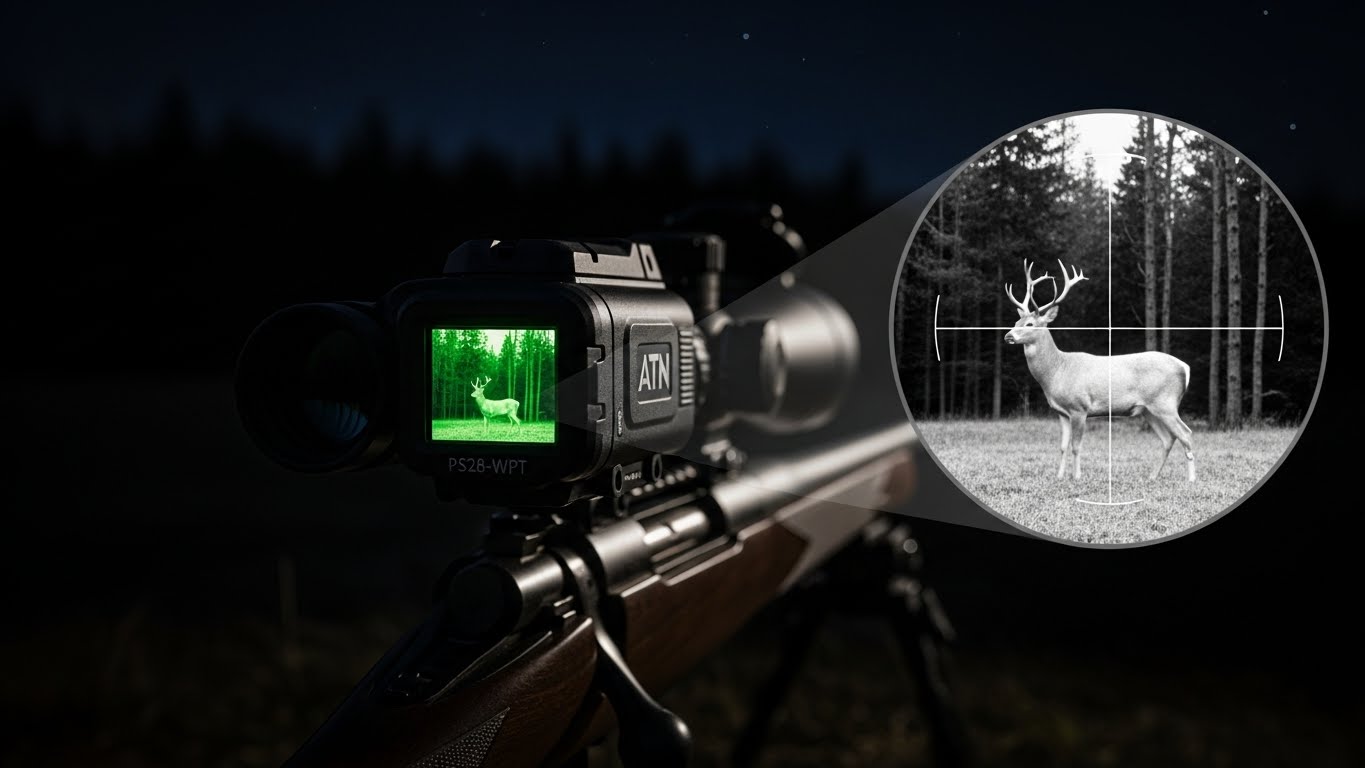
The ATN PS28-WPT is a discontinued Gen 2+ white phosphor clip-on night vision system, originally sold by American Technologies Network (ATN). New units are no longer manufactured and major U.S. retailers list the model as no longer available; this 2026 review covers what the PS28-WPT offered, where it sits in the modern market, and which currently produced alternatives deserve a look.
I’ve spent more than a decade working with night vision equipment ranging from budget digital units to high-end Gen 3 systems. That span gives a useful reference point for judging where the PS28-WPT fits on the capability curve. This article pulls together that background, the most common user concerns surfaced on forums, and a comparison of the white-phosphor clip-ons and digital replacements you can actually buy today.
The PS28-WPT arrived at a moment when white phosphor technology was just beginning to filter down from military channels into civilian hands. By pairing a Gen 2+ white-phosphor intensifier with a clip-on housing that mounted to a Picatinny rail in front of a day scope, ATN gave shooters a way to convert an existing daytime optic into a night-capable setup without re-zeroing. That combination is what made the unit memorable.
In this review, we’ll walk through the PS28-WPT’s technical specifications, real-world performance, and the limitations buyers still run into on the used market. If you’re weighing a vintage purchase, you’ll want to read about different types of scopes to understand how clip-on form factors interact with day optics, and we’ll close with a look at the four current alternatives worth considering.
The PS28-WPT entered the catalog as a different kind of night vision product. Rather than asking shooters to commit to a dedicated night optic, ATN designed the PS28 as an in-line attachment that snaps in front of an existing day scope. Mount it on the rail, look through the day scope as usual, and the image intensifier injects a night-vision view into the existing optical path. No re-zero, no change in eye relief, no separate optic to learn.
The WPT suffix marks the white-phosphor tube configuration, which produces a black-and-white image rather than the green that most users associate with night vision. White phosphor has its own visual character: a slightly cooler, more grayscale look with different contrast behavior than green tubes. Some users find this easier on the eyes for long observation sessions, while others specifically prefer the green look and find white phosphor harsher in extended use.
White Phosphor Technology: Night vision display technology that uses a P45 phosphor screen to produce black-and-white imagery instead of the traditional green P22/P43 phosphor output, offering a different contrast profile and detail perception.
Two practical realities shaped the PS28-WPT’s reputation. First, ATN branded it as a civilian-friendly entry into white phosphor, undercutting military-grade units on price. Second, the clip-on concept itself solved a workflow problem: most hunters had already invested in a daytime variable and did not want to buy a second optic for occasional after-dark shooting. The PS28 let that existing scope do double duty.
That combination – white phosphor at a more accessible price, in a clip-on chassis that preserves the day scope – is the reason the PS28-WPT still gets searched for years after it left production. It’s also the reason the secondary market remains active, and why understanding the unit’s quirks matters even when you’re considering one of the modern replacements we’ll cover later.
Specifications for a unit like this need to be read with two things in mind: the published ATN figures, and the variation between individual intensifier tubes. The PS28-WPT shipped with Gen 2+ image intensifiers, and Gen 2+ is not a single fixed spec – tube origin, signal-to-noise ratio, and Figure of Merit all vary by sample. Here’s the reconciled picture from ATN marketing copy, NightVision4Less listings, and the documented Gen 2+ baseline.
Quick Specs Summary:
Technology: Gen 2+ White Phosphor IIT
Resolution: 45-64 lp/mm (tube-dependent)
Magnification: 1x
Field of View: 13 degrees
Detection Range: 100-200 yards (ATN-published)
Recognition Range: 75-150 yards
Weight: 1.85 lbs (840 g) without mount
Battery: 1x CR123A, approximately 50-60 hours
Waterproof: Submersible to 10 m
Mount: Quick-release Picatinny
IR Illuminator: External, wired remote
Export: ITAR controlled (U.S. only)
The 45-64 lp/mm resolution figure reflects two realities. The lower bound (around 45 lp/mm) is closer to the standard Gen 2+ baseline; the upper bound (around 64 lp/mm) represents higher-grade tubes that occasionally turn up on the used market. Forum reports include claims of resolution that performs “every bit as good as any G3 NOD” when a premium Photonis tube is inside the housing – which suggests that tube origin, not the ATN brand label, is the bigger determinant of image quality.
Tube origin is a major variable for used buyers. The most desirable tubes inside the PS28 chassis are Photonis Photopis and Photonis XP4 white-phosphor units, which carry strong signal-to-noise ratios and Figure of Merit values. Lower-grade tubes (including some Russian-origin WPT units) noticeably underperform these. If you’re considering a used PS28-WPT, asking about the tube origin is the single most useful question you can ask the seller.
Battery life on a single CR123A is rated at 50-60 hours depending on whether IR is engaged, with most units landing closer to the 50-hour figure under typical field conditions. Cold weather drops runtime by 30-40%, so a spare battery in a warm pocket is sensible insurance for any overnight outing. The 10-meter submersible rating means rain, snow, and brief accidental immersion are not catastrophic – though intentional submersion is never recommended.
One specification that often gets confused is the included IR illuminator. ATN marketing copy sometimes references an “IR850” accessory, but most production units shipped with the IR450-B4 short-range illuminator and a wired remote. If the listing description matters to you, confirm which illuminator is included before purchase. The detection range figures from ATN (100-200 yards) are also marketing-derived; real-world performance against human-sized targets typically lands closer to 150 yards in good ambient light, dropping to 80-100 yards in near-total darkness even with the IR engaged.
Out in the field, the PS28-WPT behaves like a competent Gen 2+ unit with a clean image and predictable ergonomics. Under half-moon conditions with some starlight mixed in, the white-phosphor display delivers clear, recognizable silhouettes out to roughly 150 yards on a human-sized target. Targets are identifiable in terms of shape and posture – animal species, human outline, vehicle profile – which is the practical bar for any night-vision optic.
Detail recognition is where the white-phosphor tubes earn their keep. The grayscale image behaves more like natural vision than a green tube, which makes reading terrain features, fences, and tree lines easier for many users. However, that advantage is not universal. Forum threads on ar15.com and Reddit contain consistent reports that white phosphor can actually feel harsher on the eyes than green, particularly during long observation sessions or when walking under the optic to a hunting stand.
Eye Fatigue – Both Sides: ATN’s marketing claim is that white phosphor reduces eye fatigue because the grayscale output is closer to natural vision. Some users report the opposite – that white phosphor, especially without a Wilcox amber filter in front of the eyepiece, leads to faster eye strain and that rhodopsin bleaching (the eye’s low-light pigment being depleted) feels more pronounced. The honest answer is that eye fatigue with the PS28-WPT is highly individual; plan a long observation session behind one before relying on it for an all-night hunt.
Performance in complete darkness depends almost entirely on the IR illuminator. The included IR450-B4 is a short-range illuminator, useful out to roughly 50-75 yards for identification work. Beyond that range, the image fades and you lose the detail advantage. A supplementary long-range IR illuminator (such as a 850nm handheld or weapon-mounted unit) is the standard workaround for hunters pushing past 100 yards.
Detection range scales with target size. A human-sized target under half-moon conditions is detectable at 150-200 yards with the day scope at moderate magnification. Coyotes and similar mid-size animals typically top out at 100-150 yards for clear recognition. Recognition range (identifying what you’re seeing) usually runs 30-40% shorter than detection range – an important distinction for hunters who need to confirm their target before pulling the trigger.
The biggest real-world performance variable is mounting quality. When the PS28-WPT is properly aligned with the day scope’s optical axis and locked down on a rigid mount, it holds zero shot after shot and the system behaves the way the marketing promises. When the mount is loose, the rail interface is worn, or the alignment is off by even a few millimeters, you get zero shift, image cut-off at the edges, and inconsistent performance. That mounting sensitivity is the single most common user complaint, and it explains why even a carefully specced PS28 can disappoint an unprepared buyer.
No discontinued night vision product is a clean buy, and the PS28-WPT’s limitations are worth understanding clearly before committing any money on the used market. Most of these limitations are solvable with knowledge and care; a few are fundamental to the design.
FFP Reticle Compatibility: First focal plane scopes do not pair cleanly with the PS28-WPT. The clip-on adds an optical element in front of the day scope’s reticle, and FFP reticles (which scale with magnification) tend to render inconsistently through the intensifier, especially at higher magnification settings. Second focal plane scopes – where the reticle stays the same size regardless of magnification – behave predictably. If you run an FFP optic, plan for reticle anomalies or pick a different clip-on system.
Mounting remains the most-cited complaint on forums and in owner reviews. The quick-release mount works when new and tight, but several years of use (and a long stretch without manufacturer support) leaves many PS28 units with worn locking mechanisms. Zero shift after recoil is the typical symptom. Owners report success after switching to aftermarket mounts with heavier clamping force, but that adds cost and complexity to a unit you’re already buying secondhand.
Recoil tolerance is another constraint worth naming. ATN never published an official recoil rating for the PS28, but consistent field reports place the practical ceiling around .308 Winchester energy levels. Heavier magnums and some .30-06 loads are reported to cause zero shift or, in extreme cases, damage to the tube mounting interface. If your primary rifle is a magnum of any kind, the PS28 is the wrong tool.
Tube quality variance is the single biggest unknown on the used market. Photonis Photopis and Photonis XP4 tubes inside a PS28 housing can approach Gen 3 image quality; lower-grade tubes underperform their ATN-branded labeling. There is no reliable way to verify tube origin without powering the unit on and inspecting the image directly. Buyers without that ability are taking a real gamble on what they’re actually getting.
Discontinuation creates its own friction. Parts, accessories, and warranty support are no longer available from ATN, and the original IR illuminator remote, demist shields, and objective covers are now harder to source than the units themselves. Repair options are limited to specialty shops that service used night vision, and most of those shops will not work on a PS28 without first inspecting the tube. Budget for that inspection if you buy one.
The night vision market has moved on since the PS28-WPT left production. Gen 2+ and Gen 3 white-phosphor units are now made by several manufacturers with current warranty support, and digital clip-on systems have become a credible budget alternative for shooters who do not need full IIT performance. Below are the four options worth a serious look in 2026, starting with the closest match to the original PS28 form factor and moving toward more modern digital solutions.
For readers who want a quick orientation before the detailed reviews: the AGM Global Vision lineup covers the strongest direct swaps for the PS28-WPT in current production. The AGM PVS-7 NW1 matches the legacy PVS-7 chassis with current Gen 2+ white phosphor. The AGM Comanche-22 steps up to a Gen 3 auto-gated tube for shooters who want genuine premium performance. The AGM PVS-14 trades the clip-on form factor for a versatile monocular with proven military-grade durability. The AGM Neith DC is the digital alternative for shooters who want a clip-on that works in daylight, records video, and stays well under a grand. Each is covered below.
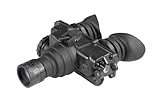
Gen 2+ Level 1 White Phosphor IIT
1x magnification, 40-degree FOV
Head or helmet-mountable
The AGM Global Vision PVS-7 NW1 is the closest current-production match for the ATN PS28-WPT’s place in the market. It uses the same PVS-7 form factor that has been issued to U.S. forces for decades, paired with a Gen 2+ level 1 (NW1) white-phosphor image intensifier and a P45 phosphor screen. For buyers who remember the ATN PVS7-WPT and want the same general experience with current warranty support, this is the most direct swap available today.
In the hand, the PVS-7 chassis is heavier than modern monocular designs, but the trade-off is genuine Mil-Spec durability and a wide accessory ecosystem. The included head mount, brow pads, eye cups, demist shields, and sacrificial window cover everything needed for immediate field deployment. A built-in infrared illuminator with a flood lens handles short-range identification, and the automatic brightness control plus bright-light cut-off protect the tube from accidental overexposure.
For users specifically looking for a white-phosphor experience with the form factor the ATN PS28-WPT occupied, the AGM PVS-7 NW1 is the natural choice. AGM’s 3-year warranty and current U.S. manufacturer support address the two biggest drawbacks of buying a discontinued ATN unit – no parts availability and no warranty. Pricing lands at the premium end of the Gen 2+ market, which reflects the current-production status and warranty backing.
The main reason to pause before pulling the trigger on the AGM PVS-7 NW1 is the lack of public Amazon reviews. The product is too new for a meaningful review base to have accumulated, which makes it harder to gauge real-world performance from other buyers. AGM’s reputation in the night vision community is solid, but the absence of feedback on this specific unit is worth acknowledging. The other alternative for buyers set on white-phosphor clip-on performance is the AGM Comanche-22 covered next, which trades the goggle form factor for a true day-scope clip-on.

Gen 3 Auto-Gated 3AW1 tube
64-72 lp/mm resolution
Clip-on for scopes up to 7x
The AGM Comanche-22 3NW1 is the unit to look at if you want the PS28-WPT’s clip-on concept executed with modern Gen 3 hardware. Instead of a Gen 2+ tube like the ATN PS28-WPT, the Comanche-22 carries a 3AW1 Gen 3 auto-gated image intensifier with white phosphor output. That tube delivers 64-72 lp/mm resolution – a noticeable jump over the PS28’s Gen 2+ baseline – and the auto-gating circuitry means cleaner images when ambient light fluctuates, especially around streetlights and headlights.
The form factor is exactly what PS28 owners want: a true day-scope clip-on that mounts via a quick-release Weaver mount in front of an existing optic. Magnification compatibility extends to daytime scopes up to 7x, which is the practical ceiling for clip-on systems before optical aberrations start to appear. The bright-light cut-off protects the tube during accidental daytime exposure. In field use, the difference between the Comanche-22 and a PS28-WPT is most visible in extreme low-light conditions, where the Gen 3 auto-gated tube pulls detail that a Gen 2+ unit cannot resolve.
The Comanche-22 addresses one of the most-cited PS28 complaints: mounting quality. The Weaver quick-release is a tighter, more positive lock than the original ATN quick-release mount, and zero retention is consistent across remounts. For users who want the PS28’s no-fuss workflow without the used-market gamble, the Comanche-22 delivers the same user experience with current parts and warranty support.
Pricing puts the Comanche-22 firmly in the premium bracket, and that’s the obvious reason to pause. Used PS28-WPT units can sometimes be found for less than half the Comanche-22’s price, and the older ATN unit will still produce a usable image for buyers on a tighter budget. The Comanche-22 makes sense for buyers who plan to use the optic regularly, want Gen 3 image quality, and value the warranty and parts support that come with current production. For everyone else, the AGM PVS-14 covered next hits a middle ground.
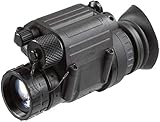
Gen 2+ Level 1 monocular
1x magnification, 40-degree FOV
Mil-spec waterproof construction
The AGM PVS-14 NL1 is the most battle-tested night vision unit in AGM’s catalog and one of the most widely used night vision devices in the world. Originally commissioned by the United States military for nighttime operations, the PVS-14 has been refined over multiple generations into a rugged, multi-purpose monocular that handles handheld observation, head-mounted use, and helmet-mounted deployment equally well. The 4.3-star rating across 62 customer reviews reflects a product that has been in shooters’ hands long enough to accumulate honest feedback.
The Gen 2+ Level 1 (NL1) image intensifier puts the PVS-14 in the same general performance bracket as a typical ATN PS28-WPT, but the green-phosphor output is a notable difference. For buyers who have only experienced white phosphor, the green display feels more familiar and is less fatiguing for many users over long sessions. The 1x magnification, 40-degree field of view, and 26mm F/1.2 lens system produce a bright, detailed image that works well for general observation and hunting scenarios.
Manual gain control is one of the PVS-14’s standout features at the price. It lets the user dial down tube brightness in environments with mixed ambient light (urban areas, partial moonlight), which preserves dark adaptation and extends the comfortable observation window. The 50-hour battery life on a single AA battery, the bright-light shut-off, and the 810G Mil-spec waterproof construction all add up to a unit you can rely on in poor weather without thinking twice.
The main difference from the PS28-WPT is form factor. The PVS-14 is a monocular, not a clip-on, so pairing it with a daytime scope requires a separate weapon mount and some re-zeroing. For buyers who only need a handheld or head-mounted observation device, the PVS-14 is straightforward. For shooters specifically wanting the clip-on workflow the PS28 offered, the Comanche-22 above is the closer match. Stock is currently limited on Amazon, so buyers interested in this model should not wait too long.

2560x1440 UHD CMOS sensor
1024x768 OLED display
Clip-on design for daytime optics
The AGM Neith DC32-4MP is the option for buyers who want the clip-on workflow the ATN PS28-WPT pioneered but do not need full IIT-grade low-light capability. The Neith uses a 2560×1440 UHD CMOS sensor with a 1024×768 OLED display, which delivers sharp daytime color imaging and solid low-light performance down to roughly the level of a Gen 2+ unit. In bright ambient light, the Neith actually outperforms most Gen 2+ IITs because of its color rendering and high-resolution sensor.
The clip-on design works the same way as the PS28-WPT: mount in front of your day scope via Picatinny or dovetail, and the digital sensor provides the night-vision view. The big advantages over an IIT unit are daylight usability, video recording, image capture, and built-in WiFi for live viewing and remote operation through the AGM app. You can use the Neith at noon and at midnight without damaging it – something no IIT tube can survive.
Pricing is the Neith’s headline feature. It’s the only sub-$1000 modern clip-on night vision option on Amazon, and it’s Prime-eligible. AGM backs the unit with a 5-year warranty, which is longer than most night vision products at any price. For budget-conscious hunters, property surveillance users, and shooters who want a clip-on that works in daylight without separate optics, the Neith covers a use case no IIT unit can match at the same price.
The honest limitation is that digital sensors underperform IITs in extreme low light. On a starlit night with no moon, the Neith’s image will get noisier and softer than what a Gen 2+ or Gen 3 IIT produces. For most practical hunting and surveillance scenarios – which happen under some ambient light – this is not a meaningful issue. For buyers who specifically need deep-dark performance, the AGM Comanche-22 covered above is the better fit. The 3.9-star score from the 3 current reviews is a useful but small sample; expect the rating to settle as more buyers work with the unit.
For a wider look at budget-friendly night vision options beyond the AGM lineup, our guide to the best night vision scopes under $1000 covers current options in detail.
The used PS28-WPT market in 2026 looks different from what it did even a few years ago. Major U.S. retailers like Adorama have marked the product as no longer available, ATN’s own PS28 product page returns a 404, and remaining inventory has moved to eBay, Armslist, AR15.com optics classifieds, and specialty night vision dealers who work with consignment units. Pricing has firmed up accordingly, and the realistic range for a working unit with a known tube is higher than what older comparison shopping would suggest.
For buyers still committed to the ATN PS28-WPT, the inspection process matters more than the brand on the box. Here’s the checklist I’d work through before handing over any money:
Realistic 2026 pricing for used PS28-WPT units reflects the tighter supply. A service-needed unit (cosmetic wear, untested tube, missing accessories) typically lands in the lower four-figure range. A working unit with a verified Photonis tube and complete accessories generally trades in the mid-to-upper four-figure range, with documented low-hour premium tubes commanding a real premium. Buyers who cannot verify tube condition should assume the low end of that range is the realistic ceiling for any sensible offer.
The bigger question is whether the used PS28 still represents the best value for a new buyer. For collectors who specifically want the ATN chassis or who already own a day scope that pairs well with a clip-on, the answer can still be yes. For practical users who need warranty support, parts availability, and predictable performance, the AGM alternatives covered above – particularly the Comanche-22 for clip-on users and the PVS-14 for monocular users – typically make more financial sense than a worn used unit at comparable total cost.
No. The PS28-WPT is discontinued. Major U.S. retailers list it as no longer available, ATN’s product page returns a 404, and remaining inventory has moved to eBay, Armslist, AR15.com optics classifieds, and specialty night vision dealers who work with consignment units. New-old-stock from specialized dealers is essentially gone.
White phosphor (P45) produces black-and-white images rather than the traditional green of P22/P43 phosphor tubes. The grayscale output behaves more like natural vision for many users and offers different contrast characteristics. Eye fatigue results vary: ATN marketing claims white phosphor reduces fatigue, while some long-time night vision users report the opposite, especially without a Wilcox amber filter in front of the eyepiece. The honest answer is highly individual.
The PS28-WPT pairs with daytime scopes from 1x to 12x magnification, with optimal performance between 2.5x and 8x. However, first focal plane (FFP) scopes do not pair cleanly with the PS28 clip-on – the FFP reticle renders inconsistently through the intensifier at higher magnification. Second focal plane (SFP) scopes behave predictably. Picatinny rail compatibility is required for mounting.
When properly mounted with a tight quick-release lock and correct optical-axis alignment, the PS28-WPT does not require re-zeroing – the clip-on design preserves your day scope’s zero. Mounting issues, worn locking mechanisms, or misalignment can cause zero shift, which is why mounting quality is the most-cited user complaint on forums.
ATN’s published detection range is 100-200 yards on human-sized targets under favorable ambient conditions, with recognition range at 75-150 yards. In real-world use, 150 yards is a realistic detection ceiling for human-sized targets under half-moon conditions, dropping to 80-100 yards in near-total darkness even with the IR illuminator engaged. Smaller targets like coyotes typically top out at 100-150 yards.
Yes, the ATN PS28-WPT is legal for civilian ownership in the United States. The unit is ITAR-controlled, which means it cannot be exported outside the U.S. without proper licensing from the Department of State. Some states may impose additional restrictions on night vision ownership and use, so state-level research is recommended before purchase.
Used PS28-WPT pricing in 2026 runs from the lower four-figure range for a service-needed unit with cosmetic wear and an untested tube, to mid-to-upper four figures for a working unit with a verified Photonis Photopis or XP4 tube and complete accessories. Documented low-hour premium tubes command a real premium over unverified examples.
Four current-production alternatives cover the main use cases: the AGM PVS-7 NW1 (closest direct legacy replacement in the PVS-7 form factor with white phosphor), the AGM Comanche-22 3NW1 (premium Gen 3 auto-gated white-phosphor clip-on), the AGM PVS-14 NL1 (proven Gen 2+ military-spec monocular with strong reviews), and the AGM Neith DC32-4MP (sub-$1000 digital clip-on with daylight capability and WiFi).
The ATN PS28-WPT deserves credit for bringing white-phosphor clip-on night vision to civilian buyers at a price point below the mil-spec tier, and the legacy it left behind still shapes what shooters expect from a clip-on night vision system. For collectors, vintage enthusiasts, and buyers who already own a day scope they want to preserve, hunting down a working used PS28-WPT with a verified Photonis tube is still a defensible choice – just build the inspection cost into your budget and accept that warranty support is gone.
For everyone else, the 2026 night-vision landscape offers better options than a used ATN PS28-WPT at comparable total cost. Buyers who want the closest functional match should look at the AGM PVS-7 NW1 – same form factor, current white phosphor, 3-year warranty, and a U.S. manufacturer standing behind the product. Shooters who want premium performance and a true clip-on should step up to the AGM Comanche-22 3NW1 with its Gen 3 auto-gated tube. Users who need a versatile monocular with deep field validation should consider the AGM PVS-14 NL1. Budget-conscious buyers who want daylight-usable clip-on performance will be served best by the AGM Neith DC32-4MP.
The ATN PS28-WPT was an important product in the civilian night vision timeline, and it remains a useful reference point for understanding what a clip-on white-phosphor system should do. Treat it as the benchmark the modern alternatives are improving on, not as the best choice for a new buyer in 2026.