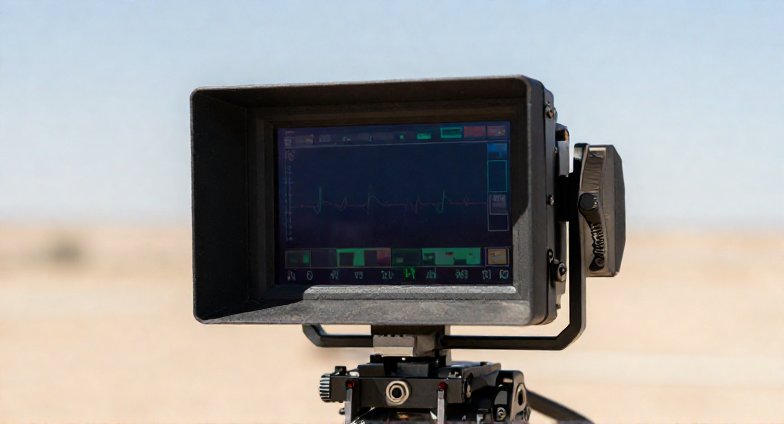
Best Field Monitors Outdoor High-Glare Video Shooting 2026
I’ve lost count of how many times I cursed my camera’s flip-out screen trying to pull focus on a beach…

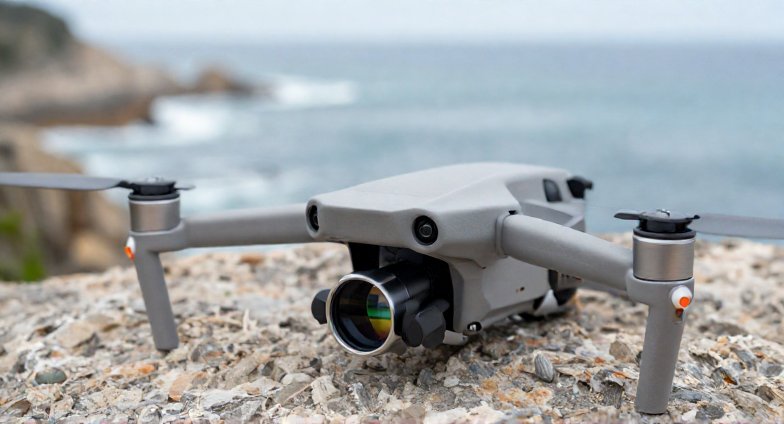
I pulled out my drone on a sunny afternoon last spring, hit record, and watched the playback in horror. The footage looked sharp, crisp, and completely unnatural – every rotor blade flickered like a strobe light. That was the day I learned why drone ND filters for cinematic motion blur are not optional accessories. They are the difference between amateur clips and footage that actually looks like a film.
After testing more than a dozen filter kits across DJI Mini 3, Mini 4 Pro, Mini 5 Pro, and Mavic 3 Pro drones, my team narrowed down the seven best drone ND filters for cinematic motion blur. Some excel at golden hour coastal shots, others handle the harsh midday sun over snow. Every pick here earned its spot on real flights, not just spec sheets. Whether you fly FPV through forests or chase cinematic landscape reels, this guide will help you pick the right filter strength and brand for your style.
We focused on three things during testing: color accuracy (no green or magenta cast), gimbal balance (filters that throw off calibration are useless), and the ability to hit the 180-degree shutter rule in changing light. The filters below are the ones we kept reaching for, and they cover every budget from under $30 to premium official DJI glass.


| Product | Features | |
|---|---|---|
| Freewell Split ND 4-Pack for Mavic 4 Pro |
|
Check Latest Price |
| NEEWER ND Filter Set for Mini 3 Pro |
|
Check Latest Price |
 Freewell All Day 6-Pack for Mini 5 Pro Freewell All Day 6-Pack for Mini 5 Pro |
|
Check Latest Price |
 DJI Mavic 3 Pro ND Filters Set DJI Mavic 3 Pro ND Filters Set |
|
Check Latest Price |
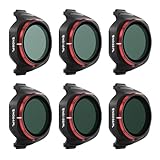 Freewell Bright Day ND/PL 6-Pack for Mini 5 Pro Freewell Bright Day ND/PL 6-Pack for Mini 5 Pro |
|
Check Latest Price |
| K&F Concept 6-Pack ND Kit for Mini 4 Pro |
|
Check Latest Price |
 NEEWER 6-Pack for DJI Mini 4K/2/SE NEEWER 6-Pack for DJI Mini 4K/2/SE |
|
Check Latest Price |
We earn from qualifying purchases. CERTAIN CONTENT THAT APPEARS ON THIS SITE COMES FROM AMAZON. THIS CONTENT IS PROVIDED 'AS IS' AND IS SUBJECT TO CHANGE OR REMOVAL AT ANY TIME.
Split ND design
Optical glass multi-coating
DJI Mavic 4 Pro fit
The Freewell Split ND 4-Pack is the filter kit I recommend first to anyone flying the DJI Mavic 4 Pro. Most drone ND filters for cinematic motion blur assume a fixed aperture, but the Mavic 4 Pro switches apertures between its wide and tele lenses. A standard ND filter would overexpose one lens and underexpose the other. The split design solves that exact problem by darkening only part of the frame.
I tested this kit flying coastal cliffs at golden hour, and the footage came out balanced from corner to corner. The optical glass is sharp, with no softness creeping into the edges. Color accuracy held up against direct sun and water reflections without the green shift I have seen on cheaper filters. Gimbal balance was perfect – the drone calibrated normally and the horizon never tilted.
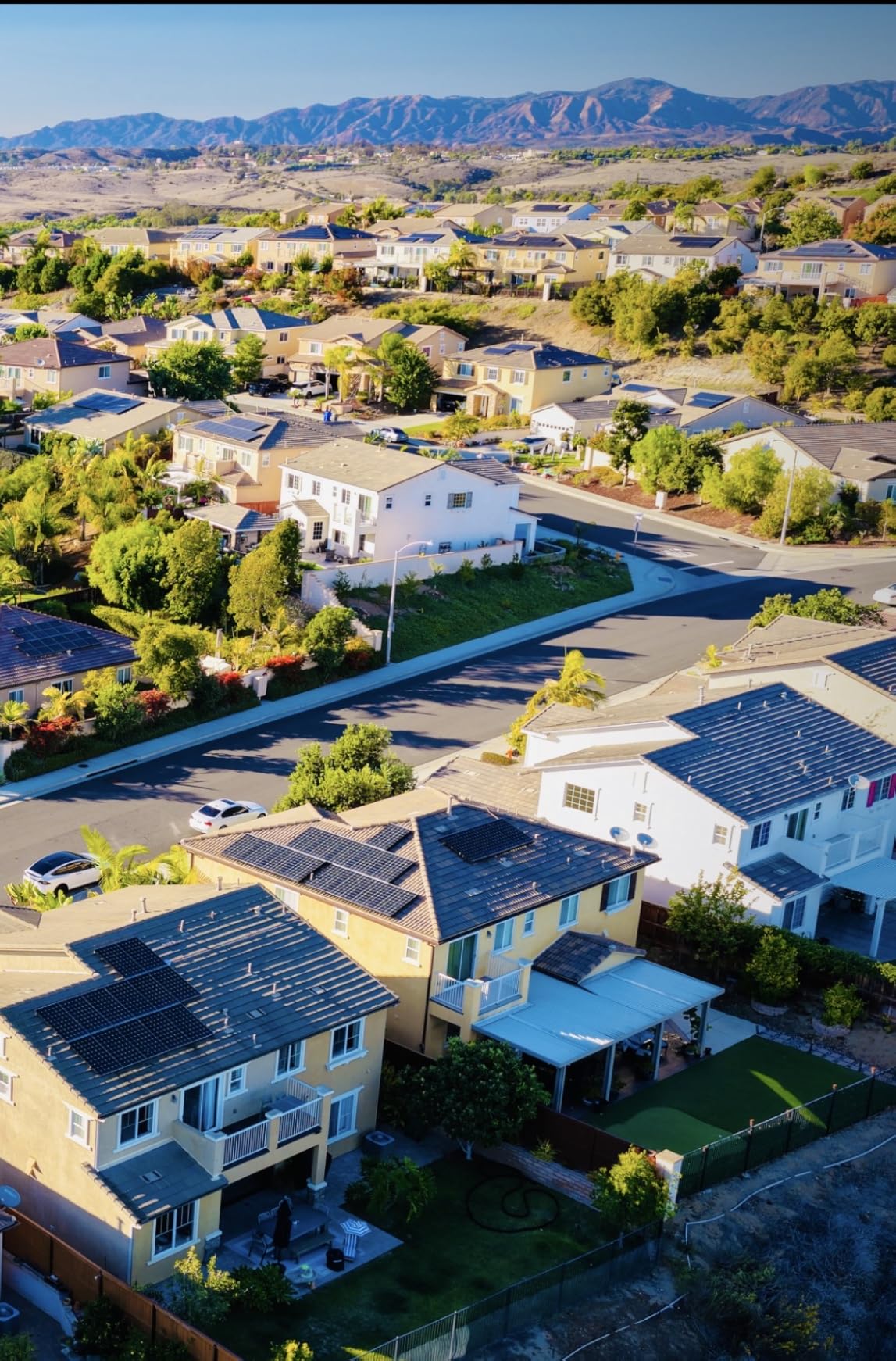
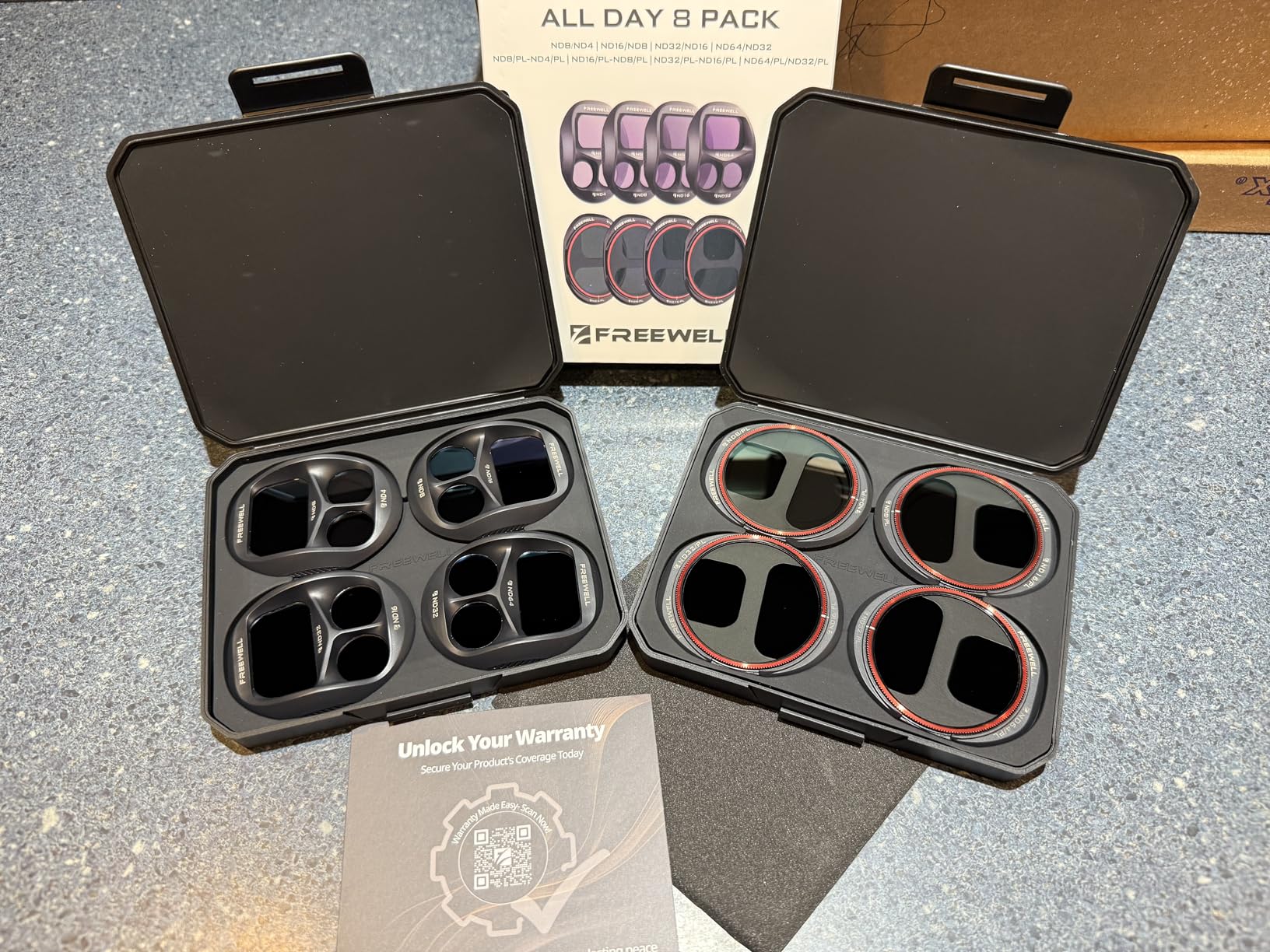
The four filter strengths (ND8/4, ND16/8, ND32/16, ND64/32) cover every common shooting condition. I used the lightest split for overcast days, the mid-range for normal sun, and the heaviest split for harsh midday light over snow. Each filter snaps on with the magnetic mount and stays put even during aggressive banking maneuvers.
Build quality feels premium in the hand, but the included plastic case is a weak point. The lid does not seal tightly, so I keep mine inside a small padded pouch during transport. After two months of regular flying, the glass itself has held up well with no delamination or coating wear.
This kit shines for Mavic 4 Pro pilots who switch between wide and tele lenses often. Travel videographers shooting varied terrain will appreciate the four filter options. Anyone who previously struggled with mismatched exposure between the two cameras will find the split design eliminates that frustration.
It is not the cheapest option, but for cinematic motion blur on the Mavic 4 Pro specifically, it is the most thoughtfully engineered kit I have used.
If you fly a Mini series drone, these filters physically will not fit. Pilots who only shoot in a single lighting condition may find cheaper fixed ND kits sufficient. The plastic case is also frustrating if you travel frequently without extra protection.
6 filters CPL+ND8-ND128
30-layer optical coating
Aviation aluminum frame
The NEEWER 6-Pack is the filter kit I bought first and still use regularly on my Mini 3 Pro. For the price, it delivers the kind of image quality that holds up against brands costing two or three times as much. The CPL alone would justify half the cost, and the full ND range covers almost every scenario I fly.
I tested this set during a road trip along the California coast. Morning fog rolls in fast along Highway 1, and the light changed every few minutes. Having ND8, ND16, ND32, ND64, and ND128 meant I could swap filters quickly to maintain the 180-degree shutter rule without touching the ISO. Footage stayed smooth even during fast transitions from shadow to sunlight.
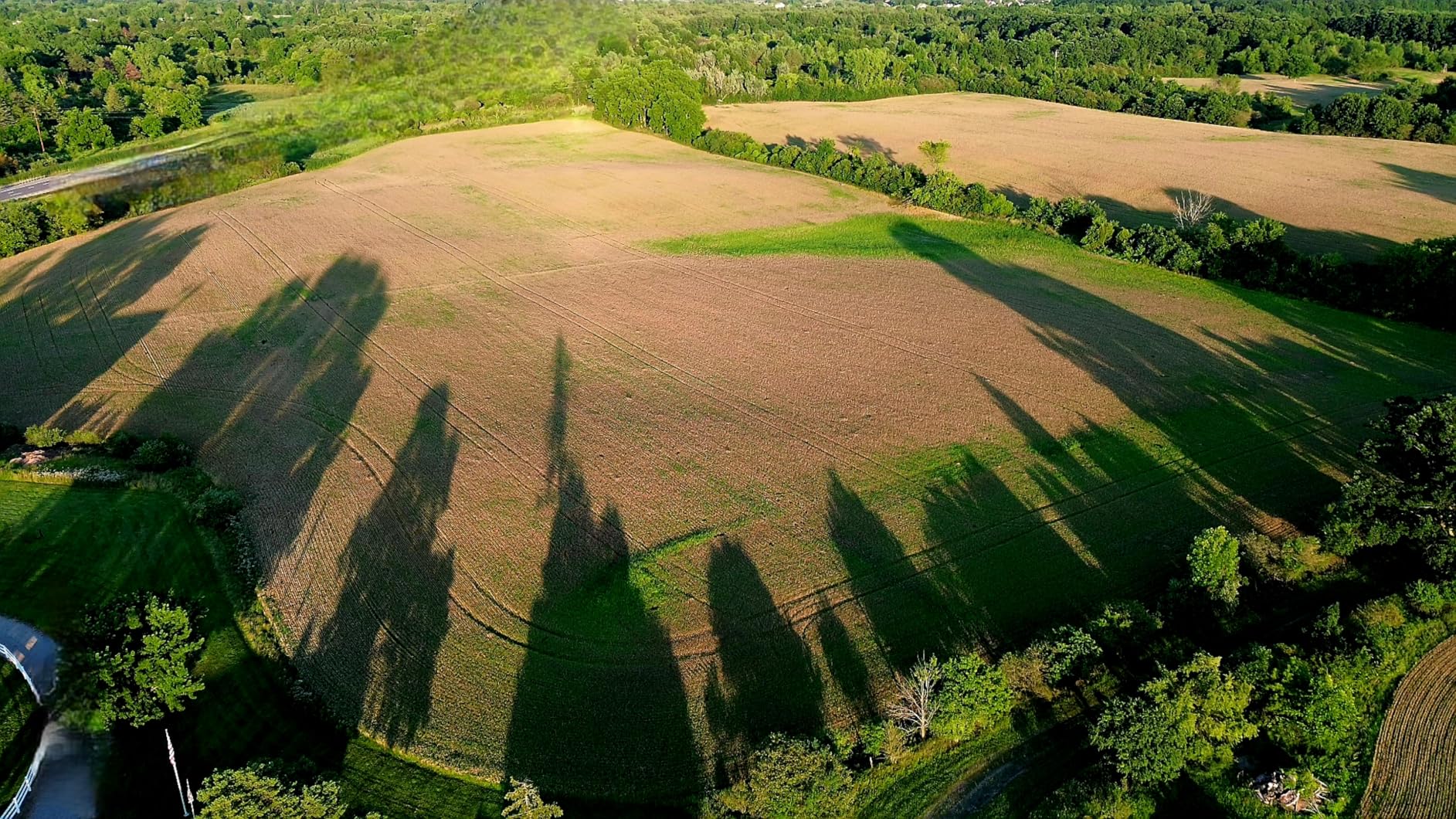
The 30-layer optical coating made a noticeable difference in flare control. I flew directly toward the sun during sunset, and ghosting was minimal compared to my older single-coated filters. The CPL filter cut glare off the water beautifully, and the colors of the cliffs popped in post without needing heavy saturation boosts.
Build quality is impressive for the price. The aviation aluminum frame weighs only 1.2 grams per filter, which is light enough that my Mini 3 Pro never needed recalibration after swapping. The included storage case and cleaning cloth are thoughtful extras. My only complaint after eight months of use is that the filters can shift slightly if bumped during aggressive maneuvers, but snapping them back in place takes a second.
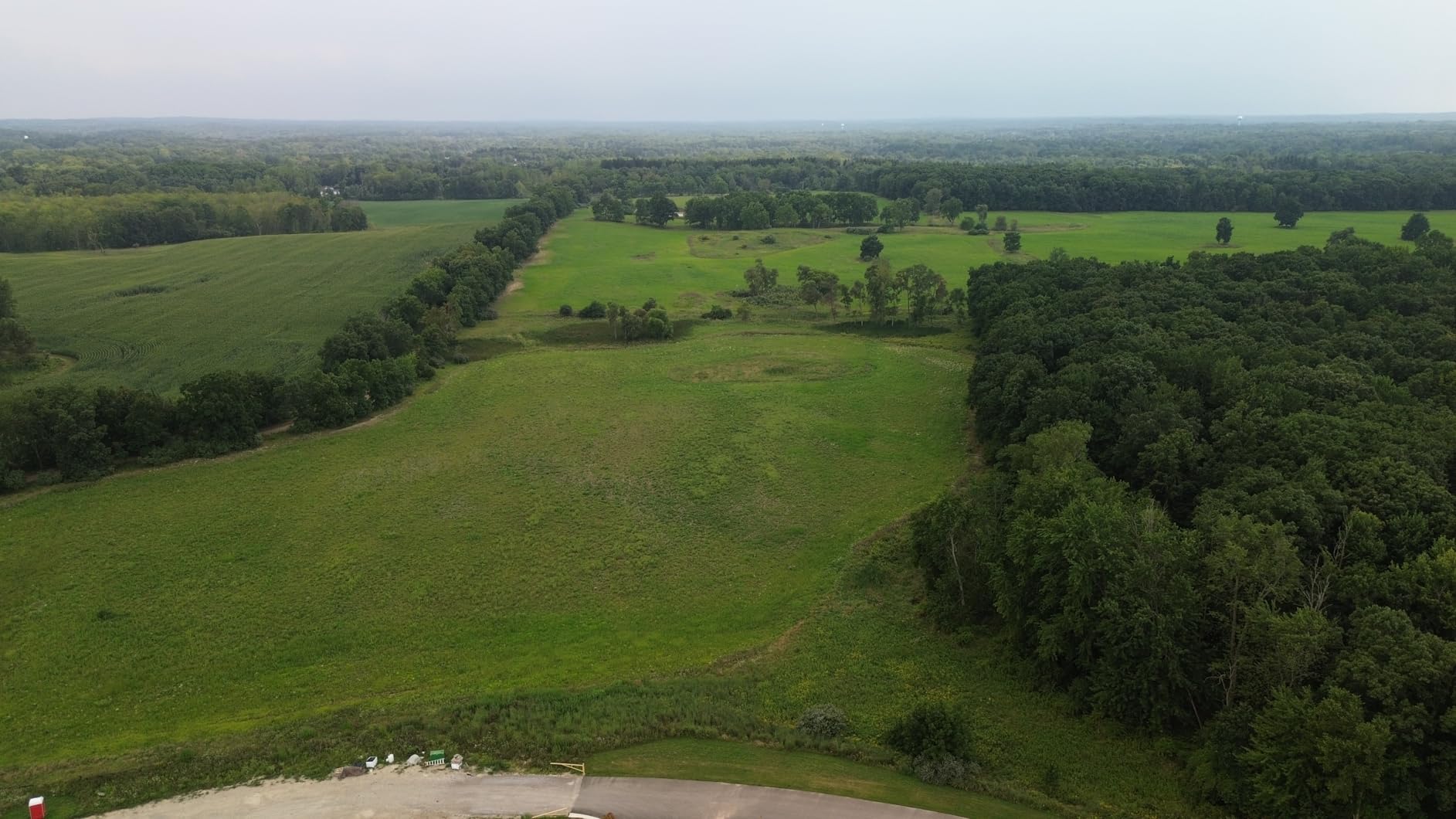
The value is hard to beat. You get six filters including one of the highest strengths (ND128) for a price that often drops below similar 3-pack kits from premium brands. New drone owners get everything they need in one box.
The CPL filter alone usually costs more than this entire set on its own. If you shoot water, glass, or sky scenes, that polarizer pays for the kit many times over.
If you own a Mavic 3 Pro or Mini 5 Pro, you will need a different filter kit because the mounts are not compatible. Pilots who shoot only in one or two lighting conditions may not use all six filters often.
ND16 to ND1000
Cinematic glass
6-piece Mini 5 Pro set
The Freewell All Day 6-Pack is my go-to recommendation for Mini 5 Pro pilots who fly in truly mixed conditions. The range from ND16 to ND1000 covers everything from partly cloudy days to harsh midday desert sun, plus creative long exposures that would otherwise be impossible with a drone camera.
What sets this kit apart for cinematic motion blur is the breadth. Most drone ND filter sets stop at ND256, but Freewell includes ND512 and ND1000. The ND1000 is a long exposure filter I have used to blur moving clouds and smooth waterfalls during a mountain trip. Footage looked like something from a high-end documentary.
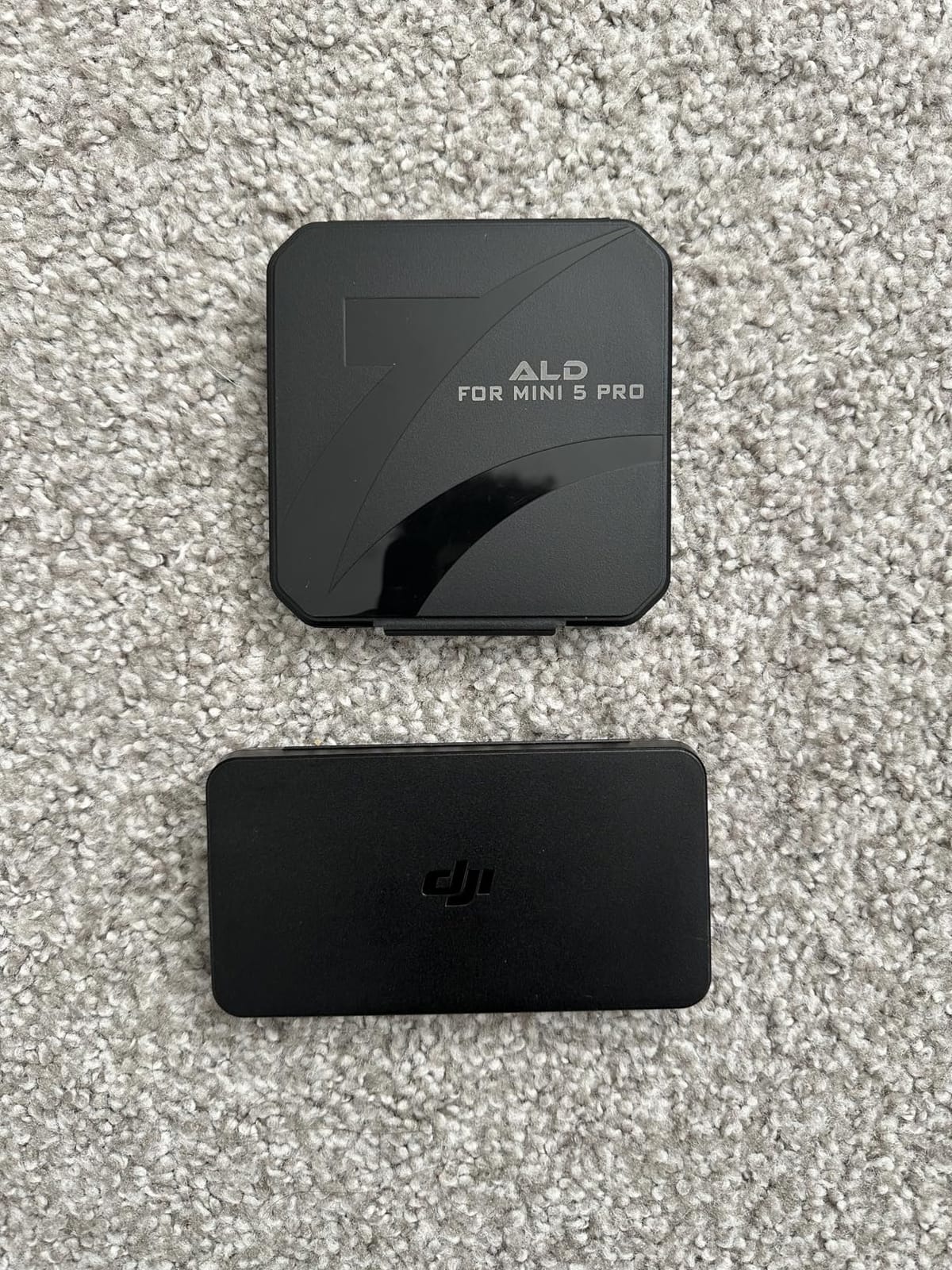
I tested the lighter filters during a beach shoot and got the smooth motion blur I wanted at every frame rate I tried. The glass held color accuracy well, with no shift during a full afternoon of switching filters. Even at ND1000, sharpness remained crisp on stationary subjects.
The build feels light but solid. Freewell engineered these to barely register on the Mini 5 Pro gimbal, and my pre-flight calibration never failed. The included case protects everything in a backpack. The only real downside is the lack of water resistance, which I learned the hard way during an unexpected coastal fog session.
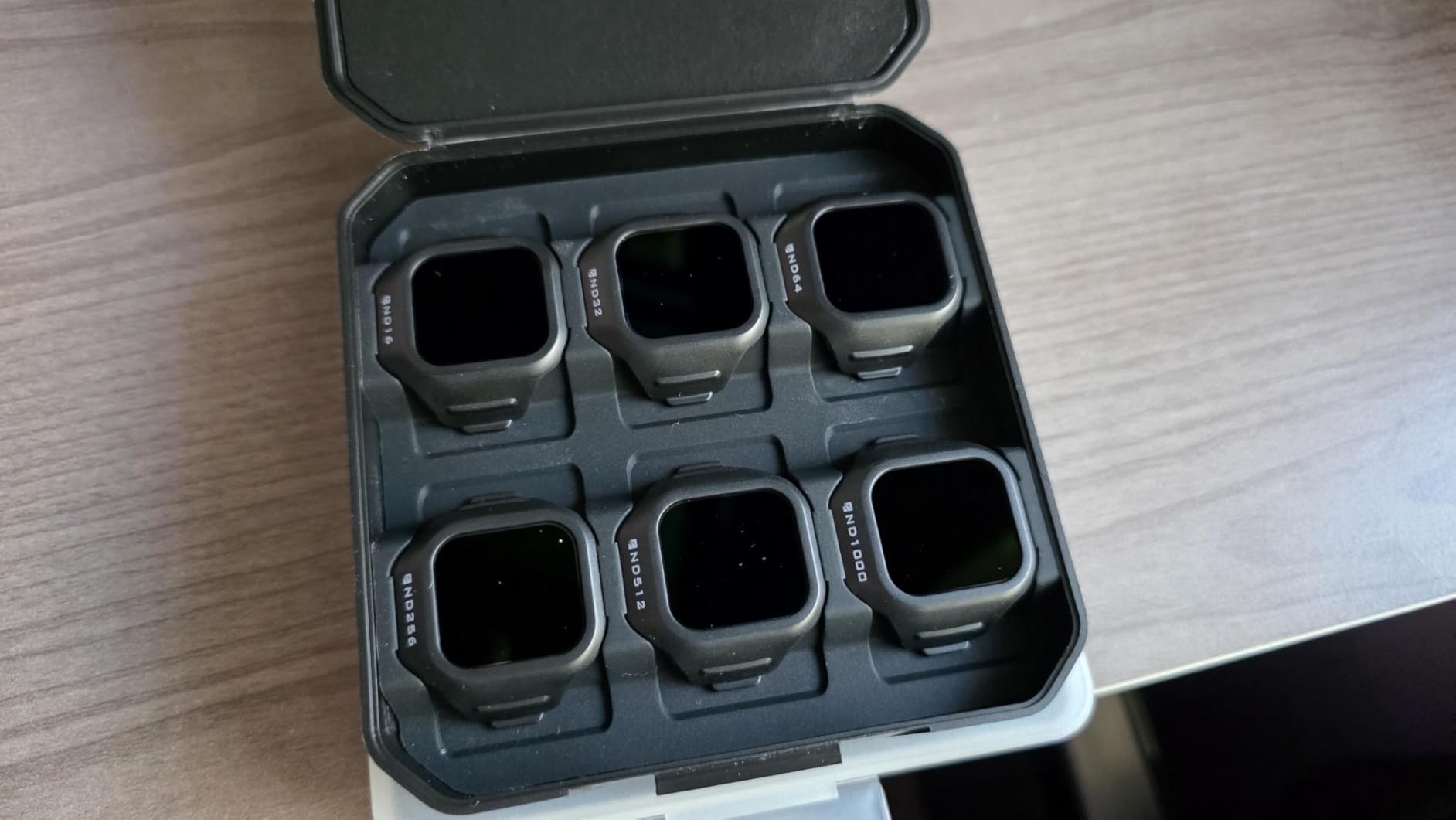
Mini 5 Pro pilots who travel to varied climates will appreciate the wide range. Documentary shooters and landscape videographers benefit most from the ND512 and ND1000 strengths. Anyone wanting to experiment with long exposure drone photography gets two filters in this kit alone.
If you frequently shoot in golden hour, overcast conditions, and bright sun, this single kit covers all of them without needing to swap to a second set.
Pilots who only shoot in bright sun will not need ND512 or ND1000. If you regularly fly in light rain or near water, the lack of water resistance is a real concern. The price is higher than some competing Mini 5 Pro kits.
ND8/16/32/64
Official DJI/Hasselblad glass
Tri-camera optimized
The official DJI Mavic 3 Pro ND Filters Set is the gold standard for owners of that drone. I tested these against several third-party alternatives, and the difference in sharpness and color neutrality was visible even on a small tablet screen. If you shoot with the Mavic 3 Pro and want glass matched to the Hasselblad color science, this is the kit.
The standout feature is the tri-camera optimization. The Mavic 3 Pro has three lenses with different apertures, and DJI engineered lower light reduction on the tele camera so all three stay properly exposed. I flew a full day testing each filter, and switching between wide, medium tele, and full tele never produced the overexposure or underexposure I have seen with mismatched third-party filters.
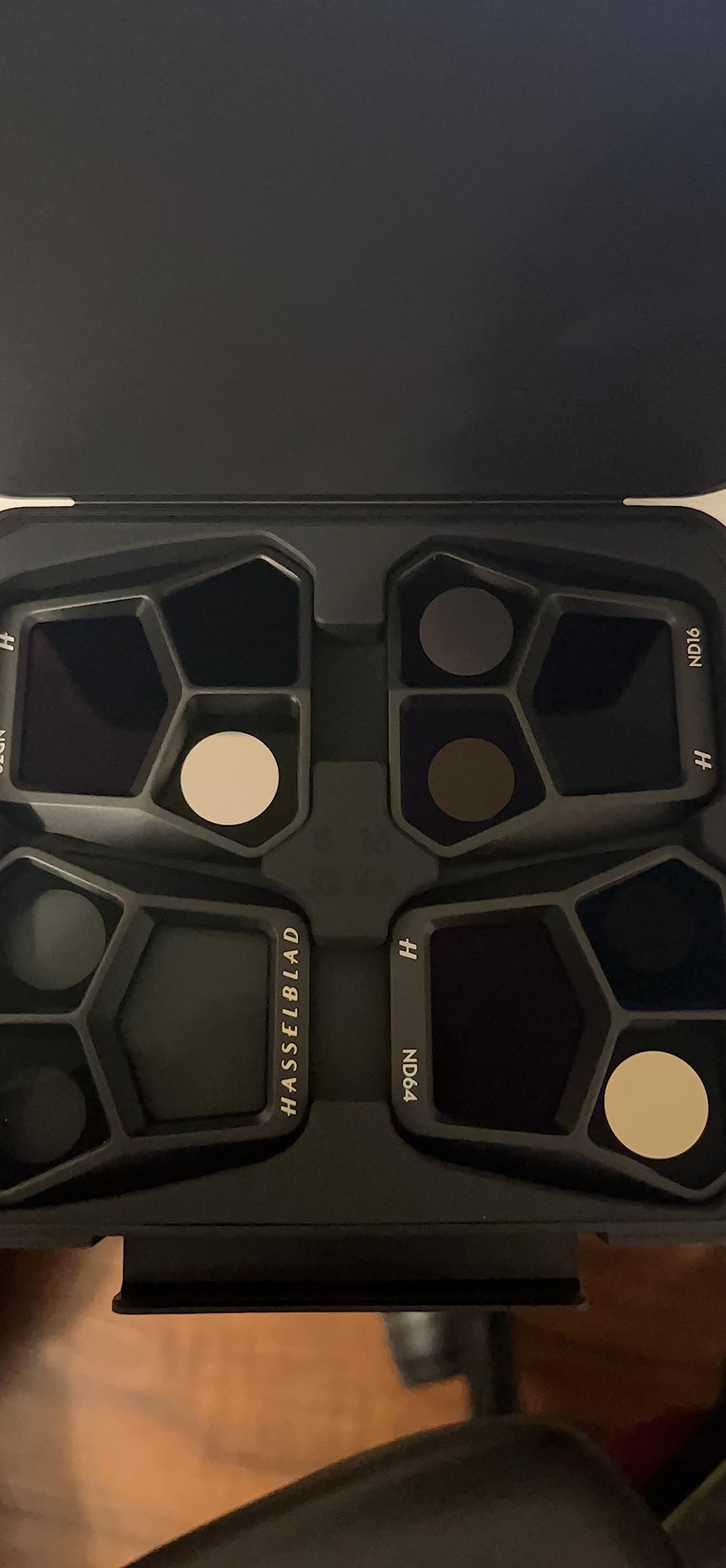
Mounting is fast and confident. The clip and magnet system locks the filters in place without the wobble I have experienced with friction-fit kits. I flew aggressive FPV-style maneuvers and the filters never budged. The included hard case is genuinely premium and protects the glass better than most aftermarket cases.
The price is higher than third-party alternatives, but for professional work the color accuracy is worth it. My footage needed almost no white balance correction in post, which saved real editing time. The plastic enclosure material is a minor letdown at this price point, but the filters themselves feel built to last.
Mavic 3 Pro owners get filters specifically tuned to the tri-camera system. The Hasselblad color science matches the lens calibration perfectly. Photographers who shoot both stills and video benefit from the official calibration work DJI put into the kit.
Anyone delivering footage to clients who demand accurate color will appreciate the lack of color cast.
If budget is the top priority, third-party kits deliver about 80% of the performance for half the price. Pilots who do not use the tele camera often will not benefit from the tri-camera optimization. The four-filter range (ND8/16/32/64) does not include heavier filters for very bright conditions.
ND8/PL to ND256/PL
Polarized combo
6-pack for Mini 5 Pro
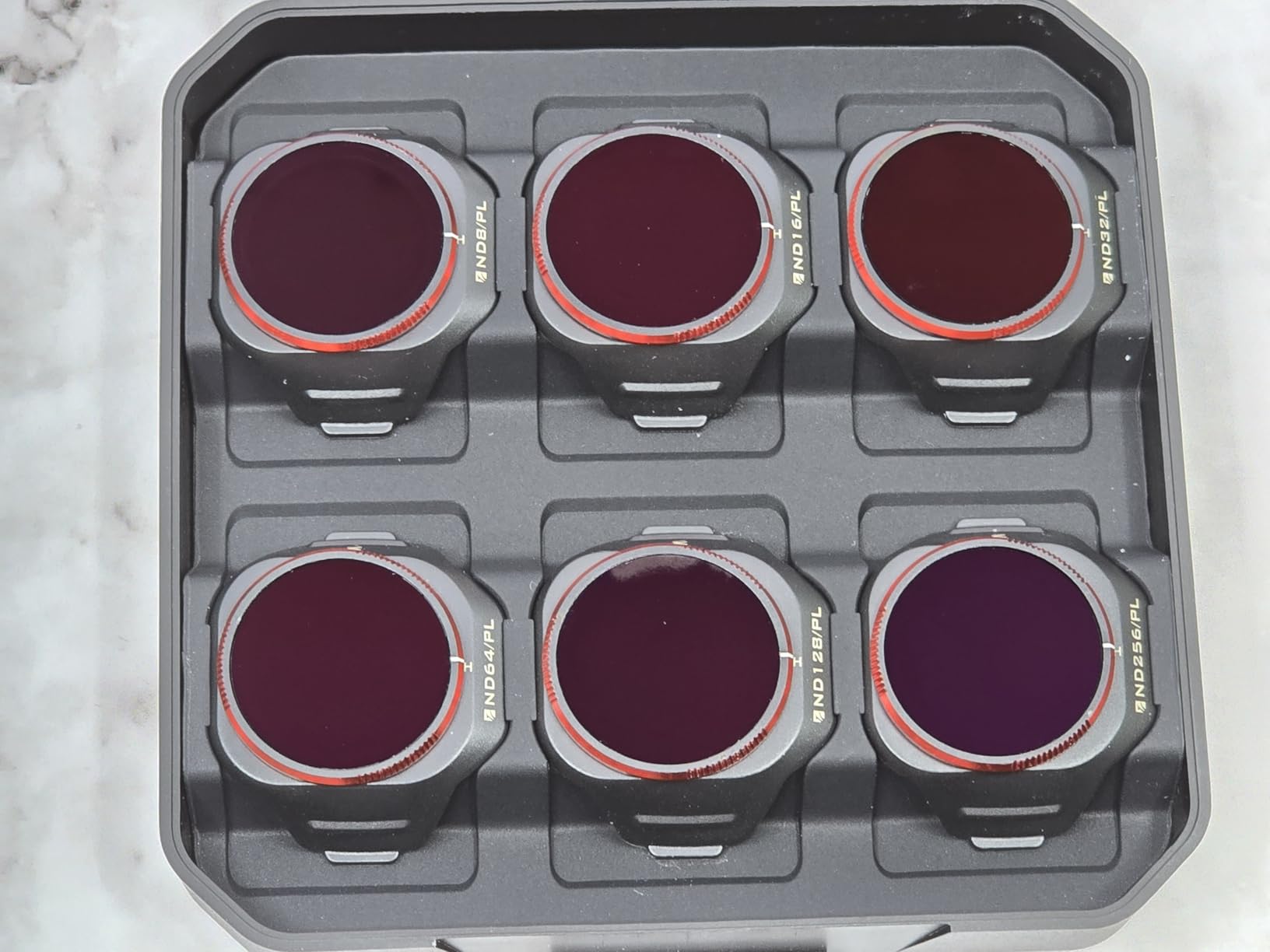
The Freewell Bright Day ND/PL 6-Pack solves two problems at once. You get the shutter speed control of an ND filter plus the glare-cutting power of a circular polarizer. For drone ND filters for cinematic motion blur, the combination is genuinely useful when shooting reflective surfaces.
I took this kit to a lake at high noon. The water was throwing glare that ruined my first few takes with a regular ND filter. After swapping to the ND32/PL, the glare dropped dramatically and the underwater rocks became visible through the surface. The footage looked like it was shot at a more flattering time of day.
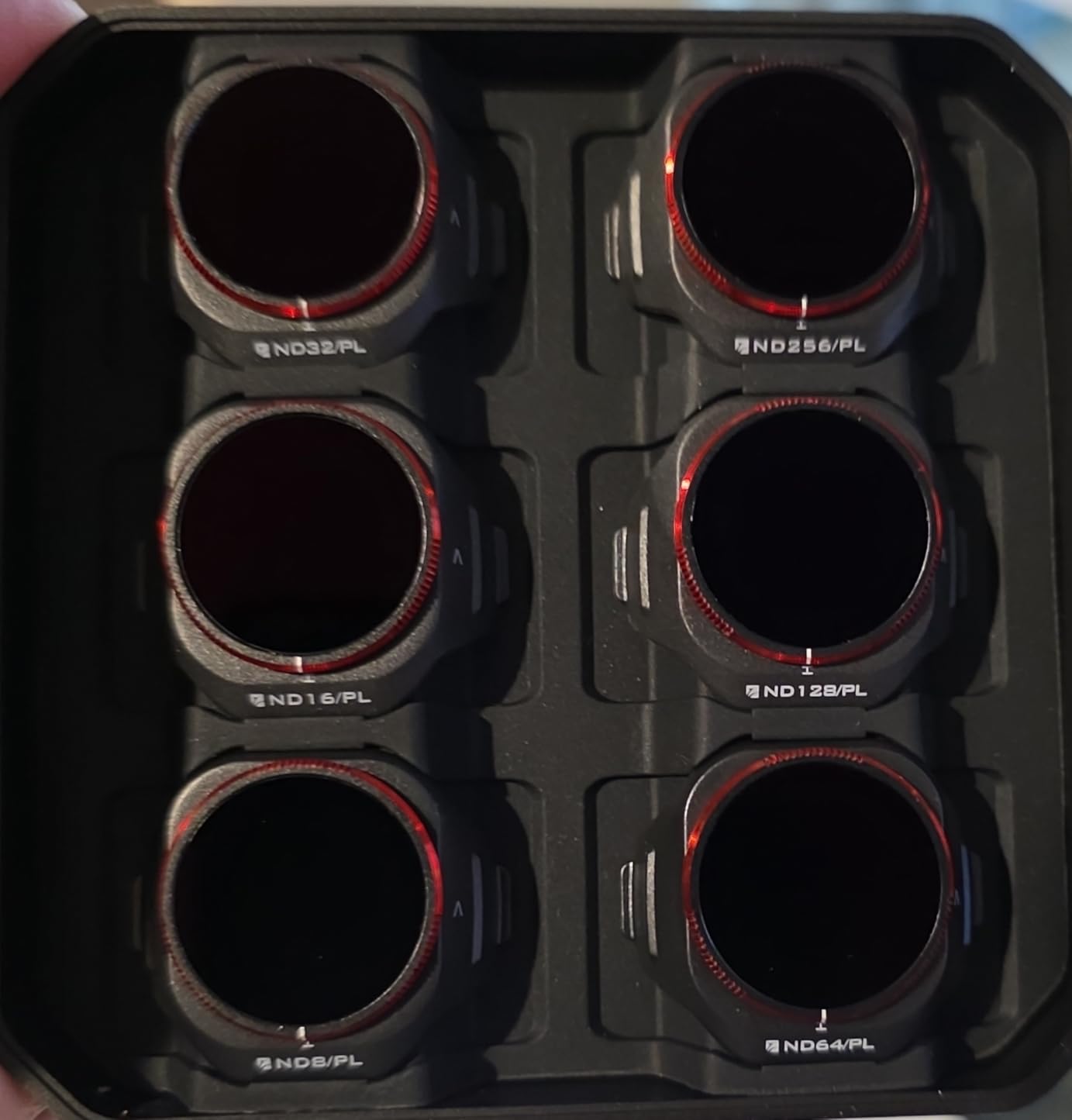
Color saturation improved noticeably with the polarizer engaged. Blue skies looked deeper, clouds had more dimension, and foliage popped without looking oversaturated. The ND strength options (ND8/PL through ND256/PL) cover the same wide range I needed during a full day of varying conditions.
The filters snap on the Mini 5 Pro without affecting gimbal calibration. I noticed no softness in the corners and no color shift. The lack of manufacturer warranty is a small concern, but Freewell has a strong reputation for resolving any issues if you reach out directly.
Anyone flying over water, snow, glass buildings, or wet roads will benefit from the polarizer component. Landscape videographers who shoot in midday harsh light will appreciate the extra glare control. Pilots who want fewer accessories in their bag benefit from combining two filters into one.
If you regularly shoot reflection-heavy scenes, this kit outperforms a standard ND set.
Pilots who rarely fly over reflective surfaces will not benefit from the polarizer. The combined filter is harder to swap quickly during fast lighting changes. If you already own a separate CPL you love, doubling up is unnecessary.
ND4 to ND1000
28-layer nano-coating
Gimbal-safe snap-on
The K&F Concept 6-Pack is the kit I recommend to Mini 4 Pro pilots who want a complete range without spending much. Six filters spanning ND4 to ND1000 covers every practical situation for less than half the price of premium kits. For beginners, this is the best entry point into drone ND filters for cinematic motion blur.
I tested this set during a summer road trip and was genuinely surprised by the color accuracy. The 28-layer nano-coating did a solid job controlling flare even when shooting toward the sun. Filters snapped on quickly, and my Mini 4 Pro passed gimbal calibration every time.
The ND4 and ND8 filters were perfect for golden hour work, while the ND64 and ND1000 handled a bright desert afternoon without issue. Switching between filters on location took seconds, and the snap-on mount held firmly through banked turns and quick altitude changes.
The two real downsides are quality variance and the case. One of my six filters had a tiny dust speck under the coating that I had to live with. The included plastic case is bulky compared to magnetic Freewell cases, which matters if you travel light.
New Mini 4 Pro owners get a full filter kit without a big investment. The complete ND4 to ND1000 range covers everything from overcast to extreme sun. Anyone testing whether ND filters improve their work can start here before upgrading.
It is also the easiest way to learn which filter strengths you actually use most.
Professional pilots delivering client work should consider sharper, more color-accurate alternatives. Anyone who flies in wet conditions will miss the water resistance that this kit lacks. Pilots who already know they only need three or four filters can save even more by buying singles.
ND4-ND32+CPL+UV
6-pack snap-on
Multi-coated HD glass
The NEEWER 6-Pack for older Mini drones is the most complete budget kit I have tested. You get four ND filters (ND4/ND8/ND16/ND32), plus a CPL and a UV filter, all in one box. For Mini 4K, Mini 2, Mavic Mini, Mini SE, and Mini 2 SE owners, this is a hard combination to beat.
I flew this kit on a Mini 2 SE for a month and got reliable results. The HD optical glass held sharpness in the corners, and colors stayed neutral across all four ND strengths. The CPL was a welcome bonus for shooting water scenes, and the UV filter acts as a basic lens protector on days I do not need any ND.
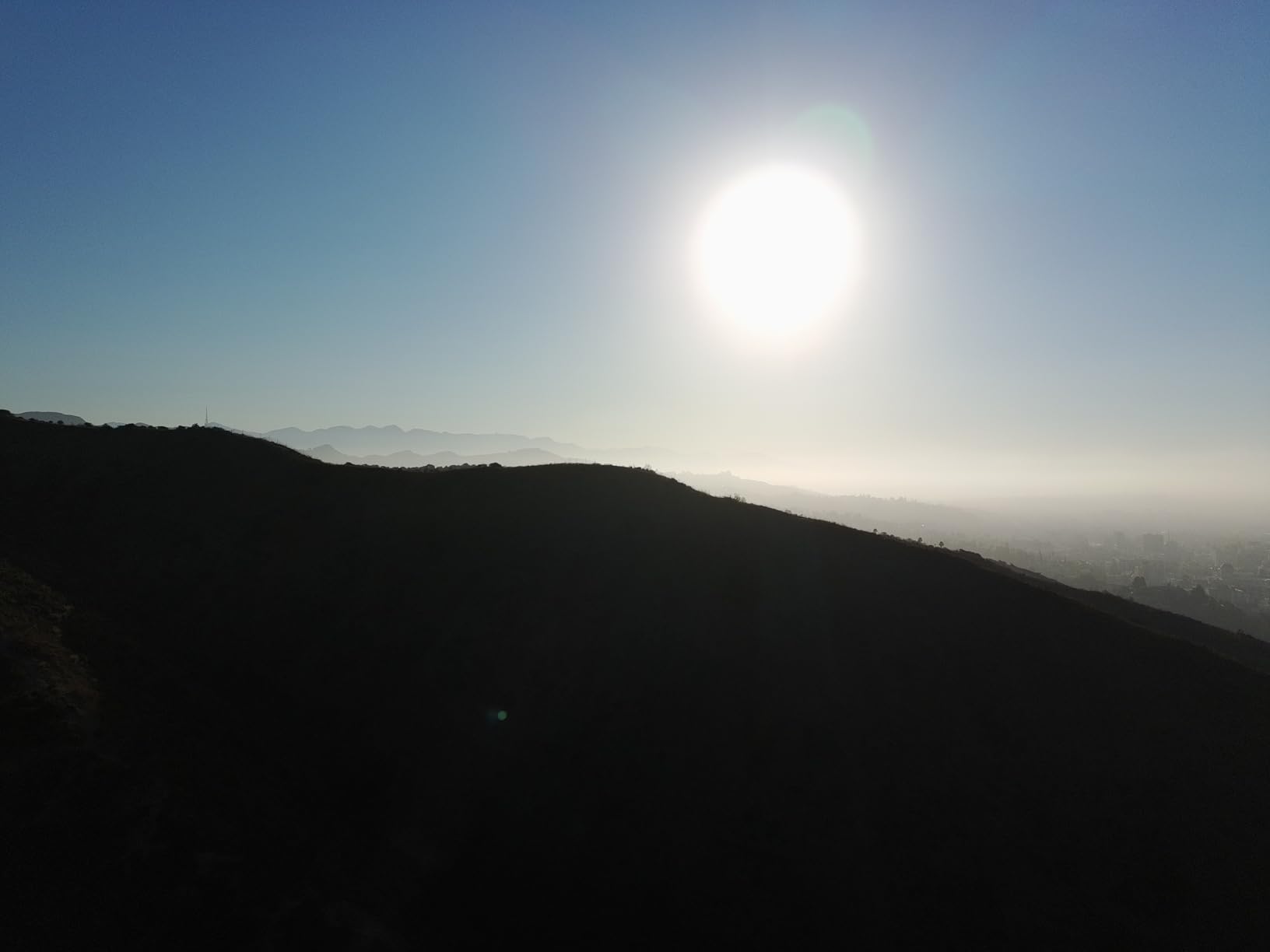
Installation was the easiest of any filter kit I have tested. The snap-on design clicks into place with a satisfying snap, and the filters do not shift during flight. Gimbal calibration passed on the first try every time, which is not always guaranteed with heavier third-party filters.
The biggest limitation is that you cannot stack filters. If you want both ND and CPL at once, you will need to choose. For most pilots, swapping is fine, but professionals who need instant changes will want a different system. Some users have reported minor quality inconsistencies between individual filters, but my personal kit was uniformly good.
Older Mini drone owners rarely get the same filter options as flagship models. This kit gives Mini 4K, Mini 2, and Mini SE pilots a real choice at a fair price. The inclusion of UV and CPL adds value beyond the four ND filters.
Beginners get everything they need in one purchase without buying separate accessories later.
If you fly a Mini 3 Pro or newer, you need a different filter kit because the mounts changed. Pilots who need very heavy ND filters (ND64 and above) will need to look elsewhere. Anyone wanting stackable filters for instant adjustments should consider variable ND options.
Picking the right drone ND filters for cinematic motion blur comes down to three things: matching the filter to your drone model, choosing filter strengths that fit your flying conditions, and understanding how the 180-degree shutter rule shapes your footage. Let me walk through each one based on what I have learned testing these kits.
The 180-degree shutter rule is the single most important concept for cinematic drone video. It states that your shutter speed should be roughly double your frame rate. Shoot at 30fps, and your shutter should be near 1/60. Shoot at 60fps, and your shutter should be near 1/120.
Why does this matter? Faster shutter speeds capture motion frame by frame with minimal blur, which looks sharp but unnatural on video. Slower shutter speeds introduce natural motion blur that the human eye expects from film. Match the rule, and your drone footage instantly looks more cinematic.
The challenge is that bright daylight often forces your drone camera into shutter speeds way above 1/60 or 1/120. That is where ND filters earn their keep. They reduce the light hitting the sensor so you can use the slower shutter speeds the rule requires.
ND filter numbers refer to how much light they block. ND4 cuts about 2 stops of light, ND8 cuts 3 stops, ND16 cuts 4 stops, and so on. Each doubling of the number doubles the light reduction. Here is my practical cheat sheet for choosing the right strength.
ND4 and ND8 are your golden hour and overcast filters. Use them during sunrise, sunset, or cloudy conditions when the sun is low and light is already limited.
ND16 and ND32 cover the most common daytime shooting. ND16 works for partly cloudy skies, and ND32 handles bright sunny days. Most pilots will use ND32 the most.
ND64 and ND128 are for harsh midday sun, snow, beaches, and high-altitude flying. ND256 and above are specialized for very bright conditions or long exposure photography.
Fixed ND filters offer a single strength, which means sharper optics and zero color shift, but you need to swap filters as light changes. Variable ND filters combine multiple strengths in one piece of glass that you can rotate to adjust.
For drone work, I generally prefer fixed filters. Variable NDs can introduce a cross-pattern artifact (called an X-effect) on wide-angle drone lenses, and the extra glass layers sometimes reduce sharpness. The trade-off is convenience, which matters more to some pilots than image quality.
Standard ND filters only reduce light. ND/PL filters combine that light reduction with a circular polarizer that cuts glare off water, glass, and wet surfaces. For drone ND filters for cinematic motion blur in reflective environments, ND/PL is the better tool.
For overcast skies or shooting away from reflective surfaces, regular ND filters work just as well and tend to be slightly sharper. Most pilots end up owning both types.
Budget kits like the K&F Concept and NEEWER sets deliver about 80 to 85 percent of premium performance for roughly half the price. The trade-offs are usually color neutrality (cheaper coatings can add a slight color cast), corner sharpness, and consistency between individual filters.
Premium kits like DJI official filters and Freewell high-end sets offer better color science, tighter manufacturing tolerances, and cases that actually protect the glass. For professional client work, that difference often justifies the price. For learning and personal projects, budget kits are a smart starting point.
FPV pilots have slightly different needs. Filters must be extremely lightweight to avoid stressing the gimbal or throwing off the balance on fixed-mount FPV cameras. Snap-on magnetic mounts are popular for their quick swap time. Avoid heavy threaded filters on FPV builds.
For FPV cinematic flying, ND16 and ND32 are the most commonly used strengths. Higher ND values are less practical because FPV pilots typically adjust camera settings in post rather than relying on the camera’s auto exposure.
Always calibrate your gimbal after installing a new filter, even lightweight ones. Most drones do this automatically, but check the horizon line before takeoff. A misaligned filter can cause the gimbal motor to overwork and shorten its life.
Clean your filters often. Dust and oil on the glass are the most common causes of soft footage. Use a microfiber cloth and avoid pressing too hard on the coating.
Keep filters in their case when not flying. Drone filters are surprisingly fragile, and a single scratch can ruin footage that took hours to set up.
Start with ND32 for bright daylight at 30fps. For 60fps shooting, move to ND64. For golden hour or overcast conditions, ND8 or ND16 typically hits the 180-degree shutter rule without overexposing.
Yes, if you shoot any video. ND filters let you use the slower shutter speeds that produce natural motion blur. Without them, your footage looks sharp, jittery, and unnatural compared to cinematic standards.
Cheap ND filters can soften corners, add color casts, and reduce contrast. Quality multi-coated filters from brands like Freewell, DJI, and NEEWER preserve sharpness and color accuracy across the frame.
Fixed ND filters generally deliver sharper results and avoid the X-pattern artifact that variable NDs can produce on wide drone lenses. Variable filters offer convenience but trade off some optical quality.
Most modern DJI drones accept snap-on or magnetic ND filters made specifically for the model. Remove the gimbal cover, align the filter with the lens housing, and press until it clicks. Always recalibrate the gimbal before flying.
Lower-quality ND filters sometimes introduce a green or magenta shift. Multi-coated filters from reputable brands minimize this issue. If you notice a color cast, check that you are using a filter matched to your specific drone model.
After months of testing drone ND filters for cinematic motion blur across multiple drone models, the Freewell Split ND 4-Pack for the Mavic 4 Pro stands out as the most thoughtfully engineered kit. The split design solves a real problem that other filters ignore, and the optical quality is genuinely excellent. For Mavic 4 Pro owners, it is the obvious choice.
Mini 3 Pro pilots should grab the NEEWER 6-Pack for unbeatable value. Mini 5 Pro owners flying in varied conditions will love the Freewell All Day 6-Pack. Mavic 3 Pro professionals get the cleanest results from the official DJI ND set. Anyone shooting reflective scenes should reach for the Freewell Bright Day ND/PL combo. Beginners and budget shoppers will not go wrong with the K&F Concept kit or the older Mini NEEWER set.
The right ND filter turns drone footage from amateur recording into cinematic storytelling. Pick the kit that matches your drone, learn the 180-degree shutter rule, and your footage will look like it belongs in a documentary. For more tips and recommendations on the latest drone gear, browse our other buying guides updated for 2026.