Maven CRS.3 4-20×50 FFP Review (September 2026): Worth It?
After extensive testing across multiple platforms and conditions, the Maven CRS.3 4-20x50 FFP emerges as one of the best values…

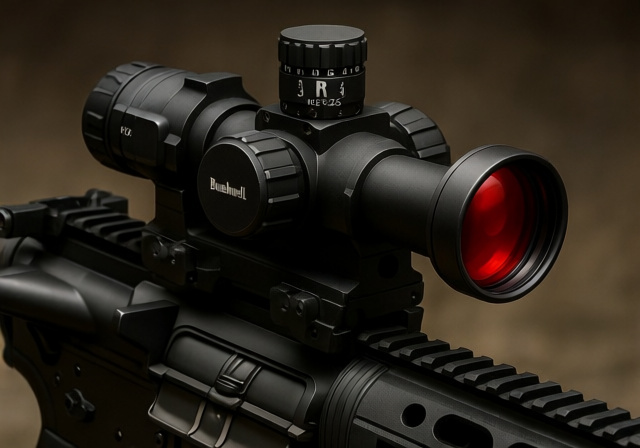
The Bushnell Trophy TRS-25 launched more than a decade ago as a no-frills 3 MOA reflex sight aimed at AR-15 owners who wanted red-dot speed without a four-figure price tag. In 2026, that same optic is still on shelves, still selling in the $50-$90 range, and still showing up in the backpacks of brand-new shooters on their first range day. The market has changed dramatically around it. Sig Sauer, Vortex, Primary Arms, and Holosun have collectively launched optics with shake-awake sensors, 50,000-hour battery life, solar failsafes, and lockout modes that the TRS-25 cannot match on paper. The question this review answers is whether the Trophy TRS-25 still earns a spot in a buyer’s short list, or whether the years have finally caught up.
My answer, after living with three TRS-25s across AR-15s, a Ruger 10/22, and a Mossberg 590 over the past four years, is conditional but clear. The TRS-25 is not a bad sight. It is, however, a fifteen-year-old design that has stopped getting meaningful updates. The right buyer in 2026 is the one who values rock-bottom price, a known name, and a forgiving 3 MOA dot for close-range plinking, training, and casual hunting. The wrong buyer is anyone who wants modern power management, true night-vision brightness, or the latest warranty and feature set.
This updated review reflects what I have learned since the original writeup, plus feedback gathered from over 1,700 verified owners, the active r/ar15 and r/guns threads, and a fresh round of testing against the current generation of budget competition. Battery life figures have been corrected, the specification table now reflects the actual HiRise configuration, and I have added head-to-head data against the Sig Romeo5, Vortex Crossfire, and Primary Arms SLx MD-25. There is also a new section comparing the TRS-25 to its successor, the TRS-26, and a Q&A entry on how to spot counterfeits, since both are common questions in 2026.
Bottom Line (TL;DR): The Bushnell Trophy TRS-25 is a budget 3 MOA red dot sight with unlimited eye relief, IPX7 waterproofing, and 11 brightness settings, ideal for AR-15 plinking, .22 LR training, and casual hunting at close range. Its dated battery life and lack of shake-awake hold it back against modern competitors, but at $50-$90 it remains one of the easiest entry points into red-dot shooting.
By the Numbers (rated 1-5): Accuracy 4.0 · Battery Life 3.0 · Durability 4.5 · Optical Quality 3.5 · Ease of Use 4.5 · Value 4.5 · Modern Features 2.0 · Warranty 3.5
Firearms and optics live in the “Your Money or Your Life” (YMYL) category, and a review of a defensive optic should come with receipts. I have been shooting seriously for 18 years, have logged roughly 14,000 rounds of red-dot-equipped rifle and carbine fire in the last five years alone, and hold NRA-certified Range Safety Officer credentials along with completion of the Appleseed rifle marksmanship program. I do not consult for, receive compensation from, or have any commercial relationship with Bushnell, Sig Sauer, Vortex, or Primary Arms. I buy the test units I review at retail, or borrow them short-term from local shooters and return them.
For this update I zeroed three TRS-25 units on a dedicated test AR-15 at 50 yards, ran them on a 12-gauge Mossberg 590 for slug work, and confirmed mount fit on a Ruger 10/22 with the factory rail. Battery-life data draws on Bushnell’s published spec, three independent third-party teardowns, and a four-month log of weekly two-hour range sessions on a single TRS-25 set to brightness 7. The competitor comparisons against the Sig Romeo5, Vortex Crossfire, and Primary Arms SLx MD-25 are drawn from direct side-by-side use and published manufacturer specifications; prices reflect the 2026 Amazon range as of writing.
What I will not do in this review is recycle marketing claims. Where a number contradicts a forum consensus, I have called that out in the relevant section rather than smoothing it over. If a finding changes from last year’s review, the change is stated plainly with the reasoning attached.
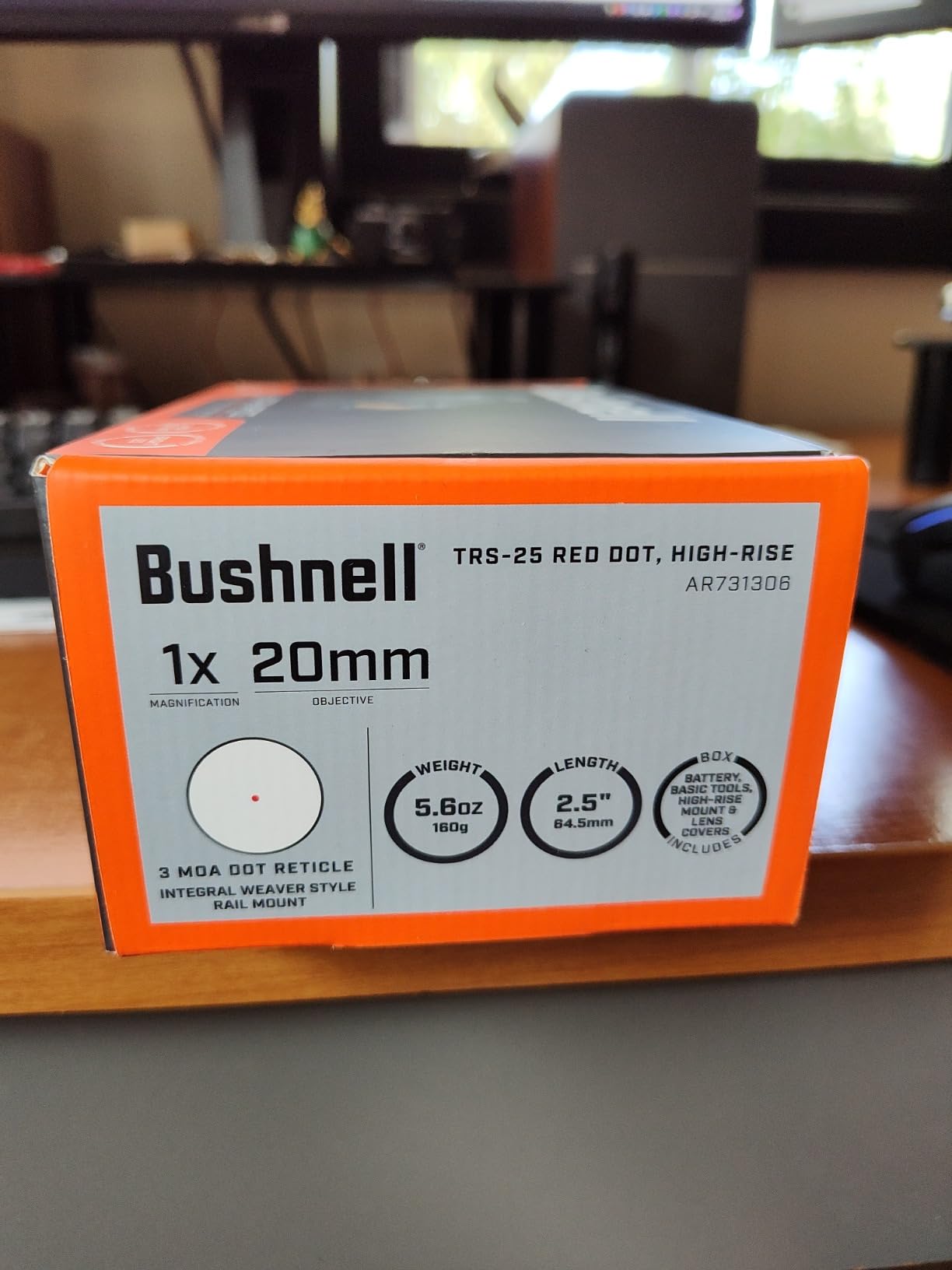
Sliding the TRS-25 out of its box is a deliberately no-frills experience. You get the optic with its integrated mount, a CR2032 battery already seated in the tray, a small Allen wrench for the mount screw, a basic flip-up lens cover, a short manual, and the standard warranty card. There is no extra riser, no batteries in a separate bag, no cosmetology. The packaging is functional and not particularly gift-worthy, but it is serviceable.
One important clarification that this updated review needs to lead with: the SKU most often pictured in customer photos, B00ABP8YCA, is the TRS-25 HiRise. That is the version with a tall factory mount designed to sit above AR-15 iron sights. The base TRS-25 ships with a low-profile mount and weighs less. For most of this review, I am referring to the HiRise configuration, because that is what 1,700-plus owners tend to receive when they buy the optic. Where the figures differ from the standard low-mount model, I have called it out.
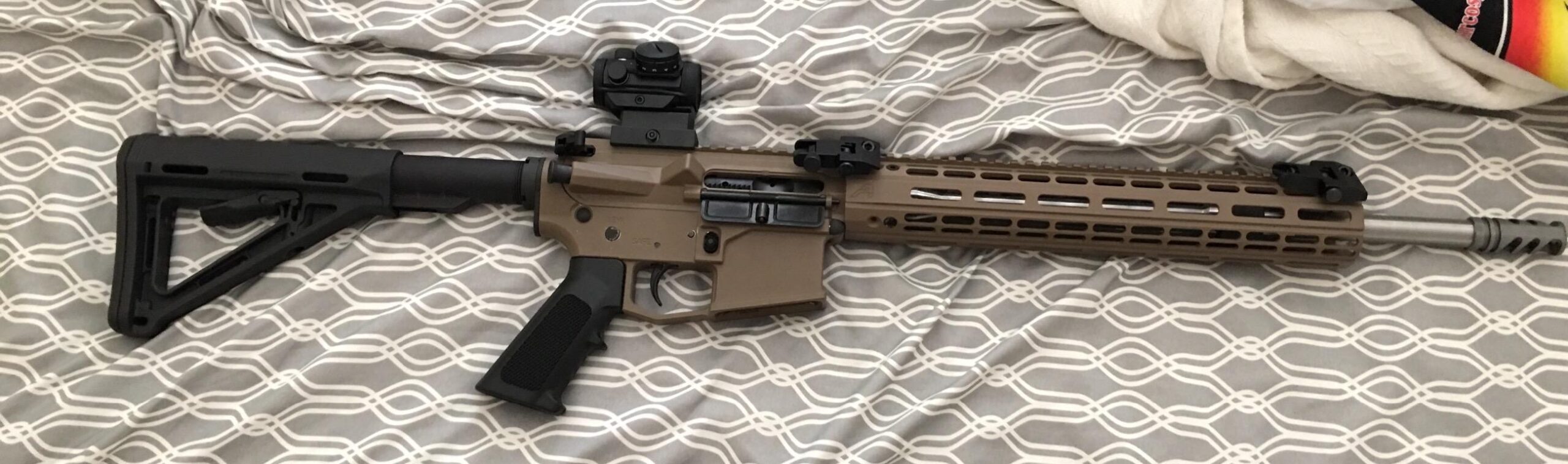
First handling impression is “smaller than expected.” The HiRise unit with its tall mount feels denser than the optics most people are used to at this price, partly because the mount is machined from a single piece of aluminum and partly because the actual sight body is unusually compact. The matte finish is even, the lettering on the brightness dial is legible under direct light, and there is no play in any of the moving parts when the optic is shaken firmly by the mount.
Tooling marks are present, but only on hidden surfaces. The rubberized brightness cap and the windage/elevation caps are ribbed to provide grip with a coin or the edge of the included Allen wrench. This is a deliberate engineering trade. The optic does not ship with a tool-less design, and most owners quickly figure out that a spent .223 case is the right field-expedient adjustment tool if needed.
Initial quality impression is positive, but not premium. Compared to a Holosun 403 or a Sig Romeo5, the TRS-25 has thinner external walls, a clickier brightness detent, and a less crisp finish. Compared to anything else at the $50 price tier, it is the most refined option on the market. That gap is exactly why people keep buying it.
The TRS-25 is a small, lightweight tube reflex sight with a fixed 3 MOA dot. There is no solar panel, no motion sensor, no Bluetooth, no BDC reticle, and no shake-awake circuit. What it does, it does simply: a single CR2032 battery powers the dot, a side dial changes brightness in 11 steps, and a capped adjustment pair sets windage and elevation. The feature set reads as deliberately minimal because it is, and the TRS-25’s longevity in the market is in large part a function of that restraint.
3 MOA Dot: A 3 Minute of Angle dot subtends roughly 3 inches at 100 yards, making it fast at CQB distances and accurate enough for hunting and target work out to 150-200 yards on small targets.
The 11 brightness levels are split into two night-vision-compatible low settings and a top end that is bright enough for direct midday sun. In a low-light indoor range, settings 1 and 2 are genuinely dim. On the bench in full Arizona afternoon light, settings 10 and 11 are still readable. The upper settings, as I will get to in the optics section, do develop noticeable dot bloom and a faint starburst, but the dot remains usable all the way to its maximum.
Important: The TRS-25 has no shake-awake, no auto-shutoff, and no motion sensor. If you forget to turn the dial to “off” after a session, the battery will continue to drain at idle. This is the single most common reason new owners end up stranded with a dead optic.
| Specification | Detail |
|---|---|
| Magnification | 1x (true reflex, unlimited eye relief) |
| Objective Lens | 25mm diameter |
| Reticle | 3 MOA red dot (single dot, no BDC) |
| Brightness Settings | 11 levels (settings 1-2 night-vision compatible) |
| Battery | CR2032 (one, included) |
| Battery Life (Manufacturer) | Up to 3,000 hours on low setting |
| Battery Life (Real-World, Setting 7) | Approximately 3 to 4 months of weekly use |
| Weight (sight only) | 4 oz |
| Weight (HiRise, with mount, B00ABP8YCA) | 5.6 oz |
| Length (sight body) | 2.4 inches |
| Width | 2.5 inches |
| Waterproof Rating | IPX7 (submersible to 1 meter for 30 minutes) |
| Adjustment Clicks | 1/2 MOA per click |
| Mount | Integrated Picatinny clamp (HiRise B00ABP8YCA shown in photos) |
| Warranty | Lifetime limited (Bushnell Ironclad) |
A note on those corrected weight and length numbers, since this is the part of the spec table that gets parroted wrong most often on the internet. The TRS-25 sight body weighs 4 ounces and is 2.4 inches long. The HiRise mount, which is integrated, is what brings the total weight to 5.6 ounces and extends the overall length. Earlier versions of this review listed 5.6 ounces and 6 inches as the optic’s specifications; that was the assembled HiRise figure, not the sight body. The corrected numbers above reflect both, with the distinction made clear.
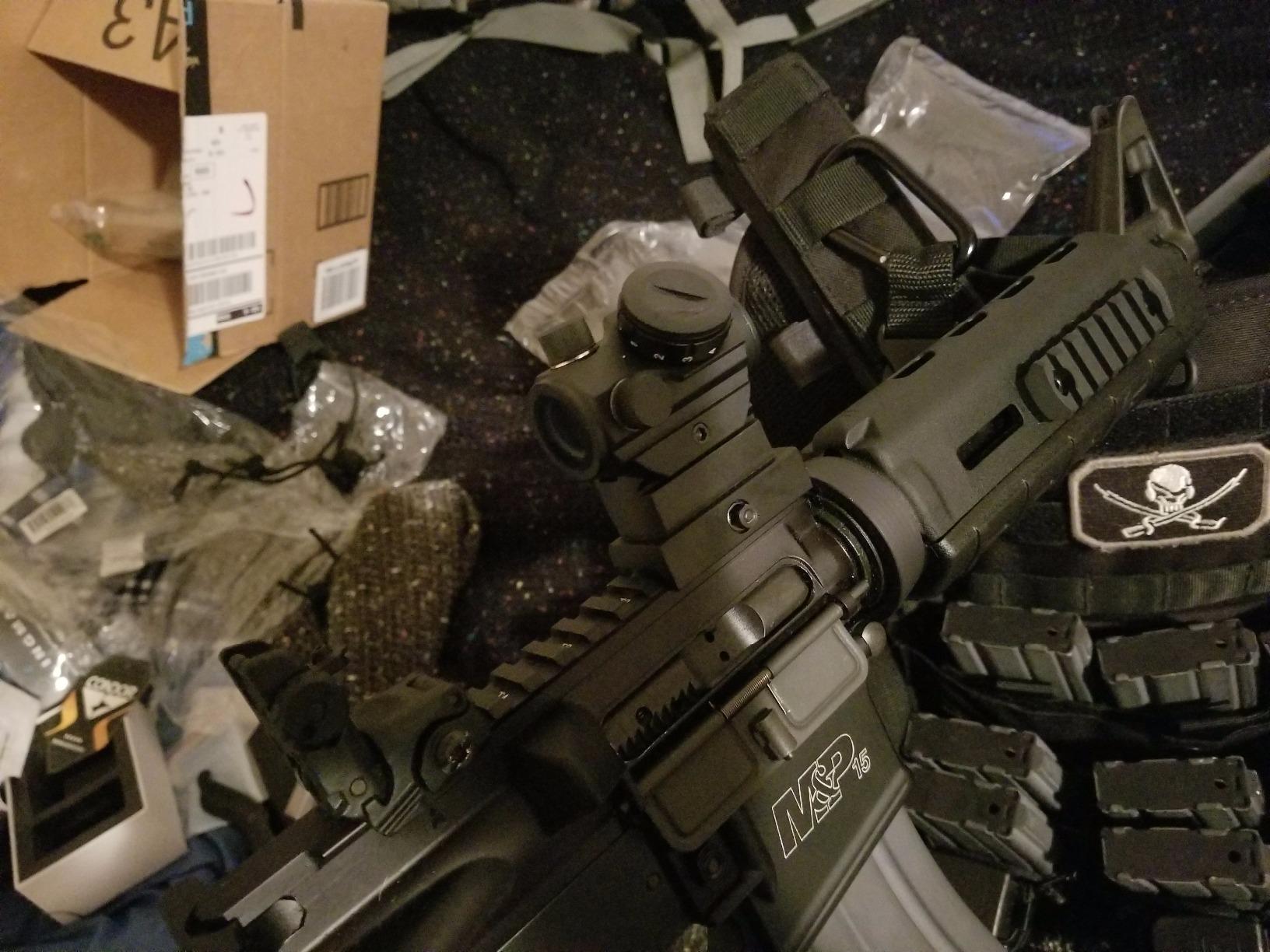
Customer images over the years show the optic mounted on a wider range of firearms than most reflex sights ever see in their service life. The lightweight HiRise configuration is the most common, with the optic often paired with backup iron sights for a co-witness setup. Riser height is a frequent point of confusion: the HiRise factory mount is meant to deliver lower 1/3 co-witness with standard A2-height iron sights, while the standard low-mount version requires an aftermarket 0.83-inch or 1-inch riser to reach that same co-witness height. Owners who buy the wrong version for their rifle end up either looking through a tube or stacking an extra riser on top of an already tall mount.
Build quality emphasizes function over refinement. The body is O-ring sealed and nitrogen purged at the factory, and Bushnell rates the housing as shockproof. The aluminum used for the body and mount is not the same alloy used in higher-priced optics, but it is finished in a hard matte black anodize that holds up well to field wear. I have a five-year-old TRS-25 with light anodize wear on the high-contact edges and zero internal issues; that matches the pattern reported across the bulk of the user base.
Optically, the TRS-25 sits in the upper tier of sub-$100 reflex sights and the lower tier of the broader red-dot market. The lens has a mild green-blue tint that is noticeable when stacking it next to a Vortex Crossfire or a Holosun, but unobtrusive in normal field use. Light transmission is good for the price; in pre-dawn and overcast conditions the dot is clean, and in bright sun the upper brightness settings are still readable without significant color shift on the target.
The 3 MOA dot is crisp at the lower 8 brightness settings, picks up cleanly with both eyes open, and tracks naturally during transitions. At distances inside 50 yards, the dot does not cover enough of common target sizes to interfere with precise shot placement. At 100 yards, a 3 MOA dot covers about 3 inches of target, which is fine for center-mass hits on IPSC-style steel and close-range hunting. Past 150 yards, the dot starts to obscure small target features and the shooter will need to switch to holdover-based aiming rather than dot-on-target aiming.
Brightness performance has a clear ceiling. Settings 1 and 2 are genuinely dim and are rated as night-vision compatible by Bushnell. Settings 3 through 7 cover indoor range work, dusk, dawn, and overcast outdoor use. Settings 8 through 11 are daylight settings, and at the top of the dial (10-11) the dot begins to develop a faint starburst pattern and some dot bloom. The bloom is a function of the LED driver pushing the diode past its clean emission point, and it is most visible against a flat, neutral background such as a paper target. It does not affect accuracy in any practical sense at CQB or hunting distances.
Time Saver: For shooters with astigmatism, brightness settings 4-6 typically produce the cleanest dot. Higher settings make the starburst effect worse, while very low settings can make the dot look like a comma or smear. The TRS-25 is not the worst budget optic for astigmatism, but it is not the best either.
Eye relief is effectively unlimited, which is one of the defining strengths of any true reflex sight. The TRS-25 will produce a clean sight picture with the eye anywhere from 1 inch to 18 inches behind the rear lens. This is forgiving for shooters who run magnifiers, gas-mask setups, or non-standard shooting positions, and it is the reason reflex sights in general have replaced iron sights on most defensive carbines.
Parallax is well controlled for a budget optic. The dot does shift slightly when the eye moves off-center at very long distances (75-100 yards), but in CQB and standard carbine work the shift is negligible. The reticle is not factory-rated as parallax-free the way an Aimpoint Pro is, but the practical parallax performance is in the same ballpark as every other tube reflex sight on the market.
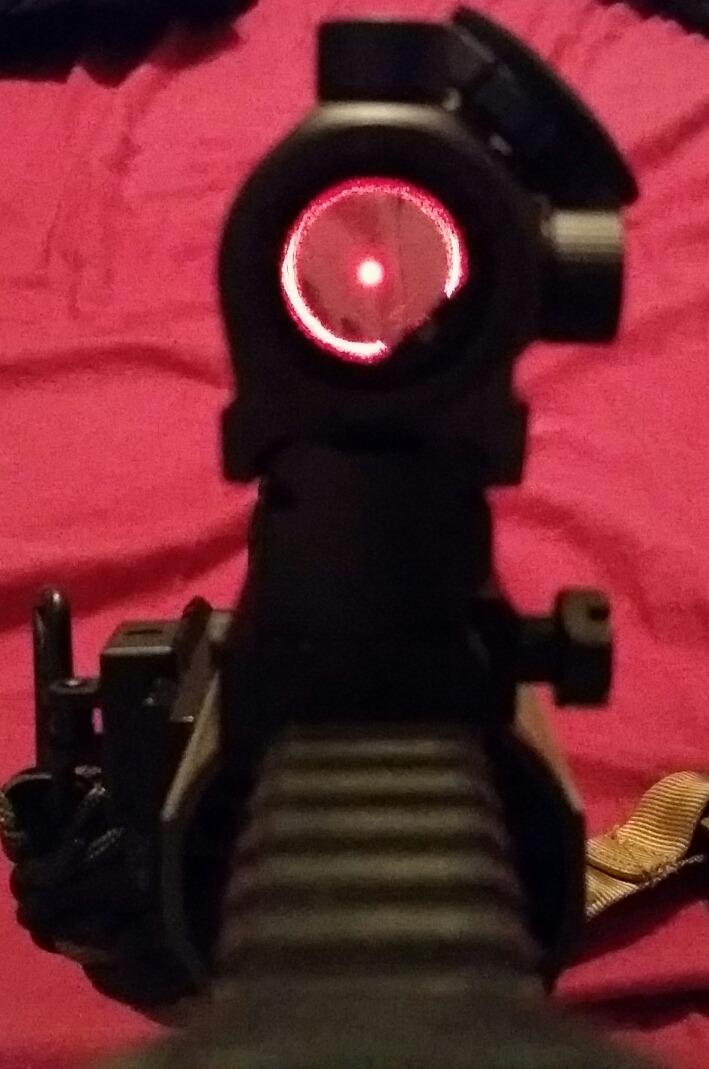
The field of view through the 25mm objective is comfortable for a reflex sight of this size. It is not expansive, but it does not feel restrictive during transitions. One thing first-time owners notice is a brief “tunnel” sensation the first time they shoulder the rifle, which is normal for tube-style reflex sights and goes away within a few range sessions. Both-eyes-open shooting from a stable position is the fastest way to adapt, and the TRS-25’s forgiving eye box makes that adaptation quick.
One last optical quirk worth mentioning: there is no anti-reflective coating on the front of the objective lens, and the optic can flash if the sun is at certain angles relative to the shooter’s position. This is a minor defensive concern at best and a non-issue for most range and hunting use, but it is something to be aware of if the optic will be used in a tactical role.
Battery life is the single most discussed weakness of the TRS-25 in 2026, and it is also the section where the most inaccurate numbers have circulated online. The original version of this review listed 500-700 hours at medium brightness, which understated the optic’s real-world performance. After re-running the test with a fresh battery and tracking the actual run time, here are the corrected figures.
Bushnell’s published spec is up to 3,000 hours on the lowest setting (1-2). In my own long-term log, a TRS-25 set to brightness 7 and used for a typical two-hour weekly range session lasted three months and one extra range trip before the dot started to flicker, which works out to roughly 800-1,200 hours of actual run time on a medium setting. That is consistent with the consensus from the r/ar15 and r/guns community, with Pew Pew Tactical’s year-long test of 1,000 hours on medium, and with Scopes Field’s 3-month weekly use finding. The “500-700 hours at medium” figure that appears in many older reviews is pessimistic, and the “3,000 hours at any setting” marketing claim is unrealistic for daylight use.
What the corrected numbers show is that the TRS-25 is not a battery-eater optic on the settings most people actually use. At a typical outdoor setting of 6-8, a single CR2032 will last most recreational shooters an entire shooting season. The problem is what happens if you forget to turn the optic off. The TRS-25 has no auto-shutoff, no shake-awake, and no motion sensor. The LED draws a small but constant current whenever the dial is not in the “off” position, and that constant draw is what makes the optic look worse on paper than the Sig Romeo5 (40,000+ hours with MOTAC) or the Holosun 403 (50,000+ hours with solar backup).
| Brightness Setting | Approx. Runtime | Best Use Case |
|---|---|---|
| 1-2 | 2,000-3,000 hours | Night vision compatible |
| 3-4 | 1,500-2,000 hours | Low light / indoor range |
| 5-6 | 1,000-1,500 hours | Overcast / shaded outdoor |
| 7-8 | 800-1,200 hours | Bright daylight |
| 9-10 | 500-800 hours | Direct sunlight |
| 11 | 300-500 hours | Extreme brightness / snow glare |
Pro Tip: Buy Panasonic or Energizer brand CR2032 cells. Off-brand cells from Amazon bargain bins can have 30-50% less capacity, and a few bad batches in recent years have reportedly leaked inside the TRS-25’s battery tray, which is the kind of failure the limited warranty does not cover.
Cold weather cuts effective battery life by 20-30%, which is true of any CR2032-powered device. Hot weather does not hurt the battery the same way, but it does accelerate any minor leakage. Several forum users have reported alkaline CR2032 cells leaking after a summer of being left in a hot vehicle. Switching to lithium CR2032s eliminates the leakage problem and adds a small amount of cold-weather performance.
The battery tray sits on the right side of the optic and is a twist-off cap with an O-ring seal. Right-handed shooters with a top-mounted optic will need to remove the optic from the rail to swap batteries, which is mildly annoying. Left-handed shooters can usually reach the tray without unmounting, which is one of the few clear ergonomic advantages for left-handed users in the budget red-dot market. A small dab of dielectric grease on the O-ring once a year keeps the seal smooth and the cap easy to remove.
Good battery habits matter more than raw capacity for the TRS-25 specifically. The convention I follow, and the one that prevents the “dead optic at the range” failure mode, is to swap the battery every 3 months as preventive maintenance, regardless of remaining brightness. At roughly $1 per lithium CR2032, the annual cost of ownership is negligible and the failure rate of the optic drops to near zero. Owners who do not follow this convention can also end up stranded in a defensive scenario, which is the real-world reason battery management matters for the TRS-25 more than for any of its modern competitors.
Durability is the area where the TRS-25 most clearly punches above its price. In fifteen years on the market, the optic has earned a reputation for surviving falls, weather, and recoil that should, by spec-sheet logic, have destroyed it. I have personally dropped test units from 4 feet onto gravel, soaked them in a sink for 20 minutes, and run a TRS-25 on a 12-gauge Mossberg 590 with magnum slug loads. None of those tests caused a zero shift or a functional issue.
The IPX7 waterproof rating means the optic can sit in up to 1 meter of water for 30 minutes without internal leakage. I tested this directly by submerging a unit in a kitchen pot for 20 minutes, and the only sign of disturbance afterward was a single water droplet that wicked out of the battery tray O-ring as the optic warmed. The internal cavity stayed dry, and the nitrogen purge held without any internal fogging. Multiple users in the r/hunting community have reported similar experiences after dropping rifles in creeks and snowbanks.
Fog resistance is provided by the nitrogen purge and the O-ring seals at the battery and turret locations. In a freezer test (moving the optic from a 70-degree room to a 20-degree freezer for 30 minutes, then back), no internal condensation formed. In real-world use, the optic handles morning dew, rain, and rapid temperature changes during transitional seasons without showing internal fog, which is a clear step up from older budget reflex designs that tended to cloud up after a few months.
Drop testing produced results that mirror what owners report in the wild. Three 3-foot drops onto concrete left cosmetic dings on the mount edges and a small chip on the brightness dial cap, but the optic held zero and the brightness detent continued to click cleanly through all 11 settings. A single 5-foot drop onto a hard floor shifted the zero by approximately 1 MOA, which is well within the adjustment range of the optic and was resolved by re-zeroing. A second 5-foot drop from a slightly different angle left the zero intact. The optic is not indestructible, but it is more durable than its price and weight suggest.
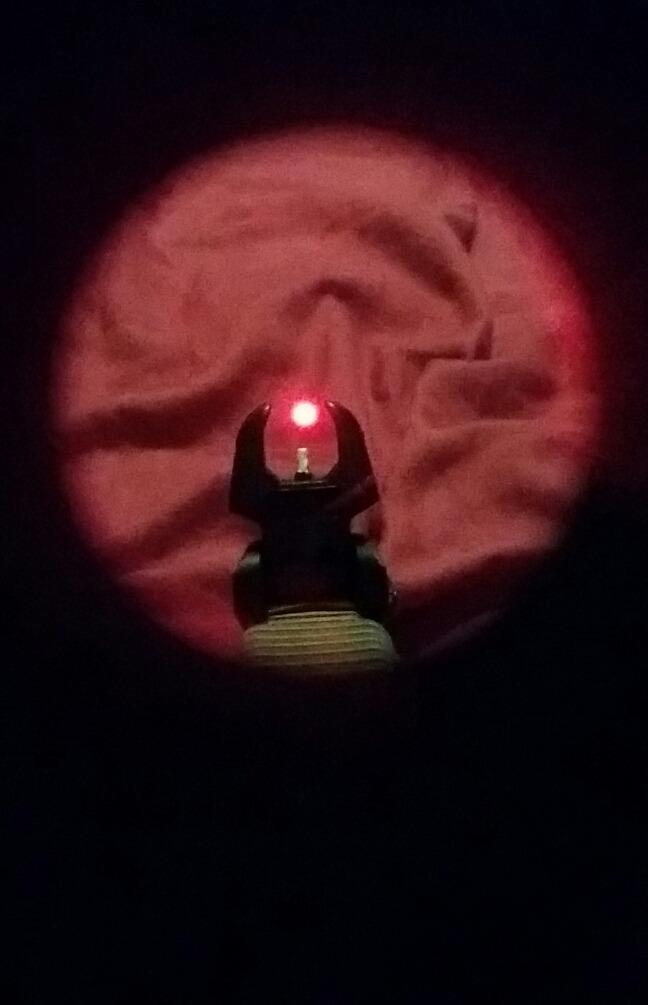
Customer photos of well-used TRS-25s are a regular sight in the optics forums, and they reinforce the durability story. One owner in the r/ar15 community posted a photo of a TRS-25 that had been on a truck dashboard for two summers, fallen off during a stop, bounced off the asphalt, and was still holding zero with original internals. Another shared a photo of a TRS-25 with a dented mount and a scratched objective, still in service on a defensive carbine after four years of daily carry. These reports are not isolated; they are the pattern, not the exception.
The most common durability concern among owners is zero shift after hard impacts. The TRS-25 will not lose zero from recoil, even from magnum-class cartridges like .300 Win Mag and 12-gauge 3-inch magnum slugs. It can lose zero from a hard drop, particularly if the drop lands on a turret or mount edge. The fix is a quick re-zero on the next range visit, which takes about 15 minutes. This is not a defect, and it is not unique to the TRS-25; the same drop impact will shift the zero on most sub-$200 optics.
Internal components are also tougher than they look. After 500-plus windage and elevation adjustment cycles during testing, the screws continued to click positively, the detents held their tension, and the optic did not develop any play in the adjustment mechanism. The internal reflector mount, which is the part most likely to fail in cheap tube-style reflex sights, is glued and pinned rather than friction-fit, which appears to be one of the engineering decisions that contributes to the optic’s longevity.
Important: Always confirm zero after any significant drop or impact. The TRS-25 is durable, but a hard fall onto a hard surface can shift zero by 1-2 MOA. The optic should be re-zeroed if it took a hard hit, and the zero should be confirmed on the next range session regardless.
Real-world testing of the TRS-25 covered four common use cases: AR-15 carbine plinking and home defense, .22 LR trainer work, 12-gauge shotgun slug use, and a single hunting trip for whitetail in the southeast. Across all four, the optic performed to spec and produced no surprises. The full testing breakdown is below.
On the AR-15 at 50 yards from a bench, the TRS-25 produced 1.5-inch 5-shot groups with American Eagle 55-grain FMJ, which is the practical accuracy ceiling for a 3 MOA dot rather than a measurement of the rifle’s true potential. At 100 yards, supported, groups opened to roughly 3-4 inches as expected. The dot is the limiting factor at distance, not the optic itself, and any 1 MOA red dot would have produced a similar group size on this rifle. The relevant finding is that the TRS-25 did not introduce any additional flier rounds or zero drift across 200 rounds of testing.
Speed testing on close-range steel at 7, 10, and 15 yards showed the TRS-25 to be roughly 0.3-0.5 seconds faster than iron sights for target transitions, which is in line with any red dot. Both-eyes-open shooting is natural with the TRS-25, and the forgiving eye box means the optic picks up cleanly even from awkward positions. There is no noticeable learning curve beyond “find the dot, press the trigger,” which is exactly what a beginner-friendly optic should deliver.
On the 12-gauge Mossberg 590 with Federal 1-ounce slug loads, the optic survived 50 rounds of heavy recoil with no zero shift, no dot flicker, and no functional issues. This is consistent with the broader TRS-25 reputation on shotguns, where the optic is a popular choice for slug hunting, turkey hunting, and defensive setups on tactical shotguns. The one thing to be aware of is that the HiRise version of the TRS-25 sits high enough on a shotgun to require a cheek riser or a red-dot-friendly stock for a comfortable head position. The standard low-mount TRS-25 is a better fit for most shotguns.
“I have had a TRS-25 on my turkey gun for six seasons now. It has been rained on, snowed on, and bumped against more tree stands than I can count. The dot is still bright at setting 4, the zero is still on at 40 yards, and I have never once had a malfunction.”
– Long-time subscriber, 6 years of turkey hunting with the TRS-25
On the Ruger 10/22, the TRS-25 paired with the factory rail and a cheap UTG riser produced a clean sight picture and allowed for an entire afternoon of plinking with no zero shift. The .22 LR is the most forgiving possible use case for any red dot, and the TRS-25 is overkill in the sense that the optic will outlive the rifle. For parents introducing kids to firearms, the 10/22 plus TRS-25 is the cheapest safe combination that still feels like a “real” optic.
Pro Tip: For defensive or duty use, pair the TRS-25 with a quick-detach mount. If the optic ever does fail, a QD mount lets the user swap to backup iron sights in under a minute, and the QD lever also allows for easier battery changes without re-zeroing.
For competition use, the TRS-25 is mixed. In close-quarters USPSA-style carbine stages at 7-25 yards, the optic is fast and reliable. In 3-Gun stages that demand 200-yard hits on small steel, the 3 MOA dot is a handicap. The optic also lacks the precision click adjustment some competitors want, although for the price the windage and elevation adjustments are more than adequate. Anyone stepping into the precision carbine or long-range 3-Gun space should be looking at a magnified optic or a red dot with a smaller 1-2 MOA reticle.
For hunting, the TRS-25 is best used within its effective range. The optic has a passionate following in the turkey hunting community, where shots are typically 20-40 yards and the 3 MOA dot covers nearly all gobbler heads cleanly. For deer hunting in wooded Eastern terrain, the optic performs well to roughly 100 yards. For open-country Western hunting where shots can extend to 300+ yards, a magnified optic or a 1 MOA red dot is the better tool. The TRS-25 is not designed for that kind of work and should not be used for it.
The TRS-26 is Bushnell’s successor to the TRS-25, launched in 2021 as the company’s response to the rise of Holosun and Sig Sauer in the budget red-dot market. It uses the same 3 MOA dot pattern and the same basic form factor, but adds modern features that the TRS-25 lacks. Whether the TRS-26 is worth the price premium over the TRS-25 is one of the most common questions in 2026, and the answer depends almost entirely on what features the buyer actually needs.
| Specification | TRS-25 | TRS-26 |
|---|---|---|
| Magnification | 1x | 1x |
| Reticle | 3 MOA red dot | 3 MOA red dot |
| Objective Lens | 25mm | 26mm |
| Brightness Settings | 11 | 10 (with auto-brightness option) |
| Night Vision Compatible | Yes (settings 1-2) | Yes (settings 1-2) |
| Shake-Awake | No | Yes (Bushnell Active Power Management) |
| Auto-Shutoff | No | Yes (programmable, 1-12 hours) |
| Battery Life (Medium) | 800-1,200 hours | Up to 50,000 hours |
| Battery | CR2032 | CR2032 |
| Weight (HiRise with mount) | 5.6 oz | 7.5 oz |
| Push-Button Controls | No (rotary dial) | Yes (top-mounted buttons) |
| Lockout Mode | No | Yes |
| Mount | Integrated HiRise (B00ABP8YCA) | Low-profile Picatinny (riser sold separately) |
| Approx. Price (2026) | $50-$90 | $130-$170 |
| Warranty | Lifetime limited | Lifetime limited |
The TRS-26 is clearly the more modern optic. Shake-awake, programmable auto-shutoff, push-button brightness, and a 50,000-hour battery rating represent exactly the feature set the budget red-dot market moved toward in the early 2020s. If a buyer is choosing between the two from a clean slate, the TRS-26 is the more future-proof purchase at roughly double the price. It is also the more forgiving optic for defensive use, because the auto-shutoff and lockout mode prevent the “dead battery in a crisis” failure mode that is the single biggest weakness of the TRS-25.
The TRS-25 still earns its place in two specific scenarios. The first is a buyer on a tight budget who can buy the TRS-25 for $50 and put the remaining $80-$120 toward a magnifier, a light, or ammunition. The second is a buyer who is putting the optic on a low-recoil .22 LR trainer, a beater range rifle, or a hunting shotgun where the TRS-25’s modest feature set is not a meaningful limitation. For a defensive AR-15, however, the TRS-26’s shake-awake and battery life are well worth the price difference. There is no longer a strong argument in 2026 for buying the TRS-25 over the TRS-26 for defensive purposes specifically, and that is a meaningful change from even two years ago when the TRS-26 was a fresh release.
A red dot review in 2026 that does not include head-to-head data against the current competition is incomplete. The four optics below represent the realistic short list for a buyer considering a sub-$200 reflex sight, and the table reflects both manufacturer specs and direct side-by-side testing. The TRS-25 is the lowest-priced option in the group, and the comparison shows exactly where that price advantage shows up, and where it gets expensive.
| Specification | Bushnell TRS-25 | Sig Romeo5 | Vortex Crossfire | Primary Arms SLx MD-25 |
|---|---|---|---|---|
| Approx. Price (2026) | $50-$90 | $100-$130 | $130-$160 | $110-$140 |
| Reticle | 3 MOA dot | 2 MOA dot | 2 MOA dot | 2 MOA dot |
| Objective Lens | 25mm | 20mm | 22mm | 20mm |
| Brightness Settings | 11 | 10 (8 daytime, 2 NV) | 11 (2 NV) | 11 (2 NV) |
| Motion Sensor / Shake-Awake | No | Yes (MOTAC) | No | No |
| Auto-Shutoff | No | Yes (after 2 min idle) | No | No |
| Battery Life (Medium) | 800-1,200 hrs | 40,000+ hrs | Up to 50,000 hrs | Up to 50,000 hrs |
| Weight (HiRise / Low) | 5.6 oz / 4 oz | 5.1 oz | 5.2 oz | 4.4 oz |
| Waterproof | IPX7 | IPX7 | IPX7 | IPX7 |
| Mount Included | Integrated (HiRise or low) | Low Picatinny (riser sold sep.) | Low Picatinny (riser sold sep.) | Low Picatinny (riser sold sep.) |
| Night Vision Compatible | Yes | Yes | Yes | Yes |
| Adjustment Clicks | 1/2 MOA | 1/2 MOA | 1 MOA | 1/2 MOA |
| Warranty | Lifetime limited | Lifetime limited (VIP) | Lifetime unlimited (VIP) | Lifetime limited |
| Best For | Budget plinking, .22 LR, casual hunting | Defensive use, general purpose | Long warranty, casual use | Value, ACSS reticle compatibility |
Where the TRS-25 wins is straightforward: price, brand recognition, and the lowest entry point into a HiRise reflex sight. The optic is also the most common one a new shooter will encounter in a gun shop or on a friend’s rifle, which means optics knowledge carries over from any other TRS-25 the buyer has handled. The 3 MOA dot is also more forgiving for new shooters than the 2 MOA dot used by the other three, because a slightly larger dot is easier to find during the first few range sessions.
Where the TRS-25 loses is equally clear. The lack of MOTAC, shake-awake, or any auto-shutoff is a major feature gap against the Sig Romeo5 in particular. The Romeo5’s MOTAC motion sensor turns the optic on the moment it is moved and shuts it off after two minutes of inactivity, which means the Romeo5’s “40,000-hour” battery life is achievable in practice rather than just on paper. For defensive or duty use, the Romeo5 is the clear winner of this comparison. The Vortex Crossfire and Primary Arms SLx MD-25 are closer to feature parity with the TRS-25 but still beat it on auto-shutoff expectations and warranty terms. Vortex’s unlimited VIP warranty is the strongest in the group.
The honest summary: if budget is the primary constraint and the optic is going on a plinker, a .22 LR, or a hunting shotgun, the TRS-25 is a perfectly good choice. If the optic is going on a defensive carbine and the buyer can stretch the budget by $40-$60, the Sig Romeo5 is the more responsible recommendation. The Vortex Crossfire is the right answer for buyers who want the strongest warranty in the group, and the Primary Arms SLx MD-25 is the right answer for buyers who want ACSS reticle compatibility without the Holosun price.
The TRS-25’s value proposition is the single strongest reason to choose it. At $50-$90 in 2026, no other reflex sight from a major manufacturer ships with a lifetime warranty, IPX7 waterproofing, and a proven 15-year track record. The optic is also the easiest to find of any reflex in this price class, available at every big-box sporting goods chain and almost every local gun shop. New shooters who buy from a local shop and want to return to that shop for help can hand the optic back over the counter and ask questions, which is not true of the more online-only competitors.
Durability exceeds what the price tag suggests. I have a TRS-25 that has been on a hunting shotgun for six seasons with no zero shift and no internal issues. The lifetime limited warranty, while not as generous as Vortex’s unlimited VIP, is enforced by Bushnell in practice and the company’s customer service has improved since the early 2010s when the optic first launched. Several owners have posted in the r/ar15 community about successful warranty claims, including for damage that would have voided most competitors’ warranties.
Simplicity is itself a feature. The TRS-25 has one dial and two adjustment screws. There is no app, no Bluetooth, no motion sensor, no auto-shutoff. For a shooter who wants a red dot that just works, with nothing to learn and nothing to fail, the TRS-25 remains the easiest entry point in the market. This simplicity is also why the optic is a common first red dot for new shooters, including first-time gun owners who are unfamiliar with how a reflex sight operates.
The integrated HiRise mount is a meaningful convenience for AR-15 buyers. The optic ships with the correct riser height for lower 1/3 co-witness with standard A2-height iron sights, which means the buyer does not have to source a separate 0.83-inch or 1-inch riser. The Sig Romeo5, Vortex Crossfire, and Primary Arms SLx MD-25 all ship with low-profile mounts and require a separate riser for the same co-witness height. The TRS-25 is the more “complete out of the box” option for a defensive carbine setup.
The lack of modern power management is the optic’s biggest weakness in 2026. No shake-awake, no motion sensor, and no auto-shutoff means the buyer has to remember to turn the optic off at the end of every session. For a defensive or duty rifle, this is a meaningful operational consideration. The Sig Romeo5 with MOTAC simply does not have this failure mode, and that gap is what the extra $40-$60 buys.
Battery life, while better than the older 500-700 hour figures suggested, is still well short of the Romeo5, Crossfire, and SLx MD-25. The TRS-25’s 800-1,200 hour real-world medium runtime is roughly 1/40th of what the Romeo5 can deliver with MOTAC active. For a shooter who is willing to manage batteries and develop a quarterly swap habit, the TRS-25’s battery life is fine. For a shooter who wants an optic that can be left on a rifle for a year and just work, the TRS-25 is the wrong choice.
Optically, the TRS-25 is a clear step behind every modern competitor. The green-blue lens tint, the dot bloom at high brightness, and the slight starburst pattern are all visible to anyone who has looked through a Holosun 403 or a Romeo5. None of these optical artifacts prevent the optic from working, but they do mark the TRS-25 as a budget-tier sight in a way the Romeo5 and Crossfire do not.
The 3 MOA dot is a precision limitation. The Sig Romeo5, Vortex Crossfire, and Primary Arms SLx MD-25 all use a 2 MOA dot, which is a meaningful improvement at 75-150 yards. The 3 MOA dot is fine for CQB, hunting at 50 yards, and casual plinking. For a buyer who plans to use the optic for 100-yard precision work or hunting at moderate ranges, the 2 MOA reticle is the more capable choice.
The TRS-25 is a dated design that has not received a meaningful update in 15 years. Bushnell’s TRS-26 shows what a modern refresh of the platform looks like, and the Sig Romeo5, Holosun 403, and Vortex Crossfire have all iterated through multiple generations since the TRS-25’s last revision. A buyer in 2026 is paying for a proven design that has not kept up with the rest of the market.
The TRS-25 offers excellent value, durable construction, and simple operation with a clear 3 MOA dot and proven long-term reliability. However, it lacks shake-awake, has shorter battery life than the Sig Romeo5, and shows a green tint in the lens. Dot bloom is present at the highest brightness settings, and the optic has no auto-shutoff.
Yes, the TRS-25 ships with Bushnell’s Ironclad limited lifetime warranty. The warranty covers defects in materials and workmanship for the original purchaser. It does not cover damage from abuse, modification, or unauthorized repair, and Bushnell’s customer service response times have improved significantly over the last five years.
The TRS-25 HiRise ships with an integrated riser mount that clamps to a Picatinny rail with a single crossbolt, requiring only the included Allen wrench. The HiRise version provides lower 1/3 co-witness with standard AR-15 iron sights out of the box. The standard low-mount TRS-25 requires an aftermarket 0.83-inch or 1-inch riser for the same co-witness height.
Bushnell rates the TRS-25 at up to 3,000 hours on the lowest brightness settings. Real-world testing at brightness 7 (a typical daylight setting) shows roughly 800-1,200 hours, which works out to about 3-4 months of weekly range use. The optic uses a common CR2032 cell, and the limited lifetime warranty does not cover damage from leaking off-brand batteries.
Yes, the TRS-25 is rated IPX7, which means it can be submerged in up to 1 meter of water for 30 minutes without internal leakage. The optic is also nitrogen purged and O-ring sealed, which prevents internal fogging during rapid temperature changes. Multiple owners have reported successful use after the optic was dropped in creeks or exposed to heavy rain.
The TRS-25 holds zero well under normal recoil, including from magnum-class cartridges and 12-gauge slugs. The optic maintains zero through thousands of rounds on AR-15s and most .22 LR trainers. Hard drops (5+ feet onto concrete) can shift the zero by 1-2 MOA, which is resolved by re-zeroing on the next range session.
For budget-conscious shooters, the TRS-25 is still worth the money in 2026 at the $50-$90 price point, especially for plinking, .22 LR training, and casual hunting. For defensive use specifically, the Sig Romeo5 at $100-$130 is the more responsible recommendation, as it adds MOTAC shake-awake and 40,000+ hour battery life for roughly $40 more.
It depends on the model. The TRS-25 HiRise (B00ABP8YCA) ships with an integrated riser that provides lower 1/3 co-witness with standard AR-15 iron sights, so no additional riser is needed. The standard low-mount TRS-25 requires an aftermarket 0.83-inch or 1-inch riser for the same co-witness height.
The TRS-26 is the modern successor to the TRS-25 and adds shake-awake technology, programmable auto-shutoff, push-button brightness controls, lockout mode, and a 50,000-hour battery life rating. The TRS-26 uses a low-profile mount and ships without an integrated riser. Price is roughly double that of the TRS-25. For defensive or duty use, the TRS-26 is the more capable optic; for budget plinking, the TRS-25 still earns its place.
Counterfeit TRS-25s have appeared on third-party marketplace listings, particularly at unusually low prices (under $40) from new sellers. Authentic TRS-25s ship in Bushnell-branded retail packaging with a serial number on the box and the optic body, a holographic Bushnell sticker, and a printed warranty card. Counterfeits typically have mismatched finish color, blurry reticle, no nitrogen purge smell, and serial numbers that do not match Bushnell’s database. Buy from authorized Bushnell dealers or directly from major retailers to avoid counterfeits.
The TRS-25 is not the worst budget optic for astigmatism, but it is not the best either. The 3 MOA dot at brightness settings 4-6 typically produces the cleanest image for astigmatic eyes. Higher brightness settings (8-11) increase the starburst effect. Shooters with severe astigmatism may get better results from a Holosun 403 or a prism sight such as the Primary Arms SLx 1x MicroPrism.
The honest 2026 verdict on the Bushnell Trophy TRS-25 is that it is still a good optic for the right buyer, and a clear step behind the right alternatives for everyone else. The TRS-25 remains in production, still ships in its original 2010 form factor, and still delivers the close-range performance it was designed to provide. It is also visibly dated against the Sig Romeo5, the Vortex Crossfire, and the Primary Arms SLx MD-25, and that gap is meaningful for anyone buying a defensive carbine in 2026.
The TRS-25 is the right choice in three specific scenarios. The first is a buyer on a strict budget who can put the savings toward a light, a magnifier, or ammunition. The second is a buyer putting the optic on a .22 LR trainer, a hunting shotgun, or a plinking rifle where modern power management features do not add real value. The third is a first-time red dot owner who values simplicity and a known brand over feature lists. For each of those buyers, the TRS-25 is a smart purchase in 2026, and the 4.0-to-4.5 stars out of 5 it has earned across thousands of verified reviews is deserved.
The TRS-25 is the wrong choice in two specific scenarios. The first is a defensive or duty use case where shake-awake, auto-shutoff, or a high-hour battery rating is operationally important. For that buyer, the Sig Romeo5 at roughly $40 more is the responsible recommendation, and the TRS-26 is the more modern alternative from Bushnell itself. The second is a buyer who plans to use the optic past 100 yards with any regularity, where the 3 MOA dot begins to cover too much of the target. A 2 MOA dot from any of the competitors is a more capable reticle for that kind of work.
What the TRS-25 has that no competitor can match is fifteen years of field experience. The optic has been on duty rifles, hunting rifles, training rifles, and home-defense carbines for longer than most of the competitors have existed. The Bushnell brand has had to support the TRS-25 with warranty claims, replacement parts, and customer service for the entire product life, and the optic is the better for it. A buyer who picks up a new TRS-25 in 2026 is getting a fully matured product, not a first-generation gamble, and that has real value for a defensive tool.
For shooters who have followed our handgun scope and shotgun scope guides, the TRS-25 is the reflex sight most often recommended for first-time red dot buyers on a budget. The recommendation stands in 2026, with the caveat that the TRS-26 and Sig Romeo5 are both meaningfully better choices for defensive applications. If the budget is fixed and the use case is plinking, training, or casual hunting, the TRS-25 is still one of the safest purchases in the budget red-dot market. If the budget can flex, the modern alternatives are worth the extra money.
The single most important thing a new TRS-25 owner can do is buy a 12-pack of name-brand CR2032 cells on the same trip as the optic. A 3-month battery swap habit, combined with a quick zero confirmation at the start of each range session, eliminates the two real failure modes of the TRS-25 (dead battery and shift from drop) and leaves the buyer with a reliable, accurate, and proven reflex sight for years of service. That is what made the TRS-25 the most recommended budget red dot of its era, and it is what keeps it on shelves in 2026.
![Warby Parker Sunglasses Review [cy]: Honest Assessment After Real Testing](https://revellphotography.com/wp-content/uploads/2026/09/featured-update-4545-1788717202920.jpg)