8 Best Drones for Photography in May 2026: Complete Cost Guide
Complete guide to drone costs for photographers. Learn about pricing tiers, hidden expenses, and ROI analysis for professional aerial photography.

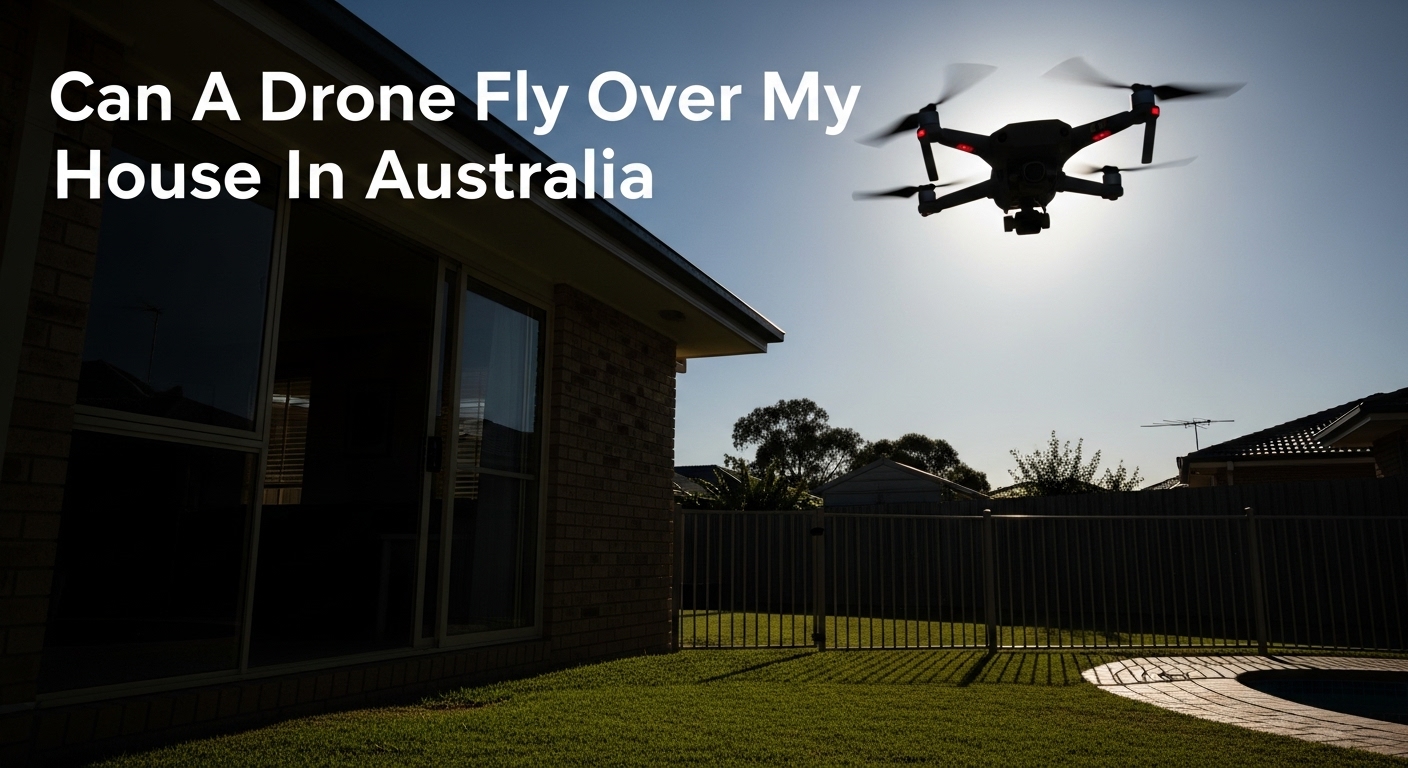
Imagine finishing dinner when you notice a drone hovering outside your bedroom window, its camera pointed directly at your family. This exact scenario plays out thousands of times across Australia each year, leaving property owners frustrated and uncertain about their rights. The question on everyone’s mind: is it legal to fly drones over houses in Australia?
The short answer is yes, drones can legally fly over private property in Australia under certain conditions, but the situation is far more nuanced than a simple yes or no. Property owners have more protections than they might realize, and drone operators have specific legal obligations they must follow. Understanding this balance between airspace access and property rights is essential for anyone who owns land or operates a drone in this country.
This guide covers everything you need to know about drone overflights in Australia, including your legal rights as a property owner, where drones are actually banned, how to identify operators, and what steps you can take when drone activity feels invasive. We have researched Australian aviation law, privacy legislation across all states and territories, and emerging technologies like Remote ID and UTM systems that are reshaping how drones operate in our airspace.
To directly answer the PAA question: is it legal to fly drones over houses in Australia? The answer is yes, but only when drone operators comply with Civil Aviation Safety Authority (CASA) regulations and respect privacy laws. Operators cannot simply fly anywhere they want, and property owners have genuine legal recourse when those rules are broken.
CASA classifies drones as aircraft under federal law, which means aviation regulations override state property laws in most situations. However, this does not mean property owners have zero rights. The key conditions that must be met for legal drone overflights include maintaining altitudes below 120 meters, keeping at least 30 meters away from people, operating only during daylight hours, and maintaining visual line of sight with the aircraft.
Quick Reality Check: While you might feel your property rights extend indefinitely upward, Australian law treats airspace above approximately 100-150 meters as public airspace for aircraft navigation. Your rights to the immediate airspace above your land extend only high enough to prevent interference with your property’s quiet enjoyment and reasonable use.
Privacy laws add another layer of protection. Even if a drone operator follows all CASA rules, they can still face legal consequences if they use the drone to record people in private settings without consent. The specific privacy protections vary by state and territory, which we cover in detail later in this guide.
Australian property law operates on the principle that landowners have rights to the airspace they can reasonably use for their property is enjoyment and benefit. This concept, sometimes called the “ad coelum” doctrine (Latin for “to the heavens”), has limits that become critically important when discussing drone operations.
In practice, courts have interpreted Australian property law to grant homeowners rights only to the immediate airspace above their land—typically extending 10 to 15 meters above ground level. Beyond this, the airspace transitions to public navigation space regulated by the federal government. This means that when a drone operates at the standard legal altitude of 30 to 120 meters, it is generally operating in public airspace, not violating your property rights.
The legal framework supporting this interpretation comes from multiple sources. The Civil Aviation Act 1988 establishes federal authority over Australian airspace and classifies drones as aircraft for regulatory purposes. The Civil Aviation Safety Regulations 1998 further cement CASA is authority to regulate all aircraft operations, including drones of all sizes.
This federal preemption creates an important legal reality: even if state or territory law had provisions that might theoretically protect against low-flying objects, CASA regulations would take precedence for drone operations. Your local council cannot create bylaws that contradict federal aviation law, and state trespass laws have limited application to standard drone altitudes.
Airspace Rights: In Australia, property owners own the immediate airspace they can reasonably use (approximately 10-15 meters above ground), while higher altitudes are considered public airspace regulated by CASA. Drones operating legally typically fly at 30-120 meters, placing them in public airspace.
While drones can legally fly over private property under certain conditions, many locations are completely off-limits. Understanding these drone no-fly zones is essential for both operators who want to stay legal and property owners who may be dealing with unauthorized flights in restricted areas.
Kakadu National Park and other UNESCO World Heritage sites prohibit all drone operations to protect wildlife and cultural heritage. Flying drones in these areas can result in fines exceeding $6,000 and potential criminal charges under federal environmental protection laws. The restriction extends to all aerial photography using unmanned aircraft, regardless of the operator is purpose or licensing.
Marine parks throughout Australia, including the Great Barrier Reef Marine Park and numerous coastal protected areas, have specific drone restrictions. While some marine parks allow drone launches from designated beach areas, flying over marine park boundaries or disturbing marine wildlife with drone noise can result in significant penalties from the Great Barrier Reef Marine Park Authority and equivalent state agencies.
Correctional facilities including prisons, detention centers, and youth justice facilities across all states and territories strictly prohibit drone operations. These restrictions exist for security reasons and violations can result in charges under both aviation regulations and state correctional facility laws. Penalties can include imprisonment for attempting to deliver contraband via drone, which is treated as a serious criminal offense.
Additional no-fly zones include airports and aviation facilities (typically 5.5 kilometers radius around controlled airports), emergency scenes and active firefighting operations, military installations, and sensitive government buildings. Many of these restrictions are enforced through CASA’s built-in geofencing in compliant drones, though operators should always verify their flight location before launching.
To help identify where you can and cannot fly, CASA provides a drone no-fly zone map through their “Can I Fly There?” app and website. This interactive tool allows users to enter any address in Australia and see the applicable airspace restrictions. Property owners can use this tool to verify whether drone operators in their area are violating airspace restrictions, while drone pilots should consult it before every flight.
CASA Standard Operating Conditions form the foundation of legal drone operations in Australia. These rules apply to all recreational drone flights and many commercial operations, prioritizing aviation safety over either property rights or privacy concerns. Understanding these rules helps property owners identify when violations are occurring and provides the basis for reporting to authorities.
The core CASA rules require operators to fly below 120 meters (400 feet) above ground level, keep their drone at least 30 meters away from people who are not under their direct control, never fly over groups of people, operate only during daylight hours, maintain continuous visual line of sight with their drone, and never fly over or near emergency operations scenes such as bushfires, accidents, or police incidents.
Weight-based rules create additional restrictions that vary depending on the drone is mass. Drone rules under 250g Australia are more permissive than for heavier aircraft, reflecting the reduced risk profile of smaller drones. These lighter drones can be flown closer to people and in some cases near buildings, making them popular for recreational use. Heavier drones, including many popular consumer models like the DJI Mavic series (typically 400-900 grams), face stricter separation requirements.
Commercial operators face additional requirements beyond the standard operating conditions. Those flying in populated areas or excluded spaces must hold a Remote Pilot Licence (RePL) and operate under a Remotely Operated Aircraft Certificate (ReOC). These certifications require demonstrated competency, knowledge of aviation law, and compliance with more stringent operational requirements including detailed flight planning and risk assessments.
Time Restrictions: CASA rules require drone operations during daylight hours only. If you see drones flying at night, the operator is likely operating illegally unless they hold specific exemptions approved by CASA. Night operations require additional lighting and documentation.
The 250-gram threshold creates two distinct regulatory categories with significantly different operational freedoms. Drones weighing less than 250 grams can be flown closer to people (as close as 5 meters in some scenarios), can operate in certain areas where heavier drones cannot, and face fewer restrictions when flying near buildings. This makes them particularly popular for beginners and casual recreational pilots.
Drones weighing 250 grams or more must be registered with CASA, and the registration number must be visibly displayed on the aircraft. These drones must maintain at least 30 meters separation from people not under the operator is control and cannot be flown over crowds regardless of altitude. The registration requirement means that property owners documenting drone incidents can often identify the operator is registration and report specific violations more effectively.
All drones weighing 250 grams or more require CASA drone registration, which is free for recreational operators and valid for three years. Commercial operators have additional licensing and registration requirements. When documenting a drone incident, noting the drone is size and weight class (often identifiable from photos or the registration number format) helps authorities assess which specific rules apply.
If you observe a drone violating CASA rules over or near your property, you have the right to report the incident. The reporting process is designed to be accessible to ordinary property owners without requiring legal expertise. Following these steps maximizes the chances that your complaint will be investigated effectively.
While CASA regulates safety, privacy laws create separate obligations that drone operators must follow. These laws vary across Australian states and territories, creating a complex regulatory landscape. Understanding the privacy framework helps property owners understand exactly what protections exist and how to pursue remedies when those protections are violated.
In New South Wales, the Surveillance Devices Act 2007 prohibits recording a person carrying out a private activity without their consent. This legislation has been interpreted by courts to include aerial surveillance when it captures images of people in settings where they have a reasonable expectation of privacy, such as backyards, inside homes visible through windows, or private outdoor areas. Victoria is Surveillance Devices Act 1999 contains similar provisions restricting optical surveillance devices in private places.
The critical element for privacy law violations is typically the recording function, not merely the presence of a drone overhead. A drone flying over your property without recording may be operating legally from a privacy perspective, while one that captures images or audio of private activities likely violates surveillance laws regardless of where it was flying. This distinction is crucial for property owners deciding whether to pursue privacy complaints.
Federal privacy law, primarily the Privacy Act 1988, generally does not apply to individual drone operators. The Privacy Act binds organizations with annual turnover exceeding $3 million, meaning your neighbor is recreational drone hobby is not subject to federal privacy requirements. However, commercial operators and businesses that use drones may fall under federal privacy jurisdiction, particularly if they collect personal information through aerial photography.
| State/Territory | Key Privacy Legislation | Recording Restrictions | Penalties |
|---|---|---|---|
| NSW | Surveillance Devices Act 2007 | No recording of private activities without consent | Up to 5 years imprisonment |
| VIC | Surveillance Devices Act 1999 | Optical surveillance devices prohibited in private places | Up to 2 years imprisonment |
| QLD | Invasion of Privacy Act 1971 | Observation or recording without consent | Up to 3 years imprisonment |
| WA | Surveillance Devices Act 1998 | Recording private conversations prohibited | Up to 2 years imprisonment |
| SA | Surveillance Devices Act 2016 | Recording in private places prohibited | Up to 2 years imprisonment |
| TAS | Listening Devices Act 1999 | Audio recording restrictions | Up to 2 years imprisonment |
| ACT | Surveillance Devices Act 2004 | Recording private activities prohibited | Up to 2 years imprisonment |
| NT | Surveillance Devices Act 2007 | Similar to other jurisdictions | Varies by offense |
Property owners often ask whether drone overflights constitute trespass, and the answer requires understanding the legal distinction between trespass and nuisance. This distinction matters because it determines which legal remedies are available and how courts would likely interpret your complaint.
Trespass to land requires a physical invasion of the property owner’s space. Historically, this included any unauthorized entry into the airspace above land, but Australian courts have generally limited trespass claims to the lower airspace that the property owner can reasonably use. At standard drone operating altitudes of 30 to 120 meters, successful trespass claims are extremely difficult to pursue because this airspace is considered public and subject to federal aviation regulation.
Nuisance provides a more promising legal avenue for drone-related complaints. Nuisance covers interference with a property owner’s use and enjoyment of their land. A drone that hovers persistently over your property, records images of your family in your backyard, or creates excessive noise that disrupts your daily activities may qualify as a private nuisance even if it is technically operating in legal airspace.
The Flying Glass competitor analysis notes that there is currently limited case law in Australia specifically addressing drone nuisance claims. This means the legal landscape is still developing, and successful nuisance claims may require demonstrating that the drone operator’s actions went beyond merely transiting through the airspace and actually interfered with the property owner’s reasonable use and enjoyment of their land.
For property owners, this distinction has practical implications. Reporting to CASA addresses safety violations (which are essentially regulatory matters), while pursuing nuisance claims requires civil litigation and would need to demonstrate actual harm or interference. The trespass vs nuisance distinction matters because it helps you choose the right path: CASA for safety violations, police for privacy breaches, and civil courts for nuisance claims where other remedies are insufficient.
When a drone hovers over your property, you have several legal options, though they come with important limitations. Knowing what you can legitimately do helps you protect your privacy without inadvertently breaking the law yourself. Documentation and proper reporting are the foundation of any effective response.
Document Everything: Thorough documentation is the single most important step you can take. Record the date, time, and duration of each drone sighting. Photograph or video the drone if it is safe to do so, capturing any visible registration numbers or identifying features. Note the drone is behavior: does it hover persistently, circle the property, or quickly pass through? This information becomes evidence if you pursue formal complaints. Include landmarks in your photos to establish altitude and proximity to your home.
Communication: If you can identify the drone operator, a calm conversation often resolves issues more effectively than formal complaints. Many drone pilots do not realize their flights are causing concern to neighbors. When approaching operators, choose a neutral time and location, explain your concerns without accusatory language, ask about their purpose and flight plans, and look for potential compromises regarding timing or flight paths that might address your concerns.
Pro Tip: When documenting drone incidents, include recognizable landmarks in your photos to help establish altitude and distance from your property. Reference points like trees, buildings, fence lines, or power lines help authorities assess whether potential violations occurred and which rules might apply.
Official Reporting: For ongoing issues or serious violations, multiple reporting channels exist. CASA handles safety regulation violations including altitude breaches, unauthorized night operations, and failure to maintain required distances from people. Police address privacy law breaches including unauthorized recording of private activities. Local councils may handle noise complaints or nuisance behavior. Your documentation supports all of these reporting pathways.
How to Identify Drone Operator: Drone operator identification has become easier with CASA is registration system. All drones weighing 250 grams or more must display their registration number visibly on the aircraft. This number can be entered into CASA is database to identify the registered operator. For commercial operators holding a RePL or operating under a ReOC, the certification details provide additional identification pathways. When documenting incidents, prioritize capturing any visible registration numbers as this significantly enhances the usefulness of your report to authorities.
Equally important as knowing your rights is understanding actions that could land you in legal trouble while attempting to protect your property. Several intuitive responses to unwanted drones are actually illegal and can result in serious criminal charges.
Never shoot down a drone or attempt to destroy it in any way. Drones are classified as aircraft under federal law, and damaging or destroying an aircraft carries penalties including fines up to $10,500 and up to two years imprisonment under the Crimes Act 1914. This applies regardless of whose property the drone is flying over or how invasive you find its presence. Document the incident and report it through proper channels instead of taking direct action.
Signal jammers are illegal under the Radiocommunications Act 1992. These devices, which some homeowners purchase online hoping to disable drones, can interfere with legitimate communications and emergency services. Possession and use of signal jammers can result in fines and criminal charges. Do not purchase or use these devices under any circumstances.
Other actions that could result in legal consequences include deliberately interfering with a drone is operation (such as shining lasers at the aircraft or creating physical obstacles), physically confronting the operator, or recording the operator without their consent in a manner that violates their privacy rights. The desire to protect your own privacy does not justify violating the law in other ways.
Legal Warning: Several Australian homeowners have faced serious legal consequences for attempting to deal with drone problems themselves. One Sydney resident was charged with endangering aircraft after throwing objects at a drone, while a Melbourne homeowner received criminal charges for using a commercial-grade signal jammer. In each case, the property owner’s desire to protect their privacy led to criminal charges that were more serious than the original drone complaint.
While CASA provides the national framework for drone regulation, Australian states and territories have additional requirements and enforcement priorities that affect how drone complaints are handled. Understanding your local context helps you pursue the most effective remedies for your situation.
New South Wales operates under the Surveillance Devices Act 2007 with enforcement handled primarily by police. Local council bylaws in Sydney and other metropolitan areas may impose additional restrictions around airports, helipads, and sensitive locations. Sydney is extensive no-fly zones extend several kilometers from major airports and affect numerous suburban properties. NSW has been active in pursuing privacy violations involving drones, with several documented cases of charges being laid for unauthorized recording.
Victoria has developed particularly strong interpretations of its Surveillance Devices Act 1999 regarding aerial surveillance. Courts have found that drones capturing images through windows or over backyard fences where people have a reasonable expectation of privacy can constitute prohibited optical surveillance. Victoria Police has dedicated resources for investigating drone-related privacy complaints, making this state relatively responsive to formal reports.
Queensland takes a proactive approach to drone regulation under its Invasion of Privacy Act 1971. The state has developed clearer guidelines than most jurisdictions about what constitutes a privacy breach involving aerial drones, making it somewhat easier for property owners to understand whether their situation warrants a formal complaint. Queensland police generally respond more quickly to drone privacy complaints than in some other states.
Western Australia and South Australia operate under frameworks similar to other states but with different enforcement priorities. WA police have been particularly active in pursuing privacy violations involving drones, while SA has focused more heavily on safety enforcement near populated areas. Both states apply their respective surveillance device acts to drone-related complaints, though the practical response varies by location and incident details.
The Australian Capital Territory has extensive no-fly zones affecting residential areas due to the high concentration of government buildings and federal institutions. The ACT is unique regulatory environment means drone operators face more restrictive conditions than in most other jurisdictions, and property owners may find that many unwanted drone flights are already technically illegal under existing airspace restrictions.
The Northern Territory sees fewer drone complaints due to lower population density, but privacy laws apply fully when incidents occur. The territory is vast open spaces mean that most drone operations occur in areas far from residential properties, though urban areas like Darwin and Alice Springs see complaint patterns similar to other regional centers.
While legal remedies exist for drone overflights, prevention often provides faster and more reliable relief than formal complaints. Several practical strategies can reduce unwanted drone observation of your property without requiring any legal action or confrontation with operators.
Physical Barriers: Privacy screens and retractable awnings prevent aerial views into your home and yard. Strategic landscaping with tall trees, bamboo, or dense hedges creates natural barriers that deter casual drone observation. Outdoor umbrellas and pergolas provide adjustable privacy for specific outdoor spaces when needed. Privacy window films allow light into your home while preventing cameras from capturing interior images through glass.
Technological Deterrents: Drone detection apps use smartphone microphones to identify characteristic drone sounds and alert you to their presence. Wi-Fi security systems can sometimes detect unusual network activity from drones operating nearby. Motion-activated systems, including sprinklers that activate when movement is detected, can discourage operators from lingering over your property. These approaches are legal as long as they do not specifically target or interfere with the drone is operation.
Community Approaches: Consider discussing drone concerns with neighbors who face similar issues. Collective approaches through neighborhood groups or informal community guidelines can be more effective than individual complaints, particularly with recreational operators who may be more responsive to community norms than formal regulations.
Legal Warning: Be extremely cautious about commercial drone detection or jamming devices marketed online. Many are illegal in Australia under federal radiocommunications laws, and possessing or using them could result in fines or criminal charges. Only use detection methods (not jamming) and always verify that any device you purchase complies with Australian law.
Australia is drone regulatory framework is evolving rapidly to address new technologies that will fundamentally change how drones operate in our airspace. Remote ID and UTM (Uncrewed Traffic Management) represent the most significant developments on the horizon, and understanding them helps property owners anticipate future protections and limitations.
Remote ID is essentially a digital license plate for drones, transmitting identification information during flight. CASA is implementing Remote ID requirements that will allow authorities and affected parties to identify drone operators in real-time. This technology addresses one of the most common frustrations property owners face: difficulty identifying who is flying a drone over their property. Once fully implemented, Remote ID will allow anyone with appropriate equipment to receive the drone operator is registration details during flight operations.
The UTM system, also called Uncrewed Traffic Management, is a digital airspace management framework being developed to coordinate drone operations alongside traditional aircraft. UTM will enable sophisticated deconfliction of drone flights, geofencing based on real-time conditions, and potentially property owner input on airspace restrictions above their land. CASA is rolling out UTM capabilities in phases, with more advanced features expected over the next several years.
These developments represent genuine improvements for property owners concerned about drone privacy and safety. Remote ID will make it easier to identify operators when reporting violations, while UTM may eventually enable property owners to register no-fly preferences for their land, similar to the “do not call” list for telemarketers. While these systems are not yet fully implemented, staying informed about their development helps you understand the direction of Australian drone regulation.
| Topic | Key Takeaway | Action for Property Owners |
|---|---|---|
| Legal Status | Drones can legally fly over private property if they follow CASA rules | Know which rules apply to the drone you observed |
| Altitude Limits | 120 meters maximum, 30 meters from people | Estimate altitude when documenting incidents |
| Privacy Laws | Vary by state; recording without consent is generally prohibited | Check your state is surveillance devices act |
| Drone Registration | Required for drones 250g and above | Look for visible registration numbers |
| Trespass vs Nuisance | Trespass unlikely at legal altitudes; nuisance may apply | Consult a lawyer for persistent problems |
| What You Cannot Do | No shooting down drones, no signal jammers | Use legal channels only |
| Future Technology | Remote ID and UTM will improve identification and airspace management | Stay informed about regulatory developments |
Yes, drones can legally fly over private property in Australia if the operator follows CASA safety regulations including staying below 120 meters altitude, maintaining at least 30 meters distance from people, and only flying during daylight hours. However, privacy laws apply if the drone is recording individuals in private settings without consent.
No, shooting down a drone over your property is illegal in Australia. Drones are classified as aircraft under federal law, and damaging or destroying an aircraft can result in criminal charges with penalties including fines up to $10,500 or imprisonment. Document the incident and report violations to CASA or police instead.
Drones are banned in numerous locations including Kakadu National Park and other UNESCO World Heritage sites, all marine parks including the Great Barrier Reef Marine Park, correctional facilities and prisons, airports and within 5.5 kilometers of controlled airports, and emergency scenes. Use the CASA ‘Can I Fly There?’ app to check specific location restrictions.
For drones weighing 250 grams or more, look for the visible registration number displayed on the aircraft and enter it into CASA is database to identify the registered operator. Commercial operators holding a Remote Pilot Licence (RePL) can be identified through their certification. Document the registration number when safely possible and include it in your report to authorities.
Drones under 250 grams have fewer restrictions than heavier drones. They can be flown closer to people (as close as 5 meters in some scenarios) and face fewer operational restrictions near buildings. However, they still must follow all standard CASA rules including altitude limits, daylight operations, and visual line of sight requirements. Registration is not required for drones under 250 grams.
Document the incident with photos or videos if safe, note the time date and behavior, try to identify the operator or capture the registration number if visible, and try a polite conversation if you know who is operating it. If violations continue or safety rules are broken, file reports with CASA for safety violations or police for privacy breaches. Provide all your documentation when making reports.
All drones weighing 250 grams or more must be registered with CASA. Registration is free for recreational operators and valid for three years. The registration number must be clearly displayed on the drone. Commercial operators have additional licensing requirements including the Remote Pilot Licence (RePL) and Remotely Operated Aircraft Certificate (ReOC).
Trespass claims are generally unsuccessful at legal drone altitudes (30-120 meters) because this airspace is considered public under federal aviation law. Nuisance claims may be more viable if the drone operator is interference with your use and enjoyment of your property, such as persistent hovering, excessive noise, or recording that violates privacy laws. Consult a lawyer for persistent problems.
Navigating drone overflights over your property requires balancing federal aviation regulations, state privacy laws, and practical resolution strategies. While you cannot claim exclusive rights to the airspace above your land, you have genuine legal protections against invasive recording and safety violations. The key is understanding which laws apply to your specific situation and choosing the right pathway to address your concerns.
Documentation remains the foundation of any effective response to unwanted drone activity. Recording dates, times, registration numbers, and behaviors provides the evidence needed for successful reports to CASA or police. Without documentation, authorities have little basis for action, regardless of how legitimate your complaint might be.
For ongoing issues, combining documentation with polite communication often produces better results than immediate formal complaints. Many drone operators are unaware their flights are causing concern, and a neighborly conversation can resolve problems without requiring official intervention. When informal approaches fail, report safety violations to CASA and privacy breaches to police, providing all your documented evidence.
Stay informed about regulatory developments including Remote ID implementation and UTM rollout, as these technologies will create new tools for property owners concerned about drone activity. Australian drone regulations continue to evolve, and what constitutes legal drone operation today may change as new rules are implemented.
For those particularly concerned about privacy, proactive prevention measures like physical barriers, strategic landscaping, and privacy window films can provide immediate relief while you work through official channels if problems persist. Understanding the trespass vs nuisance distinction helps set realistic expectations about legal outcomes, while knowing what actions are illegal (shooting down drones, using signal jammers) prevents well-intentioned property owners from making their situation worse.