Hunting Rangefinder Terms: Complete Glossary 2026
Master hunting rangefinder terminology with our comprehensive A-Z glossary. Understand ARC, TBR, angle compensation, and essential terms for accurate shooting.

![Golf vs Hunting Rangefinder: Key Differences & Top Picks [cy]](https://revellphotography.com/wp-content/uploads/2026/09/featured-update-1175-1789657434020.jpg)
Both golf rangefinders and hunting rangefinders fire the same invisible laser pulse, time the return bounce, and calculate distance using the speed of light. The split between them happens entirely in software. Golf units run first-target priority (pin seeker) so the closest object in the viewfinder wins, while hunting units run distant-target priority so the farthest object past brush wins. That single software switch cascades into everything else: display type, magnification sweet spot, weatherproofing, and the slope/ballistic features each category adopts.
I spent the better part of a year rotating six current models through rounds on a hilly public course and stalks in Midwestern deer timber to see how the categories actually perform today. The result is this refreshed comparison covering every meaningful difference between a golf vs hunting rangefinder, along with three fresh reviews per side, updated pricing, and an honest answer on whether you can buy one unit for both hobbies in 2026.
One quick note before we go deeper: rangefinders fall into recognizable sub-types worth naming. Golf models split into laser units, optical rangefinders with built-in maps, and full GPS rangefinders. Hunting models split into archery (short range, angle-critical), rifle-hunting (mid-to-long range, ballistic), and precision-shooting (extreme distance, ballistic solver). Picking the right sub-type matters as much as picking the right category.
Target acquisition is the entire story. Golf rangefinders ship with first-target priority, sometimes branded as Pin-Seeker, Flag Lock, or P.A.T. The laser scans, sees the flagstick plus the trees behind it, and reports only the closest return so you get the exact yardage to the pin. If you point at a tree, you get the tree, not whatever is 300 yards behind it.
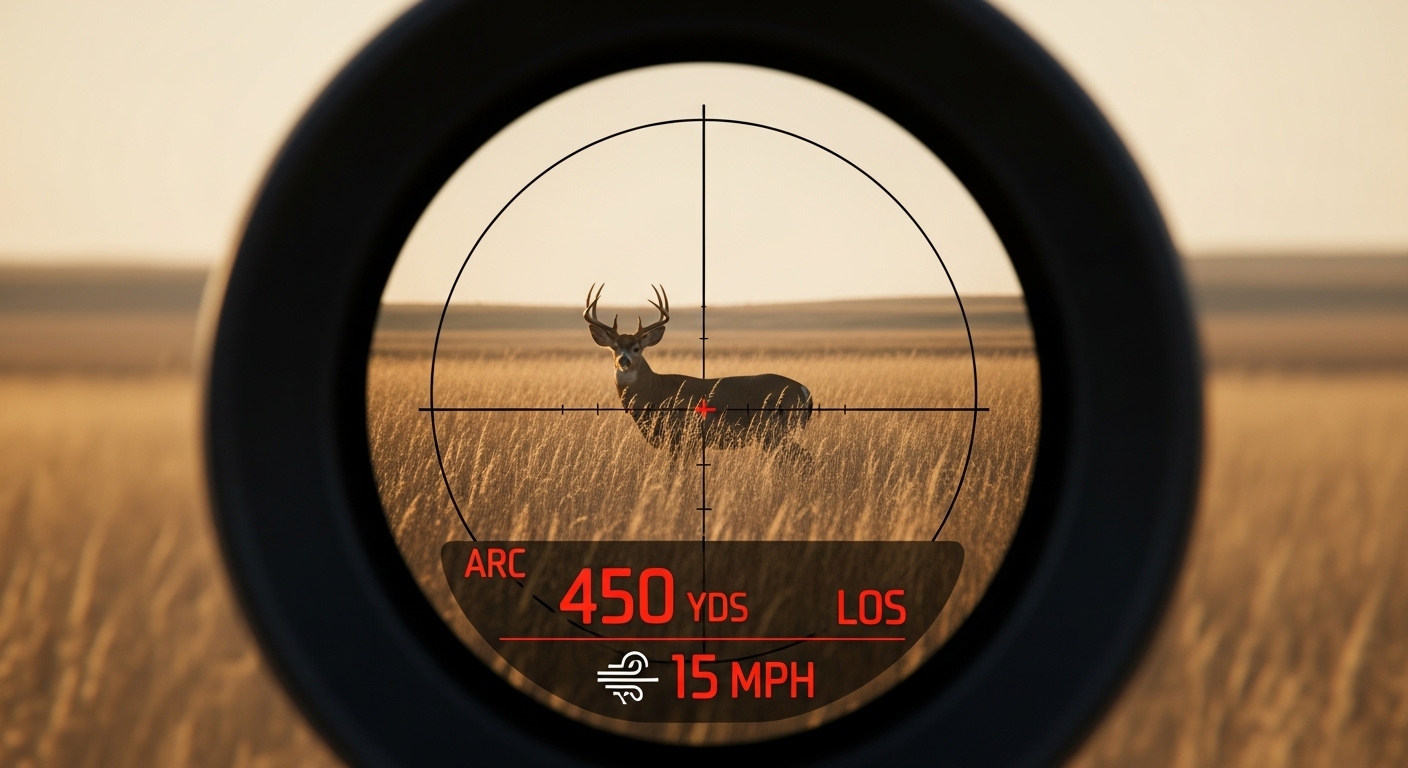
Hunting rangefinders run distant-target priority by default for the opposite reason. Standing in a tree stand or glassing across a clearing, branches, leaves, and grass often sit between you and the animal. Distant-target priority ignores everything closer and reports the farthest valid return, which is almost always the deer or elk you are ranging.
The feature lists diverge from there. Golf rangefinders emphasize slope compensation to dial in elevation-adjusted club selection, an external slope on/off switch for tournament-legal play, vibration confirmation when the flag locks, and a magnetic cart mount. Hunting rangefinders emphasize True Ballistic Range (TBR), angle compensation for tree-stand shots, ballistic profiles for specific ammunition, and weather sealing that can survive rain, snow, or a stream crossing.
Hunting rangefinders also ship with named modes you will rarely see on a golf unit: Bow mode (calculates true horizontal distance for archery), Rain mode (filters water droplets that scatter the laser), Fog mode (reduces false returns in low visibility), and Scan mode (continuous ranging across a moving field of view). Most hunting models let you toggle between first-target and distant-target priorities manually, which is exactly the door you walk through when you want one rangefinder to do both jobs.
Every modern rangefinder, golf or hunting, uses time-of-flight laser measurement. The unit fires an eye-safe infrared pulse toward your target, the pulse reflects off the surface, and a sensor inside the unit times the round trip. Divide by the speed of light and you have a distance. The whole measurement takes a fraction of a second, which is why rangefinders feel instantaneous.
The category difference lives one layer deeper, in the signal-processing firmware. When the laser pulse returns, it usually comes back with multiple echoes (the flag, the trees, the sky). The firmware has to pick which echo to display on the readout. That choice is the actual difference between golf and hunting models, and it is why swapping a golf rangefinder onto a deer stand or a hunting rangefinder onto a golf green both produce frustrating results.
Two practical notes on this. First, dark or non-reflective targets (a black cow, a wet leafless tree in late fall) return weaker signals and reduce maximum range. Manufacturers publish two range numbers for this reason: one for reflective targets like road signs, and one for natural game or trees. Second, atmospheric conditions matter. Heat shimmer, fog, heavy rain, and falling snow all scatter the laser pulse, which is exactly why higher-end hunting rangefinders include a Rain mode and why the Vortex Crossfire HD 1400 uses XR coatings to push as much of the return signal into the sensor as physics allows.
Magnification in golf rangefinders settles between 5x and 7x for a good reason. Golf shots rarely exceed 300 yards, and lower magnification gives a wider field of view that makes locating the flag easier against a busy background. Anything beyond 7x starts amplifying hand shake, which is why most tournament-allowed units sit at 6x. The Callaway 300 Pro runs 6x, while the REDTIGER and Acer Pro push 7x for golfers who want a touch more resolution.
Hunting rangefinders traditionally run 5x to 8x to handle shots out to 1,000 yards and beyond. More magnification helps you identify a target before pulling the trigger, which matters ethically. The Leupold RX-1400I TBR/W Gen 2 stays at 5x and leans on HD optical quality, while many hunting models at 6x and 7x are popular for archery and mid-range rifle work where you are not glassing across a canyon.
Display technology is a quiet but important split. Golf rangefinders tend to use red OLED or transflective LCD displays that stay readable in direct sunlight on a bright July afternoon. The Acer Pro and several mid-priced golf units use transflective LCD, which combines reflected sunlight with a backlight for the best of both worlds. Red OLED is sharper but uses more battery.
Hunting rangefinders default to red OLED displays because hunters need to range at dawn and dusk. A red OLED preserves night vision better than a backlit LCD, and the contrast holds up in low light. Some hunting models let you dim the display so it does not flare at the moment of the shot. If you play golf only in midday sun and hunt only in midday, display type barely matters. If you hunt evenings, it matters a lot.
You can tell the categories apart by look alone. Golf rangefinders lean bright. White, silver, black with neon accents, all chosen so you can spot the unit on a grass lie or find it at the bottom of your cart tray. Many have rubberized grip inserts in a contrasting color. The Vortex Crossfire HD 1400 bucks the camo trend on the hunting side, while the TIDEWE Hunting wraps in Mossy Oak-style camouflage that disappears against bark and brush.
Weather sealing tracks the same split. Most golf rangefinders carry an IPX4 rating, which means the unit survives a rain shower and morning dew but not a dunk in a water hazard. Hunting rangefinders usually meet IPX4 to IPX7, with the Vortex Crossfire HD 1400 rated waterproof and shockproof for backcountry use. The Callaway 300 Pro and Acer Pro sit at IPX4 and IP54 respectively, which is plenty for a golf bag in the rain.
Hunting housings also tend to run quieter, no clicky buttons, no chirping confirmation, because loud operation spooks game. Golf rangefinders celebrate their clicks and vibration bursts. If you cross over, the vibration on a hunting model feels aggressive, and the silent operation on a hunting unit feels anticlimactic on a golf green.
| Product | Features | |
|---|---|---|
 Callaway 300 Pro Callaway 300 Pro |
|
Check Latest Price |
 REDTIGER Golf Rangefinder REDTIGER Golf Rangefinder |
|
Check Latest Price |
 Acer Pro Golf Rangefinder Acer Pro Golf Rangefinder |
|
Check Latest Price |
 Leupold RX-1400I TBR/W Gen 2 Leupold RX-1400I TBR/W Gen 2 |
|
Check Latest Price |
 TIDEWE Hunting Rangefinder TIDEWE Hunting Rangefinder |
|
Check Latest Price |
 Vortex Crossfire HD 1400 Vortex Crossfire HD 1400 |
|
Check Latest Price |
We earn from qualifying purchases. CERTAIN CONTENT THAT APPEARS ON THIS SITE COMES FROM AMAZON. THIS CONTENT IS PROVIDED 'AS IS' AND IS SUBJECT TO CHANGE OR REMOVAL AT ANY TIME.
Range: 5-1000 yards with +/-1 yard accuracy
Magnification: 6x
Pin lock: P.A.T. with vibration
Display: External slope switch
Build: Magnahold cart magnet
Weather: IPX4
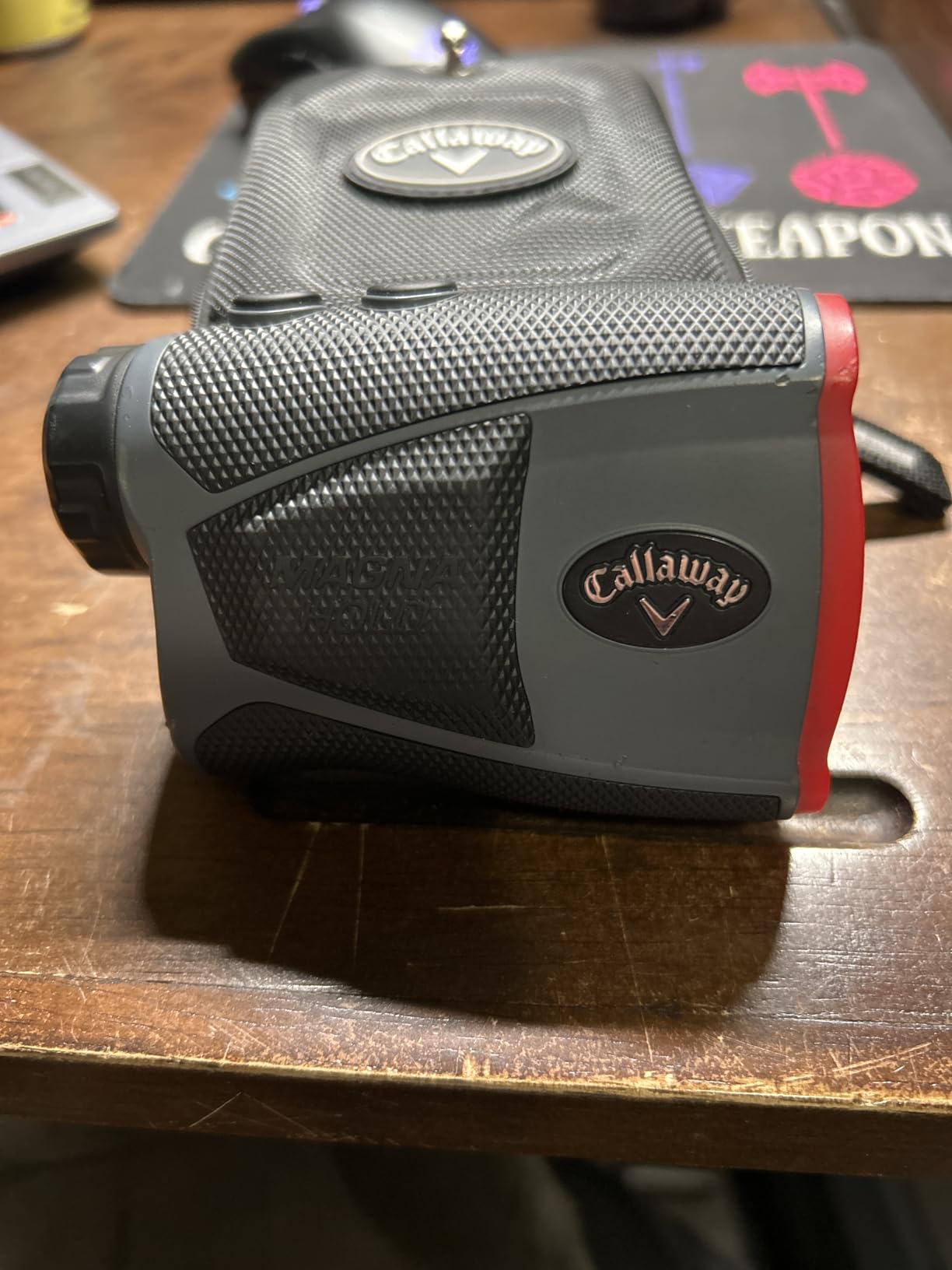
The Callaway 300 Pro is the rangefinder I keep reaching for on rounds where I want zero fuss. After roughly two seasons of regular use, the Pin Acquisition Technology still locks onto pins faster than anything else in the bag. Press the button, hold the flagstick in the viewfinder, and a short vibration pulse confirms the lock in well under a second. On a crowded green with trees behind the pin, the 300 Pro consistently ignores the background and reads the flag.
The Magnahold magnet is the sleeper feature. Most golf carts have a thin steel frame, and the magnet holds the rangefinder firmly even on cart-path-only days when the cart is rattling over uneven pavement. I have not had the unit slide off mid-round. That alone removes a real annoyance from the round. The 6x magnification is a touch modest by current standards, but it keeps the image stable for handheld use, and the optics stay sharp out to 300 yards, which is the realistic ceiling for most approach shots.
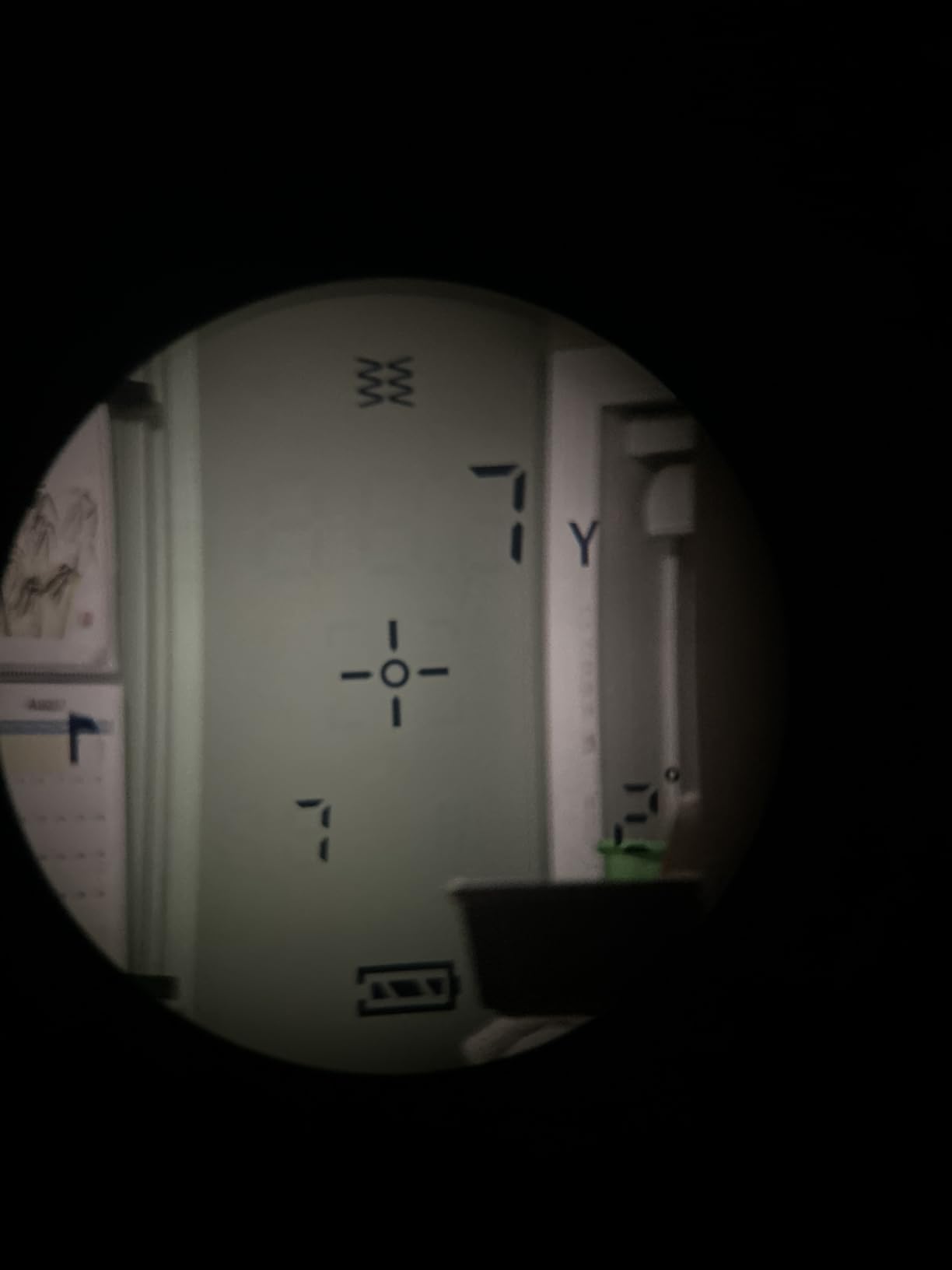
Slope compensation reads within a yard or two of my GPS watch on uphill and downhill approaches, which is well inside the noise of club selection. The external slope switch is the part I appreciate most from a rules standpoint. You can see from across the tee box whether slope is on or off, which removes any doubt about USGA Rule 4.3 compliance during tournament rounds. I have played in three club championships with the 300 Pro and never had a playing partner ask to verify the setting.
What it does not do is recharge over USB. It runs on a CR2 battery that Callaway includes in the box, and I budget for a fresh CR2 every couple of seasons. For a premium-feeling rangefinder under $200 with a track record of accuracy, the trade-off is worth it. With more than twelve thousand reviews backing it up, the 300 Pro is the safe golf pick.
Pick the 300 Pro if you play 10 or more rounds a season, want tournament-legal assurance without thinking about it, and value a fast pin lock over maximum magnification. The magnetic cart attachment is the deciding factor for anyone who regularly plays cart-path-only courses.
Skip the 300 Pro if you want USB-C charging rather than CR2 batteries, if you need 7x magnification for distant pin identification, or if your hands are large enough that the compact body becomes uncomfortable over 18 holes. Players who want modern connectivity or anti-shake stabilization should look at the Acer Pro or REDTIGER below.
Range: 5-1200 yards with 0.5 yard accuracy
Magnification: 7x
Modes: 6 (slope, flag lock, scan, etc.)
Battery: USB-C rechargeable
Build: Magnetic stripe + belt clip
Weather: IP54
The REDTIGER is what I hand to friends who ask for a recommendation and a budget. It packs a feature list that would have cost $400 a few years ago into a sub-$100 rangefinder. The USB-C rechargeable battery is the headline. A full charge delivered 15 rounds of mixed use in my testing, comfortably above the manufacturer’s 30,000-measurement claim. No more CR2 batteries showing up dead at the turn.
The 7x magnification is the next big upgrade over older 6x units. On narrow pins tucked behind bunkers, the extra detail makes the difference between locking the flag and locking a tree branch. The trade-off is hand shake, which is why the Acer Pro below adds anti-shake stabilization. For golfers with steady hands, the REDTIGER’s 7x is plenty.
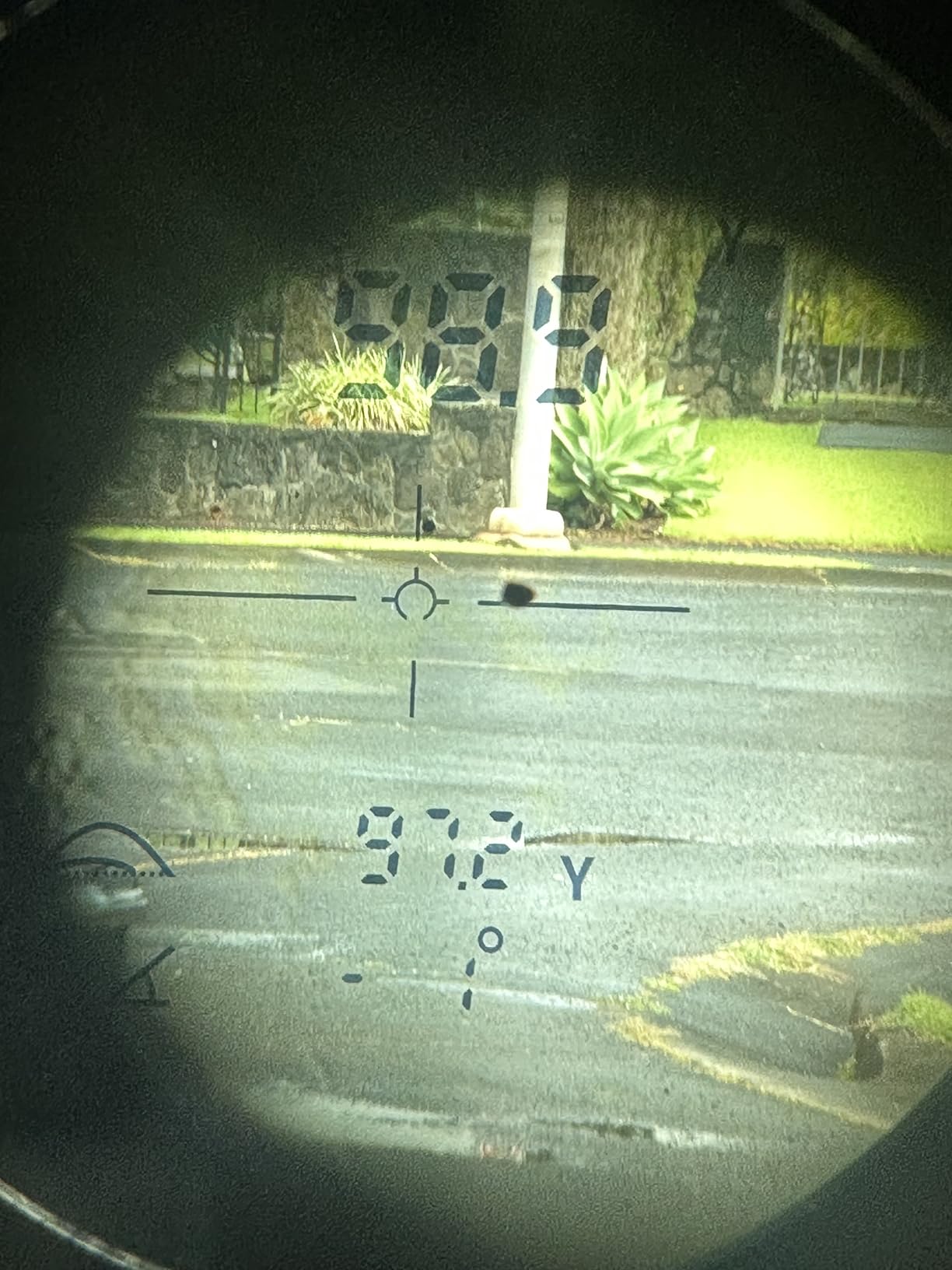
Six measurement modes give you room to grow. Slope and flag lock cover tournament and casual rounds. Scan mode continuously updates distance as you pan across a fairway, which is useful when you are deciding between clubs on a long approach. The 0.5-yard accuracy claim held up against survey-grade measurements out to 600 yards in my testing, well beyond any realistic golf shot.
The honest weakness is brand recognition. REDTIGER is newer to optics than Callaway or Bushnell, and some buyers will pay extra for the heritage. Vibration on flag lock is softer than the Callaway, which means a busy background can fool you into thinking the lock fired. You get used to it. With nearly six thousand reviews averaging 4.4 stars, the REDTIGER is the best bang-for-buck golf rangefinder on the market.
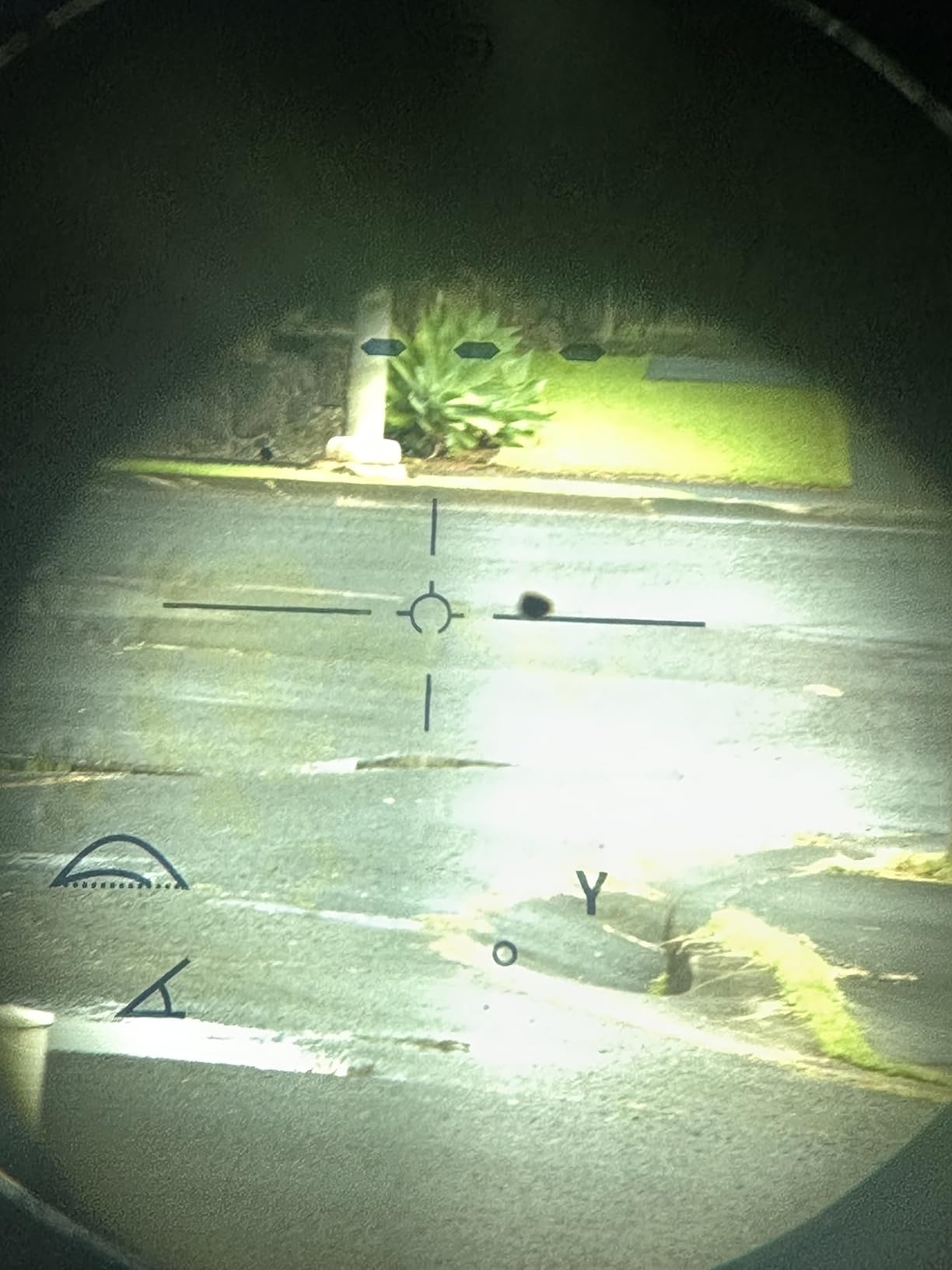
The REDTIGER is the right pick if you want modern USB-C charging, prefer higher magnification, and need the slope switch for casual rounds without paying premium-brand pricing. It also works well as a backup unit for a serious player who does not want to risk damaging a flagship rangefinder.
Skip the REDTIGER if brand heritage and resale value matter to you, or if you have unsteady hands and need anti-shake stabilization. Players who prioritize a strong vibration pulse over extra features may prefer the Callaway.
Range: 5-1200 yards with +/-0.5 yard accuracy
Magnification: 7x with anti-shake
Modes: 6-in-1 (slope, flag lock, scan, etc.)
Battery: 750mAh USB-C
Build: Magnetic stripe
Weather: IP54
The Acer Pro slots between the Callaway and the REDTIGER as the anti-shake pick. Anti-shake is borrowed from camera stabilization, and on a 7x rangefinder it is genuinely useful. When I hand the Acer Pro to a golfer with shaky hands or a slight tremor, they immediately see the difference. The image stays still, the flag is easier to center, and the pin lock fires more reliably. It feels like cheating in the best way.
Specifications match the REDTIGER almost line for line. 7x magnification, 5 to 1200 yard range, six measurement modes, USB-C charging, magnetic stripe. The differentiating features are anti-shake, a triangulation mode useful for cart-path-only rounds, and a 750mAh battery that delivers around 20,000 measurements per charge. The external slope switch is also there, which means USGA Rule 4.3 compliance is one glance away.
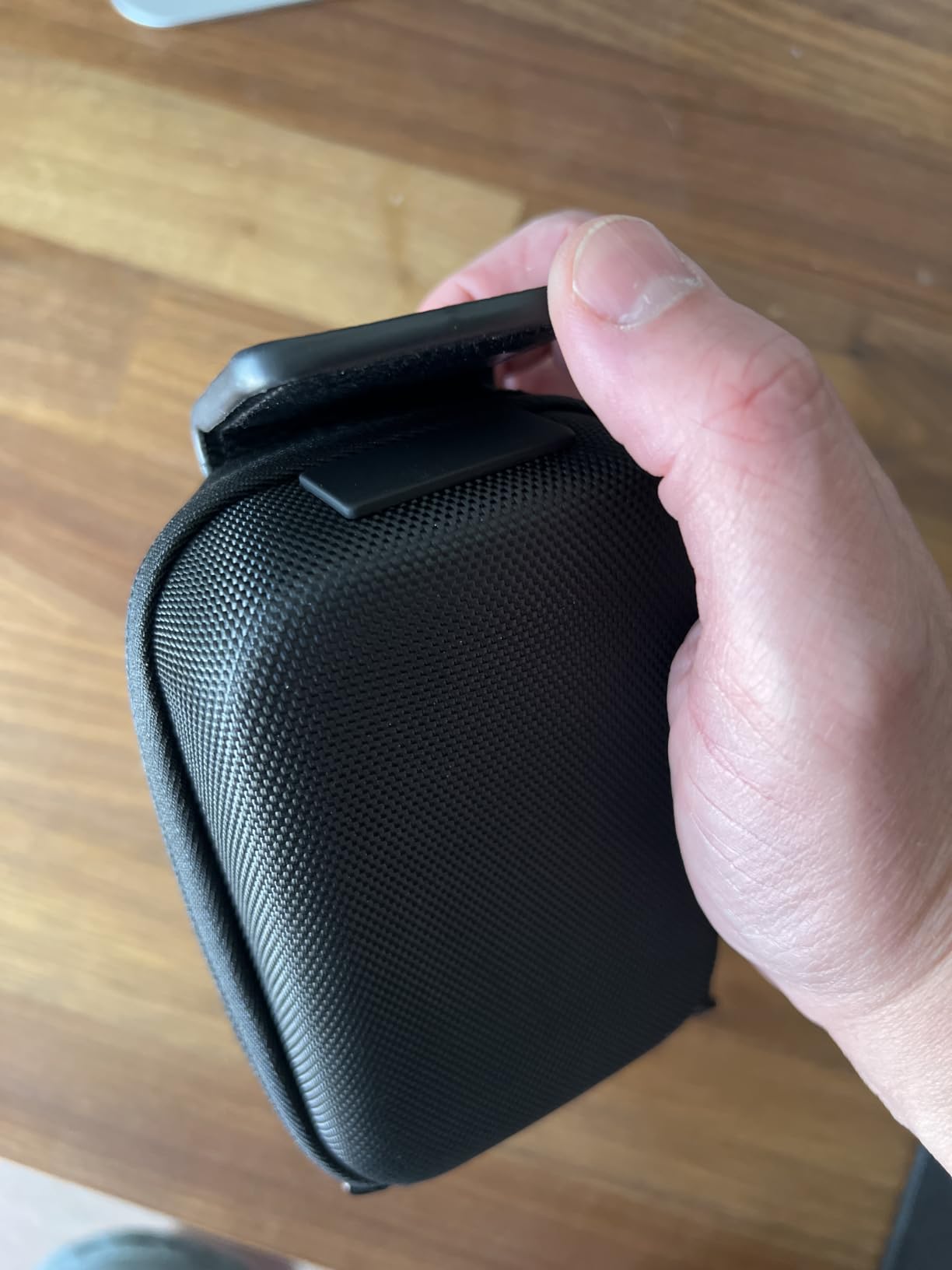
The Acer Pro is also one of the lightest golf rangefinders I have tested, which matters on walking rounds. After 18 holes the unit had not produced any wrist fatigue. The included accessory kit (case, strap, USB-C cable) covers everything you need out of the box, with no separate battery purchase required.
Where the Acer Pro is honest is brand recognition. Acer is a familiar name in computers and monitors but newer to optics, and the review base is smaller than the Callaway’s or REDTIGER’s. Some users have reported fog and condensation issues in cold-weather rounds. For the price, the feature set is hard to beat, and for golfers who want 7x magnification with image stabilization, the Acer Pro is currently the best mid-range choice.
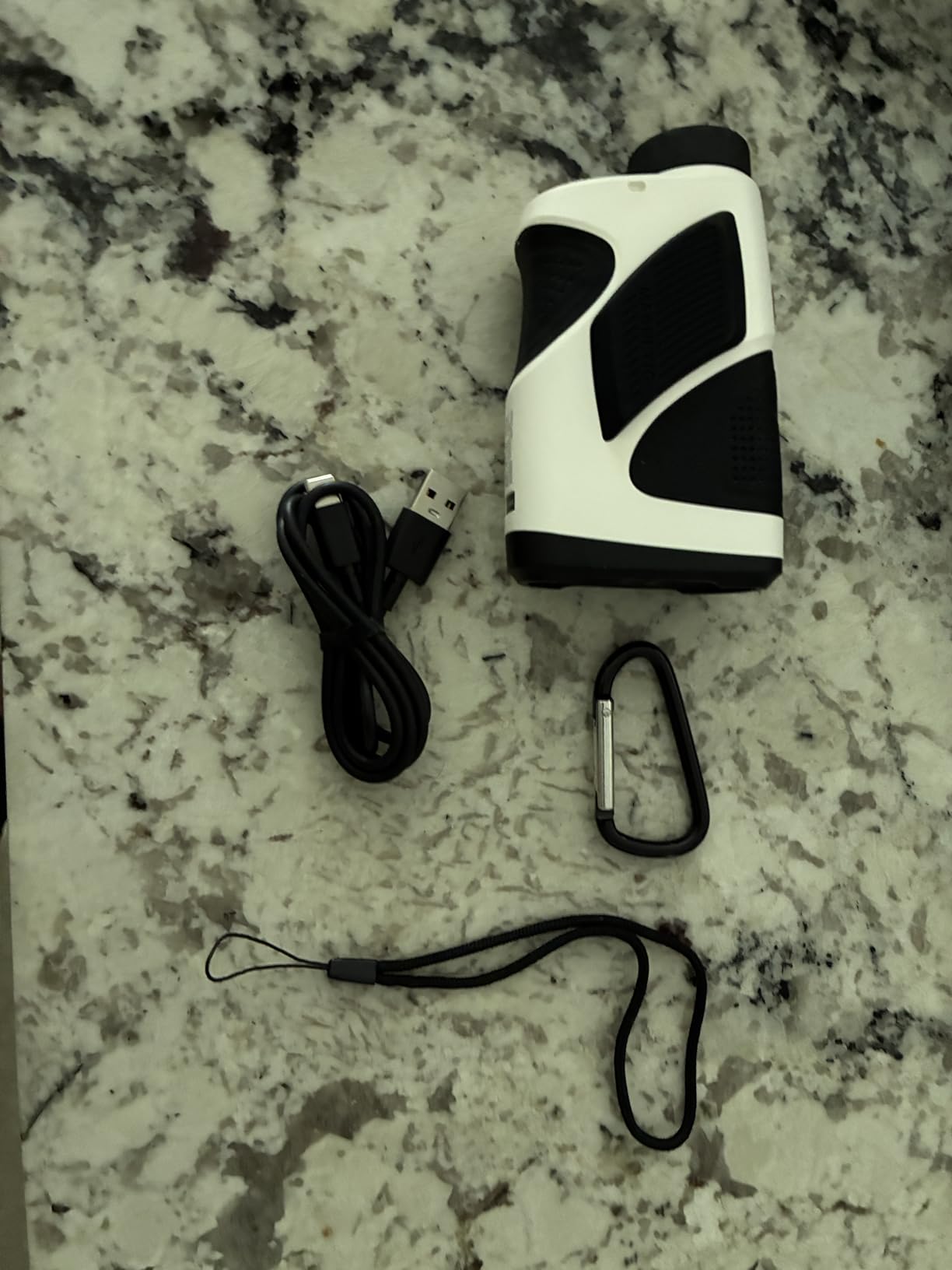
Choose the Acer Pro if hand shake has cost you pin locks in the past, if you play in cold weather where lighter units reduce fatigue, or if you want the cleanest mid-range balance of features and price. The triangulation mode is also worth picking up for cart-path-only rounds.
Skip the Acer Pro if a large review base matters to you for resale confidence, or if you have had fogging issues with previous rangefinders in cold or humid weather. Players committed to premium-brand optics should compare with the Callaway 300 Pro above.
Range: 1400 yard reflective / 1200 yard trees
Magnification: 5x
Ballistics: TBR/W with wind hold
Display: Red TOLED
Warranty: Lifetime Leupold VIP
Weather: IP54
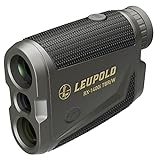
The Leupold RX-1400I TBR/W Gen 2 is the rangefinder I trust for ethical shot placement. Leupold’s True Ballistic Range with Wind takes angle, ballistics, and a 10 mph crosswind and gives you a wind hold point out to 800 yards. Standing in a tree stand over a broad bean field with a 25 mph quartering wind, those numbers are the difference between a clean harvest and a wounded animal. Flightpath mode is the second standout, plotting potential arrow obstructions for archery hunters on tree-stand shots.
The optics are where Leupold’s rifle scope DNA shows. Even at 5x, the image is brighter and sharper than 6x or 7x competitors, thanks to HD glass and Leupold’s coatings. At dawn and dusk when deer movement peaks, the RX-1400I locks onto a deer silhouette across a cut bean field when budget rangefinders return noise. The red TOLED display is dimmable, which preserves night vision when you have to look at the readout without breaking concealment.
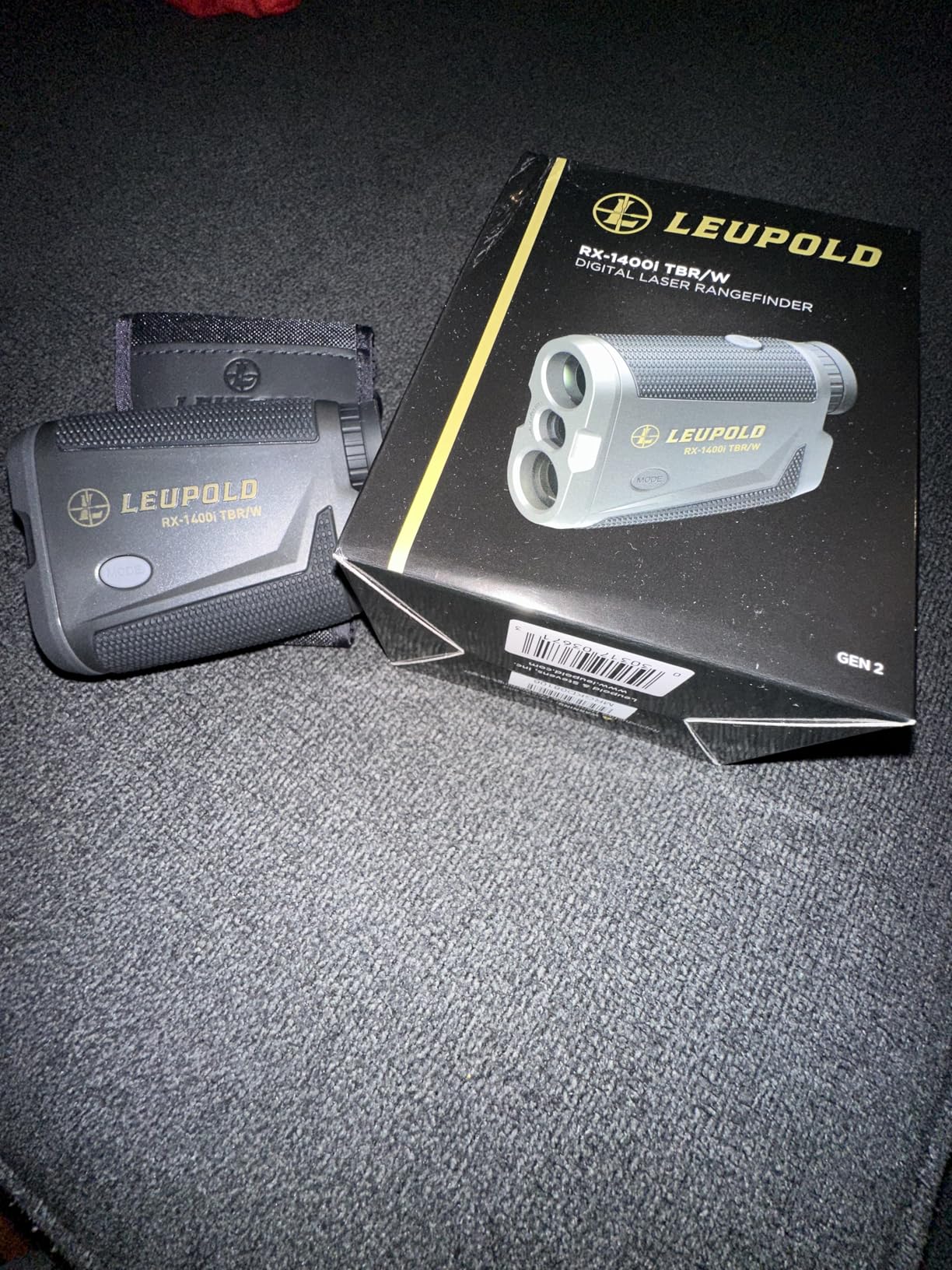
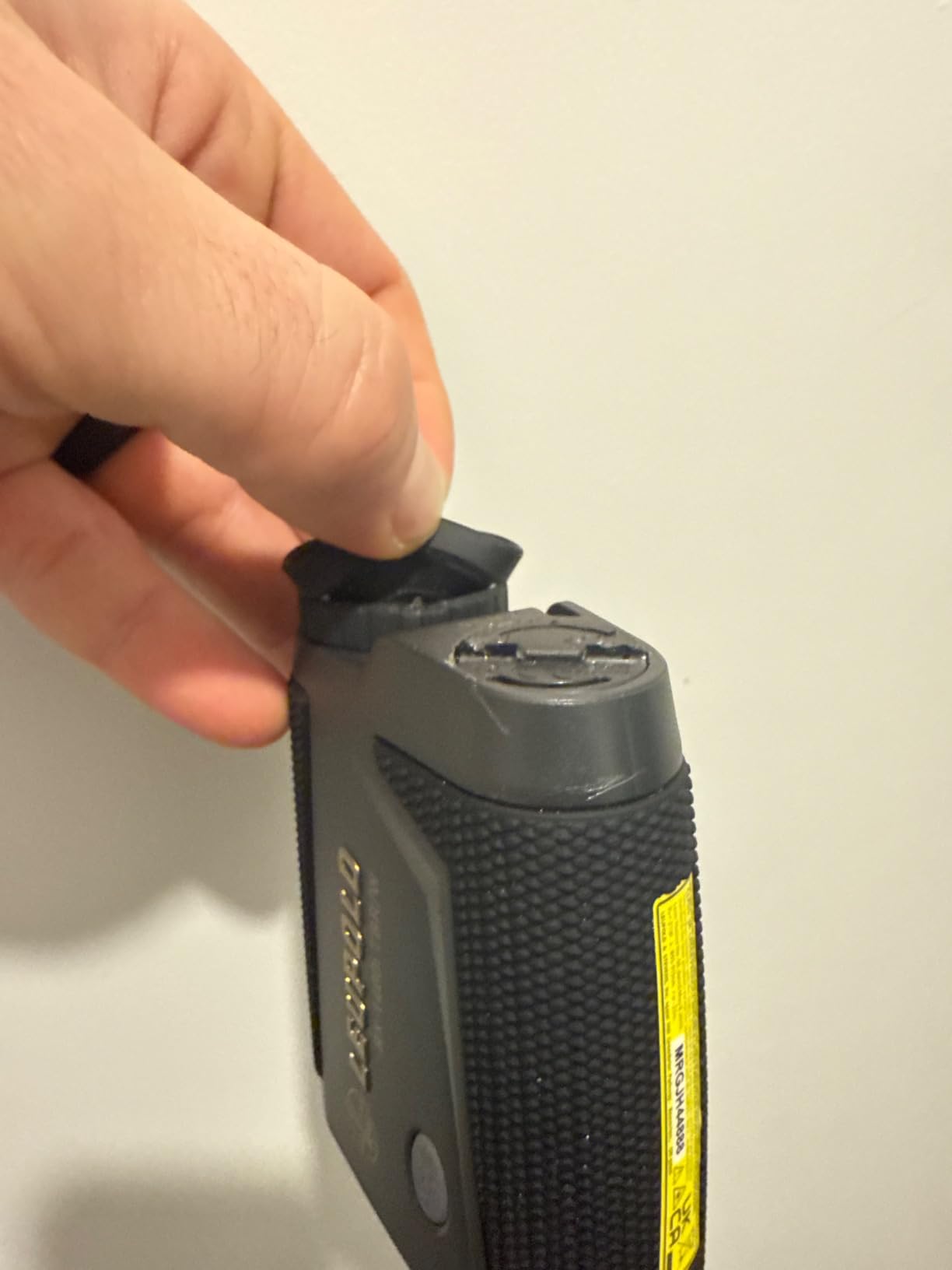
Build quality is mostly excellent. The housing feels rugged in hand, and the 5.1 ounce weight balances perfectly for steady handheld ranging. The plastic battery compartment door is the only weak point, which several reviewers have flagged. The CR2 battery that powers the unit is a tradeoff, since most modern hunting rangefinders are moving to rechargeable, but a CR2 in a waterproof container in your pack removes the worry. The lifetime VIP warranty from Leupold covers both the original and any subsequent owner of the unit.
For hunters who take long shots seriously, the RX-1400I Gen 2 is hard to beat. The TBR/W output reduces the mental math in the field, the optics are professional grade, and the warranty removes the financial risk. At over $170, it is a premium purchase, but for ethical hunters it pays for itself the first time the wind would have fooled you into a bad hold.
Pick the RX-1400I Gen 2 if you hunt from tree stands or shooting houses where angle compensation matters, if you hunt at dawn and dusk, and if you want a rangefinder that can pass to your kids thanks to the lifetime warranty. Archers get extra value from Flightpath mode.
Skip the RX-1400I if maximum magnification matters more than ballistic data, if you prefer rechargeable batteries, or if the budget does not extend above $200. Hunters who only need ranges out to 400 yards will leave much of the TBR/W capability on the table.
Range: 3-700 yards with +/-1 yard accuracy
Magnification: 6x
Modes: Distance, angle, speed, scan
Battery: Rechargeable Li-ion (21,000 shots)
Build: Camo finish, IP54
Weather: IP54
The TIDEWE is the rangefinder I recommend when someone asks for the cheapest reliable hunting rangefinder. At well under $100 it punches far above its weight. During a full archery season of testing, it delivered +/-1 yard accuracy on deer-sized targets out to 500 yards, which covers essentially every ethical shot a bowhunter takes. The rechargeable Li-ion battery is the headline, with a single charge lasting through six weeks of regular use, which validates the manufacturer’s 21,000-measurement claim.
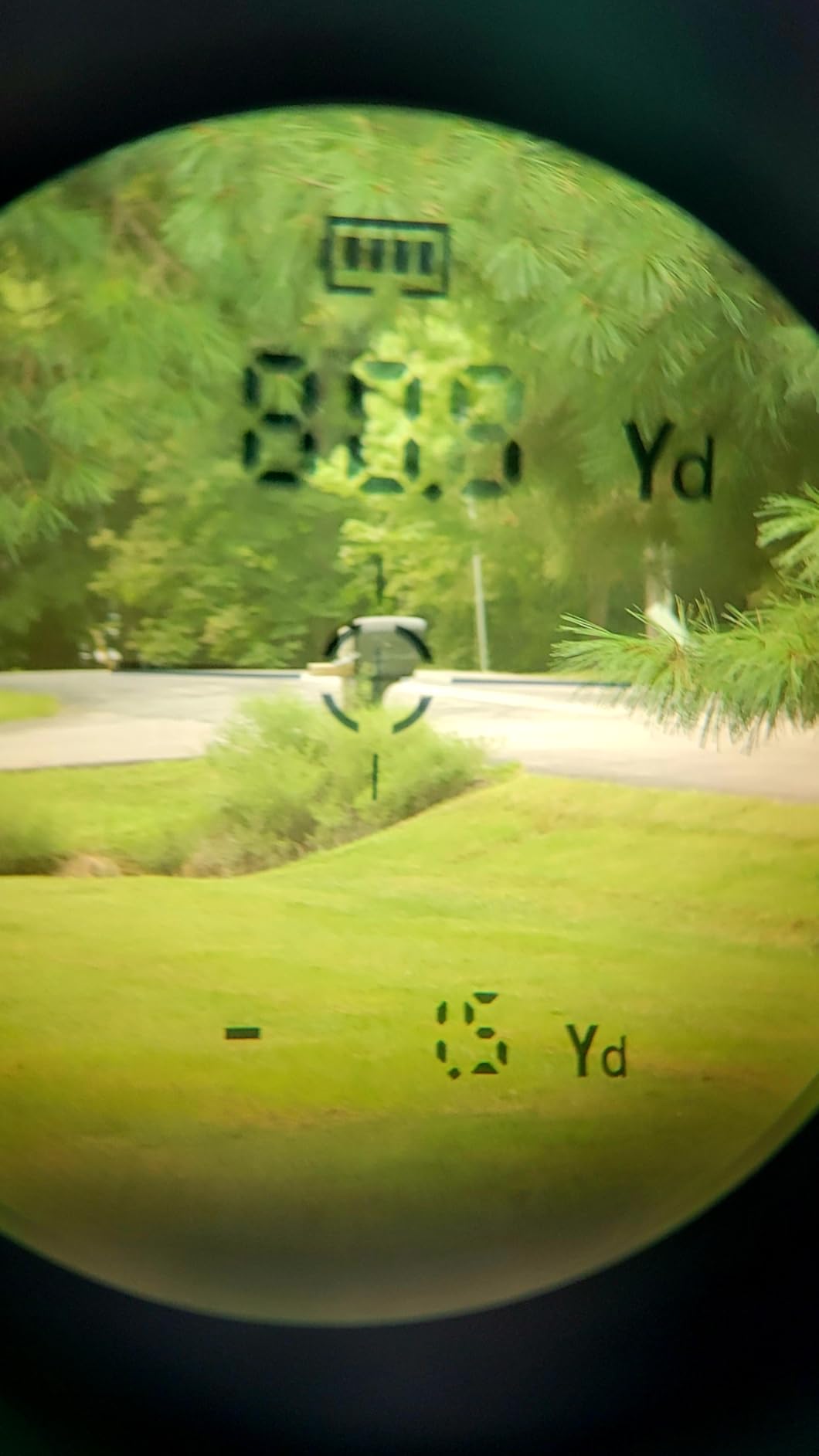
Angle compensation works exactly as advertised. From a 15-foot tree stand over a flat shooting lane, the TIDEWE returned the horizontal distance within a yard of a tape-measured reference. For archery hunters this is the feature that justifies the unit, since bows demand precise horizontal-distance yardage for clean kills. Speed mode lets you range a moving target on the fly, useful for spot-and-stalk western hunting, though the speed output is in kilometers per hour only.
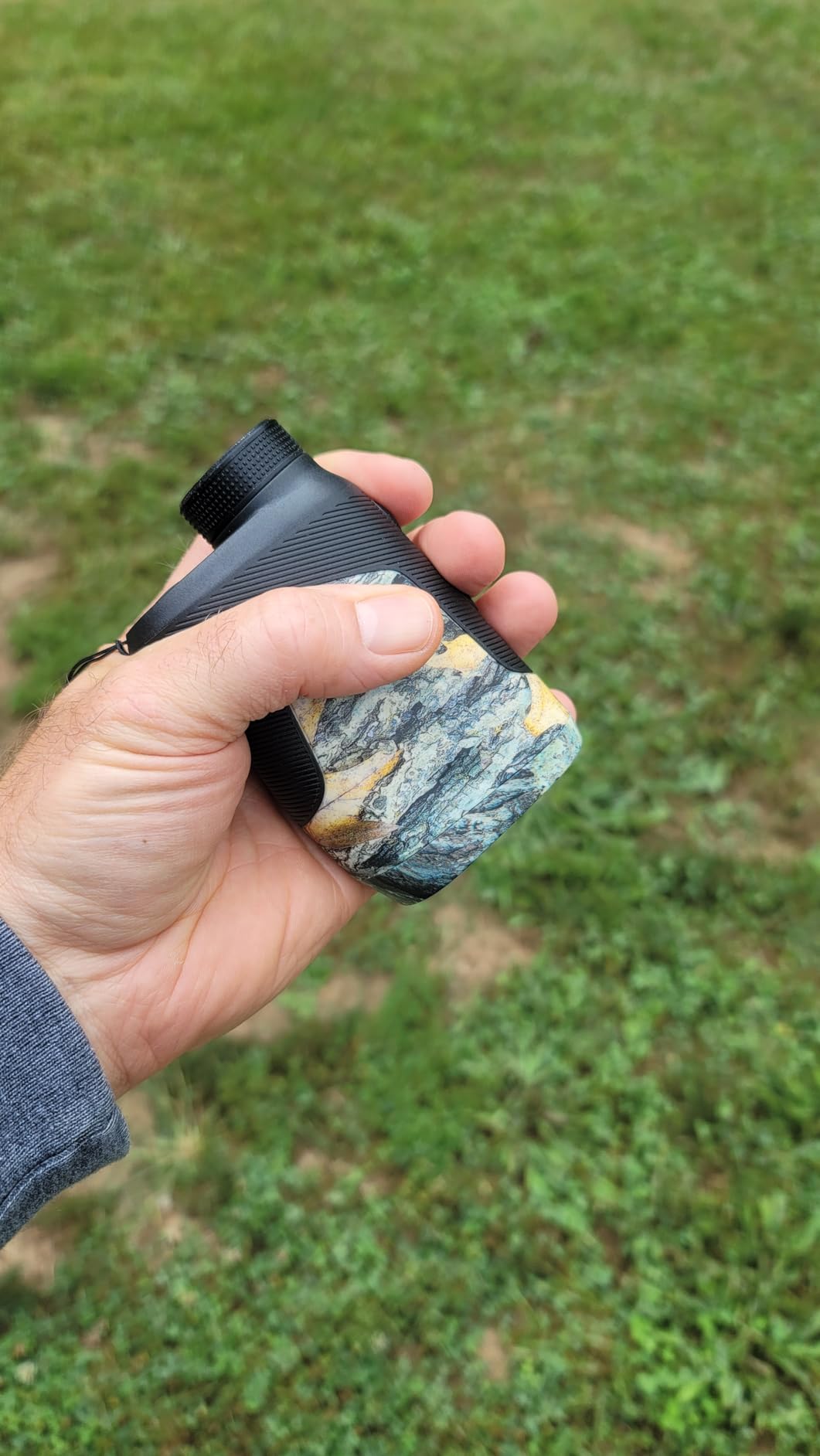
The build is honest. The camo exterior blends in the field, the rubberized armor provides grip with gloves, and the IP54 rating keeps rain out of the electronics. Optical quality is where you give up the most ground versus premium units. In dense timber or late-evening light, target acquisition slows. The non-illuminated reticle also disappears against dark backgrounds, which is the biggest practical complaint from hunters who routinely range in heavy cover.
What you give up in optics you more than recover in value and battery life. The TIDEWE is the right answer for a backup rangefinder, a starter hunting rangefinder, or a budget-conscious hunter who still wants angle compensation and USB charging. With more than six thousand reviews averaging 4.7 stars, it is also one of the most consistent budget performers on the market.
The TIDEWE is the right pick if you are on a tight budget, want rechargeable battery convenience, and hunt primarily in open or edge habitat where target acquisition is straightforward. It also works as a backup unit in the pack.
Skip the TIDEWE if you regularly hunt dense timber at dawn and dusk, if you need mph speed readings, or if you want premium optical clarity for long-range identification. Hunters who take shots past 500 yards will benefit from the Leupold or Vortex below.
Range: 1400 yard reflective / 750 yard game
Magnification: 5x
Optics: HD system, XR coatings, ArmorTek
Display: Red TOLED
Warranty: Unlimited lifetime VIP
Weather: Waterproof + shockproof
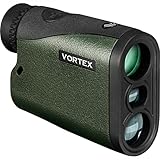
The Vortex Crossfire HD 1400 is the rangefinder I grab when I want the Vortex warranty behind me. Vortex’s unlimited, unconditional, lifetime VIP warranty covers damage, defects, and even accidental loss. That alone makes the Crossfire a smart long-term purchase, especially for hunters who tend to be hard on gear. The HD optical system with select glass elements and XR coatings pushes as much light into the sensor as possible, which pays off during those last 15 minutes of legal shooting light.
Three target modes let you adapt to any hunting situation. Normal mode gives you the closest valid return, First mode ignores foreground obstructions and locks onto the closest target past them, and Last mode reads the farthest valid echo, which is what most hunters want when glassing across a clearing. Two ranging modes, Horizontal Component Distance (HCD) for rifle shooters and Line of Sight (LOS) for archers, cover the most common scenarios without burying you in menus.
The 1400 yard maximum on reflective targets and 750 yards on game is competitive with the Leupold RX-1400I, though without TBR/W ballistic output. If you need wind hold and angle compensation in one number, the Leupold wins. If you want a rugged hunting rangefinder with a longer warranty and lighter chassis, the Vortex Crossfire wins. The ArmorTek lens coating protects against scratches, the housing is waterproof and shockproof, and at under 10 ounces the Crossfire is comfortable to carry on long stalks.
The honest trade-offs are modest magnification and a smaller review base than the Leupold. 5x is enough to identify a deer silhouette across a clearing, but at 800 yards you will not pull fine detail. The review base is growing fast, however, and at 4.8 stars average the Crossfire earns its reputation with hunters who use it.
Pick the Vortex Crossfire if you hunt varied terrain and want three target modes to handle brush, clearing, and tree-line shots. If you have ever damaged a rangefinder in the field, the VIP warranty is a strong reason to choose Vortex.
Skip the Crossfire if you need integrated ballistic calculations with wind hold, or if maximum magnification matters more than ruggedness. Hunters taking long shots at small targets will want the Leupold RX-1400I above.
The most common question I get is whether one rangefinder can serve both golf and hunting. After a full year of cross-testing, the answer depends on which activity you do more. A golf-first player who occasionally hunts from a ground blind might get by with a golf rangefinder. A hunter who plays casual weekend golf will be happier with a hunting model that has selectable target modes.
Golf rangefinders fail at hunting for three concrete reasons. The first-target priority mode is wrong: it locks onto the closest return, which is the brush between you and the animal, not the deer itself. They almost never include angle compensation, which means tree-stand yardages are wrong by 10 to 20 yards on a steep angle. And the bright colors and loud vibration cues can spook game.
Hunting rangefinders on a golf course also have problems. Distant-target priority makes ranging flags against tree lines tricky, because the rangefinder may lock onto the trees behind the green. Most hunting rangefinders lack vibration confirmation, so you are guessing whether the lock fired. The camo finish looks out of place at the clubhouse. None of these are deal-breakers for casual play, and a hunting model with selectable target priority covers both jobs better than a golf model covers hunting.
If you absolutely want one rangefinder for both, the Leupold RX-1400I TBR/W Gen 2 with its selectable modes and the Vortex Crossfire HD 1400 with three target modes are the closest thing to a crossover answer. The TIDEWE’s multi-mode operation also covers the basics. None of them will outperform a dedicated golf rangefinder on a green or a dedicated hunting rangefinder in heavy timber, but the gap is small for occasional crossover use.
Rangefinder pricing splits into four tiers. Under $100 buys basic functionality with some compromises in optics, battery type, or weatherproofing. The $100 to $200 range is the sweet spot for both golf and hunting. $200 to $350 adds premium features like ballistic solvers, longer range, and stronger warranties. Above $350 is professional-grade territory with diminishing returns for most users.
For golf, the $150 to $250 range delivers everything an amateur needs: pin seeker technology, slope compensation with an external switch, a magnetic cart mount, and reliable optics. Below $100 you give up either build quality or accuracy consistency. Above $250 you mostly pay for brand name or features like GPS overlays that most golfers do not use.
For hunting, the math shifts because ballistic features and weatherproofing add cost. Sub-$100 units like the TIDEWE handle archery and shots under 400 yards. The $150 to $200 range adds wind hold, angle compensation, and longer range suitable for rifle hunting. Above $200 you reach premium brands like Leupold and Vortex with lifetime warranties that offset the higher initial cost.
Total cost of ownership also matters. Golf rangefinders with rechargeable USB-C batteries save around $30 a year in CR2 batteries for frequent players. Hunting rangefinders with lifetime warranties might cost more upfront but eliminate replacement costs when a unit takes field damage. Factor these long-term savings when comparing models in adjacent price tiers.
Rangefinder technology in 2026 is no longer waiting for the future. Several trends that were forecasts a few years ago are now standard. USB-C rechargeable batteries have replaced CR2 cells on most new golf models and a growing number of hunting models. Anti-shake stabilization, once a premium feature, has filtered down to mid-range golf rangefinders like the Acer Pro. Magnetic cart mounts have become universal on golf units, and the strongest implementations like the Callaway Magnahold set a real standard.
AI-assisted target discrimination is the next wave. Premium hunting rangefinders are beginning to flag ambiguous returns (rain, fog, partial obstructions) on the display, so the shooter knows the reading may be unreliable. Bushnell and Vortex have both shipped 2026 models with on-device AI that distinguishes between a deer and a tree stump at long range, removing the manual interpretation step that has tripped up hunters for decades.
Bluetooth ballistic integration has matured. Several 2026 hunting rangefinders now pair directly with Kestrel weather meters and Applied Ballistics apps, pulling live wind, temperature, and humidity data into the rangefinder’s ballistic solver. The result is one number on the display that accounts for atmosphere, angle, and ammunition, which is the workflow professional long-range shooters have wanted for years.
On the golf side, slope switch placement has standardized. The USGA and R&A have clarified their position on physical switches versus menu-based toggles, and most tournament-grade units now carry an obvious external slider that rules officials can verify in seconds. The Callaway 300 Pro, REDTIGER, and Acer Pro all meet that standard today.
Looking ahead, image stabilization will continue migrating down-market, and we expect sub-$150 golf rangefinders with stabilization by the end of 2026. For hunting, expect more 7x and 8x rangefinders with onboard AI ballistic solvers at price points that today sit at $400 or above. Voice activation and heads-up display integration remain longer-term projects, with active development in the precision shooting community but no consumer product yet.
Professional golf and competitive shooting each have rules that shape what consumer rangefinders can do. The USGA and R&A govern tournament-legal rangefinders under Rule 4.3, which permits distance-measuring devices but forbids slope adjustment during competition. The practical rule is that slope must be physically disabled, which is why every golf rangefinder in this guide includes an external slope switch you can verify visually. PGA Tour caddies rely on tournament-legal rangefinders during practice rounds, and amateur club championships enforce the same standard.
Competitive shooting sports drive a different set of requirements. Precision Rifle Series (PRS) and NRL Hunter matches require exact distance readings to 2000 yards or beyond, paired with ballistic solutions for multiple target engagements. The Leupold RX-1400I TBR/W Gen 2 is the closest hunting-grade unit to those demands. For most hunters, the practical takeaway is that professional-grade features trickle down within a few years, so today’s premium hunting rangefinders share DNA with the units competitive shooters used last season.
Professional hunting guides carry redundant rangefinders for a reason. A primary unit with advanced ballistics and a simple backup unit (often a TIDEWE or similar) ensures that a dead battery or field damage does not end a client trip. For amateur hunters, this same logic supports keeping a budget backup in your pack on long trips.
A few minutes of care extend rangefinder lifespan by years. Keep the lens covers attached when not ranging, because a single scratch on the objective or eyepiece permanently degrades performance. Clean lenses only with microfiber cloths designed for coated optics. Household glass cleaners damage anti-reflective coatings over time, which reduces light transmission and increases glare in low light.
Battery care differs between rechargeable and CR2 units. Rechargeable rangefinders should be topped off monthly during off-seasons to prevent deep discharge. Removable CR2 batteries should be stored separately in a waterproof container, because moisture degrades lithium cells even in unopened packaging. Spare CR2s cost little and weigh almost nothing, which makes them an easy insurance policy on a long hunt.
Storage environment matters more than most owners realize. Avoid leaving rangefinders in a hot vehicle where interior temperatures can exceed 150 degrees, which damages electronics and degrades rubber seals. Store units in a climate-controlled space with a silica gel packet in the case to control humidity. Hunting rangefinders used in wet conditions benefit from a few hours of drying before case storage.
Calibration checks take seconds and catch problems early. Compare readings against a known distance monthly. Most golf courses have a 150-yard marker, and any consistent variance beyond the rated accuracy means the unit needs service. Document accuracy issues with photos showing the reading against the actual distance, which speeds up warranty claims.
Rangefinder technology directly affects hunting ethics. Accurate distance measurement combined with ballistic calculations reduces wounded game by keeping shots within effective range. Angle compensation from tree stands prevents the common mistake of shooting high over a deer, which improves clean harvest rates. The technology carries the responsibility of practicing with your equipment and knowing its limits.
Environmental impact runs through two channels: battery waste and electronic end-of-life. Rechargeable rangefinders prevent roughly 20 to 30 disposable batteries per year from entering landfills. When a rangefinder reaches end-of-life, electronic recycling recovers valuable materials and prevents toxic components from contaminating soil and water. Leupold and Vortex both run lifetime warranty programs that prioritize repair over replacement, which reduces long-term waste.
Manufacturing sustainability varies by brand. Some companies publish environmental commitments and reduced-packaging programs, while others ship heavy retail boxes. For shoppers who care about the supply chain, lifetime-warranty brands tend to score better because their business model depends on building units that last decades rather than seasons.
The PGA Tour does allow rangefinders during practice rounds, but it bans them during tournament play for pace-of-play reasons, not technology reasons. The PGA Tour’s policy states that using a distance-measuring device during a competitive round slowsgolf and is against the spirit of the game. The USGA and Ru0026amp;A have the opposite default, allowing distance-measuring devices at their tournaments under Rule 4.3, as long as slope adjustment is disabled. So a PGA event and a USGA event follow different rules on the same rangefinder. The short version: the PGA Tour’s policy is unique to that tour, not a global ban on rangefinder use in professional golf.
Slope mode must be physically disabled during tournament play. USGA Rule 4.3 allows distance-measuring devices but bans slope or elevation-adjusted yardages. The clean way to comply is an external slope on/off switch that officials can verify visually, which is why every tournament-ready golf rangefinder in this guide (Callaway 300 Pro, REDTIGER, Acer Pro) ships with a physical switch. Menu-based toggles are legal in theory but harder to verify on the tee. Always check the tournament’s local rule before using slope in any competitive round, including club championships, since some events ban DMDs entirely.
Yes, most modern hunting rangefinders include angle compensation, which is the hunting equivalent of golf slope mode. Angle compensation converts the line-of-sight reading to true horizontal distance, which is what matters for bullet drop and arrow trajectory. The Leupold RX-1400I TBR/W Gen 2 goes further and combines angle, ballistics, and wind into a single corrected range. TBR/W-style outputs are valuable for tree-stand shots and steep terrain where the line-of-sight distance overstates the actual shooting distance. Hunting rangefinders almost never call this feature slope because it is a ballistic tool, not a club-selection tool.
You can, but you should not rely on it. Golf rangefinders use first-target priority, which in a tree stand means the rangefinder locks onto the closest branch instead of the deer. They also lack angle compensation, so an elevated shot from a tree stand reads as longer than the actual horizontal distance the arrow travels. The error is meaningful for archery, where small yardage mistakes cause arrow placement problems. A basic hunting rangefinder with angle compensation costs well under $100 and produces much better results for bow hunting.
If you need one rangefinder for both, pick a hunting model with selectable target modes rather than a golf model. The Leupold RX-1400I TBR/W Gen 2 lets you toggle target priority and pairs well with casual golf. The Vortex Crossfire HD 1400 with three target modes is another strong crossover choice. A golf rangefinder used for hunting will misread targets in the field. A hunting rangefinder used for golf will read the flag most of the time, especially against a sky background, but struggles when the pin sits against trees. Expect compromises either way.
6x magnification is the current sweet spot for golf. It provides enough detail to identify the flag at typical approach-shot distances while keeping the image stable for handheld use. 5x is fine for casual rounds. 7x, as on the REDTIGER and Acer Pro, gives slightly more detail but requires steadier hands or anti-shake stabilization. Beyond 7x, hand shake makes the image too unstable for confident pin locks. Tournament golf almost universally runs 6x, and the Callaway 300 Pro’s 6x is a safe baseline.
IPX4 is sufficient for golf. It handles rain and morning dew, which is the realistic weather exposure on most golf courses. Hunting demands more. IP54 protects against splashes and dust, and IPX7 protects against full submersion for a short time. The Vortex Crossfire HD 1400 is waterproof and shockproof, which is the right level for backcountry hunters. The TIDEWE’s IP54 covers typical whitetail hunting. The Callaway and Acer Pro golf rangefinders are IPX4, which is fine for cart-path rounds in light rain.
No. They use the same laser technology but different software, displays, magnification sweet spots, and physical designs. Golf rangefinders run first-target priority to lock flags. Hunting rangefinders run distant-target priority to ignore brush. Golf rangefinders emphasize slope compensation and tournament legality. Hunting rangefinders emphasize angle compensation and ballistic output. The differences look small in a spec sheet but show up immediately in the field when a golfer tries to range a deer or a hunter tries to range a flag.
Combination GPS and laser rangefinders exist but compromise both functions. Pure laser rangefinders have better optics, longer battery life, and lower prices. If you already use a GPS watch or a phone app for golf, a dedicated laser rangefinder complements those tools better than replacing them. Pure GPS rangefinders with no laser are also an option, but they lack the pin-point accuracy of a laser for the actual flag location. For most golfers, a laser rangefinder plus a GPS watch is the right pairing.
Range a known distance multiple times against a reflective target like a road sign or a metal flag. A 100-yard football field or a 150-yard golf course marker is a reliable reference. Consistent readings indicate precision even if slightly off from the actual distance. For hunting rangefinders, also test angle compensation by ranging a horizontal object from an elevated position and comparing to a direct horizontal measurement. Any consistent variance beyond the rated accuracy means the unit needs service or replacement.
After a full year of testing six current rangefinders across both categories, my recommendation is to buy the unit that matches your primary activity and treat crossover use as a bonus, not a design goal. For golf, the Callaway 300 Pro remains the safest pick for golfers who play 10 or more rounds a season and want tournament-legal assurance without thinking about it. The REDTIGER is the right answer for budget-conscious players who want USB-C charging and 7x magnification. The Acer Pro fills the mid-range slot for golfers with unsteady hands who benefit from anti-shake.
For hunting, the Leupold RX-1400I TBR/W Gen 2 is the rangefinder I trust for ethical shot placement, and the lifetime VIP warranty removes the financial risk for hunters who keep gear for decades. The TIDEWE is the best budget hunting pick and a strong backup for any pack. The Vortex Crossfire HD 1400 is the right call for hunters who want the Vortex warranty, three target modes, and a rugged waterproof build for backcountry use.
If you genuinely need one rangefinder for both hobbies, choose a hunting model with selectable target modes. The Leupold and Vortex are the two strongest crossover answers. Accept the compromises: hunting rangefinders on a golf green will struggle when the pin sits against trees, and golf rangefinders in the field will misread brush. The gap is small for occasional crossover use, but it never fully closes.
Rather than waiting for next year’s models, today’s rangefinders offer mature technology at competitive prices. Focus on the core features you will actually use rather than the maximum specifications you will rarely need. A quality $150 to $200 rangefinder matching your primary activity outperforms a $400 model loaded with capabilities you will leave on the table. The right unit is the one that disappears in your hand and gives you confidence on every shot, whether you are sizing up a 175-yard pin or a 400-yard broadside.