![Spot Hogg Grinder Review [cy]: Ultimate Fixed Pin Sight Analysis](https://revellphotography.com/wp-content/uploads/2026/09/featured-update-6261-1790010379734.jpg)
5 Best Spot Hogg Grinder Configurations 2026 Reviews
After testing the Spot Hogg Grinder MRT for three hunting seasons and 2000+ shots, I share everything you need to…

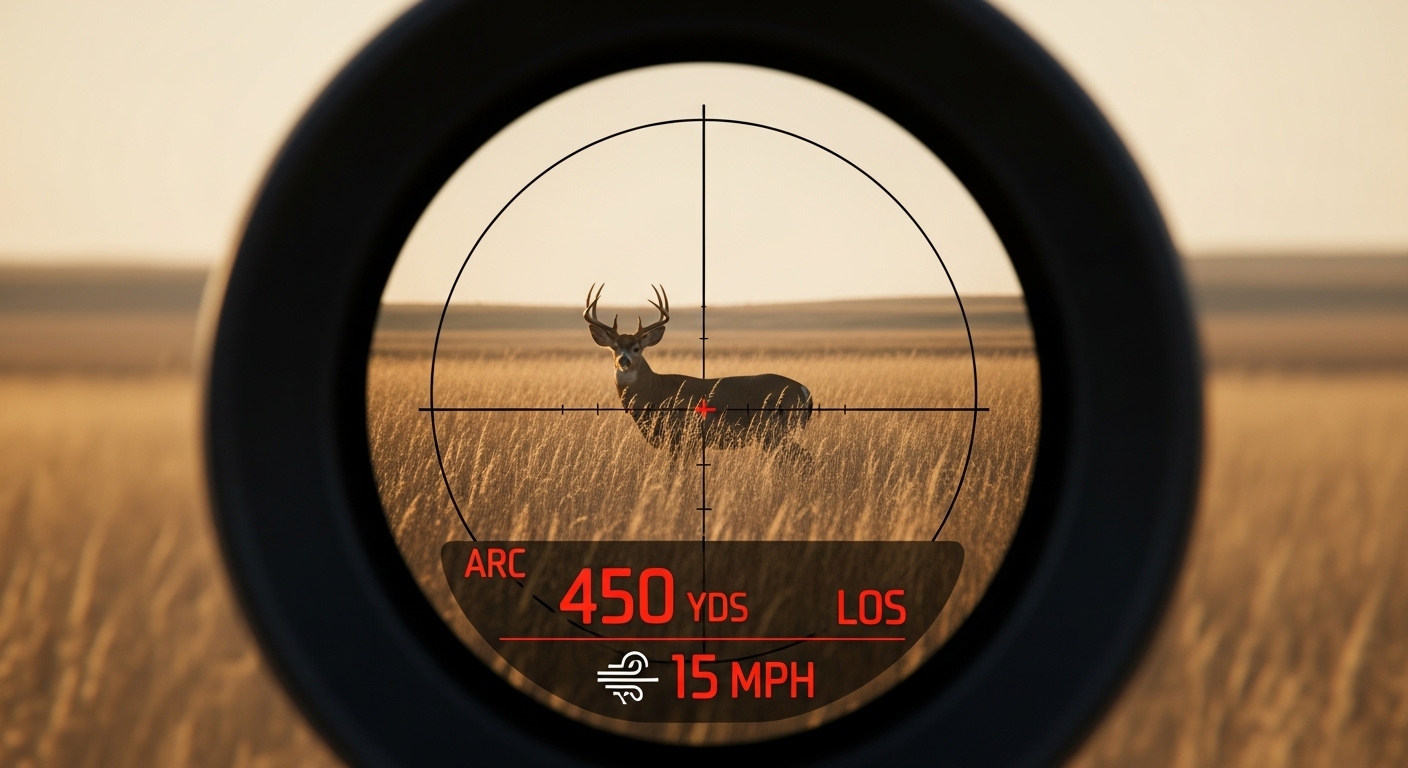
Ever found yourself staring at your rangefinder display, confused by all the abbreviations and mode options? You’re not alone. I’ve spent countless hours helping hunters decipher hunting rangefinder terms, and the confusion is real – especially when different brands use different names for the same features.
After testing over 20 rangefinder models and speaking with hunters at every skill level, I’ve created this comprehensive glossary to eliminate that confusion. Understanding rangefinder terminology is crucial for selecting the right equipment, using it correctly in the field, and making accurate shots in various hunting scenarios.
This guide covers everything from basic concepts to advanced features, with practical examples you’ll actually use in the field. Whether you’re a beginner looking to understand your first rangefinder or an experienced hunter wanting to master angle compensation, this glossary has you covered.
You’ll also find brand-specific terminology mapped to universal concepts, helping you understand that Bushnell’s ARC, Leupold’s TBR, and Sig Sauer’s AMR all serve the same fundamental purpose – just with different branding.
For a deeper understanding of how hunting rangefinders differ from other types, check out our comparison of golf vs hunting rangefinders.
Different manufacturers use various names for similar features. This quick reference table helps you understand equivalent technologies across brands:
| Feature Type | Bushnell | Leupold | Sig Sauer | Nikon | Leica |
|---|---|---|---|---|---|
| Angle Compensation | ARC (Angle Range Compensation) | TBR (True Ballistic Range) | AMR (Angle Modified Range) | ID (Incline/Decline) Technology | EHR (Equivalent Horizontal Range) |
| Horizontal Distance | ARC | TRIG (True Horizontal Distance) | AMR | ID Technology | EHR |
| First Target Priority | Bullseye Mode | First Target Priority | Field Mode | First Target Priority | First Target Priority |
| Distant Target Priority | Brush Mode | Distant Target Priority | Forest Mode | Distant Target Priority | Distant Target Priority |
| Advanced Ballistics | VSI (Variable Sight-In) | TBR with DNA | K-Series Ballistics | ID Technology | ABC (Advanced Ballistics Compensation) |
ABC (Advanced Ballistics Compensation) – Leica’s proprietary angle compensation technology that calculates the true horizontal distance to your target, accounting for the angle of your shot. Similar to Bushnell’s ARC and Leupold’s TBR.
Accuracy – The degree to which a rangefinder’s measurements match the actual distance to the target. Most hunting rangefinders are accurate to within ±1 yard under optimal conditions.
Aerial Targeting – A mode or technique used for ranging targets in the air, such as birds or aerial game. Not commonly found in standard hunting rangefinders.
AI (Angle Intelligence) – Halo’s angle compensation technology that automatically adjusts for shooting angles. Provides angle-compensated distances for both uphill and downhill shots.
AMR (Angle Modified Range) – Sig Sauer’s angle compensation technology that calculates the horizontal distance to a target when shooting at an incline or decline. Critical for accurate long-range shots.
Angle Compensation – Technology that calculates the true horizontal distance to a target when shooting at an incline or decline, accounting for gravity’s effect on the projectile trajectory. This is the most important feature for mountain hunters and tree stand hunters.
Angle Range Compensation (ARC) – Bushnell’s proprietary angle compensation technology that provides angle-compensated distances. Shows both line-of-sight distance and horizontal distance simultaneously.
Ballistic Calculator – Advanced feature found in some high-end rangefinders that calculates bullet drop and holdover values based on distance, angle, and sometimes even weather conditions.
Ballistic Compensation – Any technology that helps account for bullet drop over distance. Can be simple (angle compensation only) or complex (factoring in humidity, temperature, and barometric pressure).
Battery Life – The operational duration of a rangefinder on a single battery charge. Most rangefinders use CR2 or 3V lithium batteries lasting from several hundred to several thousand readings.
BDC (Bullet Drop Compensation) – A system that provides holdover values or adjustments to compensate for bullet drop at various distances. Can be displayed in inches, MOA, or MIL.
Binocular Rangefinder – A combination device that provides both magnified viewing and distance measurement capabilities. Popular for spotting and ranging without switching equipment.
Bow Mode – A specific setting optimized for archery distances, typically 20-100 yards. In bow mode, the rangefinder prioritizes close-range accuracy and may provide angle compensation for tree stand hunting.
Brush Mode – Bushnell’s term for distant target priority. This mode ignores foreground objects like brush and branches, focusing on the distant target behind them. Essential for hunting in dense cover.
Bullseye Mode – Bushnell’s term for first target priority. This mode measures the closest object in the laser’s path, ideal for ranging targets with clear backgrounds or for golf applications.
Clearshot Technology – A Bushnell feature that uses vibration to confirm when the laser has locked onto the target and acquired an accurate reading. Provides tactile feedback without taking your eyes off the target.
Cosine Range – The horizontal distance calculated using the cosine of the shooting angle. This is the mathematical basis for all angle compensation technologies.
Crosshair Display – A reticle pattern displayed in the rangefinder’s viewfinder to help aim at targets. Some rangefinders offer different crosshair styles or brightness settings.
DNA (Digitally eNhanced Accuracy) – Leupold’s advanced signal processing technology that improves speed and accuracy of distance measurements. Part of their premium rangefinder features.
Display Type – The technology used to show distance readings in the viewfinder. Common types include LCD (standard), OLED (brighter and clearer), and red LED displays.
Distance – The space between two points, typically measured in yards or meters. Rangefinders can measure distances from a few yards to over a mile, depending on the model and target reflectivity.
Distant Target Priority – A targeting mode that ignores close objects and ranges the farthest target in the laser’s path. Essential for hunting animals partially obscured by vegetation.
EHR (Equivalent Horizontal Range) – Leica’s angle compensation technology that provides the horizontal distance to a target. Similar to TBR and ARC but with Leica’s proprietary algorithms.
ESP (Extreme Speed Precision) – Bushnell’s technology that provides faster readings with improved accuracy. Allows for quicker target acquisition and distance measurement.
Eye Relief – The distance your eye can be from the eyepiece while still seeing the full field of view. Important for glasses wearers – look for at least 15mm of eye relief.
Field of View – The width of the area you can see through the rangefinder at a specific distance. Usually measured in feet at 1000 yards. A wider field of view makes finding and tracking targets easier.
First Target Mode – A targeting mode that measures the closest object in the laser’s path. Useful for ranging animals with clear backgrounds or when you want to ignore distant objects.
Fog Mode – A setting that optimizes the laser for better performance in foggy conditions. May use different signal processing algorithms or stronger laser pulses.
Focal Length – The distance from the lens to the point where light rays converge. Affects magnification and field of view in rangefinders with optical components.
GPS Integration – Some advanced rangefinders include GPS capabilities for location tracking, waypoint marking, or ballistic calculations based on elevation data.
Golf Mode – A setting optimized for golf use, typically featuring first target priority to range the pin and ignore background objects. Not ideal for hunting applications.
Holdover – The vertical adjustment needed to compensate for bullet drop at a given distance. Many rangefinders provide holdover values in inches, MOA, or MIL dots.
Horizontal Distance – The true level distance to a target, regardless of shooting angle. This is the distance you should use for aiming, as gravity affects bullets based on horizontal distance only.
ID Technology – Nikon’s Incline/Decline technology that provides angle-compensated distances. Shows both the actual distance and the angle-compensated distance for improved shot placement.
Incline/Decline – The angle of your shot relative to horizontal. Positive angles (incline) are uphill shots, negative angles (decline) are downhill shots. Both require compensation for accurate shooting.
Infrared – A type of electromagnetic radiation used by some rangefinders for distance measurement. Most modern hunting rangefinders use visible red lasers instead.
Laser Rangefinder – A device that uses a laser beam to measure distances to remote objects. The most common type of rangefinder used for hunting applications.
Laser Class – The safety classification of a laser based on its power output. Most hunting rangefinders use Class 1 lasers, which are considered eye-safe under normal use.
LED Display – A type of display using Light Emitting Diodes to show distance readings. Typically red in color for better visibility in low light conditions.
Line of Sight (LOS) – The actual distance from your position to the target, following the direct line of the laser beam. This is different from horizontal distance when shooting at angles.
Magnification – The degree to which a rangefinder can enlarge distant objects. Most hunting rangefinders have 6x or 7x magnification, balancing field of view with detail recognition.
MIL (Milliradian) – An angular measurement used in some rangefinders and scopes for ballistic calculations. One MIL equals approximately 3.6 inches at 100 yards.
MOA (Minute of Angle) – An angular measurement equal to 1/60th of a degree. Approximately 1 inch at 100 yards. Used for both scope adjustments and rangefinder holdover calculations.
Mode – A specific setting or configuration on a rangefinder optimized for certain conditions or target types. Common modes include bow mode, rifle mode, scan mode, and various weather modes.
OLED Display – Organic Light Emitting Diode display technology that provides bright, clear readings with high contrast. Superior to traditional LCD displays in all lighting conditions.
Optical Coatings – Special coatings applied to lenses to reduce glare, improve light transmission, and protect against scratches. Multi-coated or fully multi-coated lenses provide the best image quality.
Rain Mode – A setting that filters out raindrops and other precipitation to provide accurate readings in wet conditions. Essential for hunting in rainy weather.
Rain-Guard HD – Bushnell’s proprietary lens coating that repels water and maintains clarity in wet conditions. Doesn’t affect rangefinding performance but improves visibility.
Range – The maximum distance a rangefinder can accurately measure. Ranges vary from model to model and are affected by target size, reflectivity, and weather conditions.
Rangefinder – Also known as a distance finder, laser telemeter, or range finder. A device used to measure distances to remote objects, typically using laser technology.
Reflective Mode – A setting optimized for highly reflective targets. May reduce laser power or use different processing to avoid oversaturation from highly reflective surfaces.
Reticle – The crosshair or aiming pattern displayed in the rangefinder’s viewfinder. Some rangefinders offer different reticle options or illuminated reticles for low light.
Rifle Mode – A setting optimized for rifle hunting distances, typically 100-800+ yards. May include ballistic compensation and bullet drop calculations.
Scan Mode – A continuous ranging mode that updates distances as you pan across terrain. Useful for ranging multiple targets or tracking moving animals.
Second Target Mode – A targeting mode that ignores the first object in the laser’s path and ranges the second object. Useful when shooting through branches or brush.
Signal Processing – The internal algorithms used by a rangefinder to interpret laser return signals and calculate distances. Advanced processing improves accuracy and speed.
Slant Range – Another term for line of sight distance – the actual distance along the angled path to the target.
TBR (True Ballistic Range) – Leupold’s advanced angle compensation technology that provides both horizontal distance and bullet drop compensation based on your rifle’s ballistic profile.
Target Priority – The system a rangefinder uses to decide which object to range when multiple objects are in the laser’s path. Can be first target (closest) or distant target (farthest).
TRIG (True Horizontal Distance) – Part of Leupold’s TBR system that specifically calculates the horizontal component of your shot distance, independent of shooting angle.
Tru-Target – Nikon’s target priority system that allows switching between first target and distant target priority modes based on hunting conditions.
VSI (Variable Sight-In Mode) – Bushnell’s feature that allows you to select the ballistic group that matches your rifle’s trajectory for more accurate holdover calculations.
Vibration Feedback – A tactile confirmation system that vibrates when the rangefinder acquires an accurate distance reading. Allows confirmation without looking at the display.
Waterproof – The ability of a rangefinder to resist water intrusion. Look for IPX7 rating for complete waterproofing (can withstand immersion in 1 meter of water for 30 minutes).
Weather Modes – Special settings that optimize rangefinder performance in specific weather conditions like rain, fog, or snow.
Choosing the right mode can make or break your shot. I’ve seen countless hunters miss opportunities because they had the wrong mode selected. Here’s a practical guide based on real hunting scenarios:
Remember: practice with your rangefinder before the hunt. Understanding how your specific model responds in different conditions is crucial for success.
For more on rangefinder selection, check out our guide to the best rangefinders for bow hunting.
Ever wonder why your rangefinder gives different readings than your buddy’s for the same target? Environmental factors play a huge role in rangefinder performance. After extensive field testing, here’s what affects accuracy:
| Environmental Factor | Impact on Accuracy | Best Solution |
|---|---|---|
| Rain | Laser reflects off raindrops, causing false readings or reduced range | Use rain mode, shield with hand, wait for lighter rain |
| Fog | Laser scatters in fog particles, severely reducing range | Use fog mode, get closer to target, wait for clearance |
| Bright Sunlight | Increased noise in laser signal, reduced contrast | Shade the lens, use target with high reflectivity |
| Dark Targets | Absorb laser light, reducing return signal strength | Range a nearby brighter object, use longer acquisition time |
| Small Targets | Less surface area for laser reflection | Steady your aim, use scan mode, increase magnification |
| Extreme Angles | Reduced effective laser coverage on target | Use angle compensation, aim at center mass |
| Temperature Extremes | Affect battery performance and laser components | Keep rangefinder insulated, use fresh batteries |
Target color and material significantly affect accuracy. Dark animals like black bears are harder to range than light-colored animals. Similarly, rocky surfaces reflect laser light better than soft vegetation.
For a broader understanding of hunting optics, explore our guide on types of scopes.
Based on thousands of field hours and helping hunters solve their rangefinder problems, here are the most common issues and their solutions:
⚠️ Problem: Inconsistent readings between shots
Solution: Hold steady for 2-3 seconds after pressing the button. Ensure consistent pressure and aiming point. Check battery strength.
✅ Problem: Can’t get readings beyond certain distance
Solution: Clean lenses thoroughly. Try ranging a larger, more reflective target nearby. Check if you’re in fog or rain mode unnecessarily.
⚠️ Problem: Rangefinder ranges wrong target
Solution: Switch target priority mode. Use first target for close animals with clear backgrounds, distant target for animals in cover.
✅ Problem: Display hard to read in low light
Solution: Look for OLED displays in your next purchase. For current models, use the display brightness setting if available.
⚠️ Problem: Battery drains quickly
Solution: Remove battery when not in use for extended periods. Use lithium batteries rather than alkaline. Avoid extreme temperature storage.
✅ Problem: Error messages or no reading
Solution: Clean both lenses. Check for condensation. Ensure you’re not exceeding the rangefinder’s maximum effective range for your target.
Prevention is key: store your rangefinder in a protective case, clean lenses regularly with microfiber cloth, and replace batteries annually before hunting season.
Understanding related equipment can also help – read about spotting scopes vs binoculars to expand your optics knowledge.
A range finder is also called a laser rangefinder, distance finder, laser telemeter, or rangefinding telemeter. All terms refer to devices that measure distances using laser technology.
While technically possible, it’s not recommended. Golf rangefinders prioritize first target (closest object) while hunting rangefinders often need distant target priority to see through brush. Golf models also lack angle compensation features crucial for hunting.
Most quality hunting rangefinders are accurate to within ±1 yard under optimal conditions. Accuracy can be affected by weather, target reflectivity, and extreme angles. Premium models may offer even better precision.
Bow mode optimizes the rangefinder for archery distances (typically 20-100 yards). It often includes angle compensation for tree stand hunting and prioritizes close-range accuracy over maximum distance capability.
If you hunt from tree stands or in hilly/mountainous terrain, angle compensation is essential. For flat-ground hunting at ranges under 200 yards, it’s less critical but still useful for precision.
Mastering rangefinder terminology takes time, but understanding these terms will dramatically improve your hunting success. Start with the basics – learn angle compensation and target priority modes first, as these will have the biggest impact on your accuracy.
Remember that different brands use different names for similar features. Use the quick reference table to understand equivalent technologies across manufacturers. This knowledge will help you make informed decisions when purchasing your next rangefinder.
Practice with your rangefinder in various conditions before your hunt. Understanding how weather, target materials, and angles affect your readings will prevent frustrating surprises in the field.
For related optics information, explore our comparison of binoculars vs monoculars to complete your hunting optics knowledge.