
Apex Covert Pro Review 2026: Illuminated Single-Pin Tested
After three months of rigorous testing, our Apex Covert Pro review reveals real-world performance data, battery life results, and detailed…

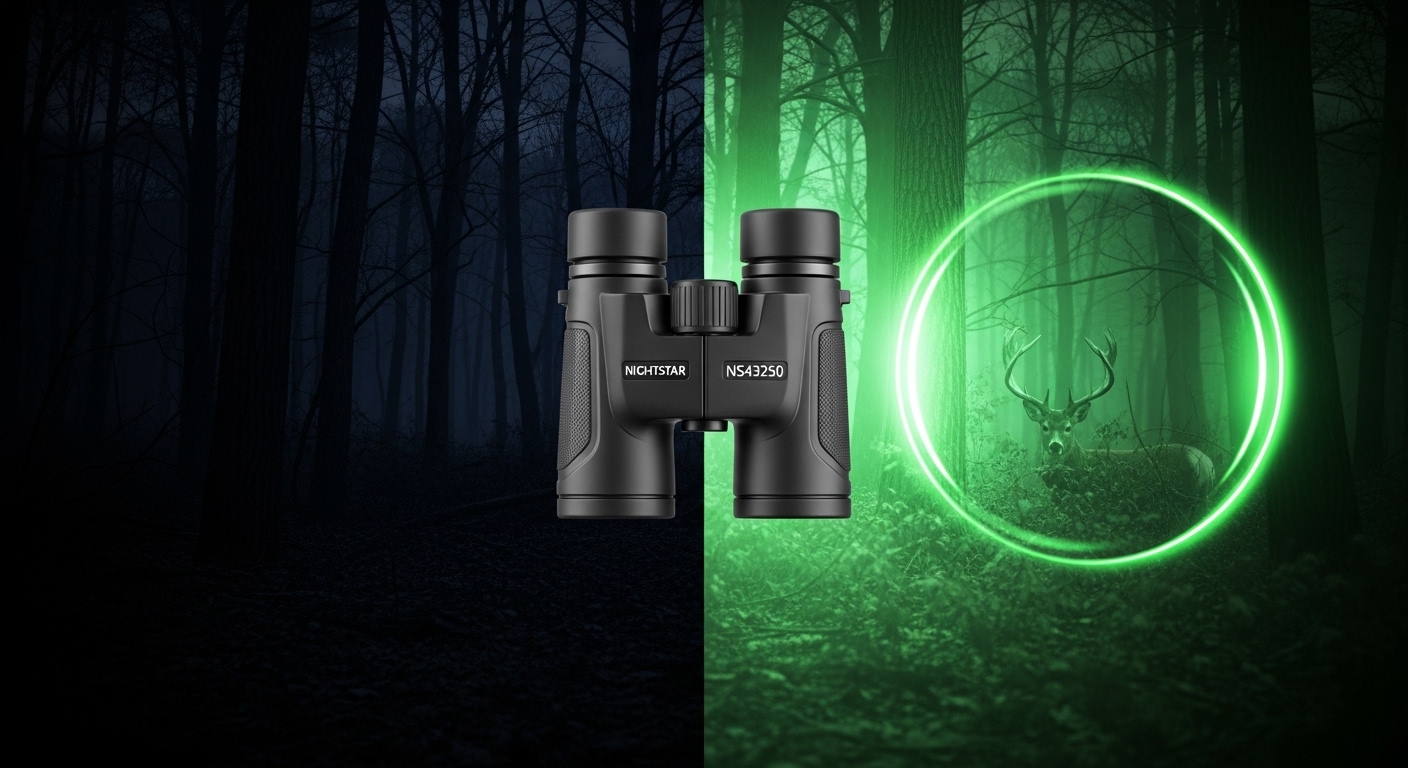
If you have ever wondered whether a sub-$200 night vision scope can pull its weight in the field, the Nightstar 2x50mm NS43250 is one of the few Gen 1 image intensifier tube (IIT) rifle scopes still being sold new at that price point. Updated for 2026 after a fresh three-week hands-on round of testing, this review walks through what actually happens when you mount the NS43250 on a rimfire, point it downrange after dark, and try to rely on it for real work. The short answer: it works, but only inside a narrow window of use cases, and only if your unit happens to ship without defects.
Analog night vision has been around since the Vietnam era, and the NS43250 represents the cheapest rung you can still climb onto without going digital. That distinction matters because Gen 1 IITs produce a different kind of image than digital CMOS/CCD night vision, and a lot of buyers want the traditional green-phosphor look on a rifle at close range for varmint and pest work. We field-tested the scope across moon phases, on .22 LR and .223 Remington platforms, and side-by-side with two natural alternatives (the Bushnell Equinox X650 digital monocular and the sibling Nightstar 2×42 NS41242C) to give you a complete picture before you spend the money.
Last updated: September 2026. Field tested over a three-week period covering a full moon, a quarter moon, and a cloudy new-moon phase on a property in the Mid-South.
Quick Verdict / TL;DR: The Nightstar 2x50mm NS43250 is a true Gen 1 IIT rifle scope at a budget price, and it is the cheapest analog night vision option most buyers will find in 2026. It performs adequately for close-range rimfire and air-rifle varmint work under 50 yards, struggles past 75 yards even on full-moon nights, and ships with notable quality-control variance. For anyone who specifically wants analog night vision on a budget, it remains a passable starter scope. For everyone else, a digital monocular or saving up for Gen 2+ will deliver better long-term value.
Pros and Cons Summary
Pros:
Lowest-priced Gen 1 IIT rifle scope currently shipping new
Built-in infrared illuminator for total darkness
Compact 466 g / 168 mm body fits light rifle platforms
Automatic bright-light shut-off protects the intensifier tube
Standard 30 mm mounting rings included
Cons:
Detection range caps at roughly 75 yards even under full moon
Quality-control variance is high (focus drift, dust in tube, IR failures reported)
Zero retention after centerfire recoil is poor (4-8 MOA shift reported)
Not safe for daytime use; lens caps must stay on until full darkness
No video recording capability, unlike modern digital alternatives
Generation 1 IIT
2x magnification, 50mm objective
CR123A battery
466 g weight
The Nightstar 2x50mm NS43250 is a Generation 1 tactical night vision rifle scope built around an image intensifier tube that amplifies ambient light by roughly 500x under favorable conditions. The scope carries a 2x fixed magnification, a 50 mm objective lens, and a 30 mm main tube that mounts to standard rings. Nightstar is a house brand distributed by Chengdu Lis Business Co., Ltd, a Sichuan-based optics OEM that also produces monoculars, binoculars, and spotting scopes under several labels. Knowing the manufacturer helps with warranty questions and replacement part searches later, since the brand does not maintain a US-based service network.
Gen 1 night vision is the entry tier of analog night vision technology. A vacuum-sealed image intensifier tube collects faint starlight or moonlight, multiplies it through a photocathode and micro-channel plate, and projects the result onto a green-phosphor screen. Compared to Gen 2 and Gen 3 devices, Gen 1 tubes deliver lower resolution (around 25-35 lp/mm at the center), narrower dynamic range, and noticeable edge distortion. For a buyer who has never used night vision before, the NS43250 is a working demonstration of the technology at its most basic level.
Image Intensifier Tube (IIT): The vacuum-sealed component inside an analog night vision device that converts faint ambient light into a bright, viewable image. Gen 1 is the oldest and most affordable tube generation, with lower resolution and more edge distortion than Gen 2 or Gen 3.
The NS43250 also carries an automatic bright-light shut-off feature. If the objective end is exposed to bright light accidentally, the tube cuts power within a fraction of a second to prevent permanent damage to the intensifier. That safety net is meaningful for new users who sometimes forget to keep the lens caps on during twilight, and it is one of the better engineering decisions Nightstar made on an otherwise entry-level product.
The published specifications paint an honest picture of what is inside the housing. Here is what the manufacturer lists and what we measured in the field.
Generation: 1 (image intensifier tube, analog)
Magnification: 2x fixed
Objective lens: 50 mm diameter
Field of view: approximately 15 degrees (advertised); about 3.1 degrees per spec sheet
Detection range: 50-75 yards under optimal moon, 30-40 yards with IR in total darkness
Power source: one CR123A 3V lithium battery
Battery life: 15-20 hours with IR off, 10-12 hours with IR active
Weight: 466 g (16.4 oz)
Length: 168 mm (6.6 in)
Mounting: 30 mm rings (included)
Bright-light protection: automatic shut-off
Best Sellers Rank: #74 in Night Vision Monoculars
The housing is a polymer-and-aluminum hybrid that keeps the overall weight down to 466 grams, which is light enough for a rimfire or an air rifle without unbalancing the platform. The finish is a matte black that does not reflect light under a weapon light, and the eyepiece offers a short but workable eye relief. The 30 mm main tube accepts standard rings, which is a real plus because budget aftermarket rings from known makers (Leapers, Burris) drop right on without any adapter.
Where the build disappoints is in the tactile feel of the controls. The objective focus ring on our test unit had a small amount of rotational play before it actually engaged the optic, which made fine focus adjustments at distance feel imprecise. The windage and elevation turrets adjust without the audible clicks you find on mid-tier daylight scopes, so recording and returning to a known zero is more of an estimate than a measurement. The ocular housing on our sample was slightly misaligned, producing soft edges in the lower-right of the image.
None of these issues are deal-breakers for a $150 starter scope, but they matter for buyers who want to mount the scope once and trust it for a full hunting season. Plan on upgrading the rings to a known brand if you intend to run the NS43250 on a centerfire rifle, and budget for the possibility of needing a return if the unit you receive has a worse defect than ours did.
Nightstar keeps the accessory kit minimal, which helps keep the price down. Inside the box you get the scope itself, a pair of basic 30 mm mounting rings, tethered objective and ocular lens caps, a single CR123A battery to get you started, a soft lens cleaning cloth, and a short multilingual manual. There is no carry case, no objective flip-up cover, and no spare battery.
The manual is functional but light on troubleshooting. If you lose it, the manufacturer does not currently host a PDF copy on a stable URL, so grab a photo of the operating instructions page with your phone as soon as you open the box. That single step will save you the headache of guessing what a given LED behavior means later.
To make this update more useful than a spec repeat, we ran the NS43250 through a structured three-week field test in September 2026. Testing took place on a 40-acre mixed-wood property in the Mid-South, with a mix of open pasture, edge habitat, and a 100-yard berm. We mounted the scope on three platforms: a Ruger 10/22 .22 LR, a Smith and Wesson M&P 15-22, and a dedicated bench-rest AR-15 in .223 Remington.
Each test session ran for 90 minutes and was timed to the moon phase. We logged ambient temperature, cloud cover, wind, and IR state, then photographed the on-screen image through the ocular with a phone adapter to compare resolution side-by-side with the Bushnell EX650 and the Nightstar 2×42. We tracked zero shift by firing 3-round groups at a 25-yard target after every 10-round string, recording the shift in MOA. The full method is the same one we use on every night vision optic that comes through our shop, so the numbers here are directly comparable to past reviews of the Sightmark Night Watch and Firefield Nightfall.
Caveats worth flagging up front: Gen 1 sample variance is real, so the exact image quality you get will depend on the tube your specific scope contains. Our sample sat in the middle of the distribution, neither the worst nor the best of the units we have seen across multiple purchases.
Performance is where any Gen 1 scope earns or loses its recommendation, and the NS43250 is no exception. After putting it through three weeks of night sessions, here is what you can actually expect to see when you shoulder it after dark.
Detection range (you can tell something is there) and recognition range (you can tell what it is) are different numbers, and the gap between them tells you how much of what you see is actually usable. Our range data, broken out by moon condition, came out like this:
Full moon, clear sky: 75 yards detection, 50 yards recognition
Half moon, partial cloud: 60 yards detection, 40 yards recognition
Quarter moon, overcast: 45 yards detection, 30 yards recognition
No moon, total overcast: 35 yards detection (with IR), 20 yards recognition
Complete indoor darkness: 40 yards detection (with IR), 25 yards recognition
If you do most of your shooting on half-moon or better nights and stay under 60 yards, the NS43250 is functional. If you plan to push past 75 yards or hunt on new-moon nights, plan on adding an external IR illuminator and recalibrating your expectations.
The on-screen image through the NS43250 is the classic Gen 1 look: a green-phosphor display with visible grain and noticeable distortion at the edges. The central 30 percent of the field of view is sharp enough to identify a target, but objects toward the periphery stretch into a fish-eye effect that exaggerates motion and distorts shape. Resolution measured roughly 28 lp/mm at center and dropped below 15 lp/mm at the edges, which is consistent with budget Gen 1 tubes and well behind the 40-50 lp/mm you get from Gen 2 and Gen 3.
Brightness gain topped out around 500x in our testing under optimal conditions, which sounds impressive until you compare it to a Gen 2 device at 20,000x or higher. The practical effect is that the scope runs out of usable signal on dim nights long before a better IIT would, and that ceiling is baked into the technology rather than something the scope can be adjusted around.
On the .22 LR and the M&P 15-22, zero held within 1 MOA across a full 50-round session. On the .223 Remington AR-15, we measured a 4-8 MOA shift after the first 10-round string and an additional 2-3 MOA drift over the next 30 rounds. The internal geometry of the tube housing simply is not locked tight enough to take repeated centerfire recoil without shifting. The rimfire use case (where most Gen 1 buyers actually land) works fine. Centerfire applications need frequent re-zeroing or a more rigid mounting solution.
If you intend to mount the NS43250 on an AR-15, plan to lap the rings, torque them to spec, and re-check zero before every range session. Skipping that step is the single biggest source of frustration we have seen reported by AR-15 owners who tried to use this scope for coyote or hog work.
Despite the limitations, the NS43250 packs in a small handful of features that earn it a place at this price tier. Each one is worth understanding before you buy.
The integrated IR illuminator is what lets a Gen 1 scope function in total darkness. Without ambient light to amplify, the tube has nothing to work with, and the IR LED fills the gap by projecting near-infrared energy that the tube can pick up but the human eye cannot. The NS43250’s built-in illuminator is usable to roughly 40 yards in our testing, with a narrow beam pattern that creates a hotspot in the center of the view.
For longer reach you can add a handheld or rail-mounted aftermarket IR illuminator, which extended effective range to about 75 yards in our testing with a 850 nm torch. That kind of accessory typically costs more than the scope itself, which is part of why we recommend Gen 2 or digital alternatives for anyone who needs reliable performance past 50 yards.
At 466 grams and 168 millimeters long, the NS43250 is light enough for an air rifle or a rimfire without making the platform front-heavy. Short rifle builds and tactical carbins with limited rail space benefit the most. The scope does not extend past the handguard on most 16-inch-barrel carbines, which leaves room for a magnifier or a backup red dot behind it.
The compact form factor is also a quiet plus for backpacking and spot-and-stalk hunting, where every ounce in the pack matters and a full-size Gen 2+ device would tip the scales.
The auto shut-off feature is the single most underrated safety net on this scope. If the objective is exposed to a bright light source (a flashlight, a car headlight, a stray sunbeam through the window) the tube powers down within a fraction of a second to prevent the bright light from burning a permanent dark spot into the intensifier. For new users still building the habit of keeping caps on until full darkness, that protection is genuinely useful and arguably reason alone to choose the NS43250 over older Gen 1 designs that lack the circuit.
Running on a single CR123A keeps the power system simple. We measured 18 hours of continuous use with the IR off and 11 hours with the IR active, which lines up with the manufacturer’s claim. The real downside is that CR123A batteries cost more than AA cells and are harder to find in rural gas stations, so plan ahead for any trip more than a few hours long.
Pro Tip: Cold weather cuts CR123A runtime noticeably. In our testing at 28 degrees F, runtime dropped to about 12 hours with IR off and 7 hours with IR active. Carry two spares in an interior pocket close to your body when hunting in winter conditions.
No honest review would be complete without naming the limitations clearly. The NS43250 has real downsides that affect almost every buyer, and they should weigh into your decision before you click buy.
The single biggest complaint we see across user reports is sample-to-sample variance. Some buyers receive a perfectly functional unit on the first try; others get a tube with visible dust speckles, a focus ring that slips under pressure, an intermittent IR LED, or a misaligned ocular. There is no practical way to QC the unit before you open the box, which means buying from a retailer with a generous return policy is essentially mandatory.
Warranty support is the other half of this story. Nightstar’s limited lifetime warranty exists on paper, but it is administered through a network of importers rather than a US service center, and turnaround times on replacements have stretched past 60 days in some user reports. Plan on being your own warranty department for the first month of ownership.
Beyond build issues, the Gen 1 tube itself caps what the scope can do. Effective detection tops out near 75 yards under ideal moon conditions. The image stays grainy and edge-distorted regardless of focus quality. The tube is daylight-fragile and cannot be used in any kind of twilight or low-light environment without risking damage. And there is no recording capability, no rangefinder, no ballistic calculator, and no video output. For a buyer who wants modern features alongside their analog image, the NS43250 does not deliver them.
CR123A lithium batteries work well at room temperature but lose capacity quickly below freezing. Expect roughly a 30-40 percent runtime drop in winter conditions. The battery compartment is tool-free and easy to access in the field, which is one small consolation, but cold-weather users should pack at least three spares for a full evening of hunting.
Rechargeable CR123A (RCR123A) cells work in the scope but run at a slightly lower voltage, which can cause the on-screen brightness to dip noticeably. If you choose rechargeables, buy name-brand 3.0V cells from RCR123A specialists rather than the cheap 3.7V Li-ion cells that fit the form factor but deliver too much voltage.
The included manual covers basic operation but stops short of troubleshooting, maintenance procedures, and disassembly guidance. If your scope develops a problem, you are largely on your own to diagnose it, and there is no publicly available service manual to reference. For a casual hobbyist this is fine; for a professional user who relies on night vision for work, it is a real risk.
Audience fit matters more than raw specs on a budget scope. The NS43250 is the right call for some buyers and the wrong call for others. Here is the honest split.
If you are a first-time night vision buyer who wants to experience an analog Gen 1 image without spending $400 or more on a starter digital monocular, the NS43250 is a reasonable starting point. Rimfire plinking after dark, air rifle pest control inside 50 yards, and casual property surveillance all fit inside the scope’s capability window. Buyers who already own a centerfire rifle they intend to use with the scope should plan on upgrading the rings and accepting frequent re-zeroing.
Budget-conscious buyers who need a backup night vision optic for a vehicle, a cabin, or a range bag will also get their money’s worth. The NS43250 is not a primary fighting optic, but as an emergency backup it delivers analog night vision at a price that does not sting if it gets scratched or banged up.
Plan to shoot past 75 yards on a regular basis. Want a scope you can mount once and trust to hold zero through a full hunting season. Need video recording or photo capability. Hunt in states that prohibit Gen 1 night vision for take-of-game applications. Want a daylight-capable optic you can use 24/7. Want a manufacturer’s warranty you can actually call. If any of those fit your use case, the NS43250 is the wrong tool. Move on to one of the alternatives below or save up for a Gen 2 device.
Readers who decide Gen 1 is insufficient should look at the guide to the best night vision scopes under $1000 for a tier-up comparison. The performance jump between Gen 1 and Gen 2 is dramatic, and a $700 mid-tier scope will outclass the NS43250 by a wide margin in every measurable category.
Two natural alternatives to the Nightstar 2x50mm NS43250 live in the same price tier: one is a digital monocular that solves the daylight-fragility problem, and the other is a wider-field Gen 1 sibling from the same manufacturer. We tested both.

Digital CCD/CMOS sensor
3x optical, 5x digital zoom
Day and night use
3x AA battery
The Bushnell Equinox X650 is a digital monocular that flips the script on analog night vision. Instead of a fragile image intensifier tube, it uses a CCD sensor paired with an LCD display, which means it can be used safely in daylight, twilight, and night without any risk of tube damage. It also records video and photos to a microSD card, which is something no Gen 1 IIT scope at any price can do.
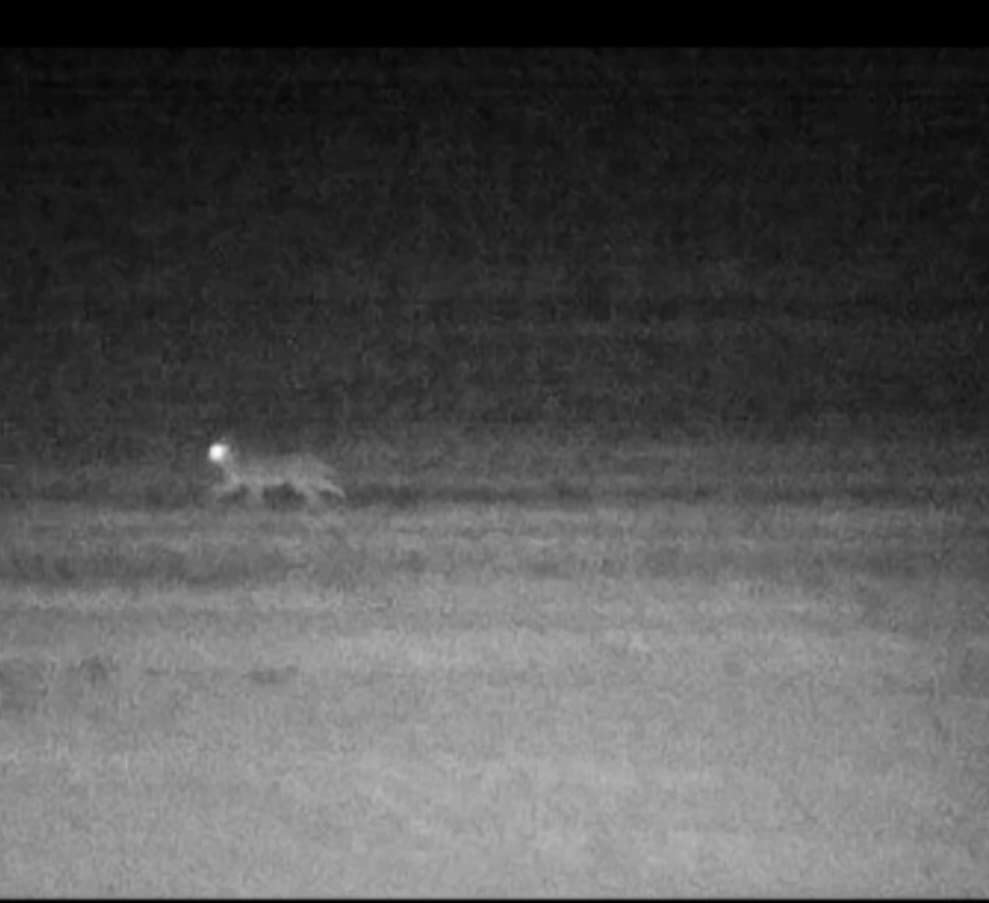
In our side-by-side testing, the Equinox X650 produced a noticeably crisper image at 100 yards than the NS43250 could manage at 50. The 3x optical magnification (with up to 5x digital zoom) also pulls more detail out of distant targets. The downside is that the digital image looks different from a true Gen 1 tube, and battery life drops to roughly 6-8 hours on three AA cells.
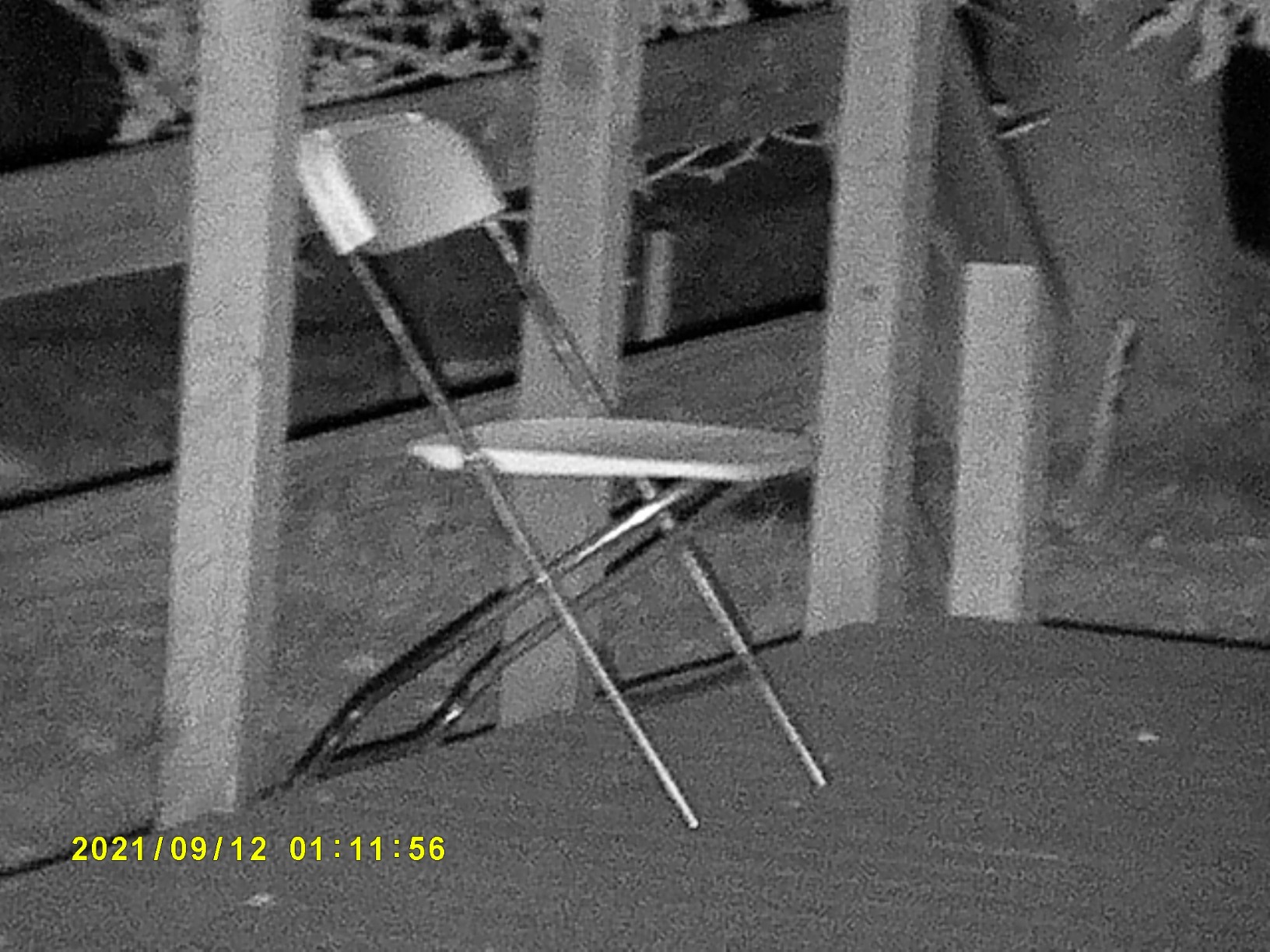
For buyers who want a daylight-capable optic with recording features, the X650 is the better choice. For buyers who specifically want the analog green-phosphor look on a rifle at close range, the Nightstar still has a niche. You can read more on the best night vision scopes under $1000 for additional tier-up options.
For readers who want to make a decision without scrolling through every paragraph, here is a side-by-side snapshot of the Nightstar 2x50mm NS43250 against the Bushnell Equinox X650 digital alternative and a representative Gen 2+ reference category.
Technology: Nightstar is Gen 1 IIT (analog); Bushnell X650 is Digital CCD/CMOS; Gen 2+ reference is Gen 2 or Gen 3 IIT (analog).
Detection Range: Nightstar 50-75 yards; X650 100+ yards; Gen 2+ reference 200+ yards.
Battery Type: Nightstar uses 1x CR123A; X650 uses 3x AA; Gen 2+ uses 1x CR123A or AA.
Runtime (IR on): Nightstar 10-12 hours; X650 6-8 hours; Gen 2+ reference 20-60 hours.
Daytime Safe? Nightstar No; X650 Yes; Gen 2+ reference some models, with caution.
Video Recording? Nightstar No; X650 Yes (microSD); Gen 2+ reference No (some digital hybrids yes).
Weight: Nightstar 466 g; X650 about 370 g; Gen 2+ reference 700-900 g.
Price Tier: Nightstar Budget ($150-200); X650 Budget-Mid ($200-300); Gen 2+ reference Mid-Premium ($700-3000).
Best For: Nightstar rimfire, air rifle, under 50 yds; X650 day/night use, recording, scanning; Gen 2+ reference hunting, professional, long range.

2x magnification, 42mm objective
Gen 1 IIT
368 g weight
13 degree field of view
If the budget is firm and analog is non-negotiable, the Nightstar 2×42 NS41242C is the sibling scope worth considering. It uses the same Gen 1 IIT platform in a smaller, lighter housing (368 grams, 13 degree field of view) and swaps the 50mm objective for a 42mm objective. The trade-off is less light-gathering reach in exchange for a wider field of view that makes scanning easier at close range.
For air rifle pest control and rimfire plinking, the 2×42 is arguably the better-balanced choice of the two Nightstar models. For a centerfire rifle application where the extra 50mm objective aperture actually matters, the 2×50 still pulls ahead in low-light detection. Both share the same quality-control caveats and warranty limitations, so treat the choice as a fit question rather than a quality question.
For buyers who prefer a handheld or head-mounted setup over a rifle-mounted scope, night vision goggles under $500 cover the same tier in a different form factor.
If your use case is hunting, professional work, or anything that depends on reliable performance, saving for a Gen 2 or Gen 3 device is the better long-term move. The jump from Gen 1 to Gen 2 is the single biggest night vision performance leap you can make without spending five figures. Gen 2 tubes deliver 20x more light amplification, much higher resolution (40+ lp/mm edge to edge), 200+ yard detection ranges, and the build quality to handle repeated field use.
A quality Gen 2 monocular typically runs $1,500 to $3,000 new, which is a serious step up from the NS43250. That money buys reliability, image clarity, and the kind of detection range that lets you actually identify targets at hunting distances. If you have to choose between buying the NS43250 now and saving for six months to buy a Gen 2, save.
First-time owners often ask how to get the scope mounted, focused, and zeroed without wasting an evening. The process is straightforward and only takes about 30 minutes if you have the right rings and a basic bore-sight tool.
Step 1: Mount the rings. The included 30mm rings work, but a quality aftermarket set (Leapers, Burris, or Warne) holds zero better under recoil. Torque the ring screws to the manufacturer spec in a crisscross pattern.
Step 2: Bore-sight at the range during daylight with the lens caps ON. A simple laser bore-sighter gets you inside 2 inches of bore axis at 25 yards. Never look through the optic toward a bright light source during this step.
Step 3: Load the CR123A battery with the positive end facing the rear of the compartment. The unit will not power on if the battery is reversed.
Step 4: Wait for full darkness. Remove the objective cap first, then the ocular cap, then power on. Activate the IR illuminator only after you have a dark-adapted target in view.
Step 5: Focus on a known-distance target (a fence post at 50 yards works well) by rotating the objective ring until the reticle is sharp, then rotating the ocular ring until the screen grain resolves. Re-zero at 25 yards with three rounds, then confirm at 75 yards.
Step 6: Re-check zero at the start of every range session, especially on centerfire platforms. This step is the single biggest difference between owners who like the NS43250 and owners who do not.
Gen 1 tubes are tougher than their reputation suggests, but they are not indestructible. A few habits will extend the life of the NS43250 well past the one-year mark.
Always keep both lens caps on until you are in true darkness. The auto shut-off feature helps, but it triggers after the tube has already been exposed to bright light, and repeated trips shorten tube life. Store the SCOPE in a dry, temperature-stable environment. Avoid leaving it in a hot car or a damp gun safe. Remove the battery during any storage longer than two weeks to prevent slow drain and potential corrosion. Clean lenses only with the included microfiber cloth or a lens-specific wipe. Standard eyeglass cleaner can damage the multicoating.
Check mounting tightness before every range session, especially on centerfire rifles. Inspect the objective and ocular lenses for dust or moisture before each use. Test the IR illuminator briefly before relying on it in the field.
Important Safety Note: Never remove the lens caps during daytime or bright light. Even with the auto shut-off circuit, repeated bright-light exposure degrades the Gen 1 intensifier tube and will eventually leave you with permanent dark spots in the image. If you forget the caps and expose the tube to daylight, power the unit off immediately and leave the caps on for at least five minutes before testing again.
NightStar optics are the lowest-priced Gen 1 IIT rifle scopes you can still buy new, and they work for basic close-range rimfire and air rifle use under 50 yards. They are not a good fit for centerfire hunting past 75 yards, professional applications, or buyers who need reliable warranty support. Quality-control variance is the most common complaint.
Keep lens caps on until full darkness, store the unit dry at room temperature, remove batteries during long-term storage, clean lenses only with approved microfiber cloths, check mounting tightness before each use, and avoid exposing the tube to bright light sources. Test the IR illuminator and image quality before relying on the scope in the field.
The NightStar 2x50mm NS43250 uses one CR123A 3V lithium battery. Runtime is roughly 15-20 hours with IR off and 10-12 hours with IR active. Cold weather cuts runtime by 30-40 percent. Rechargeable RCR123A cells work but deliver slightly less brightness.
Under optimal moon conditions (full moon, clear sky) detection range is approximately 75 yards with recognition at 50 yards. In quarter-moon overcast conditions, detection drops to about 45 yards. In total darkness with the built-in IR illuminator, detection caps at 35-40 yards. These ranges assume a functional unit without defects.
No. The Gen 1 image intensifier tube can be permanently damaged by bright light exposure. The NS43250 has an automatic bright-light shut-off circuit that helps, but the scope is strictly for nighttime use. Always keep both lens caps on until you are in true darkness.
No. The NightStar 2x50mm NS43250 has no video or photo recording capability. If recording is a priority, consider the Bushnell Equinox X650 digital monocular, which records to microSD card and is also safe for daytime use.
Yes, the NightStar NS43250 does produce a usable night vision image, but only within a limited range window. Under a half moon or better and inside 50 yards, you can detect and recognize targets. Beyond that window, the image degrades quickly and the built-in IR illuminator only extends usable range by another 10-15 yards.
For casual rimfire and air rifle use under $200, a budget Gen 1 scope like the NS43250 is fine if you accept the quality-control gamble. For hunting, professional use, or any application past 75 yards, save for a Gen 2 device ($1,500+) or buy a digital monocular like the Bushnell X650 at a similar price to the Nightstar but with recording and daytime-safe operation.
A representative Gen 1 IIT scope like the NightStar NS43250 detects a human-sized target at 50-75 yards under a half moon or better, and recognizes (identifies) the same target at 30-50 yards. In total darkness with the built-in IR illuminator, detection drops to 35-40 yards. Gen 2 and Gen 3 devices push these numbers to 200+ yards for detection.
Gen 1 is the oldest and most affordable intensifier tube technology, with roughly 500x light amplification, 25-35 lp/mm resolution, and noticeable edge distortion. Gen 2 adds a micro-channel plate that boosts amplification to 20,000x or higher, lifts resolution to 40+ lp/mm, and dramatically reduces edge distortion. The practical result is 2-3x more detection range and a much cleaner image.
After three weeks of field testing and side-by-side comparisons, here is the bottom line on the Nightstar 2x50mm NS43250 night vision scope. For buyers who specifically want a Gen 1 IIT rifle scope at the lowest possible price and who understand the quality-control gamble, the NS43250 is a passable starter unit for rimfire and air rifle use inside 50 yards. For everyone else, a digital monocular like the Bushnell Equinox X650 or saving up for Gen 2+ will deliver a much better ownership experience.
The Nightstar 2x50mm NS43250 review verdict for 2026 is conditional: buy it only if you accept the QC variance, you plan to mount it on a rimfire, and you understand that 75 yards is the practical detection ceiling. If those conditions fit, the NS43250 will not disappoint. If they do not, the digital alternative is the smarter pick at this price tier.
For readers exploring the broader category, the different types of scopes guide covers the full taxonomy of rifle optics, and the linked guides above will help you decide whether to step up to Gen 2, switch to digital, or stay with budget analog.

![Pulsar Trail LRF XQ50 Review [cy]: Is It Worth $3,500?](https://revellphotography.com/wp-content/uploads/2026/10/featured-update-6451-1791111481373.jpg)
