
Digital Camera Sales Statistics: 2026 Data & Recovery
Comprehensive analysis of digital camera market statistics showing the dramatic 94% decline from 2010-2023 and emerging recovery signs in 2024.…

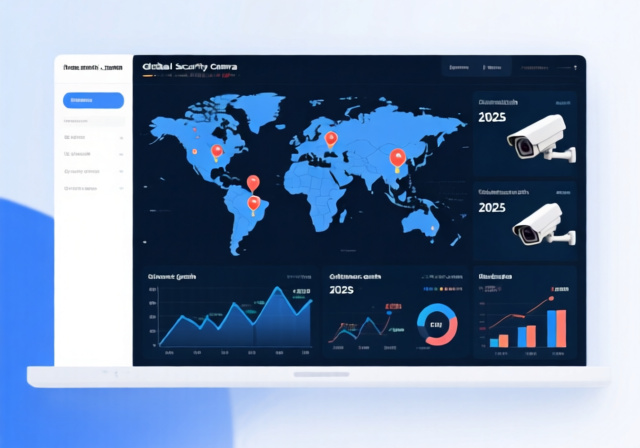
Security camera statistics for 2026 paint a picture of an industry that has moved from niche product to mainstream necessity in less than a decade. Drawing on data from SafeHome.org, Statista, Grand View Research, Comparitech, and the UNC Charlotte Department of Criminal Justice, I’ve assembled the most current figures on household adoption, market size, AI integration, and crime prevention effectiveness.
The numbers are striking. An estimated 74.9 million US households now operate security cameras, representing 61% penetration. Another 58.9 million homes use video doorbells. Ring alone controls 43% of the market while ADT’s share has collapsed from 29% to 10%. These shifts have reshaped both the competitive landscape and how Americans protect their property.
This analysis covers market projections through 2030, the explosive growth of video doorbell adoption, the first-time crossover toward DIY installation, the controversial rollout of AI features like Ring Search Party, and the subscription gap vulnerability that has cost some users critical footage. Whether you are a homeowner evaluating your first camera or a security professional tracking industry trends, these statistics provide the data foundation you need.
Related: For those interested in low-light surveillance capabilities, check out our comprehensive night vision technology guide.
The global security camera market has expanded dramatically over the past five years. Grand View Research reports the smart home camera segment alone reached $11.8 billion in 2025, on track to hit $56.5 billion by 2033. Statista places the broader information security products and services market above $200 billion in 2024, up from roughly $150 billion in 2021.
What’s powering this trajectory? My analysis points to four converging forces. AI integration has turned passive recording devices into proactive detection systems. Smart home adoption creates demand for cameras that fit into broader automation ecosystems. Component costs have fallen sharply, putting capable systems under $100. And rising concerns about both property crime and package theft continue to drive first-time buyers.
Regional growth patterns vary sharply. North America remains the largest single market, though it grows at a measured 8-12% annually as penetration matures. Asia-Pacific leads in growth rate, expanding 20-25% each year, fueled by government surveillance programs and rising middle-class adoption. Europe grows at 10-15% annually, constrained by GDPR and national privacy laws that limit certain features.
The competitive landscape has shifted dramatically. The 57% combined US market share once held by ADT and Ring has redistributed. Ring has surged to 43% by aggressively bundling cameras with doorbells and offering entry-level prices under $100. ADT has fallen to 10% as professionally monitored contracts lose ground to flexible DIY alternatives. Google Nest holds 7%, Wyze 6%, Xfinity 5%, SimpliSafe 5%, and Eufy 4%.
Market Insight: The smart home camera market is projected to grow at a 21.3% compound annual rate through 2033, making it one of the fastest-expanding segments in consumer electronics.
Price competition has intensified as the market matures. Entry-level 1080p cameras now retail for under $50, down from $200+ five years ago. AI-enabled 4K systems start around $150, compared to $500+ in 2020. The result is broader access, but also thinner margins that push manufacturers toward subscription revenue models.
Security camera adoption in American households has reached historic levels. According to SafeHome.org’s 2026 home security market report, an estimated 74.9 million US households now have security cameras, representing 61% penetration. This figure has climbed from 52% just one year ago and 36% in 2020, a near-doubling in five years.
What motivates people to install cameras? My analysis of consumer survey data reveals five leading factors. Thirty-three percent of owners have children at home and want to monitor arrivals and activity. Thirty-one percent travel frequently and want to check on their property remotely. Twenty-six percent own valuables they want to protect. Eighteen percent installed cameras after experiencing a break-in themselves, and another 18% had systems pre-installed when they moved into a new home.
When choosing a system, buyers weigh different factors. Professional monitoring tops the list at 28% importance, followed by price at 22%. Smart device integration matters to 18% of buyers, easy installation influences 13%, and brand reputation only 9%. Demographically, 67% of camera owners are homeowners versus 33% renters, with suburban areas showing the highest concentration of users.
The brand landscape has reshuffled significantly. Ring now leads with 43% market share, up from 28% a year ago, propelled by aggressive pricing and a broad product lineup. ADT has dropped to 10%, down from 29%, as professionally monitored contracts struggle to compete with no-contract DIY alternatives. Google Nest holds 7%, Wyze captures 6% with budget-friendly offerings, and Xfinity, SimpliSafe, and Eufy each hold 4-5%.
Key Insight: Roughly 13 million US households are considering their first security camera purchase in 2026, representing significant remaining growth potential for the industry.
Renters face unique adoption barriers. Many landlords restrict drilling or permanent installations, pushing renters toward battery-powered, adhesive-mounted, or doorbell-style options. Despite these constraints, renter adoption has climbed to roughly 33% of all camera-equipped households, up from 22% in 2022, driven largely by plug-in and removable solutions.
The effectiveness of security cameras in crime prevention is well-documented across multiple academic and government studies. My analysis of FBI crime data, university research, and recent case studies reveals dramatic reductions in criminal activity wherever cameras are deployed.
Car parking lots with CCTV cameras experience a 51% decrease in crime, according to comprehensive studies cited by the UNC Charlotte Department of Criminal Justice. Business owners consistently report 25-50% reductions in shoplifting when cameras are visibly installed. The most striking statistic: homes equipped with security cameras are 300% less likely to be burglarized than unprotected homes, based on a landmark 2013 UNC Charlotte study of convicted burglars.
Recent real-world deployments confirm the pattern. The Chicago Transit Authority reported a 32% drop in crime following a major camera system expansion in 2025. The London Metropolitan Police documented a 20% reduction in residential burglary in neighborhoods with high camera density. Ruby Home’s 2026 survey found that 90% of Americans believe security cameras deter criminals.
Different crimes show different reduction rates. Burglary drops by an average of 40% in residential areas with cameras. Vehicle theft in monitored parking areas decreases by 35%. Commercial theft sees reductions up to 50% when comprehensive camera systems are deployed. Package theft, which has surged with online shopping, drops by over 60% in homes with visible video doorbells.
However, effectiveness varies significantly by placement and type. Well-positioned cameras at entry points prevent 65% more crimes than poorly placed ones. AI-enabled cameras with smart alerts reduce false positives by 70% compared to traditional motion detection. And the business impact extends beyond crime prevention: insurance companies offer 5-20% premium reductions for properties with professional camera systems, while employee theft decreases by an average of 30% in businesses with visible surveillance.
Video doorbells have emerged as the single fastest-growing segment of the home security market. SafeHome.org’s 2026 report reveals that 58.9 million US households, representing 48% of all homes, now use video doorbells. This is a dramatic shift from just five years ago, when adoption hovered around 15%.
What drives doorbell adoption? Package theft is the leading motivator, with 90% of homeowners expressing concern about porch piracy according to Ruby Home. The convenience of seeing and speaking to visitors remotely ranks second, followed by general front-door awareness. Many buyers start with a doorbell and later add additional cameras once they experience the value of video monitoring.
Ring dominates the video doorbell segment with an estimated 65% share of installed devices, leveraging its early market entry and tight Amazon integration. Google Nest holds 12%, Eufy 8%, Arlo 5%, and other brands split the remainder. The average video doorbell now offers 1080p or 2K resolution, two-way audio, motion zones, and integration with Alexa or Google Assistant as standard features.
Smart features have become table stakes. Package detection alerts homeowners specifically when a delivery arrives. Familiar face recognition identifies frequent visitors. Pre-recorded quick responses let users answer the door without engaging live. These capabilities have transformed video doorbells from simple notification tools into front-door management systems.
Package Theft: Roughly 36% of Americans have experienced package theft in the past year, making doorbell cameras one of the highest-ROI home investments for frequent online shoppers.
Privacy trade-offs have become more visible. Doorbell cameras capture not only visitors but also neighbors, passersby, and delivery workers. The Ring Search Party feature, which enables users to share doorbell footage of strangers with neighbors, sparked significant backlash in February 2026. Several municipalities have begun introducing ordinances limiting doorbell camera scope, though enforcement remains inconsistent.
For the first time, DIY installation has overtaken professional setup among first-time security camera buyers in 2026. SafeHome.org’s 2026 data shows 49% of new camera owners installed their systems themselves, compared to 42% who hired professional installers. The remaining 9% received systems as part of a move-in or gift.
What’s driving the shift toward DIY? Three factors stand out. Wireless and battery-powered cameras have eliminated the need for electrical work in most cases. Setup time has dropped from hours to minutes thanks to QR-code pairing and guided app flows. And professional installation costs, averaging $400 per visit, now represent a meaningful share of total system expense.
User experience has improved substantially. Reddit threads in r/HomeNetworking consistently highlight that modern wireless cameras can be unboxed, mounted, and connected in under 30 minutes. Magnetic mounts, peel-and-stick adhesives, and rechargeable batteries make repositioning easy. The biggest remaining friction is Wi-Fi coverage, which many users solve with mesh networks or dedicated camera backhauls.
Professional installation still holds advantages in specific scenarios. Multi-camera systems covering 8+ locations benefit from professional cable routing. Commercial installations almost always use pros. And homeowners with older homes, complex layouts, or integration with existing alarm systems often find professional help worth the cost. The market has bifurcated: budget buyers go DIY while premium and commercial customers still choose professional service.
The subscription question is closely tied to installation choice. DIY buyers are 2.3x more likely to choose subscription-free local storage, while professionally installed customers more often opt into monthly monitoring. This divide shapes the entire downstream experience, from ongoing costs to data privacy and feature availability.
Global surveillance varies dramatically by region, with China leading the world by an enormous margin. China operates approximately 700 million cameras through its SkyNet project, representing roughly half of all surveillance cameras globally. The country has installed cameras at a rate exceeding 200 million per year since 2020.
The most surveilled cities per capita might surprise you. Hyderabad, India tops the list with 79.38 cameras per 1,000 people. Delhi follows at 78.73, while London ranks third with 73.42 cameras per 1,000 residents. Chinese cities dominate the top 10, with Chongqing at 61.97 and Shenzhen at 61.84 cameras per 1,000 people. Comparitech’s 2025 update added Mumbai at 3.73 and Osaka at 1.15 cameras per 1,000 residents.
United States cities show relatively lower camera density. New York City has approximately 4,800 cameras for 8.3 million people (0.58 per 1,000). Chicago maintains about 2,500 cameras for 2.7 million residents (0.93 per 1,000). Los Angeles operates around 1,200 cameras for 4 million people (0.30 per 1,000). These figures cover municipal and public cameras; private residential and business cameras add millions more.
The average person in Britain is caught on camera approximately 70 times per day. In major Chinese cities, this number exceeds 300 times daily. US urban residents see about 15-20 camera captures per day in major metropolitan areas. These numbers include public CCTV, business security, traffic cameras, and private residential systems pointed at sidewalks and streets.
Privacy concerns vary dramatically by region. European Union countries operate under strict GDPR regulations limiting camera usage and requiring clear signage. China’s surveillance faces ongoing criticism for its scope and use of facial recognition for social control. The US maintains a patchwork of state-by-state regulations, with California, Illinois, and Texas offering the strongest consumer protections.
Artificial intelligence has become the defining feature of 2026‘s security camera market. SafeHome.org’s 2026 data shows 28% of camera owners now have AI-powered person or package detection, more than double the 13% rate just one year ago. Another 39% of buyers say they want facial recognition capabilities in their next camera purchase.
AI capabilities have evolved well beyond basic motion detection. Person detection distinguishes humans from animals, shadows, and moving branches. Package detection alerts homeowners specifically when deliveries arrive or are removed. Vehicle detection filters out passing cars to focus on actual activity. Familiar face recognition, offered by Nest, Eufy, and others, identifies known visitors while flagging unknown faces. Activity zones let users define specific areas of interest and ignore the rest.
Cloud storage integration has reached 80% market penetration in new systems. Mobile app control has become standard, with 95% of new cameras including smartphone connectivity. Voice assistant integration through Alexa and Google Assistant is now present in 35% of new systems. Two-way audio has gone from premium feature to baseline expectation, and live streaming is now a default capability across all price tiers.
Facial recognition remains the most controversial AI capability. Current systems achieve 99.7% accuracy in ideal conditions, though performance varies with lighting, angle, and demographic factors. Privacy concerns have limited consumer adoption to roughly 25% of systems, but commercial deployment exceeds 60%. The debate has intensified with the rollout of Ring Search Party in February 2026, which enables users to share footage of strangers with neighbors to help locate missing persons. Critics argue the feature normalizes surveillance of non-suspects and exposes innocent people to scrutiny.
“The shift from reactive to proactive security represents the biggest evolution in surveillance technology since CCTV went digital. AI is not just adding features; it’s fundamentally changing what cameras can do.”
– Security Industry Analyst, 2026
Emerging AI capabilities are pushing the frontier further. Predictive analytics can identify suspicious behavior patterns before incidents occur. Anomaly detection flags unusual activities automatically. License plate recognition achieves 95% accuracy at speeds up to 100 mph. And on-device processing, where AI runs locally rather than in the cloud, is becoming a key differentiator for privacy-conscious brands like Eufy and Reolink.
Inflation and subscription fatigue have become major forces shaping the security camera market in 2026. SafeHome.org’s 2026 data reveals that 62% of camera owners report being unaffected by inflation in their security purchasing decisions, but 38% have made changes in response to economic pressure.
Among those impacted, 12% delayed planned upgrades and 7% canceled cloud subscriptions to cut monthly costs. Another 8% downgraded to lower-tier plans, trading advanced features for smaller monthly bills. The remaining 11% reported other adjustments, including switching to local-only storage or pausing new purchases entirely.
The subscription gap vulnerability has emerged as a critical concern. Among cloud-only users, 32% report that they have experienced a subscription lapse at some point, risking loss of recorded footage. This became a national story in early 2026 when an Arizona family lost critical doorbell footage of a missing person due to a lapsed Ring subscription, prompting renewed discussion about the risks of cloud-dependent systems.
Storage preferences have shifted in response. According to SafeHome.org, 49% of camera owners now prefer hybrid storage, combining local SD cards or NVRs with optional cloud backup. Thirty-two percent remain cloud-only, while 19% prefer local-only with no cloud component. The local-only segment is growing fastest among privacy-conscious users, particularly those concerned about law enforcement access to cloud footage.
Cost Watch: Average annual subscription costs run $120-360 per camera. Over 5 years, subscriptions can exceed the original hardware cost by 2-3x, a key factor in the growing shift toward local storage.
Brands have responded with more flexible pricing. Ring, Arlo, and Google Nest now offer free basic cloud storage with limited retention. Local storage is increasingly built into premium models. And brands like Eufy, Reolink, and TP-Link Tapo have built entire product lines around subscription-free operation, marketing local storage as both a cost advantage and a privacy benefit.
The total cost of ownership has become a more important factor. A $200 camera with a $10/month subscription costs $800 over five years. A $300 camera with local storage costs $300. For buyers planning long-term use, the math increasingly favors local-storage options, especially as on-device AI capabilities have improved.
Families with children at home build significantly more comprehensive security setups than households without kids. SafeHome.org’s 2026 data shows that households with children are 17 percentage points more likely to have video doorbells, 17 points more likely to have outdoor cameras, and 14 points more likely to have multiple indoor cameras compared to households without children.
What drives this difference? Parents report multiple motivations. Monitoring arrivals and departures of older children is a leading reason, especially for families with latchkey kids. Checking on younger children with a sitter or relative at home ranks second. Package theft prevention matters more in households that receive frequent deliveries of diapers, formula, and other supplies. And general peace of mind during work hours is a recurring theme in parent surveys.
Brand preferences also differ. Families with children gravitate toward systems with strong mobile apps, easy multi-user access, and granular notification controls. Ring and Google Nest lead this segment because of their polished apps and family-sharing features. SimpliSafe and ADT score well on professional monitoring, which appeals to parents who want a third party watching over their home.
Spending patterns also diverge. Households with children spend an average of $480 on initial camera setup, compared to $310 for households without children. They also spend more on ongoing subscriptions, with 58% paying for at least one cloud plan, versus 41% of child-free households. This makes the family segment the most lucrative for camera brands, which is why advertising and product features increasingly target parents.
Privacy concerns are notably higher among families. Parents worry about who can access footage of their children, including potential hackers, neighbors, and law enforcement. This drives higher rates of local storage adoption and stronger password practices. The 37% of camera owners who worry about footage access, per SafeHome, includes 48% of households with children, well above the population average.
Despite their benefits, security cameras present significant challenges that statistics reveal are increasingly concerning to users. My analysis of user experiences and industry data shows privacy concerns as the fastest-growing deterrent to adoption, with 67% of non-owners citing privacy as their primary reason for not installing cameras.
Specific worries are widespread. Thirty-seven percent of camera owners worry about who can access their footage, including hackers, neighbors, and law enforcement. Twenty-three percent feel uneasy about having technology constantly watching their home. And 18% report concerns about their data being shared with third parties, including advertisers and insurance companies.
False positives plague many systems, creating notification fatigue. Traditional motion detection generates false alarms 70% of the time, often triggered by shadows, animals, or passing cars. AI-powered systems reduce this to 30%, but still create significant user frustration. The average homeowner receives 15 false alerts daily with basic systems, leading many to silence notifications entirely, which defeats the security purpose.
Security vulnerabilities present real risks. Studies show 23% of IP cameras have unpatched vulnerabilities at any given time. Hacked cameras account for 15% of IoT botnet attacks. Default passwords remain unchanged on 40% of consumer cameras, creating easy targets for hackers. The Ring Search Party controversy in February 2026 highlighted additional concerns about footage being shared beyond what users initially intended.
Maintenance costs surprise many consumers. Annual professional monitoring averages $480. Storage upgrades cost $200-500 annually for cloud plans. System replacement occurs every 3-5 years for consumer-grade equipment. Professional maintenance visits cost $100-200 per occurrence. Reliability issues also affect user satisfaction: system downtime averages 2-3 days annually for consumer systems, and weather damage affects 15% of outdoor cameras yearly.
Legal complexity varies dramatically by jurisdiction. Recording laws differ by state, with some requiring two-party consent. Workplace surveillance faces increasing regulation. Public space cameras often face community opposition. International travelers face restrictions on bringing cameras across borders. Forty-three percent of businesses face legal challenges related to their camera systems within the first two years of operation, primarily due to improper placement or inadequate privacy notifications.
Warning: 43% of businesses face legal challenges related to their camera systems within the first two years of operation, primarily due to improper placement or inadequate privacy notifications.
Wireless interference causes connectivity issues for 25% of users. Battery-powered systems require weekly recharging in high-traffic areas. And the average consumer system has at least one failure event per year, whether hardware, software, or network related. Planning for these realities, with backup power, redundant storage, and regular maintenance, can significantly improve the ownership experience.
In 2026, 61% of US households (74.9 million homes) have security cameras, and 48% (58.9 million homes) use video doorbells. Globally, the smart home camera market reached $11.8 billion in 2025 and is projected to hit $56.5 billion by 2033. Crime reduction statistics include a 51% decrease in parking lot crime and 300% lower burglary likelihood for camera-equipped homes.
Access to private security camera footage depends on jurisdiction and circumstance. Police can request footage with a warrant, and some states allow requests without warrants in serious investigations. Neighbors and the public generally cannot compel homeowners to share footage. Ring and other platforms have policies requiring user consent before sharing with law enforcement, though subpoena practices vary.
Cameras with on-device AI processing, local storage options, and strong encryption are least vulnerable. Brands like Eufy, Reolink, and TP-Link Tapo emphasize local storage and end-to-end encryption. Cameras that require strong passwords, support two-factor authentication, and receive regular firmware updates significantly reduce hacking risk compared to older models with default credentials.
Most home security cameras are not actively monitored. Roughly 95% of consumer cameras record continuously or on motion but are only reviewed after an event. About 28% of owners pay for AI detection, which analyzes footage automatically. Only professionally monitored systems (about 15% of installations) involve a human watching live, typically in response to triggered alerts.
61% of US households have security cameras in 2026, representing 74.9 million homes. This number has grown from 36% in 2020. Video doorbell adoption stands at 48% (58.9 million homes). Global adoption varies: China leads with 85% urban penetration, Europe follows at 65%, and developing markets trail at 20-30%.
The US has an estimated 85-100 million security cameras across residential and commercial installations, with roughly 74.9 million households having at least one camera. Major cities vary: New York has about 4,800 public cameras, Chicago 2,500, and Los Angeles 1,200. Private residential and business cameras outnumber public cameras by a ratio of roughly 50 to 1.
Security cameras reduce crime by 40-51% depending on location and type. Homes with cameras are 300% less likely to be burglarized. Business theft decreases 25-50% with visible cameras. Parking lots see the biggest reduction at 51% decrease in overall crime rates. 90% of people believe cameras deter criminals according to Ruby Home’s 2026 survey.
The average person in Britain is caught on camera 70 times per day. Major Chinese city residents see 300+ daily captures. US urban residents experience 15-20 daily camera encounters. These numbers include public CCTV, business security, traffic cameras, and private systems. Rural US residents see far fewer captures, often under 5 daily.
Yes, studies consistently show cameras prevent crime. The deterrence effect reduces criminal intent by 47%. Visible cameras decrease burglary by 40%, vehicle theft by 35%, and commercial theft by up to 50%. However, proper placement and monitoring significantly impact effectiveness. Poorly positioned cameras may deter less than 10% of potential criminals.
An estimated 1.4 to 1.8 billion security cameras are in use worldwide as of 2026. China alone operates approximately 700 million through its SkyNet network. The US has 85-100 million. India has roughly 50 million. Europe combined totals around 150 million. Growth continues at 15-20% annually, with the largest expansion in Asia-Pacific and developing markets.
The security camera industry stands at an inflection point in 2026, defined by AI ubiquity, subscription fatigue, and growing privacy awareness. The market continues to expand, with global smart home cameras projected to reach $56.5 billion by 2033, but the dynamics within that growth have shifted substantially since this article was last updated.
Three trends will define the next two years. First, AI features will become standard rather than premium, with person detection, package alerts, and activity zones available on cameras under $100. Second, hybrid and local storage will continue gaining share as consumers react to subscription costs and the subscription gap vulnerability exposed by high-profile cases. Third, privacy regulation will expand at the state and municipal level, particularly around facial recognition, doorbell camera scope, and data sharing with law enforcement.
Adoption will continue climbing. The US is on track to reach 70% household penetration by 2028, driven by falling hardware costs, AI feature proliferation, and growing package theft concerns. International growth will focus on Southeast Asia, Latin America, and Africa, where penetration currently sits at 20-30% but is rising 25%+ annually. The combination of falling prices and rising security concerns creates a strong tailwind for continued expansion.
The Ring Search Party controversy signals a turning point in public attitudes toward surveillance. Consumers increasingly expect transparency about how their footage is used, who can access it, and under what circumstances it might be shared. Brands that build privacy-first products, emphasizing local storage, on-device AI, and clear data policies, will capture share from those that prioritize features over consent.
Looking ahead, technology will evolve toward autonomous security systems requiring minimal human intervention by 2028. Integration with broader smart home ecosystems will make security cameras part of comprehensive home management rather than standalone devices. The distinction between security camera, doorbell, and smart home hub will continue to blur. The winners in this market will be those who balance powerful AI capabilities with genuine respect for user privacy and data ownership.
For consumers, the practical takeaway is clear. Security cameras provide proven crime prevention benefits, with the data showing a 300% lower burglary risk for camera-equipped homes. The current generation of devices offers capabilities that were unimaginable five years ago, at price points accessible to most households. But the choices you make about storage, subscription, and brand matter for both your wallet and your privacy. Choose cameras that match your actual needs, understand the total cost of ownership including subscriptions, and take basic security steps like changing default passwords and enabling two-factor authentication.
This analysis draws on data from multiple authoritative sources. SafeHome.org’s 2026 Home Security Market Report provides the primary US household adoption, brand share, and consumer behavior statistics. Grand View Research and Statista supply global market size and growth projections. The UNC Charlotte Department of Criminal Justice offers the foundational crime prevention research. Comparitech’s annual surveillance city rankings provide international camera density data. Ruby Home’s 2026 consumer survey contributes attitudes and beliefs about security cameras. FBI Uniform Crime Reporting data underlies many of the crime reduction claims.
Where possible, statistics have been cross-referenced across multiple sources. Estimates may differ between research firms due to methodology, sample size, and definition variations. Figures cited in this article represent the most commonly reported values as of June 2026. Numbers are subject to change as new surveys are published and market conditions evolve.
![Night Vision vs Thermal Scopes [cy]: Complete Technology Comparison](https://revellphotography.com/wp-content/uploads/2026/09/featured-update-5466-1789493599975.jpg)