Best Digital Night Vision Scopes 2026: 3 Expert Picks
Expert review of the Pulsar Digisight Ultra N450 LRF digital night vision scope. We analyze the integrated rangefinder performance, image…

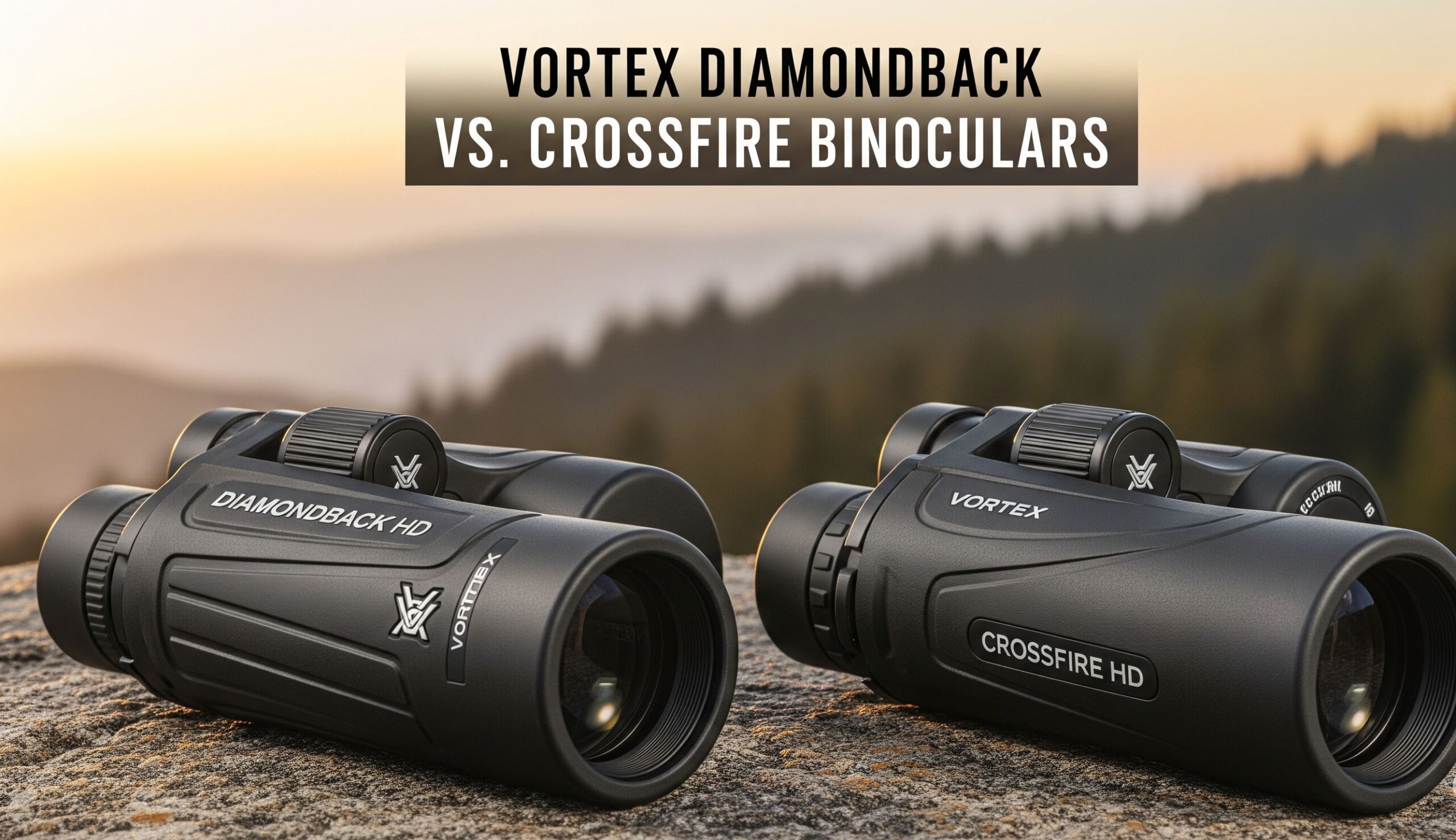
If you have spent any time researching mid-range binoculars, the question of Vortex Diamondback vs Crossfire has probably come up more than once. Both lines sit comfortably in the $130-$280 range, which makes them accessible to beginners while still delivering enough quality for experienced outdoor enthusiasts. The challenge is figuring out which one actually makes sense for your specific needs. After spending years testing optics in the field and reviewing feedback from hunters, birders, and general outdoor users, I want to walk you through a detailed comparison that goes beyond the specification sheet.
This guide covers optical performance, build quality, real-world usability, and the often-overlooked details like purging technology and lens coatings. By the end, you will have a clear picture of which series fits your activities and budget. Whether you need something for early morning turkey hunts, weekend birding excursions, or casual stadium watching, understanding these differences will help you make a confident decision.
The table below summarizes the key specifications side by side. Use it as a quick reference before diving into the detailed analysis that follows.
| Specification | Diamondback HD | Crossfire HD |
|---|---|---|
| Price Range | $230-$280 | $130-$180 |
| Optical Coating | Fully multi-coated + dielectric coating | Fully multi-coated |
| Lens Protection | ArmorTek scratch-resistant coating | Standard coating |
| Gas Purging | Argon purged | Nitrogen purged |
| Weight (10×42) | 21.3 oz | 23 oz |
| Field of View (10×42) | 330 ft @ 1000 yards | 325 ft @ 1000 yards |
| Close Focus | 5 feet | 6 feet |
| Exit Pupil | 4mm (10×42) | 4mm (10×42) |
| Eye Relief | 16mm | 17mm |
| Best For | Serious enthusiasts, all-day use | Casual users, budget-conscious buyers |
Before getting into the differences, it helps to acknowledge what the Diamondback and Crossfire have in common. Both series represent Vortex is commitment to delivering reliable optics at reasonable price points. They share the same roof prism optical design, which keeps the body compact and lightweight compared to older Porro prism designs. Both lines feature fully multi-coated lenses, meaning each air-to-glass surface receives multiple anti-reflection coatings to boost light transmission.
Build quality is comparable across both lines. You get rubber armor protection, twist-up eyecups with multiple stops, and a center focus wheel that works smoothly in the field. Waterproofing meets the same IPX7 standard in both series, meaning they can handle brief submersion without damage. The widely praised Vortex VIP warranty backs every model, offering unlimited transferability and coverage for any damage, regardless of cause. This warranty alone often sways buyers who have dealt with more restrictive manufacturer policies.
Both series come with lens caps, a neck strap, and a carrying case. The Glasspak case that ships with newer models keeps the binoculars protected during transport while remaining quick to access. For users stepping up from budget department store optics, either series delivers a noticeable improvement in image clarity, color fidelity, and mechanical feel.
The most meaningful distinction between these two lines comes down to their optical systems. The Diamondback HD incorporates dielectric prism coatings that push light transmission above 90%. In practical terms, this translates to noticeably brighter images during low-light conditions such as dawn and dusk when wildlife tends to be most active. Color saturation and contrast benefit from this coating as well, making it easier to distinguish subtle details like feather patterns or coat variations against complex backgrounds.
The Crossfire HD uses fully multi-coated lenses but omits the dielectric layer on the prisms. The difference is subtle in bright conditions but becomes apparent in shade, under canopy cover, or during extended glassing sessions. Users who frequently find themselves in low-light environments consistently report that the Diamondback provides a meaningful edge. The Crossfire still delivers excellent daytime performance and exceeds what most people expect at its price point.
Both binoculars feel solid in hand, but there are meaningful differences in their protection strategies. The Diamondback features ArmorTek lens coating, which adds exceptional scratch resistance to the exterior lenses. If you regularly push through dense brush, thorns, or salty marine air, this coating helps keep the glass clear over years of use. The Crossfire uses standard protective coatings that perform well for casual use but lack the same level of durability against abrasive elements.
The gas purging difference deserves more attention than it typically receives. Diamondback models use argon gas for internal purging, while Crossfire uses nitrogen. Argon molecules are larger than nitrogen molecules, which makes them less likely to seep out through microscopic seals over time. This matters because even tiny amounts of moisture vapor inside the optics can cause fogging when temperature changes rapidly. In extreme cold or high humidity situations, the argon purging in Diamondback models provides noticeably better fog-proofing performance. For most moderate climates and typical outdoor activities, the nitrogen purging in Crossfire models remains more than adequate.
The Diamondback 10×42 offers a 330-foot field of view at 1000 yards compared to the Crossfire 10×42 at 325 feet. While this five-foot difference seems small on paper, it can matter when tracking moving subjects or scanning wide areas. More importantly, the Diamondback close focus of 5 feet versus the Crossfire 6 feet makes a real difference for birders watching small, skittish species at close range. That single foot of additional reach can mean the difference between missing a warbler in thick brush or watching it flit through branches.
Birders spending hours in the field often notice the weight difference first. The Diamondback 10×42 at 21.3 ounces feels noticeably lighter than the Crossfire at 23 ounces during a full day of carrying. Combined with the superior close focus distance, this makes the Diamondback the preferred choice for serious birders who log many hours in the field. The enhanced color accuracy helps with identifying similar species where plumage details matter. For more recommendations, see our guide to the best binoculars for bird watching.
Hunters face a more nuanced choice. The Diamondback low-light performance provides a genuine advantage during prime hunting hours around dawn and dusk. If you spend long afternoons in a treestand or regularly glass distant ridges, the brighter image reduces eye strain and helps spot game earlier. That said, many successful hunters use Crossfire binoculars without issue, particularly when the budget helps fund more ammunition or better optics elsewhere. Looking for more options? Check our guide to the best binoculars for hunting.
Casual users attending concerts, sporting events, or nature walks will find the Crossfire HD delivers exceptional value. The optical quality surpasses what most buyers expect at this price, and the rugged construction handles occasional use without concern. Unless you have specific needs like extended all-day carrying or low-light performance, the Crossfire covers most recreational scenarios well.
The Diamondback more compact design becomes apparent during extended use. Weighing nearly two ounces less than the Crossfire might not sound significant, but hikers, backpack hunters, and anyone carrying optics for hours understand what that weight savings means over miles. The slightly slimmer profile also fits more comfortably in smaller hands and packs more easily.
That said, some users with larger hands actually prefer the Crossfire fuller grip. The slightly larger body provides more surface area for contact, which some people find more stable during extended viewing sessions. This is a personal preference factor worth considering if you have the opportunity to handle both models before purchasing.
Community feedback from platforms like Reddit and specialized hunting forums reveals interesting patterns. Crossfire owners frequently express surprise at the quality relative to the price, with many stating they see no compelling reason to upgrade. The consensus seems to be that the Crossfire exceeds expectations for casual and intermediate use. Diamondback owners, on the other hand, often mention the confidence that comes with near-premium optics at a mid-range price.
Users who upgraded from Crossfire to Diamondback report the difference is noticeable but not dramatic in good lighting conditions. The gap widens considerably during dawn and dusk glassing, exactly where serious hunters and dedicated birders need every advantage. Several reviewers noted that the lighter weight of the Diamondback became more apparent after using both for extended periods, and the superior close focus distance influenced their birding experience positively.
The Vortex warranty consistently earns praise across both product lines. Multiple users report successful warranty claims after accidents that would void coverage from competing manufacturers. One Hunter described his Diamondback surviving a fall from a treestand stand, while another mentioned the Crossfire continuing to function after accidental submersion in a creek. These real-world experiences reinforce the value proposition of Vortex no-questions-asked coverage.
Both the Diamondback and Crossfire series benefit from Vortex exceptional VIP warranty, which covers any damage regardless of cause. This unlimited, fully transferable warranty effectively makes either choice a lifetime investment. Unlike warranties that pro-rate coverage or exclude accidental damage, Vortex stands behind their products unconditionally. Several users report successful warranty claims after accidents that would void other manufacturers coverage, making this a significant factor in the decision process.
Before making a final decision, consider these scenarios that might shift your choice toward a different model or series.
Budget Flexibility: If you can stretch beyond the Diamondback price point, the Viper HD series offers another meaningful jump in optical quality. Conversely, if the Crossfire stretches your budget, the Triumph HD line provides reliable basic functionality at an even lower price point. If you are considering upgrading from Diamondback, our Vortex Viper HD review covers the next tier up.
Specific Use Cases: Astronomy enthusiasts might prefer saving money on Crossfire binoculars to invest in a quality tripod adapter instead. Marine users should note that while both series offer adequate waterproofing, neither includes the specialized lens coatings found in dedicated marine binoculars designed for salt water environments.
Configuration Options: Both series come in multiple configurations beyond 10×42. The 8×42 option provides a wider field of view and larger exit pupil, making it easier for beginners to find the image. The 12×50 models offer more magnification for long-distance observation but require steadier hands or a tripod for comfortable extended viewing.
As we move through 2026, the fundamental comparison between these two series remains relevant despite steady improvements across the optics industry. For users who will genuinely use their binoculars regularly in varied conditions, the Diamondback refinements justify the higher price. The dielectric coatings, lighter weight, argon purging, and ArmorTek protection pay dividends over years of regular field use. The image quality difference becomes most apparent exactly when you need it most, during those critical low-light moments.
For occasional users or those operating within strict budgets, the Crossfire HD represents outstanding value. Its optical performance exceeds many competitors at twice the price, and the build quality ensures reliable service for typical outdoor activities. The warranty protection provides peace of mind regardless of which model you choose.
For regular users who glass in varied lighting conditions, the Diamondback worth the premium. The improved optics, lighter weight, argon purging, and enhanced durability with ArmorTek coating justify the investment. Casual users will find the Crossfire more than adequate for their needs.
Both work well for birding. The 8×42 provides a wider field of view and larger exit pupil, making it easier for beginners to find birds quickly. The 10×42 offers more reach for distant subjects but requires steadier handling. Choose based on your typical viewing distances and experience level.
Argon purging uses larger gas molecules than nitrogen to displace oxygen and moisture inside the optics. This provides better long-term fog-proofing because argon is less likely to seep out through microscopic seals over time. The benefit shows most in extreme temperature changes or high humidity conditions.
Both work for casual astronomy, but the Diamondback superior coatings provide better contrast for viewing star clusters and the moon. Consider 10×50 or larger models if astronomy is your primary activity, as they gather more light and provide brighter images of celestial objects.
The Vortex VIP warranty is widely considered one of the best in the industry. It covers any damage regardless of cause, is fully transferable, and has no limit on time or claims. This contrasts with warranties from many competitors that exclude accidental damage, pro-rate coverage, or require registration within a narrow timeframe.
The choice between Vortex Diamondback and Crossfire binoculars comes down to honest self-assessment of how you will use them. Both deliver exceptional value within their respective price ranges, backed by the industry-leading VIP warranty. The Diamondback offers refinements that serious users will appreciate daily, while the Crossfire provides remarkable quality that satisfies most outdoor enthusiasts without requiring a premium budget. In 2026 competitive optics market, you really cannot go wrong with either choice. Match the binoculars to your intended use, consider how often you will carry them, and decide whether low-light performance matters for your typical activities. That honest evaluation will point you toward the right model for your situation.