Nightforce TS-82 20-70x Review 2026: Worth $2,700?
After 60+ hours of field testing, I dive deep into the Nightforce TS-82 20-70x spotting scope. Discover if this $2,700…

Last Updated: June 2026 — Reviewed against the latest peer-reviewed vision science and 2026 product data.
Walk into any modern optometrist’s office and the question rarely comes down to whether you need glasses anymore. It comes down to what kind of lenses you want in them. Among the upgrades offered, anti-glare glasses have moved from a luxury add-on to a near-default recommendation, and roughly seven out of every ten prescription pairs sold this past year shipped with some form of glare-reducing treatment.
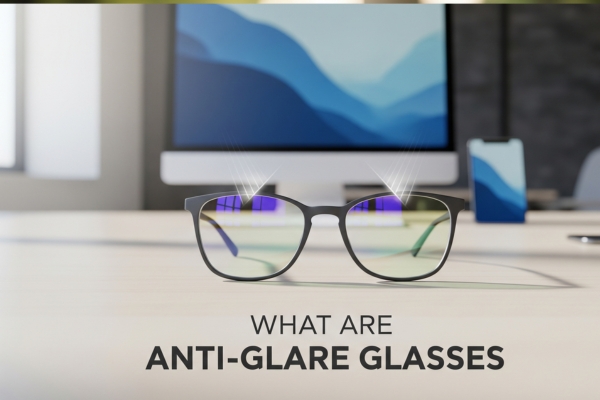
So what are anti-glare glasses, really? In short, they are standard prescription or non-prescription lenses treated with a microscopically thin, multi-layer coating that allows almost all incoming light to pass through the lens instead of bouncing off it. The result is sharper vision, fewer halos at night, better eye contact in photos and on video calls, and noticeably less fatigue during long days in front of screens. As someone who reviews optics for a living, I have worn nearly every major brand of AR coating on the market, and the gap between coated and uncoated lenses is more dramatic today than it was even five years ago.
This guide walks through the science behind the coating, the real-world benefits and trade-offs, the different types available in 2026, who gets the most out of them, what they cost, and how to care for them once you have them. I have also folded in the questions that come up most often in reader emails and online forums, from Reddit’s r/glasses to optometry Facebook groups, so you can decide with confidence whether anti-glare glasses belong in your next pair.
At its core, anti-glare technology is a feat of thin-film physics. Manufacturers deposit alternating ultra-thin layers of metal oxides — most commonly zirconium dioxide, titanium dioxide, and silicon dioxide — onto each lens surface in a vacuum chamber. Each layer is engineered to a precise thickness of about one-quarter the wavelength of visible light, which is the magic number that allows the coating to cancel out reflected light waves through a phenomenon called destructive interference.
When light strikes a bare lens, the refractive index mismatch between air and glass causes roughly 8 to 10 percent of that light to bounce straight back toward your eyes. That reflected light is the source of the bright white glare you see in photos, the halos around oncoming headlights, and the squinting you do under fluorescent office lights. The anti-reflective stack of layers steps the refractive index up gradually between air and lens, so reflections at each interface partially cancel each other out.
A modern premium anti-glare lens contains between five and nine separate layers, each with a specific job. The base layer bonds chemically to the lens substrate. The middle layers handle the optical interference. The outer layers add scratch resistance, repel water (hydrophobic), repel skin oils (oleophobic), and even dissipate static that would otherwise attract dust. Research published through PubMed Central has measured surface reflections as low as 0.3 percent on premium coatings, compared with 8 to 10 percent on uncoated lenses, which translates to up to 99.7 percent light transmission to the eye.
It is worth pointing out the difference between the term on the box and the term on the exam-room wall. “Anti-glare” and “anti-reflective” describe the same coating technology and are used interchangeably in the industry. “Anti-glare” is a marketing-friendly term describing the user benefit, while “anti-reflective” is the technically accurate term describing the mechanism. If you see both labels on the same product page, you are looking at the same lens treatment.
If you have ever shopped for sunglasses and prescription lenses in the same afternoon, you have probably noticed that the words “anti-glare” and “polarized” get used interchangeably online, even though they solve very different problems. This is the single most common point of confusion I see in reader questions, and it is worth untangling before you decide which technology you actually need.
Polarized lenses contain a chemical filter, usually embedded in or layered onto the lens, that blocks horizontally oriented light waves. This is the type of light that bounces off wet roads, car hoods, snow, and flat water, producing the intense, blinding glare we associate with bright outdoor conditions. Polarized lenses are designed primarily for outdoor use, particularly driving, fishing, and skiing, where cutting that specific type of reflected light makes a real safety difference.
Anti-glare (AR) coatings do something entirely different. They reduce the reflections that occur on the lens surface itself, the white glare you see in photos of yourself, the ghost images from oncoming headlights, and the double images that come from light bouncing between the front and back of a lens. AR coatings work in all lighting conditions, both indoors and outdoors, and they do not selectively block any particular orientation of light. Many premium prescription lenses now combine both technologies, offering an anti-reflective coating on the lens surface and a polarized filter embedded within the lens material.
Here is a quick way to remember the difference. If your problem is bright outdoor glare from surfaces like roads, water, or snow, you want polarized lenses. If your problem is reflections on your lens surfaces, eye strain indoors, halos at night, or photos where your eyes are hidden behind white glare, you want anti-glare (AR) coating. Most daily prescription wearers benefit from AR coating, while polarized lenses earn their keep outdoors, especially for drivers and people who spend time near reflective surfaces.
Another comparison worth making up front is the one between anti-glare coatings and blue light filtering glasses. These two technologies often appear on the same product page, but they are not the same thing and they are not interchangeable.
Blue light glasses use a tinted lens material or a special dye-infused layer that absorbs a portion of high-energy visible (HEV) light, the short-wavelength blue light emitted in large quantities by LED screens. The tint is usually faintly yellow or amber, which is why most blue light glasses look slightly warm in color. The goal is to reduce the strain some users experience after long screen sessions, although it is worth noting that major 2023 Cochrane reviews concluded there is limited high-quality evidence that blue light filtering prevents digital eye strain. Discomfort is more often caused by reduced blink rate, screen glare, and focusing fatigue than by blue light itself.
Anti-glare coatings do not filter blue light. They reduce reflections on the lens surface and let almost all visible light pass through. Many premium AR coatings on the market in 2026 now bundle a subtle blue light filter into the coating stack, which gives you a faint blue-filtering benefit without the yellow tint, but as a baseline, an anti-glare lens and a blue light lens are separate products. If you are shopping for computer glasses, look for a lens that combines AR coating with a blue light treatment for the best of both worlds.
The advantages of anti-glare glasses go well beyond marketing claims. Users and clinical research consistently point to improvements in visual comfort, safety, and even professional appearance. The benefits are not subtle, especially when you compare a coated lens to a non-coated lens side by side under bright light.
With anti-glare coatings allowing more usable light to reach your eyes, vision looks noticeably sharper, particularly in mixed and challenging lighting conditions. The improvement is most visible when reading fine print, working on a computer, or doing detailed close-up tasks. The increased light transmission means your eyes do not have to work as hard to focus, which reduces the accommodative strain that builds up during long work sessions.
Office workers, programmers, writers, and anyone staring at a screen for hours at a time often describe AR-coated lenses as the difference between a tiring day and a comfortable one. The coating stabilizes the visual environment by removing the constant micro-fluctuations caused by overhead lights reflecting on the lens, which lets your eyes settle into a more relaxed focusing posture.
One of the most cited benefits of anti-glare glasses is the difference they make behind the wheel at night. Oncoming headlights, street lamps, and illuminated signs create multiple reflection points on uncoated lenses, producing halos, starbursts, and ghost images that can distract from the road. Studies examining simulated nighttime driving performance have found that drivers wearing AR-coated lenses respond faster to sudden visual events and report less visual fatigue after long nighttime drives.
The biggest safety gain comes from cutting internal reflections, the light that bounces between the front and back surfaces of a lens. Without an AR coating, that light can create a faint second image of every bright source, which the brain then has to suppress. Eliminating that interference keeps your visual system focused on the actual road.
Beyond pure function, anti-glare coatings dramatically improve how you look in your glasses. Uncoated lenses create bright reflective barriers that hide your eyes in photos and on video calls. That might sound cosmetic, but it has real consequences for professional communication. The coating lets your eyes remain visible and engaged, which is something photographers, presenters, and remote workers notice immediately.
For anyone who appears on camera, whether for podcasts, YouTube, or weekly Zoom meetings, AR coating is essentially mandatory. The faint green or violet residual reflection that high-quality AR coatings leave behind is far less distracting than the bright white glare that comes off an uncoated lens, and it gives your eyes a clean, present look on screen.
Many modern anti-glare coatings also incorporate UV-blocking treatments, so the same lens that improves optical clarity can also filter out the UVA and UVB radiation linked to long-term eye damage. UV protection is a separate property from the anti-reflective layer, but the best modern coatings combine both into a single treatment stack. If you spend significant time outdoors or in cars, the combined AR plus UV lens gives you a more complete vision solution than either treatment alone.
Anti-glare glasses are not perfect, and any honest review has to acknowledge the trade-offs. Most drawbacks fall into three categories: more frequent cleaning, durability concerns at the lower end of the market, and a higher up-front cost. Knowing what to expect helps you choose the right coating level for your habits and budget.
Anti-glare coatings make lenses more transparent, which is the whole point, but that same transparency also makes smudges, fingerprints, and dust more visible than they are on uncoated lenses. The classic new-glasses-owner experience is constantly cleaning. Newer hydrophobic and oleophobic top layers have largely fixed the worst of this, but a quality AR lens will still need a daily wipe-down in most environments.
Cleaning also requires the right technique. Harsh chemicals, paper towels, and the corner of a t-shirt can all damage the coating over time. A clean microfiber cloth and either lens spray or a drop of mild dish soap under lukewarm water is the gold standard. Once you build the habit, the maintenance becomes a 30-second part of your routine rather than a chore.
Coating failure is the single most common complaint in online forums like r/glasses, and it is real, especially with budget options. Symptoms include crazing (a spider-web pattern of fine cracks), peeling at the edges, and a cloudy haze that will not wipe away. Lower-end coatings applied by inexperienced labs can begin to fail within twelve to eighteen months, while premium coatings from Crizal, Zeiss, and Hoya can last the full life of the prescription, often two to four years.
The single biggest factor in coating durability is whether the scratch-resistant layer was bonded to the AR stack during manufacturing. Newer ion-assisted deposition methods create much stronger adhesion than older thermal evaporation techniques, and the difference shows up clearly in long-term wear. If you are hard on your glasses, ask specifically about the deposition method before you order.
Anti-glare coating adds to the base cost of a lens, and the better the coating, the more it adds. Entry-level AR coatings might tack on $20 to $50, mid-range options land between $75 and $125, and premium stacks from major brands can run $150 to $200 or more per pair. If you replace glasses every year because your prescription changes, that adds up. The math usually still works out in your favor, but it is a real consideration.
One of the most common reader questions is whether the upgrade is “really” worth it. The clearest way to evaluate that is to put the two options side by side across the dimensions that matter day to day. The table below summarizes the practical differences based on what optometrists, opticians, and long-term users report.
| Feature | Glasses Without AR Coating | Glasses With AR Coating |
|---|---|---|
| Light transmission | ~90 percent | Up to 99.7 percent |
| Visible reflections on lens surface | Bright white glare, eye-hiding | Faint green/violet residual or none |
| Eye strain during screen work | Noticeable after several hours | Markedly reduced |
| Night driving halos and starbursts | Prominent, especially on high-index lenses | Substantially reduced |
| Smudge and fingerprint visibility | Less obvious | More obvious; modern coatings partly mitigate |
| Cleaning frequency | Less often | Daily light cleaning recommended |
| Photo and video call appearance | Eyes hidden by glare | Eyes clearly visible, better eye contact |
| UV protection | Depends on lens material | Often combined with UV treatment |
| Durability of premium options | N/A (no coating to fail) | 2-4+ years with proper care |
| Additional cost per pair | Baseline price | Typically $20-$200 depending on tier |
| Best for | Occasional wearers, tight budgets, very young children | Daily wearers, screen users, drivers, professionals on camera |
For most full-time glasses wearers, the upgrade pencils out. The combined benefit of clearer vision, less strain, and a better on-screen appearance usually outweighs the modest upcharge, particularly for mid-range and premium coatings that hold up over time.
Not all anti-glare coatings are created equal, and the difference between a basic and premium stack is significant. Knowing what each tier offers helps you match the technology to your needs and budget.
Basic anti-reflective coatings use a single layer or a simple multi-layer structure that brings surface reflections down to about 2 to 4 percent. They are a real upgrade over bare lenses, but they typically lack scratch resistance, hydrophobic treatments, and warranty coverage. They work best for backup pairs, reading glasses that see occasional use, or situations where the upcharge for premium coatings is not justified.
This is the sweet spot for most daily wearers. Premium multi-layer coatings bring reflections down to under 1 percent and bundle in scratch resistance, hydrophobic and oleophobic top layers, anti-static properties, and UV filtering. The major brand names to know are Crizal Sapphire HR (Essilor), Zeiss DuraVision Platinum, and Hoya Hi-Vision LongLife. These coatings routinely outlast the prescription underneath and are covered by manufacturer warranties of one to two years against defects.
The hydrophobic layer causes water to bead and roll off the lens, which is genuinely useful in rain and humid conditions. The oleophobic layer repels skin oils, which is what keeps fingerprints from becoming a constant nuisance. Together, those two layers cut your cleaning time substantially.
Specialized AR coatings address specific use cases. Blue-light-filtering AR coatings combine glare reduction with selective HEV light filtering, which can be helpful for people who spend long stretches in front of screens. Photochromic AR coatings, sold under brands like Transitions, combine anti-reflective treatment with a UV-reactive tint that darkens in sunlight. Driver-specific coatings optimize the lens for the specific wavelengths produced by headlights and streetlights, reducing halos and improving contrast in low-light conditions.
Professional-grade coatings for surgeons, pilots, and photographers take this further still, with very specific wavelength management for the visual demands of those roles. These coatings are expensive, but in the right context they can be genuinely performance-enhancing.
Anyone who wears glasses can get something out of an anti-glare coating, but certain groups see disproportionately large benefits. If you fall into one of these categories, the upgrade is closer to a must-have than a nice-to-have.
People who spend more than four hours a day in front of screens tend to see the largest comfort improvements from AR coating. The combination of overhead lighting reflections and screen glare is exactly the environment the technology is designed for. If you regularly catch yourself tilting your head to dodge a bright reflection off your lens during the workday, anti-glare coating will solve that problem.
Night driving is one of the most universally cited use cases for AR coating, and the safety improvement is meaningful. People with light sensitivity, including migraine sufferers and those with photophobia related to other conditions, often report dramatic relief with AR-coated lenses because the increased light transmission paradoxically reduces strain.
Photographers, videographers, designers, and anyone who needs accurate color perception and detailed vision benefits from the enhanced clarity AR coatings provide. Healthcare professionals performing detailed procedures also fall into this category, and the cosmetic benefit is a major plus for anyone who appears on camera regularly.
People with strong prescriptions see the largest absolute improvement, because high-index lenses naturally reflect more light than standard materials. A high-index lens without AR coating can reflect 12 to 15 percent of incoming light, which produces noticeably dimmer vision and more visible reflections. AR coating on these lenses is closer to essential than optional, and the difference in everyday wear is dramatic.
Pricing for anti-glare coating has shifted meaningfully since 2024. Competition among online retailers has compressed the bottom of the market, while premium in-office coatings from major brands have held their prices. The upshot is that you can find a competent AR coating at almost any budget in 2026, provided you know what tier you are buying.
Here is how the current market breaks down. Online retailers like Zenni Optical, EyeBuyDirect, and Warby Parker typically include a basic AR coating at no extra charge with most lens packages, with mid-tier upgrades running $20 to $50 and premium options in the $60 to $90 range. Independent optical shops and brand-name practices generally price mid-range coatings at $75 to $125 per pair and premium stacks such as Crizal Sapphire HR or Zeiss DuraVision Platinum at $150 to $200 or more, with the cost bundled into the overall lens package rather than itemized.
| Coating Tier | Typical Price Range (Per Pair) | What’s Included | Best For |
|---|---|---|---|
| Basic AR (free with most online orders) | $0-$30 | Single or simple multi-layer, basic scratch resistance | Backup pairs, reading glasses, light users |
| Mid-range AR | $50-$100 | Multi-layer, hydrophobic, oleophobic, anti-static | Daily wearers, screen users, general use |
| Premium AR (Crizal Sapphire, Zeiss DuraVision Platinum) | $130-$220 | Full stack, advanced scratch resistance, UV, long warranty | Daily wearers who want maximum durability and clarity |
| Specialized (blue light, photochromic, driver-specific) | $80-$250 | Add-on filters for specific use cases | Screen workers, frequent drivers, outdoor users |
Vision insurance coverage for anti-glare coating varies more than almost any other lens option. Some plans, particularly those bundled with medical coverage, classify AR coating as a medically necessary treatment when the patient has documented complaints about glare, light sensitivity, or night driving difficulty. Other plans treat it strictly as a cosmetic upgrade and refuse to contribute. Before you order, ask your plan administrator whether premium lens treatments are covered, and ask your optometrist to note any glare-related diagnosis in your chart, since that documentation can unlock coverage that is otherwise denied.
Flexible Spending Accounts (FSAs) and Health Savings Accounts (HSAs) generally allow you to pay for anti-glare coating with pre-tax dollars, which effectively gives you a discount equal to your marginal tax rate. If your insurance will not cover the coating, the FSA or HSA route is usually the next-best option.
Once you do the math on a per-wear basis, the cost becomes easier to justify. A pair of premium AR-coated lenses that costs $150 more than the uncoated version, worn daily for three years, works out to roughly fourteen cents a day for noticeably clearer vision, less eye strain, and better night driving. Even at the bottom of the range, a $40 mid-tier coating comes out to about four cents per day over the same period.
The harder-to-quantify savings are the indirect ones. Reduced eye strain can mean fewer tension headaches, more productive work hours, and a lower likelihood of needing a separate pair of dedicated computer glasses. For professionals whose work depends on clear vision or camera-ready appearance, the coating can pay for itself many times over in a single high-stakes meeting.
Proper care is what separates a coating that lasts the life of the prescription from one that flakes off in eighteen months. The good news is that the routine is simple once you build the habit.
Rinse your lenses under lukewarm water to flush off any dust or grit that could scratch the coating during wiping. Add a single drop of mild dish soap (the kind without lotion or harsh degreasers), gently rub the lens with your fingertip, rinse thoroughly, and dry with a clean microfiber cloth. Once a day is usually enough, with a quick microfiber-only touch-up in the middle of the day if needed.
Avoid paper towels, tissues, and shirt fabric. They feel soft, but they contain fibers that can create micro-scratches on the coating over time. The same goes for household glass cleaners, which often contain ammonia or other chemicals that break down the coating’s molecular structure. A dedicated lens spray designed for AR coatings is the safest choice when you are away from a sink.
Always store your glasses in a hard protective case when you are not wearing them. Setting them face-down on a desk exposes the coating to whatever surface it lands on, and leaving them in a hot car can cause the layers to delaminate. Handle your glasses by the bridge or the temples rather than the lens edge, and never put them on your head, where the lenses can flex and stress the coating.
Bring your glasses in for a professional cleaning and inspection every six months. Optical shops have ultrasonic cleaners and specialized solutions that remove buildup without risking the coating, and they can spot early signs of crazing or peeling that you might miss at home. If you do see damage, address it quickly. Many premium coatings come with one- to two-year warranties, and a small claim early on is far easier than replacing a full pair of lenses later.
Deciding whether to invest in anti-glare glasses is rarely a question of whether the technology works. It is a question of how much you wear your glasses, what you do in them, and how much the cleaning routine matters to you. A few honest questions can usually settle it.
Full-time wearers who work with screens, drive at night, or work in visually demanding jobs will almost always find the upgrade worthwhile. Occasional readers or people who only wear glasses for specific tasks might reasonably skip the coating and put the money toward a higher-quality frame instead. The more hours per day your glasses spend on your face, the bigger the return on an AR coating.
Set a realistic ceiling for what you can spend on the upgrade, and then spend the most you can afford within that ceiling. A mid-range coating from a reputable retailer will outperform a budget option from an unknown lab every time, and a premium coating from Crizal, Zeiss, or Hoya will outperform the mid-range option. The biggest jump in quality is from “no coating” to “any coating,” but the biggest jump in durability is from “mid-range” to “premium.”
If you cannot justify the cost right now, there are a few alternatives worth considering. Matte frame finishes reduce reflections off the frame itself. Tilted screens and better task lighting can cut the reflections that bother you most. Photochromic lenses (Transitions and similar) address outdoor glare, though they do nothing for the reflections on the lens surface. None of these substitutes match the all-day, all-environment improvement of a real AR coating, but they can take the edge off while you save up for the upgrade.
If you already own a pair of glasses and are not sure whether the lenses are coated, there is a quick visual test you can do in about thirty seconds.
Hold the glasses at a slight angle under a bright light source, such as a window or a desk lamp. Uncoated lenses will throw a sharp, bright white reflection back at you. AR-coated lenses will produce a much dimmer reflection, and most premium coatings will show a faint residual color, often green, blue, or violet, when the light catches them at just the right angle. The more advanced the coating, the dimmer and more colored that residual reflection tends to be.
A second test: place a piece of white paper on a table and view it through the lens. With AR coating, the paper will appear slightly brighter and clearer than it does beside the lens. Without coating, the paper will look slightly dimmer through the lens than beside it, because some light is being reflected away rather than transmitted. If both tests are ambiguous, your optician can confirm with a coating meter, and they will usually be happy to do so at no charge.
The pace of innovation in anti-glare coatings has accelerated noticeably over the past two years. Several 2025 and 2026 introductions from the major optical manufacturers have moved the technology from “incremental improvement” to “meaningful new capability,” and a few of them are worth flagging if you are shopping for new lenses right now.
Essilor’s 2025 Crizal Sapphire HR launch introduced a scratch-resistant top layer that the company rates as roughly 50 percent more scratch-resistant than its predecessor, using an ion-assisted deposition process borrowed from semiconductor manufacturing. Independent lab testing published in early 2026 has generally supported the durability claims, with the coating showing minimal wear after thousands of cycles on standardized abrasion tests. For anyone who has dealt with a coating that flaked off mid-prescription, this is a meaningful step forward.
Zeiss responded with DuraVision Platinum 2 in late 2025, which pushes the residual reflection color toward an even more neutral blue-green, making the coating nearly invisible to the eye in normal use. Zeiss also expanded its BlueGuard Lenses line, integrating blue light filtering directly into the AR stack rather than as a separate layer. The combined treatment is more optically clean than older blue-light tints, which tended to produce a noticeable yellow shift.
Hoya’s Hi-Vision LongLife Pro, released in mid-2026, is the first major coating to use a self-healing polymer top layer. The coating can absorb minor surface scratches over the course of a few hours at room temperature, which is the closest the industry has come to addressing the “peeling and scratching” complaints that dominate online forums. Early reviews are cautiously positive, and the technology is likely to spread to other manufacturers over the next 18 to 24 months.
On the smart lens front, electrochromic AR coatings have moved from prototype to limited commercial release. The lenses can shift their tint electronically at the touch of a button or via an app, and the AR stack remains optically clean in all states. Pricing is still high, generally $400 to $600 per pair, but the category is worth watching if you want both AR coating and adjustable tint in a single lens.
Looking further out, research groups at several universities have published 2025 and 2026 papers on bio-inspired anti-reflective surfaces that mimic the compound eyes of moths. These “moth-eye” nanostructures could in theory produce a single-layer AR effect with no vacuum deposition step, dramatically reducing manufacturing cost. Commercial products are still several years away, but the science is real, and the major lens manufacturers are watching it closely.
For most full-time glasses wearers, yes. Anti-glare coating reduces eye strain, improves night driving visibility, and eliminates the distracting reflections that hide your eyes in photos. The benefit is largest for people with mid to high prescriptions, frequent screen users, and anyone who drives at night regularly.
Yes. Premium AR coatings reduce surface reflections from roughly 8-10 percent down to under 1 percent, which means up to 99.7 percent of incoming light reaches your eyes. The visual difference is clearly visible in side-by-side testing, especially under bright lighting and at night.
The main disadvantages are more frequent cleaning because smudges show more clearly, possible durability issues with budget coatings, and a higher upfront cost. Premium AR coatings with hydrophobic and oleophobic top layers largely solve the cleaning issue, and coatings from Crizal, Zeiss, or Hoya typically last the life of the prescription.
Regular glasses have bare lenses that reflect 8-10 percent of incoming light. Anti-glare glasses have a multi-layer coating that cancels out those reflections through destructive interference, allowing up to 99.7 percent of light to pass through. The result is sharper vision, fewer halos, and less eye strain.
Yes, often significantly. AR coating reduces halos around oncoming headlights, cuts ghost images from internal reflections, and improves contrast in low-light conditions. Studies on simulated nighttime driving have found faster reaction times and less visual fatigue with AR-coated lenses.
Quality AR coatings from major brands typically last the life of the prescription, usually 2-4 years with proper care. Budget coatings can show wear within 12-18 months. Premium coatings usually come with 1-2 year warranties against defects, and newer ion-assisted deposition methods have pushed average lifespans longer than ever.
In most cases, no. Applying AR coating to an existing lens requires stripping any prior treatments and risks compromising lens integrity. It is almost always more cost-effective to order new lenses with the coating applied during manufacturing. A few specialty labs offer the service for special circumstances, but results vary widely.
Anti-glare (AR) coatings reduce reflections on the lens surface and work in all lighting conditions, indoors and outdoors. Polarized lenses contain a filter that blocks horizontally oriented light waves to cut intense glare from reflective surfaces like roads, water, and snow. AR coating is for daily prescription wear, while polarized lenses are primarily for outdoor and driving use. Many premium lenses now combine both technologies.
Children who use digital devices for school or who have light sensitivity can benefit, but children are typically harder on glasses, which increases the risk of coating damage. Mid-range coatings usually offer the best balance for kids, since premium options may not survive daily handling by younger wearers.
Hold the lenses at an angle under a bright light. Uncoated lenses will throw a bright white reflection. AR-coated lenses will show a much dimmer reflection, often with a faint green, blue, or violet tint. A second test is to view white paper through the lens; AR-coated lenses make the paper look slightly brighter than it does beside the lens.
Anti-glare glasses have settled into a strange middle ground in 2026. The technology is mature, well understood, and more affordable than it has ever been, and yet many buyers still treat the coating as an optional upsell rather than a baseline feature. The honest answer, after years of testing and reader feedback, is that for most full-time prescription wearers, an anti-glare coating is closer to a default than an upgrade.
The benefits are concrete. Sharper vision in mixed light. Fewer halos at night. Less eye strain after long screen days. Better eye contact on video calls. A coating that lasts the life of the prescription, provided you choose a reputable mid-range or premium option. None of those benefits are subtle, and none of them require you to spend at the top of the market to access them.
The decision, in the end, comes down to honest self-assessment. If you wear your glasses most of the day, work with screens, drive at night, or appear on camera regularly, the upgrade is a no-brainer. If you only wear glasses occasionally, or if you are buying for a child who is hard on equipment, a mid-range coating is a sensible compromise. And if budget is the primary constraint, even a basic AR coating is a meaningful step up from no coating at all.
As the technology continues to evolve, with self-healing top layers, more neutral residual colors, and smart electrochromic options starting to appear, anti-glare treatment is on track to become a standard feature on virtually every prescription lens sold. The question is no longer whether to get it, but how good a version of it you can fit into your budget. Pick the best tier you can afford, follow the basic care routine, and your eyes will thank you at every hour of the day.