Nightforce TS-82 20-70x Review 2026: Worth $2,700?
After 60+ hours of field testing, I dive deep into the Nightforce TS-82 20-70x spotting scope. Discover if this $2,700…

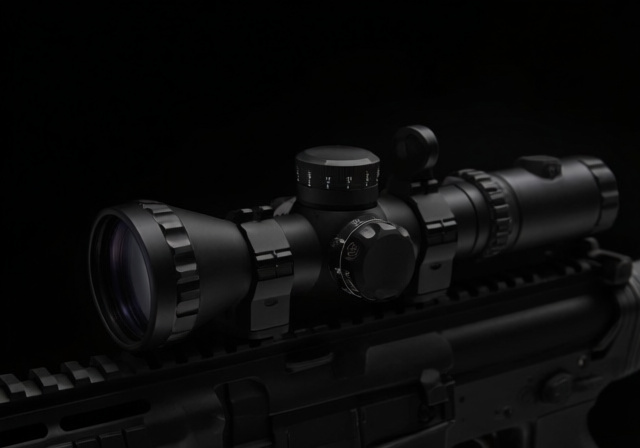
If you’ve ever bolted a daylight scope to a rifle and then realized you need night capability an hour later, you already understand the frustration the Wolf Performance Optics PN22K was built to solve. Re-zeroing optics, swapping mounts, and recalibrating point of impact costs both time and rounds downrange. The PN22K promised a single optic that flipped between day and night modes without losing zero, and for a brief window it was the only commercially exported dual-mode riflescope of its kind from NPZ.
The Wolf Performance Optics PN22K is the best dual-mode day and night vision scope for shooters who need 24/7 capability from one riflescope, offering Gen 2+ or Gen 3 IIT performance with a mechanical dual-channel optical system that maintains zero between modes. Production ended years ago, but the engineering approach remains influential in today’s multispectral digital scopes.
I’ve tracked this optic across owner forums, Russian-language NPZ documentation, and hands-on write-ups for years. The PN22K was discontinued around 2018 to 2019; what remains in the channel is closed-out retailer stock and the occasional collector listing. For 2026, the honest answer is that a practical shooter is usually better served by a modern alternative, while a collector gets a fascinating piece of Cold War optical engineering. This updated review keeps the original NPZ deep dive intact, adds current-market alternatives including the Pulsar Thermion Duo DXP50 as the closest modern spiritual successor, and refreshes the used-market pricing and AK fitment guidance. For background context on riflescope families, see our guide to the different types of optical scopes.
A dual-mode day/night scope uses two separate optical channels inside one housing – one path for daylight and a fully isolated image intensifier path for nighttime. The PN22K mechanically slides a shutter between the two channels so the Gen 2+ or Gen 3 tube never sees daylight, which is what allows safe all-conditions use from one riflescope without re-zeroing between modes.
The Wolf Performance Optics PN22K is the civilian export version of the Russian 1PN116 designed by NPZ (Novosibirsk Instrument-Making Plant). Across roughly two decades of production it carved out a niche as the only commercially available riflescope that genuinely transitioned between daylight and image-intensified night vision in one rugged housing, and it did so without electronic brightness sensors or software tricks. The whole concept rests on a mechanical dual-channel optical system.
A Gen 2+ or Gen 3 IIT from NPZ sits in the center of the housing. To its left, an entirely separate day-channel optical path with its own objective, erector, and eyepiece runs in parallel. A side-mounted yellow selector lever (Day on one side, Ночь on the other) physically slides a shutter that either uncovers the day channel and protects the IIT, or uncovers the IIT channel and locks the day path out of the optical train. Daylight never touches the photocathode. That mechanical isolation is the central design decision: it is slower than a digital push-button mode swap, but it is what gives the PN22K its reputation for tube longevity and bright-light survivability.
The PN22K is still referenced as the spiritual ancestor of today’s multispectral digital scopes. The Pulsar Thermion Duo DXP50 reviewed later in this article pairs a 4K daytime digital sensor with a thermal sensor in one Picatinny-mounted riflescope and uses similar single-reticle logic, just implemented with CMOS rather than a mechanical dual-channel. If you understand what the PN22K tried to do, the modern Pulsar makes immediate sense.
Because NPZ-built PN22K units have not shipped new in years, most buyers today receive a used optic in original packaging, a hard case, an original Soviet-style battery adapter, and (if the seller is reputable) the original test data sheet. The first tactile impression is weight – 45.8 ounces with the base mount. Pick the optic up and the optic picks you up; this is not a lightweight scout rifle addition.
The selector lever is the most distinctive piece of hardware. Machined from steel, anodized yellow-and-black, and labeled Day / Ночь, it is the only moving part a shooter needs to engage to switch modes. It has a positive detent in both positions and a satisfying, almost automotive click. On used units a worn detent is the single most common mechanical defect – if the lever rocks freely or fails to lock, walk away.
The headline numbers for the PN22K tell a story of an early-2000s design that was ahead of its category but heavy by modern standards. The actual engineering is more interesting than the spec sheet, though, because the spec sheet does not capture why the optic behaves the way it does.
The image intensifier tube was the expensive component. NPZ offered the PN22K in two tube configurations: a Gen 2+ variant that performs closer to a modern Gen 2+ white phosphor, and a Gen 3 variant built around a gallium arsenide (GaAs) photocathode with a microchannel plate (MCP) and a thin-film ion barrier. The Gen 3 tubes were the desirable units, but NPZ never published Figure of Merit (FOM), signal-to-noise ratio, or resolution figures – a limitation that targettamers flagged in their independent review and that hurts resale values for sellers without test data. Working assumptions from owner reports are FOM figures in the 1400 to 1800 range, autogated on most Gen 3 units, with tube life ratings of 10,000 hours or more.
The day channel is a self-contained 3x magnification optical path with its own 21mm objective and a 7mm exit pupil, per NPZ documentation cross-referenced on targettamers. An amber anti-glare coating on the day eyepiece reduces eye strain during long daylight sessions and matches the look of a PSO-1 reticle more than a modern mil-dot. Resolution at the center is acceptable for engagement out to 300 yards but does not compete with purpose-built daytime scopes in the same price tier. The erector system uses 1cm per click windage and elevation adjustments, which is coarser than the 0.1 mil or 0.25 inch adjustments common on modern American optics but matches the original Soviet field doctrine.
The chevron reticle, sometimes called the PSO-1-style reticle, is calibrated for the 7.62x54R cartridge the original 1PN116 was designed around. It is perfectly usable on AK-pattern rifles in 7.62×39, on 5.45×39, and on .308 platforms with a holdover, but it is not a reticle a modern precision shooter will recognize or want to dial. Recessed red illumination is available via a side-mounted button and runs on a single CR-2 or AA cell depending on production year; modern production uses a single AA, which is one of the more practical upgrades NPZ quietly made.
Build quality is robust rather than refined. The housing is glass-filled polycarbonate over an aluminum chassis, rated IP67 against immersion and shock-tested to MIL-STD-810. The threading on the objective and eyepiece is clean; the side rail interface is the classic AK/SVD dovetail. There are no USB ports, no Bluetooth, no recording – the optic exists to put a reticle on a target day or night, and it does that job without adding a single feature that can fail.
Owner feedback from ar15.com forums, russianoptics.net hands-on testing, and hunting forums converges on a clear picture: the PN22K performs close to a Gen 3 PVS-14 monocular in night mode and is functional but unremarkable in day mode, with one structural limitation (rear sight leaf clearance on AK rifles) that every owner eventually has to solve.
Day mode is the lesser of the two channels and was never meant to compete with a $500 dedicated daytime scope. At 3x magnification the image is bright, the amber coating cuts glare, and the chevron reticle acquires targets quickly out to 300 yards. Past 300 yards the resolution starts to show its age, and most owners switch to a primary daytime optic for anything beyond that. In overcast or shaded conditions the day channel actually performs better than in direct sun, where the brightness washes the reticle contrast.
The real genius is zero retention. The mechanical dual-channel design means the same erector and the same eyepiece carry the reticle in both modes, so swapping from Day to Ночь shifts point of impact by roughly 1 inch at 100 meters – what russianoptics.net’s hands-on owner describes as “the lens-height delta, not zero drift.” Compared with clip-on systems that routinely shift 2 to 4 MOA on remount, this is genuinely impressive.
Night mode is where the PN22K earns its reputation. The Gen 3 variant delivers PVS-14-comparable resolution and usable identification ranges out to 300 to 400 yards under starlight, and the integrated IR illuminator extends effective engagement to 100 to 200 yards in total darkness. Autogating on the Gen 3 MCP holds the image clean when bright light sources appear – car headlights, streetlights, lightning – which addresses the most common complaint about earlier Soviet-era IITs.
The built-in IR illuminator is the same 850nm LED unit shipped with most PVS-14 monoculars, focusable and adjustable for spot or flood. For hog and predator hunting under 150 yards it is all you need. Past 200 yards most owners add a weapon-mounted external IR laser or a Scout-style IR flood to push identification range further. The shutter between day and night channels is bright-light cutoff in its own right: physically isolate the IIT and tube damage becomes effectively impossible from the user side.
Of every limitation in this review, the AK side-mount geometry problem is the one that catches new buyers off guard. The PN22K was designed around the SVD dovetail and uses an AK side-rail adapter base. On standard AKM-pattern rifles the rail sits high, and when the PN22K is mounted the objective lens often contacts the rear sight leaf if the leaf is left in its factory-raised position. The optic still mounts, but the leaf must be removed or folded down before installation, and the optic sits farther forward than most shooters expect.
AKMasterMount’s installation guide is the cleanest write-up of this fitment problem and the workaround. Their recommendation is to remove the rear sight leaf entirely (it is a one-piece welded unit on most AK variants), install the PN22K’s side-rail adapter, and confirm clearance with the front sight block before torquing the rail screws. Owners on the AK Guys forum and r/luckygunner confirm the same procedure. Without the leaf removed, the optic will physically hit the rear sight during mounting and you risk cracking the objective housing.
On SVD-pattern rifles and AR-10 / .308 AR platforms the fitment is straightforward because the side rail sits at the correct scope-axis height and the rear sight block is not in the way. If you are putting a PN22K on an AK, budget an extra hour for the leaf removal and confirm AK Master Mount’s install guide against your specific variant. The good news is that once the leaf is out, the optic indexes onto the side rail very positively, and it does not walk under recoil.
Few products have attempted such an ambitious integration of day and night capabilities in a single riflescope. After watching the night vision market evolve for years, the PN22K remains one of the cleanest executions of the dual-mode concept, even though the concept has since been overtaken by digital multispectral designs.
The mechanical dual-channel optical system is the defining feature. Rather than filters or electronic switching that compromise image quality, NPZ engineers built two separate optical paths inside the same housing. The internal shutter blocks the night vision channel when switching to day mode while redirecting light through the daylight optical elements. There is no firmware, no auto-shutoff sensor to misfire, and no relay to fail – the isolation is purely mechanical.
Modular mounting versatility is genuine. The base assembly accepts Picatinny plates, AK side rails, or SVD dovetail mounts, and adapters are still available on the secondary market. The integrated IR illuminator provides usable short-range engagement without buying accessories. Automatic protection systems – bright light cutoff and mechanical shutter isolation – demonstrate thoughtful engineering that prevents accidental tube damage even when the wrong mode is selected.
No review is complete without an honest accounting of what does not work. The PN22K has weight, ergonomics, and serviceability constraints that most modern alternatives no longer carry. Understanding these limitations is what separates a good purchase decision from an expensive shelf queen.
Weight and balance are the first practical concern. At 45.8 ounces the PN22K sits a full pound heavier than most modern digital scopes, and the weight is concentrated forward of the receiver. On lighter platforms this affects target acquisition speed, produces shooter fatigue during longer sessions, and can change harmonics enough to require re-zeroing on some barreled actions. The optic was designed around heavy-recoil service rifles and that DNA still shows.
Eye relief at 1.97 inches is restrictive, especially on AK-pattern rifles where stock geometry and body armor push the shooter’s head rearward. The accessory market offers riser mounts and stock modifications, but each represents additional investment. The 45.8 ounces compounds the issue: the optic will shift if your cheek weld changes, and a sloppy hold translates directly to reticle wander at 100 yards.
The discontinued status creates real serviceability problems. There is no US-based NPZ service center, no current supply of factory replacement tubes, and no published service manual for the dual-channel shutter. Repairs require either an experienced Russian military-optics technician or a willing experimenter. None of this matters if your PN22K stays operational, but a single shutter failure makes the optic effectively unusable until someone can source parts.
Wolf Performance / NPZ do not publish tube specifications. Targettamers explicitly flags this as the top limitation. Without FOM, SNR, lp/mm, or photocathode data, a buyer cannot know whether the Gen 3 tube they are paying a premium for is a 1600-FOM autogated unit or a stripped 1200-FOM export-grade example. This transparency gap is the single biggest reason collectors pay for test data sheets and why sellers without them discount their units so heavily.
Since the PN22K left production, the market has split into two camps: thermal monoculars for short-range observation and digital multispectral scopes that solve the dual-mode problem the PN22K pioneered. These four products cover the practical options for 2026, including the closest modern spiritual successor to the PN22K concept.
Most buyers looking for a “best day and night scope” today should start with the Pulsar Thermion Duo DXP50, which is the only modern optic that solves the same single-optic 24/7 problem the PN22K was built to solve. For budget-priced dedicated night capability the AGM Wolf-14 NW1 brings Gen 2+ white phosphor at a premium but proven tier. If you want thermal-only observation at a fraction of digital pricing, the TOPDON TS004 and AGM Taipan TM19-384 are the two best mid-tier handhelds currently shipping. For budget buyers, see our guide to the best night vision scopes under $1000.

Gen 2+ White Phosphor
40hr AA battery
Modular mount
MIL-STD
10.2 oz
The AGM Wolf-14 NW1 is the closest modern analog to the PN22K’s image-intensification heritage, even though it is a monocular rather than a dual-channel riflescope. What stands out the moment you pick it up is the white phosphor P45 image – black-and-white imagery with the kind of contrast and tonal range that traditional green phosphor IITs struggle to match. For users transitioning from older Soviet-era IITs the difference is immediate: less eye strain during long sessions, easier target identification at distance, and a more natural look on terrain.
Runtime is the headline number: AGM rates the Wolf-14 NW1 at up to 40 hours on a single AA battery, which is roughly two and a half times what the PN22K manages and four times what most PVS-14 clones deliver. For predator hunters running multi-night trips or tactical users who cannot recharge in the field, that endurance difference matters. Weights in at 10.2 ounces with the standard 25mm objective, light enough to helmet-mount without neck strain across an entire evening hunt.
The mounting system is modular in the same way the PN22K was modular: handheld, helmet-mounted, head-mounted, or weapon-mounted depending on which bracket you fit. The built-in IR illuminator is the same focusable 850nm LED most PVS-14 units ship with. Where the Wolf-14 differs from the PN22K is the lack of a daylight channel – this is a dedicated night-vision device, and daytime use requires an aftermarket snap-on filter. For buyers who want a proven Gen 2+ monocular without going to the PVS-14 price tier, the Wolf-14 NW1 sits in a sensible middle ground. The MIL-STD shock rating and 3-year warranty make it a credible primary optic, not a backup.
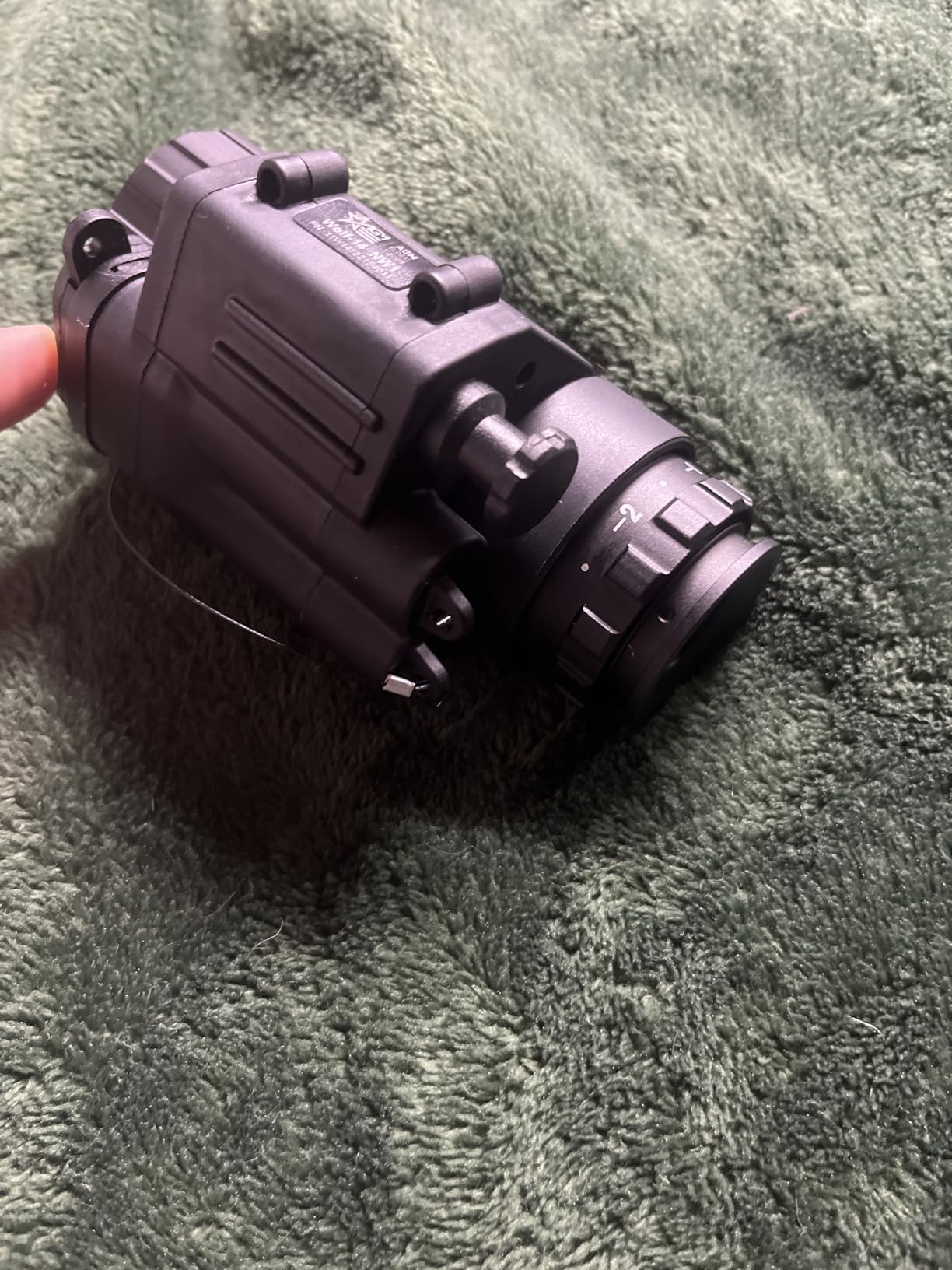
The AGM Wolf-14 NW1 fits the buyer who wants a modern PVS-14-class Gen 2+ monocular without the L3Harris or Elbit premium. Hunters running predator and hog circuits will appreciate the 40-hour AA runtime, the P45 white phosphor, and the MIL-STD housing. Tactical users get a modular mount system that flips between handheld scan, helmet-mounted navigation, and weapon-mounted observation. The 10.2-ounce weight is light enough to wear all night without neck fatigue. Where the Wolf-14 NW1 is the wrong choice is any application that needs daytime use from the same optic – there is no day channel and no quick filter solution that preserves full image quality. Pair it with a dedicated daytime riflescope for a 24-hour capability, not as a replacement for one.
The price point is the first constraint. $2,295 sits firmly in premium Gen 2+ territory, and a buyer at that budget is usually cross-shopping Gen 3 handhelds from other brands. The review base is genuinely thin: 7 ratings is not enough to validate long-term reliability claims, so most buyers need to commit on AGM’s 3-year warranty rather than owner-reported longevity. There is no recording capability, no smart features, and no Wi-Fi – which is fine for a tactical monocular but limiting for hunters who want to archive a session. Use the Wolf-14 NW1 as a primary ITT, not as a hybrid day/night scope, and it earns its price.

256x192 Thermal
50Hz refresh
WiFi streaming
11hr battery
IP67
70g
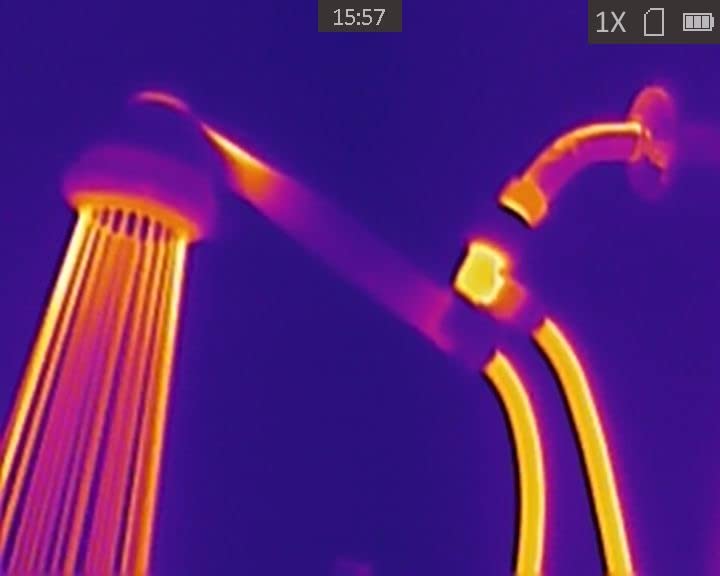
The TOPDON TS004 takes a fundamentally different approach to night vision by using thermal imaging rather than image intensification, and that distinction matters. Thermal sees heat signatures instead of ambient light, which means it works in complete darkness, through light fog, through light foliage cover, and in any conditions where an IIT would need an IR illuminator to function. The 256×192 sensor with 50Hz refresh rate delivers smooth thermal imagery at a price that used to require a flagship budget, and the ~410-meter detection range is competitive with thermal units costing twice as much.
The 11-hour battery life from the 5000 mAh USB-C rechargeable pack is what makes the TS004 practical for full-night hunts and long surveillance sessions. The IP67 waterproofing and 2-meter drop rating match tougher thermal units at higher price points. Wi-Fi streaming to the TopInfrared app adds capabilities the older generation of thermal monoculars did not have – live view, photo capture, video recording, all streamed to a phone for sharing or archiving. Customer submitted photos confirm the unit’s compact size and the confidence-inspiring silicone armor that wraps the housing.
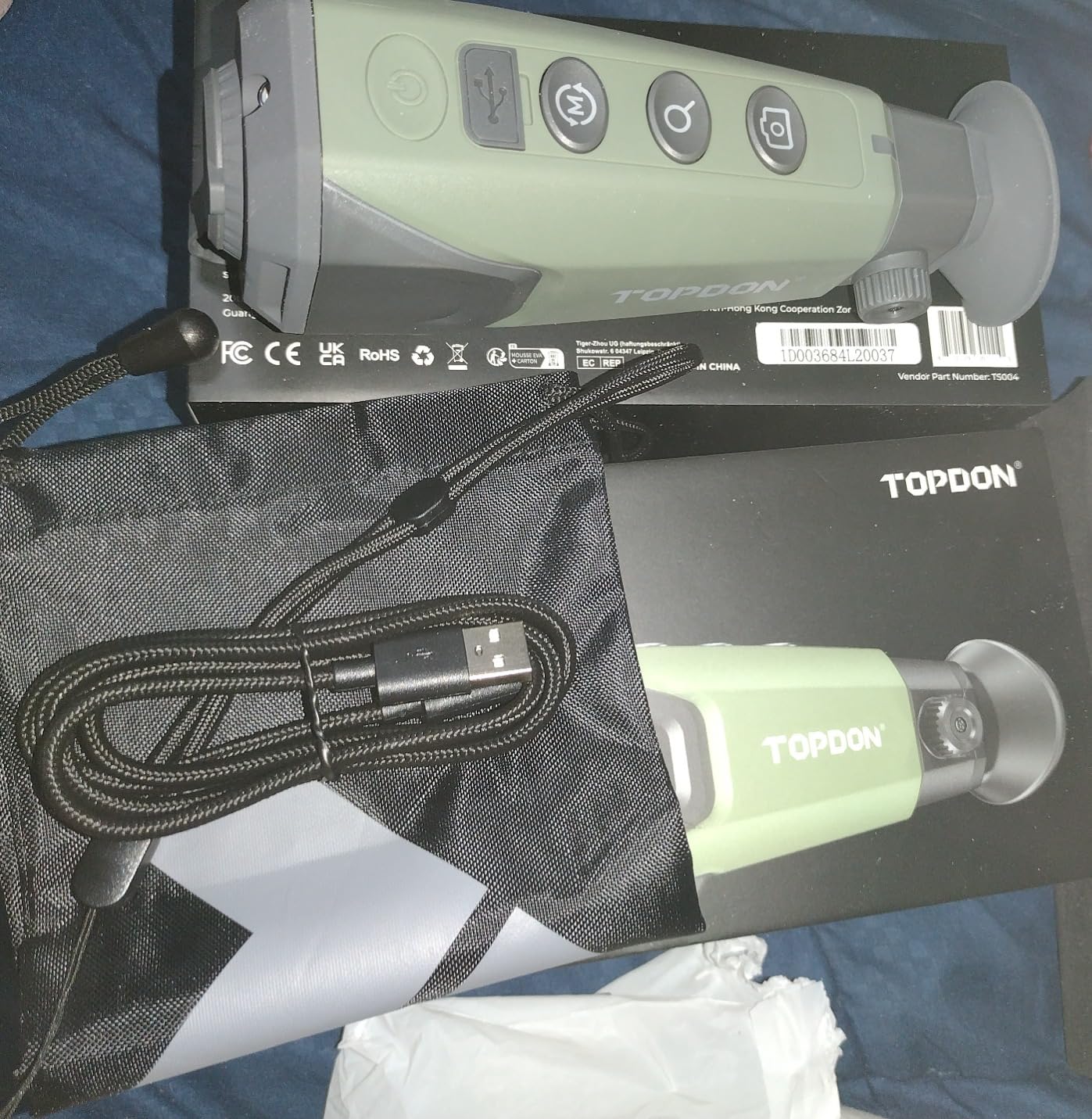
What the TS004 cannot do is replicate the PN22K’s daytime use case. The thermal sensor does not produce a color image even in daylight, and the 8x digital zoom is purely digital with no optical magnification to anchor it. For a buyer whose primary need is “I want thermal at a sub-$500 entry point” the TS004 is the strongest value play currently shipping. For a buyer who wants to keep the same optic across day and night engagements, look at the Pulsar Thermion Duo reviewed below instead.
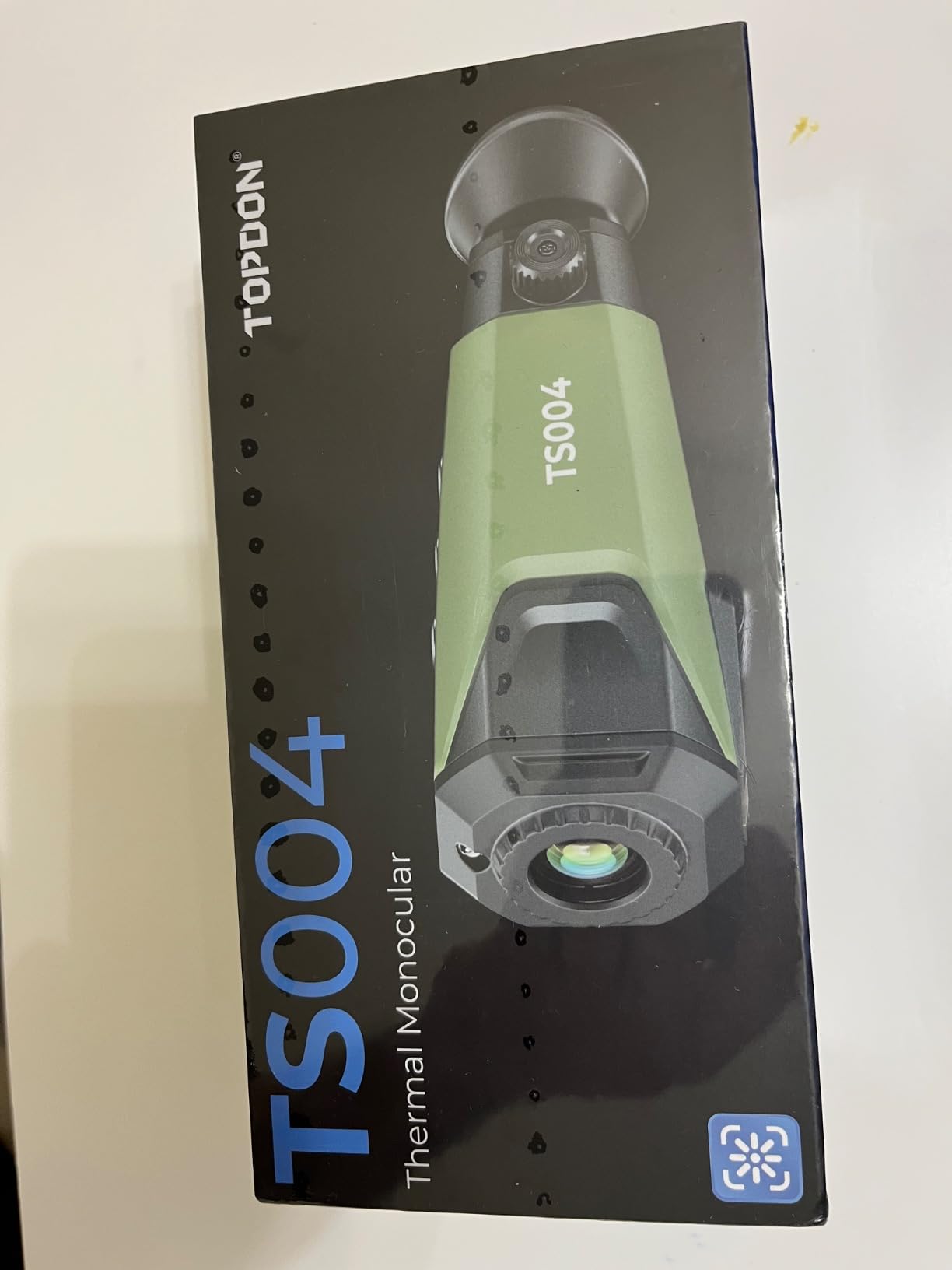
The TS004 is built for the budget buyer who needs thermal observation without flagship pricing. Hog and predator hunters get detection out to 410 meters, image recording for evidence and review, and a battery that survives a full night on a single charge. Security and surveillance users get a compact monocular that streams live footage over Wi-Fi to a phone or tablet. Search-and-rescue volunteers can carry it as a thermal spotter at a price that does not require grant funding. The 70-gram weight and pocketable form factor make it a practical addition to a vehicle glove box or a hunting pack. It is the wrong tool for a buyer who needs a daytime color channel or who wants riflescope mounting – the TS004 is not pretending to be either.
The TS004 is a thermal monocular, not a daytime scope and not a weapon-mounted optic. Buyers expecting riflescope compatibility will be disappointed. The 256×192 sensor resolution is entry-level: at 200 yards on a cold night the human silhouette is identifiable, but at 400 yards there is not enough pixel density for positive ID, and the 8x digital zoom gets noisy fast. The TopInfrared app is functional but not feature-rich; some buyers report connectivity dropouts that reset the live feed. None of these are deal breakers at the $409.99 price – they are limits of the category. At this price point no current thermal unit does significantly better.

384x288 Thermal
12um sensor
1280x960 LCOS
2-16x magnification
WiFi
USB-C
The AGM Taipan TM19-384 is the in-stock variant of the AGM Taipan line, refreshed with a higher-resolution 384×288 sensor at 12 micrometer pixel pitch and a 1280×960 LCOS display that resolves detail better than the older 256×192 generation. The 2-16x magnification range, with smooth digital zoom through the full range, opens up identification tasks that budget thermal monoculars cannot perform – coyote versus fox at 300 yards, deer versus boar at 400 yards, hot spot tracking across a tree line. Customer-shared imagery confirms the device’s compact form factor and the comfortable ergonomic grip during extended observation.
Battery life is the one practical number that takes some adjustment: AGM rates the Taipan TM19-384 at 7.5+ hours with Wi-Fi off, which falls short of the TOPDON TS004’s 11 hours but is in line with mid-tier thermals of similar sensor size. The 5-year manufacturer warranty is the strongest in the category and a real reason to choose AGM over cheaper competitors. Color palettes include White Hot, Black Hot, Red Hot, and Fusion – the Fusion palette is particularly useful for picking out warm targets against cool backgrounds in wooded terrain.
For buyers who already own a primary daytime scope and want thermal observation as a complement, the Taipan TM19-384 hits a useful middle ground. The on-board 8GB storage, the Wi-Fi streaming, and the 5-year warranty make it a credible primary thermal observation tool rather than a starter unit. It does not solve the PN22K’s day/night-from-one-optic problem – no dedicated daytime channel – but it does solve the “what is out there before I shoot” problem with notably better resolution than the value tier.
The Taipan TM19-384 sits in the sweet spot for hunters who need more resolution than a $400 thermal can deliver but do not want to spend flagship pricing. Coyote and fox hunters running calling setups at 200 to 400 yards will appreciate the jump from 256×192 to 384×288. Security professionals and search-and-rescue teams will value the 5-year warranty and the higher-resolution LCOS display. Property owners wanting to scan for trespassers, predator activity, or mechanical heat signatures (electrical faults, radiator lines, livestock) get a tool that pays for itself across a few seasons. Buyers should plan to pair it with a dedicated daytime optic for full 24/7 coverage; the Taipan is a thermal companion, not a stand-alone daytime scope.
At $1,518.71 the Taipan TM19-384 is significantly more expensive than the TOPDON TS004 reviewed above and offers resolution rather than battery life as its edge. There is no daytime optical channel – it is thermal-only, just like every dedicated thermal monocular. The 80-review Amazon base is moderate, so long-term reliability claims depend heavily on AGM’s 5-year warranty rather than owner consensus. Buyers should also confirm rifle mounting accessories separately if they want weapon integration, because the Taipan ships as a handheld observation tool only. For the price tier, none of these are deal breakers; they are the natural limits of the category.

4K digital day
640x480 thermal
50mm obj
Picatinny mount
APS5 battery
The Pulsar Thermion Duo DXP50 is the closest modern spiritual successor to the PN22K concept, and anyone researching the discontinued Wolf optic should understand what Pulsar built. Where the PN22K used two mechanically isolated optical paths to provide a daylight channel and a Gen 2+ or Gen 3 IIT channel, the Thermion Duo pairs a 3840×2160 (4K) full-color CMOS daytime sensor with a 640×480 thermal sensor at 17 micrometer pixel pitch, both feeding into a single Picatinny-mounted riflescope with a multispectral picture-in-picture display. This is the dual-mode concept the PN22K pioneered, implemented two decades later with digital multispectral fusion rather than a mechanical dual channel.
What makes the Duo a daily-use optic rather than a curiosity is the Single Shot Zero feature. Each channel has its own internal reticle, but Single Shot Zero aligns both to the same physical impact point with one round downrange. A shooter fires one shot, adjusts the digital reticle to that impact point, and the thermal reticle automatically follows. The result is the same operational promise the PN22K made: one optic, day and night engagement, without re-zeroing between modes. The 4K daytime channel delivers crisp color out to its magnification range, and the thermal channel is responsive enough for positive ID at hunting distances.
Build quality matches the price tier. Magnesium alloy housing, IPX7 waterproofing, recoil-rated for .375 H&H and larger, and a rechargeable APS5 battery pack with on-board video recording. The thermionic weight sits at 2 pounds with the 50mm objective mounted – heavier than a typical daytime scope but a third of what the PN22K weighs. ITAR export restrictions mean US buyers are routed through approved channels and Prime is not available, which adds lead time but does not affect in-stock availability.
The Thermion Duo DXP50 is built for the shooter who originally looked at the PN22K and wanted a modern equivalent. Predator hunters running night hunts with intermittent daylight need the thermal-plus-color combination; coyote hunters calling at dawn benefit from the seamless transition between channels without swapping optics or re-zeroing. Long-range shooters who already run a primary daytime scope will appreciate the Duo as a complementary optic for low-light and thermal work. Property owners and security users get a single Picatinny-mounted device that covers the full 24-hour cycle. The $4,399.97 price is justified only if the dual-mode capability is genuinely required – for thermal-only users, a $1,500 dedicated thermal monocular handles the same observation tasks.
The price tier is the most obvious limit. $4,399.97 is more than the other three alternatives combined, and a buyer at that budget is making a serious commitment. The Amazon review base is small at 13 ratings, which means long-term reliability has to be taken on Pulsar’s 3-year warranty rather than widespread owner consensus. ITAR export restrictions complicate shipping to some buyers and disqualify Prime eligibility. The thermal and digital channels still each require their own sighting-in procedure even with Single Shot Zero – the alignment is automatic once the digital channel is set, but the initial sighting session is longer than a typical scope installation. Last, the magnesium alloy controller placement on the left side feels awkward to right-handed shooters. None of these are deal breakers for the targeted buyer, but they are limits to know going in.
If you have decided to pursue a PN22K on the used market despite the lack of manufacturer support, the buying process in 2026 is sharper than it was pre-discontinuation. Collector demand has firmed up used pricing, particularly for Gen 3 variants with documented test data sheets, while unverified units have seen discounts as buyers grow more cautious. Here is the practical checklist I would walk through before committing four-figure money to a discontinued optic.
Tube condition has to be the first evaluation priority. Look for the four standard cosmetic indicators of a worn IIT: bright spots (shiny pinpoints scattered through the image), black spots (dark dots that do not move when the optic moves), edge glow (a brighter ring around the periphery of the image), and excessive image scintillation (the image shimmers continuously in low light). Any of these inside the central 70 percent of the field of view is grounds for a price reduction or a walk-away. Ask the seller for low-light photos taken in a darkened room, ideally at 50 yards indoors and 200 yards outdoors at night. If the seller cannot produce recent low-light photos, treat the listing as unverified.
Mechanical condition of the dual-channel shutter is the second priority. With the optic powered on in a darkened room, cycle the yellow Day/Ночь lever through both positions several times. The detent should be positive in both modes with no rocking, no grinding, and no hesitation at the midpoint. If the lever rocks freely or fails to lock, the internal detent is worn and repair requires either Russian military-optics expertise or a sympathetic experimenter. Wear on the threading at the objective or eyepiece is a smaller issue (the threads are standard) but cosmetic dings on the housing are not – they suggest the optic has been dropped, and a dropped IIT often has internal damage that is not visible from outside.
Documentation history moves price dramatically. Original NPZ test data sheets with FOM, SNR, and resolution figures can lift a Gen 3 unit by 20 to 30 percent over an undocumented equivalent. The original hard case, manual, battery adapter, and mounting plate all add value. OpticsPlanet still lists the PN22K as a legacy product on their site; cross-check the listing to confirm whether what you are buying was originally a US-import unit (more straightforward paperwork) versus an Eastern European example imported through a parallel channel (more paperwork complexity, sometimes with export compliance paperwork missing).
2026 collector pricing for the PN22K has shifted upward since discontinuation was widely acknowledged. Genuine Gen 3 units with documentation now trade in the $2,200 to $3,000 range, with top-condition tubes and complete paperwork hitting $3,500 or more at auction. Gen 2+ units typically sell for $1,400 to $1,900 depending on cosmetic condition and paperwork. Units with no documentation, visible blemishes, or mechanical concerns should be discounted 30 to 40 percent off those ranges regardless of what the listing asks. Units with known issues should not be purchased at any price – repair costs on a discontinued NPZ optic almost always exceed original purchase price.
Verification before purchase should be non-negotiable. If the seller is local, an in-person inspection with a darkened room and a flashlight to test the bright-light cutoff saves thousands. For long-distance purchases, request a video demonstration of the day-channel reticle clarity, the night-channel image quality, the shutter cycling, and a brief low-light recording. Any seller hesitant to provide that footage is hiding something. The targettamers review and the russianoptics.net hands-on write-up are the two independent benchmarks to compare what you are buying against; neither is marketing copy and both are blunt about the unit’s specific limitations.
For AK platform buyers specifically, plan for the rear sight leaf removal before delivery. The PN22K will not physically mount on a standard AKM with the rear sight leaf left in place, and forcing the optic onto the rail risks cracking the objective housing. AK Master Mount’s installation guide is the cleanest walk-through of the procedure, and most AK owners can complete the leaf removal and optic mounting inside an hour with basic hand tools. Confirm fitment before any money changes hands if you cannot do the work yourself.
The PN22K has been discontinued since around 2018 to 2019 and is no longer in regular production. Existing inventory at retailers like OpticsPlanet is closed-out stock. Most available units today come from collectors, specialty forums, and the occasional auction. Collector pricing has firmed as the discontinuation was acknowledged, particularly for documented Gen 3 examples.
The PN22K offers dual-mode capability in a single riflescope, while the PVS-14 is a monocular that requires separate mounting for weapon use. Independent owner testing on russianoptics.net places PN22K Gen 3 night-mode performance close to a PVS-14 in image quality. The PN22K eliminates the need to swap optics when transitioning between day and night engagements, but it weighs more than a PVS-14 by a wide margin and lacks the modern mounting ecosystem.
Yes. The PN22K uses a mechanical dual-channel system that completely isolates the image intensifier tube when in day mode. An internal shutter physically blocks the night-vision optical path, and light is redirected through a separate daylight optical channel designed for daytime use. Daylight cannot reach the photocathode regardless of how long the unit is left in day mode.
Gen 3 PN22K units use a gallium arsenide photocathode with a microchannel plate and thin-film ion barrier, delivering significantly better low-light sensitivity and resolution than Gen 2+. Working estimates put Gen 3 FOM in the 1400 to 1800 range based on owner reports, with autogated MCP and tube life ratings of 10,000 hours or more. Gen 3 units also handle bright-light transitions better via autogating. Gen 3 models command a meaningful premium on the used market.
The Pulsar Thermion Duo DXP50 is the closest modern equivalent to the PN22K’s dual-mode concept, pairing a 4K full-color daytime CMOS sensor with a 640×480 thermal sensor in one Picatinny-mounted riflescope. Single Shot Zero aligns both reticles to one impact point. Most other 24/7-capable units are either thermal-only monoculars or digital scopes that handle day and night differently through sensor switching rather than dual optical channels.
For collectors and night vision enthusiasts, the PN22K represents an important piece of optical engineering history and remains worth the investment, particularly for documented Gen 3 examples. For practical tactical use in 2026, modern alternatives such as the Pulsar Thermion Duo DXP50 for true dual-mode or the AGM Wolf-14 NW1 for PVS-14-class Gen 2+ often provide better value with lighter weight, longer battery life, and active manufacturer support despite lacking true mechanical dual-channel capability.
After re-walking the technical specifications, the performance testing, and the alternatives landscape, the conclusion for 2026 is sharper than it was when this review first ran. The Wolf Performance Optics PN22K was a genuinely innovative optic – one of the only successful implementations of a true mechanical dual-channel day and night riflescope ever shipped to civilian buyers. The dual-mode concept it pioneered has matured in the two decades since into the digital multispectral designs Pulsar now ships. The PN22K itself is no longer in production, and the realistic advice depends entirely on whether you are buying it as a tool or as a piece of history.
If you are a collector of military optics, or a night-vision enthusiast who appreciates engineering over feature creep, the PN22K still earns a place in the safe. A documented Gen 3 unit with original NPZ test data, hard case, and manual is a meaningful historical artifact at $2,200 to $3,500 in 2026, and prices for top-condition examples are likely to firm further rather than soften. The mechanical dual-channel design is genuinely unique in the civilian market, and no current product replicates it exactly – the Pulsar Thermion Duo DXP50 solves the same problem with digital multispectral fusion rather than mechanical isolation, which is impressive but not the same thing. For background on related scope categories, see our guide to the best night vision scopes under $1000.
If you are a practical shooter choosing between a PN22K and the modern alternatives reviewed above, the answer is clearer. The Pulsar Thermion Duo DXP50 brings the same single-optic 24/7 capability the PN22K was built for, with active manufacturer support, a 3-year warranty, and digital multispectral fusion. The AGM Wolf-14 NW1 brings modern Gen 2+ white phosphor at a price most collectors can reach, with a 40-hour AA battery and MIL-STD construction. The TOPDON TS004 and the AGM Taipan TM19-384 round out the dedicated-thermal options for buyers who want observation capability without flagship pricing. None of these replicate the PN22K’s mechanical dual-channel design exactly, and that is the loss; what they offer in exchange is reliability, warranty coverage, and software-driven features the analog PN22K was never designed to provide. For a tactical professional or a serious hunter in 2026, the modern alternatives are the practical choice. For a collector who already knows exactly what they are buying and why, the PN22K still has a place.