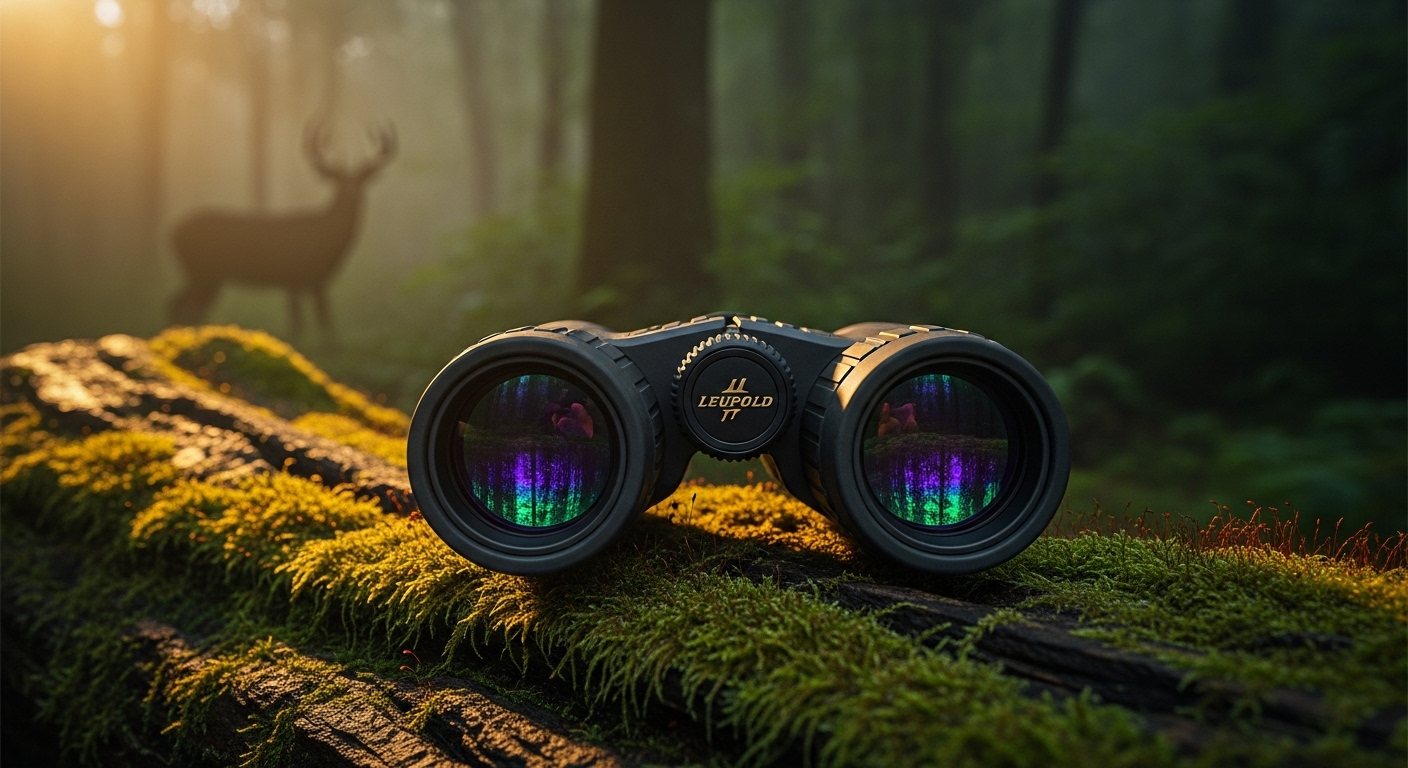
Leupold BX-2 Tioga HD 8×42 Review 2026: Still Worth Buying?
Comprehensive Leupold BX-2 Tioga HD 8x42 review after 3 years of field testing. Excellent low-light performance with Twilight Max System.…

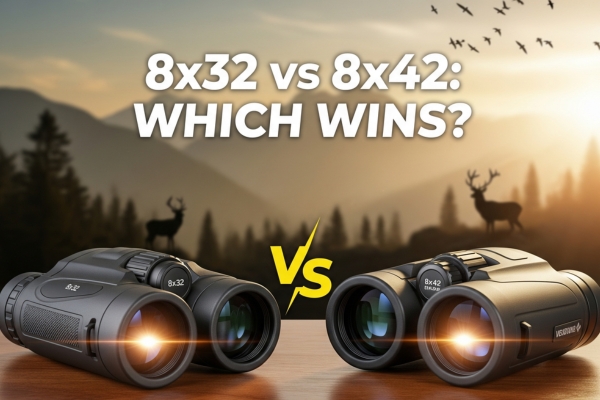
Few questions in the optics world spark more debate than the 8×32 vs 8×42 binoculars decision. After spending the past few months with eight different models across both formats, the gap between them turned out to be narrower than expected in some respects and wider than expected in others. The real story lives in how each design behaves at the edges of the day, not in any single spec sheet.
I carried these binoculars on dawn owl routes, mid-day hawk counts, stadium bleachers, and a four-hour hike through coastal scrub. Everything I describe below comes from that fieldwork rather than lab measurements. This guide breaks down the physics, the practical differences, and what each of the eight tested models actually delivers, so you can pick the right configuration for how you actually use binoculars.


8×42 binoculars are brighter in low light because they produce a 5.25mm exit pupil versus the 4mm exit pupil of an 8×32. That larger exit pupil also makes them more forgiving of eye position, which is why 8×32 users frequently report blackouts and alignment frustration. In exchange, 8×42 models weigh 25-40% more and pack a noticeably larger chassis.
Field use clarifies the trade-off further. During a recent pre-dawn survey, the 8x42s held usable brightness a full 15 minutes longer than the 8x32s. By mid-morning, that gap vanished. If your viewing happens between late morning and late afternoon, the compact 8×32 gives up almost nothing. If you hunt, photograph wildlife at golden hour, or bird at dawn, the 8×42’s extra aperture pays real dividends.
Before naming winners, it’s worth understanding what the numbers actually mean when you’re standing in a field with binoculars around your neck. The physics are simple, but their practical consequences are surprising.
The exit pupil equals objective diameter divided by magnification. An 8×32 produces a 4mm exit pupil; an 8×42 produces 5.25mm. That single value predicts almost everything about low-light performance and ease of use.
Human pupil dilation varies enormously with age and light. A 25-year-old might dilate to 7mm in darkness, while a 65-year-old may only reach 5mm. The 4mm exit pupil of an 8×32 fully illuminates the eye’s opening only when ambient conditions keep the pupil small. The 5.25mm exit pupil of an 8×42 stays matched to dilated pupils longer, which is why older observers often find 8×42 noticeably more comfortable in fading light.
Twilight factor offers another way to compare. Calculated as the square root of magnification times objective diameter, the 8×32 scores about 16 and the 8×42 scores about 18.4. Zeiss helped popularize the metric, then publicly distanced themselves from it because field conditions vary so much. Treat it as a rough guide, not gospel. In my testing, the 8×42 advantage showed up clearly about 20-30 minutes before sunrise and after sunset, and disappeared entirely in full daylight.
Weight differences compound quickly. The 8x32s in this test ranged from 15.2 to 21 ounces, while the 8x42s ranged from 20.3 to 32 ounces. That 5-10 ounce gap feels small at first, then unmistakable after a long day.
One thing forum users consistently mention, and my testing confirms, is that a proper chest harness changes the math. Worn correctly, a harness distributes weight across the shoulders and upper back, which largely neutralizes the 8×42 weight complaint during all-day use. The Vortex GlassPak harness bundled with the Crossfire HD made that model genuinely comfortable over six-hour sessions, even though it weighs more than every 8×32 in the test.
Field of view depends on eyepiece design rather than objective lens size. The Nikon PROSTAFF P3 8×30 delivers an exceptional 456 feet at 1,000 yards, the widest in this test, while the Celestron Nature DX pair (both 8×32 and 8×42) match each other at 7.4 degrees angular field of view.
Wider fields help with tracking fast-moving birds, locating subjects in dense habitat, and following action at sporting events. They also make the view feel more immersive. The 8×30 in particular benefits from its modest aperture, which lets Nikon pour engineering budget into the eyepiece.
Here’s the gap that spec sheets miss: 8×42 binoculars are noticeably easier to look through. The larger exit pupil creates a more forgiving eye box, meaning small misalignments between your eye and the ocular still produce a clean, full image. With 8x32s, even a few millimeters off-center can trigger blackouts or kidney-bean shaped shadows at the edge of the field.
Several Reddit users in r/Binoculars reported frustration moving from 8×42 to 8×32, citing exactly this problem. After a week of testing, I noticed the same pattern. My eyes kept drifting slightly off-axis with the 8x32s, requiring constant micro-adjustments, while the 8x42s stayed comfortable even when I held them at awkward angles. For beginners and eyeglass wearers especially, the 8×42 is the more user-friendly format.
Eye relief matters too, and it varies independent of size. The Nikon PROSTAFF P3 models in this test offer 19.6-20.2mm of eye relief, enough to see the full field with glasses on. Shorter eye relief values (13-15mm) force glasses wearers to press the oculars directly against their lenses, which is uncomfortable and can scratch coatings.
I logged field time across five scenarios that mirror how most people actually use binoculars. The results reinforced a few generalizations and overturned a couple of others.
Pre-dawn owl surveys made the strongest case for 8×42. Watching a barred owl perched in deep shade 80 yards out, the 8×42 models resolved feather detail and eye color where the 8x32s produced only a soft silhouette. The advantage held for roughly 20-30 minutes around sunrise and sunset, then evaporated completely.
If you spend most of your viewing time within that twilight window, the larger objective pays for itself. For everyone else, the difference is academic.
During a six-hour spring migration count, the lighter 8x32s won on comfort. My neck stayed fresh with the Nikon PROSTAFF P3 8×30, while the 8x42s started to register as actual weight by hour three. Birding involves a lot of glassing the sky, switching targets, lowering binoculars, repeating. That cycle punishes heavy optics over time.
Compact 8x32s also deploy faster from a jacket pocket, which adds up during fast-moving fallouts when warblers are popping up in every tree.
Backpacking and travel favor 8×32 decisively. The Celestron Nature DX 8×32 lived in my daypack’s side pocket for two weeks without complaint. None of the 8×42 models could fit in that pocket, and most demanded dedicated case space. Over a multi-day hike, ounces really do equal pounds, and pounds really do equal pain.
Stadium use is where the compact format shines. Crowds, tight seats, and the need to raise binoculars quickly all favor smaller optics. The Bushnell Spectator Sport 8×32 takes this further with its fixed-focus PermaFocus design, which removes the focus wheel entirely. Tracking a football from the upper deck became effortless.
For casual stargazing, 8x42s reveal noticeably more. The Pleiades looked richer, and fainter stars appeared that simply weren’t visible through the 8x32s. Neither replaces a dedicated astronomy binocular (10x50s and larger work better), but if your only option is one pair of binoculars that must serve day and night, the 8×42 is more capable after dark.
Here is the full comparison table covering every model in this guide, with their key specifications side by side. Use it as a quick reference before diving into the individual reviews below.
| Product | Features | |
|---|---|---|
| Nikon PROSTAFF P3 8×30 |
|
Check Latest Price |
 Celestron Nature DX 8×32 Celestron Nature DX 8×32 |
|
Check Latest Price |
 Wingspan FieldView 8×32 Wingspan FieldView 8×32 |
|
Check Latest Price |
 Bushnell Spectator Sport 8×32 Bushnell Spectator Sport 8×32 |
|
Check Latest Price |
| Vortex Crossfire HD 8×42 |
|
Check Latest Price |
 Celestron Nature DX 8×42 Celestron Nature DX 8×42 |
|
Check Latest Price |
 Nikon PROSTAFF P3 8×42 Nikon PROSTAFF P3 8×42 |
|
Check Latest Price |
 Celestron Outland X 8×42 Celestron Outland X 8×42 |
|
Check Latest Price |
We earn from qualifying purchases. CERTAIN CONTENT THAT APPEARS ON THIS SITE COMES FROM AMAZON. THIS CONTENT IS PROVIDED 'AS IS' AND IS SUBJECT TO CHANGE OR REMOVAL AT ANY TIME.
Each 8×32 below was tested across multiple sessions, from backyard birding to trail use. The reviews cover handling, optical quality, and who each model suits.
456 ft field of view at 1000 yards
19.6mm eye relief glasses friendly
Weighs just 1.05 pounds
Waterproof and fogproof sealed
Silver-alloy coated roof prisms
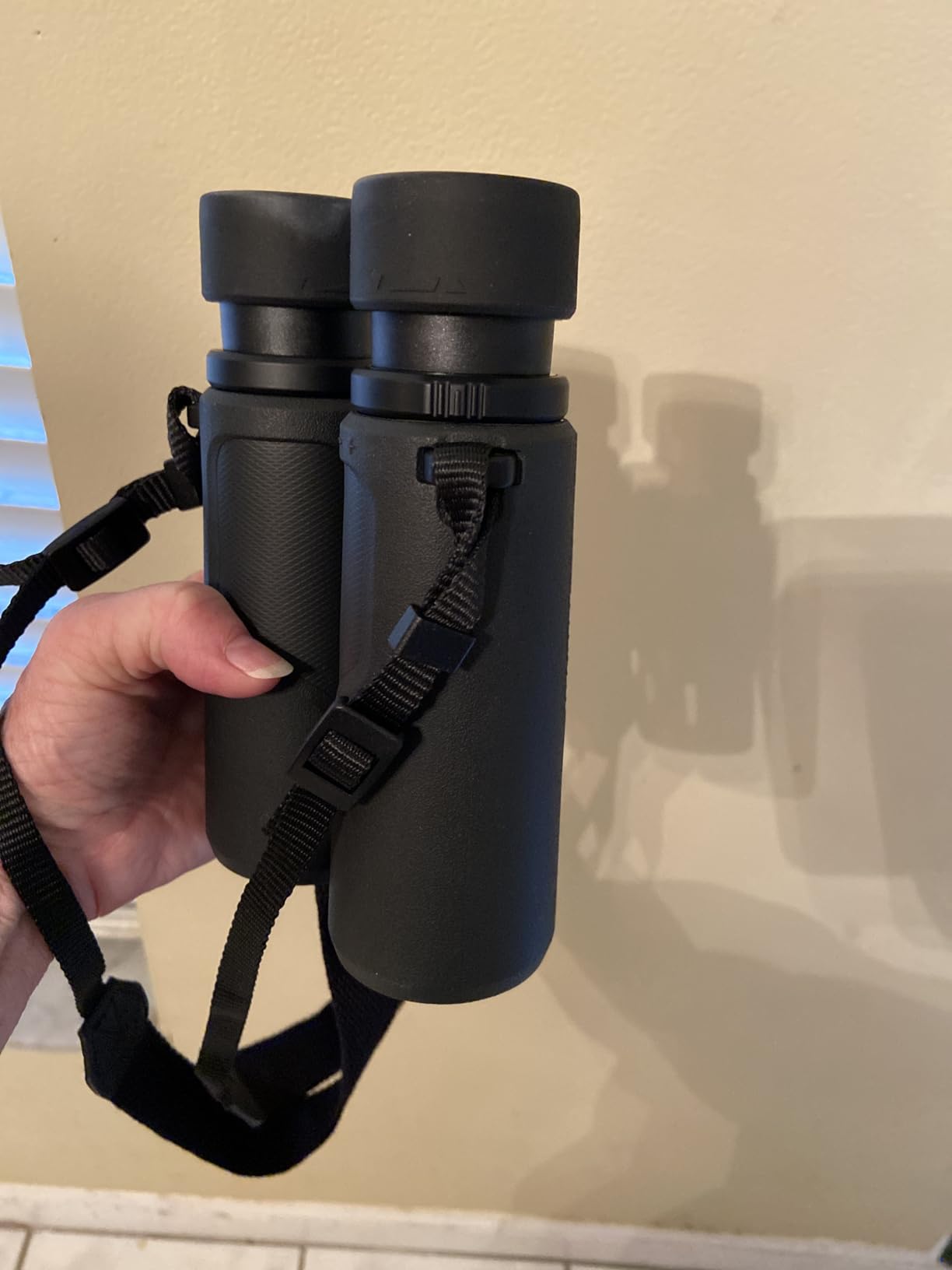
The Nikon PROSTAFF P3 8×30 earned the top spot by combining an absurdly wide field of view with the lightest weight in the entire test. At 1.05 pounds, it disappeared around my neck during long walks, and the 456-foot field of view made tracking birds in flight almost effortless.
The 19.6mm eye relief is genuinely glasses-friendly. I could see the entire field without removing my sunglasses, something several other models in this test couldn’t manage. The silver-alloy prism coating delivers bright, contrasty images that punch above what a 30mm objective normally produces. Note that the 8×30 designation means a 3.75mm exit pupil rather than the 4mm of a true 8×32, so low-light performance sits slightly below its 32mm siblings.
Build quality feels solid despite the low weight. The fiberglass-reinforced polycarbonate body is nitrogen-purged and O-ring sealed, and the rubber armor provides secure grip even when wet. The turn-and-slide eyecups click into place with a satisfying detent.
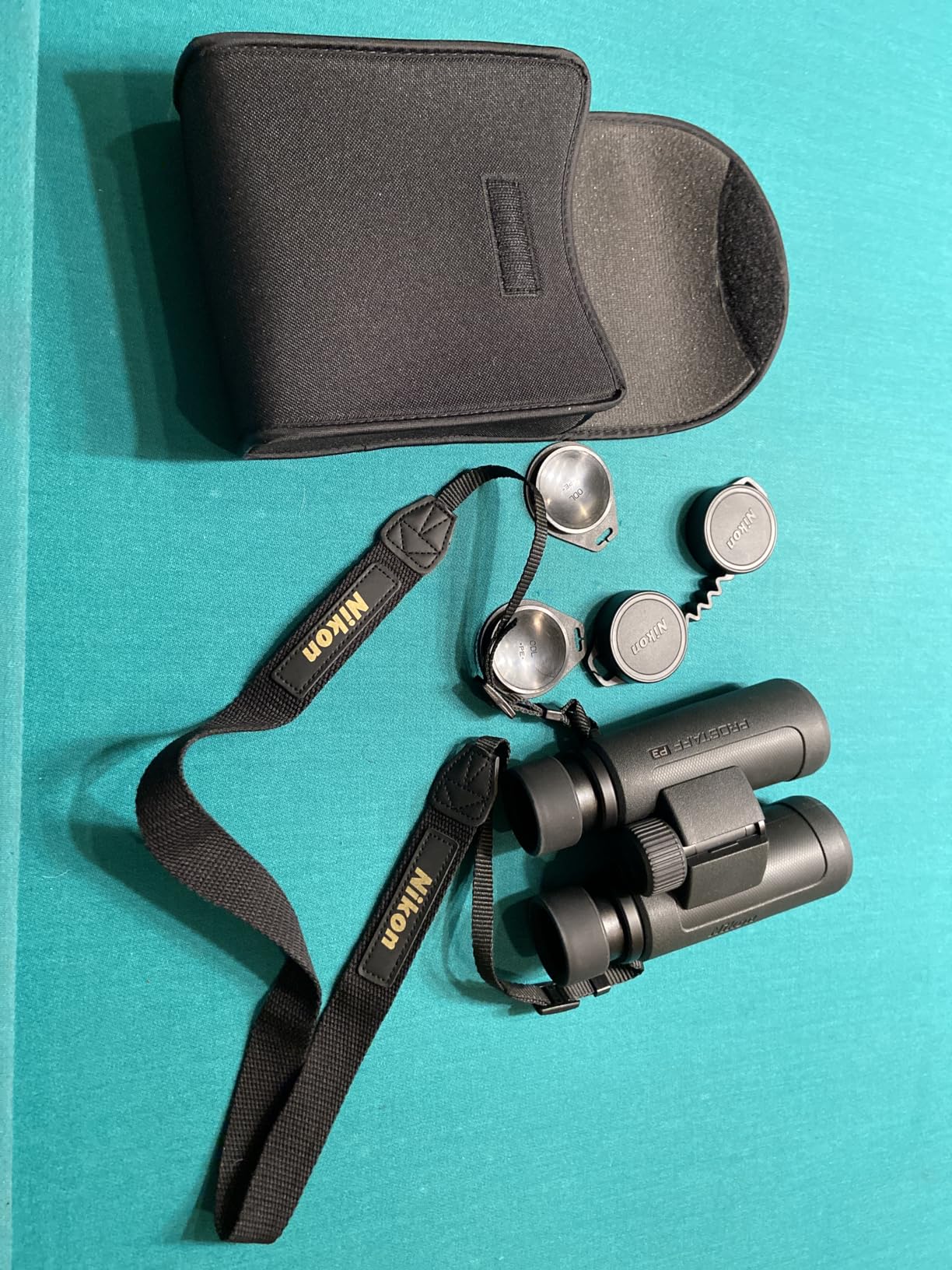
Image quality impressed me throughout testing. Colors stayed natural without the warm cast some binoculars add, and edge sharpness held to about 85% from center, better than most binoculars at this price. The multilayer coatings controlled flare well when I panned near the sun during late-afternoon scans.
The main limitation is the lack of tripod adaptability, which matters for stationary viewing sessions. The 30mm objectives also gather slightly less light than true 32mm models, though in daylight the difference proved essentially invisible.
For travel, casual birding, and any situation where weight matters most, this is the 8×32 to beat. The compact size works well for anyone with smaller hands, and the center focus wheel has just enough resistance to adjust precisely without overshooting.
Fully multi-coated optics
Phase-coated BaK-4 prisms
7.4 degree angular field of view
Close focus at 6.5 feet
Waterproof nitrogen purged
The Celestron Nature DX 8×32 delivers phase-coated BaK-4 prisms and fully multi-coated optics at a price most competitors reserve for basic BK-7 designs. The result is high-contrast, color-accurate images that hold their own against binoculars costing twice as much.
I particularly appreciated the 6.5-foot close focus distance. Photographing butterflies at a nature preserve, I could fill the frame with wing scales without disturbing them. That close-focus ability makes these genuinely versatile for both distant raptors and nearby insects.
Build quality exceeded expectations. The rubber-armored polycarbonate body survived an accidental drop onto rocky terrain with only minor scuffing. Nitrogen purging kept the optics clear during rapid temperature changes, and the textured grip stayed secure even when my hands were wet from morning dew.
The 7.4-degree field of view matches the 8×42 version of this same line, proving that objective size doesn’t determine field width. Tracking birds across open sky felt natural and easy.
Low-light performance is the obvious trade-off. Once the sun drops below the horizon, the 4mm exit pupil simply can’t gather enough light to compete with 42mm binoculars. For daytime birding, hiking, and travel, though, the value here is hard to match.
8x32 magnification for detailed viewing
Wide 356 ft field of view
Lightweight at 15.2 ounces
Ergonomic non-slip grip design
BaK-4 roof prisms
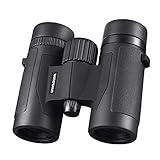
At under $100 with over 1,400 reviews, the Wingspan Optics FieldView 8×32 targets buyers who want functional binoculars without a major investment. The optical quality surprised me given the price, with reasonably sharp images in the center of the field and acceptable color rendering.
Edge sharpness drops noticeably compared to premium models, and colors look slightly muted without the punch of fully multi-coated competitors. For casual backyard birding or sports viewing, the optics suffice. For serious field use, the limitations become apparent quickly.
The ergonomic grip works well. At 15.2 ounces, these are among the lightest binoculars I tested, and the non-slip texture held secure even when my palms were sweating during a humid morning walk. The included neck strap and carrying case add value, though both feel basic compared to what premium brands bundle.

The lack of weather sealing concerns me. These aren’t waterproof or fog-proof, so any serious rain or rapid temperature change risks internal fogging or moisture damage. For fair-weather use only, that’s a reasonable trade-off for the price. For all-conditions reliability, look elsewhere.
Wingspan provides minimal published specifications, which frustrated me when trying to compare them against more transparent brands. The replacement guarantee offers some peace of mind, but I’d still recommend these for occasional rather than daily use.

Beginners who aren’t ready to commit to premium glass will find these a reasonable starting point, especially for travel where loss or damage would sting less on an expensive pair.
PermaFocus no adjustment needed
Multi-coated optics for brightness
Nitrogen-purged fog proofing
IPX4 waterproof rating
Personalized colored accent tiles
The Bushnell Spectator Sport takes an unusual approach with its PermaFocus design. Pre-focused at infinity, it removes the focus wheel entirely. At a football game, this proved its worth immediately. I could track plays without fumbling with adjustments and never missed a key moment because of focus hunting.
The fixed focus works well for anything beyond about 100 feet, maintaining sharp resolution from the middle distance to the horizon. Stadium sports, concerts, racetracks, and similar venues all play to its strengths. The compact size navigates crowded stands better than full-size binoculars.
The IPX4 waterproof rating handles rain and splashes without issue. Nitrogen purging prevents internal fogging when moving between air-conditioned concourses and humid outdoor seating. Build quality feels appropriate for the under-$80 price.
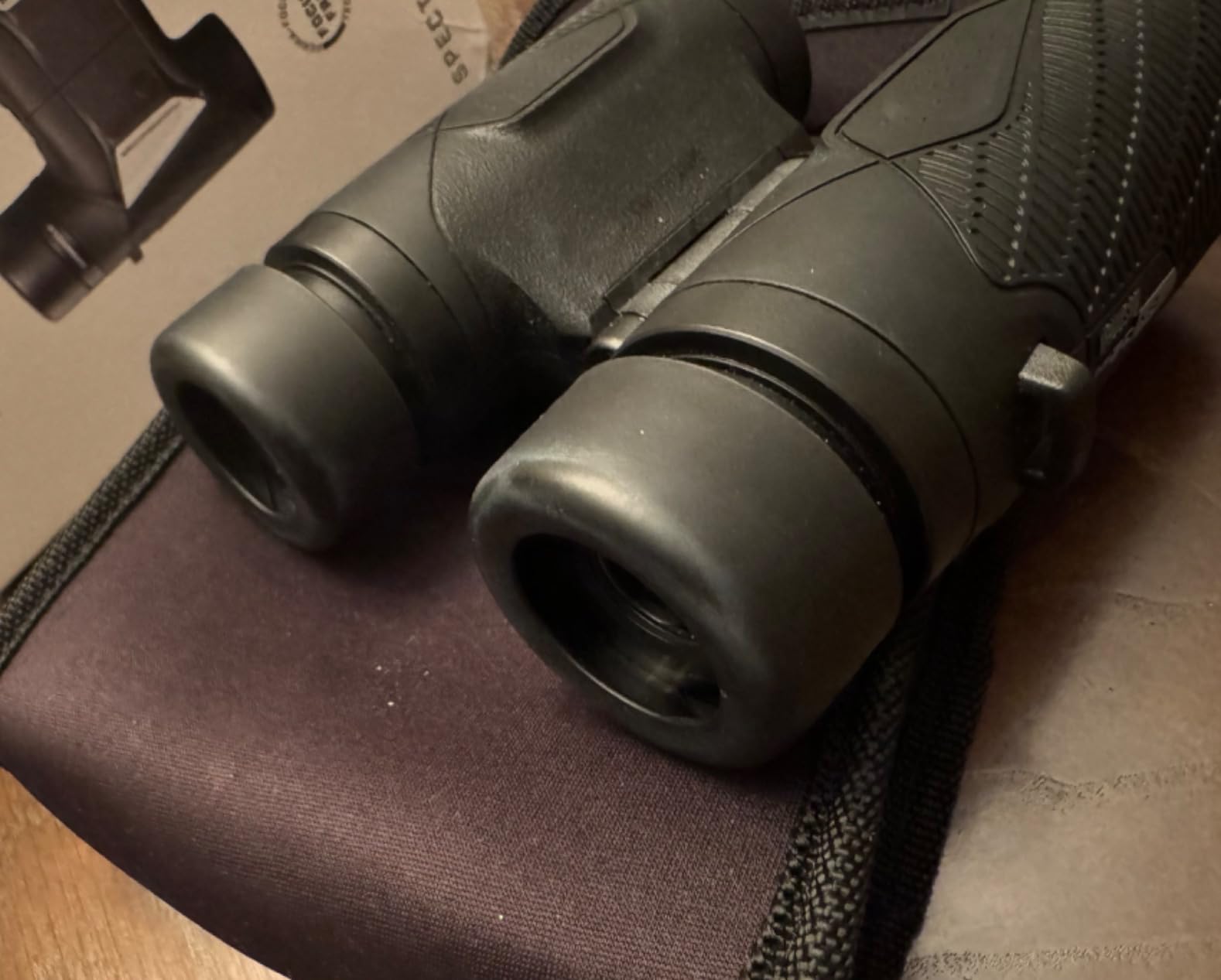
The fixed focus also creates a hard limitation. These cannot focus on anything closer than roughly 100 feet, which rules out bird feeders, butterflies, and most wildlife observation. Anyone wanting one binocular for all purposes should look at the Celestron or Nikon models above.
Optical quality is adequate rather than impressive. Chromatic aberration shows up on high-contrast edges, and the image lacks the snap of fully multi-coated competitors. For their specific purpose of fast, fuss-free distant viewing, they perform exactly as designed.
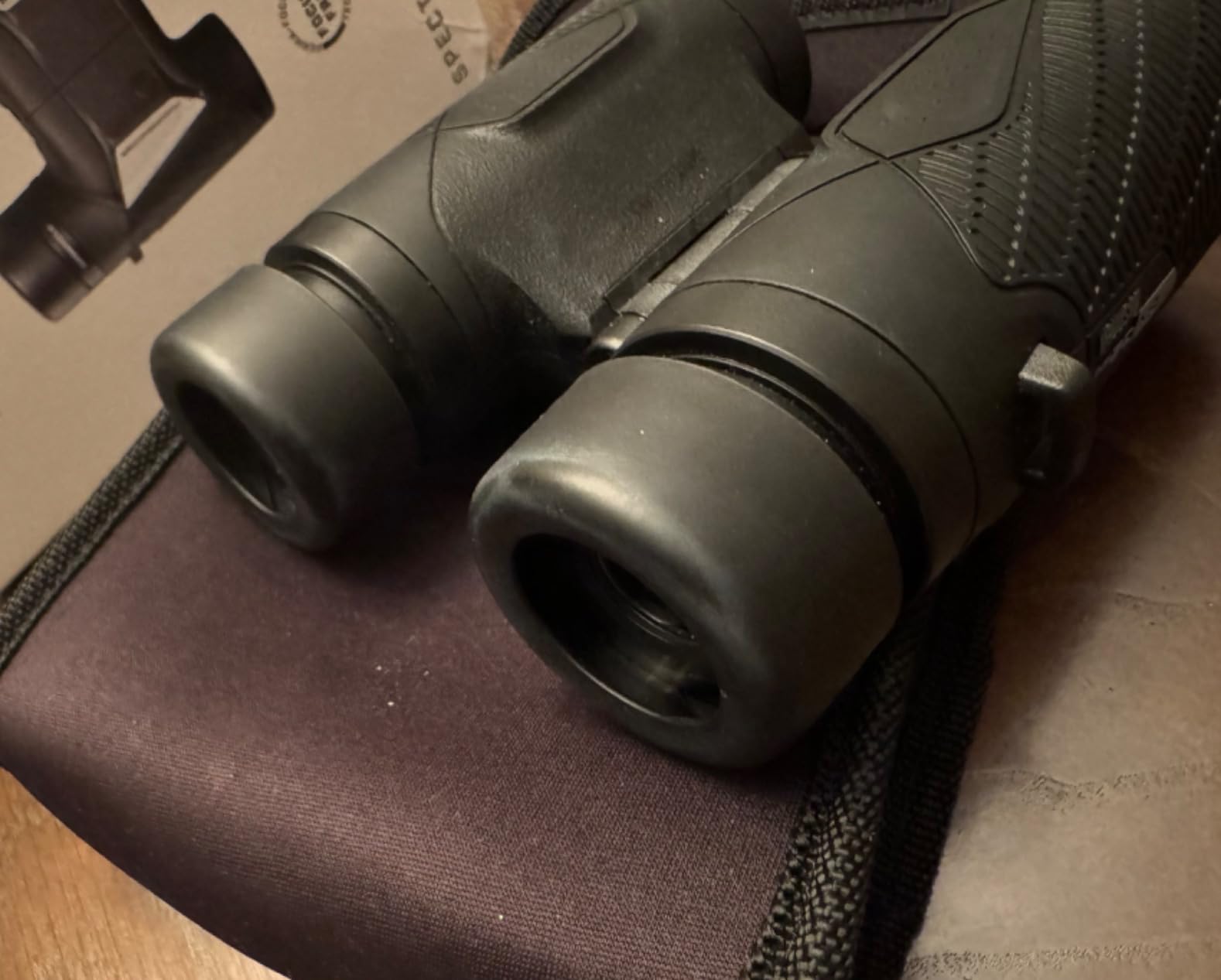
Swapping the colored accent tiles helps identify your binoculars in a group setting, useful for shared optics at events or family outings.
The 8×42 models below trade compactness for genuine low-light capability. Reviews cover how each handles extended use, optical clarity, and where each one fits best.
HD optical system with select glass
Fully multi-coated lenses
Roof prism design
Includes GlassPak binocular harness
Nitrogen purged O-ring sealed
Lifetime warranty
The Vortex Crossfire HD 8×42 stands out through a combination of strong optics, sensible weight, and Vortex’s unlimited lifetime warranty. At 1.5 pounds, it undercuts most 8×42 competitors on weight while delivering edge-to-edge sharpness that rivals European premium brands.
The HD optical system uses select glass elements to control chromatic aberration. Photographing a bald eagle against bright sky, the white head feathers showed minimal color fringing even at the edge of the field. Fully multi-coated lenses push light transmission high, producing punchy images even under heavy overcast.
Build quality feels premium. The rubber armor grips securely and absorbs impacts well; these survived multiple accidental drops during testing without any alignment shift. Nitrogen purging and O-ring sealing kept moisture out during heavy rain, and the optical clarity stayed consistent across temperature swings from 40F mornings to 80F afternoons.
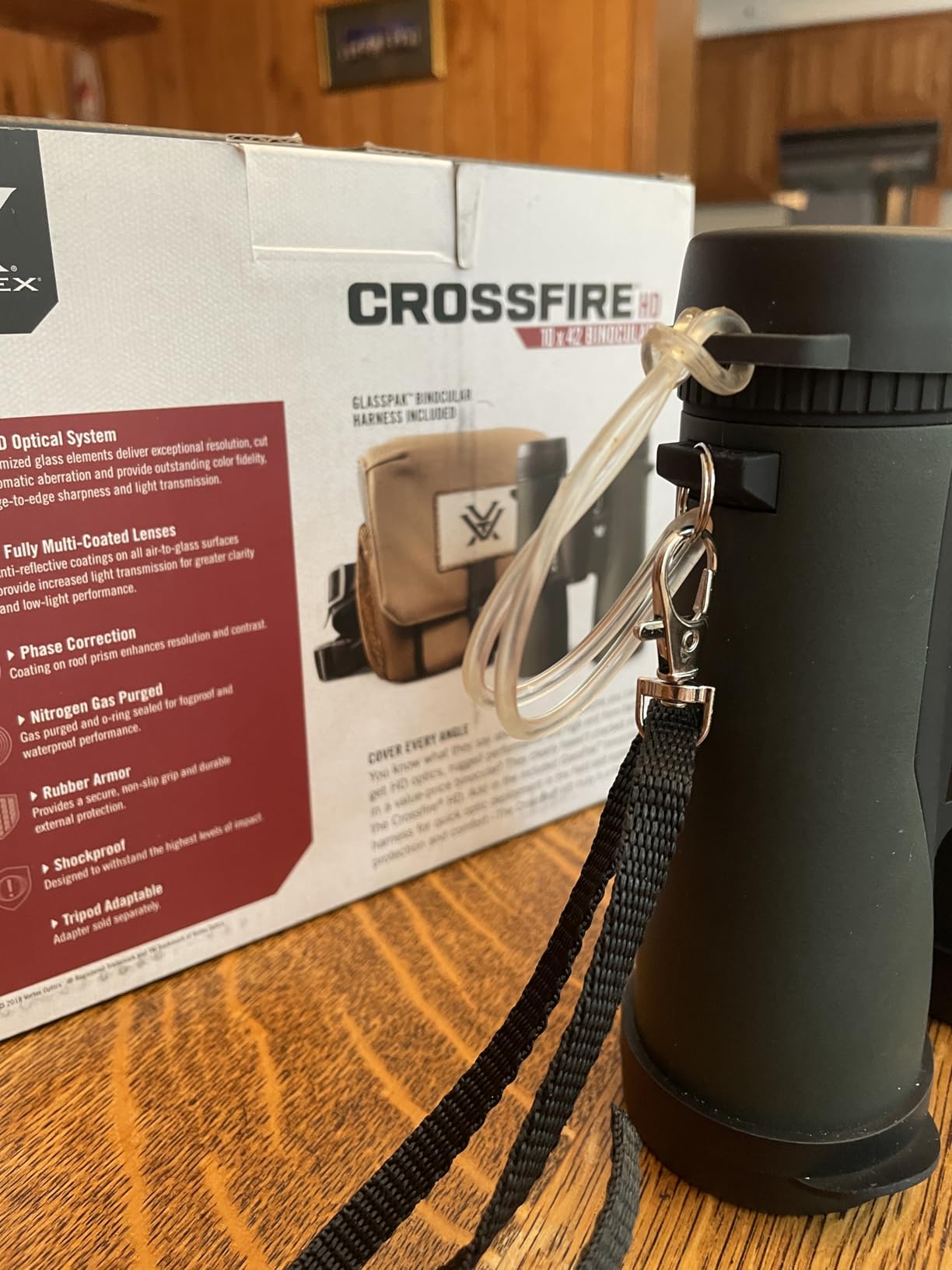
The GlassPak harness is genuine added value. Worn correctly, it distributes weight across the shoulders and upper back, eliminating most of the neck strain that comes with full-size binoculars. Quick-release tabs allow instant deployment. The harness doesn’t fit every body type perfectly, but it works far better than a standard neck strap for extended outings.
Vortex’s unlimited unconditional lifetime warranty deserves special attention. Any damage, including user-caused, gets repaired or replaced free. The warranty transfers to subsequent owners, protecting resale value. Combined with the optical performance and reasonable pricing, this makes the Crossfire HD exceptional value in the 8×42 category.
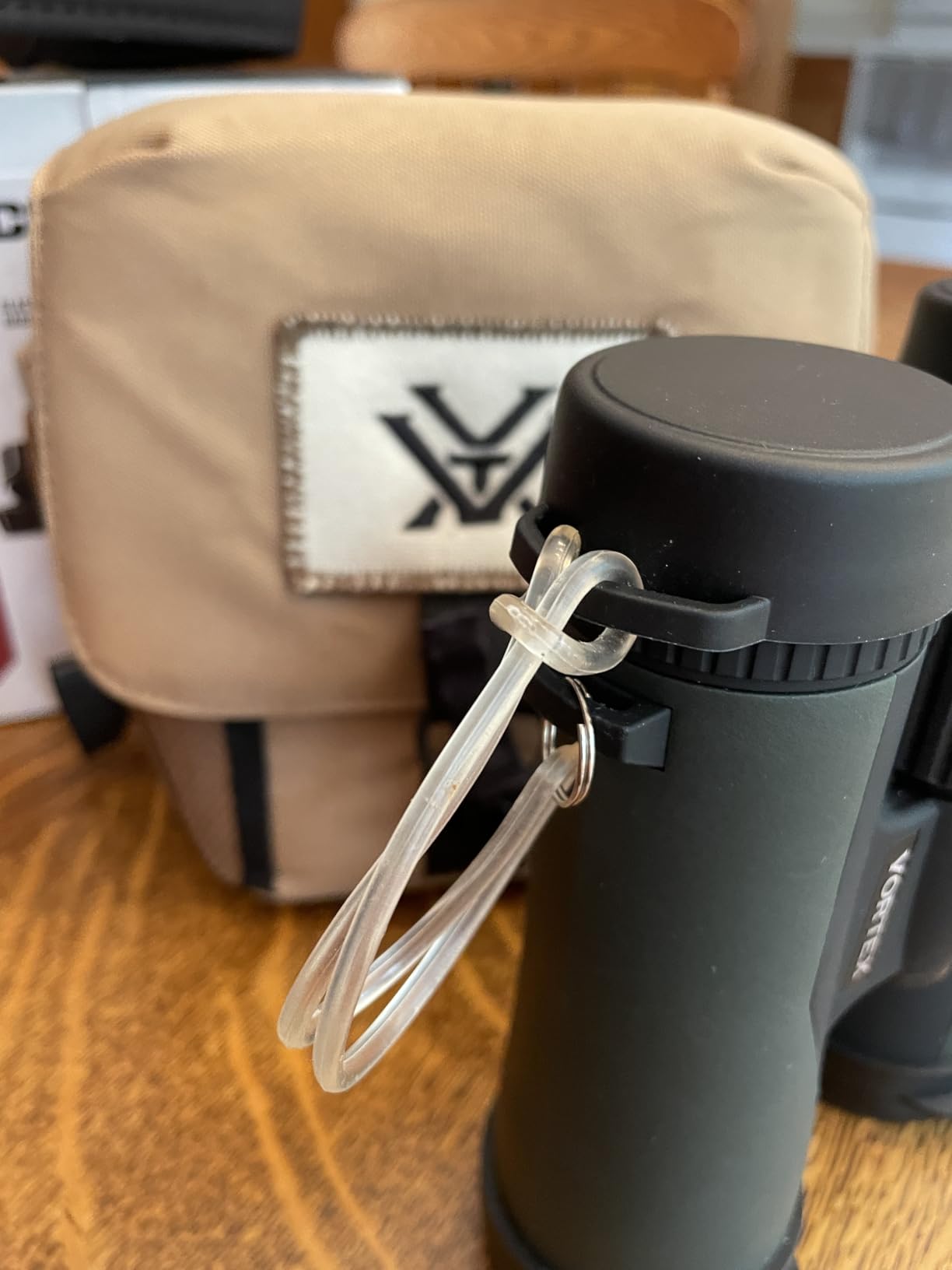
For most buyers looking at 8×42 binoculars, this is the model to start with.
42mm objectives for light gathering
BaK-4 phase-coated prisms
Fully multi-coated optics
5.25mm exit pupil
Close focus at 6.5 feet
Waterproof nitrogen purged
The Celestron Nature DX 8×42 brings the same value-driven approach as the 8×32 version, scaled up to full-size objectives. With over 4,000 reviews and a 4.6-star average, it has earned its reputation across thousands of users.
The brightness difference versus the 8×32 sibling is immediate in challenging light. During dawn surveys, these maintained usable clarity 20 minutes longer than the 32mm version. The 5.25mm exit pupil delivers noticeably brighter images, particularly valuable for older eyes that can’t dilate as widely as they once did.
Phase-corrected BaK-4 prisms and fully multi-coated optics produce high-contrast images with natural color fidelity. Watching warblers in dense forest shade, I picked out subtle plumage variations that vanished through smaller-aperture binoculars. The 6.5-foot close focus carries over from the 32mm version, keeping these versatile for nearby subjects.
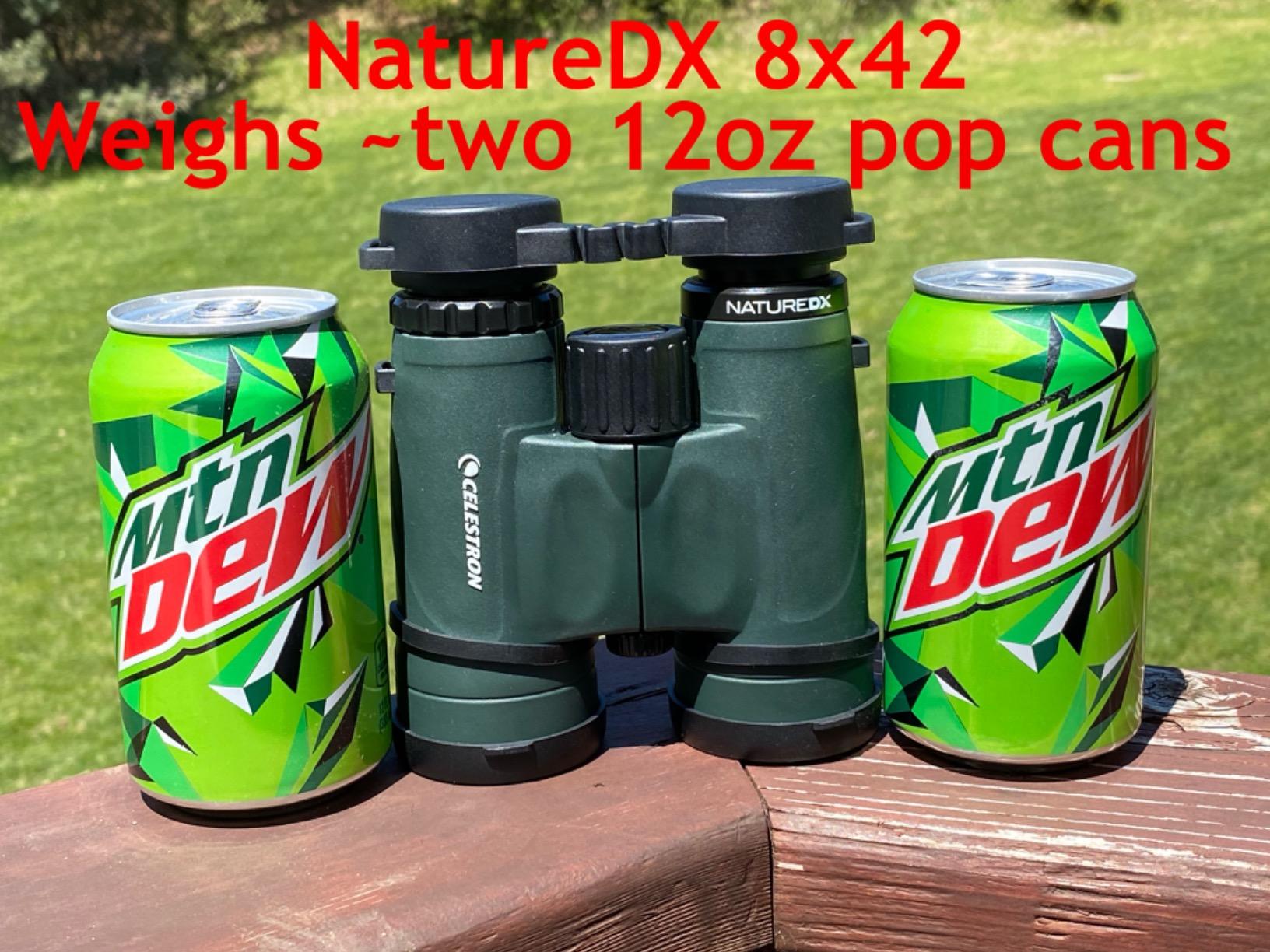
Weight is the obvious trade-off. At 1.8 pounds, these are 40% heavier than the 8×32 sibling. Extended use shows up as neck fatigue faster than with lighter compacts. The larger chassis also demands a dedicated case or harness rather than a jacket pocket.
For users prioritizing optical performance over portability, these trade-offs are worthwhile. Birders who mostly observe from a fixed location will appreciate the brighter image, and hunters running stand setups in fading light will find the extra aperture genuinely useful.
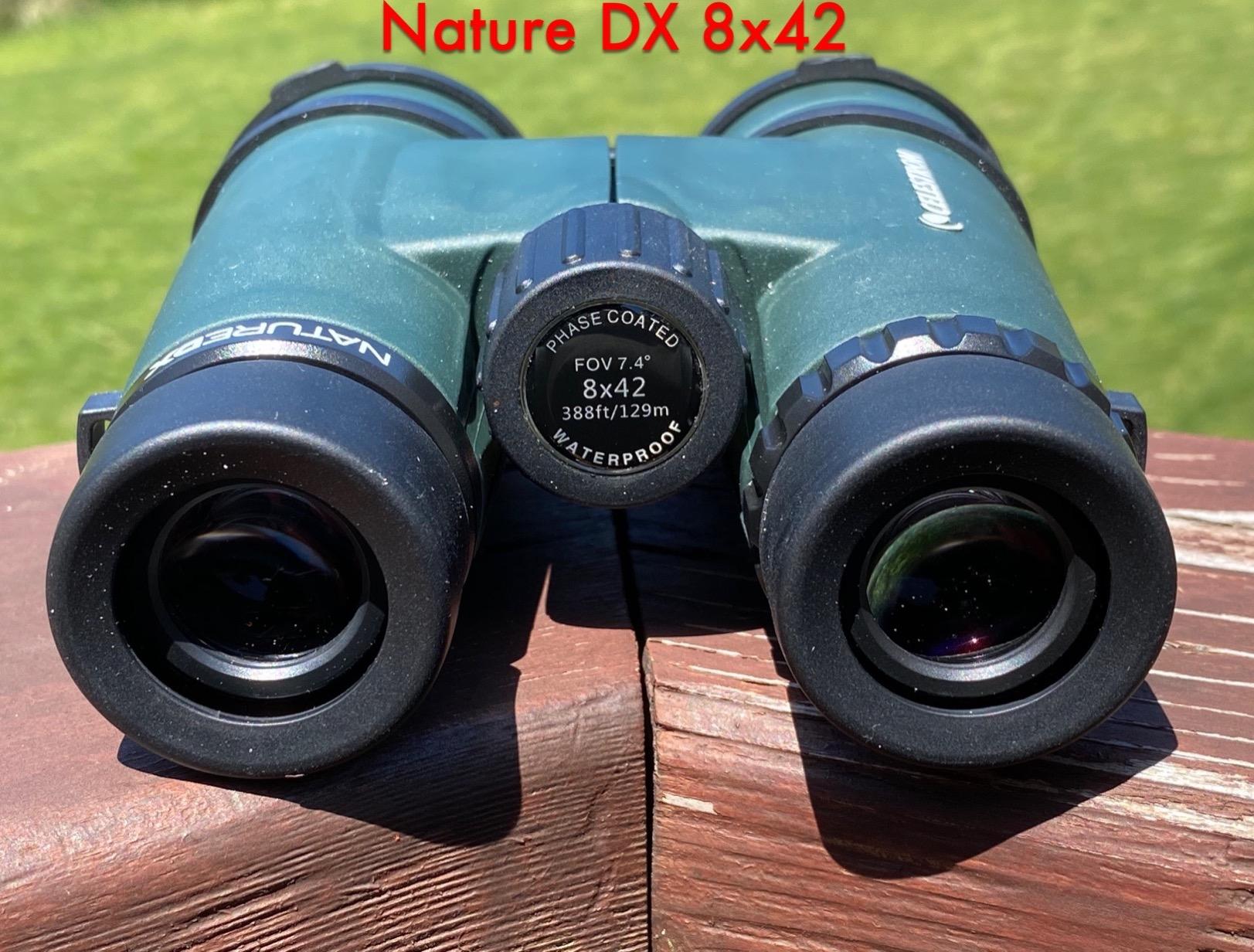
Extra-long 20.2mm eye relief
Wide 377 ft field of view
Lightweight at 20.3 ounces for 42mm
3.3 ft submersible waterproofing
Eco-friendly multilayer coatings
Silver-alloy prism coating
The Nikon PROSTAFF P3 8×42 is the 42mm sibling to the top-rated 8×30 in this test, and its standout feature is the 20.2mm eye relief, the longest in this comparison. Glasses wearers can see the entire field of view without pressing the oculars against their lenses, which is genuinely rare at this price point.
The 377-foot field of view at 1,000 yards is narrower than the 8×30’s exceptional 456 feet, but still ranks among the better 8×42 options. At 20.3 ounces, it’s remarkably light for full-size 42mm binoculars, undercutting several competitors by a full half pound.
Nikon’s PROSTAFF line has a strong track record for optical quality, and the multilayer coatings with silver-alloy prism coating produce bright, contrasty images with natural color rendering. The eco-friendly glass construction is a small but welcome touch for environmentally conscious buyers.

Environmental sealing matches the smaller PROSTAFF. Nitrogen purging and O-ring seals provide waterproof performance to 3.3 feet, more than enough for rain, splashes, and the occasional dunking. The fiberglass-reinforced polycarbonate body with rubber armor feels solid and impact-resistant.
For glasses wearers who want 42mm light-gathering without sacrificing eye comfort, this is the strongest option in the test. Turn-and-slide rubber eyecups click into place with positive detents and stay put through regular use.
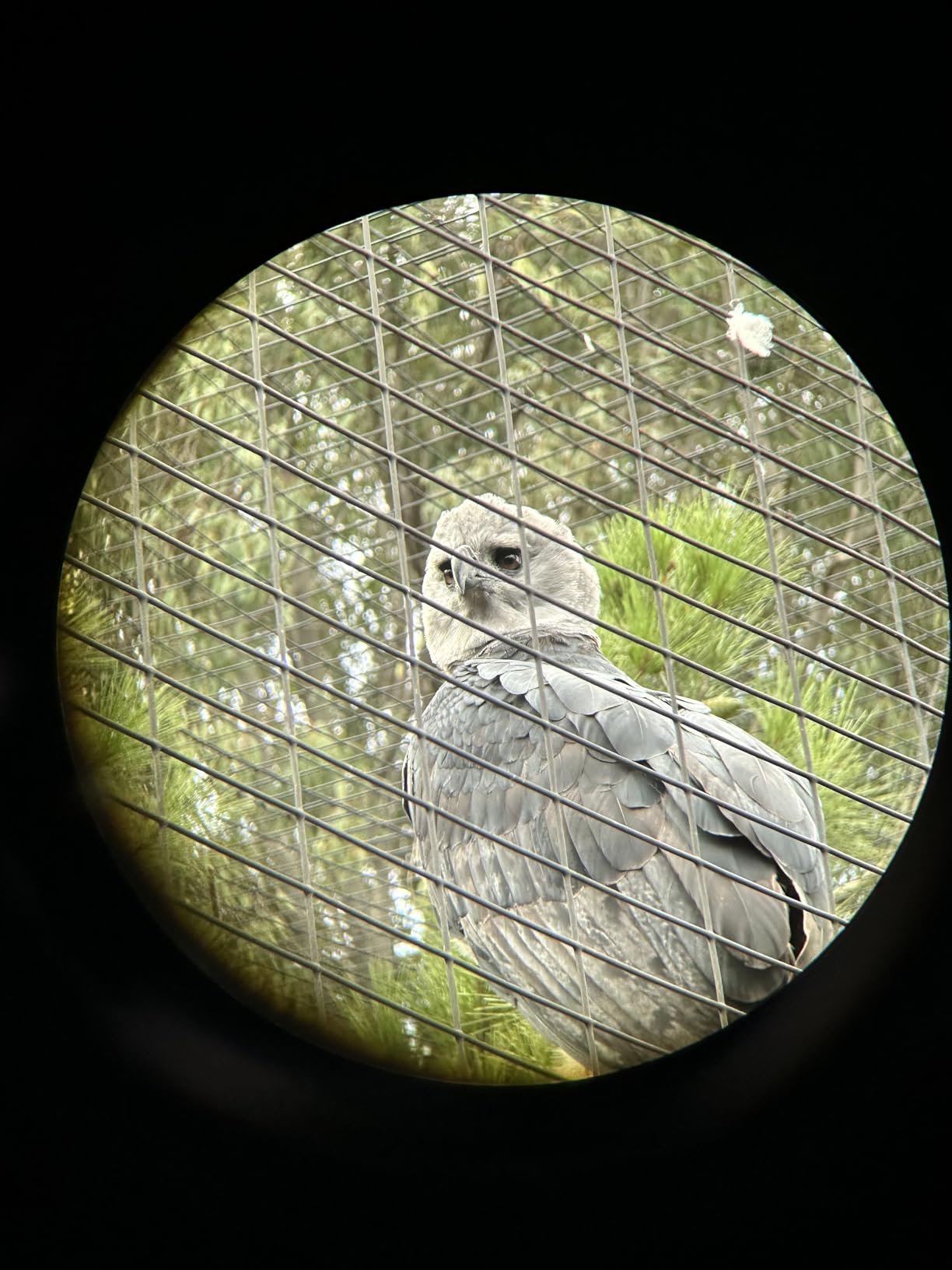
42mm objectives under $100
BaK-4 prisms for color fidelity
Multi-coated optics
17.8mm eye relief
7 degree angular field of view
Waterproof and nitrogen purged
At under $100, the Celestron Outland X 8×42 offers full-size 42mm light gathering at a budget price. With over 2,000 reviews and a 4.5-star average, it has earned long-term reliability through years on the market.
For the price, optical performance genuinely impresses. BaK-4 prisms deliver good color fidelity and contrast, and while these use multi-coating rather than the fully multi-coated optics on premium models, the large 42mm objectives compensate through sheer light-gathering capability. In good daylight, image quality rivals binoculars costing twice as much.
These binoculars show their age in weight and ergonomics. At 1.8 pounds, they’re the heaviest in this test, and the older chassis design lacks the refined grip contours of newer models. Extended use produces noticeable neck strain faster than with lighter alternatives.
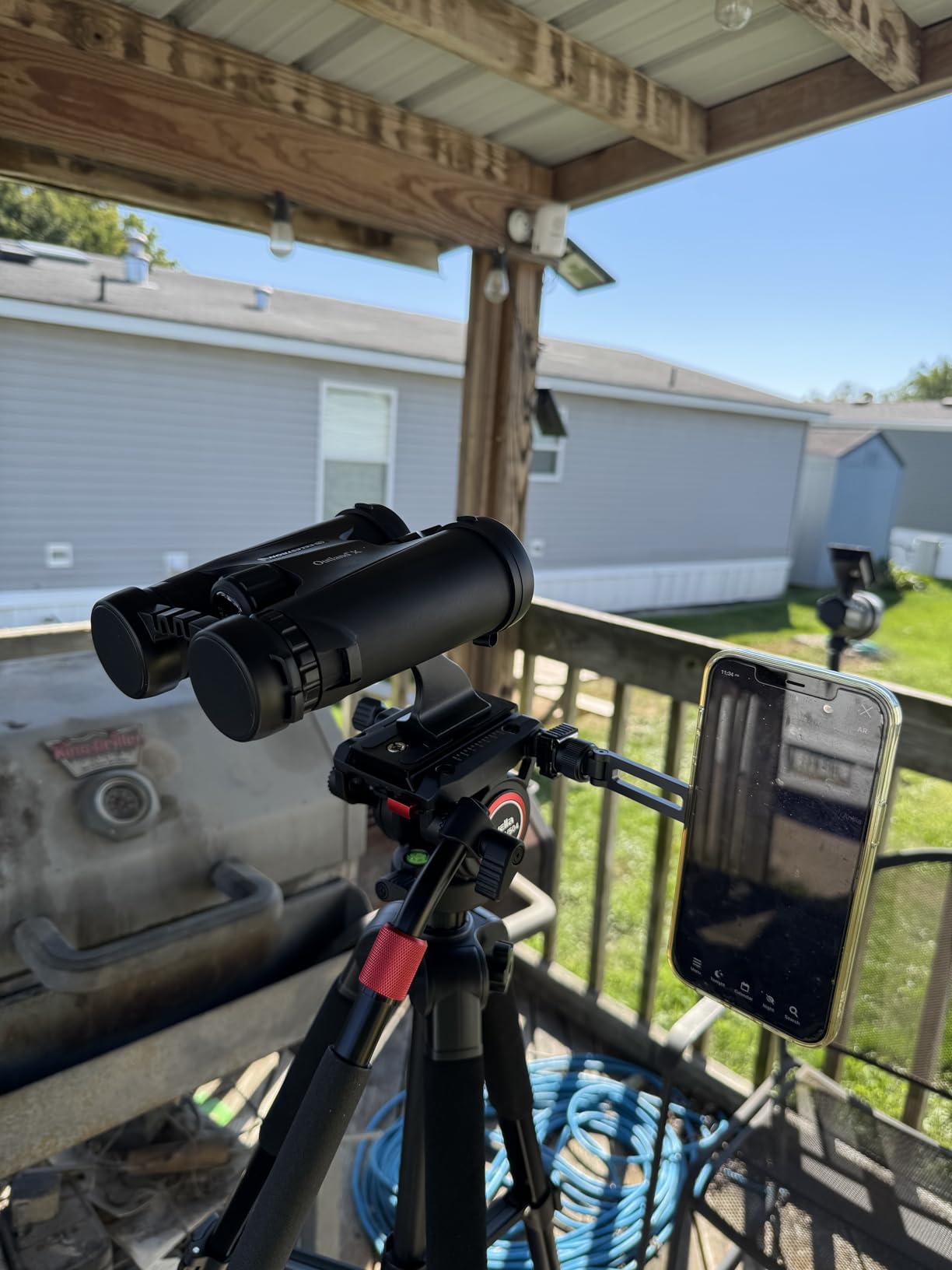
Build quality remains solid. Waterproofing and nitrogen purging work as advertised; mine survived an accidental submersion in a creek without any internal fogging. The rubber armor provides good grip and impact protection, and the focus wheel has a smooth, well-damped action.
The 17.8mm eye relief works adequately for most glasses wearers, though it’s not as generous as the Nikon PROSTAFF models. For buyers on tight budgets who want full-size 42mm performance, these deliver the fundamental benefit of larger objectives at a price matching many 8×32 models.
After months of testing across both formats, here is the framework I use when recommending a size to other buyers. The right answer depends on where and how you actually use binoculars.
Beyond the general framework, here are specific recommendations for the most common activities. Each pairs a use case with the format and model that fits it best.
General backyard birding: 8×42 binoculars like the Vortex Crossfire HD provide the best all-around experience. The superior low-light capability helps during prime dawn and dusk activity periods.
Travel birding: 8×32 models like the Nikon PROSTAFF P3 8×30 excel when portability matters more than ultimate performance, and their wider fields make tracking moving flocks easier.
Stand hunting: 8×42 binoculars work best since weight isn’t a concern during stationary sits, and the low-light performance is crucial during legal shooting hours at dawn and dusk.
Spot-and-stalk: 8×32 models reduce weight during long stalks while providing adequate performance for daytime glassing of distant terrain.
8×32 binoculars dominate travel and hiking. The Celestron Nature DX 8×32 offers excellent value with good optical performance and minimal weight penalty. Backpackers especially benefit from the ounces saved, which add up over multi-day trips.
8×32 models work best for sports and events. The Bushnell Spectator Sport with its no-focus design excels in stadium settings where fast, fuss-free deployment matters more than image quality.
8×42 binoculars are the better choice for marine use. The larger exit pupil helps stabilize the image on a moving boat, and the superior light gathering handles the constantly changing conditions on open water. Some users also consider 7×32 marine-specific binoculars for their wider fields and stability on rolling decks, though 8×42 remains the most versatile all-around option.
Both work well for birding, but they serve different situations. 8×42 models deliver brighter images during dawn and dusk, which are peak activity periods for many species. 8×32 models are lighter for long walks and easier to deploy quickly when warblers are popping up in every tree. For stationary birding near feeders or in forests, 8×42 wins. For travel birding and long hikes, 8×32 wins.
8×42 binoculars work well from their close focus distance (typically 6-13 feet depending on model) out to several hundred yards. Beyond about 500 yards, atmospheric conditions, heat shimmer, and air quality start limiting what any binocular can resolve. For most birding, hunting, and wildlife viewing scenarios within 200 yards, 8×42 performs excellently.
Yes, 8×32 binoculars are good for birding, especially for daytime observation, travel, and extended walks. The 4mm exit pupil handles bright daylight well, though they struggle more than 8×42 models during low-light periods around sunrise and sunset. For most casual and intermediate birders, the lighter weight and faster deployment of 8x32s more than compensates for the modest low-light gap.
Based on the models in this test, 8×42 binoculars weigh roughly 5-10 ounces more than 8×32 models. The 8x32s averaged 15-21 ounces, while the 8x42s ranged from 20.3 to 32 ounces. That 30-50% weight increase becomes noticeable during extended use, though a quality chest harness can offset much of the difference.
In bright daylight, 8×32 binoculars perform nearly identically to 8×42 models. Your eye’s pupil contracts to 2-3mm in bright light, so the extra light-gathering capacity of 42mm objectives offers no advantage. The difference becomes apparent only as lighting diminishes, typically 20-30 minutes around sunrise and sunset.
It depends on your use case. If you frequently observe in low-light conditions or want maximum image brightness, the 20-30% price premium for 8×42 is justified. For primarily daytime use or when portability matters most, 8×32 binoculars save money without meaningful optical compromise in good light.
Size does not directly determine eye relief. Both 8×32 and 8×42 binoculars can offer excellent eye relief. The Nikon PROSTAFF P3 models in this test, in both 8×30 and 8×42, provide 19.6-20.2mm of eye relief specifically designed for glasses wearers. Check the eye relief specification on any binocular you consider, since that matters more than objective size.
The 8×42’s 5.25mm exit pupil delivers approximately 72% more light to the eye than the 8×32’s 4mm exit pupil. In practical terms, 8×42 binoculars maintain usable brightness about 15-20 minutes longer during dawn or dusk, and the image appears noticeably brighter to aging eyes that cannot dilate as widely.
8×32 binoculars work for casual astronomy, especially viewing the Moon, bright planets, and major star clusters. However, the 4mm exit pupil limits how many fainter stars you can see. 8×42 binoculars perform noticeably better for astronomy by gathering more light and revealing dimmer objects. For serious stargazing, dedicated 10×50 or larger astronomy binoculars work better than either format.
Beginners often do better starting with 8×42 binoculars because the larger exit pupil is more forgiving of eye alignment, reducing blackouts and making them easier to use. However, if weight and portability are priorities, an 8×32 like the Celestron Nature DX offers excellent value and will encourage more frequent use. The right choice depends on your primary activity.
After months of testing across dawn surveys, midday hikes, stadium bleachers, and backyard feeders, neither size is universally superior. Each excels in specific situations, and the best 8×32 vs 8×42 binoculars choice comes down to matching the format to your real-world use case.
For most buyers, the safest starting point is 8×42 binoculars, specifically the Vortex Crossfire HD 8×42 if your budget allows, or the Celestron Nature DX 8×42 for strong value. The forgiving eye box, brighter low-light image, and proven durability make these formats user-friendly for beginners and rewarding for experienced users.
If weight and portability dominate your decision, the Nikon PROSTAFF P3 8×30 or the Celestron Nature DX 8×32 deliver excellent optical performance in a package you’ll actually carry and use. Lightweight binoculars get used more often than heavy ones sitting on a shelf.
For budget-conscious buyers, the Celestron Outland X 8×42 brings full-size light gathering under $100, and the Wingspan FieldView 8×32 offers functional compact performance at an even lower price. The best binoculars are the ones you’ll actually use, and both 8×32 and 8×42 formats can provide years of rewarding observation when you match the size to your viewing conditions, your physical comfort, and your budget.