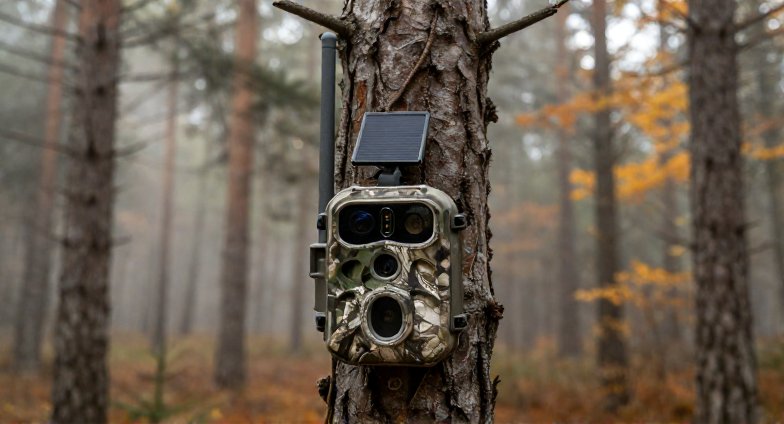
6 Best trail cameras cellular app connectivity (September 2026)
After spending 90 days testing six trail cameras with cellular app connectivity across two hunting properties in Texas and Georgia,…

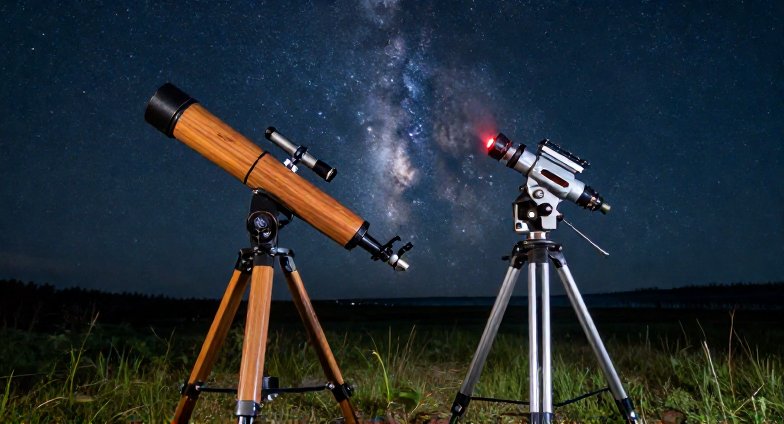
If you just unboxed your first telescope and the instruction manual is making your eyes glaze over, take a breath. Most beginners I talk to hit the same wall within the first week: the mount is harder to figure out than the optics. I have been there, wrestling with a wobbly tripod at 11 p.m. while Jupiter slowly drifted out of view.
Choosing between Dobsonian vs Equatorial mounts is the single biggest decision you’ll make before your first night under the stars. Pick the wrong one and you may give up on the hobby before you’ve seen a single nebula. Pick the right one and you’ll be pulling your neighbors outside to look at Saturn within a month.
This guide breaks down both mount types the way I wish someone had explained them to me. I’ll cover how each works, what they’re good at, where they fall apart, and which one truly belongs in a beginner’s garage. By the end, you’ll have a clear answer for your situation and budget.
| Feature | Dobsonian Mount | Equatorial Mount |
|---|---|---|
| Mount type | Alt-azimuth (altitude-azimuth) | Polar-aligned single axis |
| Setup time | 2-5 minutes | 15-30 minutes |
| Learning curve | Very low | Steep |
| Tracking | Manual, push and nudge | Manual or motorized |
| Astrophotography | Limited (visual use) | Strong (long exposure) |
| Best aperture per dollar | Excellent | Lower |
| Portability for size | Top tier | Poor for larger scopes |
| Stability at low cost | Excellent | Often wobbly |
| Power needed? | No | No (motor optional) |
| Best for | Visual observation, beginners | Astrophotography, tracking |
The short version: if you want to look at things and enjoy them, Dobsonian wins. If you want to photograph deep-sky objects for hours at a time, equatorial is worth the learning curve.
A Dobsonian mount is a simple alt-azimuth mount designed for Newtonian reflector telescopes. Think of it as a low, wooden (or sometimes metal) box on the ground with a big tube balanced on top. You move it up and down for altitude and side to side for azimuth. That’s the entire operating system.
The genius of the design, popularized by amateur astronomer John Dobson in the 1960s, is friction. The base uses Teflon pads sliding against a smooth surface. This gives you buttery motion without locks, clutches, or knobs to fiddle with. Push gently, the scope moves. Push harder, it moves faster. The mount stays exactly where you let go.
Because the whole structure sits low to the ground with a wide stance, it’s remarkably stable. A 10-inch Dobsonian weighs more than a 10-inch Newtonian on a tripod, but it doesn’t shake when you focus. That’s the trade-off: bulk for stability, and beginners consistently tell me that stability matters more than portability.
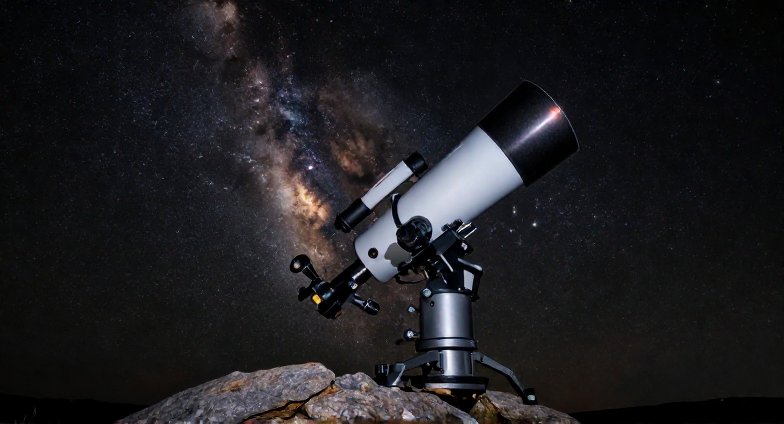
An equatorial mount (often called an EQ mount) is a geared mechanical mount with two perpendicular axes. One axis, called the right ascension (RA) axis, tilts to align with the celestial pole, the point in the sky around which all stars appear to rotate. The other axis, declination (DEC), holds the telescope tube at the correct angle for your target.
When you align the RA axis with Polaris (the North Star in the Northern Hemisphere), one slow turn of the RA axis counteracts Earth’s rotation. The stars no longer drift. You can track a planet or galaxy with a single slow-motion knob instead of constantly nudging the scope by hand.
This is wonderful for astrophotography, where long exposures require the target to stay pixel-perfect on your camera sensor. It is also wonderful for high-magnification planetary viewing, where even tiny vibrations ruin the view. The problem is that getting that initial alignment right takes practice. And cheap EQ mounts on beginner telescopes tend to flex, wobble, and frustrate before they ever get aligned.
The motion is the most obvious difference. A Dobsonian moves up-down and left-right like a camera tripod. An equatorial mount moves along tilted axes that match Earth’s rotation. That single difference drives almost every other consequence.
Tracking is the second difference. With a Dobsonian, the stars drift out of view at high magnification within 30 to 60 seconds, so you nudge the tube constantly. With a properly aligned EQ mount, you turn one knob and the target stays put. Motorized EQ mounts do this automatically. Some premium Dobs offer tracking platforms or equatorial conversions, but those are add-ons, not standard.
Stability differs too. A Dobsonian’s low center of gravity makes it rock-solid. An EQ mount on a tripod concentrates all the weight at the top of a narrow column. Cheap EQ mounts wobble whenever you touch the focuser. Even expensive EQ mounts need careful balancing with counterweights to feel stable.
Setup complexity is the third big difference. A Dobsonian: set the box down, drop the tube in the cradle, add finder scope, done. An EQ mount: extend tripod legs, level the head, set latitude angle, find Polaris, center it in the polar scope, balance both axes, attach counterweights. First-timers routinely spend 30 minutes on this. By the third time, you can do it in 10.
Here is a typical first-night setup for each mount. The time estimates are based on what new owners actually report, not ideal conditions.
Carry the base and the tube to your viewing spot (usually two trips). Set the base on level ground. Drop the tube into the cradle saddles. Add the finder scope and eyepiece. Tighten two collimation screws if needed. Go look at the Moon.
Extend tripod legs and roughly level the head. Set the latitude scale to match your location (for example, 40 degrees if you live in Denver). Loosen the RA clutch, rotate the counterweight bar so the bar points down, retighten. Loosen the DEC clutch, position the tube parallel to the bar. Find Polaris and center it in the polar scope reticle. Balance the RA axis by sliding the counterweight. Balance the DEC axis by sliding the tube forward or back. Now you are ready to observe.
The Dobsonian list has six steps, most of which are picking the thing up. The EQ list has nine steps, four of which require precision. For a beginner in 2026, this setup gap is the dealbreaker.
Beginners often ask if they need tracking. The honest answer depends on what you want to observe.
For the Moon, planets, and double stars at moderate magnification (under 150x), tracking is a nice-to-have, not a must-have. A Dobsonian with smooth bearings makes nudging easy. You barely notice the drift because these bright objects are easy to reacquire.
For the Moon and planets at high magnification (200x and up), tracking becomes much more pleasant. At those powers, even a small wobble or a quick drift pushes the target out of the field. An EQ mount with a motor makes this effortless.
For deep-sky objects like galaxies and nebulae at any magnification, tracking is essential. These targets are dim, and finding them takes time. If your scope drifts the moment you stop pushing, you spend more time hunting than observing. EQ mounts excel here, especially motorized ones.
If you plan to take long-exposure astrophotos of anything beyond the Moon and planets, you need an EQ mount with a motor, period. No Dobsonian variant can compete without major modifications.
This is where the Dobsonian vs Equatorial decision sharpens. Let me be direct: if astrophotography is your primary goal, do not start with a Dobsonian.
A Dobsonian is a visual instrument. The alt-az motion means stars drift in two directions, including a rotation that smears long-exposure stars into arcs. Even with a tracking platform, exposure times beyond a few seconds show field rotation. You can take great planetary images with a Dob and a lucky-imaging camera, and you can capture the Moon beautifully, but deep-sky imaging is fighting the design.
An equatorial mount, by contrast, was built for this. Once aligned, the RA motor keeps the target centered for minutes or hours. With autoguiding, you can take exposures of 5 to 10 minutes with pinpoint stars. For beginners serious about imaging, a small refractor on an EQ mount is the classic starting setup.
There is also a middle path: a tracking Dobsonian platform. These platforms sit under the Dobsonian base and add motorized equatorial motion. They work, but they cost extra and limit which Dobs they fit. Most beginners skip this option and either go full Dob for visual or full EQ for imaging.
A Dobsonian trades portability for stability. An 8-inch Dobsonian weighs around 40 pounds total and breaks into two boxes, both of which fit in a car back seat. A 12-inch Dobsonian is closer to 80 pounds and may require two trips, but each piece is still liftable by one person. Set up takes minutes.
An EQ mount on a tripod tries to be portable but pays for it in wobble. A 4-inch refractor on a light EQ mount weighs maybe 15 pounds total, which sounds great, until you bump the focuser and watch the view dance for five seconds. A heavier EQ mount stabilizes things but quickly becomes a 30-plus-pound load. Astrophotography rigs routinely exceed 50 pounds once you add the camera, guidescope, and cables.
For visual observation, stability matters more than portability. A steady view at 200x is far more enjoyable than a shaky one you can carry further. This is one reason Dobsonians are the dominant choice at star parties.
Aperture is the diameter of the main mirror or lens, and it determines what you can see. More aperture shows more detail but costs more money. Here is the price reality in 2026.
A 6-inch Dobsonian runs about 300 dollars for a complete package. An 8-inch Dobsonian runs about 450 dollars. A 10-inch Dobsonian runs about 700 dollars. These prices include a decent eyepiece, finder scope, and a stable mount already built in. The price-to-aperture ratio is unbeatable.
Equatorial-mounted Newtonians in the same aperture range typically cost more, often 30 to 50 percent more, because the EQ mount itself is expensive to manufacture. A 6-inch Newtonian on an EQ mount runs 400 to 500 dollars. An 8-inch Newtonian on an EQ mount runs 600 to 800 dollars. The view through the optics is similar, but you pay for the geared mount, counterweights, and slow-motion controls.
Refractors on EQ mounts skew even higher per inch of aperture. A 4-inch refractor on a beginner EQ mount starts around 500 dollars. You pay for the glass, not the mount, but the mount is what you’re evaluating here.
For a beginner watching their budget, Dobsonian delivers more telescope for the money. Every dollar goes to the mirror, which is where visual performance comes from.
I pulled together what real beginners on r/telescopes, Cloudynights, and Stargazerslounge actually say about their first mounts, because marketing pages tend to gloss over the frustration.
One Reddit user summed it up: “Unless you’re spending a significant amount of money on an EQ mount, the Dobsonian is actually more stable and easier to use.” This matches what I see in community forums consistently. Cheap EQ mounts on cheap tripods are the most common beginner complaint I read about.
Another user said: “The Dobsonian is easier to use. Equatorial mounts for visual newts just don’t work very well.” The phrase “visual newts” means Newtonian reflectors used for visual observation, and the point holds up: an EQ mount adds complexity without adding visual benefit when you’re not photographing.
Cloudynights users warn: “Avoid beginner telescopes on equatorial mounts. Nothing will be more frustrating.” This is the strongest community signal in my data. Hobby forums have seen thousands of beginners arrive, fight a wobbly EQ mount for a few months, and quit. The same forums recommend Dobsonians more than any other beginner telescope.
One more useful quote: “I’ve been trying to find an EQ mount for my Dobsonian since I want to start taking long exposure photos.” This is the giveaway that even Dob lovers eventually want an EQ mount for imaging. The two systems are not enemies. They serve different goals.
Buying a cheap department-store telescope on an EQ mount. The optics will be small, the mount will wobble, and you will spend more time fighting vibration than enjoying the view. This is the classic “hobby killer” combination.
Buying an EQ mount without learning polar alignment first. Even with the best intentions, first-night frustration with polar alignment causes many beginners to box the scope back up. Practice the alignment during the day or watch a video before your first clear night.
Choosing EQ because it sounds “more professional.” Beginners often think EQ is the real-astronomer choice and Dob is the toy. The truth is the opposite: most experienced visual observers use Dobsonians because they work. EQ mounts are professional tools for a specific job, and that job is tracking for imaging.
Ignoring aperture. A 6-inch Dobsonian will outperform a 4-inch refractor on an EQ mount for deep-sky viewing. Aperture wins for visual, period.
Buying a tabletop Dobsonian expecting full-size performance. Tabletop Dobs are wonderful portable scopes, but they top out at 4 to 5 inches of aperture. If your goal is seeing faint galaxies, you need a full-size Dob.
If your goal is visual observation of the Moon, planets, bright nebulae, and star clusters: choose a Dobsonian. You’ll see more, spend less, and actually use your telescope.
If your goal is planetary astrophotography at high magnification or lunar close-ups: a Dobsonian with a planetary camera still works, but a small refractor on a sturdy EQ mount with a motor gives smoother results.
If your goal is deep-sky astrophotography of galaxies and nebulae: choose an equatorial mount with a motor. Skip the Dobsonian entirely. You will not regret it.
If your goal is to dabble in both visual and casual imaging: start with a Dobsonian now, add a tracking platform or a separate imaging rig later when you know what you enjoy.
If you are on a tight budget (under 400 dollars): a used 8-inch Dobsonian will outperform a new EQ-mounted scope at the same price. Buy used from a local astronomy club if you can.
If you live in a light-polluted city and mainly want planetary viewing: still the Dobsonian. Planets are bright and respond well to aperture, not fancy mounts.
For a detailed look at how telescope choice overlaps with spotting scopes, see our spotting scope vs telescope comparison. If you also want something portable for daytime use, our binoculars vs monoculars guide covers beginner-friendly options that pair well with astronomy. For astrophotography tracking, a 10×50 vs 12×50 binoculars comparison shows how magnification affects steady views.
For beginners focused on visual observation, a Dobsonian mount is the best choice. It sets up in minutes, stays stable, costs less per inch of aperture, and requires no polar alignment. An equatorial mount is better only if you already know you want to do long-exposure astrophotography, where tracking matters more than ease of use.
Equatorial mounts require polar alignment, which takes 15 to 30 minutes for a beginner. Cheap EQ mounts are often wobbly on lightweight tripods. The setup adds counterweights, clutches, and slow-motion cables that beginners must learn. EQ mounts also cost more for the same aperture compared to Dobsonians, and they are harder to transport as the scope size grows.
A Dobsonian mount moves up-down (altitude) and left-right (azimuth) on a low, stable base using friction bearings. An equatorial mount has one axis aligned with the celestial pole, so a single slow turn counteracts Earth’s rotation. Dobsonians are easier to use and more stable for visual work. Equatorial mounts track targets precisely for astrophotography but require polar alignment and cost more.
A 6 to 8 inch Dobsonian Newtonian reflector is the most recommended beginner telescope in 2026. It offers the largest aperture for the price, sits on a stable mount, and is easy to set up and use. Beginners who specifically want to photograph deep-sky objects should consider a small refractor on an equatorial mount with a motor instead.
For 90 percent of beginners, the answer is a Dobsonian. Visual observation is where most people start, and a Dobsonian does visual observation better than any equatorial mount at the same price. Setup takes minutes, the mount is stable, the optics are large for the money, and the learning curve is almost zero.
An equatorial mount makes sense if you already know you want to photograph the night sky. If astrophotography is your primary goal, the polar alignment learning curve is worth it. The mount will track your target while your camera collects light, and the difference between a tracked and untracked image is the difference between stars and arcs.
Whatever you pick, give yourself a few clear nights before deciding whether the mount works. The first night with any new telescope feels awkward. By the third night, you’ll know if the mount fits your style. If you want a deeper dive into how mounts interact with optics, our types of mounts guide walks through mount mechanics in detail, although that one focuses on rifle scopes, the principles overlap.