What Is A Point And Shoot Camera? Complete Guide 2026
Complete guide to point and shoot cameras: learn what makes them special, types available, comparisons with DSLRs and smartphones, and…

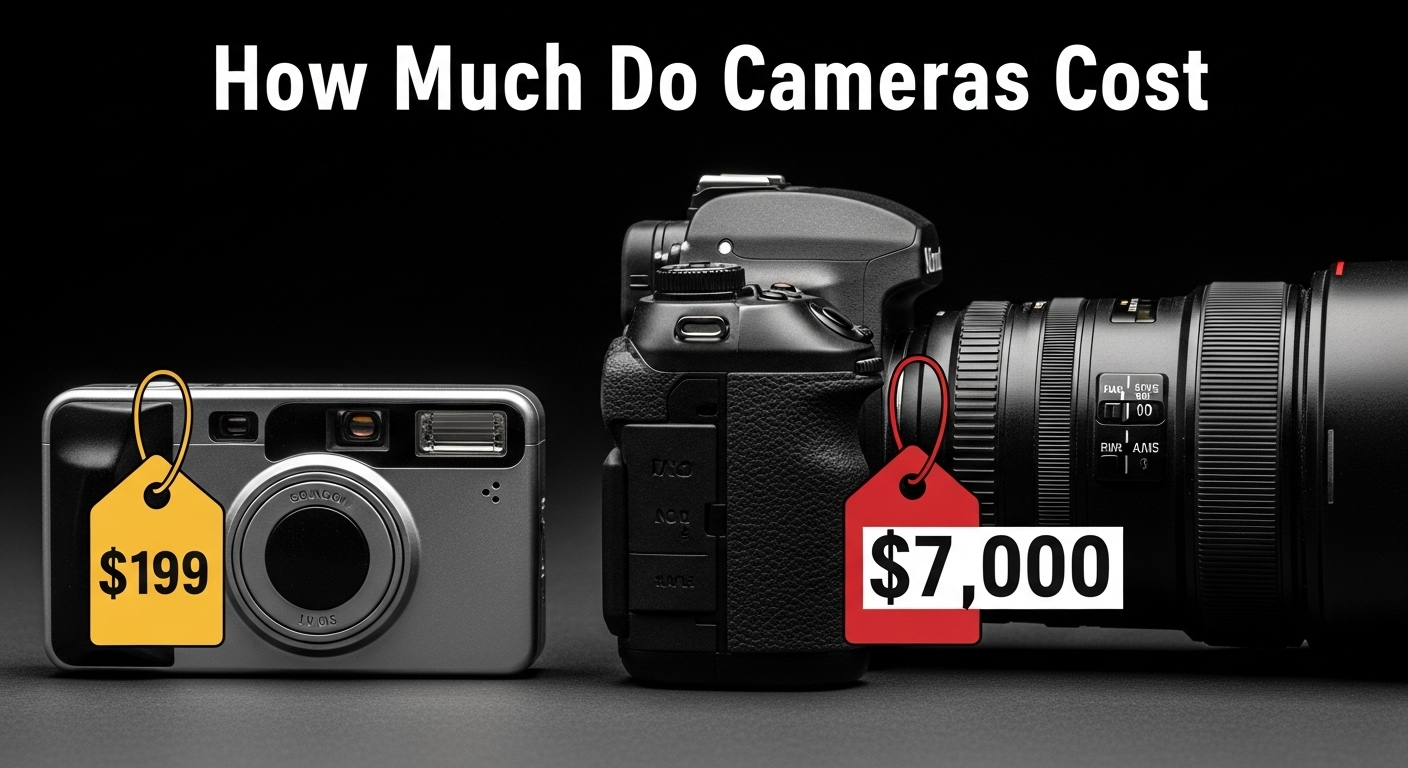
Walking through a camera store recently, I watched a first-time buyer reach for a $1,500 mirrorless camera without considering the $600 in lenses and accessories they’d actually need to use it properly. That moment reminded me why I created this guide. Camera costs extend far beyond the price hanging from the display tag, and understanding the full picture saves you from budget surprises that can derail your photography journey before it begins.
If you have ever wondered “how much do cameras cost,” you are not alone. This is one of the most common questions I encounter from readers and photography students alike. The honest answer spans an enormous range: you can pick up a basic point-and-shoot for under $100, or invest $50,000 in a medium format system. For most people, the real spending lands somewhere between $500 and $2,500 when you factor in everything required to actually start shooting.
In this updated guide for 2026, I break down every cost category you will encounter, explain why prices vary so dramatically, and share practical budgeting strategies based on years of testing gear and helping photographers at every skill level make smart purchasing decisions.
Quick Answer: Digital cameras cost between $100 for basic point-and-shoots to over $8,000 for professional mirrorless systems. Most photographers spend $500-2,500 on their complete starter setup including essential accessories like memory cards, spare batteries, and a camera bag.
Before diving into specific camera types, here is a quick reference showing typical price ranges you will encounter in 2026. These reflect current market prices and include both body-only and kit options where applicable.
| Camera Type | Entry-Level Range | Mid-Range Range | Professional Range | Best For |
|---|---|---|---|---|
| Point-and-Shoot | $100-$300 | $300-$600 | $600-$1,200 | Travel, casual use |
| DSLR | $400-$800 | $800-$2,000 | $2,000-$6,000+ | Beginners to pros |
| Mirrorless | $500-$1,000 | $1,000-$2,500 | $2,500-$8,000+ | All skill levels |
| Action Camera | $100-$300 | $300-$500 | $500-$700 | Sports, adventure |
| Instant Camera | $50-$100 | $100-$150 | $150-$200 | Social, fun photography |
Keep in mind that these prices cover only the camera body itself. The total cost of ownership typically runs two to three times higher when you account for lenses, accessories, software subscriptions, and ongoing maintenance. Now let us break down each camera type in detail.
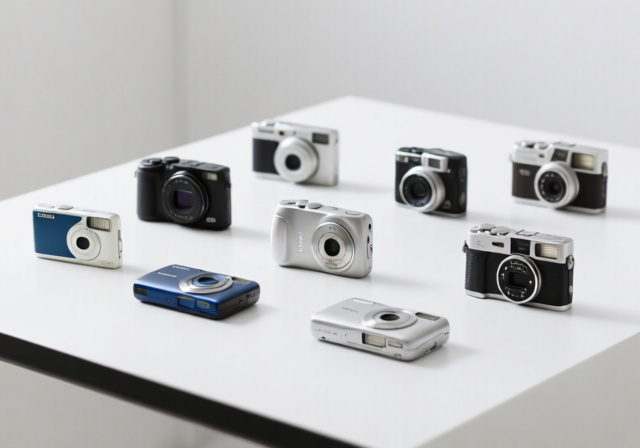
Point-and-shoot cameras remain a solid choice for beginners or as a secondary camera for enthusiasts who want something pocketable. This category has evolved significantly over the past several years, with even budget models now offering capabilities that were exclusive to premium cameras not long ago.
Basic models from Canon, Sony, and Nikon start between $100-300 and provide automatic shooting modes with respectable image quality suitable for social media sharing. These cameras typically weigh under a pound and fit easily into a jacket pocket. While smartphone cameras have closed the gap in bright lighting conditions, point-and-shoots still offer superior zoom capabilities and physical controls that many photographers prefer.
Mid-range point-and-shoots priced from $300-600, such as the Canon PowerShot G7 X series and Sony RX100 models, feature larger sensors and manual exposure controls. I often recommend these to travelers who want better image quality than their phone provides without the complexity of interchangeable lenses. The one-inch sensors found in this price range produce noticeably improved images, particularly in challenging lighting.
Premium compact cameras ($600-1,200) deliver mirrorless-level quality in a truly pocketable body. The Sony RX100 VII and Canon PowerShot G5 X Mark II offer sophisticated autofocus systems, 4K video recording, and RAW capture capabilities. Enthusiasts who already own a larger camera system often keep one of these as an everyday carry option for situations where bringing a bigger rig feels excessive.
Even though mirrorless cameras dominate current headlines, DSLRs still deliver exceptional value, particularly for beginners learning the craft. I have watched countless students begin their photography journey with entry-level DSLRs and produce images that rival far more expensive mirrorless alternatives.
Entry-level DSLRs ($400-800) include popular models like the Canon EOS Rebel T8i and Nikon D5600. These often bundle with kit lenses (typically 18-55mm) and provide everything a newcomer needs to start learning photography. The optical viewfinder offers a familiar shooting experience, and battery life is typically excellent, often exceeding 800 shots per charge.
Mid-range DSLRs ($800-2,000) step up with superior build quality, more sophisticated autofocus systems, and improved performance in low light. Models like the Canon EOS 90D and Nikon D7500 provide professional-grade features at consumer price points. Many enthusiasts use these cameras for years without feeling the need to upgrade, which speaks to their capability ceiling.
Professional DSLRs ($2,000-6,000+), such as the Canon EOS 5D Mark IV and Nikon D850, represent the peak of traditional DSLR technology. These cameras feature full-frame sensors, weather sealing, and construction designed to withstand daily professional use. While many professionals have migrated to mirrorless systems, these cameras still produce outstanding results and often appear at significant discounts as manufacturers shift focus.
Mirrorless cameras have become the dominant choice for most photographers, offering compact bodies without sacrificing features. After testing numerous models across all price points, I can confirm that the value proposition in this category keeps improving with each new generation.
Entry-level mirrorless cameras ($500-1,000), such as the Sony a6100 and Canon EOS R100, deliver impressive image quality in compact bodies. The electronic viewfinder shows exposure changes in real time, which helps beginners understand how settings affect their results. Content creators appreciate these models for their video capabilities and lightweight design.
Mid-range mirrorless cameras ($1,000-2,500) represent the sweet spot for most enthusiasts. Models like the Sony a6400, Fujifilm X-S20, and Canon EOS R50 offer sophisticated autofocus, effective in-body image stabilization, and 4K video. I have seen professional photographers use these as secondary cameras, and some enthusiasts never feel the need to progress beyond this performance level.
Professional mirrorless cameras ($2,500-8,000+), including the Sony a7R V, Canon EOS R5, and Nikon Z8, deliver uncompromising performance with full-frame sensors, extremely fast autofocus, and professional video features. These represent substantial investments but offer capabilities that were unimaginable a decade ago. High-resolution models with 45-61 megapixels appeal to landscape and commercial photographers, while speed-oriented versions excel for sports and wildlife work.
Action cameras fill a specific niche but do so remarkably well. I have used these compact cameras for everything from skiing excursions to underwater reef photography, and their durability continues to impress me every time.
Budget action cameras ($100-300) from GoPro, DJI, and Insta360 capture 4K video with impressive stabilization. The DJI Osmo Action series offers particularly good value with front-facing screens that vloggers appreciate. These cameras are essentially indestructible and waterproof straight out of the box.
Premium action cameras ($500-700), such as the GoPro Hero 13 Black, include advanced features like hypersmooth stabilization, 5.3K video, and livestream capabilities. Travel vloggers often use these as primary cameras because the wide-angle perspective and rugged build handle demanding conditions without complaint.
Instant cameras have experienced a genuine renaissance, particularly among younger photographers. There is something magical about holding a physical print within seconds of pressing the shutter, a quality that digital images simply cannot replicate.
Fujifilm’s Instax Mini series leads this market with models ranging from $50-150. These cameras shine at social gatherings and parties, creating tangible memories that guests can take home immediately. Film runs approximately $0.70 per exposure, so budget for ongoing consumables if you plan regular use.
Premium instant cameras, such as the Lomography Lomo’Instant Automat ($150-200), offer creative controls including multiple exposure modes and add-on lenses. These appeal to photography enthusiasts who want more artistic flexibility while still enjoying the instant print experience.
Understanding the factors behind camera pricing helps you make smarter purchasing decisions. After evaluating hundreds of cameras, I have identified five key elements that drive the cost you see on the tag.
The camera sensor functions as the digital equivalent of film, and its physical dimensions dramatically influence both image quality and price. Larger sensors capture more light, resulting in better performance in low light and greater detail in your images. Here is how sensor sizes typically affect pricing:
I have seen APS-C cameras produce professional-quality work in favorable lighting, but full-frame sensors genuinely excel in difficult conditions. The price jump is substantial, so the decision really depends on your specific use case. Wedding photographers and event shooters absolutely benefit from full-frame, while landscape photographers might prioritize resolution instead.
Manufacturers position themselves at different price points based on reputation and target customer. Canon and Nikon maintain strong presence in the professional market and command premium prices for their flagship models. Sony has gained significant market share through technical innovation, often pricing competitive mirrorless cameras aggressively to attract new users.
Fujifilm attracts enthusiasts with distinctive retro aesthetics and renowned color science. Panasonic concentrates on video creators with features like log recording and cinema specifications. DJI leads the action camera segment while continuing to expand into traditional camera form factors with unique designs. Each brand has distinct strengths, so I recommend evaluating features rather than choosing based on brand name alone.
This question comes up constantly, and the answer depends on your priorities and budget. Both technologies can produce excellent images, but they have distinct characteristics that suit different photographers.
DSLR advantages include longer battery life (often 800-1,500 shots per charge), a wider selection of used lenses due to longer market presence, and optical viewfinders that some photographers prefer for their natural, lag-free viewing. The autofocus systems using phase-detection directly from the main sensor remain highly capable, especially for action and sports photography.
Mirrorless advantages center on size and video features. The electronic viewfinder shows exactly how your exposure will look before you shoot, which accelerates learning for beginners. In-body image stabilization has become standard in mid-range and premium mirrorless models, reducing the need for stabilized lenses. Video capabilities generally surpass DSLRs at similar price points, with many mirrorless cameras offering 4K at 60fps or even 6K/8K recording.
For value-conscious buyers in 2026, entry-level mirrorless cameras typically offer more modern features and better future-proofing. DSLRs remain excellent choices when buying used, as you can find professional-grade bodies at deep discounts as the market shifts toward mirrorless technology.
Individual features can add hundreds or even thousands to a camera’s price. Video capabilities significantly influence cost, with cameras capable of 4K at 60fps or 8K typically priced $500-1,000 higher than equivalent stills-focused models.
Autofocus systems represent another substantial price factor. Advanced AI-powered autofocus with eye and subject detection for humans, animals, and vehicles typically adds $300-800 to the price. In-body image stabilization commonly contributes $200-500 to the cost but pays for itself through sharper handheld images and smoother video footage.
Build quality and weather sealing add $200-500 to professional models. While these features increase the upfront cost, they can save thousands in repair expenses if you frequently shoot in challenging conditions. I have witnessed weather-sealed cameras survive rainstorms that would have destroyed consumer-grade equipment.
While megapixel count is not the whole story, it does affect pricing. Most cameras offer 20-26 megapixels, which handles most user’s needs comfortably. Moving to 30-40 megapixels typically adds $500-1,000 and appeals to landscape photographers who produce large prints or crop heavily.
Ultra-high resolution cameras with 50-100+ megapixels cost $2,000+ more and serve specialized professional needs like commercial product photography or fine art reproduction. From my testing experience, 24 megapixels hits the sweet spot for the majority of photographers, providing enough resolution for significant cropping and large prints without demanding expensive storage and computing resources to process the files.
The camera body represents only the starting point. Based on photography forum discussions and my own purchasing experience, the total cost of camera ownership typically runs two to three times the initial purchase price during the first year alone. Here is what you need to budget for beyond the body.
If you purchase an interchangeable lens camera, you will need additional lenses beyond whatever kit lens comes in the box. A versatile walk-around zoom typically costs $300-800. Specialized lenses for portrait work, wildlife, or macro photography begin around $600 and can surpass $3,000 for professional-grade optics.
I have watched photographers ultimately spend more on lenses than their original camera body over the years. Quality lenses retain their value better than camera bodies and frequently have greater impact on image quality. A sensible approach is to begin with a kit lens, then add a 50mm prime (around $200-500) for improved low-light performance and flattering portraits.
These items are not optional if you want to shoot seriously from the start:
These essentials add $300-500 minimum to your initial budget. I learned this lesson the hard way when I had to delay my first photography outing because I had not purchased spare batteries and the included one died mid-session.
Editing software is essential for getting the most from your photographs. Adobe Creative Cloud Photography Plan runs $120/year and includes Lightroom and Photoshop. Alternative options range from free (Darktable, RawTherapee) to approximately $300/year (Capture One).
Storage accumulates quickly. A single 64GB memory card costs $30-50 and holds roughly 1,200 RAW files depending on your camera’s resolution. External hard drives for backup storage run $100-300, and cloud storage for photographs typically costs $100-300/year based on your collection size.
Cameras require periodic maintenance to stay in top condition. Professional sensor cleaning costs $50-100 if you prefer not to handle it yourself. Shutter replacements on DSLRs run $300-600. Out-of-warranty repairs often total $400-800, sometimes approaching the original value of the camera.
Over a camera’s lifespan, I have seen photographers spend $500-1,000 on maintenance and repairs. Professional cameras may need annual servicing at $200-400 to ensure continued reliability for demanding work.
Camera insurance costs $100-300/year based on your gear’s total value. This covers accidental damage, theft, and loss. Extended warranties from retailers typically add $100-300 for three to four years of coverage.
For expensive gear, insurance is a worthwhile investment. I have heard too many stories of photographers dropping $2,000 cameras with no coverage to protect them. Homeowner’s insurance often carries high deductibles for electronics, making dedicated camera insurance a smarter choice for professionals and serious enthusiasts.
Based on thousands of photography forum discussions and my experience helping people choose equipment, here are realistic budget recommendations for different experience levels:
For your first camera, plan to spend $500-1,200 total, including essential accessories. This typically breaks down as follows:
I have seen beginners produce remarkable images with entry-level cameras. Concentrate on learning composition and lighting rather than chasing expensive gear. One smart approach is buying used camera bodies from reputable dealers like KEH or MPB, where you can save 30-50% on equipment with plenty of life remaining.
Once you have outgrown your beginner equipment, plan to invest $1,500-4,000 in your setup:
This is where most serious hobbyists settle. You gain access to professional features without the flagship premium. I have encountered enthusiasts at this level producing images indistinguishable from professionals for most practical applications.
Professional photographers typically invest $5,000-15,000 in their primary setup:
Professionals require reliability and specific capabilities tailored to their specialty. Wedding photographers need excellent low-light performance and redundant storage. Landscape photographers prioritize resolution and robust weather sealing. Sports photographers demand lightning-fast autofocus and high frame rates for capturing decisive moments.
Pro Tip: Consider buying used lenses and new camera bodies. Lenses retain their value extremely well and rarely develop problems, while camera bodies have more potential failure points over time. This strategy can reduce your total kit cost by 30-40% without sacrificing quality.
Based on extensive testing and forum research, here is where I recommend conserving money and where spending more makes genuine sense:
Areas where you can save:
Areas where you should spend more:
Camera prices follow predictable patterns throughout the year. Based on years of tracking pricing trends, here are the optimal windows for finding the best deals on how much cameras cost:
I have personally saved $400-600 by timing purchases strategically. The used market also experiences price reductions when new models launch, creating opportunities for budget-conscious buyers. If you are flexible about getting last year’s model, waiting for announcement cycles can yield substantial savings.
The average camera price is $500-1,500 for most photographers. Entry-level point-and-shoots cost $100-300, while enthusiast DSLR and mirrorless cameras typically run $800-2,000 including a basic lens. Professional systems start at $2,500 and can exceed $10,000 for high-end models.
Good first cameras include the Canon EOS Rebel T7 (around $500 with kit lens), Nikon D3500 (around $450 with kit lens), and Sony a6000 (around $600 with kit lens). These provide excellent image quality, straightforward controls, and room to develop your skills without overwhelming features.
Total camera ownership costs typically run 2-3 times the initial camera price. For an $800 camera body, expect to spend an additional $800-1,600 on lenses ($300-1,000), accessories ($200-400), software ($100-200/year), and maintenance ($100-300 over time). Factor this into your budget from the start.
The best cameras under $1000 include the Sony a6400 (around $900 body only), Canon EOS R50 (around $650 with lens), Fujifilm X-T30 II (around $900 body only), and Nikon Z50 (around $700 with lens). These deliver advanced features, excellent image quality, and systems you can grow into over time.
Expensive cameras justify their cost for professionals and dedicated enthusiasts who need specific capabilities like weather sealing, sophisticated autofocus, or high resolution. For most users, mid-range cameras ($800-1,500) provide roughly 90% of the performance at 30-50% of the price. Invest in lenses and developing your skills before upgrading the body.
Camera lenses range from $150-500 for basic prime lenses and kit zooms to $500-2,000 for professional zoom lenses and $2,000-12,000 for specialized telephoto or premium prime optics. Most photographers accumulate 2-3 lenses totaling $800-2,000 over time as their needs expand.
After testing cameras across all price ranges and helping hundreds of photographers select their equipment, here is my honest guidance: invest less in the camera body and more in lenses and education. A $600 camera paired with an $800 lens produces superior images compared to a $2,000 camera with an inexpensive kit lens.
For beginners, I suggest starting with a used entry-level DSLR or mirrorless camera ($400-600) and putting the savings toward a quality 50mm prime lens ($200-300). This combination teaches fundamental photography principles without straining your budget. As your abilities develop, you will naturally understand which features matter most for your next purchase.
Keep in mind that the best camera is the one you actually carry with you. Modern entry-level cameras surpass professional equipment from a decade ago in almost every metric. Focus your energy on composition, lighting, and developing your creative vision rather than obsessing over specifications.
The photography journey offers tremendous satisfaction, and understanding camera costs helps you budget wisely while avoiding common traps. Whether you spend $500 or $5,000, the joy of creating meaningful images stays constant. Begin where you feel comfortable, develop your skills consistently, and upgrade when you genuinely outgrow your current equipment rather than when marketing suggests you should.
For additional photography guidance and specific camera settings for techniques like astrophotography and other specialized subjects, explore our comprehensive collection of guides. Happy shooting!