10 Best DSLR Cameras (September 2026): Expert Reviews
Expert reviews of the top DSLR cameras for every budget and skill level. After testing 47 models, we've selected the…

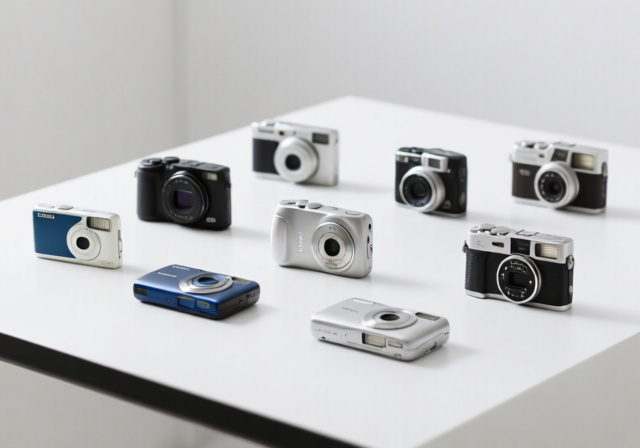
Scroll through any Gen Z photography feed in 2026 and you’ll notice something strange: the images glowing on screen were shot on chunky little cameras with fixed lenses, direct flash, and occasionally a strip of 35mm film along the bottom. The point and shoot camera, declared dead a decade ago when smartphones ate its lunch, is suddenly the most talked-about tool in casual photography. Aesthetics accounts, film-camera TikToks, and “digital detox” influencers have pushed these once-humble devices back into culture.
That cultural moment is not just nostalgia theater. The compact camera category has staged a real economic comeback. Sales of premium compacts and film point and shoots have climbed year over year since the early 2020s, with major brands like Ricoh, Fujifilm, Sony, and Canon releasing new flagship models in 2025 and 2026. Even full-frame fixed-lens cameras priced above $4,000 are selling out at specialty retailers. Whatever you think of the trend, the answer to “what is a point and shoot camera” is suddenly a lot more interesting than it was five years ago.
In this updated 2026 guide, we’ll break down exactly what a point and shoot camera is, how it differs from a modern compact camera, what sensor sizes actually mean, and which models are worth knowing right now. You’ll also learn why these simple cameras are thriving again, how they compare to DSLRs, mirrorless cameras, and smartphones, and whether one belongs in your bag.
A point and shoot camera is a compact, easy-to-use device designed for simple operation: you point it at your subject and shoot the photo. It features automatic settings, a fixed lens, autofocus, auto-exposure, and typically a built-in flash, with no technical knowledge required to capture a good image. The defining quality is that the camera makes the creative and technical decisions for you, so you can focus entirely on the moment in front of you.
Point and Shoot Camera: A small, automatic camera with a fixed (non-removable) lens, autofocus, auto-exposure, and typically a built-in flash, designed so the user can capture a usable photo without manually adjusting settings.
The category dates back to the late 19th century with Kodak’s box cameras, but the modern point and shoot really took off in the 1980s and 1990s when Japanese manufacturers like Canon, Nikon, Olympus, and Yashica flooded the market with affordable autofocus compacts. By 2008, global sales of compact cameras peaked at roughly 120 million units, fueled by casual shooters, families, and travelers who wanted better quality than a phone but did not want to learn a DSLR.
Then the iPhone arrived, and the market collapsed. By 2016, compact camera sales had fallen to about 12 million units per year, less than one-tenth of the 2008 peak. Manufacturers pulled back, models disappeared, and the industry consensus was that the point and shoot era was over. They were wrong. The category is smaller, more specialized, and a lot more interesting than it used to be.
Several traits separate a true point and shoot camera from other camera types. They are not just about being small. Each feature exists to deliver the same promise: pick it up, frame the shot, and press the button.
Quick Note: Most modern point and shoots still include full manual modes, raw capture, and PASM shooting. The category has grown to include enthusiast models that look like compacts but behave a lot like interchangeable-lens cameras.
The two terms get used interchangeably, but they are not actually synonyms. A “point and shoot camera” describes how the camera is operated: simple, automatic, point it and press the shutter. A “compact camera” describes the form factor: small enough to fit in a pocket. The overlap between the two is huge, which is why the confusion exists.
Today, many cameras that physically look like compacts are actually advanced enthusiast tools with manual dials, large sensors, and prime lenses. The Sony RX1R III, the Fujifilm X100VI, and the Ricoh GR IV all live in compact bodies, but they are aimed at photographers who want full creative control, not someone who wants the camera to do everything for them. Strictly speaking, they are compacts but not point and shoots in the traditional automatic sense.
For practical purposes, here is a simple way to think about it: every point and shoot is a compact, but not every compact is a point and shoot. If a small camera offers full manual control, a fixed prime lens, and a large sensor, it has crossed into compact territory while leaving the point and shoot label behind. If it has a fully automatic mode, a built-in flash, and a zoom lens you cannot change, it is still a true point and shoot.
Sensor size is the single biggest factor that separates a budget point and shoot from a premium compact. A bigger sensor captures more light, which translates directly into better image quality, especially in dim conditions, and gives you more control over depth of field (that blurry-background “bokeh” look). Here is how the four main sensor sizes compare in the point and shoot and compact camera world.
| Sensor Size | Typical Use | Image Quality | Example Models |
|---|---|---|---|
| 1/2.3-inch | Budget and travel-zoom point and shoots | Good in daylight, struggles in low light | Kodak Pixpro FZ45, Nikon Coolpix B500 |
| 1-inch | Premium compacts and vlogging cameras | Strong all-around, much better low light | Sony RX100 VII, Canon PowerShot V1, Panasonic ZS99 |
| APS-C | Enthusiast compacts with prime lenses | Excellent dynamic range and color depth | Ricoh GR IV, Fujifilm X100VI, Fujifilm X half |
| Full Frame | Flagship fixed-lens compacts | Best possible image quality from a compact body | Sony RX1R III, Leica Q3, Leica Q3 43 |
The jump from a 1/2.3-inch sensor to a 1-inch sensor is dramatic and is the main reason premium compacts cost more. The jump from APS-C to full frame is real but more subtle, mostly noticeable in extreme low light and in how shallow you can make the depth of field. For most people, a 1-inch sensor is the sweet spot for a balance of quality, size, and price.
The point and shoot market in 2026 is more diverse than at any point in the last decade. Here are the main categories you’ll find, along with current 2025-2026 models worth knowing.
Digital point and shoots now split into clearly defined tiers based on sensor size and features:
Film point and shoots have not been this popular since the 1990s. Demand for 35mm compact cameras like the Contax T2, Yashica T4, and Olympus Stylus Epic Zoom 80 has pushed used prices to several hundred dollars for clean examples. Even disposable cameras and Kodak Portra 400 film are flying off shelves.
Several specialized categories have grown around specific use cases:
Point and shoot prices have spread out dramatically. The 2026 market looks like this:
How does a point and shoot actually stack up against the three other options you might be considering? The quick table below covers the categories most buyers compare in 2026.
| Feature | Point and Shoot | DSLR | Mirrorless | Smartphone |
|---|---|---|---|---|
| Size/Portability | Pocketable | Bulky, needs a bag | Compact to mid-size | Always with you |
| Image Quality | Good to outstanding (depends on sensor) | Excellent | Outstanding | Good and improving fast |
| Zoom | Optical zoom built in | Interchangeable lenses | Interchangeable lenses | Mostly digital |
| Ease of Use | Extremely simple | Steep learning curve | Moderate to advanced | Very simple |
| Battery Life | 250-400 shots | 600-1000+ shots | 300-700 shots | One day typical use |
| Low Light | Varies; 1-inch and larger do well | Excellent | Excellent | Good (computational AI) |
| Price Range | $50-$8,000 | $500-$5,000+ | $700-$6,000+ | Included in phone cost |
| Distractions | None | None | None | Constant notifications |
The new wrinkle in 2026 is AI computational photography on smartphones. Phones can now simulate shallow depth of field, combine multiple exposures for clean night shots, and “fix” old photos with a tap. That convenience is exactly why a lot of people are deliberately reaching for a simple point and shoot instead: they want photos that look like photos, not AI-generated approximations of what a camera could have captured.
Point and shoots shine in specific situations where simplicity and portability matter more than having every possible setting at your fingertips.
A travel point and shoot offers the best balance of quality and convenience. You get real optical zoom, far better low-light performance than a phone, and a battery that lasts days instead of hours. You also get to keep your phone free for navigation, tickets, and the occasional call home.
Carrying a dedicated camera on vacation also changes how you experience a place. Without the constant pull of social apps, you tend to slow down and notice more. That is a meaningful upgrade even before you factor in the image quality.
At weddings, parties, and family events, a small camera is far less intimidating than a DSLR with a giant lens. Subjects relax, smiles come easier, and you blend in instead of looking like a professional photographer on assignment.
Starting with a point and shoot forces you to focus on composition, lighting, and timing instead of drowning in technical menus. Once you outgrow the automatic modes, most modern point and shoots offer full PASM control, raw capture, and external flash support so you can grow into the camera.
This is the use case that has exploded in the last three years. A point and shoot has no apps, no notifications, and no infinite scroll waiting to break your concentration. You shoot, you put the camera away, and you live the rest of the moment in real life. For people trying to step back from constant phone use, even a cheap compact can feel like a small act of resistance.
A point and shoot camera is great for travel photography, casual events, snapshots, learning the basics of composition, and any situation where you want better image quality than a phone without the bulk of a DSLR. It is also the go-to choice for anyone who wants to photograph more and scroll less.
A camera is classified as a point and shoot if it has automatic focus and exposure, a fixed (non-removable) lens, simplified controls, and a dedicated automatic mode that lets you capture a usable photo without adjusting any settings. The defining trait is the experience of just pointing and shooting.
The biggest differences are: point and shoots have fixed lenses while DSLRs use interchangeable lenses; point and shoots are mostly automatic while DSLRs offer full manual control; point and shoots are small enough for a pocket while DSLRs need a dedicated bag; point and shoots are simple to operate while DSLRs have a steeper learning curve; and point and shoots are generally much cheaper than DSLRs, though premium compacts can rival mid-tier DSLRs in price.
Budget point and shoots use small sensors that struggle in low light, the fixed lens limits creative flexibility, autofocus is often slower than on a modern mirrorless camera, and high-end premium compacts can be surprisingly expensive. They also lack the deep manual control and lens ecosystem that professionals rely on for specialty work.
Modern premium point and shoots generally beat phones in optical zoom, true depth of field, low-light noise, and battery life. Phones win on convenience, computational AI tricks, and always being with you. If you care most about image quality and a distraction-free experience, a point and shoot wins. If you care most about convenience and instant sharing, your phone still wins.
Yes, many working photographers carry a point and shoot or premium compact. Street photographers use cameras like the Ricoh GR IV and Fujifilm X100VI for discretion, travel shooters keep one as a backup or everyday carry, and editorial photographers appreciate the look of a fixed prime lens in a small body. Sony, Ricoh, Fujifilm, and Leica all make compact cameras widely used by professionals.
No, point and shoot cameras are not dead. After bottoming out around 2016, the category has staged a clear comeback, especially at the premium and enthusiast end. New 2025-2026 releases like the Ricoh GR IV, Sony RX1R III, Canon PowerShot V1, Fujifilm X half, and Panasonic ZS99 show that major manufacturers still see a real market for them. The category is smaller than it was in the 2000s, but it is healthier and more profitable than at any point in the last decade.
The short answer is yes, more than they have been in a decade. The longer answer is more interesting: point and shoot cameras are not just surviving, they are growing in ways that look a lot like a comeback. Several forces are driving that comeback at the same time, and each one is reshaping what these little cameras mean to a new generation of users.
First, there is the cultural wave. Gen Z rediscovered film photography through TikTok aesthetics, Tumblr throwbacks, and the Y2K revival. The look of a 1990s 35mm point and shoot, complete with flash blowouts, grainy highlights, and the date stamp in the corner, became a visual signature for an entire generation that grew up taking digital photography for granted. Cameras that were worth $20 in a thrift store five years ago are now selling for several hundred dollars in working condition.
Second, there is the digital detox movement. Younger users in particular are pushing back against the always-on nature of smartphone photography. A point and shoot cannot check email, cannot ping you with notifications, and cannot tempt you into a doom scroll. It does one thing: take a photo. That limitation has become a feature, not a bug, for people who want to be more present and less pulled in five directions at once.
Third, there is the counter-narrative to AI smartphone photography. Computational photography has gotten so good that phone images can feel uncanny, smoothed, almost artificial. A real camera, even a small one, produces photos that still look like photos. Grain, falloff, imperfect exposures, and lens character all show through. For users tired of “AI-enhanced” everything, that authenticity is a big reason to pick up a dedicated camera.
Finally, manufacturers have responded with real innovation. The release slate in 2025 and 2026 is the strongest in over a decade: the Ricoh GR IV, Sony RX1R III, Canon PowerShot V1, Fujifilm X half, Panasonic ZS99, and OM System TG-7 all address different niches, from street photography to vlogging to outdoor adventure. Even at the top end, full-frame fixed-lens cameras from Sony and Leica are selling reliably, which would have seemed impossible ten years ago.
None of this means point and shoots will ever return to the 120-million-units-per-year glory days of 2008. The category is permanently smaller, more specialized, and more expensive on average. But in 2026, the question “what is a point and shoot camera” has a richer answer than it did in 2016, and a lot more people are reaching for one of these little cameras in their bag, on their trip, or in their pocket at the end of the night.