Sun Facts: Complete Guide to Our Closest Star (August 2026)
Essential Sun facts from size and temperature to composition. Learn about our 4.6-billion-year-old star, safe solar observation, and photography techniques…


For thousands of years, humanity gazed at the night sky and wondered what lay beyond the twinkling stars. The invention of the telescope changed everything, transforming mysterious lights in the darkness into distant worlds, galaxies, and cosmic phenomena that we could finally understand. This remarkable instrument, born from a chance observation by a Dutch lens maker in 1608, opened a window to the universe that we are still exploring in 2026.
The telescope stands as one of the most transformative inventions in human history, forever altering our place in the cosmos. What started as a simple arrangement of lenses in a tube has evolved into sophisticated instruments capable of detecting gravitational waves, imaging black holes, and peering back to the earliest moments of the universe. Whether you are a budding astronomer or simply curious about the night sky, these amazing telescope facts will expand your cosmic perspective and deepen your appreciation for human ingenuity.
Here are 50 amazing telescope facts that will transform how you view the universe around you: Telescopes work by gathering and focusing electromagnetic radiation across the entire spectrum, from radio waves to gamma rays. The first modern telescope was invented by Hans Lippershey in 1608, and within just a year, Galileo Galilei had turned this humble device toward the heavens and revolutionized our understanding of the cosmos.
Having spent countless nights observing through various telescopes, I can tell you that the moment you see Saturn’s rings for the first time through a quality instrument is genuinely life-changing. Photographs and documentaries can never fully capture the experience of witnessing these celestial wonders with your own eyes, feeling the weight of light that traveled billions of years to reach you.
Before we dive deep into the world of telescopes, here are quick facts that showcase just how incredible these instruments have become over four centuries of innovation:
The telescope’s remarkable journey began not in the hands of an astronomer, but with a humble Dutch eyeglass maker named Hans Lippershey. In 1608, Lippershey stumbled upon a revolutionary principle while observing children playing with lenses in his shop in Middelburg, Netherlands. When they held two lenses at arm’s length, distant objects appeared mysteriously closer. This accidental discovery would fundamentally transform humanity’s understanding of the universe.
Telescope: A device used to observe distant objects by their emission, absorption, or reflection of electromagnetic radiation across all wavelengths.
When Italian astronomer Galileo Galilei heard rumors of the “Dutch perspective glass” in 1609, he immediately set about constructing his own version. Though his telescope could only achieve 30x magnification, what he revealed through it shattered centuries of scientific orthodoxy. Galileo observed mountains on the Moon, discovered that Venus exhibited phases like our Moon, and most astonishingly, identified four moons orbiting Jupiter. This last discovery provided the first observational evidence that not everything revolved around Earth, dealing a fatal blow to the geocentric model that had dominated thinking for over a thousand years.
Isaac Newton revolutionized telescope design once again in 1668 when he created the first practical reflecting telescope. Frustrated by the color distortion that plagued refracting telescopes, a problem known as chromatic aberration, Newton employed a curved mirror to gather and focus light instead of lenses. This innovative approach eliminated color fringing and proved far more economical for building larger apertures. The Newtonian reflector design remains widely popular among amateur astronomers today, a testament to Newton’s brilliant engineering.
The nineteenth century witnessed the construction of massive refracting telescopes with lenses reaching up to 40 inches in diameter. The Yerkes Observatory’s great refractor, completed in 1897 at the University of Wisconsin, still holds the distinction of being the largest refracting telescope ever built. Its massive lens weighs 500 pounds and required 14 years of meticulous grinding and polishing by master opticians. The physical challenges of casting and supporting such large lenses essentially ended the era of giant refractors, shifting the future of large telescopes toward reflecting designs.
The space age opened entirely new possibilities for astronomy when the Hubble Space Telescope was launched aboard the Space Shuttle Discovery in 1990. Operating above Earth’s distorting atmosphere, Hubble has provided crystal-clear views that have revolutionized nearly every area of astronomy, from determining the age of the universe to discovering dark energy. Its successor, the James Webb Space Telescope, launched on Christmas Day 2021, extends our vision even deeper into cosmic history, capturing light from the first galaxies that formed after the Big Bang.
“The telescope is undoubtedly the most important investigative tool in astronomy.”
– Encyclopedia Britannica
Throughout history, telescopes have served as time machines, allowing us to witness events that occurred millions or even billions of years ago. The discoveries made possible by these instruments have fundamentally reshaped our understanding of the cosmos and humanity’s place within it.
The Hooker Telescope at Mount Wilson Observatory, completed in 1917, played a pivotal role in establishing the scale of the universe. Using this 100-inch reflector, astronomer Edwin Hubble made groundbreaking observations that proved the existence of other galaxies beyond the Milky Way. He also discovered that these galaxies were moving away from us, with their recession velocity increasing with distance, a phenomenon that would later be explained by the expansion of the universe and the discovery of dark energy.
In 1965, astronomers Arno Penzias and Robert Wilson accidentally discovered the cosmic microwave background radiation using a radio telescope at Bell Laboratories. This faint hiss of radiation permeating the entire sky represents the afterglow of the hot, dense early universe, dating back to just 380,000 years after the Big Bang. Their discovery provided the strongest evidence for the Big Bang theory and earned them the Nobel Prize in Physics in 1978.
The Very Large Array (VLA) in New Mexico, consisting of 27 radio telescopes working in concert, has produced countless remarkable discoveries since becoming operational in 1980. This technique of linking multiple telescopes together, known as interferometry, effectively creates a single instrument with the resolving power of a telescope miles across. The VLA has been used to image distant galaxies, study pulsars, and even contributed to the imaging of Sagittarius A*, the supermassive black hole at the center of our galaxy.
More recently, the Event Horizon Telescope collaboration combined eight radio observatories across four continents to capture the first direct image of a black hole, located in the galaxy M87. This remarkable achievement demonstrated the power of international scientific cooperation and VLBI (very long baseline interferometry) technology, bringing Einstein’s general relativity to vivid, visual reality.
Modern telescopes continue to reveal wonders that expand our cosmic perspective. The discovery of thousands of exoplanets has revealed that our solar system is merely one of billions of planetary systems in our galaxy alone. Adaptive optics technology, which corrects for atmospheric distortion in real-time, has enabled ground-based telescopes to achieve images nearly as sharp as those from space, opening new frontiers in the study of planetary formation and the search for potentially habitable worlds.
At its most fundamental level, a telescope functions as a light bucket. The larger the primary mirror or lens, known as the aperture, the more light it collects, enabling the detection of fainter and more distant objects. This principle explains why aperture size matters far more than magnification when it comes to astronomical observation.
Refracting telescopes operate on the same basic principle as the human eye. Light passes through a large objective lens at the front of the instrument, which bends (refracts) the light rays to converge at a focal point. An eyepiece then magnifies this focused image for viewing. However, this design suffers from chromatic aberration, where different wavelengths of light focus at slightly different points, creating unwanted color fringes around celestial objects.
Reflecting telescopes, which constitute the majority of modern instruments, employ curved mirrors to collect and focus light. The primary mirror gathers incoming light and reflects it to a secondary mirror, which redirects the beam to the eyepiece or camera. This design eliminates chromatic aberration and allows larger apertures to be built more economically, since mirrors can be supported from behind unlike lenses which can only be held by their edges.
| Feature | Refracting Telescope | Reflecting Telescope |
|---|---|---|
| How it works | Lenses bend (refract) light | Mirrors reflect light |
| Cost for large sizes | Very expensive | Relatively affordable |
| Color distortion | Can occur (chromatic aberration) | None |
| Maximum practical size | ~40 inches (Yerkes) | Over 100 feet (planned) |
| Best for | Planets, Moon, double stars | Deep space objects, faint galaxies |
Magnification is often misunderstood as the most critical specification. Beginners frequently purchase telescopes advertising 600x magnification, only to be disappointed when views appear blurry and useless. These high magnifications merely amplify atmospheric distortion and optical imperfections. The practical magnification limit is approximately 50x per inch of aperture under typical viewing conditions, making aperture the specification that truly matters.
Modern astronomy extends far beyond visible light. Radio telescopes like the Very Large Array in New Mexico utilize 27 dish antennas, each 82 feet across, working in concert to create an instrument with the resolving power equivalent to a telescope spanning an entire city. X-ray telescopes such as Chandra observe high-energy phenomena around black holes and neutron stars that emit virtually no visible light. This multi-wavelength approach, combining observations across the electromagnetic spectrum, provides a more complete understanding of cosmic objects and events.
Quick Summary: Telescopes collect light through a large aperture and focus it to create magnified images. Larger apertures gather more light, revealing fainter objects at greater distances. Reflecting telescopes use mirrors to avoid chromatic aberration, while refracting telescopes use lenses. magnification is less important than aperture size.
Telescopes come in remarkably diverse forms, each optimized for specific wavelengths and observing goals. Understanding these various types reveals the incredible range of approaches humans have developed to study the cosmos.
Refracting Telescopes: The original design employing lenses to bend and focus light. While historically significant and excellent for lunar and planetary observation, practical limitations keep refractor apertures under 40 inches. The Yerkes Observatory’s great refractor remains the largest ever built, a testament to the engineering challenges of casting large lenses.
Newtonian Reflectors: Sir Isaac Newton’s 1668 design uses a parabolic primary mirror and a flat secondary mirror angled at 45 degrees to redirect light to the eyepiece. This simple, elegant design offers excellent value for aperture and remains extraordinarily popular among amateur astronomers. The Dobsonian variant, popularized by John Dobson in the 1960s, pairs a Newtonian reflector with an extremely simple alt-azimuth mount, making large-aperture telescopes affordable and accessible to anyone interested in exploring the night sky.
Cassegrain Reflectors: These instruments fold the optical path using a convex secondary mirror, creating a compact design well-suited for deep-sky observation. The Schmidt-Cassegrain variant adds a corrective lens at the front, resulting in a versatile instrument excellent for both planetary and deep-space viewing. This design dominates the market for compact, multi-purpose telescopes.
Radio Telescopes: These massive dish antennas detect radio waves from cosmic sources, revealing phenomena invisible to optical telescopes. The now-collapsed Arecibo Observatory in Puerto Rico featured a 1,000-foot diameter dish built into a natural karst sinkhole. The Square Kilometre Array, currently under construction in South Africa and Australia, will eventually provide a million square meters of collecting area, enabling the detection of extremely faint radio signals from the distant universe.
Space Telescopes: Operating above Earth’s atmosphere provides unparalleled image clarity and access to wavelengths blocked by our planet’s air. The Hubble Space Telescope (visible light), Spitzer Space Telescope (infrared), and Chandra X-ray Observatory each specialize in different portions of the electromagnetic spectrum. The James Webb Space Telescope focuses on infrared observations to penetrate cosmic dust and capture light from the earliest galaxies.
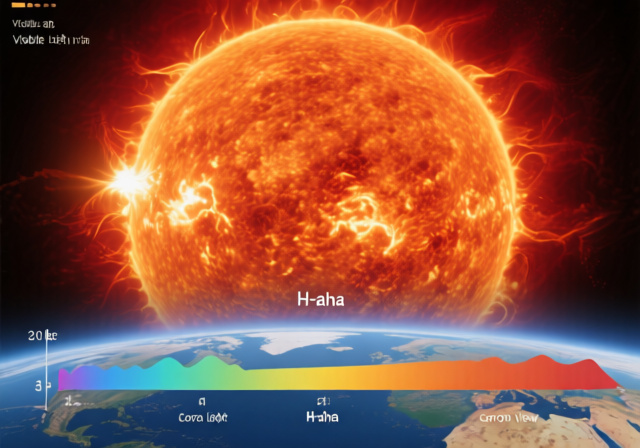
Solar Telescopes: Heavily filtered specialized instruments designed for safe observation of our nearest star. The Daniel K. Inouye Solar Telescope in Hawaii, with its 13-foot aperture, can resolve features as small as 20 miles on the Sun’s surface, revealing the intricate structure of solar granulation and magnetic fields that drive space weather affecting Earth.
Gamma-ray Telescopes: These instruments detect the highest-energy radiation in the universe, arising from the most violent events in the cosmos including supernova explosions, neutron star collisions, and the environments surrounding black holes. The Fermi Gamma-ray Space Telescope monitors the entire sky for gamma-ray bursts that can outshine entire galaxies for brief moments.
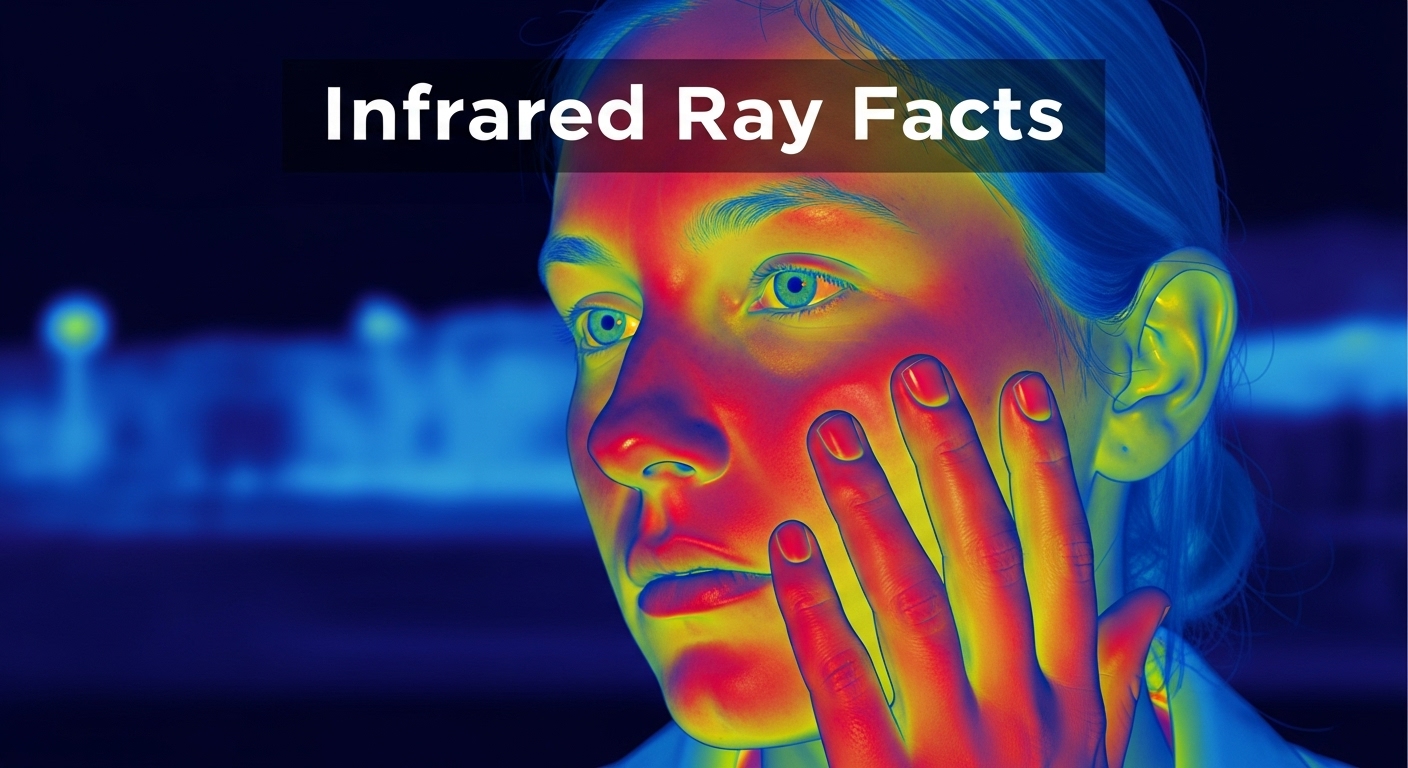
Infrared Telescopes: Detecting infrared radiation allows astronomers to see through dust clouds that block visible light, revealing newborn stars and planetary systems in their formation stages. Earth’s atmosphere absorbs most infrared radiation, necessitating placement at high altitudes or in space. The Spitzer Space Telescope has been particularly successful in detecting asteroid belts around other stars and revealing the hidden structure of galaxies.
UV Telescopes: Ultraviolet observations probe hot young stars, the interstellar medium, and the outer atmospheres of planets in our solar system. Since Earth’s ozone layer blocks most UV radiation, these telescopes must operate from space. The GALEX (Galaxy Evolution Explorer) mission surveyed the sky in ultraviolet light, revealing the hidden population of hot, young stars throughout the universe.
Neutrino Telescopes: These remarkable instruments detect nearly massless particles that pass through ordinary matter as if it were empty space. The IceCube Neutrino Observatory at the South Pole uses a cubic kilometer of Antarctic ice as its detection medium, observing neutrinos from cosmic sources including the jets of active galactic nuclei and the remnants of supernova explosions.
Gravitational Wave Detectors: While not traditional telescopes that detect electromagnetic radiation, instruments like LIGO (Laser Interferometer Gravitational-Wave Observatory) and Virgo detect ripples in the fabric of spacetime itself. These gravitational waves, generated by merging black holes and neutron stars, open an entirely new window on the universe, allowing astronomers to observe events previously completely invisible.
Telescope Arrays: Combining multiple telescopes through interferometry creates instruments with effective apertures far larger than any single telescope could achieve. The Event Horizon Telescope, linking radio telescopes across the globe from Hawaii to Antarctica, achieved sufficient resolving power to image the shadow of a black hole for the first time in 2019.
Space telescopes represent humanity’s most ambitious astronomical achievements, operating far above the limiting atmosphere that frustrates ground-based observers. The Hubble Space Telescope, launched in 1990, has become both a scientific powerhouse and a cultural icon, its images gracing publications worldwide and inspiring generations of scientists and dreamers alike.
Hubble’s scientific contributions span nearly every frontier of modern astronomy. Its observations helped determine the age of the universe at 13.8 billion years, revealed the existence of dark energy driving the accelerated expansion of the cosmos, and discovered that supermassive black holes occupy the centers of most galaxies. The telescope has generated over 19,000 scientific papers, making it one of the most productive scientific instruments ever built.
The James Webb Space Telescope, launched on December 25, 2021, represents the current pinnacle of space astronomy. Its 6.5-meter primary mirror, constructed from 18 hexagonal gold-coated segments, operates at temperatures around -380 degrees Fahrenheit to detect faint infrared heat from the most distant objects in the universe. Webb has already detected light from galaxies formed just 300 million years after the Big Bang, observing the universe when it was less than 2% of its current age.
The Nancy Grace Roman Space Telescope, scheduled for launch later this decade, will complement Webb with an extraordinarily wide field of view, 100 times larger than Hubble’s. This survey capability will enable astronomers to map the distribution of galaxies across cosmic time, investigate the nature of dark energy, and discover thousands of new exoplanets through gravitational microlensing. The Roman telescope will truly democratize space astronomy, providing data that the entire scientific community can utilize for decades of research.
Looking further ahead, ambitious concepts like LUVOIR (Large Ultraviolet Optical Infrared Surveyor) envision space telescopes with mirrors up to 15 meters across, large enough to directly image and characterize Earth-like planets around nearby stars. Such an instrument could potentially detect signs of life in the atmospheres of worlds orbiting other suns, answering humanity’s oldest question about whether we are alone in the universe.
Space telescopes work in concert with ground-based observatories, combining different wavelengths and observational capabilities to build comprehensive understanding of cosmic phenomena. Multi-wavelength astronomy, studying objects across the entire electromagnetic spectrum, has revealed that black holes influence their host galaxies through radiation and outflows spanning from radio waves to gamma rays. This synergy between space and ground-based telescopes represents the future of astronomical discovery.
The cost of space telescopes is genuinely astronomical. James Webb’s development spanned over two decades and cost approximately $10 billion, while Hubble’s servicing missions totaled billions more. Yet the scientific returns have been immeasurable, with every Hubble image contributing to human knowledge and every Webb observation pushing the boundaries of what we can know about our cosmic origins.
While telescopes remain essential tools for astronomical research, their applications extend far beyond peering into deep space. These versatile instruments serve crucial roles in defense, communications, environmental monitoring, and the search for extraterrestrial intelligence.
Telescopes have discovered over 5,000 exoplanets, determined the universe’s age at 13.8 billion years, and can detect heat from a bumblebee at the Moon’s distance. The first astronomical photograph was taken in 1840, and large telescope mirrors are polished to incredible precision within 1/50th of a light wavelength. Modern telescopes use interferometry and adaptive optics to achieve resolution previously possible only from space.
The James Webb Space Telescope can detect light from just 300 million years after the Big Bang, approximately 13.5 billion light-years away. Ground-based telescopes with adaptive optics have detected galaxies up to 13.3 billion light-years distant. The practical limit is not distance but time, as we are looking back to when the universe first became transparent to light after the cosmic dark ages.
Hans Lippershey, a Dutch eyeglass maker, applied for a patent on the first telescope in 1608. Galileo Galilei was the first to use the device for astronomical observations in 1609, discovering Jupiter’s moons and lunar mountains. Isaac Newton invented the reflecting telescope in 1668, creating a design that eliminates chromatic aberration and enables much larger apertures.
1) Astronomical research discovering celestial objects and cosmic phenomena 2) Tracking space debris protecting satellites and the ISS 3) Military reconnaissance and surveillance 4) Environmental monitoring measuring climate change 5) Deep space communications with spacecraft. Beyond astronomy, telescopes serve crucial roles in defense, communications, Earth observation, and the search for extraterrestrial intelligence.
Mountain observatories sit above most of Earth’s atmosphere, dramatically reducing distortion and light pollution. Mauna Kea in Hawaii, at 13,803 feet elevation, has approximately 40% less atmosphere above it than sea level locations. This elevation creates sharper images and provides access to wavelengths blocked at lower elevations, particularly infrared radiation absorbed by water vapor in the atmosphere.
Telescopes typically feature one optical path and are optimized for high magnification viewing of specific objects. Binoculars essentially combine two small telescopes mounted in parallel, providing comfortable viewing with both eyes and better depth perception. While binoculars are more portable and versatile for general use, dedicated telescopes can achieve much higher magnifications and gather significantly more light for serious astronomical observation.
Telescopes continue to revolutionize our understanding of the cosmos, from amateur stargazers discovering comets to space telescopes imaging the dawn of time itself. Each generation of instruments builds upon four centuries of optical innovation, constantly pushing the boundaries of human knowledge further into the universe.
Whether you are a beginner exploring beginner telescopes or an experienced amateur studying the technical differences between reflector vs refractor telescopes, the journey of astronomical discovery awaits anyone willing to look up at the night sky with curiosity and wonder.
The universe stretches out before us, filled with wonders waiting to be discovered. From the cosmic microwave background radiation that marks the beginning of our universe to the most distant galaxies being born in the early cosmos, telescopes continue to expand our cosmic perspective in ways that Hans Lippershey and even Galileo could never have imagined. As technology advances and new instruments like the Nancy Grace Roman Space Telescope come online, we stand on the threshold of discoveries that will once again transform our understanding of reality itself.
The next time you gaze at the night sky, remember that every point of light you see has been scrutinized by generations of astronomers using increasingly powerful instruments. The universe is vast beyond comprehension, filled with billions of galaxies, trillions of stars, and countless planets. Thanks to telescopes, we have begun to understand our place in this magnificent cosmos, and the journey of discovery is just beginning.