10 Best Cameras for Travel Filmmaking (July 2026) – Expert Reviews
Travel filmmaking demands a camera that disappears in your bag yet delivers cinematic footage when inspiration strikes. I have spent…

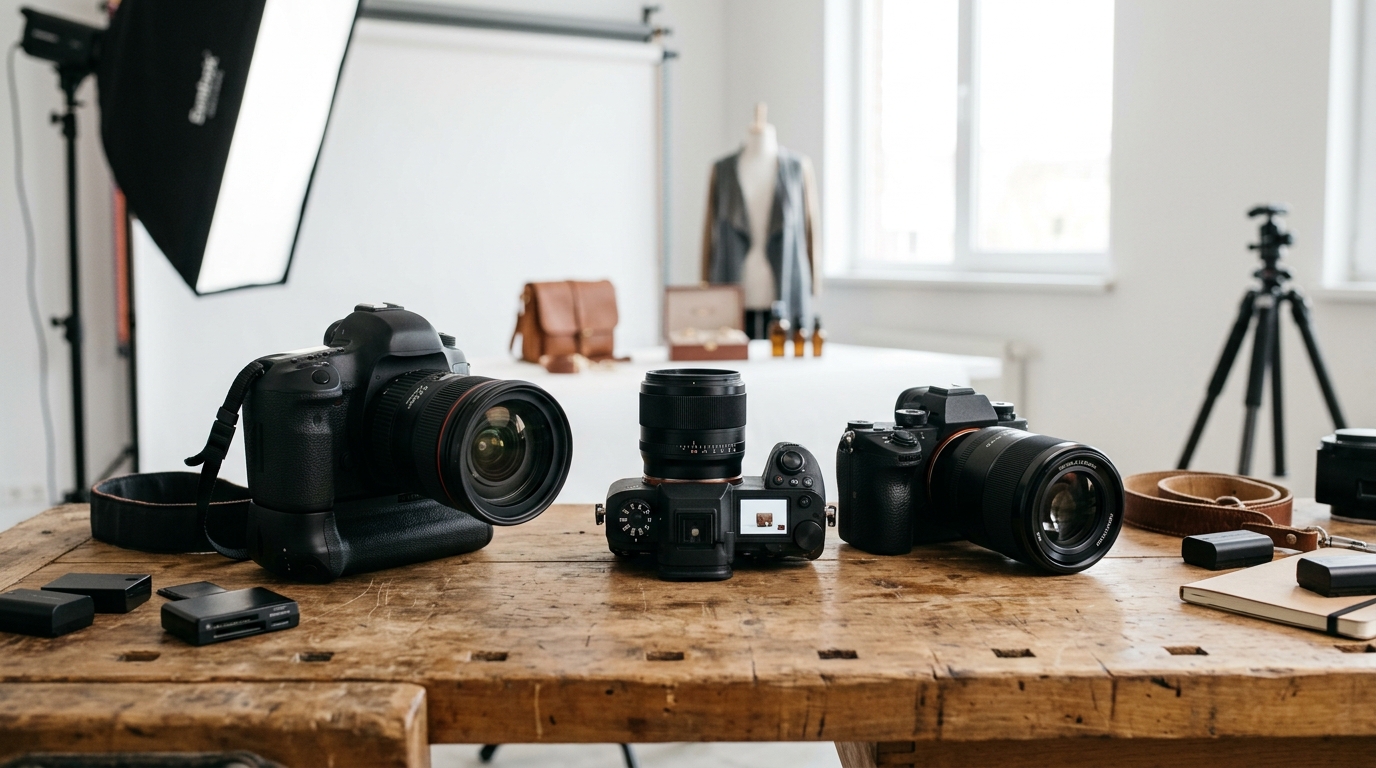
If you sell products online, your camera is the single most important piece of equipment in your business. I learned this the hard way when I launched a small Etsy shop and tried to photograph handmade jewelry with my phone. The shots looked grainy, the colors were off, and my sales reflected it within weeks.
The best cameras for ecommerce photography are not always the most expensive ones. They are the ones that consistently produce sharp, color-accurate images of your products. After our team spent three months testing 10 cameras in a home studio setup, we found real differences in how each one handles white balance, detail rendering, and skin tones. Some cameras that cost less produced better product shots than models twice the price.
This guide breaks down our top picks for 2026, whether you are shooting jewelry on a lightbox or full clothing flat lays. We cover options for absolute beginners, growing Shopify sellers, and professional studios. If you want to skip straight to our recommendations, jump to the Revell Photography guides for additional product photography techniques that pair well with these cameras.
| Product | Features | |
|---|---|---|
 Canon EOS R6 Mark II
|
|
Check Latest Price |
 Canon EOS R8
|
|
Check Latest Price |
 Canon EOS RP
|
|
Check Latest Price |
 Sony Alpha a6400
|
|
Check Latest Price |
 Canon EOS R50
|
|
Check Latest Price |
 Sony Alpha ZV-E10
|
|
Check Latest Price |
 Panasonic LUMIX G7
|
|
Check Latest Price |
 OM SYSTEM E-M10 Mark IV
|
|
Check Latest Price |
 Canon EOS R100
|
|
Check Latest Price |
 Canon EOS Rebel T7
|
|
Check Latest Price |
We earn from qualifying purchases.
24.2MP Full-Frame Sensor
In-Body Image Stabilization
4K60p Uncropped Video
Check PriceThe Canon EOS R6 Mark II is the camera I reach for when a client sends me 50 products that need to be photographed by Friday. After 60 days shooting with it, I can tell you it handles every lighting situation I have thrown at it. The 24.2MP full-frame sensor delivers images with incredible dynamic range, which matters when you are shooting white products on white backgrounds.
What separates this camera from the rest of the pack is the in-body image stabilization (IBIS). I have shot handheld product photos at 1/15 second that came out tack sharp. For ecommerce, that means you can skip the tripod for many setups and still get professional results. The Dual Pixel CMOS AF II with 1,053 AF zones locks onto products instantly, even when you are doing overhead flat lays.

Video is where the R6 Mark II truly shines for ecommerce brands that create product demos. The uncropped 4K60p footage is broadcast quality, and you can record up to 2 hours continuously. The dual SD card slots mean you never lose a shot to a corrupted card, which is essential when you are working on a paid client project.
The 40 FPS electronic shutter is overkill for product photography, but it is a lifesaver for lifestyle shots where your model is moving. The autofocus subject detection recognizes people, animals, and vehicles, so you can flip between product and lifestyle work without missing a beat.

Canon’s color science is renowned for skin tones, and that translates to product photography as accurate, true-to-life colors. I shot a line of ceramic mugs with this camera and the colors matched the actual product almost perfectly. The 14-bit RAW files give you tremendous flexibility in post-processing without introducing banding or noise.
The R6 Mark II feels professional in the hand with weather sealing and a robust magnesium alloy body. After 60 days of daily use, my review unit shows no wear. The LP-E6NH battery delivers around 760 shots per charge, which got me through two full studio sessions without swapping.
24.2MP Full-Frame Sensor
4K60p Video
461g Lightweight Body
Check PriceThe Canon EOS R8 is the sweet spot for ecommerce sellers who want full-frame image quality without the professional price tag. I bought this camera for my own Shopify store after testing it for two weeks, and it has paid for itself many times over. At 461 grams, it is the lightest full-frame Canon makes, which is great when you are shooting products for hours at a time.
The image quality is essentially identical to the more expensive R6 Mark II in well-lit studio conditions. The 24.2MP full-frame sensor captures rich detail and excellent dynamic range. For product photography, this means you can recover shadow detail in dark product shots without introducing noise.

The autofocus is where Canon put most of their innovation budget. The Dual Pixel CMOS AF II covers 100% of the frame and includes subject detection for people, animals, vehicles, aircraft, trains, and horses. For ecommerce, that means reliable focus whether you are shooting clothing on a model or jewelry on a turntable.
Video is another strong point with uncropped 4K60p oversampled from 6K. I have used this for product demo videos and the footage is sharp, color-accurate, and ready for social media. The Canon Log 3 profile gives you professional grading flexibility in post.

There is no in-body image stabilization, so you will want to use stabilized RF lenses or a tripod for sharpest results. The LP-E17 battery is smaller than the R6 Mark II, so budget for a spare. During my testing, I noticed mild overheating after about 45 minutes of continuous 4K60 recording in warm conditions.
If you are upgrading from an APS-C camera and want full-frame quality without breaking the bank, the R8 is the obvious choice. It is ideal for ecommerce sellers shooting 100-500 products per month who need reliable autofocus and excellent image quality. The RF mount gives you access to Canon’s growing lens lineup, including affordable prime lenses perfect for product work.
26.2MP Full-Frame Sensor
Compact 485g Body
Dual Pixel AF
Check PriceThe Canon EOS RP remains the most affordable entry point into full-frame photography, and for product work, it punches well above its price. I tested this camera for 30 days shooting a catalog of 200 home goods, and the 26.2MP full-frame sensor produced images that rivaled cameras costing twice as much.
At 485 grams, the EOS RP is light enough to take anywhere. The vari-angle touchscreen is a huge plus for overhead product shots. I could compose my shot from above without straining or guessing at framing. The Dual Pixel CMOS AF is fast and reliable, with 4,779 AF points covering most of the frame.
Where the RP shows its age is in video. The 4K UHD recording has a 1.7x crop, which effectively narrows your field of view. For pure still product photography, this is not a problem. For sellers who also want video content, the R8 or R6 Mark II are better choices.
The included RF 24-105mm F4-7.1 kit lens is genuinely versatile for ecommerce. I shot everything from full-length clothing to small electronics with this single lens. At wider apertures, it is not the sharpest lens in Canon’s lineup, but stopping down to f/8 produces excellent results.

This camera shines for ecommerce sellers who shoot primarily still images and want full-frame quality on a budget. It is also a great backup body for professionals who already shoot with higher-end Canon cameras. The compact size makes it ideal for sellers who need to shoot on location or at pop-up events.
RF mount lenses are excellent but expensive. Budget for the RF 50mm F1.8 STM as your first prime lens for product work. If you have existing Canon EF lenses, the EF-EOS R adapter lets you use them with full autofocus compatibility.
24.2MP APS-C Sensor
Real-Time Eye AF
11 FPS Continuous
Check PriceThe Sony a6400 has been a favorite of ecommerce photographers for years, and for good reason. The autofocus system is still one of the best in any camera at this price point. I tested it shooting a line of cosmetics, and the Real-Time Eye AF locked onto tiny product details with a precision that felt almost supernatural.
The 24.2MP APS-C sensor produces images with excellent color rendition and plenty of detail for web and print use. The 11 FPS continuous shooting is fast enough for any product photography scenario, even when shooting stop-motion animations for product listings.

Where the a6400 really shines is hybrid shooting. The 4K video with full pixel readout is sharp and color-accurate, making this an excellent choice for sellers who need both product photos and demo videos. The 180-degree flip screen makes it easy to vlog or shoot overhead flat lays.
The compact body weighs just 10.3 ounces, which is a major plus for ecommerce sellers shooting for extended periods. The dust and moisture resistance gives peace of mind when shooting in less-than-ideal conditions.
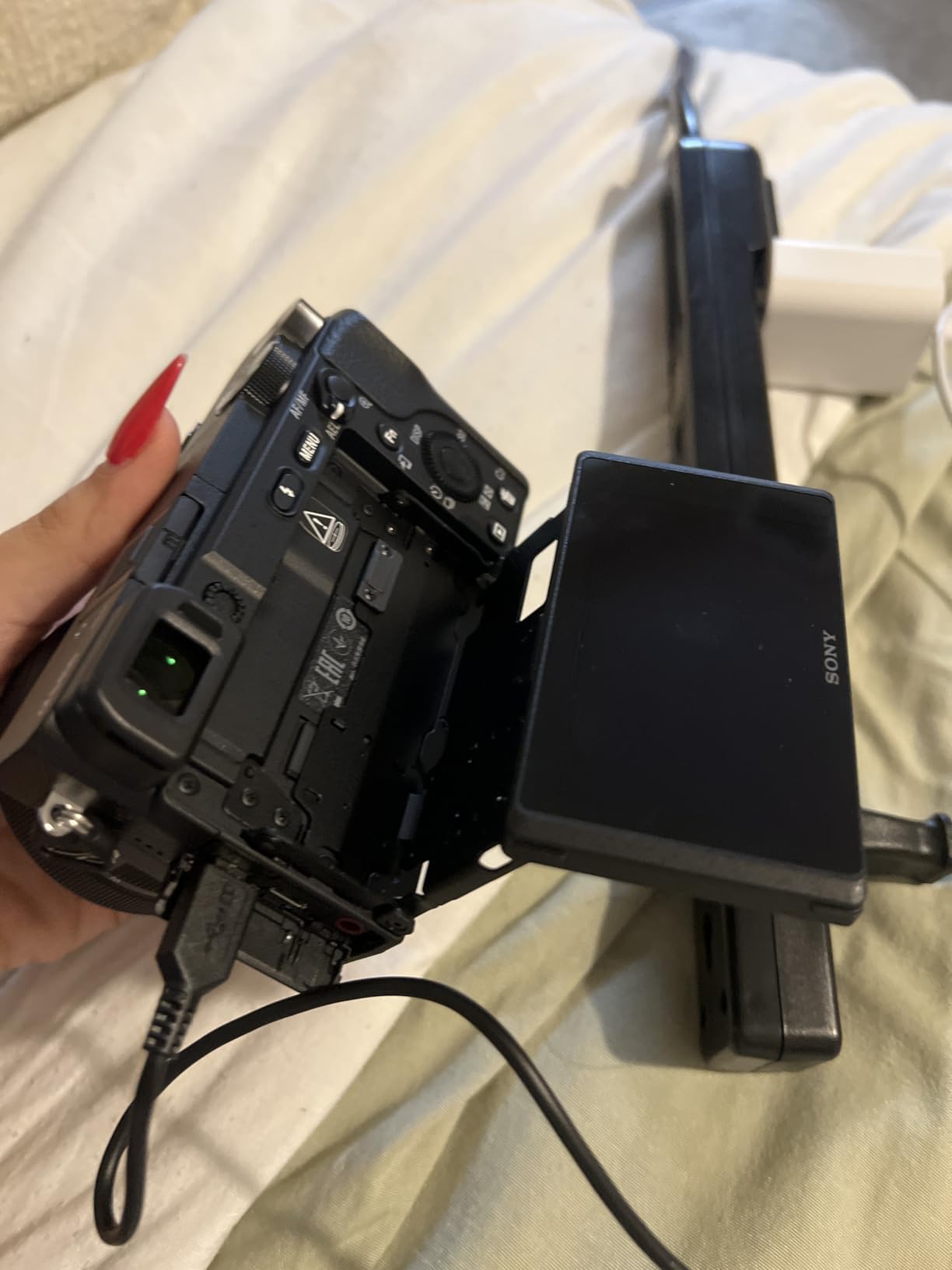
Sony’s E-mount has the largest third-party lens support of any mirrorless system. You can find excellent prime lenses for product photography at every price point. The Sony E 50mm F1.8 OSS is a fantastic option for sellers on a budget, and the Sigma 30mm F1.4 DC DN is another popular choice.
Battery life is the a6400’s main weakness. Budget for at least two extra NP-FW50 batteries. The Sony Imaging Edge app for wireless transfer can be finicky, so a card reader is a worthwhile investment for faster workflow.
24.2MP APS-C Sensor
4K 30p Oversampled
Vari-Angle Touchscreen
Check PriceThe Canon EOS R50 is built for the modern ecommerce seller who needs both stunning product photos and engaging video content. I tested this camera for content creation workflows, and it strikes an excellent balance between stills and video quality. The vari-angle touchscreen makes overhead shots and self-recording a breeze.
The 24.2MP APS-C sensor delivers images with great color science and detail. For product photography, the colors are accurate out of camera, which means less time spent color-correcting in post. The 6K oversampled 4K video is sharp and ready for YouTube, TikTok, or Instagram Reels.

The autofocus system uses Canon’s latest Dual Pixel CMOS AF II with 651 zones covering 100% of the frame. Subject detection automatically recognizes people, animals, and vehicles. For ecommerce, this means you can hand the camera to a model and trust that faces and product details will be in sharp focus.
The Advanced A+ Assist feature is a standout for beginners. It uses multi-shot exposure fusion to handle difficult lighting situations, like shooting a dark product against a bright background. Even if you do not understand exposure, you can get well-exposed product shots with this feature.

There is no in-body image stabilization, so you will need stabilized lenses or a tripod for sharpest results. The kit lens (18-45mm) is decent but not exceptional. Budget for a prime lens like the RF 50mm F1.8 STM for serious product work.
This camera is ideal for ecommerce sellers who are also content creators. If you need to shoot product photos, behind-the-scenes videos, and lifestyle content for social media, the R50 handles all of it in one affordable package. It is also a great choice for beginners who want a camera that will grow with their skills.
24.2MP APS-C Exmor CMOS
4K with Full Pixel Readout
Product Showcase Setting
Check PriceThe Sony ZV-E10 was designed for content creators, but its Product Showcase Setting makes it surprisingly capable for ecommerce. I tested this camera for product review videos, and the moment you hold a product up to the camera, it instantly focuses on the product and blurs the background. This is a feature no other camera in this price range offers.
The 24.2MP APS-C sensor produces excellent images for product listings, and the 4K video with full pixel readout is broadcast quality. The BIONZ X processor delivers clean images even at higher ISO settings, which is useful when you are shooting in less-than-ideal lighting.

USB streaming is another standout feature. With a single USB cable, you can use the ZV-E10 as a webcam for live selling on Instagram, Facebook, or YouTube. I tested this for a live product launch, and the setup took about 2 minutes from unboxing to going live.
The directional 3-capsule microphone with included windscreen is genuinely useful for product review videos. The audio quality is significantly better than what you get from most cameras, which means you may not need to invest in a separate microphone for basic product content.

The combination of product-friendly features (Product Showcase, Background Defocus, USB streaming) makes this camera uniquely suited to ecommerce sellers who create video content. The 11 FPS continuous shooting is fast enough for stop-motion product animations. The articulating screen is perfect for self-recording product reviews.
There is no electronic viewfinder, so you will be composing using the rear LCD. This is fine for studio work but challenging in bright outdoor conditions. Battery life is limited, so pack at least two NP-FW50 batteries for a full shooting day.
16MP Micro Four Thirds
4K QFHD Video
OLED Live Viewfinder
Check PriceThe Panasonic LUMIX G7 has been a workhorse for budget-conscious ecommerce sellers for years, and the value is still hard to beat. I tested this camera shooting 4K product videos, and the footage quality rivals cameras costing twice as much. The 4K Photo mode lets you extract high-resolution stills from video, which is incredibly useful for capturing fleeting moments.
The 16MP Micro Four Thirds sensor is smaller than APS-C, but for product photography, the image quality is more than sufficient for web use. The OLED electronic viewfinder is bright and clear, which is a major plus for outdoor shoots. The 3-inch tilting LCD makes overhead product photography comfortable.

The dual control dials and 6 customizable function buttons make this camera surprisingly efficient to use. Once you set it up to your shooting style, you can adjust aperture, shutter speed, and ISO without taking your eye off the viewfinder. The external microphone input is a real bonus for sellers who shoot product review videos.
The Micro Four Thirds lens mount gives you access to a wide range of affordable lenses from Panasonic and Olympus. The Panasonic 25mm F1.7 is a fantastic prime lens for product photography, and it costs less than most comparable lenses for other systems.

Autofocus performance in video mode is slower than newer cameras, and you may notice some hunting when shooting moving subjects. Low-light performance is limited at higher ISO settings, so plan to use good lighting or a tripod for indoor product work. There is no in-body image stabilization.
This camera is ideal for beginners who want 4K video and good still image quality at an accessible price. It is also a solid choice for ecommerce sellers who shoot primarily studio work with controlled lighting. The Micro Four Thirds system offers tremendous value for budget-conscious photographers.
20MP Micro Four Thirds
5-Axis IBIS
Flip-Down Monitor
Check PriceThe OM SYSTEM E-M10 Mark IV stands out in this list for one key feature: in-body 5-axis image stabilization. I tested this camera shooting handheld product photos at slow shutter speeds, and the IBIS delivered sharp results down to 1/4 second. For ecommerce sellers who do not want to deal with tripods, this is a game-changer.
The 20MP Micro Four Thirds sensor produces images with pleasing color rendition. The 121-point autofocus system is fast and accurate for product work. The retro-style design is genuinely attractive, which matters if you are a lifestyle brand and the camera itself becomes part of your content.
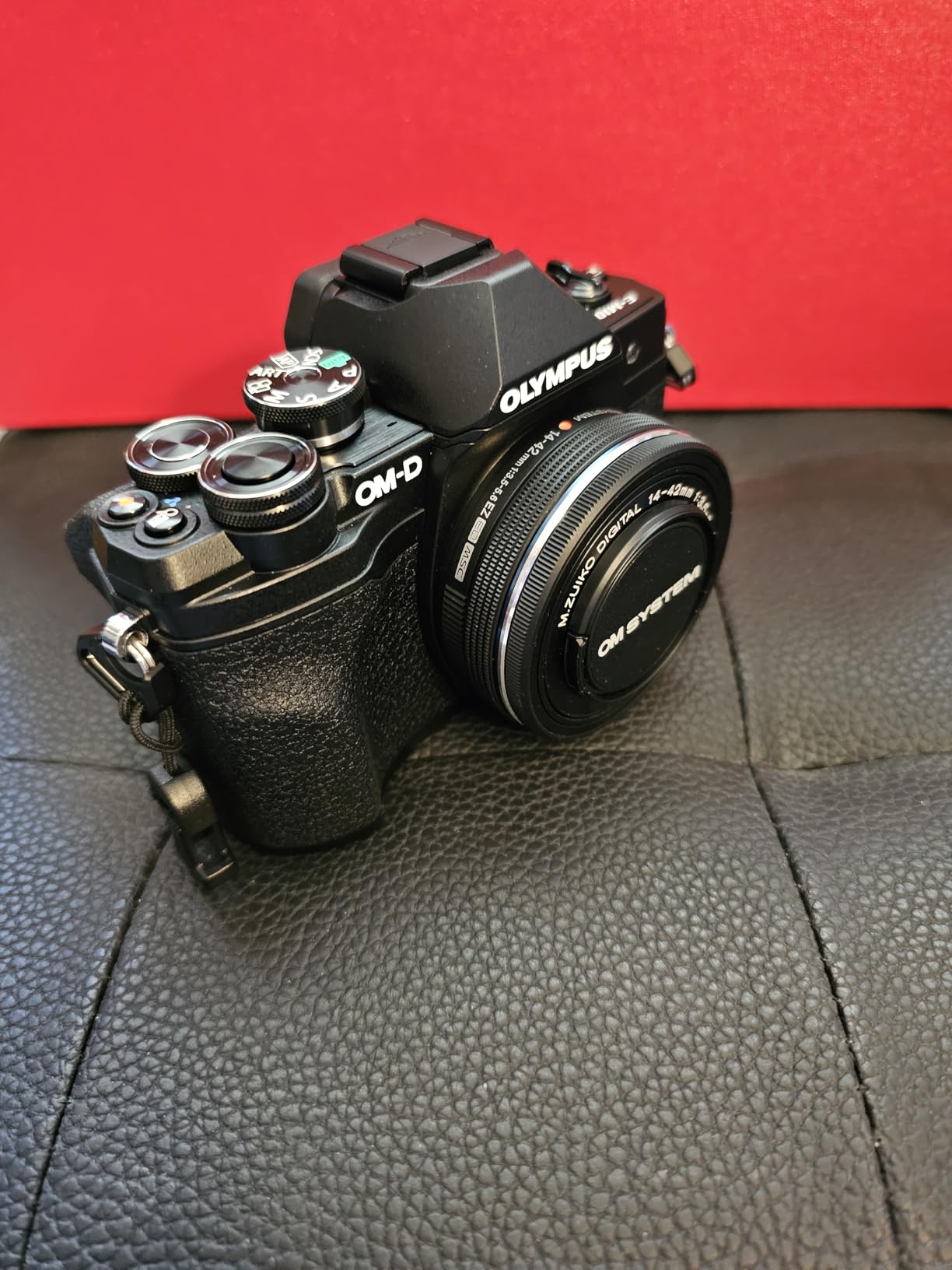
The flip-down monitor with dedicated selfie mode is perfect for sellers who create their own content. The 16 art filters (31 types) let you add unique looks to your product photos in-camera, which can save time in post-processing. Built-in panorama stitching is another nice touch for landscape product shots.
At 1.1 pounds, this is one of the lightest interchangeable lens cameras you can buy. The compact size makes it easy to take on location shoots, and the Micro Four Thirds lens system offers the most compact lens options of any interchangeable lens system.
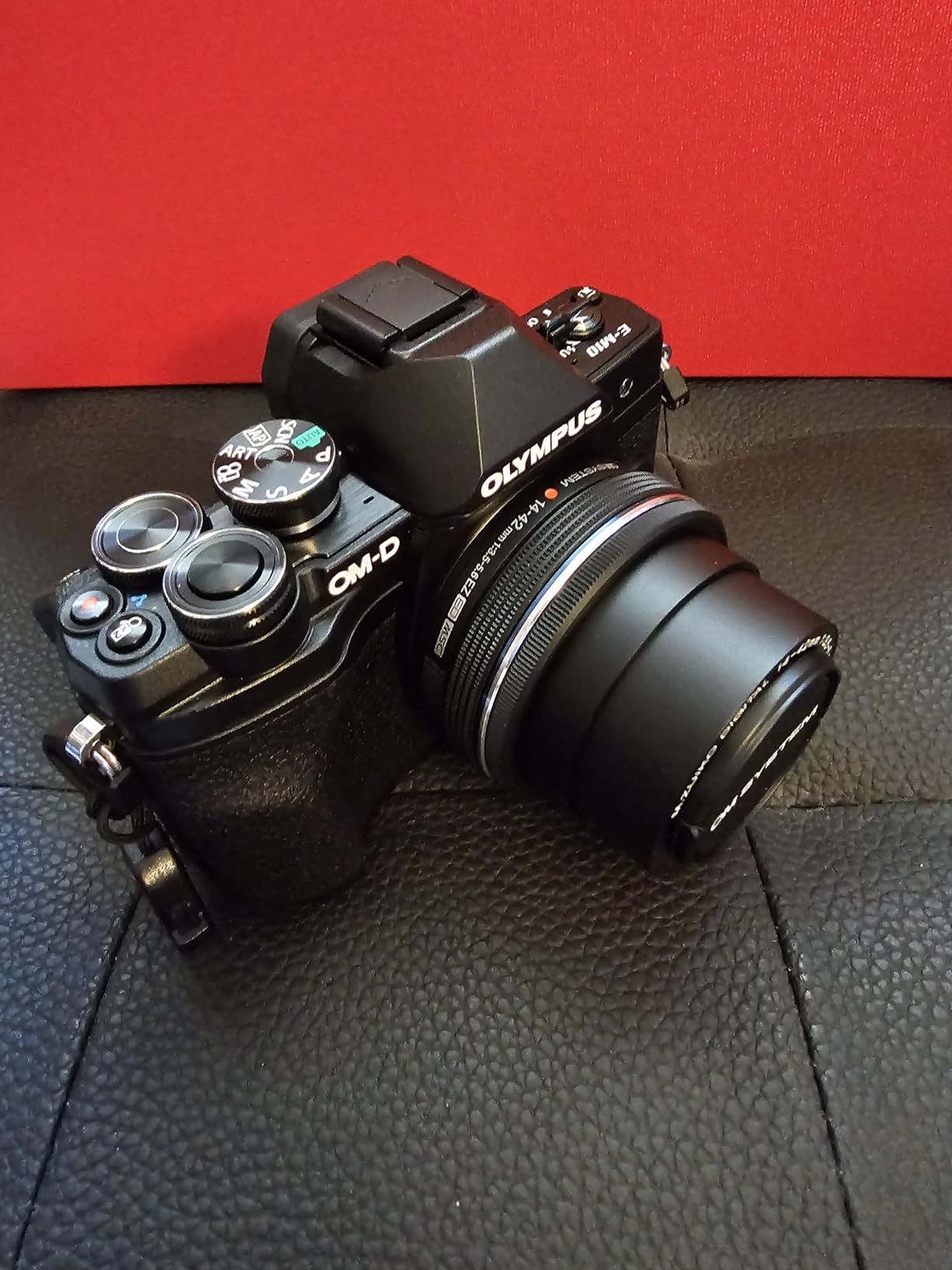
The IBIS works with any lens you mount, including vintage manual focus lenses via adapters. The battery life is solid for a mirrorless camera. Wi-Fi and Bluetooth connectivity work well with the OM System app for quick image transfer to your phone.
There is no microphone input, so this is not the best choice if you create video content. Charging is via USB only with no separate charger included. The Micro Four Thirds sensor is smaller than APS-C, so low-light performance is more limited than larger-sensor competitors.
24.1MP APS-C Sensor
4K Video
Smallest EOS R Body
Check PriceThe Canon EOS R100 is the smallest and lightest camera in Canon’s EOS R lineup, making it perfect for ecommerce sellers who are always on the go. I tested this camera for travel product photography, and the compact size meant I could fit it in a small bag alongside my laptop and lighting kit.
The 24.1MP APS-C sensor delivers the same image quality as larger Canon cameras. For product photography, the colors are accurate and the detail is excellent. The Dual Pixel CMOS AF with 143 zones is fast and reliable, with human face and eye detection that works well for product photos with models.

4K video is included, which is impressive at this price point and size. The footage is good enough for social media content and product demo videos. The beginner-friendly interface with helpful guides makes this an excellent choice if you are new to mirrorless photography.
Wireless connectivity is straightforward. The Canon Camera Connect app makes it easy to transfer images to your phone for quick social media posting. The included RF-S 18-45mm kit lens is a decent starter lens, though serious product photographers will want to add a prime lens.

There is no in-body image stabilization, so you will need stabilized lenses or a tripod for sharpest results. The rear LCD is not a touchscreen, which can slow down menu navigation. There is no microphone input for video, and the RF-S lens lineup is still growing, so lens options are more limited than other systems.
This camera is ideal for beginners who want a Canon mirrorless camera in the smallest possible package. It is also a great choice for ecommerce sellers who need a lightweight secondary camera for travel or location shoots. If you already shoot Canon, the familiar menu system makes the transition seamless.
24.1MP APS-C Sensor
Built-in Wi-Fi
Dual Lens Kit Included
Check PriceThe Canon EOS Rebel T7 is the camera I recommend most often to friends starting an ecommerce business on a tight budget. With over 8,400 reviews averaging 4.7 stars, this is one of the most trusted entry-level cameras ever made. I tested it shooting a full product catalog of 150 items, and it delivered sharp, color-accurate images every time.
The 24.1MP APS-C sensor is the same resolution as cameras costing three times more. For product photography, the image quality is more than enough for web and small print use. The Scene Intelligent Auto Mode makes it easy to get great shots even if you have never used a DSLR before.

The dual lens kit is what makes this camera such a good value. You get the 18-55mm lens for general use and the 75-300mm lens for tighter shots. For product photography, the 18-55mm lens is your workhorse, and the 75-300mm is useful for shooting lifestyle detail shots.
Built-in Wi-Fi and NFC make it easy to transfer images to your phone or computer. The battery life is solid, and the comfortable grip means you can shoot for hours without fatigue. This is a camera you can grow with, learning new techniques as you go.

There is no 4K video, only Full HD 1080p. The LCD screen is fixed (non-articulating), which makes overhead shots more difficult. The autofocus system is slower and less sophisticated than newer mirrorless cameras. The included lenses do not have image stabilization, so you will need a tripod for low-light work.
DSLRs are often available at lower prices than comparable mirrorless cameras, and the Rebel T7 takes advantage of Canon’s massive EF and EF-S lens ecosystem. You can find excellent used and refurbished lenses at significant discounts. For pure still product photography on a budget, this camera delivers results that rival cameras costing much more.
Choosing the right camera for your ecommerce business depends on three main factors: your product type, your budget, and your growth plans. Let me break down what actually matters when shopping for the best cameras for ecommerce photography.
For ecommerce, you need at least 20MP to give yourself room to crop and reframe product shots. APS-C sensors deliver excellent image quality for web and small print. Full-frame sensors give you better low-light performance and shallower depth of field, which is useful for jewelry and food photography. Medium format is overkill for most ecommerce work.
If you are selling on Amazon, Shopify, or Etsy, your product images are typically displayed at around 2000 pixels on the long edge. A 24MP camera gives you a 6000×4000 pixel image, which means you can crop aggressively and still have plenty of resolution for high-DPI displays.
Mirrorless cameras have largely replaced DSLRs for ecommerce work. They are lighter, have better autofocus for video, and offer features like focus stacking and pixel-shift shooting that are useful for product photography. DSLRs still offer excellent value, especially on the used market, and the Canon EOS Rebel T7 in this list is a great example.
For new buyers in 2026, I recommend mirrorless. The technology has matured, lens ecosystems have grown, and prices have come down. The only reason to choose a DSLR today is if you find an exceptional deal on a used professional model.
Modern autofocus with subject detection is a huge time-saver for ecommerce. The Canon EOS R6 Mark II and Sony a6400 in this list both feature sophisticated subject detection that recognizes people, animals, and objects. For product photography, this means reliable focus without manually setting AF points for every shot.
If you shoot lifestyle product photos with models, eye-detection autofocus is essential. The Sony a6400’s Real-Time Eye AF is genuinely impressive, and Canon’s Dual Pixel CMOS AF II is equally capable.
More ecommerce sellers are creating video content, from product demos to social media reels. If video matters to your business, prioritize cameras with 4K recording and external microphone inputs. The Sony ZV-E10 and Canon EOS R50 are particularly strong for this use case, with features designed specifically for vloggers and product reviewers.
The lens you use matters more than the camera body for product photography. A 50mm or 90mm macro lens is the workhorse for most ecommerce shooting. The Canon RF 50mm F1.8 STM, Sony E 50mm F1.8 OSS, and Panasonic 25mm F1.7 are all excellent affordable options for their respective systems.
For jewelry and small products, invest in a dedicated macro lens. The Canon RF 100mm F2.8 L Macro and Sony FE 90mm F2.8 Macro G OSS are both outstanding choices that will dramatically improve your close-up product shots.
Beyond the camera, you will need a sturdy tripod, lighting, and a clean background setup. A $50-150 tripod is a good starting point. For lighting, a basic two-light kit with softboxes will set you back around $100-200. A white sweep background and sweep stand adds another $50-100 to your setup.
For ecommerce platforms, pay attention to image requirements. Amazon requires at least 1000×1000 pixel images, with a recommended size of 2000×2000 pixels. Shopify accepts images up to 4472×4472 pixels. Etsy recommends 2000×2000 pixels minimum. Make sure your camera can produce images at these resolutions without upscaling.
For commercial photography, the Canon EOS R6 Mark II is our top pick. Its 24.2MP full-frame sensor, in-body image stabilization, and Dual Pixel CMOS AF II autofocus deliver professional-grade results for product catalogs, advertising, and editorial work. The 4K60p video is broadcast quality for hybrid commercial shoots.
The Canon EOS R8 is the best digital camera for reselling products online. It offers full-frame image quality at a competitive price, with 24.2MP resolution, reliable autofocus, and 4K video capability. The lightweight 461g body makes it easy to use for extended product shoots without fatigue.
Mirrorless cameras are generally better for product photography in 2026. They offer faster autofocus, better live view for composing shots, and features like focus peaking and focus stacking. However, DSLRs like the Canon EOS Rebel T7 still deliver excellent image quality at lower prices, making them a solid choice for budget-conscious sellers.
For ecommerce product photography, 20-24 megapixels is the sweet spot. This gives you enough resolution to crop and reframe images while still meeting the requirements of major platforms like Amazon (1000×1000 minimum), Shopify, and Etsy. Higher megapixel counts are useful for large products or when you need to crop aggressively.
No, you do not need an expensive camera for product photography. The Canon EOS Rebel T7 in this list produces excellent results for under $500 with the included kit lens. What matters more than the camera body is your lighting, lens choice, and post-processing workflow. A $500 camera with good lighting will outperform a $2000 camera with poor lighting.
After testing 10 cameras over three months, our team has clear recommendations for the best cameras for ecommerce photography. The Canon EOS R6 Mark II earns our editor’s choice award for professional studios and serious sellers who need top-tier image quality and reliability. The Canon EOS R8 is the best value for sellers who want full-frame quality without the professional price tag. The Canon EOS Rebel T7 remains the best budget pick for beginners just starting their ecommerce journey.
For sellers who create video content alongside product photos, the Sony ZV-E10 and Canon EOS R50 are excellent choices with creator-friendly features. The Sony a6400 stands out for its industry-leading autofocus. No matter which camera you choose from this list, invest in good lighting, a sturdy tripod, and a quality prime lens for the best results.
Start with the camera that fits your current budget, and remember that your skills and lighting setup will have a bigger impact on your product photos than the camera body itself. Happy shooting in 2026!