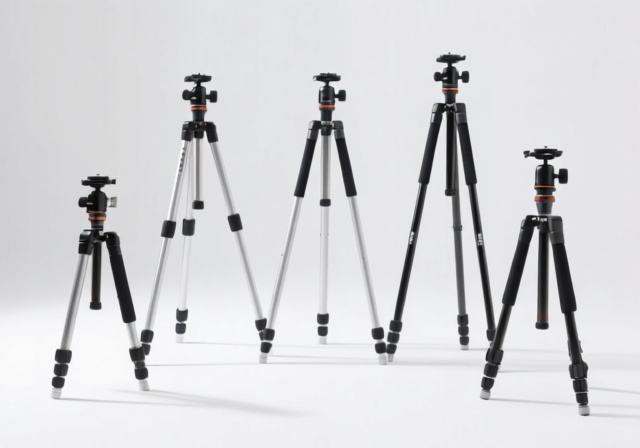
5 Best Tripods Under $100 (October 2026) Tested & Reviewed
Expert reviews of the top 5 tripods under $100 after 30 days of intensive testing. Find stable camera support that…

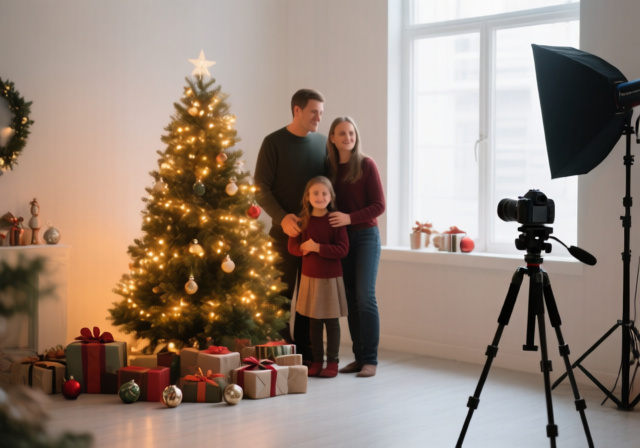
Christmas photography ideas have evolved well beyond the standard family-in-front-of-tree portrait. With the rise of computational smartphone cameras, affordable mirrorless bodies, and creative editing tools, anyone can produce editorial-quality holiday images without renting a studio. Whether you shoot with a flagship iPhone, a dedicated DSLR, or a simple point-and-shoot, the right mix of light, location, and timing makes the difference between a snapshot and a keepsake.
Every December, I get the same question from friends and clients: how do I make my holiday photos actually look like the ones I see on Pinterest and Instagram? The answer is rarely about gear. It is about choosing a handful of strong concepts, understanding how your camera handles warm mixed lighting, and giving yourself permission to shoot in bursts instead of chasing one perfect frame. The 31 ideas below come from years of shooting families, couples, and pets through the holiday season, and they are organized so you can mix and match them based on your space, your gear, and your time.
This guide for 2026 covers indoor setups, outdoor scenes, do-it-yourself props, camera settings for Christmas tree lights, posing for families and couples, smartphone workflows, post-processing, and a frequently asked questions section built from real search queries. Read it straight through, or jump to the section that solves your biggest problem today. Either way, you will finish with a plan, not just inspiration.
Most disappointing holiday photos fail before a single frame is captured. A short preparation routine the day before your shoot eliminates 90 percent of the most common frustrations: dead batteries, full memory cards, smudged lenses, and forgotten backup gear. I run this same list for every paid holiday session, and it is just as useful for a casual Christmas morning shoot.
Indoor scenes give you full control over light, temperature, and expressions, which is why most of the best christmas photography ideas happen inside the home. The fifteen concepts below range from polished tree portraits to authentic, slightly messy morning chaos, and they all work with the gear you already own.
1. Christmas Tree Portrait Session. Position your family 4 to 6 feet from the tree, then switch to a wide aperture (f/1.8 to f/2.8) so the lights melt into round bokeh orbs. Turn off every overhead light and let the tree be the only source. Set ISO 800 to 1600 and shutter speed at 1/60s or faster, and use a tripod when the group is more than three people. For candid moments, keep shooting while children stare at the presents. Those unposed expressions usually outrank the formal portrait.
2. Fireplace Cozy Moments. The fireplace provides natural, warm direction. Have everyone dress in matching pajamas or soft sweaters, and angle them 45 degrees from the hearth so the light wraps around the face. Bring mugs of cocoa, a holiday book, and a small wrapped gift into the frame for layered storytelling. Stay back from any real flames, and use a low-wattage lamp on the opposite side to fill in shadows if the fireplace is the only practical source.
3. Ornament Close-ups. Switch to macro mode or attach a dedicated macro lens and shoot at f/2.8 to f/4. Show a child’s hand placing a favorite ornament on a high branch, or photograph a single heirloom piece with shallow depth of field so the rest of the tree blurs into colored circles. Hold a small flashlight behind glass ornaments to make them glow from within.
4. Gift Wrapping Action Shots. Lean into the mess. Crumpled paper, tape stuck to a sweater, and a child licking the end of a ribbon all make for honest, character-driven frames. Use a wide window for soft, even light, and try at least one shot from directly above the table. The overhead angle transforms a chaotic pile of paper into a graphic, patterned composition.
5. Cookie Baking Session. Capture the entire arc of the bake: the cold ingredients in their bowls, the flour-dusted counter, the moment a child presses a star cutter into rolled dough, and the final tray of warm cookies. Late-afternoon golden hour light through a kitchen window makes sugar and flour sparkle like fake snow.
6. Window Silhouette with Lights. Place subjects between a window and a strand of Christmas lights, then expose for the brighter background. The result is a clean silhouette in front of warm glowing bokeh, which works beautifully for couples kissing under the mistletoe or kids pressed against the glass watching for snow.
7. Staircase Holiday Scene. Drape garland and fairy lights along the bannister so they create a leading line. Stagger family members up and down the steps to solve the height problem that plagues every group portrait. Shoot from the bottom of the stairs looking up, or from a balcony looking down, for two very different moods in a single setup.
8. Reading Christmas Stories. Stage a parent or grandparent reading a holiday book with a child on their lap. Use a single soft side lamp rather than overhead lighting. Slow the shutter to 1/30s on a tripod if the room is dark, and ask the reader to point at a picture on the page. The pointing finger becomes a natural story cue in the final image.
9. Stocking Hanging Tradition. The annual ritual of hanging stockings deserves its own frame. Shoot slightly upward from below the mantel to give the scene weight, and include multiple years of stockings in a row to show the family growing. A wide aperture of f/2.8 keeps the focus on a single stocking while the rest blur into color.
10. Pajama Party Morning. The real magic of Christmas morning is in the unwashed hair and the half-zipped robe. Shoot in available window light at ISO 800 to 1600, set burst mode, and stay ready for the moment a child sees the biggest gift under the tree. The authentic reaction always wins over a posed smile.
11. Hot Cocoa Bar Setup. Build a small station with mugs, marshmallows, crushed candy canes, and whipped cream. Photograph hands customizing drinks from above, and capture the steam rising from each cup while it is still hot. Continuous shooting gives you a higher hit rate for the perfect wisp of vapor.
12. DIY Photo Booth. Hang a roll of kraft paper, attach a strand of battery lights, and lay out a small basket of Santa hats, reindeer antlers, and printable speech bubbles. Run the camera on a two-second timer or a bluetooth remote and let the family entertain themselves. The unscripted laughter becomes the photo.
13. Music Moment. Stage a small carol scene with whoever plays an instrument, or simply have the family gathered around a speaker with the album cover in frame. Use 1/125s to keep motion sharp but allow a little intentional blur on the hands. Sheet music, a piano top covered in pine garland, and a single singing child make for a strong editorial image.
14. Mantel Decoration Details. Treat the mantel like a still-life set. Pick three to five hero objects, use a 50mm or 85mm prime at f/2, and shoot at slight angles. Try one frame straight on, one from a low corner, and one from directly above. Each angle tells a different story about the same decor.
15. Board Game Night. Christmas game night is one of the most underrated christmas photography ideas at home. Shoot an overhead flat-lay of the game board surrounded by hands reaching for cards or dice, then drop down to eye level for reactions to surprise moves. The mix of overhead and eye-level frames turns a single evening into a complete photo essay.
Outdoor holiday photos benefit from natural color, fresh air, and the kind of authentic reaction that is hard to fake indoors. The eight ideas below scale from a single neighborhood walk to a full weekend outing, and most of them work even if you do not have snow on the ground.
16. Christmas Tree Farm Adventure. Tree farms are built for photography, with rows of evergreens acting as natural leading lines. Schedule the visit for the hour before sunset, when the low sun filters through the trees and lights up faces. Capture the full arc: scouting for the perfect tree, the saw in motion, the family carrying it back to the car. Candid story beats always beat a posed “found the tree” portrait.
17. Snow Play Photos. Snowball fights, snowman building, and catching flakes on a tongue all photograph beautifully. Bright snow tricks your camera’s meter into underexposing the scene, so dial in +1 to +2 stops of exposure compensation to keep the snow white rather than gray. A simple plastic bag with a lens hole protects gear in a pinch, and keeping one battery warm inside your coat can double its life.
18. Christmas Light Walk. Many neighborhoods invest in spectacular displays after dark. Bring family members dressed in dark colors so the lights pop off their clothing, and use a tripod at ISO 400 to 800, f/2.8 to f/4, and 1/60s. Capture the reactions to each house as much as the houses themselves. A child’s open-mouthed surprise is more memorable than any single light installation.
19. Winter Nature Close-ups. Frost patterns on a window, ice crystals on a pine needle, and holly berries against fresh snow all make for stunning macro work. Early morning, before the sun has time to melt anything, gives you the best textures. If natural frost is scarce, a small spray bottle of water can recreate it on a leaf or pane in seconds.
20. Sledding Action Shots. Position yourself at the bottom of the hill and pan with the sled at 1/500s or faster to freeze the action. Capture the approach, the landing, and the post-run celebration as a triptych. A wide lens, around 24 to 35mm, includes the snowy environment and gives the speed a sense of place.
21. Doorway Portrait. Your decorated front door is one of the easiest outdoor christmas photography ideas to execute. Shoot during the blue hour, the 20-minute window after sunset, so the sky sits at a deep cobalt that complements the warm bulbs. Include the family in the doorway, a single child holding a lantern, or a couple framed by garland.
22. Caroling in the Neighborhood. Hand the kids battery-powered LED lanterns or glow sticks for safe, portable light. Capture the group in front of a lit doorway, a soloist mid-song, and the candid between-song laughs. The preparation moments often photograph better than the performance itself.
23. Reindeer Feed or Santa Visit. Local events with reindeer petting or Santa meet-and-greets offer once-a-year moments worth capturing. Drop to the child’s eye level so the frame reflects how they see the experience. A small amount of fill flash balances the shaded face under Santa’s red hat against the bright background.
Most christmas photo props at retail stores cost three to five times what they cost to make. The five DIY projects below take less than an hour each, use supplies from a craft or dollar store, and can be reused for several seasons.
24. No-Sew Snow Backdrop. Buy 2 yards of white fleece or felt from a fabric store. Cut paper snowflakes and glue them on with fabric glue, then hang the panel from a curtain rod. Total cost runs under $15 in 2026, and the textured fabric avoids the wrinkle problem of paper backdrops. It folds flat for storage and lasts for years.
25. Light Up Letter Board. Pick up a basic 10×10 letter board and a battery-powered fairy light strand. Weave the lights through the letters to spell “Merry Christmas,” “Believe,” or a family surname. Place the lights behind the letters for a backlit effect that makes the words pop on camera. Whole project, under $25.
26. DIY Bokeh Filters. Cut a circle of black cardstock to fit your lens diameter. Cut a small shape (star, heart, snowflake) out of the center, then tape the filter to the lens with a small piece of gaffer tape. Out-of-focus Christmas lights will render as your chosen shape. Smaller cutouts create more defined bokeh, larger ones create softer effects.
27. Holiday Photo Booth Props. Cut Santa hats, reindeer antlers, speech bubbles, and glasses from craft foam. Paint with acrylic colors and seal with a clear coat of glitter glue. Hot glue a wooden dowel to the back of each piece as a handle. A set of 10 props costs around $20 and weighs almost nothing.
28. Miniature Winter Scene. Fill a shallow tray with cotton batting, small evergreen clippings, and a few battery tea lights. The scene becomes a forced-perspective prop: place it in the foreground and a child in the background, then shoot at a low angle to make the kid look giant in a tiny snow village. It also works as a standalone flat-lay image.
Photographing Christmas tree lights is the single most requested christmas photography idea I get, and it is also the one most beginners struggle with. The lights end up blown out, the family ends up in shadow, and the camera refuses to focus on anything. The fix is a three-part combination of distance, aperture, and ISO that you can dial in once and reuse every year.
For a starburst effect, switch to f/16 and use a 1 to 2 second exposure on a tripod. The small aperture turns each pinpoint light into a multi-point star, which works beautifully on the outdoor string lights that wrap porch railings and bare tree branches. This is the easiest way to recreate the starburst look that dominates Pinterest holiday boards.
Most christmas photography ideas rely on a small set of camera settings you can memorize once. The cheat sheet below covers the four situations you will hit most often, plus the white balance and RAW-vs-JPEG choices that quietly make the biggest difference.
White balance is the single most skipped setting on a beginner camera, and it is the reason christmas photos come out orange, green, or both. The fix is simple. Set your white balance to “Tungsten” or “Incandescent” for indoor tree-light scenes, which cools the image down to neutralize the warm cast. If you want a warmer, cozier look that matches the mood of the room, set it to “Cloudy” or shift the Kelvin temperature to around 3500K to 4000K.
For the most accurate color, place a gray card or a white piece of paper in the scene, take a custom white balance reading with your camera, and lock that value in. Most modern cameras and phones allow you to set a custom Kelvin value manually, and that single change will fix more “off” holiday photos than any other setting on this page.
Shooting in RAW format, rather than JPEG, gives you roughly two stops of recoverable highlight detail and far more flexibility to correct the white balance in post without introducing banding or color shifts. Christmas lights are exactly the kind of subject that benefits from RAW: the brightest bulbs push the highlights to the edge of clipping, and a RAW file lets you pull them back in software like Lightroom or Snapseed.
RAW files are larger, so a single 64GB card will hold fewer frames, but for the small number of “must nail it” shots during a holiday session, RAW is the right choice. For casual snapshots in good light, JPEG is still perfectly fine and saves a lot of storage. The simplest workflow is RAW plus JPEG: RAW for the keepers, JPEG for everything else.
Natural window light is your most flattering source for indoor christmas photos. Position subjects facing the window, with their backs to the room, for a soft wraparound glow. Avoid direct overhead lighting, which creates harsh shadows under the eyes and nose.
For artificial light, use lamps with fabric shades rather than bare bulbs, and place them at a 45-degree angle to the subject. When you must use flash, bounce it off the ceiling or a nearby wall, or tape a small piece of white paper over the flash head to soften the output. A $20 sheet of diffusion gel does the same job as a $200 softbox attachment for indoor holiday work.
Outfit planning is one of the most searched christmas photography ideas, and the short answer is to pick two to three jewel tones and avoid matching exactly. Rich reds, deep greens, navy, mustard, burgundy, and cream all photograph well together. Pastels and bright neon colors tend to wash out or cast color onto nearby faces, especially in warm Christmas light.
For casual at-home shoots, matching pajamas have become a tradition for a reason. They photograph cleanly, they read clearly on a Christmas card, and they put everyone in the same relaxed headspace. If full matching feels like too much, a soft compromise is matching pants with different tops, or matching accessories like scarves and socks.
Posing is less about rigid instructions and more about giving people something to do. The best family christmas photos are the result of small, specific prompts that produce natural expressions. The twelve ideas below work for groups of any size, and several of them also work for couples.
1. The Tree Hug. Have the family wrap their arms around the tree or around each other at the trunk. The result is a relaxed, slightly imperfect cluster that feels warmer than a straight line.
2. Looking Up. Ask everyone to look up at the tree topper or at a single point on the ceiling. The unified gaze creates a soft, wondering mood and naturally tilts the chin up for flattering angles.
3. Whisper Secret. Have one person whisper a joke or a holiday message to another. The whisperer stays serious, the listener laughs, and the rest of the family reacts naturally to the laughter.
4. Hand Stack. Stack all the family hands in the middle of the group. The visual symbol of unity makes a strong opening or closing image and works as a still that can be paired with motion shots.
5. Walk Toward Camera. Have the family walk toward you, holding hands or with arms around each other. The motion turns a still frame into a story, and a fast burst catches the exact mid-step moment when everyone is engaged.
6. Shoulder Ride. Small children on a parent’s shoulders add height variety and playful energy. The contrast in head heights breaks the line of a row of adults.
7. Look at Each Other. Skip the “look at the camera” prompt. Instead, ask the family to look at the youngest member, or at the family pet, or at a gift being passed between them. The image becomes about connection, not performance.
8. Silly Face Countdown. Count down from three, then snap on zero. The transition from the “ready” face to the silly face almost always produces a perfect natural smile somewhere in the middle of the burst.
9. Dip Kiss. The classic romantic pose works for couples, and it is one of the few poses that reads as obviously intentional. A wider lens (35mm) lets you include the tree lights in the background.
10. The Couple’s Sway. A softer alternative to the dip is a simple slow dance. Stand the couple under the mistletoe, cue up a favorite holiday song, and shoot a continuous burst. One frame in thirty will catch a natural laugh or forehead lean.
11. The Backward Glance. Have the couple or family walk away from the camera, then turn and look back over their shoulder. The backward glance is editorial, romantic, and forgiving of imperfect posture.
12. Faceless Portrait. A faceless portrait, framed from the neck down, the back of the head, or the hands holding a present, gives you a stylish alternative to the standard face-forward shot. It is one of the strongest christmas photoshoot ideas for couples and works especially well for hands holding mugs, holding hands, or hanging ornaments together.
Pets are some of the most expressive subjects you will ever shoot, and they are also the most unpredictable. A few small adjustments turn a chaotic pet photo into one of the best christmas photography ideas of the year. Shoot at the pet’s eye level, use a fast shutter speed of 1/250s or higher, and always have a helper standing just out of frame with a squeaky toy or a treat.
Use a wide aperture to blur the tree lights into soft bokeh behind the pet’s face, and resist the urge to use flash. The flash startles animals and creates bright spots in their eyes. Instead, position the pet near a window or a single lamp, and bump the ISO until the shutter is fast enough to freeze any sudden movement.
For group photos with the family pet, shoot in burst mode and let the animal wander. A relaxed pet that has decided to sit on someone’s lap often makes the best frame. Pet-safe props like a bandana, a small Santa hat, or a holiday collar slip are far more reliable than anything that goes near the face.
Smartphones in 2026 can produce results that rival dedicated cameras, but only when you use the features that ship with the hardware. The list below covers the iPhone 15/16 Pro and Pro Max features that change christmas photography, plus the matching Android Pro mode tools for Samsung Galaxy, Google Pixel, and other flagship Android devices.
Modern iPhones and Pixels handle Christmas lights better than many older dedicated cameras, thanks to computational Night mode. On the iPhone, Night mode turns on automatically in low light, and you can manually set the exposure time by tapping the moon icon and sliding the dial to 3, 5, or 10 seconds when the phone is on a tripod. That single setting is the difference between a noisy snapshot and a clean, well-exposed photo of a glowing tree.
Pro mode on Android and the iPhone’s Halide, ProCamera, and Blackmagic Camera apps give you full manual control: ISO, shutter speed, white balance, and focus. Set ISO 400 to 800 for indoor shots, pick a shutter speed of 1/60s or faster for still subjects, and lock focus by long-pressing the subject on screen. Manual control also unlocks RAW capture, which preserves the highlight and shadow detail that JPEG throws away.
For more in-depth smartphone guidance, see our related guide on smartphone photography tips for beginners and our breakdown of the best budget camera settings for indoor portraits. Both walk through the same manual control principles with platform-specific screenshots.
Most christmas photography ideas benefit from a short editing pass. The goal is to bring the image closer to what your eyes saw, not to apply a heavy filter. Three tools handle 90 percent of holiday work: Snapseed for phone edits, Lightroom Mobile for both phone and desktop, and Apple Photos or Google Photos for quick fixes on the fly.
Start with white balance. A slight warm shift in the 3500K to 4200K range brings out the cozy color of the tree lights without going orange. Pull the highlights back by -20 to -40 to recover the brightest bulbs, and lift the shadows by +20 to +30 to bring detail out of darker faces. Add a small amount of vibrance, between +10 and +20, to make reds and greens pop without crushing skin tones.
For a festive look, try a subtle split-toning effect: warm orange in the highlights, cool blue in the shadows. The combination mimics the actual color of a Christmas tree (warm bulbs, cool room) and gives the photo depth. A small clarity or texture boost of +10 adds sparkle to ornaments and bokeh without sharpening skin noise. Batch edit the whole set with the same recipe so the album feels cohesive.
For more advanced editing, our Lightroom mobile editing walkthrough and our guide to creating festive color grading presets cover the full workflow from import to final export.
Holiday cards are still one of the most popular uses for christmas photos, and they reward a slightly different approach than Instagram. The image needs to read clearly at a 5×7 print size, work in both landscape and portrait orientation, and leave space for a short message. A simple, well-lit family portrait against a single background almost always beats an over-styled concept card.
Leave generous margin on one side of the frame for text, or shoot with the rule of thirds in mind so the family sits on one of the vertical third lines. Keep colors coordinated between the photo and the card template, and choose a paper stock with a soft matte or linen finish, which hides the small bokeh imperfections that a high-gloss card would amplify.
Use natural light when possible, position subjects 4-6 feet from Christmas lights for best bokeh, set your camera to aperture priority at f/1.8 to f/2.8, keep ISO between 400 and 1600 for indoor shots, and shoot in burst mode to capture candid expressions between poses.
Rich jewel tones like deep red, emerald green, navy blue, mustard, and burgundy photograph beautifully. Stick to two to three coordinated colors per group, add texture rather than bold patterns, and avoid large logos that date the photo.
Incorporate fairy lights and tree bokeh, use props like ornaments and candy canes, include a decorated tree or mantel in the background, dress in festive jewel tones, capture seasonal activities like baking and gift wrapping, and use warm soft lighting to enhance the holiday mood.
For Christmas tree lights, use f/1.8 aperture, ISO 800 to 1600, and shutter speed 1/60s. For group portraits, use f/4 to f/5.6 and ISO 400 to 800. Switch to manual mode for consistent results, set white balance to Tungsten or 3500K for warm indoor light, and shoot in RAW format when possible.
Position the subject 4 to 6 feet from the tree, open the aperture to f/1.8 to f/2.8, raise the ISO to 800 to 1600, focus manually on the eyes, and turn off every other light in the room. For a starburst effect, switch to f/16 on a tripod and use a 1 to 2 second exposure.
Pick two to three complementary jewel tones like red, green, navy, or burgundy. Add texture through knits, velvet, or plaid. Matching pajamas work well for casual at-home shoots. Avoid neon colors, large logos, and busy patterns that compete with the lights.
Use Night mode on a tripod for tree lights, switch to Pro mode or a manual camera app to control ISO, shutter, and white balance, and shoot in RAW or ProRAW. Enable grid lines, clean the lens, and use burst mode to capture reaction moments during gift opening.
A 50mm f/1.8 prime is the single most versatile lens for christmas photography, producing sharp portraits with creamy bokeh. A 35mm f/1.4 is the next best choice for tight indoor spaces. For tree-light close-ups and ornaments, a dedicated macro lens adds the most impact.
The best christmas photography ideas are the ones you actually shoot. Pick two or three concepts from this guide, block off an hour on the calendar, and treat the session as a date with your family rather than a project to be perfected. Most of the keepers I have ever printed came from a five-minute window of unplanned, slightly imperfect, deeply human moments.
If you want to keep building on the techniques in this guide, our complete photography guides library covers camera settings, lighting, family posing, smartphone workflows, and Lightroom editing in greater depth. The free resources are updated every season, and the holiday archive has a dozen more christmas photography ideas you can pull from for cards, gifts, and next year’s album.
Charge your batteries, format your card, set the white balance to Tungsten, and shoot. The decorations will come down in January, the pajamas will be packed away, and the kids will be one year older. The photos are the part that lasts. Happy holidays, and happy shooting.