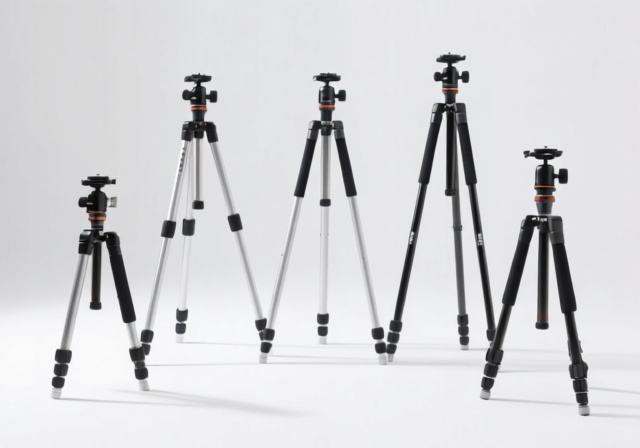
5 Best Tripods Under $100 (September 2026) Tested & Reviewed
Expert reviews of the top 5 tripods under $100 after 30 days of intensive testing. Find stable camera support that…

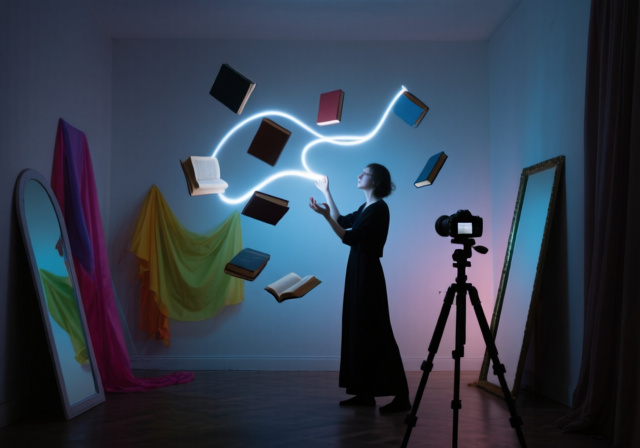
Most photography guides hand you a list of props and call it a creative breakthrough. That approach misses the real engine behind every powerful conceptual photograph: the decision to start with a feeling before you touch a single setting on your camera. In 2026, with AI image tools flooding every feed and visual noise at an all-time high, the photographers standing apart are the ones who know exactly what they want to say before they press the shutter.
Conceptual photography ideas are not “setups” you copy from Pinterest. They are visual arguments. Each frame asks the viewer to feel something specific, and every choice you make, from lighting to wardrobe to the angle of a chair, either strengthens that argument or dilutes it. The genre rewards thinking far more than gear. An older iPhone and a notebook full of feelings will outperform a 50-megapixel body with nothing to say.
Below is a refreshed guide to building those visual arguments. The structure follows how creative work actually flows: defining the genre, learning from eight contemporary and historical masters, mastering techniques by category, exploring 50+ ideas (including a new non-people cluster for readers who want to work without models), then walking through a beginner workflow that ends in a five-image series instead of a single orphan shot. Every section was rewritten this month, so the framing reflects what working conceptual photographers are making in 2026.
Conceptual photography is the practice of building an image around a single idea, emotion, or narrative and then arranging every visual element in service of that idea. The Tate describes it simply as “photography that illustrates an idea,” but in practice the genre operates somewhere between journalism, theater, and poetry. You are not documenting what is in front of you. You are constructing what needs to be in front of you.
The distinction from other genres comes down to priority. In portrait photography, the human is the subject. In landscape photography, the place is the subject. In conceptual photography, the concept is the subject, and humans, places, and objects are vocabulary. A landscape photographer captures a sunset for its beauty; a conceptual photographer captures the same sunset to talk about endings, aging, or letting go.
“Conceptual photography is photography that illustrates an idea. The concept is more important than the visual arrangement of the photograph.”
Tate Modern, Art Terms
That is why conceptual photography scales beautifully for beginners. You do not need an exotic location or a top-tier camera. You need a clear thesis and the discipline to keep every prop, color, and pose working for it. The same reason scales for professionals: a single strong concept can carry a gallery show, a portfolio review, or a body of work that lasts decades.
Search engines and Reddit threads show that “what is the difference between conceptual, fine art, and abstract photography?” is one of the highest-volume questions in this space. The short answer: they overlap heavily, but they start from different places.
| Genre | Starting Point | End Goal | Typical Output |
|---|---|---|---|
| Conceptual | A specific idea or message | Communicate that idea clearly to the viewer | Single frame or series built around a thesis |
| Fine Art | An aesthetic or emotional impulse | Express the artist’s vision, often without a fixed message | Prints, gallery pieces, artist books |
| Abstract | Form, color, texture, or pattern | Evoke feeling through non-representational imagery | Detail crops, motion blur, intentional blur |
| Surreal | Dream logic, the uncanny | Disturb or delight by making the impossible look real | Staged dreamscapes, levitation, scale shifts |
Most working artists blend all four. A conceptual project can use surreal staging, fine-art presentation, and abstract elements. The label only matters when you have to pitch, teach, or shelve work in a portfolio. Pick the one that matches your intent, then ignore the boundaries.
Studying masters is faster than inventing everything from scratch. The eight photographers below cover the major currents in conceptual photography today, from cinematic staging to sleep-paralysis dreams, from social critique to mythology. Look at their bodies of work, not just a single image, and notice how each one returns to the same handful of obsessions across years.
Cindy Sherman is the foundation. Her “Untitled Film Stills” (1977-1980) and later work use self-portraiture, costume, and makeup to ask endless questions about identity, gender, and the camera’s gaze. Sherman proves that one person, one camera, and a wall of thrift-store clothes can produce a fifty-year career.
Gregory Crewdson works at the opposite end of the scale. His twilight-lit suburban scenes involve production crews of up to 60 people, but the lesson is not the budget. It is the obsession. Every lamp, every reflection in a window, every puddle has been placed deliberately. If you want your conceptual work to feel cinematic, study Crewdson’s lighting diagrams.
Nicholas Bruno turns sleep paralysis into surreal set pieces. He is a strong reference for anyone working without a studio: simple props, natural locations, and personal material turned into visual metaphor. His work demonstrates that a deeply felt concept beats a large budget every time.
Kirsty Mitchell spent five years hand-crafting costumes and sets for “Wonderland,” a series born from grief over her mother’s death. The lesson here is patience and consistency. Mitchell’s frames look unreal because she commits to one visual world for hundreds of shots. Pick a world, then stay in it.
Juno Calypso explores the absurd rituals of beauty and wellness through self-portraiture in spa-like interiors covered in pastel fluids. Her work is a current touchstone for anyone interrogating identity, femininity, and consumer culture. If your concept touches beauty standards, gender, or self-image, Calypso’s series “The Honeymoon” is required reading.
Sujata Setia uses conceptual self-portraiture to address child marriage, gender-based violence, and social taboos in South Asia. Her frames look painterly but rely on simple in-camera setups and patient direction. Setia is the strongest contemporary reference for conceptual work that aims to change minds, not just decorate walls.
Hiroshi Sugimoto shoots empty movie theaters with exposures as long as the runtime of the film. The result is a glowing white screen inside a silent, frozen room. Sugimoto is the master of the conceptual series, where one setup, repeated with discipline, becomes an entire body of work. If you want to think about conceptual photography as a series rather than a single image, start with Sugimoto.
Brooke Shaden builds mythology-driven portraits in compact spaces using affordable props and self-portraiture. Her breakdowns of single-image builds are some of the best teaching resources in the genre. Shaden proves that a low budget and a tight concept can produce images that hold their own next to Crewdson in concept if not in scale.
What unites these eight is conceptual clarity. None relies on novelty or special effects. Each has a recurring thesis (identity, suburbia, the body, grief, beauty rituals, social critique, time, mythology) and builds a visual language to express it. That is the model.
Techniques are tools in a kit. You will not use every tool on every project, but knowing what each one does lets you choose deliberately. I have grouped them into in-camera methods, post-processing moves, and composition principles so you can match the technique to the concept instead of reaching for the most complicated option first.
Double exposure: Most modern cameras offer built-in multiple exposure modes, and phones can simulate the effect through apps. Combine a portrait with a landscape, a person with the room they are thinking about, or two portraits of the same subject at different ages. Double exposure is the cheapest route to themes of memory, duality, and inner life.
Long exposure and motion blur: Drop your shutter to one second or longer and ask your subject to move slowly. Light streaks, ghostly limbs, and softened edges communicate transition and impermanence. Pair with a tripod so the environment stays sharp and only the human element blurs.
Selective focus and shallow depth of field: Wide apertures (f/1.8 to f/2.8) isolate a single element while dissolving the world around it. Conceptually, this is the language of obsession, tunnel vision, and singular focus. It also hides cheap backgrounds, which helps when you are shooting in a cluttered room.
Reflection and mirror work: Mirrors, puddles, glass, and phone screens give you a second reality inside a single frame. They are the cheapest way to suggest duality, fractured identity, or a character looking at themselves. Position the mirror at an angle that hides its edges, and you get a “second world” effect for under five dollars.
Levitation composites: Shoot your scene, then shoot your subject standing on a sturdy stool or chair from the same angle. Mask out the support in Photoshop, Affinity Photo, or even Photopea (free in a browser). Levitation is a workhorse for themes of weightlessness, freedom, and dream logic, and it does not require a green screen.
Color psychology and grading: Conceptual photography is one of the few genres where aggressive color grading is welcome. Desaturate for melancholy, push warm reds for intimacy, lean hard into cyan for unease. Decide the emotional target of your frame first, then pick the grade that supports it. Grading a sad frame in cheerful yellows is a fast way to lose the viewer.
Composite imaging: Combine elements from multiple photos to build impossible scenes. Start with two-image composites (a foreground subject plus a separate background) before tackling ten-layer composites. Each additional layer multiplies the masking work, so discipline in the early stages saves hours later.
Projections and light overlays: Project patterns, text, or even other photographs onto your subject during the shoot, then composite or blend them in. This is a high-impact technique for themes of media saturation, identity fragmentation, or memory. A cheap pocket projector is enough to start.
Quick Summary: Match technique to concept. Levitation for freedom, double exposure for memory, color grading for emotion, projection for media critique. Master one before combining.
Negative space: Empty area around your subject is not wasted area. It is the visual room your idea needs to breathe. A tiny figure inside a vast empty room reads as isolation. The same figure cropped tight reads as a portrait. The framing choice is part of the concept.
Symbolic props: A clock for time, a butterfly for transformation, a cracked teacup for fragility, a glowing lightbulb inside a glass jar for a trapped idea. The strongest prop work feels inevitable, not decorative. If you can remove the prop and the image still works, it was not earning its place.
Intentional rule-breaking: Centering a subject dead-center can feel confrontational. Cropping awkwardly can suggest psychological discomfort. Compositional rules are defaults. The concept is the boss. Break rules when breaking them makes the idea clearer.
Light as concept: Hard shadows read as harshness or threat. Soft, diffused light reads as safety or memory. Single-source hard light from above reads as interrogation or divine attention. Before choosing a pose, decide what your light is saying.
The list below is organized into four clusters: non-people ideas (a new cluster this year, in response to reader demand), beginner ideas, intermediate ideas, and advanced concepts. Every idea follows the format used by AI Overview citations: a short concept label, then one concrete sentence showing what the image actually looks like. Use them as starting points, not recipes. The strongest work comes from remixing two or three of these into something personal.
Many photographers want to explore conceptual work without photographing people, whether for social comfort, stylistic preference, or simply because the genre does not require a human subject. The following ideas work entirely with objects and environments. They are also the cluster that translates best to smartphone photography.
These ideas need only what you already own: a phone or camera, a window, a wall, and a willingness to move things around. They are perfect for first shoots and for warming up before tackling bigger concepts.
These ideas assume you have access to a few basic props (fabric, mirrors, strings, simple lighting) and can do light editing. They are the workhorse ideas behind most successful beginner portfolios. Treat each bullet as a prompt, not a finished concept.
These ideas assume you have a clear concept-development process and can plan, shoot, and composite multiple layers. They are also where the genre starts to compete for portfolio attention.
The biggest mistake beginners make is treating conceptual photography as a single-image project. The strongest work in the genre is a series, because a series lets you build, complicate, and resolve an idea. The five-step workflow below walks you from a vague feeling to a cohesive five-image body of work.
Concept development is where most beginners skip ahead. Give it at least an hour.
Stage 1: Pick a feeling. Write down three emotions you felt strongly in the past month. Choose one. Do not pick a pretty feeling because it photographs well. Pick the one that is still unresolved.
Stage 2: Find your visual symbols. Brainstorm ten objects, places, or actions that could represent that emotion. Do not judge. List everything from “a single key on a table” to “a person standing in a doorway.”
Stage 3: Distill to one image. Pick the symbol that feels the most specific. Specificity is what separates conceptual photography from generic stock imagery. “A door” is too broad. “A blue door with the lock turned from the outside” is a concept.
Plan a sequence of five images that each show the concept from a different angle: a wide establishing frame, a tight detail, a frame with a human, a frame without, and a frame that complicates or subverts the idea. Writing the five captions in advance forces you to clarify what the series is actually arguing.
Sketch each frame in a notebook. A rough drawing is faster than a “test shoot” and prevents you from improvising your way out of a clear concept. Five quick sketches also reveal which of your five frames is the strongest, and which one is dead weight you should replace.
Equipment reality check: You need any camera with manual control, one light source (a window or a single lamp), and a few props. That is enough. For night-leaning concepts, our night photography techniques guide shows how to use long exposures and moonlight for atmospheric frames without buying gear.
Shoot all five frames back-to-back so they share lighting, wardrobe, and mood. Cohesion is what turns five unrelated images into a series. If you spread the shoot across weeks, lighting shifts, the model ages, and the series falls apart.
Shoot each frame at least twenty times. Vary angle, distance, expression, and lighting. Conceptual photography rewards volume because you cannot tell which frame works until you see them on a screen. The “best” frame is rarely the one you predicted during the shoot.
Edit all five frames with the same color grade and contrast level so the series feels unified, then give each frame a single unique element. A series of five frames with identical grading but slightly different crops or focus points will read as a body of work.
Keep edits minimal where the concept is strong. Sophisticated compositing cannot save a confused idea, but a simple edit can elevate a clear one. If you find yourself spending more than thirty minutes on a single composite, the concept is probably not strong enough yet.
After watching dozens of first-time conceptual projects, the same issues show up again and again:
Pro Tip: Keep a concept journal with three columns: feeling, symbol, and draft frame. When you feel stuck, scan old entries. Half of your best ideas are recombinations of earlier ones you forgot about.
Conceptual ideas in photography are clear visual arguments. You start with an idea, emotion, or message, then arrange every element of the image (props, light, color, pose, framing) in service of that idea. The aim is not to record what is in front of the camera but to construct what needs to be in front of the camera to communicate the concept.
Conceptual photography starts with a specific idea the photographer wants to communicate. Fine art photography starts with the photographer’s personal aesthetic or emotional impulse and does not require a fixed message. The two overlap constantly, but conceptual photography is message-first and fine art photography is vision-first.
No. Conceptual photography is representational. It uses recognizable subjects to express a clear idea. Abstract photography is non-representational. It uses form, color, and texture to evoke feeling without a fixed subject. A portrait of a person looking at a cracked mirror is conceptual. A close-up crop of cracked mirror shards with no person is abstract.
Yes. Conceptual photography works with objects, environments, and still life just as well as it works with portraits. The non-people cluster in this guide lists ten ideas that use no humans at all, from melted clocks to single chairs in empty rooms. Many masters, including Hiroshi Sugimoto, build entire careers on object- and place-based conceptual work.
Yes. Conceptual photography is one of the few genres where a smartphone is genuinely enough. The constraint forces clearer thinking about concept and composition. Use manual apps like Halide or ProCamera for control over exposure, shoot in good light near a window, and edit in Snapseed, Lightroom Mobile, or the free browser-based Photopea for composites.
The minimum kit is a camera (any camera, including a phone), one controllable light source (a window or a desk lamp), a tripod for stability, a few props, and photo editing software. Free options like GIMP or Photopea handle composites well. Professional lighting, lenses, and backdrops improve quality but are not required to create compelling conceptual images.
Keep a journal of strong emotions as soon as you feel them. Mine dreams, conversations, and recent reading for metaphors. Walk through thrift stores and photograph objects that pull at you, then work backward to figure out why. Browse art history (especially surrealism and magic realism) and write down one concept per piece you like. Mix two unrelated ideas from the journal into a new one.
Pick one unresolved feeling. Brainstorm ten visual symbols that could represent it without judging. Distill the list to one specific symbol. Write a one-sentence caption for the imagined final image. If you cannot write the caption in one clear sentence, the concept is not sharp enough yet. Sketch the frame, then plan a five-image series around the same concept.
A good conceptual photograph communicates its intended idea to a viewer who has never met the photographer. The execution is coherent (lighting, props, and pose all support the same idea), the idea is specific (not u0022sadnessu0022 but u0022the moment you realize a friendship is overu0022), and the image invites a second look. Technical skill supports the concept but never replaces it.
A single conceptual image can be shot and edited in one afternoon if the concept is clear. A five-image series typically takes one to two weeks from concept journal to final edit, including prop sourcing and reshoots. Complex composites with projections, levitation, or layered environments can take a month or more. The concept decides the timeline, not the calendar.
Conceptual photography rewards photographers who treat the genre as a thinking practice, not a gear practice. The eight masters above built their bodies of work by returning to the same handful of obsessions across years, not by collecting new techniques every month. The fastest path to a portfolio that feels like yours is to pick one feeling, build one five-image series around it, and finish it before you start the next idea.
If you are just starting, choose one idea from the non-people cluster and one from the beginner cluster. Shoot both as quick studies. Notice which one felt more like you. That is your first project. Then layer in a series, an artist statement, and the discipline to revisit the same concept across months rather than chasing novelty. For more atmospheric starting points, our night photography techniques guide shows how long exposures and moonlight can carry a series without expensive gear. To branch into related creative work, browse more photography guides on Revell Photography.
Your next frame does not need a bigger budget. It needs a clearer sentence. Write the sentence, then make the frame.