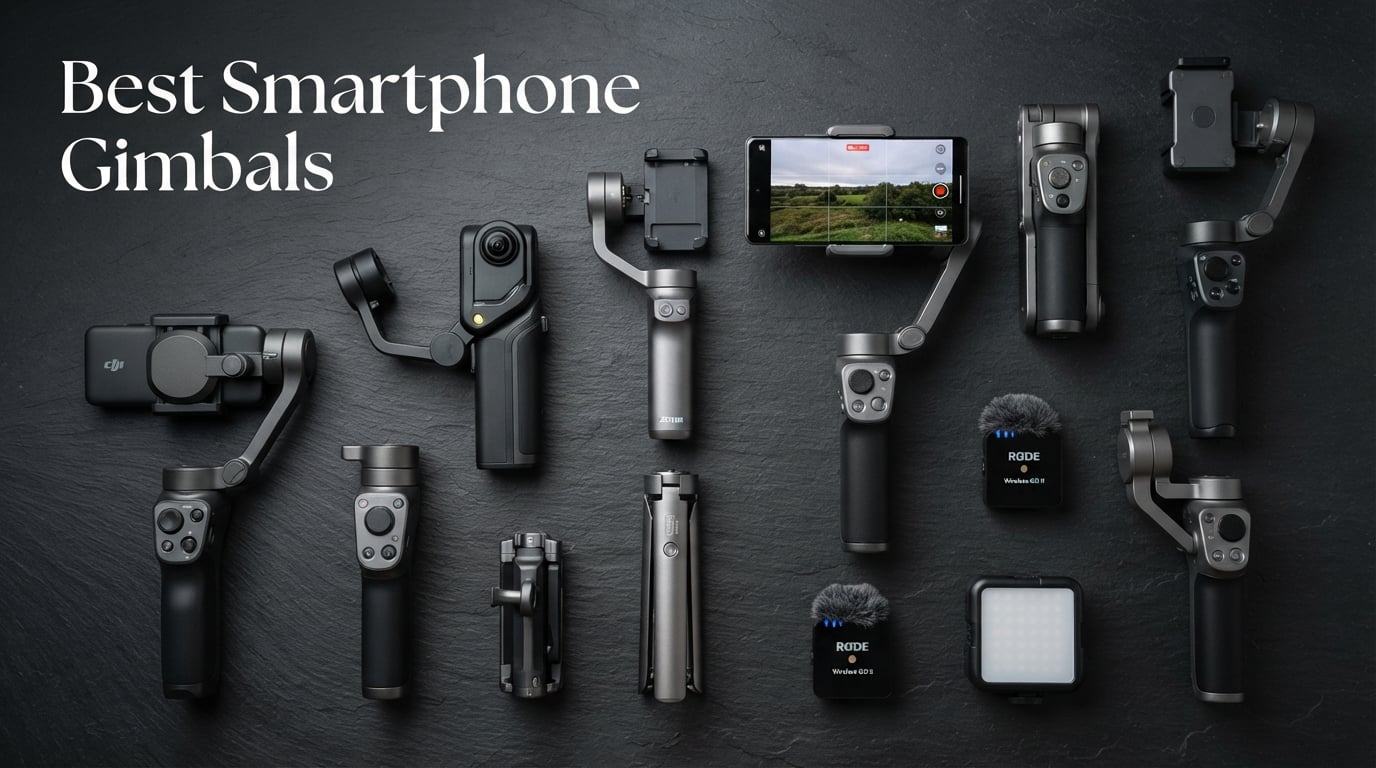
8 Best Smartphone Gimbals (October 2026) – Tested and Compared
I spent the last 90 days shooting real vlogs, walk-and-talk product reviews, and travel clips with eight smartphone gimbals strapped…

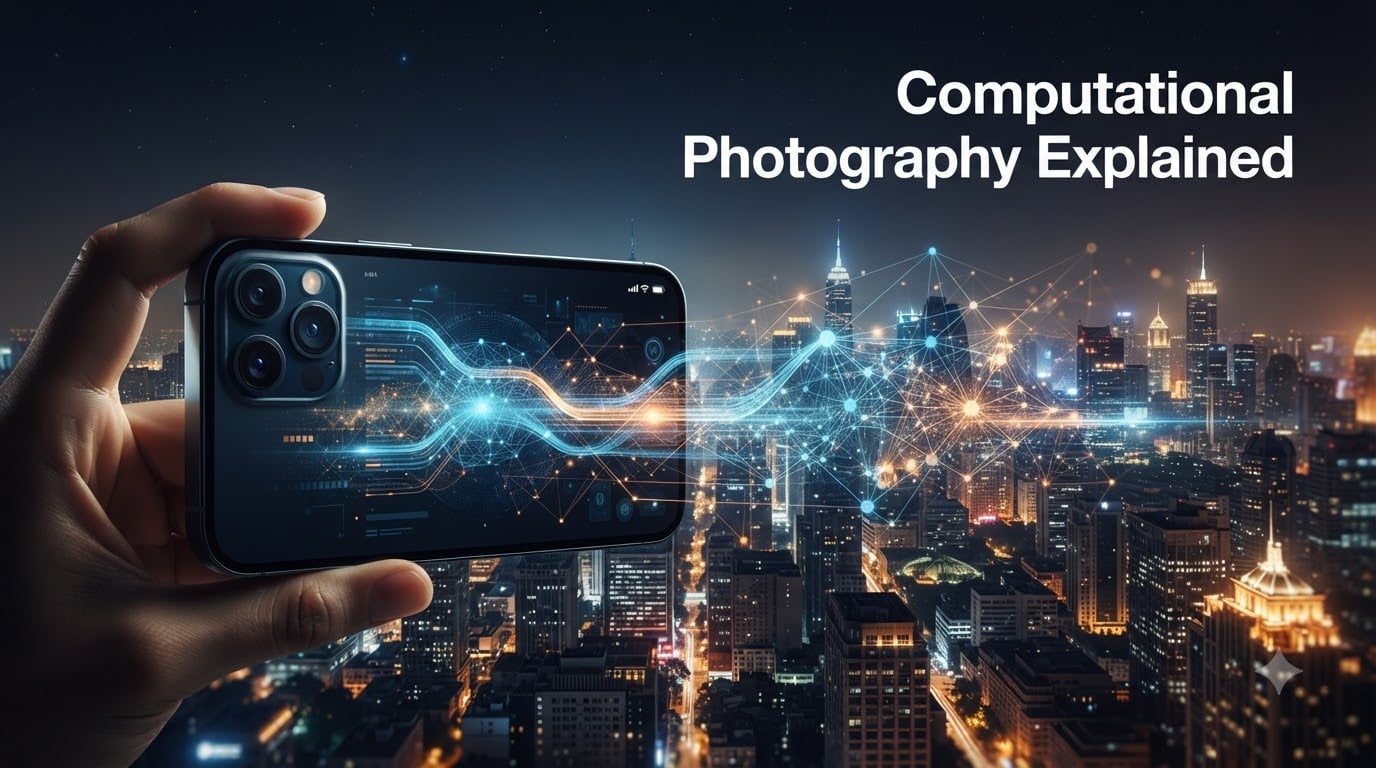
I still remember the first time a phone camera produced a sunset shot I would have framed with a DSLR just three years earlier. That moment made me curious: how does a sensor smaller than a fingernail compete with glass that costs more than my car? The short answer is computational photography explained in one sentence: software eats the gap that hardware cannot close. In 2026, nearly every modern image you see has been touched by an algorithm before it reaches your eyes.
Computational photography is the set of techniques that use digital computation to capture, process, and enhance images instead of relying on optics alone. This guide walks through how the technology works, the techniques you have already used, and where the field is heading next. We will cover real examples from smartphones, the philosophy debates from forums like r/photography, and practical advice you can use on your next outing.
Whether you are a beginner wondering why your iPhone portrait looks so good or a working photographer evaluating the future of the craft, you will find the answers here. No prior imaging background is required. I will keep the math light and the examples heavy.
Computational photography is a digital image capture and processing method that uses computer algorithms instead of purely optical processes to create, enhance, or transform images. Instead of relying only on lenses and sensors to record light, modern cameras use software to analyze the scene, combine multiple exposures, and produce a final frame that no single shot could capture alone.
Traditional photography has always been about controlling light with glass, aperture, and shutter speed. The scene enters the lens and lands on a sensor or piece of film. What you record is what you get. Computational photography flips that model. The camera still captures light, but it also captures dozens or hundreds of frames, depth information, motion data, and metadata. A processor then reconstructs the photo from all of that raw material.
Three things define a computational photograph:
If you have used Portrait Mode, Night Mode, or HDR on a phone, you have already made a computational photograph. The same principles now drive features on mirrorless cameras from Sony, Canon, and Fujifilm. Computational photography is no longer a phone trick. It is the new baseline of image making.
Computational photography works by capturing more data than a traditional camera and using software to choose the best version of the scene. The camera records many frames quickly, the processor identifies what each frame does well, and the algorithm assembles the final image from the strongest parts of every input. Four steps drive most modern computational pipelines.
Behind that pipeline sits a chip called the image signal processor (ISP). On modern phones, the ISP sits next to a dedicated machine learning accelerator often called a Neural Engine. Together they handle the heavy lifting in real time. That is why your phone can produce a clean night photo in two seconds rather than thirty.
Many techniques also use a depth map. Phones with multiple lenses, or ones that rely on AI depth estimation, build a 3D model of the scene first. The processor then knows which pixels belong to the subject and which belong to the background. That separation powers subject isolation, background blur, and even shadow relighting in some editing apps.
The label covers a wide range of features. These are the techniques you have most likely used without realizing what was happening behind the curtain.
High Dynamic Range photography merges several exposures to retain detail in both bright skies and dark shadows. The camera captures a short exposure for highlights and a long exposure for shadows, then tone maps the combined file so it fits into a standard image. Modern HDR goes further, using semantic segmentation to apply different tone curves to faces, skies, and foliage. The result feels natural rather than the over-saturated look HDR had in its early years.
Portrait Mode simulates the shallow depth of field produced by large-sensor cameras. The phone builds a depth map, separates the subject from the background, and applies a synthetic blur to everything behind them. Apple calls this the bokeh effect. The technique works best with good light and a clear subject. Edge detection is the hard part, and the latest phones use machine learning to handle hair, glasses, and complex backgrounds with surprising precision.
Night Mode captures a burst of frames over one to ten seconds, aligns them, and merges them to brighten shadows while controlling noise. Phones like the Google Pixel have made this a flagship feature. Astrophotography mode extends the technique further, aligning several minutes of frames so stars and the Milky Way appear in a phone photo for the first time in history.
Panorama Mode captures overlapping photos as you sweep the camera across a scene. The processor stitches them into a single wide image, often correcting for parallax and exposure differences as it goes. Modern versions also adjust the geometry so vertical lines stay vertical, even when your hand wobbled.
Pixel binning combines data from four or nine adjacent pixels into one larger virtual pixel. This trades resolution for cleaner low-light performance. Super-resolution does the opposite. It captures a burst at high resolution and combines the frames so fine detail exceeds what a single frame could resolve. Both rely on alignment and machine learning to choose the best version of each pixel.
Focus stacking merges several frames focused at different distances to produce a sharp image from foreground to background. This is useful for macro and landscape work. Computational long exposure uses software to simulate a long shutter speed, smoothing water or light trails without a tripod. Daytime long exposure is now possible on phones thanks to these tricks, a topic that overlaps nicely with classic forced perspective photography techniques.
Traditional photography captures a single moment with a single sensor reading. Computational photography captures a stream of data and reconstructs the moment in software. Both produce images, yet they answer different questions about reality.
A traditional photograph answers, what did the sensor see in this instant. A computational photograph answers, what should this moment look like given everything the camera knows. That difference is the source of the philosophical debate you will find on r/photography. Purists argue that software intervention changes the nature of photography from capturing to creating. Pragmatists argue that every step of the analog workflow, from film choice to darkroom dodging, also shapes the image.
For practical purposes, the comparison comes down to a few trade-offs:
In our own testing, a phone like the latest iPhone or Pixel produces prints up to 11×14 inches that hold up well at normal viewing distance. A full-frame camera still wins at large print sizes and in extreme low light. The gap is closing every year.
Computational photography matters because it changed who can make a great image and what counts as a camera. A decade ago, professional-looking photos required expensive gear and years of training. Today, a teenager with a mid-range phone can produce a portrait that would have required a four-figure camera setup in 2010.
The impact extends beyond casual users. Photojournalists use computational pipelines to rescue shots in low light. Real estate photographers rely on HDR and panorama stitching for property listings. Product photographers lean on focus stacking to keep every edge sharp in macro shots. Even scientific imaging, from microscope captures to telescope surveys, borrows computational methods to see further and clearer than any single frame allows.
Forum discussions on r/AskPhotography often highlight one specific win: night mode. Users consistently report that night mode made low-light photography accessible in ways they never thought possible from a phone. The same users also flag the limits. Over-processing creates halos around subjects, smoothing turns faces plastic, and aggressive HDR flattens scenes in ways purists dislike. Honest reviews mention both the gains and the losses, and so does this guide.
Computational features work best when you understand what they need from you. The following tips come from our team testing across iPhone, Pixel, and Galaxy devices, as well as mirrorless cameras with computational modes.
For subjects that benefit from careful staging, our team has compiled specific ideas in our guide on jewelry photography ideas. Many of those setups rely on focus stacking to keep every facet sharp, which is a great way to see computational techniques in action on a controlled subject.
The next wave of computational photography will lean harder on generative AI. We are already seeing features that relight portraits after the fact, replace skies, and remove reflections from windows. Tools like generative erase let you clean up scenes in seconds, raising fresh questions about what counts as a documentary photograph.
Mirrorless and DSLR cameras are catching up. Sony and Canon now ship cameras that combine multi-frame modes, in-body stabilization, and AI-assisted subject tracking. The line between phone and camera is blurring. The next frontier is light-field capture, where the camera records enough data that focus and depth of field can be chosen after the shutter is pressed. Early prototypes exist in research labs, and consumer versions will follow within a few years.
For working photographers, the practical takeaway is this: computational features are no longer optional. Understanding how they work, when to trust them, and when to override them is now a core skill. Our team covers related topics in co-witness sights and other optical guides, where similar principles of hybrid analog-digital design apply.
Computational photography works by capturing multiple frames, depth data, and sensor metadata in a burst, then using algorithms and neural networks to align, select, and merge them into a single optimized image. The image signal processor and machine learning accelerators do this in real time, which is why features like Night Mode return a finished photo in seconds.
The main examples in smartphones are HDR for balanced highlights and shadows, Portrait Mode for synthetic bokeh and depth of field, Night Mode for low-light and astrophotography, Panorama stitching for wide scenes, Pixel Binning for cleaner low-light images, and Super-Resolution for sharper detail. Each feature combines multiple frames and AI processing to produce results a single exposure cannot match.
Traditional photography captures a single moment with a single sensor reading and minimal processing. Computational photography captures many frames, analyzes them with algorithms, and reconstructs the final image in software. Traditional cameras offer more manual control, while computational cameras offer more automation, accessibility, and capability from smaller hardware.
Yes. Computational photography is considered real photography by most working professionals, though purists debate whether software-driven reconstruction changes the nature of the craft. The technology has expanded who can make a high-quality image and has become standard in smartphones and professional mirrorless bodies alike.
Computational photography is important because it makes professional-quality images accessible to anyone with a phone, expands what cameras can capture in low light and high contrast, and is reshaping the gear and skills working photographers need. It is the dominant direction of modern image making in 2026.
Computational photography explained in plain terms is the marriage of software and hardware in service of a better image. What started as HDR and panorama stitching has grown into machine-learning pipelines that drive most modern cameras. The technology is no longer a phone trick. It is the foundation of how images are made in 2026.
If you take one idea from this guide, let it be this: the camera in your pocket is more capable than the best DSLR of a decade ago, and the best mirrorless camera of 2026 is more capable still. Understanding how the algorithms work, when to trust them, and when to override them is the skill that separates a casual shooter from a confident one. Our team will keep testing new features and updating this resource, so bookmark it and check back as the technology evolves.