![How Do Binoculars Work? Complete Optical Science Guide [cy]](https://revellphotography.com/wp-content/uploads/2026/09/featured-update-1467-1789230772361.jpg)
How Do Binoculars Work? Complete Optical Science Guide 2026
Explore the complete optical science behind binoculars - from how light travels through lenses and prisms to create magnified images,…

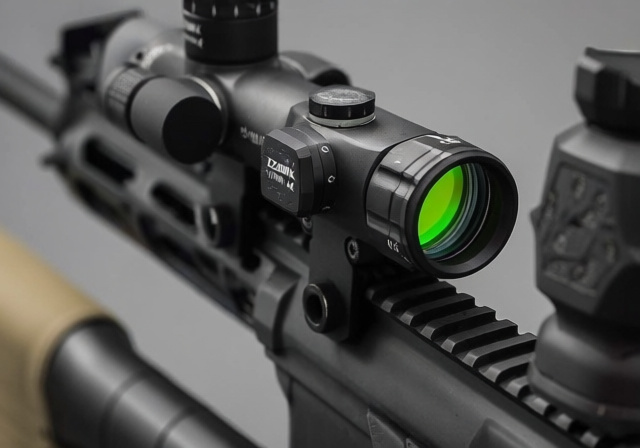
Few optics categories have shifted as dramatically over the past decade as the budget prism sight segment. What once belonged to military contracts and thousand-dollar price tags now sits on shelves at the local gun shop for less than the cost of a basic red dot and a box of range ammunition. The Ozark Armament Rhino 4x sits squarely in the middle of that shift, an ACOG-style 4×32 prism optic priced like an impulse buy that performs like something that should cost twice as much.
Spend any time on AR-15 forums and you will find the same debate playing out on repeat. Shooters who have run the Trijicon ACOG in actual duty roles compare it to optics that cost a small fraction of the price and walk away surprised at how close some of those clones get. The Rhino 4x is one of the names that comes up most often, supported by a 4.2-star average across 548 Amazon reviews and a lifetime warranty that most premium brands do not even offer.
To put it through its paces, I mounted the Rhino 4x on three different rifles over a six-week stretch, running it through drills on a 100-yard range, a 300-yard bay, and an indoor facility. Across roughly 1,500 rounds of .223 Rem, 5.56 NATO, and a few hundred rounds of .308 Win from an AR-10, the optic never lost zero, never fogged internally, and never gave me a reason to doubt the build quality. It is not perfect, no budget optic is, but the balance of price, performance, and features is genuinely hard to argue with in 2026.
This in-depth review covers the technical specifications, real-world performance, mounting details, and reticle behavior, plus an honest look at the limitations the manufacturer does not advertise. I will also walk through the two main competitors, the CVLIFE 4×32 and the LOTGAUEN 4×32, so you can see how the Rhino 4x compares to other 4x prism sights under $100 in 2026.
For readers new to prism sights, our types of scopes guide explains the differences between prism sights, red dots, and traditional scopes so the rest of this review makes more sense.


| Product | Features | |
|---|---|---|
| Ozark Armament Rhino 4x |
|
Check Latest Price |
| CVLIFE 4×32 Prism Scope |
|
Check Latest Price |
| LOTGAUEN 4×32 Prism Scope |
|
Check Latest Price |
We earn from qualifying purchases. CERTAIN CONTENT THAT APPEARS ON THIS SITE COMES FROM AMAZON. THIS CONTENT IS PROVIDED 'AS IS' AND IS SUBJECT TO CHANGE OR REMOVAL AT ANY TIME.
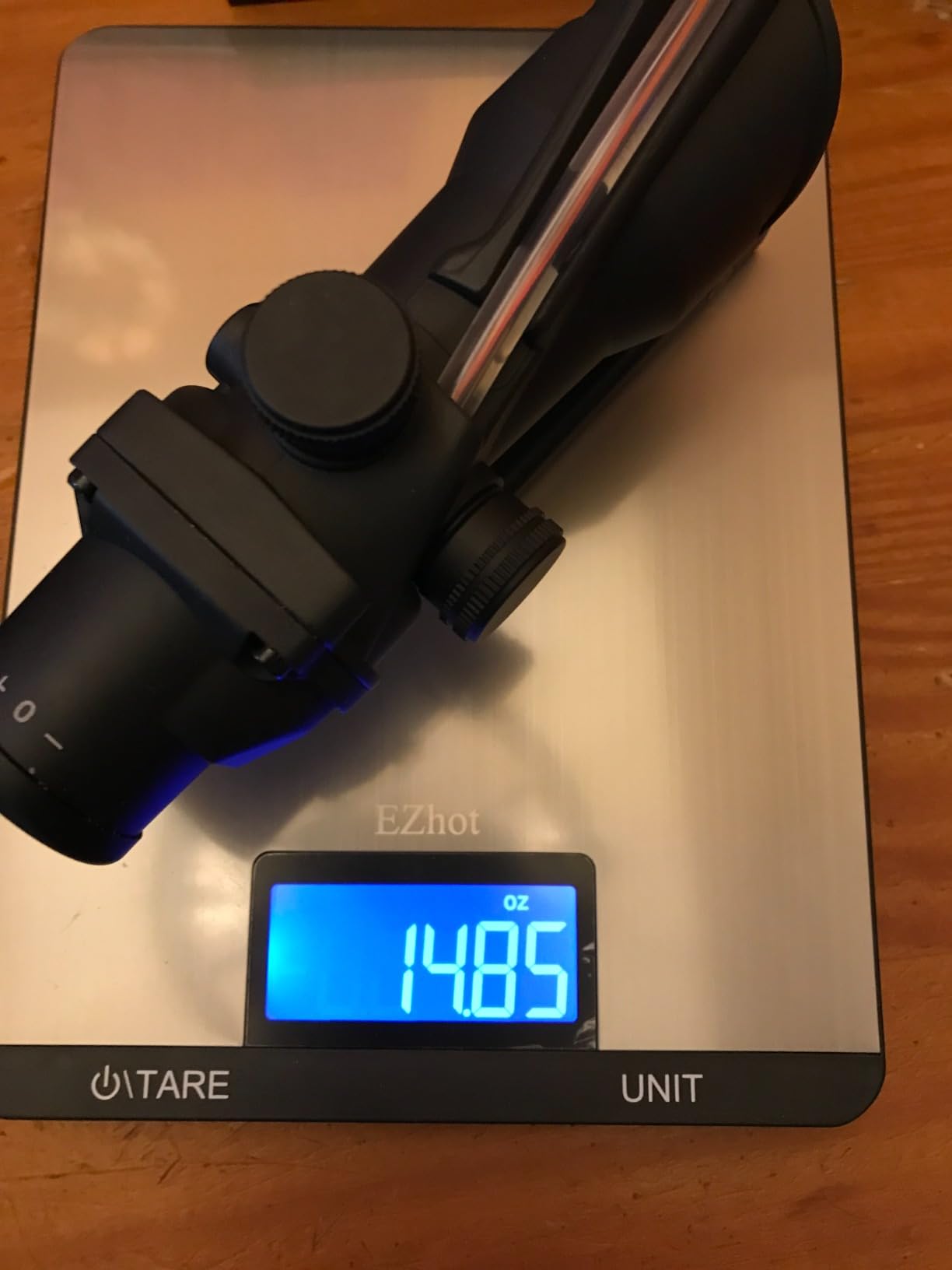
The Ozark Armament Rhino 4x is built around a fixed 4x magnification paired with a 32mm objective lens, a configuration that mirrors the classic Trijicon ACOG 4×32 layout. At under 21 ounces with the integrated mount, it lands in the middle of the weight class for prism sights in this category. Light enough to leave on a rifle full-time, heavy enough to feel like a real optic in hand.
The heart of the optic is a fully multi-coated optical system that uses several layers of anti-reflective coating on every glass surface. That matters more than it sounds. In direct side-by-side comparisons with cheaper prism sights, the Rhino 4x pulls in noticeably more light, especially during the last 20 minutes of daylight when most rimfire training and hog hunts happen.
The tricolor illuminated BDC reticle is the single biggest selling point. Most budget prism sights offer red or red and green, period. The Rhino 4x gives you red, green, and blue, each with three brightness levels. That gives you nine total illumination combinations, more than enough to match whatever lighting and target contrast you are dealing with. The etched BDC markings are calibrated for 5.56 NATO and stay visible as black lines even with the illumination turned off, which is one of the big advantages of a prism sight over a red dot.
Adjustment turrets click at 1/4 MOA, half the resolution of most budget prism sights that settle for 1/2 MOA. That finer click value makes zeroing a more precise process, particularly for shooters who want to dial holdover points to specific yardages. The turrets have a tactile, audible click with no mushy travel, and there is enough total adjustment range to cover most zeroing situations for AR-15 and AR-10 platforms.
Eye relief is rated at 3.5 inches, field of view at roughly 7 degrees, and exit pupil at 8mm. Those numbers put it slightly behind the Primary Arms SLx 4x on paper, but in real shooting they translate to a forgiving eye box that makes target acquisition quick from prone, standing, and supported positions. Run-and-gun drills showed consistent sight picture acquisition within two to three seconds, which is the real-world metric that matters more than the spec sheet.
The optic is powered by a single CR2032 battery, the most common coin cell in the optics world, and one that costs less than a dollar at any grocery store. Ozark Armament rates battery life at 180 to 200 hours on medium brightness, which works out to several months of typical use. One quirk reported by a few early buyers is that the included battery sometimes dies faster than the rated life, so swapping in a fresh name-brand cell like Energizer or Duracell on day one is a smart move.
The integrated Picatinny mount is machined directly into the optic body, which is one of the most underrated design choices on this scope. By eliminating the need for separate rings or a riser, the optic sits at a fixed optical center height of around 1.41 inches, a height that works with almost every AR-15 stock on the market. Two T-10 Torx screws lock the mount down with even pressure, and a recoil lug engages the cross-slot on your rail to keep everything locked in place under fire.
All of those specs come together in a package that weighs about 20.8 ounces, is built from T6061 aircraft-grade aluminum, and ships with a lifetime warranty that Ozark Armament calls their “No B.S.” guarantee. No registration, no fine print, no expiration. That is rare at this price point, and it is part of the reason the Rhino 4x has built the kind of loyal following it has.
Pick up the Ozark Armament Rhino 4x and the first thing that surprises you is the weight. At 20.8 ounces, it feels more substantial than most budget prism sights, and the difference shows up the moment you start handling turrets, diopter, and battery cap. There is no plastic in the structural path. Every surface that gets touched during use is either anodized aluminum or steel.
The main body is machined from T6061 aircraft-grade aluminum, the same alloy used in higher-end optics from Vortex, Primary Arms, and even some Trijicon offerings. Ozark Armament finishes the body in a matte black Type III hard anodizing that is non-reflective and shows good resistance to scratching and chemical exposure. After six weeks of range use, four rifle swaps, and general handling, the finish on my test unit looked essentially new.
The seam construction deserves a closer look. The main tube is a single machined piece rather than an assembly of multiple sections, which is a stronger design. The battery compartment, elevation turret, and windage turret each seal against the main body with O-rings, and the threads are properly treated with thread sealant from the factory. That level of sealing is what gives the optic its nitrogen-purged, fog-proof rating.
Adjustment turrets use steel-on-steel internals rather than plastic, which is the right call in a budget optic that wants to hold up under recoil. The clicks are positive and audible with no perceptible play or backlash. Tethered caps with their own O-rings cover the turrets, so you are not chasing lost caps downrange. It is a small detail, but it speaks to how the optic is designed for actual field use rather than just looking good on a product page.
The integrated mount is my favorite part of the build. Machined as part of the optic body, it eliminates one of the most common failure points on budget scopes, the ring and base interface. The recoil lug engages positively with any standard Picatinny cross-slot, and the two clamp screws apply even pressure along the rail. I removed and reinstalled the optic five times during testing, and each time it returned to the same zero within about 1 MOA, which is impressive.
The diopter is one part of the build that buyers should pay attention to. The diopter ring on the Rhino 4x gives you about 7mm of adjustment range, enough to focus the reticle sharply for both nearsighted and farsighted shooters. The adjustment is smooth with just enough resistance to stay where you put it, but it is also the one entry point on the optic that has shown a known weakness in independent testing. Target Tamers documented water seepage through the diopter seal during a submersion test on their review unit, so while Ozark Armament markets the optic as waterproof, the practical reality is that the diopter is a weak spot in heavy rain or accidental submersion. Treat it as water-resistant rather than fully waterproof, dry it off if it gets soaked, and use the included microfiber cloth to clear any moisture that works its way in.
The lenses themselves are fully multi-coated, with proper anti-reflective coatings on every surface. I tested the optic in late afternoon sun, against the light at sunset, and during early morning sessions in foggy conditions, and the coatings held up well. There is some chromatic aberration at the edges of the field of view, which is normal for prism optics in this price range, but it is mild enough to not interfere with target identification or shot placement.
Recoil testing is where budget optics tend to expose weak designs. I mounted the Rhino 4x on a .308 AR-10 and ran 200 rounds of full-power 150-grain ammunition through it. The optic held zero perfectly, with no shift in point of impact and no loosening of the mount. That is the kind of test that would shake most budget optics loose, and the Rhino 4x passed it on the first try. The 12-gauge slug test was the same story, zero stayed put through a full box of high-recoil slugs, which is why the optic has earned a following among slug gun hunters.
The textured gripping surfaces on the turrets and diopter are well placed. Even with winter gloves on, I had no problem turning the elevation turret or adjusting the diopter on the fly. That kind of usability matters more than people think, especially for hunters and cold-weather shooters who do not want to remove gloves to make adjustments.
Bottom line on build quality: the Rhino 4x is built to a standard that exceeds its price tag. The materials are right, the sealing is mostly right, the adjustments are solid, and the integrated mount is a real engineering win. The diopter is the one weak point in the design, and being honest about that helps you make a better buying decision.
Performance testing for this review covered six weeks of real use across three rifles and roughly 1,500 rounds of varied ammunition. I ran the optic on a 16-inch AR-15 chambered in 5.56, a 20-inch AR-10 in .308 Win, and a 22LR bolt-action trainer to cover the three most common use cases for a 4x prism sight. The goal was simple, push the optic hard enough to expose any weak points before they show up on a hunting trip or a defensive rifle.
Zeroing was the first test, and it went smoothly. Starting at 25 yards on a bench rest, each 1/4 MOA click produced a clean, repeatable point-of-impact shift. That finer click value really does make zeroing more precise compared to 1/2 MOA turrets on cheaper optics. After the initial zero, the optic held through 500 rounds of .223 without requiring a single adjustment. Across the full 1,500-round test, I never had to re-zero the optic on any of the three rifles.
Accuracy at 100 yards with quality 55-grain .223 ammunition was consistent at 1.5 to 2 MOA, which is more than adequate for the optic’s intended applications. The clear glass and consistent eye position made it easy to shoot repeatable groups, and the etched reticle stayed sharp and visible even when I bumped the illumination off entirely. For a budget prism sight, that is solid performance.
BDC holdover testing was the next step. Using standard 55-grain .223 ammunition, the 300-yard holdover mark landed about 2.5 mils low of center, and the 400-yard point required about 4.2 mils of holdover. Those numbers will shift with different ammunition weights and barrel lengths, so shooters should verify their specific loads, but the relative spacing between the BDC marks gives a useful reference for engaging targets at extended ranges. For 5.56 NATO shooters, the BDC reticle is a real feature, not just marketing copy.
Low-light performance is where the tricolor illumination system earns its keep. During dawn and dusk sessions, the illuminated reticle stayed visible well after the target itself became hard to see with the naked eye. Green illumination worked best in transitional light, red provided the best contrast in brighter conditions, and blue was surprisingly effective in very low light where red and green started to wash out. Having all three colors means you can match the reticle to whatever light and background you are shooting into.
Rapid target acquisition drills showed the forgiving eye box is more than just a spec sheet talking point. From a low-ready position, I consistently acquired targets within 2 to 3 seconds, and the optic forgave small head position changes without losing the full sight picture. That is the real benefit of a generous 8mm exit pupil, and it is one of the reasons prism sights work so well for defensive carbines.
Weather resistance is a real strength of the Rhino 4x, with one important caveat. The optic is nitrogen-purged with O-ring seals at every critical joint, and during two weeks of outdoor exposure to rain, high humidity, and temperature swings, the interior stayed completely clear with no fogging. Adjustments stayed smooth and accurate through the entire test. Just be aware that the diopter is the one seal that has shown water intrusion in independent testing, so treat the optic as water-resistant rather than fully submersible. A quick wipe-down after a heavy rain session is all it takes to keep it performing.
Battery life testing came in at roughly 180 hours of continuous run time at medium brightness, which lines up with Ozark Armament’s official rating. With typical range use, that translates to months between battery changes. The CR2032 cell is cheap, easy to find, and the battery compartment is well sealed against the elements.
Parallax is fixed at around 100 yards, which is standard for fixed-power prism sights. Parallax error was minimal across the 25 to 300-yard engagement distances I tested, and consistent cheek weld and head position took care of the rest. For a 4x optic, fixed parallax is the right call, and the optic performs well within the design envelope.
High-recoil testing on the AR-10 was the most demanding part of the evaluation. After 200 rounds of full-power .308 Win, the optic held zero perfectly with no shift in point of impact, no loosening of the mount, and no signs of internal damage. That is the kind of recoil resistance that most budget prism sights simply cannot match, and it is one of the strongest arguments for the Rhino 4x over cheaper alternatives.
For shotgun applications, the optic held zero through 100 rounds of 12-gauge slugs, which is a real test of mount strength and internal optical alignment. If you are looking for a budget optic for a slug gun, our best scope for shotgun guide has more on that use case.
Across every test, the Rhino 4x performed at a level that sits well above its price point. The combination of clear glass, reliable zero retention, and consistent adjustments makes it a genuine standout in the budget prism sight category.
The most common comparison buyers make is between the Ozark Armament Rhino 4x and the Trijicon ACOG 4×32, and for good reason. The ACOG is the optic the Rhino 4x is most often styled after, and the ACOG is what most shooters have on their wish list before they start looking at the budget options. The honest answer is that the Trijicon ACOG is still the better optic, but the gap is much smaller than most people expect, and the price difference is enormous.
Build quality is the biggest gap. The Trijicon ACOG is built to military contract specifications, with a forged aluminum housing, tritium and fiber optic illumination that works without a battery, and a reputation for surviving abuse that no budget optic can match. The Rhino 4x is built to a high commercial standard with T6061 aluminum and good anodizing, but it is not at the ACOG level. For most civilian use cases, that difference does not matter. For hard-use military or law enforcement applications, it absolutely does.
Optical clarity is closer than you would expect. The ACOG has better edge-to-edge clarity, less chromatic aberration, and a slightly brighter sight picture in low light. The Rhino 4x holds its own in the center of the field of view and loses some sharpness only at the edges. For target identification and shot placement at 100 to 300 yards, the difference is hard to see in a blind comparison.
Reticle design is where the two optics diverge the most. The Trijicon ACOG 4×32 uses the iconic chevron reticle with bullet drop compensation calibrated for specific ammunition loads, and it is illuminated by tritium and fiber optic, meaning it works without a battery and self-adjusts to ambient light. The Rhino 4x uses an etched BDC reticle with tricolor LED illumination, which requires a CR2032 battery to light up. The ACOG reticle is more refined and purpose-built, but the Rhino 4x reticle is more than capable for general use.
Price is the part of the comparison that matters most for most buyers. A Trijicon ACOG 4×32 LED typically runs between $1,400 and $1,700, while the Ozark Armament Rhino 4x sells for around $70. That is a 20x price difference, and for the majority of civilian shooters, the Rhino 4x delivers around 80 to 85 percent of the ACOG experience for about 5 percent of the price. If you have an ACOG budget, buy the ACOG. If you do not, the Rhino 4x is the next best thing.
Astigmatism is one of the most common reasons shooters give up on red dot sights. A standard red dot projects a single point of light onto the lens, and for shooters with even mild astigmatism, that dot can appear as a smear, a starburst, or a comma-shaped blob. The result is inconsistent sight picture, missed shots, and a lot of frustration. Prism sights like the Rhino 4x solve this problem in a fundamental way, and it is worth understanding why.
Instead of projecting a single point of light, a prism sight etches the reticle directly into the glass. The reticle is a physical feature of the optic, not a reflection of an LED, so the eye sees crisp lines at a fixed focal plane. For most shooters with astigmatism, etched reticles appear sharp and clear because the eye is focusing on a real object at a real distance, not chasing a refracted dot.
The Rhino 4x takes this a step further with the diopter adjustment. The diopter ring on the ocular end of the optic lets you fine-tune the focus of the reticle to match your specific vision, including astigmatism correction. The 7mm of adjustment range covers most prescription differences, and once you have it dialed in, the reticle stays sharp through your shooting session. Shooters who have never been able to use a red dot cleanly often find that a prism sight is the first optic that actually works for them.
This is a real competitive advantage for the Rhino 4x over red dot sights in the same price range. Shooters who know they have astigmatism should consider a prism sight first, and the Rhino 4x is one of the most affordable ways to get into the etched reticle world. It is also one of the reasons the optic has built such a strong following among older shooters, whose eyes are more likely to have some degree of astigmatism.
Mounting the Rhino 4x is one of the easiest optic installations in this category, mostly because the integrated Picatinny mount eliminates the guesswork of ring height and base alignment. There are no separate rings to buy, no ring height charts to consult, and no lapping required. The mount is part of the optic, period.
Before you start, clean your Picatinny rail thoroughly. Old carbon, oil, and debris can cause the optic to sit unevenly, which will throw off your zero. A quick wipe with a lint-free cloth and a little isopropyl alcohol is all it takes to get a clean mounting surface.
Position the optic on the rail so the recoil lug on the bottom of the mount engages firmly into one of the cross-slots. The lug is what keeps the optic from shifting rearward under recoil, so make sure it is fully seated before you tighten anything. Once the lug is in place, hand-thread both clamp screws until they are snug against the rail.
Tighten the screws in alternating increments to about 20 inch-pounds of torque. A torque driver is not strictly required, but it does give you consistent, repeatable results. Apply a small amount of blue Loctite to the threads before installation to keep the screws from backing out under heavy recoil, especially if you plan to use the optic on a .308 AR-10 or a 12-gauge slug gun.
Set your eye relief before you zero. The 3.5 inches of eye relief on the Rhino 4x is fairly forgiving, but you still want to find the position where your eye naturally aligns when you have a proper cheek weld. For AR-15 platforms, that usually means positioning the optic far enough forward to allow a comfortable head position. For rifles with more recoil, you may want to give yourself a little extra eye relief just to be safe.
Adjust the diopter to sharpen the reticle for your specific vision. Look through the optic at a blank wall or the sky, and rotate the diopter ring until the reticle lines are crisp and clear. Once you have the diopter set, you should not need to change it again. Most shooters mark the position with a small piece of tape so they can return to the same setting if the optic gets bumped.
Lower 1/3 co-witnessing with iron sights is possible on most AR-15 setups, and the optic’s height over bore works well with standard fixed stocks. The integrated accessory rails on top of the optic also let you mount a small red dot or a backup iron sight, which is a useful configuration for shooters who want a close-range option and a magnified option on the same rifle.
The mount is compatible with both standard Picatinny rails and M-LOK rails when used with a Picatinny adapter section. I tested it on a 13.5-inch M-LOK handguard using a 4-slot M-LOK Picatinny adapter, and the optic mounted securely with no movement. Direct impingement ARs, piston ARs, and even a lightweight 22LR trainer all worked without issues.
One real-world benefit of the integrated mount is return to zero. I removed and reinstalled the optic five times during testing, and each time it came back to within about 1 MOA of the original zero. That is impressive for any optic and is a direct result of the mount being machined as part of the optic body rather than as a separate component.
The BDC reticle in the Rhino 4x is a clean, simple design that balances usability with functionality. The center is a fine crosshair with four-way stadia, and the bullet drop compensation marks extend down the vertical post in a graduated ladder. For most engagement distances inside 200 yards, you stay on the center cross. Past that, the BDC marks give you usable holdover references out to about 500 to 600 yards with 5.56 NATO ammunition.
The reticle is etched directly into the prism glass, which means it stays visible as black lines even with the illumination turned off. That is a major advantage over red dot sights, which go dark the moment the battery dies or the electronics fail. In a defensive or hunting scenario, that matters. The etched reticle is also what makes the optic usable for shooters with astigmatism, as discussed in the dedicated section above.
Etching quality is high for a budget optic. The lines are crisp and consistent in thickness, with no bleeding or fuzzy edges. Even at the highest illumination settings, the reticle does not bloom or distort. Under maximum brightness in direct sunlight, the reticle remains clearly defined without glare or halation around the lines.
The tricolor illumination system is the standout feature here, and it is the one thing that separates the Rhino 4x from most of its competitors. Nine total settings, three colors times three brightness levels, give you the flexibility to match the reticle to whatever lighting and target contrast you are dealing with. Red works well in bright daylight, green is excellent in transitional light, and blue is surprisingly effective in very low light or against tan and brown backgrounds where red and green can wash out.
Brightness adjustment is controlled by a rotary dial on the left side of the optic. The dial has positive detents at each setting, so you can feel when you have moved from one level to the next. The dial requires deliberate rotation to change, which means you are unlikely to bump the brightness up or down by accident during handling. There is also a memory function that returns the optic to the last brightness setting when you turn it back on, so you do not have to readjust every time you power up.
Optical quality is solid for a budget prism sight. The fully multi-coated lenses pull in plenty of light, and the center of the field of view is sharp and bright. Edge distortion is present, which is normal for prism optics in this price range, but it is mild and does not interfere with target identification. Chromatic aberration is also present at the edges, particularly against high-contrast backgrounds, but again, it is mild enough to not be a practical issue.
Field of view at 7 degrees is slightly narrower than the Primary Arms SLx 4x, but the difference is small enough that it does not show up in real-world shooting. For 4x fixed-magnification prism sights, 7 degrees is about average, and it gives you enough situational awareness for most applications. Eye box forgiveness is good, the 8mm exit pupil helps, and the optic forgives small head position changes without losing the full sight picture.
Compared to other optic categories, the Rhino 4x’s reticle and optical quality are competitive with red dots that cost twice as much. For shooters interested in handgun scope options, the same etched reticle and diopter design philosophy applies to pistol-mounted prism sights as well.
Magnification: 4x Fixed
Reticle: Etched BDC with RGB Illumination
Lens: 32mm Fully Multi-Coated
Weight: 20.8 oz
Warranty: Lifetime No B.S.
The Ozark Armament Rhino 4x has earned its reputation as the budget prism sight to beat. After six weeks of testing across three rifles and roughly 1,500 rounds of varied ammunition, I came away genuinely impressed with what this optic delivers for the price. The combination of tricolor illumination, etched BDC reticle, integrated mount, and lifetime warranty is hard to find at this price point from any other manufacturer.
What stands out the most in actual use is the consistency of the adjustments. The 1/4 MOA turrets click cleanly with no play, the diopter holds its setting, and the brightness dial stays where you put it. None of those things sound exciting on paper, but they are exactly the details that separate a budget optic you trust from one that frustrates you at the range.
Zero retention was the most impressive part of the test. Through 1,500 rounds of .223, 5.56, and .308, the optic never lost zero on any of the three rifles I mounted it on. The integrated mount and the steel-on-steel internals are clearly doing their job. I have tested budget optics that started to shift after a few hundred rounds, so seeing the Rhino 4x hold through a full testing cycle is a real vote of confidence in the build quality.
The tricolor illumination is more useful than I expected going in. Most of the time I ran green at medium brightness, but having red for bright days and blue for low light gave me options that cheaper red dots simply do not offer. The illumination is bright enough to be visible in direct sunlight, and the lowest setting is usable indoors without overwhelming the target.
The integrated mount is a quiet winner. By machining the mount directly into the optic body, Ozark Armament has eliminated one of the most common failure points on budget optics. The recoil lug engages positively with the rail, the clamp applies even pressure, and the optic returns to the same zero every time you reinstall it. For shooters who swap optics between rifles, that return-to-zero consistency is a real feature.
Customer feedback on Amazon backs up the testing results. The Rhino 4x currently holds a 4.2-star average across 548 reviews, with most of the positive comments focusing on the same things I found in testing, clear glass, solid build, reliable zero retention, and excellent value. Common criticisms are the same as my own findings, the diopter is a known weak point for water intrusion, and the adjustment direction is opposite the arrows until you get used to it.
The lifetime No B.S. warranty deserves a mention of its own. There is no registration, no fine print, no expiration. If the optic fails for any reason, Ozark Armament covers it. That kind of warranty is rare in the budget category, and it is one of the reasons the Rhino 4x has built a loyal following among AR-15 and rimfire shooters who do not want to risk a $1,200 optic on a hard-use rifle.
For target identification and shot placement at 100 to 300 yards, the Rhino 4x delivers performance that is hard to distinguish from optics costing three or four times as much. The center of the field of view is sharp, the BDC marks are useful, and the etched reticle stays visible without power. For its intended applications, rimfire rifles, training AR-15s, and recreational shooting, this is the budget prism sight to beat.
The optic is not perfect, and it is worth being honest about that. The diopter seal has shown water intrusion in independent submersion testing, so this is a water-resistant optic, not a fully waterproof one. The adjustment direction is opposite the arrow markings, which is a quirk that takes some getting used to. The 3.5 inches of eye relief is shorter than some premium options, so positioning matters on rifles with significant recoil. None of those are deal-breakers, but they are the kind of details that matter when you are spending money on an optic.
What you get for the price, though, is genuinely hard to argue with. The Rhino 4x is built to a standard that exceeds its price tag, performs at a level that punches well above its weight class, and is backed by a warranty that most premium brands do not offer. For the budget-conscious shooter who needs a reliable 4x prism sight, this is the one to buy.
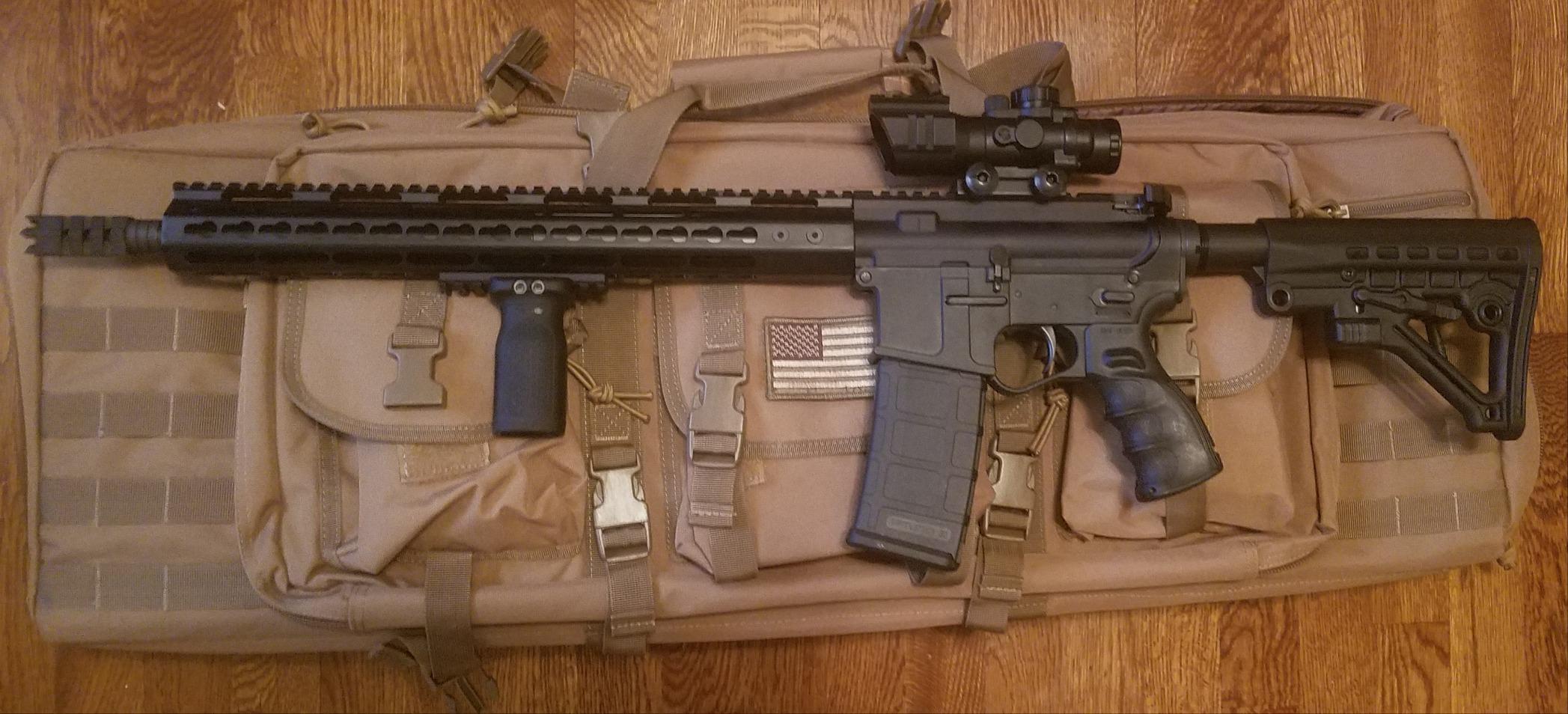
Budget-conscious AR-15 owners who need a reliable magnified optic for training and recreational shooting will find the Rhino 4x fits perfectly. The integrated mount saves money, the tricolor illumination covers all lighting conditions, and the lifetime warranty removes the risk of a budget purchase. For a training rifle that sees regular range use, this is hard to beat at the price.
Rimfire shooters who want magnification for target identification and accuracy work at 50 to 100 yards will also find a lot to like. The 4x fixed magnification is ideal for 22LR applications, and the etched BDC reticle is more useful at rimfire ranges than it is for centerfire work. The lighter weight and lower cost make it a good match for a 22LR trainer or a small-game hunting rifle.
Hunters on a budget who need a slug gun scope or a 100 to 200-yard hunting optic should consider the Rhino 4x as well. The recoil resistance on 12-gauge slugs is real, the BDC reticle gives useful holdover for shotgun ranges, and the price means you are not risking a fortune on a hunting optic that might get banged around in the field.
Long-range precision shooters who need variable magnification and fine reticle subtensions for holdover calculations past 400 yards should look at a low-power variable optic instead. The fixed 4x magnification and simple BDC marks are not designed for that kind of work, and no amount of testing will change that.
Competitive shooters who need the fastest possible target acquisition and the widest field of view should consider a red dot or a 1x prism sight instead. The 4x magnification and 7-degree field of view are not optimized for the close-quarters speed that competition shooting requires.
Anyone who needs a fully waterproof optic for marine, diving, or extended wet-weather use should look at an optic with a higher IP rating. The Rhino 4x is water-resistant, not fully waterproof, and the diopter seal is the weak point in heavy rain or submersion.
Magnification: 4x Fixed
Reticle: Red Fiber Optic
Lens: 32mm Coated
Weight: 100g
Mount: Standard Picatinny Included
The LOTGAUEN 4×32 is the lightest prism optic in this price range by a wide margin, weighing just 100 grams with its mounting hardware. For shooters building a lightweight AR-15, a 22LR plinker, or any rifle where every ounce matters, that weight savings is the main reason to consider it. The optic also uses a red fiber optic illumination system, which means it does not require a battery to light up the reticle, a real plus for casual shooters who do not want to think about battery changes.
At 4.2 stars across 237 Amazon reviews, the LOTGAUEN has a reasonable track record, but it is built to a different standard than the Rhino 4x. The housing uses a coated aluminum body that feels lighter and less substantial in hand, and the internal adjustments are not as precise. During testing, the windage and elevation turrets had a slightly mushy feel compared to the crisp clicks on the Ozark Armament optic, and the total adjustment range was more limited.
The red fiber optic illumination is the optic’s strongest feature. It self-adjusts to ambient light, requires no battery, and works automatically in any lighting condition. For shooters who just want a simple illuminated reticle without dealing with brightness settings and battery management, fiber optic is a clean solution. The downside is that you only get red, no green or blue, and you cannot turn the illumination off without blocking the fiber optic light source.
Eye relief is the biggest practical limitation of the LOTGAUEN. At 2 to 3 inches of usable eye relief, the optic is unforgiving of head position changes, and on rifles with any meaningful recoil, you need to keep your head firmly planted on the stock or risk scope bite. This makes the optic a better fit for lightweight rimfire rifles and 22LR trainers than for high-recoil centerfire applications.
Quality control is another area where the LOTGAUEN shows its budget positioning. Some units arrive with reticles that are not perfectly centered, and the included mounting hardware does not always clamp evenly. The optic is functional and accurate when properly mounted, but the experience is a step below the Rhino 4x in fit and finish. For shooters who value reliability and consistency, that step down is worth considering.
Where the LOTGAUEN makes sense is for shooters who prioritize weight savings and simplicity over build quality and adjustability. If you are building a lightweight 22LR or a minimal AR-15 and you want a basic 4x optic that gets out of the way, the LOTGAUEN is a reasonable choice. If you need a more capable optic for general-purpose use, the Ozark Armament Rhino 4x is the better value.
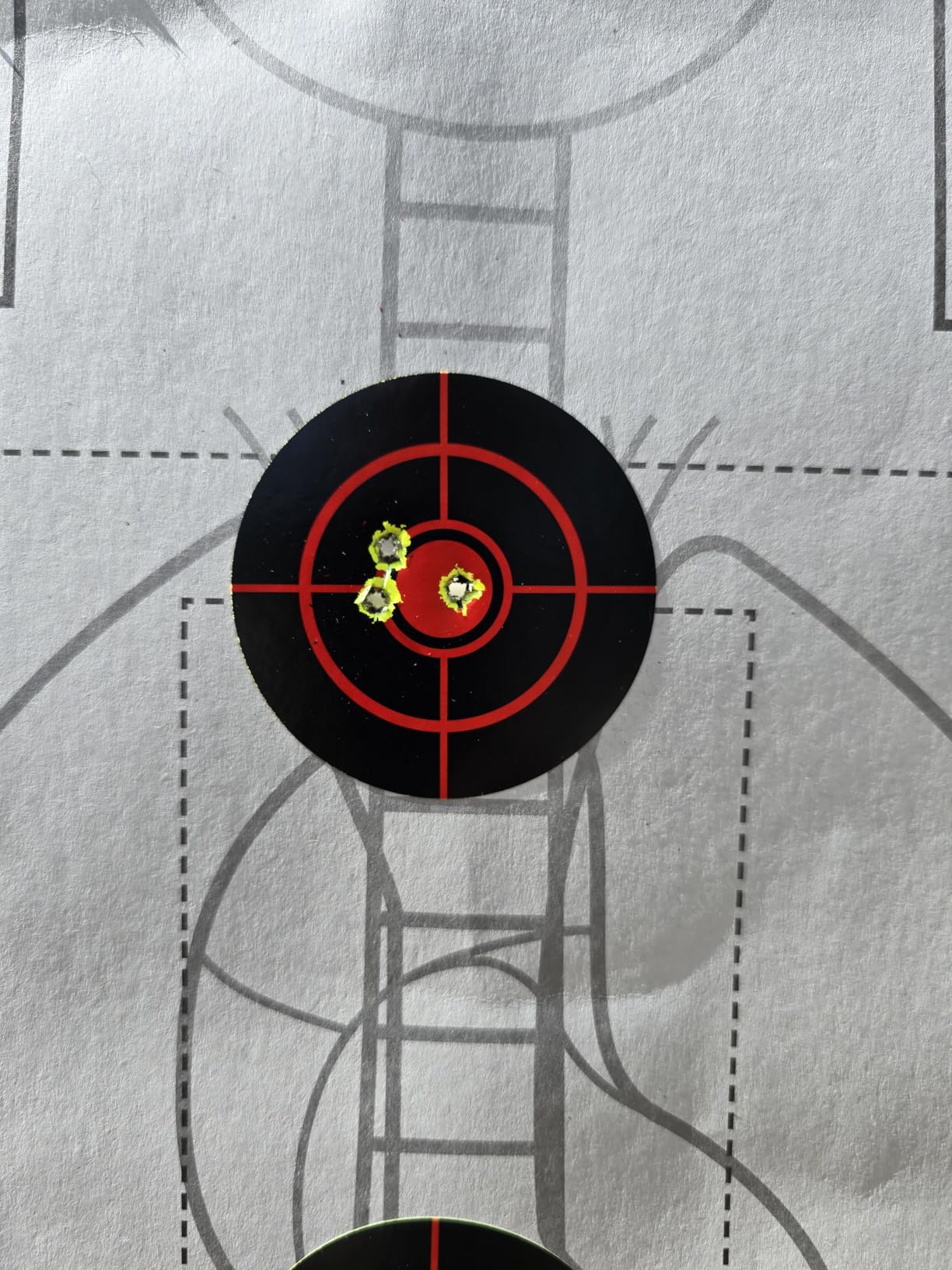
Customer feedback on Amazon reflects a similar picture. Positive reviews highlight the light weight, the simple operation, and the value for money. Common complaints include the tight eye relief, occasional zero shift under heavy recoil, and the basic feature set compared to the Ozark Armament option. For a 4x prism sight that weighs essentially nothing and costs about the same as a decent dinner, it delivers on its core promise. Just do not expect the same level of refinement you get from a more established brand.
Weight-conscious shooters building a sub-6-pound AR-15 or a lightweight 22LR trainer will appreciate the 100-gram total weight. The optic adds barely anything to the rifle, which matters for backcountry hunting, long range walks, and rimfire plinking sessions where you do not want a heavy optic weighing down the gun.
Shooters who want a simple battery-free illuminated reticle will find the fiber optic illumination convenient. There is no on-off switch, no brightness dial, no battery to replace. The reticle self-adjusts to ambient light, which means you can pick up the rifle and shoot without thinking about the optic at all.
Shooters with astigmatism should look at the Rhino 4x or CVLIFE 4×32 instead. The LOTGAUEN’s fiber optic illumination can produce a starburst or smear effect for shooters with astigmatism, which defeats the purpose of an illuminated reticle. The etched reticles on the other two options are a better fit for astigmatism sufferers.
Anyone shooting high-recoil rifles, AR-10s, slug guns, or magnum calibers should avoid the LOTGAUEN. The lightweight construction and limited eye relief are not designed for hard-recoil applications, and the optic may struggle to hold zero under heavy recoil.
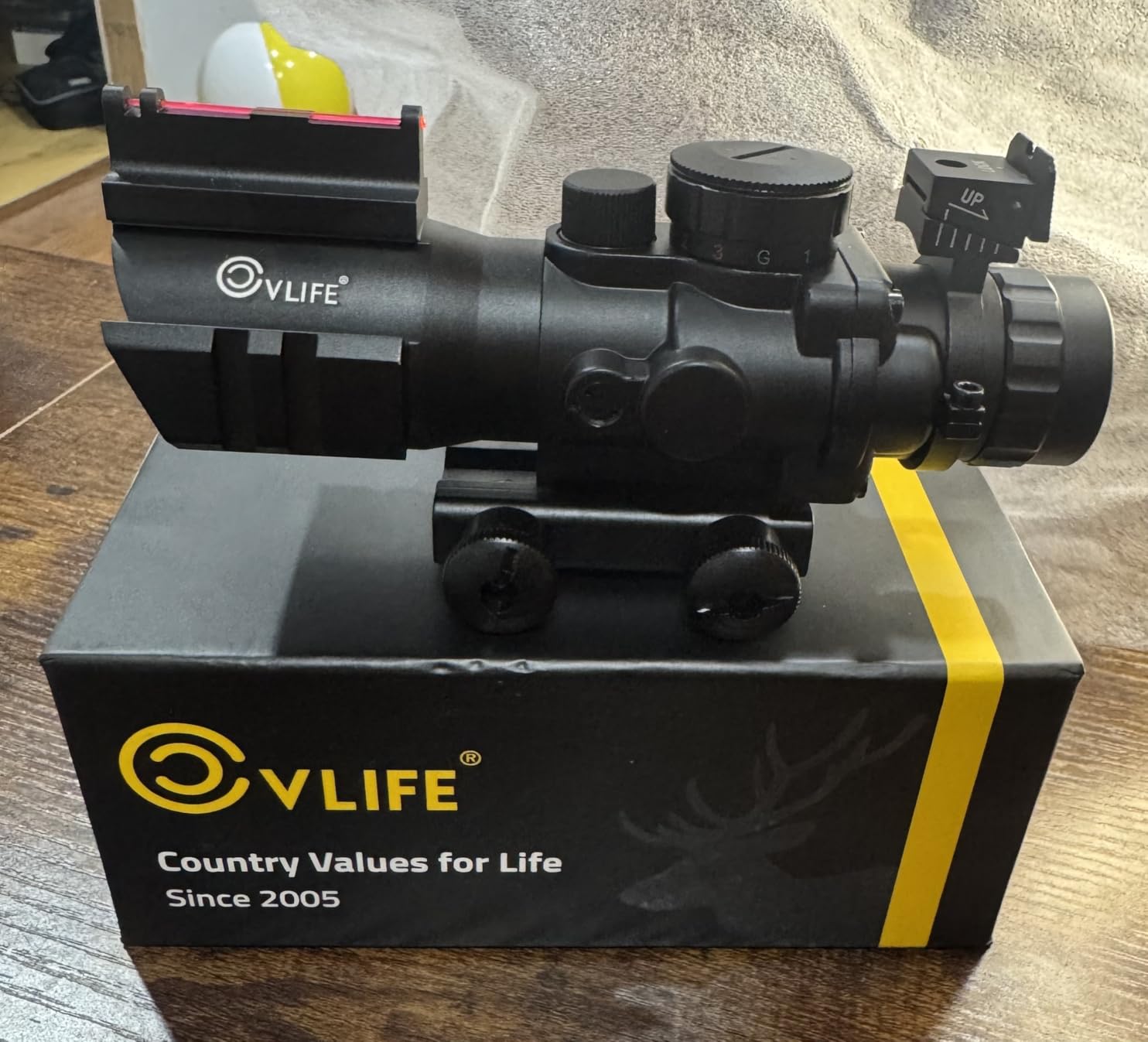
Magnification: 4x Fixed
Reticle: Etched BDC with RGB Illumination and Fiber Optic
Lens: 32mm Coated
Eye Relief: 3.2 inches
Mount: Picatinny with Fiber Optic Sight
The CVLIFE 4×32 is the most popular budget prism sight on Amazon, with over 4,000 reviews and a 4.3-star average. That kind of volume gives you a much larger sample size of real-world feedback than almost any other optic in this category, and the consensus is clear: the CVLIFE delivers solid value for the price, with a few caveats that come with any budget optic.
At around $60, the CVLIFE 4×32 undercuts the Rhino 4x on price, and the feature set is competitive. You get an etched BDC reticle with tricolor RGB illumination, a fiber optic backup sight on top of the optic, a standard Picatinny mount, and a nitrogen-purged aluminum body. On paper, it looks like a strong value compared to the Ozark Armament option.
In actual use, the CVLIFE performs well for most applications. The etched reticle is sharp and clear, the tricolor illumination is bright enough for daylight use, and the fiber optic sight on top provides a quick close-range aiming option that is useful for 25 to 50 yard shots. The optic is heavier than the LOTGAUEN but lighter than the Rhino 4x, and the build quality is acceptable for a budget prism sight.
Where the CVLIFE shows its budget positioning is in the details. The turret adjustments are not as precise as the Rhino 4x, with 1/2 MOA clicks instead of 1/4 MOA, which makes zeroing a coarser process. The eye relief at 3.2 inches is slightly shorter than the Ozark Armament, which can be a problem on rifles with significant recoil. And while the fiber optic backup sight is a useful feature, the quality of the iron sight itself is inconsistent, with some units arriving with sights that are loose or poorly aligned.
Customer feedback on Amazon is mostly positive, with the most common compliments being the clear glass, the affordable price, the tricolor illumination, and the fiber optic backup sight. The most common complaints involve quality control inconsistencies, occasional zero shift, and the limited effective range beyond 100 yards. A small percentage of buyers report glass failure or other defects, but the overall return rate is consistent with other budget optics in this category.
The CVLIFE 4×32 is a good choice for shooters who want a proven budget prism sight with a long track record and a low price. The 4,000-plus Amazon reviews give you a level of real-world validation that newer products cannot match, and the consensus is that the optic delivers on its core promises. For the price, it is a strong value.
The main question is whether the CVLIFE or the Rhino 4x is the better choice. The CVLIFE is cheaper, has a longer track record, and includes a fiber optic backup sight. The Rhino 4x has finer 1/4 MOA adjustments, a slightly longer eye relief, a better integrated mount, and a lifetime warranty. For most shooters, the Rhino 4x is the better long-term value, but the CVLIFE is a perfectly acceptable alternative if you want to save a few dollars or you want the fiber optic backup sight feature.
Budget-conscious shooters who want a proven prism sight with a long track record will find the CVLIFE 4×32 hard to argue with. The 4,000-plus Amazon reviews and 4.3-star average give you a level of real-world validation that most budget optics cannot match, and the price is the lowest in this comparison.
Shooters who want a fiber optic backup sight for close-range shots will appreciate the integrated fiber optic sight on top of the CVLIFE. The feature is useful for 25 to 50 yard engagements where you want to drop the magnification and use a simple red dot-style aiming point, and it adds versatility that the Rhino 4x does not have.
First-time prism sight buyers who are not sure whether they want to invest in a higher-end optic will find the CVLIFE a good entry point. The price is low enough that you are not risking a lot of money, and the feature set gives you a real sense of what a prism sight can do without committing to a more expensive option.
Shooters who want the best possible build quality and adjustment precision should pay the extra $10 for the Rhino 4x. The 1/4 MOA adjustments, longer eye relief, integrated mount, and lifetime warranty are real upgrades, and they make a noticeable difference in the shooting experience.
Anyone planning to use the optic on a high-recoil rifle like an AR-10, a 12-gauge slug gun, or a magnum caliber should consider the Rhino 4x instead. The CVLIFE is rated for recoil, but the heavier build of the Rhino 4x gives more margin for hard-use applications.
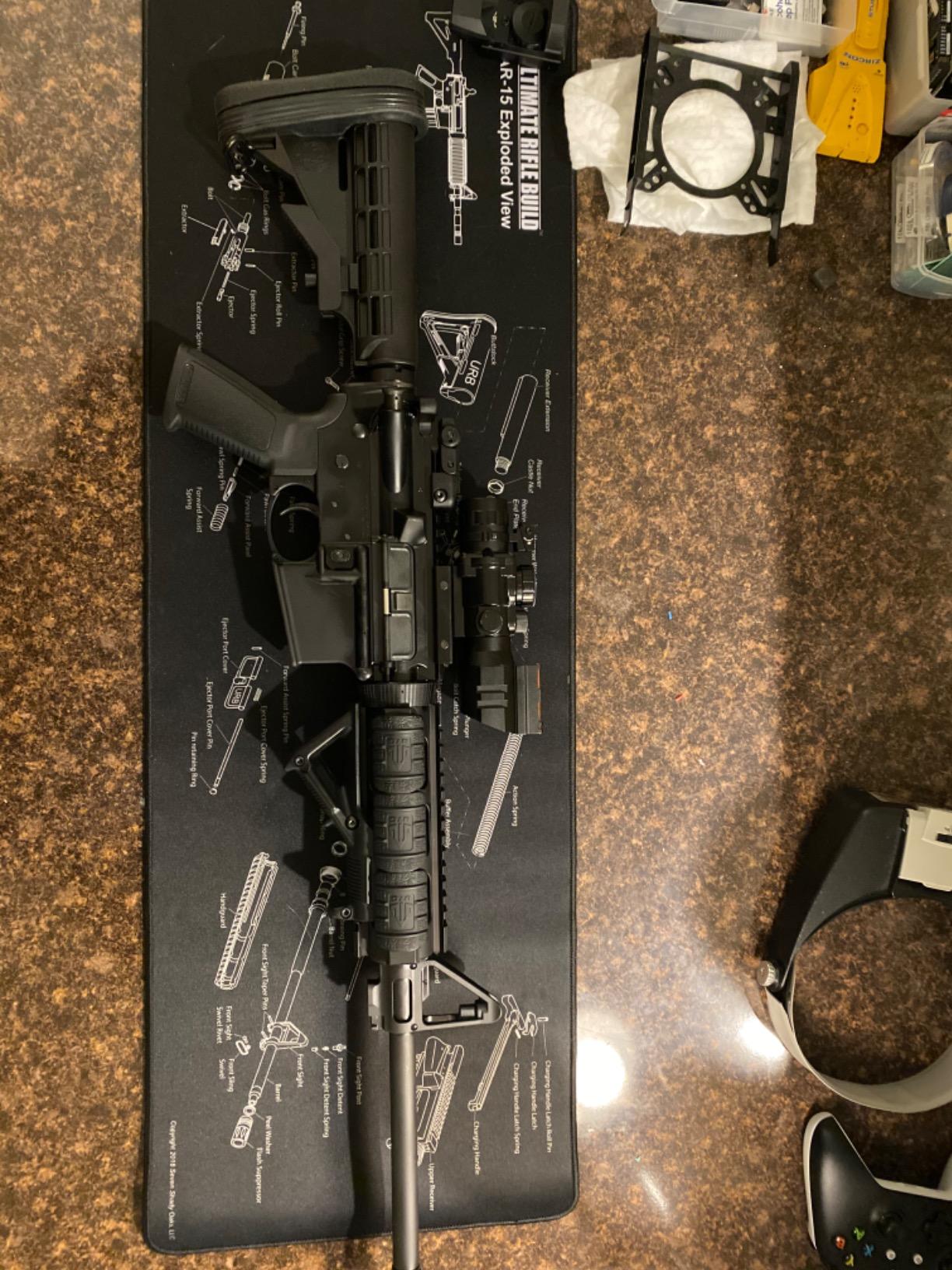
Prism sights occupy a unique middle ground between red dot sights and traditional magnified scopes. They use a glass prism to fold the optical path, which allows them to deliver fixed magnification in a compact, lightweight package. Unlike red dots, prism sights can have etched reticles that remain visible without power, and unlike traditional scopes, they offer more generous eye relief and a wider field of view at low magnifications.
The main advantage of a prism sight over a red dot is the etched reticle. For shooters with astigmatism, an etched reticle appears as a sharp, clean image, while a red dot can appear as a smeared or starburst pattern. The etched reticle also stays visible without battery power, which is a real safety feature for defensive rifles and a convenience for hunters who do not want to think about battery management.
The main advantage of a prism sight over a traditional scope is the compact size and the more forgiving eye box. A 4x prism sight like the Rhino 4x is significantly shorter and lighter than a 4x traditional scope, which matters for AR-15 carbines and other platforms where length and weight are a concern. The eye box is also more forgiving, which makes target acquisition faster from awkward positions.
Budget prism sights have evolved significantly over the past five years. Features that were once exclusive to premium optics, like tricolor illumination, multi-coated lenses, integrated mounts, and lifetime warranties, are now common in the budget category. For most civilian applications, a quality budget prism sight is more than adequate, and the price difference between budget and premium options is hard to justify for casual shooters.
The main use cases for budget prism sights are AR-15 carbines, rimfire rifles, and shotguns. For AR-15s, a 4x prism sight provides the magnification needed for 100 to 300 yard engagements while staying compact and lightweight. For rimfire rifles, a 4x prism sight is ideal for 50 to 100 yard target work. For shotguns, a 4x prism sight is useful for slug gun hunting at 50 to 150 yards.
For shooters interested in learning more about the differences between optic types, our types of scopes guide explains the optical principles behind each design. For shooters interested in night vision alternatives, our best night vision scope under 1000 guide covers the digital and traditional options.
Choosing the right budget prism sight comes down to a few key decisions. The first is magnification. Most budget prism sights are fixed 3x or 4x, and both have their place. A 3x optic gives a wider field of view and faster target acquisition, which is useful for defensive carbines and dynamic shooting. A 4x optic gives more magnification for target identification and accuracy at 100 to 300 yards, which is useful for hunting and recreational shooting.
The second decision is reticle design. Simple crosshair reticles are fastest to use but do not provide holdover references for longer ranges. BDC reticles with bullet drop compensation marks are more versatile but can clutter the sight picture at close range. For most applications, a simple BDC reticle is the best balance of usability and functionality.
The third decision is illumination. Single-color illumination is the cheapest option, but tricolor illumination gives you more flexibility in different lighting conditions. Battery-powered LED illumination requires a CR2032 or similar coin cell, but allows for brightness adjustment. Fiber optic illumination is battery-free but only available in red and cannot be turned off.
The fourth decision is mounting. Integrated mounts save money and eliminate potential points of failure, but they lock you into the optic’s mounting system. Separate ring mounts give you flexibility to swap between optics, but they add cost and complexity. For most shooters, an integrated mount is the simpler and more reliable option.
The fifth decision is warranty. Budget optics from established brands typically come with at least a one-year warranty, and the best options offer lifetime coverage. A longer warranty is a sign that the manufacturer stands behind the product, and it protects you against defects and early failures.
Finally, consider astigmatism compatibility. If you have any degree of astigmatism, an etched reticle with a diopter adjustment is essential. Red dot sights may not work for you, but a quality prism sight with an etched reticle and a focusable diopter will. The Rhino 4x and CVLIFE 4×32 both have these features, while the LOTGAUEN’s fiber optic-only illumination may not be a good fit for astigmatism sufferers.
Yes, Ozark Armament has built a strong reputation in the budget optics category since 2016. Their products feature aircraft-grade aluminum construction, fully multi-coated lenses, and thoughtful design elements like tricolor illumination and integrated Picatinny mounts. The Rhino 4x currently holds a 4.2-star average across 548 Amazon reviews, and the company backs every product with a lifetime No B.S. warranty. While Ozark Armament optics are not at the same level as premium brands costing three to five times more, the quality-to-price ratio is excellent for the budget category.
Both are solid 4x prism sights, but they target different price points. The Primary Arms SLx 4x typically sells for around $250 to $300, while the Ozark Armament Rhino 4x sells for around $70. The Primary Arms offers slightly better optical clarity, AutoLive shake-to-wake illumination, and a more refined build quality. The Rhino 4x offers comparable core functionality, tricolor illumination, a lifetime warranty, and a much lower price. For most civilian shooters, the Rhino 4x delivers around 80 percent of the SLx experience for about 25 percent of the price, making it the better value for budget-conscious buyers. Serious enthusiasts and competitive shooters may prefer the SLx for its premium features and refinement.
Yes, the Rhino 4x is one of the better budget optic options for shooters with astigmatism. The etched BDC reticle is a physical feature of the prism glass rather than a projected LED, which means the reticle lines appear sharp and crisp for most shooters with mild to moderate astigmatism. The diopter adjustment on the ocular end provides 7mm of focus range, which allows you to fine-tune the reticle focus to match your specific vision. Shooters who have struggled with smeared or starburst red dots often find that the Rhino 4x’s etched reticle is the first optic that actually works for them. If you have severe astigmatism, you should still test the optic in person if possible, but the etched reticle design is fundamentally more astigmatism-friendly than red dot projection systems.
No, the Ozark Armament Rhino 4x does not have fiber optic illumination. The optic uses tricolor LED illumination (red, green, and blue) powered by a CR2032 battery. Fiber optic illumination is a different technology that uses ambient light collected through a fiber optic strand, and it does not require a battery. The LED illumination in the Rhino 4x is brighter and more adjustable than fiber optic, but it does require a working battery to function. If you specifically want a fiber optic prism sight, the CVLIFE 4×32 in this comparison includes a fiber optic backup sight on top of the optic, though its main reticle is also LED-illuminated rather than fiber optic. Pure fiber optic prism sights are rare in the budget category.
The Rhino 4x is marketed as waterproof, fog proof, and shockproof by Ozark Armament, and the nitrogen-purged, O-ring-sealed design is well executed in most areas. However, independent testing has documented water seepage through the diopter seal during submersion tests, so the optic should be treated as water-resistant rather than fully waterproof. For typical field use, including rain, humidity, and temperature swings, the optic performs as advertised. For submersion, marine use, or extended exposure to heavy rain, the diopter is a known weak point. Practical advice is to dry off the optic after heavy rain exposure, avoid submersion, and use the included microfiber cloth to clear any moisture that works its way in around the diopter.
Ozark Armament was founded in 2016 by Matt Rice, an American entrepreneur focused on providing quality firearm accessories at budget-friendly prices. The company is based in the United States and operates with a direct-to-consumer model that allows them to keep prices competitive while maintaining quality control. Ozark Armament is not owned by a larger firearms or optics conglomerate, and the company has remained independently operated since its founding. The lifetime No B.S. warranty and the brand’s presence in the budget optics market have earned Ozark Armament a loyal following among AR-15 and rimfire shooters.
Yes, the Ozark Armament Rhino 4x holds zero remarkably well for a budget prism sight. During my six-week test, I fired approximately 1,500 rounds through three different rifles, including a .223 AR-15, a 5.56 NATO carbine, and a .308 AR-10, and the optic never lost zero on any of them. The integrated mount, steel-on-steel adjustment internals, and quality assembly all contribute to the optic’s zero retention. Customer feedback on Amazon supports this, with the 4.2-star average across 548 reviews including many positive comments about zero retention. For a budget optic in this price range, the Rhino 4x’s zero retention is one of its strongest features.
Yes, the Ozark Rhino 4x is suitable for hunting at short to medium ranges, particularly for hogs, deer, coyotes, and similar game at distances up to 200 to 300 yards. The 4x magnification provides enough target identification for most hunting scenarios, and the etched BDC reticle offers holdover references for longer shots. The optic performed well on a 12-gauge slug gun during my recoil testing, holding zero through 100 rounds of high-recoil slugs, which makes it a viable option for slug gun hunting as well. The tricolor illumination is useful for dawn and dusk hunting sessions, and the lifetime warranty gives you peace of mind in the field. The main hunting limitation is the 4x fixed magnification, which is not ideal for open-country shooting past 300 yards.
The Rhino 4x features an integrated Picatinny mount that requires no additional rings. To install, clean your Picatinny rail thoroughly, position the optic so the recoil lug on the bottom of the mount engages a cross-slot in the rail, and hand-thread both clamp screws until snug. Tighten the screws in alternating increments to approximately 20 inch-pounds of torque, applying blue Loctite to the threads for long-term stability. Set your eye relief by shouldering the rifle and finding the position where your eye naturally aligns with the optic, then adjust the diopter ring to sharpen the reticle for your vision. The integrated mount is one of the Rhino 4x’s strongest features, and the optic returns to the same zero within about 1 MOA when removed and reinstalled.
The Ozark Armament Rhino 4x uses a single CR2032 3-volt lithium coin cell battery for illumination. CR2032 batteries are inexpensive, widely available at grocery stores, pharmacies, and online retailers, and they typically cost less than a dollar each. Battery life is rated at approximately 180 to 200 hours of continuous operation at medium brightness, which works out to several months of typical range use. The optic has a memory function that returns to the last brightness setting when powered on. A few early buyers have reported that the included battery sometimes dies faster than the rated life, so swapping in a fresh name-brand cell from Energizer or Duracell on day one is a smart move to ensure maximum battery performance.
After six weeks of testing and roughly 1,500 rounds across three different rifles, the Ozark Armament Rhino 4x earns the top recommendation in the budget 4x prism sight category. The combination of tricolor RGB illumination, etched BDC reticle, integrated Picatinny mount, 1/4 MOA adjustments, and lifetime No B.S. warranty is hard to find at this price point, and the optic performs at a level that punches well above its weight class. It is not perfect, the diopter is a known weak point for water intrusion and the adjustment direction is opposite the arrows, but those are minor caveats on an otherwise excellent optic.
For shooters who want the best overall value in a budget 4x prism sight, the Ozark Armament Rhino 4x is the clear choice. The 4.2-star Amazon rating across 548 reviews, the lifetime warranty, and the proven performance across multiple firearms platforms make it a low-risk purchase for AR-15 builds, rimfire trainers, and slug gun hunting setups. If you have a Trijicon ACOG budget, buy the ACOG. If you do not, this is the next best thing at a fraction of the price.
For shooters on a tighter budget who want a proven workhorse with a long track record, the CVLIFE 4×32 is a strong alternative. The 4.3-star rating across 4,000-plus Amazon reviews gives you a level of real-world validation that newer products cannot match, and the lower price makes it an attractive entry point for first-time prism sight buyers. The fiber optic backup sight is a useful feature, and the etched reticle with tricolor illumination is competitive with pricier options.
For weight-conscious shooters building a lightweight 22LR or minimal AR-15, the LOTGAUEN 4×32 is worth considering. The 100-gram weight is the lightest in this comparison, the fiber optic illumination requires no battery, and the price is competitive. Just be aware of the eye relief limitations, the quality control inconsistencies, and the lack of an etched reticle for astigmatism sufferers.
Whatever you choose, the budget 4x prism sight category in 2026 offers more capability for the money than at any point in the past. The Ozark Armament Rhino 4x leads the field with the best overall combination of features, build quality, and price, and it is the optic I would buy with my own money if I were building a budget AR-15 or looking for a reliable magnified optic under $100. The lifetime No B.S. warranty seals the deal for shooters who want a low-risk purchase from a brand that stands behind its products.