Rifle Scope Turret Systems: Complete Guide 2026
Expert guide to rifle scope turret systems - master MOA vs MIL adjustments, custom turrets, and maintenance for precision shooting.

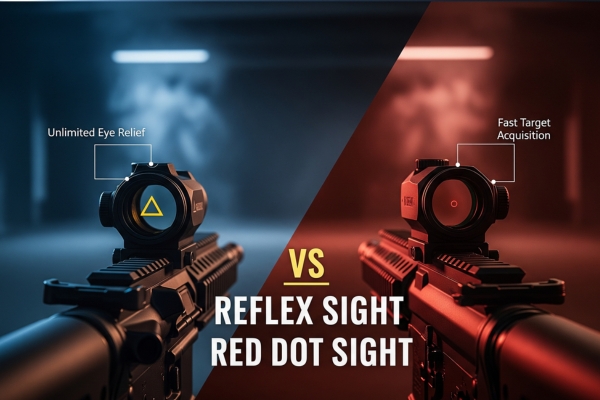
Walk into any gun store in 2026 and ask for a “red dot,” and you’ll walk out with one of three very different optics: a wide-window open reflex, a sealed tube, or one of the enclosed-emitter hybrids that have flooded the market over the last two years. That confusion isn’t accidental. The terms “reflex sight” and “red dot sight” have been bleeding into each other for decades, and the marketing language hasn’t caught up with the engineering. The reflex sight vs red dot sight conversation in 2026 looks nothing like it did when Aimpoint first popularized the category, and treating the two as synonyms is a fast path to buying the wrong optic for your rifle or pistol.
I’ve spent the better part of a decade running optics on AR-15s, competition pistols, and hunting rifles, and the question I hear most often from new shooters is some version of “are these the same thing?” They aren’t, but the relationship between them is more nuanced than the gun counter usually explains. The goal of this guide is to settle the terminology, walk through the actual technical differences that matter when you’re behind the gun, and help you pick the right design for what you’re doing. We will also cover the third category nobody talks about at the counter: enclosed emitter sights like the Holosun 509T and Aimpoint Acro P2 that now dominate the duty-grade pistol optic market.
Whether you’re setting up a defensive carbine, a USPSA open-gun race rig, a hog-hunting rifle, or a concealed carry pistol with a red dot, understanding how these designs differ in the field will save you money and frustration. Let’s start with the simple version of the answer that most searches are looking for, then get into the engineering.
Here’s the cleanest way to think about it: “reflex” describes the optical principle, and “red dot” describes the most common reticle choice that ships with that principle. A reflex sight uses a partially reflective lens and a light source (an LED emitter or, in older designs, a tritium/gas tube) to bounce an aiming point back to your eye while still letting you see through the lens to the target. The word “reflex” comes from that reflective behavior, not from any claim that the sight will improve your reflexes on the draw.
Red dot sights take their name from the original reticle, a literal red dot. The term stuck even as the technology evolved to include green dots, gold dots, 65 MOA circles, BDC reticles, and Christmas-tree style holdover patterns. Almost every modern electronic non-magnified sight on the market is a reflex sight at its core, which is why the two terms get used interchangeably in forums and product listings.
In current retail language, however, the words have settled into a practical shorthand. “Reflex sight” typically means an open design: a single rectangular or round lens, an exposed emitter at the base or rear, and no protective tube. “Red dot sight” typically means a tube-style enclosed optic, often in a 20mm, 30mm, or 34mm housing, that protects the optical path from debris and weather. The newest and fastest-growing segment, the enclosed emitter reflex, blends both ideas, and we’ll cover that category in its own section below.
The Wikipedia entry on red dot sights now groups reflex, prism, and holographic designs under the same umbrella, and brands like Holosun, Sig Sauer, and Aimpoint use the language fluidly in their spec sheets. The takeaway: when someone asks about the difference between a reflex sight and a red dot sight, the most useful answer is about the housing (open vs tube vs enclosed-emitter), not the technology category.
Below is a side-by-side technical comparison of the three main design categories you’ll encounter: the open reflex, the tube red dot, and the enclosed emitter hybrid. Numbers are typical ranges across mainstream 2026 models and will vary by specific product and price tier.
| Specification | Open Reflex Sight | Tube Red Dot Sight | Enclosed Emitter Sight |
|---|---|---|---|
| Typical Weight | 0.6 to 2.5 oz | 3 to 8 oz | 1.5 to 3 oz |
| Battery Life (mid brightness) | 15k to 50k hours | 30k to 100k+ hours | 20k to 60k hours |
| Common Battery | CR2032 / CR1632 | CR2032 / CR123 | CR2032 |
| Field of View | Unlimited peripheral | Limited by tube diameter | Wide, with protected window |
| Water/Debris Resistance | Moderate | Excellent (sealed tube) | Excellent (sealed emitter) |
| Typical Dot Sizes | 2 to 6 MOA | 1 to 4 MOA | 2 to 6 MOA (often multiple) |
| Parallax-Free Range | 25 to 50 yds typical | 50 to 100+ yds | 25 to 50 yds typical |
| Mounting Footprint | Proprietary or Docter/RMR | 30mm rings, Aimpoint Micro, T-2 footprint | RMR, ACRO, or proprietary |
| Magnifier Friendly | Workable, some distortion | Excellent (designed for it) | Good, varies by housing |
| Price Range (2026) | $100 to $600 | $200 to $900 | $250 to $800 |
Open reflex sights are the wide-window, heads-up-display style optics that have become nearly synonymous with modern competition shooting. The lens is mounted perpendicular to the bore, the LED sits at the base of the housing, and the reticle is projected up onto the reflective coating of the lens. With the dot appearing in the same focal plane as the target, both eyes open is the natural way to use it, and your brain merges the two images seamlessly.
The single biggest advantage of an open reflex is the sight picture. The unobstructed window gives you almost unlimited peripheral awareness, which translates directly into faster target transitions. Run a USPSA classifier through a course of fire with a 30mm tube, then run the same course with something like a Trijicon SRO or a Sig Romeo3 Max, and the open window will feel like someone removed blinders from the optic. For 3-gun, USPSA Carry Optics, and any discipline that rewards picking up the next target fast, this is the design that wins the most stages.
Open reflex sights also tend to be the lightest option on the market. The Leupold DeltaPoint Pro, for example, comes in at around 1.9 ounces, and pistol-friendly models like the Holosun 507C and the Sig Romeo-X Compact land in the 1 to 1.5 oz range. On a lightweight AR build or a carry pistol where every ounce matters, that low mass keeps the gun balanced and reduces fatigue over long range days. The lower profile also keeps the optic out of the way during draws from a holster, which is one reason open reflex pistol sights became popular before enclosed emitters took over the duty market.
Where the open design gives up ground is environmental sealing. Rain droplets on the lens will distort the dot, dust can settle on the reflective coating, and pocket lint from a concealed carry holster is notorious for migrating into the cavity around the emitter. Battery life is often shorter too, because the LED has to be driven harder to compete with ambient light coming through the open window. The result is a brighter dot that drains a CR2032 noticeably faster than a sealed tube design running the same LED at the same perceived brightness.
For shooters who primarily run range toys, competition guns, or a duty-grade rifle kept in a controlled environment, the open reflex remains a top-tier choice. For a pistol that rides in a holster all day, or a rifle that lives in a truck and sees weather, the open design starts showing its limits, and the enclosed emitter exists specifically to fix those limits.
Enclosed emitter reflex sights are the most important design shift in pistol optics since the original Trijicon RMR hit the market, and they are also where the reflex sight vs red dot sight debate gets genuinely complicated. An enclosed emitter sight keeps the wide, open window of a traditional reflex but seals the LED inside a protective housing, much like a tube design. The dot is projected onto a small internal reflective surface and bounced up to the lens, but the emitter itself can no longer be blocked by lint, dust, or mud.
The two models that defined the category for the American market are the Holosun 509T and the Aimpoint Acro P2. The 509T brought the enclosed-emitter concept down to a price tier that finally made sense for civilian duty, concealed carry, and defensive use. The Acro P2 built on that idea with the ruggedness and battery life Aimpoint is known for, and it has been adopted by a number of European and US law enforcement agencies for slide-mounted pistol duty use. Both use an RMR-compatible or ACRO-specific footprint, depending on the generation.
What you get in real-world use is a sight that handles weather and debris like a tube red dot, while keeping a wider sight picture and lower profile than a 30mm housing. For a defensive AR pistol or a concealed carry pistol that has to work after being dropped in the dirt, drawn from a holster pocket full of lint, or carried through a rainstorm, the enclosed emitter is the most practical design currently shipping. The trade-off is slightly more weight and a slightly tighter field of view than a fully open reflex, but neither penalty is significant for the use case.
For most readers trying to choose between an optic for a duty or defensive firearm in 2026, the enclosed emitter category is the answer to the reflex sight vs red dot sight question. The classic open reflex and the classic tube red dot still have their place, but if you’re buying a new pistol optic today and budget allows, the enclosed emitter design is the most balanced choice.
Tube-style red dots enclose the entire optical path inside a cylindrical housing, typically 20mm, 30mm, or 34mm in diameter. The LED sits at the rear, a multi-coated objective lens faces the target, and the dot is reflected back from an internal curved mirror. This is the design that Aimpoint pioneered in the 1970s with the original CompM, and it remains the standard for military and law enforcement carbines worldwide for very good reasons.
Durability is the headline feature. With all the sensitive components inside a sealed, nitrogen-purged tube, a quality red dot can be dropped, submerged, frozen, and dragged through mud without losing zero. Modern Aimpoint and Trijicon tubes carry IP67 or better waterproof ratings, and they are tested against thousands of rounds of magnum recoil and brutal temperature swings. For a rifle that has to work in any condition, the tube design is still the gold standard.
Battery life is the second headline feature. The Aimpoint T-2 (now sold as the Aimpoint CompM5 in some markets) can run a single CR2032 for five years on a moderate brightness setting, and newer 2025-2026 designs like the Aimpoint COA and updated Holosun tubes claim 50,000 to 100,000+ hours on a single battery. The tube design concentrates the LED output into a controlled optical path, so the emitter doesn’t have to be overdriven to fight ambient light, and motion-activated sleep modes stretch battery life even further.
The optical path inside a tube also allows for more sophisticated coatings and lens elements. Premium tube red dots achieve 90%+ light transmission, and the sight picture is clean and uniform from edge to edge, which matters when you stack a magnifier behind the optic. Cheaper open reflex designs can show a slight blue or purple tint, especially in low light, because the dichroic coating on a single lens has to compromise between reflection and transmission.
The downside of a tube is size and weight. Even a compact 20mm tube adds noticeable bulk compared to an open reflex, and a 30mm tube red dot on a lightweight AR build can feel front-heavy. Field of view is also limited to the tube’s inner diameter, which slows target transitions in close-quarters work. None of this is a deal-breaker for the use case, but it explains why competition shooters keep gravitating to the open reflex for stages under 50 yards.
The structural differences between open reflex, tube red dot, and enclosed emitter designs drive most of the real-world performance gaps you’ll notice at the range. The following are the technical factors that actually change how the optic behaves when you’re behind it.
Parallax is the apparent shift in the dot’s position relative to the target when your eye moves behind the optic. Both reflex and tube designs can be engineered to be parallax-free at a specific distance, typically 50 or 100 yards, but they get there in different ways. A tube red dot uses its longer internal optical path and curved mirror to cancel out parallax across a wider range of eye positions, which is one reason the dot “floats” so consistently when you move your head.
Open reflex sights have a much shorter optical path, so they tend to be more sensitive to head position at extreme angles. Within normal shooting postures, however, this is largely academic. At distances under 100 yards, both designs keep the dot on target through a forgiving eye box, and most shooters will never see a meaningful difference in practical accuracy. The gap only matters if you’re shooting with a really awkward cheek weld, like off a barricade at an awkward angle.
Tube red dots generally pull ahead here. The protected environment allows for multi-coated, multi-element lens systems that push light transmission above 90%, and the sight picture is consistent from edge to edge. This matters most in low light, where a dim reticle in a bright, clear window can be used without maxing out the brightness setting and draining the battery.
Open reflex sights typically use a single lens with a dichroic coating that reflects a specific wavelength (red, green, or amber) back to your eye while letting other wavelengths pass through to the target. This simpler system can introduce a slight blue or green tint to the sight picture, and edge distortion is more common on budget models. It’s not a deal-breaker, but the difference is visible when you look through both side by side.
Tube red dots often ship with multiple reticle options. The Aimpoint CompM5b and the Trijicon MRO HD, for example, let you swap between a 2 MOA dot, a 65 MOA circle, or a combination of both. Holosun has leaned into this with the 509T, which lets you cycle through dot-only, circle-only, and circle-dot combinations on the fly. Enclosed emitter pistol optics from Holosun and the Sig Romeo-X series have similar flexibility.
Open reflex sights historically offered simpler reticles, but that has changed. The Trijicon SRO, the Sig Romeo3 Max, and the Leupold DeltaPoint Pro all offer multi-reticle systems now, often with solar backup to extend battery life. The exposed design still limits how complex the reticle electronics can get, but for most users the gap in reticle options between open and tube is small enough to ignore.
Dot size, measured in MOA (minute of angle), is one of the most misunderstood specs on a red dot. The rule of thumb is simple: 1 MOA equals 1 inch at 100 yards, 2 inches at 200 yards, and so on. A 2 MOA dot covers a 2-inch circle at 100 yards and a 4-inch circle at 200 yards. A 6 MOA dot covers 6 inches at 100 yards and 12 inches at 200. This is the single most useful number for understanding how a dot will perform at the distances you actually shoot.
For a defensive AR or a concealed carry pistol, most instructors recommend a 2 to 4 MOA dot. Smaller than that and the dot gets hard to find under stress, especially for older eyes or for shooters with any astigmatism. Larger than that and precision shooting at distance becomes harder because the dot covers more of the target. The 6 MOA dot is popular on duty pistols because it’s fast to find on the draw and still precise enough for the 7 to 25 yard engagements that make up most defensive work.
For a precision-oriented carbine, a 1 to 2 MOA dot is a more common choice, and you’ll see 1 MOA and 1.5 MOA dots on the Aimpoint T-2, Trijicon MRO HD, and most high-end hunting setups. The trade-off is that a 1 MOA dot can be hard to pick up quickly at very close range or in poor light. This is why many precision shooters pair a small-dot red dot with a 3x or 6x magnifier, so they can run the small dot for distance and the magnifier for close work.
Astigmatism is the single most common reason a red dot looks like a comma, a starburst, or a smear instead of a clean dot, and the effect is identical on reflex sights, tube red dots, and enclosed emitter designs. The dot is still a single point of light, but the way your eye refracts it through the lens turns it into a shape. Switching between open and tube designs rarely fixes this, because the issue is the LED emitter itself, not the housing.
The most reliable workaround is to try different reticle shapes. Shooters with mild astigmatism often find that a circle-dot reticle (like the Holosun 509T’s 32 MOA circle with a 2 MOA dot) reads as a clean shape even when the dot smears, because the human eye can resolve the circle outline more easily. Etched reticles, found in prism sights, are a different solution because they behave more like a traditional scope reticle and don’t depend on a projected LED for visibility. If you’ve ever been told to “just buy a more expensive red dot” to fix a starburst, ignore that advice. The cause is almost always the eye, not the optic.
The reticle color on a reflex or red dot sight is a separate decision from the housing style, and the green vs red debate has gotten louder as more manufacturers offer both. The human eye is more sensitive to green wavelengths, so a green dot can appear brighter than a red dot at the same LED power output. In practice, that often means a slightly longer battery life and a faster-acquired reticle in daylight, especially for shooters with mild vision differences between the colors.
Red dots have a few advantages of their own. Red LEDs are cheaper to manufacture, and red illumination tends to wash out less in very bright sunlight, where green can bloom. Red is also the conservative default for military and law enforcement because night vision devices are calibrated to red wavelengths, and a red dot is less likely to interfere with NV tube performance. Most duty-grade optics, from the Aimpoint T-2 to the Trijicon MRO HD, still ship with red as the default illumination color for this reason.
Green is more common on concealed carry and competition optics. The Holosun HE507K-GR and similar green-only pistol sights are popular because the dot is easy to find on the draw and the battery savings add up over years of carry. For most civilian users, the choice comes down to personal preference. If you have normal color vision, try both at a range before buying. If you are slightly red-green colorblind, a green dot may actually appear dimmer rather than brighter, so testing in person matters.
Holographic sights like the EOTech EXPS3 and XPS2 deserve a callout because they often get lumped in with reflex sights but use fundamentally different technology. Where a reflex sight uses an LED to project a dot onto a reflective lens, a holographic sight uses a laser diode to illuminate a holographic grating recorded in a special film. The result is a reticle that appears to float in the sight window, and that reticle has a few unique properties worth understanding.
First, the holographic reticle stays the same apparent size regardless of magnification. Pair an EOTech with a 3x magnifier, and the circle-dot reticle looks the same size in the magnified image as it does at 1x. With a traditional red dot, the dot appears larger through the magnifier, which can obscure the target. Second, holographic sights maintain their zero even with significant damage to the front lens, because the reticle is generated by the holographic film at the rear of the housing. Knock the front glass out and the sight still works.
The trade-offs are weight, cost, and battery life. Holographic sights are heavier than comparable reflex and tube designs, often twice the weight of a similar-sized tube red dot. They are also significantly more expensive, with most EOTech models landing well above the price of an Aimpoint T-2. Battery life is the most limiting factor for casual users. A holographic sight typically runs 600 to 1,000 hours on a single battery at a moderate setting, compared to 50,000+ hours for a quality LED reflex or tube red dot.
For most civilian shooters, the practical advantages of a holographic sight don’t justify the cost and battery penalty. For military and law enforcement use cases where the unique properties matter, especially when paired with night vision and magnifiers, the EOTech remains a strong choice. The reflex sight vs red dot sight decision is really a reflex vs tube decision, with holographic as a separate, more specialized category.
Once you understand the engineering, the use cases fall into place pretty quickly. The right answer for a USPSA open gun is not the right answer for a defensive AR pistol, and the right answer for a concealed carry Glock is different from both. Here’s how the three designs sort out across the most common shooting applications in 2026.
Open reflex sights dominate USPSA Carry Optics, USPSA Open, and 3-Gun divisions where field of view and target transition speed matter most. The wide window of a Trijicon SRO, a Sig Romeo3 Max, or a Leupold DeltaPoint Pro makes the next target easy to find without a deliberate head movement, and the low weight keeps the front of the gun light during stage runs. Top competitors routinely choose large-window open reflex sights specifically for this reason.
For duty rifles and duty pistols, the enclosed emitter category has become the new default. On the AR side, the Aimpoint T-2, the Trijicon MRO HD, and the Holosun 515CT are all standard issue in law enforcement and military units. On the pistol side, the Aimpoint Acro P2, the Holosun 509T, and the Leupold DeltaPoint Pro are the most common duty-grade choices. The combination of weather sealing, debris protection, and proven battery life is what makes these designs the default for use cases where the optic has to work after months in a holster or a car trunk.
For close-range dangerous game hunting, the open reflex sight’s fast target acquisition is a meaningful advantage, especially in thick cover where the next target can be five yards away. For general hunting where weather resistance and battery life matter more, a tube red dot is the better pick. Many hog and coyote hunters are moving to enclosed emitter pistol optics like the Holosun 509T or the Aimpoint Acro P2 because the protected emitter survives being dropped in the truck bed or bounced around in a backpack.
The pistol optics market has shifted dramatically in the last two years. Open reflex pistol sights like the Trijicon RMR and the Holosun 507C remain popular for their low profile and light weight, but the enclosed emitter category is gaining ground quickly because the sealed housing keeps lint and debris out of the emitter cavity. For an everyday carry pistol that rides in an IWB holster, the enclosed emitter is the more reliable choice in 2026. Open reflex pistol sights are still a valid option if you keep the gun clean and the optic recessed in a milled slide, but they require more maintenance to keep that way.
Choosing between an open reflex, a tube red dot, and an enclosed emitter sight comes down to a handful of practical factors. Use the considerations below to match the design to your specific use case rather than chasing a brand name.
Mounting footprint is the single most overlooked spec on a red dot, and the answer to “will this optic fit my slide or receiver?” lives in the footprint standard rather than the dimensions in the marketing photos. The most common standards you’ll encounter in 2026 are the Trijicon RMR footprint (used by the RMR, SRO, Holosun 407C/507C, and many clones), the Aimpoint ACRO footprint (used by the Acro P2 and a handful of newer enclosed emitters), the Docter/Noblex footprint (used by the Docter Sight and several European pistol optics), the Trijicon MRO footprint (used by the MRO and MRO HD on rifles), and the Aimpoint Micro footprint (used by the T-2, CompM5, and most clone red dots for AR use).
The RMR footprint has become the de facto standard for pistol optics because Trijicon’s mounting pattern is widely cloned and most aftermarket slides ship with RMR cutouts. The ACRO footprint is gaining ground on the duty side because the enclosed emitter needs a deeper cut to clear the housing. For rifle use, the Aimpoint Micro footprint and the 30mm ring standard are still the dominant choices, and the Trijicon MRO footprint has become a third popular option for carbines that don’t need a magnifier.
Before buying, confirm that your firearm’s mounting interface matches the optic’s footprint, and check whether you need an adapter plate. Some aftermarket slides ship with multi-footprint cutouts (RMR plus ACRO, for example), which is the most flexible option if you haven’t decided on a specific optic yet.
If maintaining iron sight compatibility matters for your use case, sight height becomes the deciding factor. Lower 1/3 co-witness is the standard for AR-15 carbines, with the iron sight post visible in the lower third of the optic window. Absolute co-witness lines the iron sights up dead center in the optic, which can obstruct the reticle but provides a more direct reference. Open reflex sights typically sit low enough to allow absolute co-witness on most AR platforms, while tube red dots usually require a riser mount to achieve lower 1/3.
Tube red dots are the most magnifier-friendly design because the round, uniform aperture lines up cleanly with a flip-to-side magnifier housing. Open reflex sights can be paired with magnifiers, but the rectangular window and the sometimes uneven sight picture can introduce edge distortion under magnification. Enclosed emitter sights vary by model. The Holosun 509T pairs well with magnifiers because of its round window, while some rectangular enclosed emitters behave more like a traditional open reflex when magnified.
Both reflex and tube designs offer night vision-compatible settings, but implementation differs. Tube red dots often include dedicated NV brightness settings at the very bottom of the brightness range, calibrated to work with common image intensifier tubes. Open reflex sights can bloom or wash out under night vision unless the specific model includes NV settings, because the open window lets more stray light bounce around. For serious night vision use, the Aimpoint T-2, the Trijicon MRO HD, and the EOTech EXPS3 remain the most trusted choices.
The price range for quality red dots has compressed significantly since 2024. Entry-level open reflex sights from Holosun and Sig Sauer now start in the $100 to $200 range, and mid-tier enclosed emitters like the Holosun 509T are commonly available in the $250 to $400 range. Premium tube red dots from Aimpoint and Trijicon still command $700 to $900, and that premium buys proven durability, multi-year battery life, and a track record across military and law enforcement deployments. For most civilian users, a mid-tier optic in the $200 to $400 range delivers 90% of the performance at less than half the cost.
A few myths keep coming up in forums and at gun counters, and they’re worth addressing directly.
“Reflex sights are faster than red dots.” This assumes every reflex sight is an open design and every red dot is a tube, which isn’t accurate. A high-quality tube red dot with a generous window can be just as fast as an open sight for most practical applications. The speed gap comes down to training and familiarity more than sight design, and a wide-window tube red dot like the Aimpoint CompM5b is genuinely competitive with a Trijicon SRO in close-quarters work.
“Red dots are more accurate.” Mechanical accuracy depends on mounting stability and zero retention, not on whether the sight is open or enclosed. Both designs can deliver sub-MOA precision when properly mounted. The real difference is durability and the ability to maintain that zero under harsh conditions, where the enclosed designs pull ahead.
“Open sights don’t work in rain.” This one is partially true. Rain can affect an open sight more than an enclosed one because droplets on the lens will distort the dot, and modern hydrophobic coatings only go so far in heavy weather. For match shooters this is a minor inconvenience (wipe the lens between stages), and for defensive users the open design is a real liability in sustained wet conditions.
“Tube sights are obsolete technology.” Despite the popularity of open designs and the rise of enclosed emitters, tube red dots continue to evolve. The Aimpoint COA, the Trijicon MRO HD, and the Holosun 515CT all use tube designs with updated electronics, motion sensors, and improved coatings. Far from obsolete, the tube design remains the most rugged option available and continues to dominate military procurement worldwide.
The optics market in 2026 looks very different from the optics market of 2018, and the next few years are likely to bring more of the same rapid change. Here are the trends worth watching if you’re planning a future purchase or just want to understand where the category is heading.
Enclosed emitter reflex sights have moved from a niche curiosity to a mainstream category in the last three years. The Holosun 509T, the Aimpoint Acro P2, and the Steiner MPS have all proven the concept, and the third generation of enclosed emitters shipping in 2026 is bringing improved battery life, lower profiles, and lower price points. Expect most duty-grade pistol optics in 2027 to use enclosed emitter designs as a default rather than a premium option.
Smart optics with integrated features are starting to show up in the reflex and red dot category. The 2025 release of the Holosun DRS-TH (Digital Reflex Sight – Thermal Hybrid) combined a traditional red dot with a digital thermal overlay, allowing shooters to identify heat signatures through the same optic. Sig Sauer’s Romeo-X series has begun integrating ballistic APIs that work with paired smartphones, and Aimpoint has shown prototype carbine optics with built-in laser rangefinders. Expect more of these hybrid designs over the next 24 months as the underlying electronics get smaller and cheaper.
Battery technology continues to push runtime higher. Newer LED emitters draw less current at the same perceived brightness, and 2026 tube red dots from Aimpoint, Trijicon, and Holosun now claim 50,000 to 100,000+ hours on a single CR2032. Solar backup, which has been a Holosun staple for years, is now appearing on the Sig Romeo-X line and on the Primary Arms SLx MD-25. Combined with motion-activated sleep modes, a quality red dot in 2026 can realistically run for 5+ years on a single battery.
Etched reticles with battery-independent visibility are starting to show up on more reflex and red dot designs. Borrowed from prism scope technology, an etched reticle is physically present in the lens and remains visible even if the battery dies, which is a meaningful safety feature for defensive firearms. The Trijicon MRO HD, the Primary Arms SLx MD-25, and several Holosun models now offer etched reticles, and we expect this feature to become standard in the mid-tier price range by 2027.
On the budget end of the market, the gap between entry-level and premium optics is shrinking fast. Brands like Primary Arms, Vortex, and Sig Sauer are delivering $150 to $300 optics with features (multiple reticles, solar backup, motion sensors) that would have been flagship-only five years ago. The Aimpoint T-2 and Trijicon MRO HD remain the durability benchmark, but for most civilian use cases, a 2026 mid-tier optic is more than capable.
Every red dot sight uses reflective optics, so technically all red dots are reflex sights. In everyday language, however, reflex usually refers to open-window sights with an exposed LED, while red dot usually refers to tube-style enclosed optics. The newest third category, the enclosed emitter, blends the two ideas and is now the most common choice for duty and defensive use.
Neither design is universally better. Open reflex sights give you a wider field of view and faster target transitions, which is why competition shooters prefer them. Tube red dots are more durable, weather resistant, and have longer battery life, which is why military and law enforcement prefer them. For most civilian use cases in 2026, an enclosed emitter sight like the Holosun 509T or Aimpoint Acro P2 is the most balanced option.
An open reflex sight uses a single rectangular or round lens with an exposed LED emitter at the base, and the reticle is projected onto the lens itself. A tube red dot encloses the entire optical path inside a sealed cylinder, typically 20mm or 30mm in diameter, with the LED at the rear and a multi-coated lens at the front. The tube design is more durable and weather sealed, while the open design has a wider field of view and lower profile.
For most AR-15 owners, a red dot is one of the biggest accuracy and speed upgrades available. A quality red dot on an AR lets you shoot with both eyes open, acquire targets faster, and engage at distances up to 300 yards with practice. A red dot is also easier to teach new shooters than iron sights, which is why most AR training classes now assume an optic is present.
Reflex sights work well on pistols for target shooting, competition, and range use. For concealed carry and duty use, an enclosed emitter pistol optic is usually the better choice in 2026 because the sealed housing keeps lint and debris out of the emitter. The Trijicon RMR, the Holosun 507C, and the Sig Romeo-X series are all proven pistol reflex options, and the Holosun 509T and Aimpoint Acro P2 are the leading enclosed emitter choices.
Military forces use both, but the enclosed tube design dominates. The Aimpoint CompM4 and T-2, the Trijicon ACOG, and the EOTech EXPS3 are all standard issue across US and allied militaries. Open reflex sights are less common in military applications because the exposed emitter is a liability in field conditions, though they do appear on specialized weapons and on personal defense weapons.
Yes, magnifiers work with most reflex and tube red dot sights. Tube red dots pair most cleanly with magnifiers because the round aperture and uniform sight picture minimize edge distortion under magnification. Open reflex sights can also be paired with magnifiers, and the combination is common on 3-Gun rifles, but expect slightly more edge distortion than with a tube design.
Both work, and the choice is mostly personal preference. Green dots appear brighter to most people at the same LED power, which can mean longer battery life and faster acquisition. Red dots wash out less in very bright sunlight and are the standard for military and law enforcement. If you have red-green colorblindness, test both before buying because green may appear dimmer rather than brighter.
Yes, astigmatism can make the dot appear as a comma, starburst, or smear instead of a clean circle, and the effect is the same across open reflex, tube red dot, and enclosed emitter designs. The cause is the eye, not the optic, so switching housings rarely helps. A circle-dot reticle, an etched reticle in a prism sight, or simply choosing a different dot size often reads more clearly for shooters with astigmatism.
For a defensive AR or a concealed carry pistol, 2 to 4 MOA is the most common choice, with 6 MOA being popular for duty pistols where fast acquisition matters more than precision. For a precision carbine, 1 to 2 MOA is more common, often paired with a magnifier for distance work. 1 MOA equals 1 inch at 100 yards, so a 2 MOA dot covers 2 inches at 100 yards and 4 inches at 200 yards.
The reflex sight vs red dot sight question in 2026 is really a question about three different categories, not two. Open reflex sights remain the speed king for competition and range work. Tube red dots remain the durability king for military, law enforcement, and any environment where the optic has to work after weather and abuse. And the enclosed emitter category, dominated by the Holosun 509T, the Aimpoint Acro P2, and the Sig Romeo-X enclosed, has become the default answer for duty pistols, defensive carbines, and concealed carry guns that have to work first time, every time.
My honest recommendation for most readers: if you’re buying a single defensive or duty-grade optic in 2026 and you can stretch the budget, look first at the enclosed emitter category. The Holosun 509T is the value leader at around $300 to $400 and is trusted by more civilian and professional users than any other enclosed emitter on the market. The Aimpoint Acro P2 is the premium choice for users who want the longest battery life and the most proven track record. The Trijicon MRO HD remains the top pick for rifle use, and a quality tube red dot is still the right answer for a defensive carbine that needs to survive weather.
For competition, the open reflex sight is still the right call. A Trijicon SRO, a Sig Romeo3 Max, or a Leupold DeltaPoint Pro will save you time on every target transition, and that advantage compounds across a full match. The exposed design is a real liability for defensive use, but on a competition gun that lives in a range bag, it doesn’t matter. For hunting, the right answer depends on your environment, and a quality tube red dot or enclosed emitter will serve you well across most conditions.
Whatever you choose, the most important step is to train with the optic. A moderately priced sight you shoot often will outperform an expensive sight that sits in the safe. Take a class, dry-fire with the optic mounted, and confirm the zero at known distances before relying on it. The technology is mature and the options are good, but the optic only helps if you’ve done the work to use it well. Pick the design that fits your use case, mount it properly, train regularly, and the reflex sight vs red dot sight debate will become academic in the best possible way.
{ “@context”: “https://schema.org”, “@type”: “FAQPage”, “mainEntity”: [ { “@type”: “Question”, “name”: “Are reflex sights and red dot sights the same thing?”, “acceptedAnswer”: { “@type”: “Answer”, “text”: “Every red dot sight uses reflective optics, so technically all red dots are reflex sights. In everyday language, however, reflex usually refers to open-window sights with an exposed LED, while red dot usually refers to tube-style enclosed optics. The newest third category, the enclosed emitter, blends the two ideas and is now the most common choice for duty and defensive use.” } }, { “@type”: “Question”, “name”: “Which is better, a reflex sight or a red dot?”, “acceptedAnswer”: { “@type”: “Answer”, “text”: “Neither design is universally better. Open reflex sights give you a wider field of view and faster target transitions, which is why competition shooters prefer them. Tube red dots are more durable, weather resistant, and have longer battery life, which is why military and law enforcement prefer them. For most civilian use cases in 2026, an enclosed emitter sight like the Holosun 509T or Aimpoint Acro P2 is the most balanced option.” } }, { “@type”: “Question”, “name”: “What is the difference between an open reflex sight and a tube red dot sight?”, “acceptedAnswer”: { “@type”: “Answer”, “text”: “An open reflex sight uses a single rectangular or round lens with an exposed LED emitter at the base, and the reticle is projected onto the lens itself. A tube red dot encloses the entire optical path inside a sealed cylinder, typically 20mm or 30mm in diameter, with the LED at the rear and a multi-coated lens at the front. The tube design is more durable and weather sealed, while the open design has a wider field of view and lower profile.” } }, { “@type”: “Question”, “name”: “Is a red dot sight worth it for an AR-15?”, “acceptedAnswer”: { “@type”: “Answer”, “text”: “For most AR-15 owners, a red dot is one of the biggest accuracy and speed upgrades available. A quality red dot on an AR lets you shoot with both eyes open, acquire targets faster, and engage at distances up to 300 yards with practice. A red dot is also easier to teach new shooters than iron sights, which is why most AR training classes now assume an optic is present.” } }, { “@type”: “Question”, “name”: “Are reflex sights good for pistols?”, “acceptedAnswer”: { “@type”: “Answer”, “text”: “Reflex sights work well on pistols for target shooting, competition, and range use. For concealed carry and duty use, an enclosed emitter pistol optic is usually the better choice in 2026 because the sealed housing keeps lint and debris out of the emitter. The Trijicon RMR, the Holosun 507C, and the Sig Romeo-X series are all proven pistol reflex options, and the Holosun 509T and Aimpoint Acro P2 are the leading enclosed emitter choices.” } }, { “@type”: “Question”, “name”: “Do military use red dot or reflex sights?”, “acceptedAnswer”: { “@type”: “Answer”, “text”: “Military forces use both, but the enclosed tube design dominates. The Aimpoint CompM4 and T-2, the Trijicon ACOG, and the EOTech EXPS3 are all standard issue across US and allied militaries. Open reflex sights are less common in military applications because the exposed emitter is a liability in field conditions, though they do appear on specialized weapons and on personal defense weapons.” } }, { “@type”: “Question”, “name”: “Can you use a magnifier with a reflex sight?”, “acceptedAnswer”: { “@type”: “Answer”, “text”: “Yes, magnifiers work with most reflex and tube red dot sights. Tube red dots pair most cleanly with magnifiers because the round aperture and uniform sight picture minimize edge distortion under magnification. Open reflex sights can also be paired with magnifiers, and the combination is common on 3-Gun rifles, but expect slightly more edge distortion than with a tube design.” } }, { “@type”: “Question”, “name”: “Red dot or green dot sight, which should I choose?”, “acceptedAnswer”: { “@type”: “Answer”, “text”: “Both work, and the choice is mostly personal preference. Green dots appear brighter to most people at the same LED power, which can mean longer battery life and faster acquisition. Red dots wash out less in very bright sunlight and are the standard for military and law enforcement. If you have red-green colorblindness, test both before buying because green may appear dimmer rather than brighter.” } }, { “@type”: “Question”, “name”: “Does astigmatism affect red dot and reflex sights?”, “acceptedAnswer”: { “@type”: “Answer”, “text”: “Yes, astigmatism can make the dot appear as a comma, starburst, or smear instead of a clean circle, and the effect is the same across open reflex, tube red dot, and enclosed emitter designs. The cause is the eye, not the optic, so switching housings rarely helps. A circle-dot reticle, an etched reticle in a prism sight, or simply choosing a different dot size often reads more clearly for shooters with astigmatism.” } }, { “@type”: “Question”, “name”: “What MOA dot size is best for a red dot?”, “acceptedAnswer”: { “@type”: “Answer”, “text”: “For a defensive AR or a concealed carry pistol, 2 to 4 MOA is the most common choice, with 6 MOA being popular for duty pistols where fast acquisition matters more than precision. For a precision carbine, 1 to 2 MOA is more common, often paired with a magnifier for distance work. 1 MOA equals 1 inch at 100 yards, so a 2 MOA dot covers 2 inches at 100 yards and 4 inches at 200 yards.” } } ] } ![Sig Sauer Romeo MSR vs Romeo 5: Which Red Dot Wins [cy]?](https://revellphotography.com/wp-content/uploads/2026/09/featured-update-5165-1789865297976.jpg)