Types of Seabirds: Complete Guide 2025 | Identification & Photography
Complete guide to the 10 major seabird families with expert identification tips, photography techniques, and conservation insights drawn from 15…

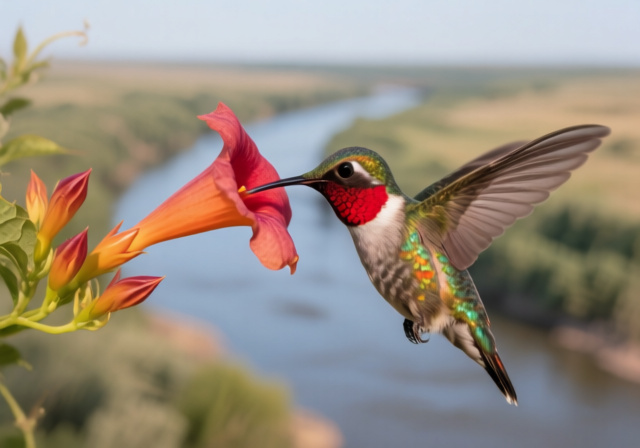
Nebraska might seem like an unlikely hotspot for hummingbirds, but these tiny jewels bring their dazzling colors and incredible aerial displays to the Cornhusker State every year. As a photographer who’s spent countless mornings tracking these swift visitors across Nebraska’s varied landscapes, I’ve witnessed the magic of their spring arrivals and fall migrations.
The answer to “how many hummingbirds in Nebraska” reveals six species visit the state, with the Ruby-throated Hummingbird being the only regular breeding resident. These remarkable birds travel thousands of miles to grace our gardens, woodlands, and prairie edges with their presence.
From the river valleys of eastern Nebraska to the pine ridges of the panhandle, hummingbirds find refuge and sustenance during their incredible journeys. This guide will help you identify every species, understand their migration patterns, and discover the best times and places to observe these miniature marvels.
Nebraska hosts six hummingbird species throughout the year, though not all are common visitors. The Ruby-throated Hummingbird claims the title of Nebraska’s primary hummingbird, being the only species that regularly breeds in the eastern part of the state.
| Species | Frequency | Best Season | Primary Region |
|---|---|---|---|
| Ruby-throated | Common breeder | May-August | Eastern Nebraska |
| Rufous | Fall migrant | July-September | Statewide (fall) |
| Black-chinned | Spring/Fall migrant | April-May, Aug-Sept | Western Nebraska |
| Broad-tailed | Spring/Fall migrant | May, August | Panhandle |
| Anna’s | Rare vagrant | Winter | Accidental |
| Calliope | Rare vagrant | Migration | Western Nebraska |
The diversity of Nebraska hummingbirds peaks during migration periods, when western species pass through on their journeys between breeding and wintering grounds. Understanding each species’ timing and habitat preferences dramatically increases your chances of successful observation and photography.
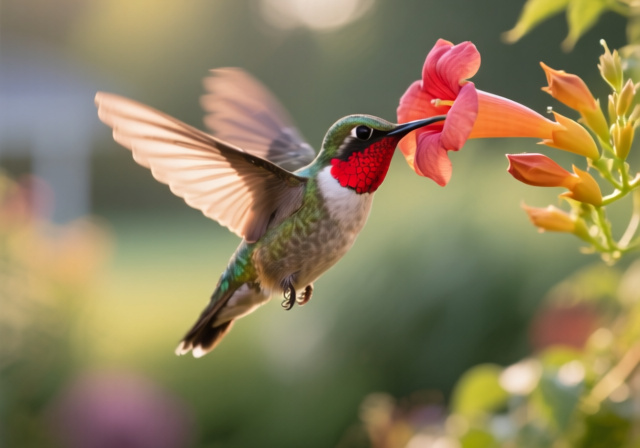
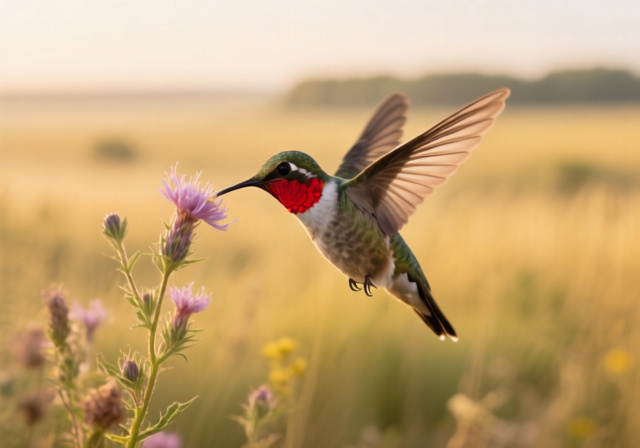
The Ruby-throated Hummingbird reigns supreme as Nebraska’s most common and only breeding hummingbird species. Arriving in late April, these tiny birds establish territories throughout eastern Nebraska’s river valleys and mature woodlands. I’ve watched them return to the same branches year after year, demonstrating remarkable site fidelity that never ceases to amaze me.
Identification centers on the male’s brilliant ruby-red gorget, which flashes like a jewel when caught by sunlight at just the right angle. Females lack this dramatic coloring but show a white throat with faint streaking and green iridescence on their back. Both sexes measure about 3.5 inches long and weigh less than a nickel.
Breeding season spans from May through August, with females constructing intricate nests using spider silk and plant down. These nests, often found on maple or oak branches, expand as the young grow – a remarkable adaptation I’ve documented over several breeding seasons. The females raise 1-2 broods per year, each with two pea-sized eggs.
For photographers, the Ruby-throated offers predictable behavior patterns. Males establish feeding territories and return to the same perches between feeding bouts, creating opportunities for staged shots. Their preference for trumpet vine, bee balm, and cardinal flower makes garden photography especially rewarding during summer mornings.
The Rufous Hummingbird brings its fiery personality and stunning copper-orange plumage to Nebraska during fall migration. These birds redefine “aggressive” – I’ve seen single Rufous hummers dominate feeders that hosted dozens of Ruby-throateds just weeks earlier. Their territorial nature makes them both a challenge and a delight to observe.
Adult males display a spectacular rufous-orange coloration across their entire body, with a brilliant orange-red gorget that appears black in poor light. Females show green backs with rufous flanks and a central orange spot on their throat. Slightly larger than Ruby-throateds at 3.75 inches, Rufous hummers pack incredible attitude into their tiny frames.
Migration timing peaks from late July through September, with Nebraska serving as a crucial refueling stop. These birds travel remarkable distances – some Rufous hummers journey over 3,000 miles from Alaska to Mexico, making Nebraska’s prairies and gardens vital gas stations on their epic journey.
Photographing Rufous hummers requires patience and quick reflexes. Their rapid flight patterns and aggressive chases create challenging but rewarding action shots. I’ve had success setting up multiple feeding stations to divide their attention, creating brief moments when they pause between territorial disputes.
The Black-chinned Hummingbird graces Nebraska primarily during spring migration (April-May) and again in late summer (August-September). While more common in western states, these adaptable birds follow Nebraska’s river corridors and find temporary refuge in our state’s diverse habitats.
Distinguishing features include the male’s distinctive black chin bordered by an iridescent purple band that’s only visible at certain angles. Without proper lighting, this purple gorget can appear completely black, leading to misidentifications. Females resemble Ruby-throated females but show a longer bill and more pronounced white tail tips.
Measuring 3.5 inches, Black-chinned hummers prefer riparian habitats and canyon areas in their western range, but in Nebraska, they frequent similar habitats to Ruby-throateds – river valleys, mature woodlands, and well-stocked gardens. Their adaptable nature serves them well during migration through our state.
The best time to spot Black-chinned hummers is during the first two weeks of May, when northbound birds pause to refuel. Keep an eye on flowering shrubs and feeders during this window, especially in western Nebraska’s more rugged terrain where they’re more regularly reported.
The Broad-tailed Hummingbird brings its unique wing trill to western Nebraska, particularly in the panhandle region. These mountain birds follow the Rocky Mountain flyway, making Nebraska’s pine ridges and high plains welcome stopovers during their spring and fall migrations.
Identifying characteristics include the male’s rose-magenta gorget and, most distinctly, the metallic trilling sound produced by their modified wing feathers during flight. This sound, reminiscent of a tiny cricket, often announces their presence before they’re visible. Females show rusty flanks and green backs with less dramatic coloring.
Slightly larger than Ruby-throateds at 4 inches, Broad-tailed hummers prefer higher elevations and coniferous forests in their breeding range. In Nebraska, they’re most frequently reported in the panhandle’s pine ridge areas and canyons that resemble their mountain habitats.
Migration periods in Nebraska are brief but concentrated. Spring sightings peak in early May, while fall migration occurs in August. Their distinctive wing trill makes auditory identification possible even when visual confirmation proves difficult – a unique advantage for birders in foggy or low-light conditions.
Anna’s Hummingbird represents one of Nebraska’s most exciting rarities. Typically a resident of the Pacific Coast, these hardy hummingbirds occasionally wander inland during winter months, creating spectacular birding events when discovered. Finding an Anna’s in Nebraska ranks among the state’s premier birding experiences.
Identification centers on the male’s spectacular rose-pink crown and gorget that extend onto the head – unlike any other Nebraska hummingbird. Both sexes display green bodies and straight bills, but females show limited pink coloring on the throat. At 4 inches, they’re slightly larger than our regular visitors.
Most Nebraska sightings occur between November and February, often at maintained feeders in urban areas. These birds, typically young or dispersing individuals, represent remarkable survival stories when they endure Nebraska’s harsh winters. Their presence demonstrates how hummingbirds continue to surprise us with their adaptability.
Photographing an Anna’s in Nebraska requires quick action and respect for the bird’s survival needs. Document these rare visitors promptly, but maintain proper feeding schedules and never disturb their established routines during harsh weather conditions.
The Calliope Hummingbird, North America’s smallest breeding bird, occasionally passes through Nebraska during migration. Weighing just 2.5 grams – less than a penny – these miniature marvels represent the ultimate challenge for Nebraska birders seeking complete state hummingbird lists.
Males display a unique gorget of magenta rays arranged in a starburst pattern against a white background. Females show typical hummingbird green coloring but can be identified by their tiny size and proportionally short tail. Their diminutive stature makes them appear almost fragile compared to other species.
Nebraska sightings are typically concentrated in western counties during spring and fall migration, when these birds travel between their breeding grounds in the Rocky Mountains and wintering areas in Mexico. Their preference for high-altitude migration routes explains their scarcity in our state’s lower elevations.
Spotting a Calliope requires careful observation, as their tiny size and rapid movements make them easy to overlook among larger species. Focus on flowering plants in western Nebraska during late April and early May, or late August through September, for your best chances at this remarkable sighting.
Understanding Nebraska hummingbird timing transforms casual observation into strategic planning. Based on years of field observation and citizen science data, here’s when to expect each species throughout the year:
Spring Migration (April-May): Ruby-throateds arrive late April, peaking early May. Black-chinned and Broad-tailed migrants pass through western Nebraska. This period offers the highest species diversity in western counties.
Summer Season (June-August): Ruby-throateds dominate statewide as the only breeding species. Look for nesting females and newly fledged young in late July. Males become less conspicuous as they shift from courtship to feeding.
Fall Migration (July-September): Rufous invasion begins late July, peaking August. All species except Ruby-throateds pass through. This window offers the best chance for rare species in eastern Nebraska.
Weather significantly impacts migration timing. Cold fronts in spring can delay arrivals by weeks, while favorable tailwinds can speed up fall passage. I’ve documented major movements following weather systems, when hundreds of hummingbirds descend on feeding stations in preparation for continued travel.
The critical factor for spring migration is temperature – hummingbirds need consistent 50°F+ temperatures and active insect populations. Fall migration responds more to day length and weather patterns, with cold fronts triggering mass movements southward.
Transforming your Nebraska yard into a hummingbird haven requires understanding their specific needs in our climate. Native plants form the foundation of any successful habitat, providing natural nectar sources that attract and sustain these birds throughout their stay.
Top native choices for eastern Nebraska include trumpet vine (Campsis radicans), bee balm (Monarda fistulosa), cardinal flower (Lobelia cardinalis), and wild columbine (Aquilegia canadensis). These plants bloom successionally from spring through fall, providing continuous nectar sources. In western Nebraska, consider agastache, penstemon, and desert four o’clock for drought-tolerant options.
Feeding stations supplement natural nectar, especially crucial during migration and bad weather. Use a 4:1 water-to-sugar ratio (no red dye!), and change feeders every 2-3 days in hot weather. Place feeders near natural perches and away from windows to prevent collisions.
Water features attract hummingbirds for both drinking and bathing. A mister or small fountain with gentle spray creates irresistible bathing areas. Position water near nectar sources to create complete habitat zones that encourage extended stays.
Strategic location selection dramatically increases your hummingbird observation success. Based on extensive fieldwork, these Nebraska hotspots consistently produce excellent hummingbird sightings:
Urban areas with mature gardens, particularly in Omaha and Lincoln, provide reliable viewing opportunities. The Henry Doorly Zoo’s botanical garden and Lincoln’s Sunken Gardens attract both migrants and breeding Ruby-throateds. These locations offer accessible viewing with excellent photography potential.
For the best experience, visit during peak activity hours – early morning (6-9 AM) and late afternoon (4-7 PM). Hummingbirds feed most actively during these periods, especially before migration when they’re building fat reserves. Overcast days often extend feeding activity throughout the day.
Successful hummingbird photography requires the right equipment to capture their rapid movements and brilliant colors. The right optics transform frustrating attempts into rewarding captures of these remarkable birds.
For observation before shooting, binoculars for hummingbird viewing help you track individual birds and understand their flight patterns. I prefer 8×32 binoculars for their balance of magnification and field of view – perfect for following hummingbirds’ erratic movements.
Understanding binocular specifications ensures you select optics that perform well in the varied lighting conditions where hummingbirds feed. Look for models with close focus capabilities under 6 feet for garden viewing.
When you’re ready to upgrade for detailed observation, comparing spotting scopes vs binoculars reveals the advantages of higher magnification for studying field marks. An angled spotting scope works well for backyard setups, allowing comfortable viewing from seated positions.
For dawn and dusk viewing when some species are most active, specialized optics help you identify hummingbirds in challenging lighting conditions. These prove especially valuable during migration when birds may feed throughout the day.
Camera gear for hummingbird photography typically includes DSLR or mirrorless bodies with fast burst rates and telephoto lenses of 300mm or longer. Flash setups with multiple units can freeze wing motion, revealing the incredible detail that makes hummingbirds so captivating.
Prime viewing runs from May through August for Ruby-throated Hummingbirds. Fall migration (July-September) offers the highest diversity when Rufous and other western species pass through.
No hummingbirds remain in Nebraska year-round. Ruby-throateds depart by early October, while rare winter visitors like Anna’s Hummingbird are exceptional vagrants.
Baby hummingbirds remain in the nest for 3 weeks after hatching. The tiny nests are well-camouflaged, and parents visit quickly, making observation nearly impossible.
No, keep feeders up until at least two weeks after your last sighting. This helps migrating birds refuel and may assist any rare species that become stranded.
Hummingbirds are intensely curious. Hovering near people usually indicates they’re investigating a potential food source or displaying territorial behavior rather than any special meaning.
Some believe foil attracts hummingbirds with reflection, but it’s unnecessary. Natural nectar sources and proper feeder placement are far more effective.
Nebraska’s hummingbirds offer endless opportunities for observation and photography. Each species brings unique behaviors and timing that create year-round excitement for birders and nature photographers. By understanding migration patterns, creating suitable habitat, and visiting key locations at the right times, you’ll experience the full diversity of hummingbirds that grace our state.
Remember that patience and persistence pay off when watching these remarkable birds. I’ve spent entire mornings waiting for that perfect shot or rare sighting, and the reward of capturing these tiny jewels in their natural glory makes every moment worthwhile. Get out there, keep your feeders fresh, and enjoy Nebraska’s hummingbird spectacle!