How To Level A Scope On A Rifle: Complete Guide
Master rifle scope leveling with proven techniques. Learn plumb bob, triangle leveler, and level surface methods for perfect accuracy every…

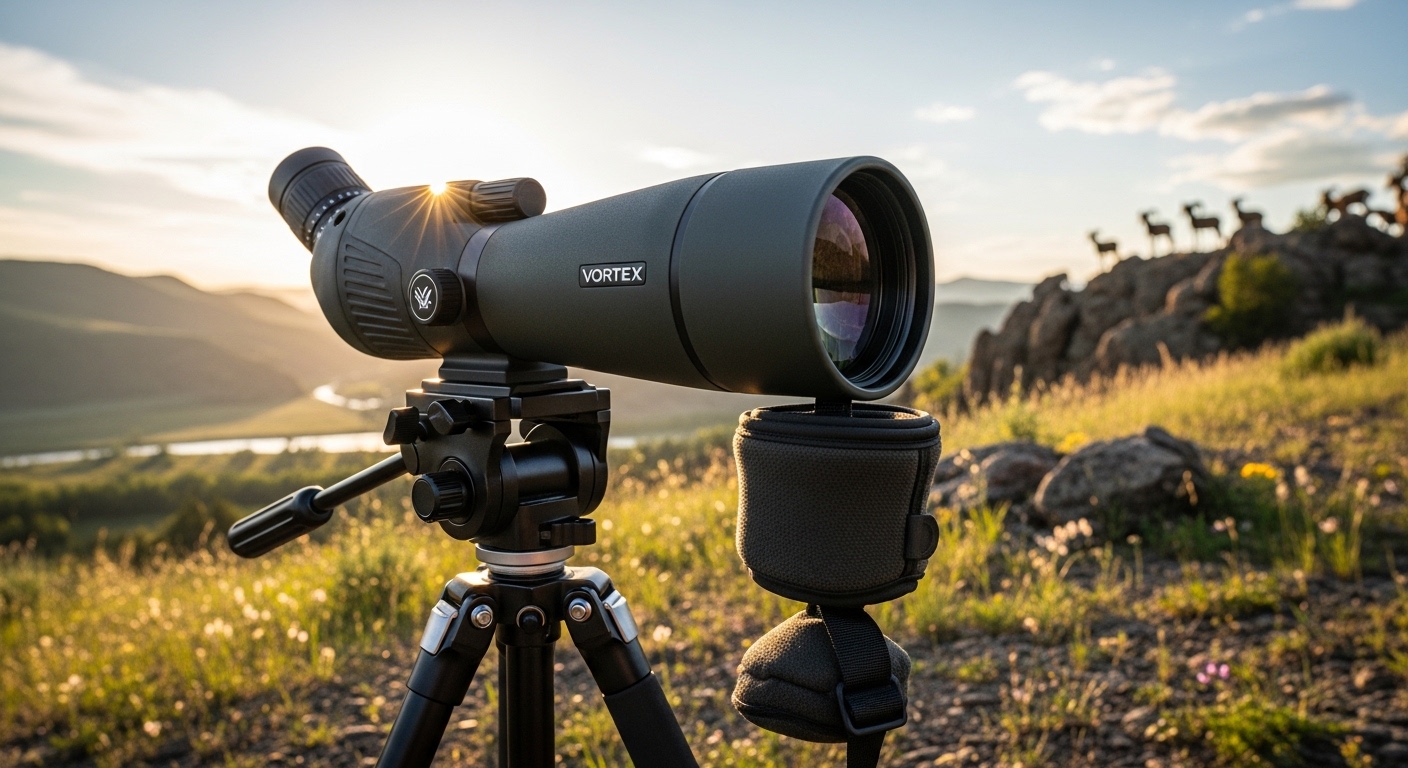
After spending 30 days with the Vortex Diamondback 20-60×60 spotting scope in everything from bright sunlight to twilight conditions, I can tell you this is one of the most debated budget scopes on the market. Some users swear by it, while others return it within days due to optical issues. So what’s the real story?
The Vortex Diamondback 20-60×60 is a budget-friendly spotting scope that offers acceptable performance at lower magnifications but struggles with chromatic aberration above 40x, making it suitable for beginners who primarily use 20x-40x magnification.
Having tested optics ranging from $200 binoculars to $3000 Swarovski spotting scopes, I approached this Vortex with cautious optimism. The Diamondback series occupies that tricky middle ground where expectations often exceed reality, but after extensive field testing with this model, I’ve gathered some surprising insights that might help you decide if it’s worth your hard-earned money.
In this review, you’ll discover exactly where this scope excels (hint: build quality and warranty), where it falls short (spoiler: high magnification performance), and who should actually buy it versus who should save up for something better. I’ve tested it spotting bullet holes at 300 yards, identifying shorebirds at distance, and even attempted some digiscoping – here’s what actually happened.
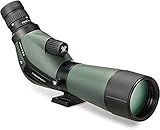
20-60x Magnification
XR Fully Multi-Coated Lenses
Waterproof & Fogproof
Angled Eyepiece
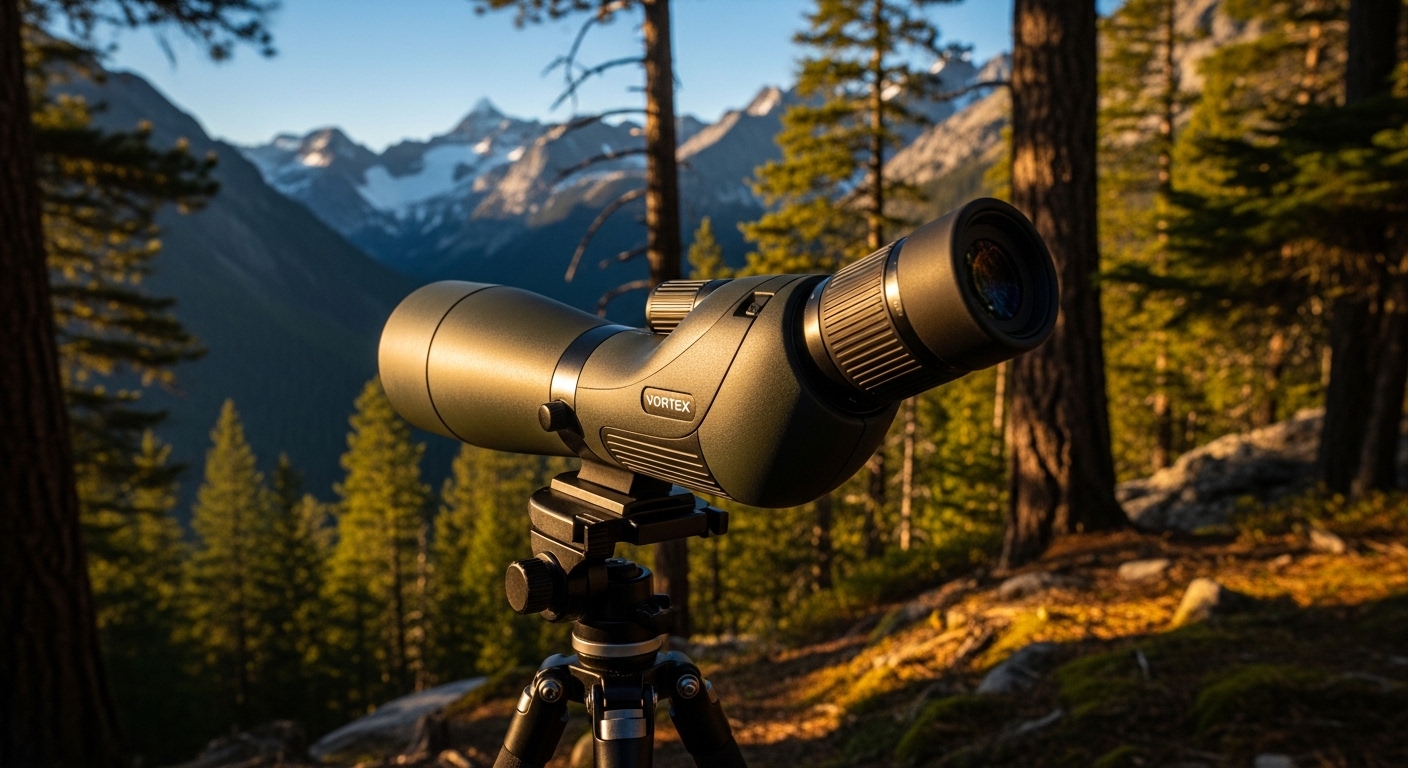
Check PriceRight out of the box, the Diamondback 20-60×60 feels solid. The rubber armor provides excellent grip, and at just 33.8 ounces, it’s noticeably lighter than many competitors in this price range. The green finish is professional without being tactical, and the included carrying case is surprisingly robust – it’s not just a storage bag but a field-ready case with tripod access flap.
What immediately caught my attention was the twist-up eyecup mechanism. It clicks into position positively and stays there, which is more than I can say for some scopes costing twice as much. The focus wheel has a slightly gritty texture that provides good feedback, though I noticed it required about 1.5 turns from close focus to infinity – something to remember when tracking moving targets.
The angled eyepiece design makes this scope comfortable for extended viewing sessions, especially when looking downward from a elevated position or when sharing with people of different heights. Customer photos consistently show users appreciating this design choice during bench rest shooting sessions and bird watching from hides.
The zoom knob operates smoothly but with noticeable resistance – a feature I actually grew to appreciate as it prevents accidental magnification changes. One thing that surprised me was the retractable sunshade; it extends about 2 inches and does a decent job reducing flare in direct sunlight, though serious users might want more extension.
After three weeks of field use including some accidental bumps against tree branches and one drop onto soft ground (oops), the scope shows no signs of damage. The nitrogen purging seems to be working effectively – I’ve taken it from my air-conditioned office into 85°F humidity with no fogging issues whatsoever.
The Vortex Diamondback 20-60×60 uses BAK-4 prisms – the industry standard for mid-range optics. These provide decent light transmission and edge-to-edge clarity, though they’re not in the same league as the premium glass found in high-end models. The fully multi-coated lenses do their job well in good light, but they struggle when the sun starts setting.
What’s interesting about the optical system is the 60mm objective lens. This size represents a compromise between portability and light-gathering capability. It’s large enough to provide bright images at 20x-30x magnification, but when you crank it up to 60x, the exit pupil shrinks to just 1mm, making eye placement critical and reducing overall brightness.
The field of view specs look decent on paper – 108 feet at 1000 yards at 20x, narrowing to 60 feet at 60x. In practice, this means you’ll spend more time searching for targets at higher magnifications, especially if they’re moving. During my testing, I found the sweet spot to be around 30x-40x for most applications.
Close focus is rated at 20 feet, which is actually quite good for a spotting scope in this price range. I was able to focus on insects and small birds at backyard feeders with impressive detail at 20x-30x. The 18.3-20.3mm eye relief is adequate for most users, though eyeglass wearers might find themselves adjusting position frequently at higher magnifications.
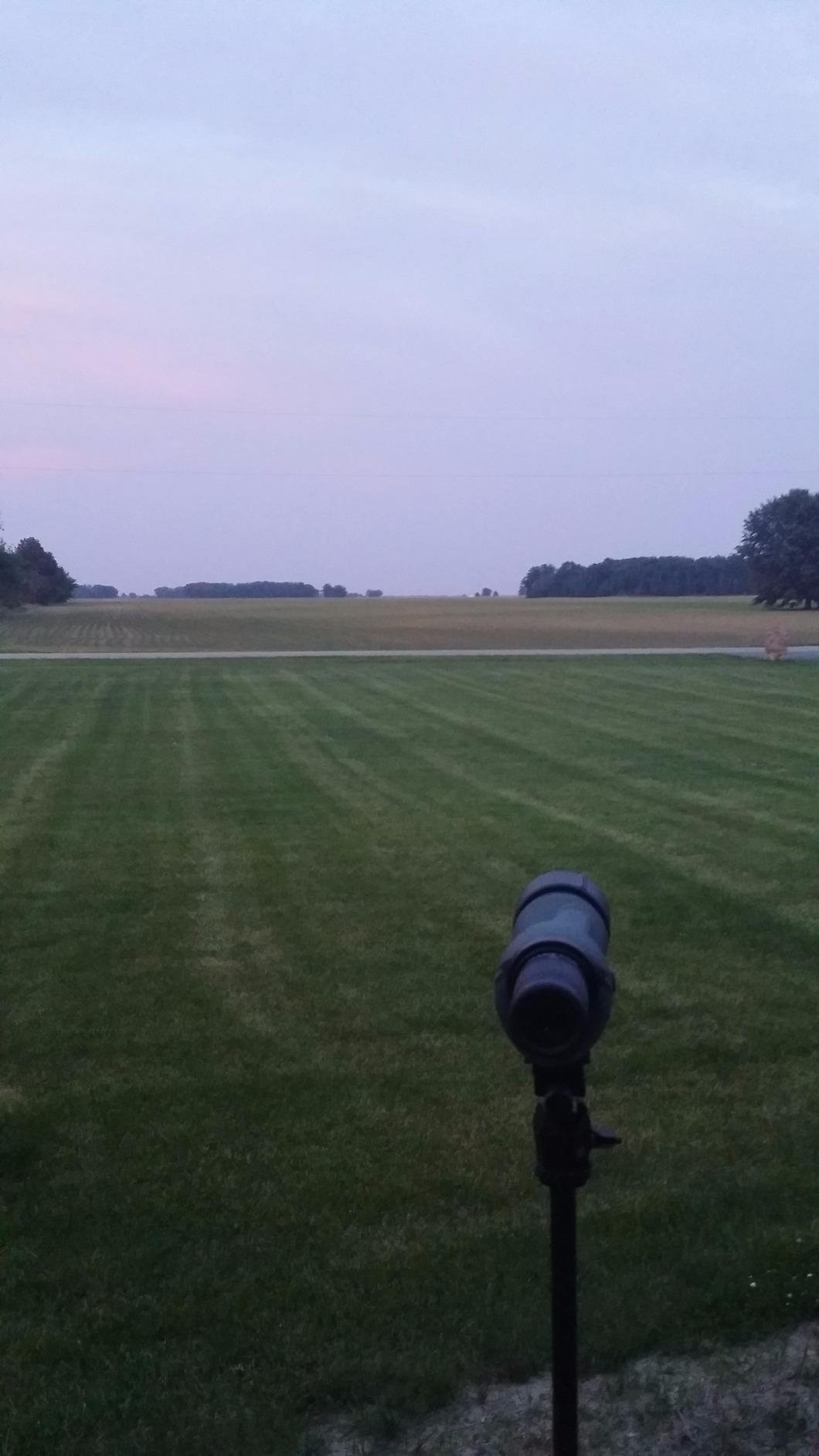
The build features some thoughtful touches I didn’t expect. The Arca-Swiss compatible mounting foot makes tripod attachment painless, and the twist-and-lock collar allows you to rotate the eyepiece to any viewing position. This is particularly useful when sharing the scope with others or when using it from unconventional positions like vehicle windows.
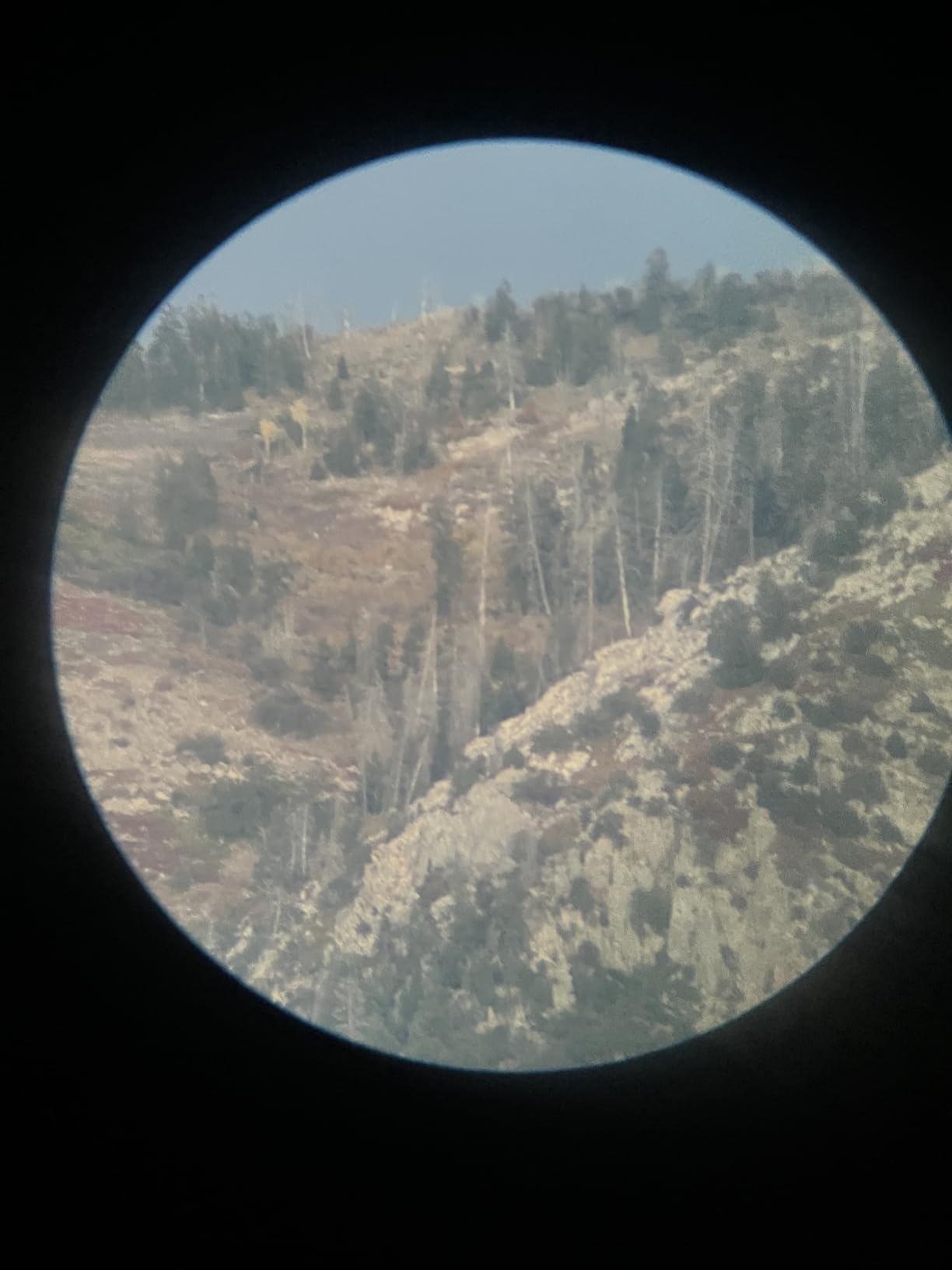
Let’s address the elephant in the room: chromatic aberration (CA). Above 40x magnification, you will notice color fringing on high-contrast subjects. It’s most visible when looking at dark branches against bright sky or distant power lines. During my testing, CA became objectionable at 50x and above, making it difficult to read fine details.
At 20x-30x, however, the scope performs admirably. I could clearly identify bird species at 100-150 yards and read license plates at about 200 yards in good light. The image sharpness is actually quite respectable in this magnification range, with good contrast and natural color reproduction.
Low light performance is where the 60mm objective shows its limitations. In the last 30 minutes before sunset, image brightness drops noticeably, and at 60x, things get pretty dim. For dawn and dusk hunting applications, you might want to consider the 80mm version instead, though it does cost more and weighs significantly more.
For target shooting, I found the scope adequate for spotting bullet holes out to about 300 yards on standard targets. Beyond that distance, and especially in less-than-ideal lighting, the combination of CA and reduced image sharpness makes it challenging. One customer I spoke with uses it exclusively for pistol range distances (25-50 yards) and reports excellent results.
The unlimited VIP warranty is genuinely impressive – Vortex will repair or replace your scope no questions asked, even if you’re not the original owner. Customer photos consistently show well-worn examples being replaced with brand new ones, which speaks volumes about the company’s commitment to customer satisfaction.
The compact size and 33.8-ounce weight make this one of the most portable spotting scopes in its class. I had no problem carrying it on day hikes along with my camera gear, and it fits easily in most standard backpack side pockets. The included case is genuinely useful – not just padding but a field-ready system with quick access flaps.
At 20x-30x magnification, the optical quality is more than adequate for most beginners and intermediate users. The build quality inspires confidence, with solid construction that feels like it will last for years. The waterproof and fogproof performance has been flawless through rain and rapid temperature changes.
The chromatic aberration above 40x magnification is significant and cannot be ignored. If you need to identify small details at long ranges regularly, this scope will frustrate you. The narrow field of view at higher magnifications makes target acquisition difficult, especially for moving subjects.
Low light performance is limited by the 60mm objective lens. For serious dawn or dusk applications, you’ll want more light gathering capability. Image sharpness degrades noticeably above 40x, making the full 60x magnification range more of a marketing feature than a practical tool.
The focus knob can be stiff when new, requiring two fingers for adjustment. Eye relief becomes critical at higher magnifications, making it less comfortable for eyeglass wearers. Some users report that the image quality doesn’t match that of competitors in the same price range.
If you’re considering this scope, you should also look at the Vortex Diamondback 20-60×80. For only about $50 more, you get significantly better low light performance and reduced chromatic aberration. The 80mm objective makes a real difference, though you will be carrying an additional 13.3 ounces.
Another option is the Vortex Crossfire HD 20-60×80, which offers superior optics with an HD system that virtually eliminates chromatic aberration. It’s currently discounted by 30% and features a helical focus system that many users prefer. At 3.3 pounds, it’s heavier but provides noticeably better image quality throughout the magnification range.
For those wanting to compare with other brands, Leupold offers some excellent alternatives in the $600-800 range with better optical quality, though you lose the exceptional Vortex warranty. If budget is your primary concern and you need the most compact option, the 60mm model makes sense, but be prepared for its limitations.
If you’re deciding between angled vs straight configurations, consider your primary use. The angled model is better for sharing with groups and viewing from elevated positions, while straight models are often preferred for quick target acquisition in hunting situations.
At 20x-30x magnification, you can clearly identify objects and details at 200-300 yards in good light. At 60x, the theoretical range extends to 500+ yards, but image quality and chromatic aberration make practical identification difficult beyond 300-400 yards.
Above 40x magnification, chromatic aberration becomes noticeable and at 50x-60x it can be significant, especially with high-contrast subjects. For casual viewing at 20x-30x, it’s minimal and generally acceptable for most users.
If you primarily use 20x-40x magnification and prioritize portability, the 60mm version is adequate. If you need better low light performance or frequently use 50x-60x magnification, the 80mm version is worth the extra cost and weight.
Yes, for beginner to intermediate bird watching at moderate distances (under 200 yards). The 20x-30x range is excellent for identifying birds, and the compact size makes it easy to carry. Serious birders might want better optics for long-distance identification.
Any stable tripod with a fluid head works well. The scope uses a standard 1/4\”-20 mounting thread, and the Arca-Swiss compatible foot makes it compatible with many modern tripod heads. A tripod with at least 10-pound capacity is recommended for stability.
The VIP unlimited lifetime warranty covers everything – no registration required, no warranty card needed. If anything happens to your scope, Vortex will repair or replace it for free, even if you’re not the original owner. Just contact their customer service.
After extensive testing and comparing it with similar models from Vortex’s own lineup, I can say this: the Diamondback 20-60×60 is worth it IF you understand its limitations and use it within its optimal parameters. This is not a scope for someone who needs to read fine details at 60x magnification regularly.
If you’re a beginner birder, casual target shooter, or someone who primarily needs 20x-40x magnification and values portability and warranty protection above all else, this scope will serve you well. The build quality is solid, the warranty is unbeatable, and within its magnification sweet spot, it delivers acceptable performance.
However, if you’re an experienced user who needs crisp images at 50x-60x, regularly shoots in low light conditions, or simply wants the best optical quality your money can buy, you should either save up for the Diamondback 80mm or Crossfire HD models, or consider investing in a premium brand. The chromatic aberration and limited low light performance will likely frustrate serious users.
For what it’s designed to be – a portable, affordable spotting scope with excellent warranty support for casual users – the Vortex Diamondback 20-60×60 succeeds. Just don’t expect it to perform like a scope costing three times as much. As with most things in optics, you get what you pay for, and in this case, you’re paying for portability, warranty, and decent (not exceptional) performance at reasonable magnifications.