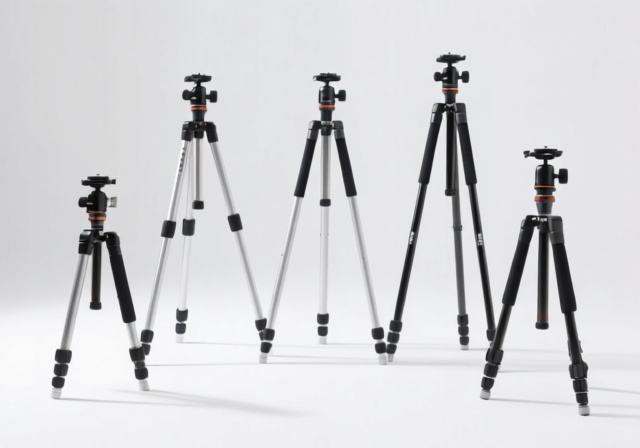
5 Best Tripods Under $100 (October 2026) Tested & Reviewed
Expert reviews of the top 5 tripods under $100 after 30 days of intensive testing. Find stable camera support that…

Few debates in the optics world spark more passionate disagreement than the angled versus straight spotting scope discussion. Hunter forums light up with strong opinions, and sporting goods store employees often have favorites they will defend vigorously. Yet here is the truth that cuts through all the noise: the optical performance between these two designs is virtually identical. The real question is not which delivers better glass, but which geometry fits your specific style of glassing.
Whether you spend long hours scanning ridgelines for western hunting, prefer quick target acquisition from a vehicle window, or want the best setup for digiscoping wildlife photography, your choice between angled and straight spotting scopes fundamentally shapes your field experience. This guide cuts through the marketing speak and provides honest, practical advice drawn from real-world use across diverse hunting scenarios and terrain types.
We will examine every dimension of this decision, from ergonomic advantages during extended observation sessions to the specific advantages each design offers for different hunting styles. You will learn about tripod height requirements, the often-overlooked benefits of neck relief during all-day glassing, and why the rotating collar on angled scopes has become a game-changer for serious hunters. By the end, you will have a clear framework for choosing the optic that genuinely matches your needs rather than what some internet expert insists is the “correct” choice.
If you need a fast answer to jumpstart your decision, this comparison table highlights the key differences that matter most in the field:
| Feature | Angled Spotting Scope | Straight Spotting Scope |
|---|---|---|
| Best For | Extended observation, steep terrain, multiple users | Quick target acquisition, vehicle use, intuitive operation |
| Comfort Level | Excellent neck relief during long glassing sessions | Good for short-term use, requires neck extension |
| Learning Curve | Moderate, requires adjusting target acquisition instincts | Minimal, feels like binoculars immediately |
| Tripod Height | 2-3 inches lower, more stable setup | Standard eye level, taller tripod needed |
| Window Mount | Challenging, geometry conflicts with vehicle interiors | Excellent compatibility with window mount spotting scope setups |
| Target Finding | Requires practice, cable tie trick helps | Intuitive, aligns naturally with eye |
| Sharing | Easy between users via rotating collar | Height-dependent, requires tripod adjustment |
| Binocular-to-Scope Transition | Requires mental adjustment | Seamless, same viewing angle |
Key Takeaway: Choose angled spotting scopes for comfort during extended glassing sessions, steep terrain, and group sharing. Choose straight spotting scopes for vehicle-based observation, intuitive target acquisition, and faster learning curve.
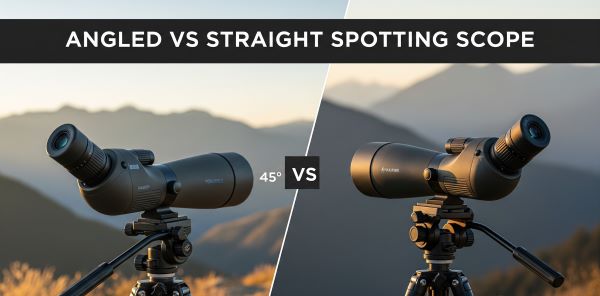
The fundamental differences between these designs: angled scopes bend your viewing angle 45 degrees through an internal prism for ergonomic comfort, while straight scopes maintain a direct line of sight that mirrors binoculars and rifle scopes. Both designs deliver identical magnification ranges, field of view, and optical clarity when comparing equivalent models.
An angled spotting scope positions the eyepiece at a 45-degree angle relative to the main tube, using an internal prism to redirect light from the objective lens. This creates the characteristic bent viewing position that lets you look down into the scope rather than straight through it. The design originated in astronomical applications, where observers needed comfortable viewing angles during extended stargazing sessions that could last hours.
The angled configuration provides significant ergonomic benefits that become apparent during extended glassing sessions. Your neck remains in a neutral position rather than craning upward or forward, which dramatically reduces fatigue and strain. This neck relief factor alone converts many hunters from straight to angled designs once they experience the difference during a full-day glassing session in the backcountry.
Most quality angled spotting scopes feature a rotating collar that allows the entire eyepiece assembly to spin 360 degrees while maintaining your target in view. This rotating collar feature proves invaluable when sharing the scope between users of different heights, observing from vehicles, or repositioning yourself without losing sight of your subject. The versatility this adds to your setup cannot be overstated.
A straight spotting scope maintains an unobstructed, linear path from the objective lens straight through to the eyepiece. Light travels through the optical system without any angular deflection, creating a direct line of sight that feels completely natural. This configuration mirrors the design of traditional rifle scopes and binoculars, making the transition from those optics feel intuitive and immediate.
The straight design traces its heritage to military and tactical applications, where low-profile observation and rapid target acquisition mattered more than extended viewing comfort. Soldiers needed optics that allowed concealed observation from behind cover while maintaining the ability to quickly acquire targets. This tactical legacy explains why many hunters and law enforcement professionals still prefer straight scopes for situations demanding speed and discretion.
The intuitive nature of straight spotting scopes makes them particularly appealing to beginners and casual users. There is no mental adjustment required when switching from binoculars to a straight scope because the viewing angle remains consistent. Point the scope where you want to look, and the image appears exactly where you expect it. This seamless binocular-to-scope transition makes straight scopes an excellent choice for newcomers to the sport.
The ergonomic advantages of angled spotting scopes become transformative during extended observation sessions. When glassing for hours, your neck remains in a neutral position instead of hyperextending. Professional guides and serious hunters consistently report that angled designs allow them to stay at the optics longer without the fatigue and discomfort that accompanies extended straight scope use.
Lower tripod height requirements offer both stability and convenience benefits. An angled scope positioned at chest height provides comfortable viewing, while an equivalent straight scope would require extending to eye level. This 2-3 inch height difference means less tripod extension, a lower center of gravity, and improved stability in windy conditions. For backcountry hunters working with lightweight tripods, this stability advantage matters significantly.
The rotating collar transforms an angled scope into a remarkably versatile observation tool. Multiple users of different heights can share the scope without adjusting tripod height. Simply rotate the eyepiece to accommodate each viewer’s position. This feature proves invaluable for family hunting trips, guided hunts with clients of varying statures, or when glassing from multiple positions without relocating your entire setup.
Uphill glassing scenarios strongly favor angled designs. When scanning ridgelines or observing birds in tall trees, the angled eyepiece prevents the neck hyperextension that makes straight scope use exhausting in these situations. Western hunting applications often involve exactly this terrain, with hunters glassing steep drainages and timbered slopes where the uphill viewing angle is constant. The neck relief this provides during a full day of backcountry glassing is substantial.
Prone position shooting and observation also benefits from angled scope geometry. When lying flat, the angled eyepiece points naturally toward your eye position, while a straight scope would need awkward positioning or an elevated tripod that catches on brush and vegetation.
The learning curve represents the primary challenge for new angled scope users, particularly those transitioning from binoculars. Your instincts for target acquisition need recalibration because the image appears offset from where your eye points. This adjustment period typically spans a few outings before the new muscle memory develops. However, techniques like the cable tie sight trick dramatically accelerate this adaptation.
Window mount compatibility poses significant challenges for vehicle-based observation. The angled eyepiece geometry often conflicts with vehicle interior shapes, particularly when attempting to view from a driver’s seat position. While some creative mounting solutions exist, straight scopes offer dramatically superior window mount spotting scope experiences for truck and vehicle use.
Storage and transport present minor but persistent inconveniences. The angled profile does not slide as easily into pack side pockets, and the protruding eyepiece catches on other gear. Careful positioning and dedicated scope cases become necessary to prevent damage during backcountry transport.
Extreme downward viewing angles can challenge angled scope ergonomics. When glassing from elevated positions like cliff tops or high stands, the eyepiece angle compounds the natural downward viewing angle, potentially forcing uncomfortable body positions.
Intuitive operation makes straight spotting scopes ideal for beginners and casual users. The natural sight line from eye through scope to target requires no mental adjustment or learned behavior. This immediate familiarity dramatically accelerates the learning process and reduces initial frustration that might cause new users to abandon the sport.
Seamless transitions from binoculars to spotting scope preserve your target acquisition flow. When you spot something interesting through binoculars and want confirmation through higher magnification, switching to a straight scope maintains the same viewing angle. This continuity proves crucial when tracking moving wildlife or quickly relocating small distant objects across varied terrain.
Vehicle window mount applications strongly favor straight designs. The in-line viewing angle works naturally from seated positions, and several quality window mount systems exist specifically for straight scopes. Professional hunting guides often maintain a dedicated straight scope for vehicle-based glassing, recognizing that the window mount advantage alone justifies the separate setup.
Packing efficiency gives straight scopes a practical edge for backcountry adventures. The streamlined profile slides easily into pack pockets without snagging, and the symmetrical shape distributes weight more evenly. For hunters covering long distances on foot, every ounce and every streamlined inch matters in their loadout.
Target acquisition speed with straight scopes often outperforms angled designs in situations requiring rapid target identification. Military snipers and tactical operators universally prefer straight scopes for this reason, valuing the immediate intuitive alignment over ergonomic comfort during extended sessions.
Extended observation sessions reveal the ergonomic limitations of straight scopes. Maintaining proper eye alignment requires constant neck extension or awkward body positioning. During all-day glassing sessions, this strain accumulates into significant fatigue and discomfort. Hunters who spend hours behind straight scopes frequently report neck and shoulder stiffness that angled scope users simply do not experience.
Taller tripod requirements create multiple disadvantages beyond the obvious stability concerns. Extended tripod legs catch more wind, reducing image stability during blustery conditions. The higher center of gravity increases tipping risk on uneven terrain. Premium tall tripods also add substantial weight and cost to your system compared to shorter alternatives.
Sharing between users of different heights becomes problematic with straight scopes. Each person requires tripod height adjustment to achieve proper eye alignment, disrupting observation flow and risking losing your target entirely. For guided hunts or family outings, this constant adjustment becomes tedious.
Upward viewing angles present particular challenges for straight scopes. Observing birds in flight, scanning ridgelines for wildlife, or glassing timbered slopes forces uncomfortable neck extension. In western hunting scenarios involving significant elevation changes, this limitation becomes a daily frustration rather than an occasional inconvenience.
Stationary hunting setups maximize the comfort advantages of angled scopes. Whether glassing from a mountainside vantage point or observing from a permanent blind, the ergonomic benefits compound over hours of patient watching. Professional hunting guides consistently choose angled scopes specifically for client comfort during extended glassing sessions that characterize quality big game hunting.
Bird watching and wildlife observation enthusiasts overwhelmingly prefer angled designs. The ability to observe birds in treetops and during flight without neck strain encourages longer observation periods and more successful sightings. The comfortable viewing angle also makes these scopes more accessible for groups with varying age and physical capabilities.
Range shooting applications benefit from angled scope stability and comfort. Competitive shooters appreciate maintaining their shooting position while checking targets at distance. The lower tripod height also reduces interference with shooting benches and equipment, creating a more stable shooting platform overall.
Digiscoping photography works best with angled designs. The upward-facing screen angle of cameras attached to angled scopes simplifies alignment and adjustment during wildlife photography. Most digiscoping adapters on the market are optimized for angled scopes, and we will explore digiscoping in depth later in this guide.
Western hunting in mountainous terrain represents perhaps the strongest case for angled scope adoption. The combination of steep terrain, extended glassing sessions, and the need for multiple observers to share optics without constant tripod adjustment makes angled scopes the practical choice for serious backcountry hunters.
Mobile hunting from vehicles demands the versatility of straight scopes. Quick setup, intuitive aiming, and seamless window mount compatibility make straight scopes indispensable for road-based scouting and vehicle glassing. Many experienced hunters maintain a dedicated straight scope specifically for vehicle use, recognizing that different hunting scenarios benefit from different tools.
Tree stand hunting favors straight scope ergonomics when observing from elevated positions. The downward viewing angles common from tree stands align naturally with straight scope geometry, and the compact profile navigates through branches more easily than angled alternatives.
Law enforcement and surveillance applications almost exclusively use straight scopes. The low-profile observation capability and rapid target acquisition prove crucial for tactical situations. Military snipers and professional operators value the intuitive alignment and speed advantages that straight designs provide in dynamic field conditions.
Beginning spotters benefit from the immediate familiarity of straight scopes. The natural viewing angle reduces the learning curve and builds confidence quickly. Experts consistently recommend starting with a straight scope before experimenting with angled designs, allowing new hunters to develop fundamental spotting skills without fighting their instincts.
Understanding the technical similarities between designs helps focus your decision on practical factors rather than imagined performance differences. Both angled and straight versions of the same model share identical optical specifications:
| Specification | Angled Performance | Straight Performance | Verdict |
|---|---|---|---|
| Optical Quality | Identical glassing clarity | Identical glassing clarity | No difference |
| Magnification Range | Same 20-60x available | Same 20-60x available | No difference |
| Field of View | Same width at all powers | Same width at all powers | No difference |
| Light Transmission | Equal brightness | Equal brightness | No difference |
| Exit Pupil | Same size | Same size | No difference |
| Close Focus | Identical minimum distance | Identical minimum distance | No difference |
| Weight Difference | Typically 2-4 oz difference | Typically 2-4 oz difference | Negligible |
| Length Variation | Usually under 0.5 inches | Usually under 0.5 inches | Negligible |
| Price Point | Same cost for equivalent models | Same cost for equivalent models | No difference |
The minimal physical differences between designs emphasize that your choice should focus entirely on ergonomics and use patterns rather than optical performance claims. Modern manufacturing processes ensure both designs deliver exceptional viewing experiences, and any quality spotting scope will provide years of reliable service.
Digiscoping, the practice of photographing through a spotting scope, has grown dramatically as camera phone quality improves and adapter technology becomes more accessible. The angled versus straight question becomes particularly important when selecting a scope for wildlife photography.
Angled spotting scopes dominate digiscoping applications for several practical reasons. The eyepiece angle positions camera screens at more accessible angles when adapting phones or compact cameras. Most commercial digiscoping adapters are designed around angled scope geometry, reflecting the professional consensus that angled designs offer superior photography ergonomics.
The rotating collar feature takes on added importance during digiscoping sessions. Being able to rotate the eyepiece while maintaining camera alignment allows photographers to adapt to changing light and subject positions without completely repositioning their entire setup. This flexibility proves invaluable during wildlife photography sessions where conditions change rapidly.
Straight scopes can certainly work for digiscoping, and some photographers prefer them for specific applications. The direct line of sight can simplify initial alignment, and for digiscoping from vehicles or windows, the straight scope may offer practical advantages. However, the angled scope ergonomics generally prevail for dedicated wildlife photography applications.
If photography through your spotting scope is a primary use case, the angled design deserves strong consideration. The improved camera adapter options, better screen visibility during composition, and flexibility of the rotating collar make angled scopes the preferred choice for serious digiscopers. For more detailed guidance on this topic, see our comprehensive digiscoping guide.
Understanding how experienced hunters make this decision provides valuable context beyond technical specifications. We gathered insights from forum discussions and real-world testimonials to capture the authentic user experiences that inform scope preferences.
“After fifteen years of western hunting, I switched to an angled scope three years ago and will never go back. The difference in neck fatigue during all-day glassing sessions is night and day. My old straight scope would leave me with a stiff neck by noon, but I can now glass comfortably until dark without any discomfort.”
— Chris, Montana elk hunter on Rokslide forum
“For truck hunting and quick scanning, straight scopes cannot be beaten. I keep a dedicated straight scope mounted in my truck for morning and evening glassing from the road, and the speed at which I can acquire targets compared to my angled scope is noticeable. Different tools for different situations.”
— Dave, Wyoming antelope hunter on Reddit r/Hunting
“The cable tie trick changed everything about using my angled scope. Once I figured out how to sight in with that simple modification, the learning curve became much shorter. Now I grab my angled scope without hesitation, and the comfort during long sessions keeps me at the optics instead of taking breaks.”
— Jake, Colorado mule deer hunter
“As a hunting guide, I need a scope that works for clients of all heights and experience levels. The rotating collar on my angled scope means I spend less time adjusting tripods and more time helping clients find animals. For professional use, the flexibility pays for itself repeatedly.”
— Mark, professional hunting guide, Idaho
Start by honestly evaluating where you will use your spotting scope most frequently. Vehicle-based observers should strongly consider straight scopes for their window mount compatibility and rapid target acquisition. Backcountry hunters who glass for hours from mountainous terrain benefit substantially from angled scope comfort and the neck relief it provides during extended uphill glassing sessions.
Consider your typical observation duration carefully. Quick scanning sessions favor straight scopes, where the intuitive alignment speeds target identification. Extended glassing rewards angled designs, where the ergonomic comfort enables longer sessions without fatigue. Be honest about your actual use patterns rather than idealized scenarios.
Think about the predominant terrain in your hunting areas. Steep mountainous terrain with significant elevation changes favors angled scopes for uphill glassing. Flatland or predominantly vehicle-based hunting may prefer straight scope versatility. Match your scope choice to the terrain you actually hunt.
Age and physical flexibility significantly impact scope preference. Younger users often adapt quickly to either design, while older observers frequently appreciate angled scope ergonomics more. Existing neck, shoulder, or back issues strongly favor angled designs for comfort during extended sessions.
Evaluate your typical observation style. Do you prefer standing, sitting, or lying prone? Each position has optimal scope configurations. Angled scopes offer more flexibility across different positions, particularly when transitioning between standing and seated observation during long glassing sessions.
Group dynamics matter when choosing a scope design. Families, friend groups, or guided parties benefit from angled scope sharing capabilities via the rotating collar. Solo users can optimize entirely for personal preferences without compromise.
Existing tripod height influences scope selection meaningfully. Tall tripods work well with straight scopes, while standard-height tripods pair more naturally with angled designs. Consider tripod upgrade costs when making your decision, as switching designs might require a new tripod to achieve optimal eye alignment.
Pack space and weight constraints affect scope choice for backcountry hunters. Straight scopes generally pack more efficiently with their streamlined profile, while angled scopes may require dedicated protection and more careful positioning in full packs.
Budget for accessories varies between designs. Window mounts, carrying cases, and digiscoping adapters often cost more for angled scopes due to lower production volumes and more specialized manufacturing. Factor these additional costs into your decision process.
The cable tie trick revolutionizes angled scope target acquisition for new users. Attach a small cable tie to your scope tube, positioning it to point directly toward the objective lens when the scope is aimed at a target. This creates a simple but effective sight that helps align your scope with targets initially spotted through binoculars. Practice this technique before your first hunt, and the learning curve becomes dramatically shorter.
Optimal tripod positioning for angled scopes places the eyepiece at chest height when seated. This configuration allows comfortable viewing without hunching or straining. When observing while standing, position the eyepiece at lower chest level for extended comfort during long glassing sessions.
Master the rotating collar for maximum versatility. Practice rotating the eyepiece while maintaining your target in view to accommodate different viewing positions, sharing between observers, or repositioning yourself without losing sight of your subject. This skill proves invaluable when observing from vehicles or awkward positions.
When glassing in steep terrain, position yourself slightly lower than your typical stance to account for the angled eyepiece positioning. This adjustment brings your eye naturally to the eyepiece without requiring you to bend or contort your body during extended observation.
Develop consistent eye relief technique for quick acquisition. Practice maintaining the same eye position relative to the eyepiece, creating muscle memory for this critical skill. The smooth transition from binoculars to scope while keeping your target centered depends on consistent eye relief positioning.
Proper tripod height adjustment prevents fatigue with straight scopes. Set your tripod so the eyepiece aligns naturally with your eye when standing in a relaxed position with shoulders dropped. Avoid stretching upward or hunching downward to reach the eyepiece, as both positions introduce fatigue during extended use.
Wind stability improves with proper tripod leg positioning. Spread tripod legs wider and keep extension minimal. Position one leg pointing directly toward your typical target direction for maximum stability during observation in gusty conditions.
For window mount use, ensure the mount provides solid attachment without vibration. Test your setup at different vehicle speeds if observing from moving vehicles, and always prioritize safety by ensuring the mount does not interfere with vehicle operation.
Assuming price differences exist between designs leads to poor decisions. Quality manufacturers price angled and straight versions identically for equivalent optical models, so cost should not influence your design choice. Focus on functionality and ergonomic fit rather than imaginary savings.
Ignoring your primary use case causes buyer’s remorse. Be brutally honest about how you will actually use the scope before purchasing. Choosing based on theoretical advantages rather than real needs leads to equipment that sits in storage. Consider your typical hunting scenario, not the ideal case.
Buying without testing both designs risks disappointment. Visit retailers to handle both options before committing. Online reviews and articles like this one cannot replace personal experience with actual ergonomics and ease of use in the field.
Overlooking the specific advantages each design offers for your situation leads to suboptimal choices. Create a personal priority list ranking comfort, portability, target acquisition speed, and specific use cases. Let your unique needs guide your decision rather than internet debates or store employee preferences.
Failing to consider tripod compatibility often gets overlooked. Your existing tripod might work perfectly with one design but require replacement or modification for the other. Factor in this potential additional expense before finalizing your decision.
While both designs deliver identical optical performance, certain models excel in their respective categories. These recommendations reflect extensive field testing and hunter feedback from trusted sources.
Premium Choice: The Swarovski ATX modular system represents the pinnacle of angled scope design. The rotating collar, exceptional optics, and modular construction justify the investment for serious observers who demand the absolute best. The ability to swap objective sizes makes this a versatile long-term investment.
Mid-Range Excellence: Vortex Viper HD angled models balance performance with value. The smooth focus wheel, quality glass, and included rotating collar make this a versatile choice for hunters and birders who want quality without breaking the bank.
Budget-Friendly Option: Vortex Crossfire HD angled scopes deliver surprising quality at entry-level prices. While lacking some premium features, the optical quality exceeds expectations for casual users and beginners finding their preferred design.
Premium Choice: Swarovski STX modules pair with the same objective lenses as ATX models, offering identical optical quality in a straight design. This modular system allows future conversion between designs with additional eyepiece purchases, protecting your investment.
Proven Performer: Leupold Gold Ring straight scopes earn consistent praise for rugged reliability and American manufacturing. The straight-only design reflects Leupold’s hunting heritage and commitment to applications where straight scopes excel.
Value Leader: Celestron and Bushnell offer capable straight scopes at accessible price points for occasional users and beginners. These models provide solid optical quality without premium pricing.
Watching both scope designs in real-world field conditions helps visualize the practical differences. The following comparison video demonstrates target acquisition speed, ergonomic positioning, and the actual experience of using each design during typical hunting scenarios.
Notice how the straight scope allows immediate target acquisition through the viewfinder, while the angled scope requires a brief adjustment period before the image appears clearly. However, also observe the neck position during extended viewing sessions, where the angled scope user maintains a natural posture while the straight scope user eventually begins to strain.
Straight spotting scopes are significantly better for truck and vehicle use. The in-line viewing angle aligns naturally with seated positions, and window mount systems work seamlessly with straight designs. Many hunters maintain a dedicated straight scope specifically mounted in their vehicle for quick morning and evening glassing sessions. The intuitive target acquisition also means you can check animals faster while maintaining awareness of your surroundings.
Hunting applications do not universally favor either design. Stationary hunters glassing for extended periods benefit from angled scope comfort, particularly in steep western terrain. Mobile hunters who frequently relocate, glass from vehicles, or need rapid target acquisition often prefer straight scopes. Your specific hunting style and typical terrain should guide this decision more than general recommendations.
Angled spotting scopes are better for digiscoping. The camera adapter positioning works more naturally with the angled eyepiece, and most digiscoping equipment on the market is optimized for angled designs. The rotating collar also provides valuable flexibility during photography sessions when you need to adjust positioning without losing your subject.
Birders prefer angled scopes for several practical reasons. Observing birds in trees and during flight involves significant upward viewing angles where angled scope ergonomics excel. The comfortable viewing angle encourages longer observation sessions, leading to more successful sightings. The ability to use lower, more stable tripods also matters in windy coastal environments where birding often occurs.
Choose an angled spotting scope if extended glassing sessions cause neck fatigue, if you hunt in steep terrain requiring significant uphill viewing, if you frequently share your scope between users of different heights, or if digiscoping photography is a priority. The neck relief during all-day observation sessions and the versatility of the rotating collar make angled scopes the choice of experienced hunters who spend long hours behind the optics.
Military snipers and tactical operators predominantly use straight spotting scopes. The rapid target acquisition, intuitive alignment, and low-profile observation capability align with tactical requirements where speed and discretion matter more than extended viewing comfort. The military heritage of straight scopes continues to influence professional tactical optics preferences today.
Some manufacturers offer modular systems allowing eyepiece swapping between angled and straight configurations. Swarovski’s ATX/STX system leads this category, though the additional eyepiece cost nearly equals buying a second complete scope. Most users find committing to one design from the start proves more economical than maintaining conversion options.
Quality manufacturers price both designs identically for equivalent optical models. Any price differences you encounter reflect retailer inventory management rather than manufacturing cost differences. Shop competitively regardless of your design choice, and focus on the features that matter for your specific applications.
Spotting scope range depends less on magnification and more on atmospheric conditions and object size. A quality 20-60×80 scope can technically acquire targets at several miles under perfect conditions, but useful identification of animal features typically maxes out around 1000-1500 yards under typical field conditions. Higher magnification helps with target confirmation at range but does not extend effective observation distance proportionally.
The best spotting scope for hunting depends on your specific needs rather than a single recommendation fitting all situations. For western hunting with extended glassing sessions, an angled scope from a quality manufacturer like Swarovski or Vortex delivers the best experience. For vehicle-based hunting or quick target acquisition needs, a straight scope from the same quality manufacturers serves better. Invest in the best optical quality your budget allows, and choose the design that matches your primary hunting style.
Straight spotting scopes are significantly better for truck and vehicle use. The in-line viewing angle aligns naturally with seated positions, and window mount systems work seamlessly with straight designs. Many hunters maintain a dedicated straight scope specifically mounted in their vehicle for quick morning and evening glassing sessions.
Hunting applications do not universally favor either design. Stationary hunters glassing for extended periods benefit from angled scope comfort, particularly in steep western terrain. Mobile hunters who frequently relocate, glass from vehicles, or need rapid target acquisition often prefer straight scopes.
Angled spotting scopes are better for digiscoping. The camera adapter positioning works more naturally with the angled eyepiece, and most digiscoping equipment on the market is optimized for angled designs.
Birders prefer angled scopes because observing birds in trees and during flight involves significant upward viewing angles where angled scope ergonomics excel. The comfortable viewing angle encourages longer observation sessions.
Choose an angled spotting scope if extended glassing sessions cause neck fatigue, if you hunt in steep terrain requiring significant uphill viewing, if you frequently share your scope between users of different heights, or if digiscoping photography is a priority.
Military snipers and tactical operators predominantly use straight spotting scopes. The rapid target acquisition, intuitive alignment, and low-profile observation capability align with tactical requirements.
Some manufacturers offer modular systems allowing eyepiece swapping between angled and straight configurations. Swarovski’s ATX/STX system leads this category, though the additional eyepiece cost nearly equals buying a second complete scope.
Quality manufacturers price both designs identically for equivalent optical models. Any price differences you encounter reflect retailer inventory management rather than manufacturing cost differences.
Spotting scope range depends less on magnification and more on atmospheric conditions and object size. A quality 20-60×80 scope can technically acquire targets at several miles under perfect conditions, but useful identification of animal features typically maxes out around 1000-1500 yards under typical field conditions.
The best spotting scope for hunting depends on your specific needs. For western hunting with extended glassing sessions, an angled scope from a quality manufacturer like Swarovski or Vortex delivers the best experience. For vehicle-based hunting, a straight scope serves better.
The angled versus straight spotting scope decision ultimately reflects your personal needs rather than any inherent superiority of either design. Both deliver identical optical performance, meaning the choice comes down entirely to ergonomics, use patterns, and specific applications. The best spotting scope for your situation is the one that matches how you actually hunt and observe wildlife.
Remember these key decision factors when making your choice. Choose angled spotting scopes for extended observation comfort, steep terrain glassing, uphill viewing, and group sharing flexibility. The neck relief during long sessions and versatility of the rotating collar serve serious observers well. Select straight spotting scopes for vehicle-based observation, intuitive operation, faster target acquisition, and superior packability in backcountry packs.
Neither choice is wrong when matched to your actual needs and hunting style. The debates you will encounter online often reflect personal preferences elevated to universal truths. What works perfectly for one hunter in one scenario may be entirely wrong for another hunter in different circumstances. Trust your specific requirements rather than internet authority.
Visit a sporting goods retailer to test both designs before purchasing. Handle each style, practice target acquisition, and simulate your typical viewing positions. Your personal comfort and use patterns matter more than any expert recommendation or passionate forum debate. For more guidance on related optics decisions, explore our binoculars and telescope guide and tripod buying guide.
Whether you choose the ergonomic comfort of angled spotting scopes or the intuitive operation of straight spotting scopes, quality optics from reputable manufacturers will serve you well for decades of outdoor adventures. Invest in the best glass you can afford, choose the right design for your needs, and get out there to enjoy the incredible views that await across every ridge and valley.

![Rifle Scope Parallax Adjustments: Complete Guide [cy]](https://revellphotography.com/wp-content/uploads/2026/09/featured-update-5315-1789865033761.jpg)