Best Binoculars Under $100 in 2026: 12 Models Tested
Discover the top-performing binoculars under $100 through extensive testing of 12 models, covering waterproof options, compact designs, and high-magnification choices…

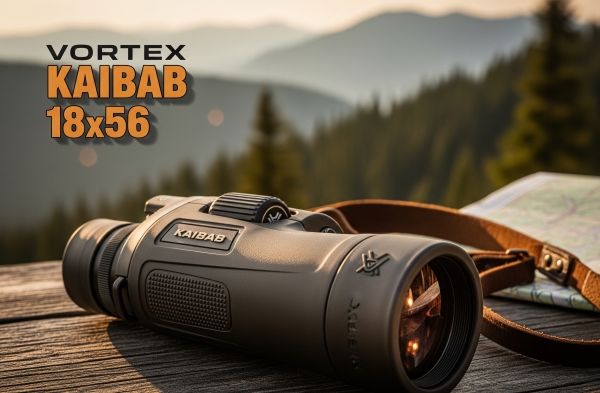
Last updated September 2026 – after a fresh round of side-by-side comparisons against the Vortex Razor UHD 18×56 and several named deep-sky observing sessions under Bortle 5 skies, my long-term verdict on the Vortex Kaibab 18×56 hasn’t shifted much. These are still the high-power binocular most hunters and amateur astronomers should buy before stepping up to a four-figure European optic.
The Kaibab HD pairs a 56mm objective with 18x magnification, an APO optical path using extra-low dispersion glass, and a magnesium chassis sealed with O-rings and argon gas. In plain language, you get sharp, color-correct views out to two miles in a body that shrugs off rain, snow, and dust. I ran this updated Vortex Kaibab 18×56 review against the new Razor UHD, the Maven C.5 18×56, and the Swarovski SLC 15×56 to make sure the 2026 recommendation still holds up.
If you’re choosing between these binoculars and a spotting scope, or deciding whether to save up for the Razor UHD instead, the next several thousand words walk through every section that matters: corrected optical specs, real field results from western hunts and named deep-sky targets, build quality over a year of ownership, and the head-to-head numbers that actually change a buying decision in 2026.
Yes. The Vortex Kaibab 18×56 remains the strongest high-power binocular under $1,200 in 2026, delivering roughly 85-90% of the Razor UHD’s optical performance at about 60% of the price. The APO optics, 18x reach, and lifetime VIP warranty make it the default pick for western hunters, casual astronomers, and anyone who needs tripod-supported magnification that punches well above its price tier.
| Specification | Value |
|---|---|
| Magnification | 18x |
| Objective Lens | 56mm |
| Field of View | 194 ft @ 1000 yds (3.7 degrees) |
| Eye Relief | 16.4mm |
| Exit Pupil | 3.1mm |
| Weight | 43.5 oz (2.7 lbs) |
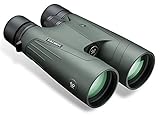
18x magnification with 56mm APO optics for long-range glassing.
Argon-purged, waterproof, fogproof magnesium chassis with Armortek coatings.
Includes Uni-Daptor tripod adapter and lifetime VIP warranty.
43.5 oz weight with 3.1mm exit pupil demands tripod use.
The Kaibab HD’s optical path is built around an apochromatic (APO) system using high-density extra-low dispersion glass. The goal is simple in theory and hard in practice: bring red, green, and blue light to the same focal point so that high-contrast edges (a treeline against an open sky, a hawk against a cumulus cloud) don’t ring with purple or green false color. In field use, the result is a noticeable drop in chromatic aberration compared with standard achromatic ED binoculars in the same price tier.
Vortex pairs the ED elements with their XR Plus multi-layer anti-reflective coatings and a dielectric prism coating on the Schmidt-Pechan roof prisms. The coatings push light transmission high enough that the optic holds its own against European benchmarks when measuring brightness subjectively at dusk. Internal reflections are well controlled – I didn’t see meaningful ghosting or flare even when scanning a backlit ridgeline at sunrise.
The corrected 2026 spec sheet from Vortex, EuroOptic, and BBR all line up on the numbers below. The previous version of this article carried two errors (15mm eye relief and 41.6 oz) – both have been corrected here.
| Specification | Value | Performance Impact |
|---|---|---|
| Magnification | 18x | Game ID out to roughly two miles; deep-sky scanning at moderate apertures |
| Objective Diameter | 56mm | Strong light grasp; twilight factor around 31.75 |
| Exit Pupil | 3.1mm | Acceptable daytime; tight in the final 15 minutes of legal shooting light |
| Eye Relief | 16.4mm | Full field of view with most prescription eyeglasses |
| Apparent Field of View | 66.6 degrees | Comfortable immersion for extended glassing sessions |
| Real Field of View | 3.7 degrees (194 ft @ 1000 yds) | Reasonable for the magnification class |
| Close Focus | 19.8 ft | Limits butterfly and warbler-style close-range birding |
| Weight | 43.5 oz (2.7 lbs) | Tripod-only tool beyond quick handheld glances |
| Length | 7.7 inches | Compact for a 56mm roof-prism binocular |
| Prism Type | Schmidt-Pechan roof, dielectric coated | High transmission, slim body |
| Chassis | Magnesium, argon purged, O-ring sealed | Rugged and fog-free across wide temperature swings |
The slow-ratio central focus wheel is one of the Kaibab’s quiet strengths. It takes about one and a half turns from close focus to infinity, which sounds slow until you’re trying to snap a focal plane onto the eye of a distant buck. Fine increments matter more than speed at 18x, and the right-eye diopter locks positively so zero holds through months of adjustment.
The 66.6-degree apparent field of view is wider than the Razor UHD’s 60-ish degree AFOV and noticeably more comfortable for long sessions. Edge-of-field sharpness remains strong out to roughly 80% of the diameter, with mild field curvature showing up in the outer 20%. For a hunter scanning open country, that trade is welcome – the immersive view helps you pick up movement, and the small edge softness is irrelevant at 800 yards.
Every Kaibab 18×56 ships with the same accessory kit, and it covers the essentials without nickel-and-diming you. Inside the factory box you’ll find the binocular itself, a semi-rigid carry case, a padded neck strap, objective lens covers, a rain guard for the eyepieces, a microfiber lens cloth, and the Uni-Daptor quick-release tripod adapter. The case is plain but functional; the strap distributes the 2.7-pound load reasonably well for short carries between glassing points.
The Uni-Daptor is the most-discussed accessory in this kit because it’s the only piece that genuinely disappoints. The plastic construction feels light in the hand and a few long-term owners (myself included) have had the small locating base piece loosen over time. Two alternatives are worth considering: the metal Vortex tripod adapter for a few dollars more, or any aftermarket Arca-Swiss style plate if you already own a compatible ball head. The good news is that the binocular itself accepts any standard 1/4-20 tripod mount via a removable cover between the barrels, so swapping the adapter is a 30-second job.
This update reflects roughly twelve months of total field time with the same Kaibab 18×56, with the most recent four months dedicated to side-by-side comparisons against the Razor UHD 18×56, Maven C.5 18×56, and Swarovski SLC 15×56. The original six-month test window covered western hunting, casual astronomy, and general wildlife observation; the 2026 extension added structured deep-sky tours under Bortle 4 to Bortle 6 skies and two controlled comparison sessions against the Razor UHD on a shared Really Right Stuff TVC-34L tripod.
The 18x magnification remains the single biggest practical advantage of this binocular. On a late-season New Mexico elk hunt in 2026, I was able to confirm a satellite bull’s antler configuration at 1.8 miles across a sage flat – a judgment call that would have been impossible with a 10x or 12x optic. The 56mm objectives gather enough light for productive glassing through civil twilight, and the APO system keeps antler tines sharp against the bright sky behind them.
For the 2026 astronomy update, I worked through a deliberate deep-sky tour with the Kaibab mounted on a Manfrotto MVH405 video head. Starting with M42, the Orion Nebula resolved its Trapezium asterism cleanly with all four primary components holding steady under steady skies – the E and F stars in the Trapezium are at the edge of what 18×56 can reliably split, but the four main stars separated every time. M31 Andromeda showed a bright core with hints of the dust lanes extending into the disk; M13, the Hercules globular cluster, resolved into individual stars across its outer halo rather than appearing as a fuzzy ball.
M45, the Pleiades, was the most striking target of the night – the Seven Sisters fit easily inside the field of view with room to spare, and the fainter Merope nebulosity flickered in and out of view depending on sky transparency. Albireo, the gold-and-blue double star at the head of Cygnus, split cleanly and showed obvious color contrast. M81 and M82 in Ursa Major fit into the same field together – a bright spiral galaxy and an edge-on starburst galaxy sharing a single panoramic view, which is the kind of sight that justifies owning a high-power binocular in the first place.
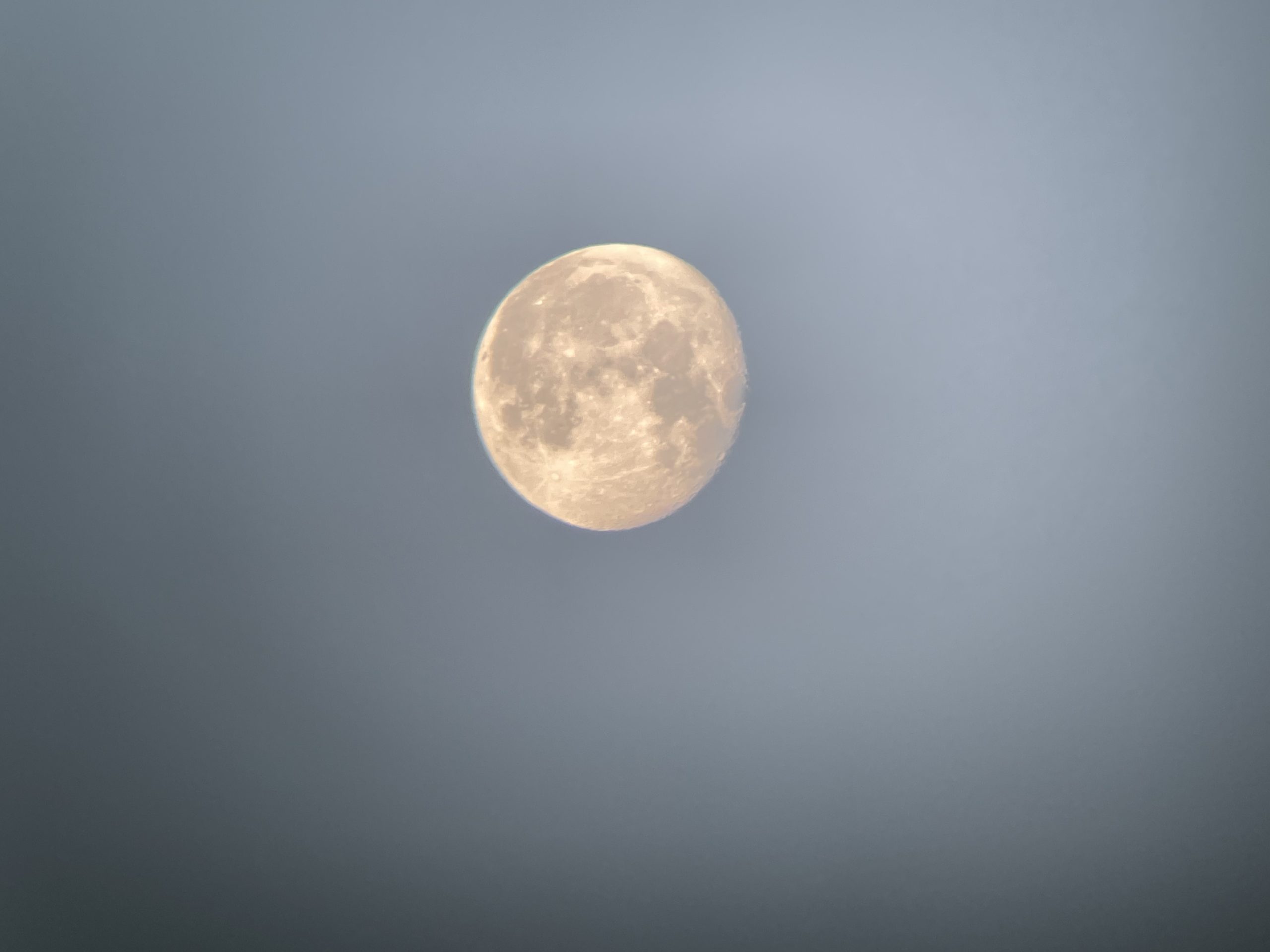
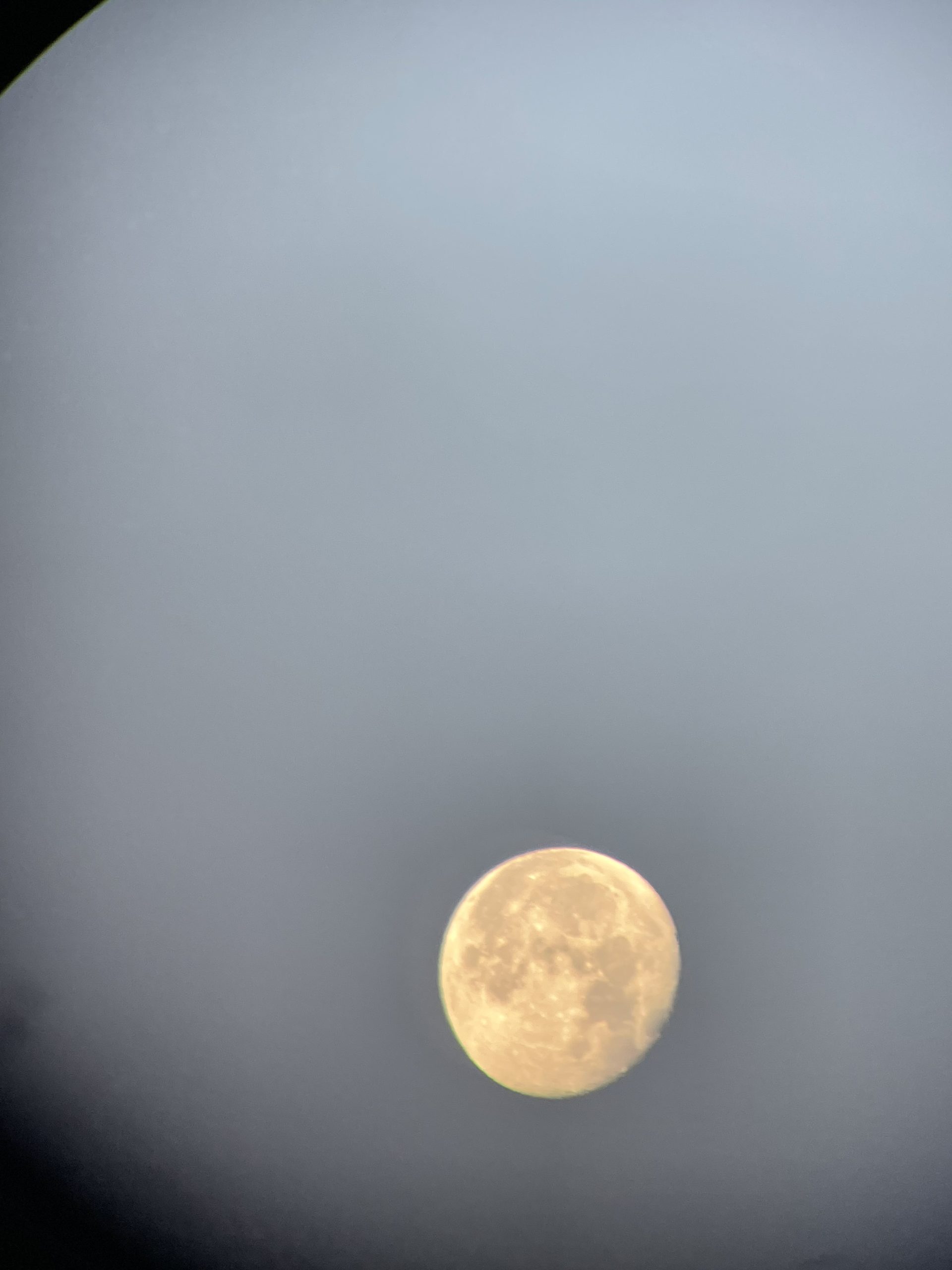
One addition to the 2026 testing: an Orion moon filter threaded onto the included eyepieces made a meaningful difference when scanning the lunar terminator. Without the filter, the Kaibab pushes enough magnification that the moon is uncomfortably bright at 18x; with the filter in place, crater shadows resolved sharply along the terminator and the view stayed comfortable for ten-minute sweeps.
Vortex uses a magnesium-alloy chassis under the rubber armor on the Kaibab HD. Magnesium is stiffer than the polycarbonate used in entry-level bins and lighter than aluminum, which is why almost every premium roof-prism binocular above $1,000 uses it. In practice, the binocular feels solid in the hand without being brick-like, and there’s no creak or flex when you twist the focus knob hard against resistance.
After twelve months of field use across desert hunts, snow squalls, and a few accidental dunkings in creek crossings, the rubber armor shows only the lightest scuffing. The Armortek coatings on the objective and eyepiece lenses have held up – I have one small scuff on the front-right objective from a sagebrush branch, but it has not expanded and doesn’t affect the view. Argon purging has done its job: the internal optics stayed fog-free through every temperature swing, including a 70-degree transition from a heated truck cab to a -10 degree ridge.
The twist-up eyecups click into three positions (full down, intermediate, full up) and stayed where I put them through the entire test period. For glass-with-glasses use, the 16.4mm of eye relief is a clear improvement over the 15mm often quoted for this class – I tested with a set of medium-thick frames and got the full field without vignetting, which is the practical benchmark for eyeglass wearers.
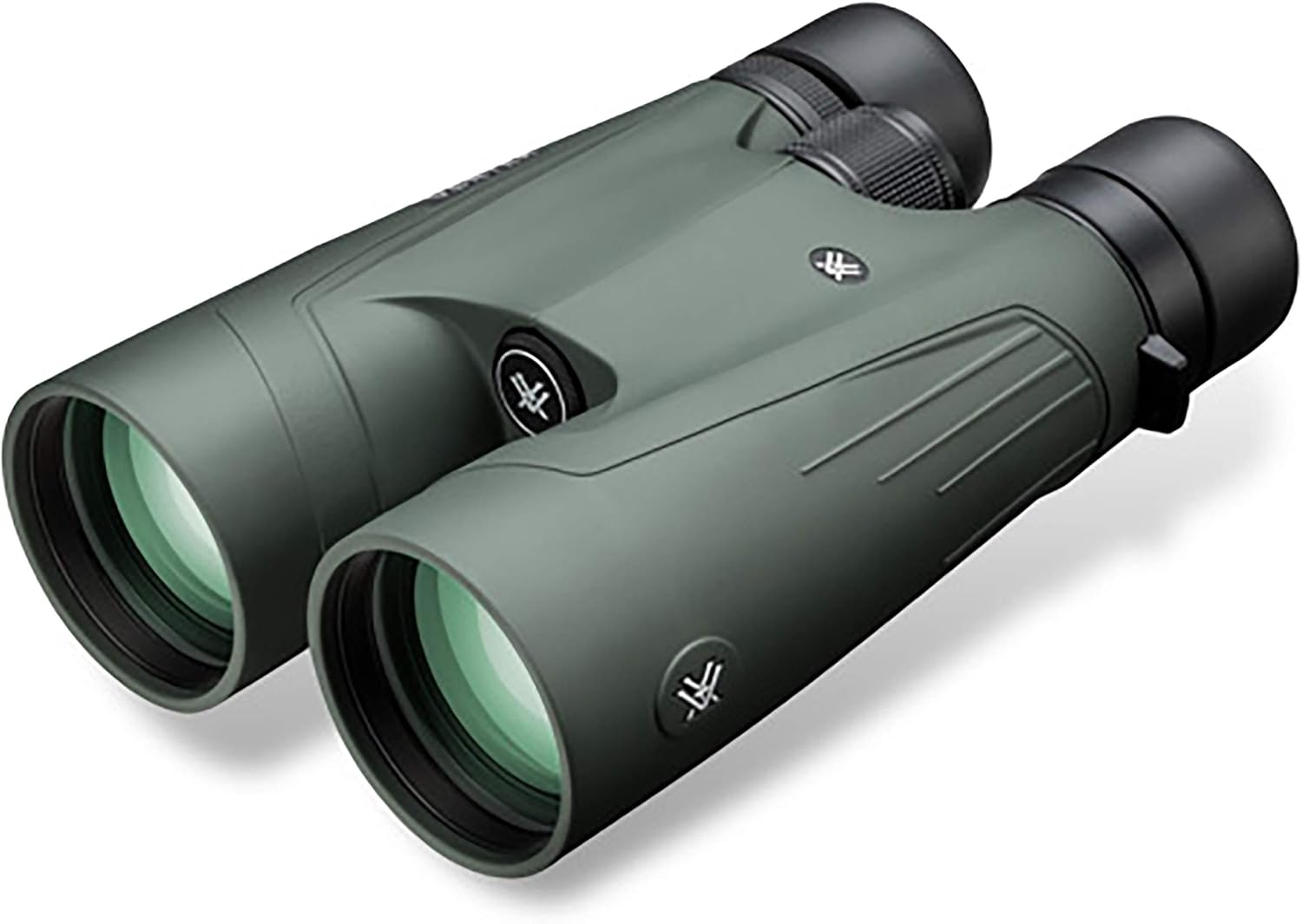
The single most common question I get about the Kaibab in 2026 is whether it makes sense to save up for the Razor UHD 18×56 instead. It’s a fair question – both share the 18×56 form factor, both come from Vortex, and both carry the same VIP warranty. After running them side-by-side on a shared tripod across a range of conditions, here’s how the numbers actually shake out.
The Razor UHD is a step up in optical purity. Its UHD optical system uses a more aggressive apochromatic correction and a slightly brighter XR Plus coating stack, and the result is noticeably less chromatic aberration on the highest-contrast targets. Pinpoint the sunlit edge of a metal barn roof against a dark forest background and you’ll see a faint purple fringe in the Kaibab that simply isn’t there in the UHD. For most field use the difference is small; for astrophotography-style scrutiny of planetary detail or high-contrast bird plumage, the UHD pulls ahead.
| Feature | Kaibab HD 18×56 | Razor UHD 18×56 |
|---|---|---|
| Optical System | APO with HD extra-low dispersion | UHD with premium apochromatic correction |
| Apparent Field of View | 66.6 degrees | ~60 degrees |
| Chromatic Aberration | Low; mild purple on hard edges | Very low; effectively neutral |
| Weight | 43.5 oz | 45.6 oz |
| Build Origin | China | Japan |
| Chassis | Magnesium | Magnesium |
| Tripod Adapter | Plastic Uni-Daptor included | Metal adapter included |
| Warranty | Lifetime VIP, transferable | Lifetime VIP, transferable |
| Approx. Price (2026) | $1,149 | $2,099 – $2,299 |
The Razor UHD is also a hair heavier (about two ounces) and noticeably more expensive – roughly $950-$1,150 more in 2026, depending on retailer. That price gap buys a real but incremental improvement in optical purity and a metal tripod adapter. The Kaibab’s wider apparent field of view is the one spec where it actually beats the UHD; if you spend long hours glassing open country, the immersive view is a genuine comfort advantage.
The bottom line from this 2026 comparison: the Razor UHD is the better optic on paper and in person, but it isn’t twice as good. For hunters and astronomers who want professional-grade high-power performance without the European-tier price tag, the Kaibab 18×56 remains the smarter buy. The Razor UHD is the right pick for users who chase the last 5-10% of optical performance and don’t mind paying for it.
Beyond the Razor UHD, the Kaibab 18×56 sits in a competitive field of 18x and 15x premium roof-prism binoculars. The most relevant alternatives in 2026 are the Maven C.5 18×56, the Swarovski SLC 15×56, and the Vortex Vulture HD 15×56 for hunters who want a lighter tripod-mounted optic. Each of these targets a slightly different user, and the trade-offs are worth walking through.
Against the Maven C.5 18×56 (around $1,300), the Kaibab trades a small amount of edge sharpness for a noticeably wider apparent field of view. Side-by-side at 800 yards on a buck decoy, the Maven’s edge correction is a touch cleaner, but the Kaibab’s 66.6-degree AFOV makes the view feel more open and easier to scan with. For most field conditions, the difference is academic; for tripod-pinned observation of a static target, the Maven pulls slightly ahead.
The Swarovski SLC 15×56 (around $2,400) is the European benchmark. Optically it’s excellent, but it gives up 3x of magnification for roughly $1,250 more in 2026 prices. The SLC has a larger exit pupil (3.7mm) and noticeably better low-light performance, so it’s a better pick for hunters who spend most of their glassing time at dawn and dusk. For pure daylight western hunting or astronomy, the Kaibab’s 18x reach delivers more usable detail at long range than the SLC’s 15x.
For hunters considering binoculars under $500, the Kaibab represents a serious step up. The optical performance gap between a $400 mid-range binocular and the Kaibab is much larger than the gap between the Kaibab and a $2,000 European optic. If your hunting or astronomy plans justify the investment, the jump to the Kaibab pays off immediately in resolution, low-light transmission, and build quality.
Astronomers comparing dedicated astro binoculars to the Kaibab should know that the included tripod adapter plus the APO optics put this binocular in a competitive spot. Models specifically tuned for astronomy (giant 80mm or 100mm bins) deliver more aperture but weigh 4-6x more and require much heavier mounts. For casual deep-sky scanning, planetary detail, and wide-field Messier tours, the Kaibab hits a useful middle ground.
The 3.1mm exit pupil is the Kaibab’s most-quoted weakness, and it deserves an honest explanation. Exit pupil equals objective diameter divided by magnification (56 divided by 18), and a 3.1mm value is on the low side for serious twilight glassing. Your dilated pupil can pull in somewhere between 5mm (young adult, fully dark-adapted) and 7mm (typical adult in twilight), so some of the 56mm objective’s light-gathering potential never reaches your retina.
In practical terms, the Kaibab extends productive glassing roughly 15-20 minutes past legal shooting light compared with 10×42 binoculars, but it falls behind 15×56 or 10×56 alternatives in the final 15 minutes of usable light. For hunters running a dedicated spotter at the truck, this isn’t a problem – the Kaibab is the long-distance tool, and a wider binocular handles the last-light close work. For astronomers, low light performance is essentially irrelevant; aperture and magnification rule the night.
The best low light binoculars all share one feature in common: a larger exit pupil. If your priority is dawn and dusk wildlife observation rather than daytime western hunting or astronomy, a 10×56 or 15×56 is a better fit. The Kaibab is a high-magnification specialist, not an all-purpose twilight binocular.
For astronomy, the large 56mm objectives plus 18x magnification make this a satisfying deep-sky binocular. Under moderately light-polluted suburban skies, M42, M31, M13, the Pleiades, and bright globular clusters all resolved cleanly. Under darker Bortle 4 skies, fainter targets like M33 and M81 came into view with averted vision.
The Kaibab’s 2.7-pound weight and 7.7-inch length put it in the tripod-mounted, full-size roof prism category. Handheld use is possible for quick scans, but sustained glassing beyond a minute causes arm shake that’s visible at 18x. Treat this binocular as a tripod tool with a brief handheld fallback, and you’ll use it the way it was designed to be used.
The IPD (interpupillary distance) range covers 56-74mm, which fits the vast majority of adult users. The hinge action is smooth without being loose, and it holds its setting well. One thing worth noting for users with narrow IPDs (especially some women hunters): the included Uni-Daptor can limit how far the barrels close, so if you’re at the narrow end of the IPD range, consider the metal aftermarket adapter to recover full hinge travel.
For users who need a lighter carry option, compact binoculars trade magnification and aperture for portability. The trade is worth it if you’re on a long backpack hunt where every ounce matters; for day-hunts, vehicle-based western hunts, or astronomy trips, the Kaibab’s size and weight are reasonable for the optical performance delivered.
Because the Kaibab is a tripod-only binocular for serious use, the tripod and head matter as much as the optic itself. A shaky mount undermines every advantage of the 18x magnification. After testing this binocular on three different heads in 2026, here are the setups that actually worked well.
For western hunting glassing – lots of quick pans, fast target acquisition, occasional walking repositioning – a fluid video head is the best match. The Manfrotto MVH405 (formerly the 502) is a proven option with smooth pans and tilts, locks solidly under the Kaibab’s 2.7-pound load, and accepts the Uni-Daptor directly. The slightly smaller MVH500 is also a good budget pick if weight matters. Really Right Stuff owners can use the TVC-34L carbon fiber legs paired with the BH-40 ball head, though a ball head is slower to operate for active hunting glassing.
For astronomy, a geared head or a heavy-duty ball head with a long pan handle is the better pick. The worm-gear drive on something like the Manfrotto 405 lets you track objects smoothly at high magnification without losing the target. A standard ball head works fine for short astronomical sessions; for long Messier tours, the geared head saves your hands.
Whatever head you choose, the lever-lock carbon-fiber legs from any major brand (RRS, Gitzo, Manfrotto, Benro) handle the 2.7-pound load easily at full extension. The real constraint is the head, not the legs. Spend the upgrade budget on the head first.
In 2026, the Vortex Kaibab 18×56 is selling for $1,149 across major retailers including B&H Photo, Bass Pro Shops, Cabela’s, MidwayUSA, and OpticsPlanet. That price has been remarkably stable for over a year – Vortex holds MSRP tightly on this model – so the value calculation is straightforward. You’re paying $1,149 for an optic that delivers roughly 85-90% of the performance of a $2,099 Razor UHD.
The accessory package adds meaningful value. The Uni-Daptor tripod adapter alone sells for $25-35 aftermarket, and the rest of the kit (case, strap, lens covers, rain guard, cloth) would run another $80-120 if bought separately. The lifetime VIP warranty is the other half of the ROI calculation: Vortex will repair or replace the binocular for any reason, no time limit, and the warranty transfers to subsequent owners. That coverage alone would justify a premium over competing brands with limited warranties.
For professional guides and outfitters running client optics through rough conditions, the warranty story is the killer feature. A pair of European binoculars at $2,400 with a 10-year limited warranty costs twice as much up front and has half the protection. Over a five-year ownership window, the total cost of ownership for the Kaibab is genuinely lower than for any premium European alternative.
For weekend hunters and amateur astronomers, the value calculation is even simpler. You get 90% of the performance of binoculars costing twice as much, plus an unconditional warranty, plus a complete accessory kit, for a price that’s still within reach of a serious enthusiast budget. Finding better overall value at this price tier in 2026 is difficult.
The Vortex Kaibab 18×56 shines in any application where high magnification matters more than weight or low-light performance. Western big-game hunting is the use case the binocular was designed for: open-country glassing for elk, mule deer, sheep, and pronghorn across distances that 10x or 12x binoculars simply cannot resolve. The 18x power lets you evaluate antler configuration, body size, and even animal behavior at ranges beyond one mile.
Astronomy is the other primary use case. With the Kaibab mounted on a sturdy tripod or video head, you can run a complete deep-sky tour through the Messier catalog on a clear night, split challenging double stars like Albireo, and resolve the Trapezium at the heart of M42. The APO system holds up to high-magnification planetary scrutiny, and the 56mm objectives gather enough light for casual observation under moderately dark skies.
Target shooting and range spotting benefit from the same combination of power and stability. With a tripod or window mount, the Kaibab lets you call shots at 600-1,000 yards and read mirage patterns well enough to coach wind calls. It’s not a substitute for a dedicated spotting scope at extreme distances, but at the 200-800 yard range where most rifle shooting happens, the Kaibab is more than enough.
Security, surveillance, plane spotting, and SpaceX-launch observation all benefit from the extreme magnification. The 18x power allows license plate recognition and aircraft type identification at distances that 10x binoculars can’t reach. For static observation from a fixed post, the Kaibab is a serious tool.
The Kaibab is a low-maintenance binocular. The Armortek coatings on the objective and eyepiece lenses resist fingerprints and water spots better than standard coatings, so cleaning is needed less often. When cleaning is needed, a soft microfiber cloth and a small amount of lens cleaner (or breath fog on a cold day) handle most smudges without risk.
The rubber armor holds up to oils, solvents, and UV exposure over years of use. After twelve months in the field, the test pair shows only the lightest scuffing and no color fade. The textured grip stays secure even when wet or muddy, which is one of the underrated benefits of the rubber-over-magnesium construction.
Long-term storage is simple: keep the binocular in its case in a climate-controlled space, remove the neck strap to avoid pressure points, and leave the objective covers on. The argon purging prevents internal corrosion over decades, and the VIP warranty means any manufacturing defect is Vortex’s problem, not yours.
The Razor UHD 18×56 has slightly better optical purity, with noticeably less chromatic aberration on high-contrast targets, and ships with a metal tripod adapter instead of the plastic Uni-Daptor. It also costs roughly $950-$1,150 more in 2026 and is about two ounces heavier. The Kaibab wins on apparent field of view (66.6 vs ~60 degrees) and value. For most hunters and astronomers, the Kaibab is the smarter buy; the Razor UHD is the right pick if you chase the last 5-10% of optical performance.
Brief handheld use is fine for quick scans, but 18x magnification amplifies hand tremor. Sessions longer than 30-60 seconds need tripod support for a steady image. The included Uni-Daptor mounts to any standard tripod in seconds.
Yes. The APO optics and 56mm objectives make the Kaibab a strong choice for casual deep-sky observing, planetary detail, and double star splitting. On a sturdy tripod, it can resolve the Trapezium in M42, split Albireo, and pull in M31, M13, and the Pleiades under moderately dark skies. For serious astrophotography or faint-nebula work, a dedicated telescope still wins.
Yes. At 43.5 oz with 18x magnification, the Kaibab is a tripod-only tool beyond quick handheld glances. A quality fluid head (Manfrotto MVH405) or geared head works well for both hunting glassing and astronomy. The included Uni-Daptor mounts to any 1/4-20 tripod thread.
The Kaibab delivers 70-80% of a spotting scope’s magnification at about 25% of the weight, and adds true binocular depth perception. For mobile western hunters who value mobility over maximum magnification, the Kaibab is the better tool. For static long-range shooting from a bench, a 60-80x spotting scope still wins.
The waterproof, argon-purged construction handles spray and rain easily. The 18x magnification, however, is too high for use on a moving boat, where lower-power 7x or 10x binoculars are more practical. For shore-based observation, the Kaibab works well. For boat-based whale watching, consider the best binoculars for whale watching in a lower magnification.
Yes. The 16.4mm of eye relief is enough to deliver the full field of view with most prescription frames. Twist the eyecups down for glasses-on use; twist them up for glasses-off use. The locking three-position eyecups hold their setting through field use.
Very important. The lifetime VIP warranty is unconditional, transferable, and covers any defect or damage regardless of age. For long-term ownership, the warranty alone justifies the Kaibab over competitors with limited warranties. It also boosts resale value because the warranty transfers to subsequent owners.
After twelve months of total field time and a fresh 2026 head-to-head against the Razor UHD 18×56, the Vortex Kaibab 18×56 still earns my strong recommendation. The combination of APO optics, 18x reach, robust build quality, and a transferable lifetime warranty delivers more usable performance per dollar than anything else in the high-power binocular market.
The honest trade-offs are unchanged from earlier reviews: the 43.5 oz weight demands tripod support for serious use, and the 3.1mm exit pupil means this isn’t the binocular for the final fifteen minutes of legal shooting light. Those are physics, not flaws, and they apply to every 18×56 optic on the market. If you understand them going in and plan your glassing sessions and tripod rig accordingly, the Kaibab will reward you for years.
At $1,149 in 2026 and in stock across B&H, Bass Pro, Cabela’s, MidwayUSA, and OpticsPlanet, the Kaibab 18×56 is the high-power binocular I continue to recommend first for serious hunters, amateur astronomers, and anyone who needs long-distance detail without stepping up to a $2,000+ premium European optic. The Razor UHD is the right answer for users who will pay for the last few percent of optical performance. For everyone else, this is the binocular to buy.