5 Best Tripods Under $100 (September 2026) Tested & Reviewed
Expert reviews of the top 5 tripods under $100 after 30 days of intensive testing. Find stable camera support that…

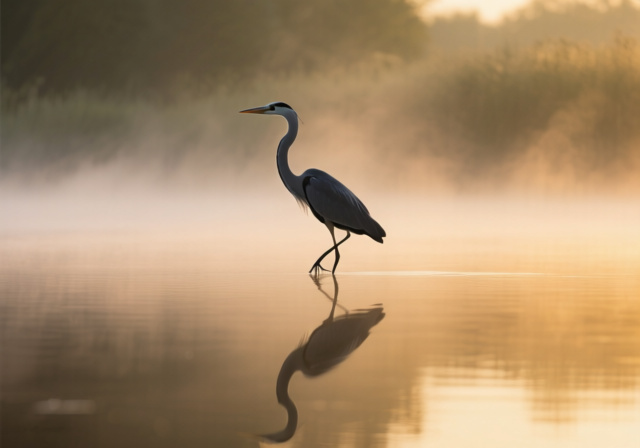
If you have ever stopped at the edge of a pond at dawn and watched a heron draw itself up onto a single, impossibly thin leg, you have witnessed one of the most efficient poses in the animal kingdom. The behavior looks almost decorative, like a yoga pose frozen in mid-flow. In reality, it is a finely tuned survival tool, and it has been quietly working for birds for millions of years.
This guide unpacks the full science behind why birds stand on one leg, drawing on field observation, comparative anatomy, and the peer-reviewed studies that have shaped our modern understanding. We will move from the basic question to the inner workings of the vascular and skeletal systems that make the stance possible, then look at how the behavior shifts with the seasons, how photographers and birders can spot it in the field, and which species have quietly opted out of the trend entirely.
Whether you are a backyard bird-feeder host wondering about the lone starling balanced on your feeder, a pet-bird owner reassuring yourself that your cockatiel is healthy, or a photographer trying to predict when a snowy owl will hold still long enough for a frame, the answer starts with the same elegant piece of physics: a foot tucked against a warm body loses almost no heat, and a leg that locks itself in place requires almost no muscle to stand.
Quick answer: A bird standing on one leg has tucked one unfeathered foot against its warm body, cutting in half the heat lost through bare limbs. A vascular system called counter-current heat exchange pre-warms the cold blood returning from the feet, so even icy water drains less warmth than the open air would. The stance is at once a thermostat, a muscle-saver, and a posture of complete relaxation.
Birds do not balance on a single leg out of habit alone. Field biologists and comparative physiologists have catalogued at least four overlapping drivers, and on any given morning a heron in a marsh may be ticking several of them at once.
Thermoregulation is the headline reason. A bird’s legs and feet are the only large surfaces that are not insulated by feathers, so they radiate heat straight into the surrounding air or, worse, into water that pulls warmth away roughly 25 times faster than air at the same temperature. By hoisting one leg into the plumage, a bird instantly halves the surface area giving up warmth.
The math is straightforward: a bird at rest loses about the same share of heat through each unfeathered limb as through the rest of its skin. Halving the exposed limbs can therefore halve the total heat bill from those surfaces. On a cold morning, that difference can mean the gap between maintaining body temperature and falling behind it.
Anyone who has held a thermal camera on a winter flock has seen the effect with their own eyes. I have watched mallards at -10 degrees Celsius and watched their tucked legs simply vanish from the thermal image, while the standing leg glowed orange against the snow.
Standing still is harder than it looks. Even at rest, postural muscles burn measurable calories, and a bird that spends sixteen hours a day on its feet cannot afford to spend all of them contracting muscle fibers. Tucking one leg gives the bird’s leg muscles a chance to fully relax and recover.
This matters most during migration. At stopover sites, exhausted shorebirds and waterfowl often rest for hours with nearly every individual balanced on a single leg, recouping energy for the next leg of the journey. I have counted flocks where more than 70 percent of the birds were one-legged during a long, cold stopover.
This is the reason most casual observers never hear about. Many birds can put one hemisphere of the brain to sleep while the other half stays awake. The behavior is called unihemispheric slow-wave sleep, and it lets a sleeping bird keep one eye open for predators.
Standing on one leg fits neatly into this vigilance pattern. By keeping the muscles of one leg engaged, the bird is still capable of an explosive takeoff at a moment’s notice, even while the opposite brain hemisphere is in deep slow-wave sleep. Research by Rattenborg and colleagues on sleeping mallards showed that birds at the edge of a flock were far more likely to use unihemispheric sleep and to keep one eye facing outward.
Frigatebirds take the strategy to extremes, sleeping while aloft on long oceanic flights with each brain hemisphere catching slow-wave sleep in turn. The vigilance logic that drives one-legged resting on land also drives mid-air micro-naps, preserving the option of instant escape.
Unihemispheric Slow-Wave Sleep (USWS): A sleep state in which one brain hemisphere shows the slow electrical waves of deep sleep while the other remains awake and alert. Found in many birds, some marine mammals, and a few reptiles.
The fourth reason is also the simplest. Birds stand on one leg because the position is comfortable. Pet parrots, cockatiels, and budgerigars famously sleep on one leg indoors at a steady 20 degrees Celsius, in conditions where heat conservation is irrelevant and predators are absent. That alone proves the behavior is not purely thermoregulatory.
Avian biologists at the Bird Ecology Study Group have pointed out the same anomaly in wild birds: herons, egrets, and ibises routinely stand on one leg in warm weather too. The posture is part of the bird’s behavioral vocabulary, developed early in life and reinforced by the simple fact that it feels good to drop half your weight off the skeleton for a while.
Understanding the four reasons is only half the story. The other half is the engineering that lets a bird actually pull this off. The avian leg is one of evolution’s quieter masterpieces, and almost every piece of it is shaped around the demands of unipedal rest.
Inside a bird’s leg, arteries carrying warm blood from the body run right alongside veins returning cold blood from the feet. Heat diffuses across the vessel walls from the warm side to the cold side, so by the time venous blood reaches the body core it has already been pre-warmed. The feet stay cold, but the bird stays warm.
This is counter-current heat exchange, and it is so efficient that a duck standing on ice can lose surprisingly little heat through its webbed feet. The same arrangement powers the long legs of herons and flamingos, which would otherwise act like cooling fins plunged into cold water all day.
Counter-Current Heat Exchange: A biological system where warm arterial blood and cooler venous blood flow in opposite directions through closely paired vessels, transferring heat between them so that returning blood arrives at the body core already warmed.
Surrounding those paired vessels is a denser mesh called the rete mirabile, Latin for wonderful net. It is a tangled mat of tiny arteries and veins that acts as a biological radiator and a heat recycler at the same time. Blood flowing into the foot gives up heat to the rete, and blood flowing out picks some of that heat back up before heading home.
The rete is so effective that the temperature inside a duck’s foot can sit just above freezing even when the bird is standing on ice. Tucking the leg into the feathers removes that small leak entirely.
Birds do not hold themselves up with constant muscular effort. When a bird bends its leg, a tendon automatically snaps over a ridge in the joint and locks the leg around the perch or the ground. This passive stay apparatus holds the limb in place with the bird’s body weight doing the work, not the muscles.
A landmark 2017 study by Chang and Ting, published in Biology Letters, used flamingo cadavers to test just how passive the system really is. They found that the cadaveric flamingos could be propped up on a single leg with no muscle activity at all, and that the body actually swayed less on one leg than on two.
This is also why a one-legged bird can sleep. The locked joint holds the bird upright while slow-wave sleep runs through the brain, and the unihemispheric system keeps watch. A locked leg and a half-asleep brain together make the unipedal pose the default rest state for dozens of species.
Even with the joint locked, a bird still has to stay upright on uneven ground, in wind, and on moving perches like swaying reeds. The avian balance system is built for it. Birds have enlarged vestibular structures in the inner ear, and they also have fluid-filled lumbosacral canals in the lower spine that act almost like a second balance organ.
Those lumbosacral canals hold cerebrospinal fluid that shifts with body position, feeding the spinal cord and brain with constant information about tilt and acceleration. When you watch a heron hold perfectly still in a stiff breeze, the lumbosacral system is one of the reasons it does not tip.
Not every bird adopts the stance equally. Across years of field observation and reviewing published surveys, a clear hierarchy emerges, with long-legged waders at the top and small songbirds at the bottom.
Herons, egrets, and ibises are the poster species. Their long, unfeathered legs lose heat quickly, and they often stand in cold water, so the heat-conservation payoff is enormous. I have watched great blue herons remain motionless on one leg in shallow tide pools for more than an hour at a stretch.
Shorebirds like oystercatchers, avocets, sandpipers, and stilts do the same on mudflats and ice edges. Sandhill cranes often roost on one leg in shallow wetlands during migration. Even at warm temperatures, the camouflage and hunting benefits of the stance mean you will see one-legged waders across most of the year.
Ducks, geese, and swans are the next-most-frequent one-legged standers. They sleep and rest on land or ice, often balancing on a single foot while tucking the bill under the shoulder feathers. In cold weather, the percentage of one-legged birds in a resting flock can climb above 70 percent.
Flamingos take the behavior to an extreme. Published studies show that they use less muscle activity standing on one leg than on two, and the Chang and Ting cadaver work confirmed how passive the stance really is. In a colony, you can usually find a row of flamingos with one leg tucked against the body.
Hawks, owls, and eagles frequently perch on one leg, particularly in cold weather. Red-tailed hawks often tuck one foot up onto their belly feathers during winter hunts, and snowy owls on tundra perches will hold one leg against the body for long stretches. For these species, the unipedal pose doubles as insulation against wind chill.
Smaller songbirds, including robins, starlings, sparrows, and juncos, will pull one leg up while perched, especially when roosting. Pet birds like parrots and cockatiels do it indoors year-round, often sleeping on one foot inside a covered cage at room temperature, which is one of the cleanest demonstrations that the behavior is not exclusively about heat.
A few species are the exception. Chickens and turkeys, despite being fairly large ground birds, only manage the one-legged pose for short bursts and quickly drop back to two feet. The kakapo, a heavy flightless parrot from New Zealand, essentially cannot do it. Burrowing owls also stand mostly on two legs, even at rest.
The reason is partly anatomy and partly weight. Heavier birds with shorter, stouter legs have a harder time getting the body’s center of gravity directly over a single foot without swaying. Lighter birds with longer, slender legs can hold the line more easily.
Beyond heat and energy, the one-legged stance also serves as a hunting tool. Wading birds that stand motionless in shallow water benefit twice over: they save heat and they break up their own outline.
A heron standing on two legs in a reed bed is a tall, obvious shape. A heron standing on one leg, neck folded into an S, looks more like a single broken reed or a slim stick. Field observers have long noted that hunting herons fold themselves into remarkably reed-like silhouettes, and reduced silhouette means prey are less likely to spot the ambush.
The strike-accuracy benefit is harder to measure, but researchers studying great blue herons have reported improvements in catch rate when the bird is in a stable, low-sway one-legged posture. The locked joint acts as a steadier firing platform than a constantly adjusting two-legged stance. For a bird that hunts by a single explosive strike, even a small gain in stability matters.
Predator avoidance runs in the other direction too. A bird holding one leg close to its body has less visual signature against the sky, and a one-legged wader is harder to detect at a distance than a two-legged one. For herons hunting fish in clear water and shorebirds dodging falcons, any reduction in visual profile is a survival advantage.
If you are trying to photograph one-legged hunting behavior, dawn and dusk are the prime windows. Waders tend to move into their hunting posture as light falls. Using the best low light binoculars lets you watch this transition from a respectful distance without flushing the bird.
The lock-and-tendon system gets most of the attention, but balance is a whole-body problem. Birds solve it with a combination of inner-ear vestibular organs, the lumbosacral canal system, and continuous micro-adjustments in the tendons of the standing leg.
The inner ear houses three fluid-filled semicircular canals at roughly right angles to each other. Any time the head tilts or accelerates, the fluid inside those canals moves against tiny sensory hairs, and the brain reads the movement. Birds also have an enlarged cerebellum relative to body size, which lets them integrate that information quickly.
Deep in the spine, the lumbosacral canals contain cerebrospinal fluid that sloshes with body motion. Some ornithologists describe this system as a second vestibular organ, in effect a balance sensor that runs through the hips and lower back. Together, the inner ear and the lumbosacral system keep a perched bird aware of its angle to the ground even with eyes closed.
On top of that, the tendons in a bird’s leg are loaded with stretch receptors that fire on the slightest shift in weight. When the bird starts to lean, the loaded leg automatically stiffens to correct. This is why a one-legged heron can hold steady on a gently rocking boat or in a steady wind without obvious movement.
Capturing the one-legged pose in a strong frame is mostly about reading the bird’s rhythm and being ready when the moment comes. After many seasons in the field, the patterns below are what I trust.
The right optics make all the difference. For distant shorebirds and waterfowl, quality optics are essential to observe details without disturbing the birds. I typically use a spotting scope vs binoculars setup to first locate birds exhibiting one-legged behavior, then switch to my camera with a long telephoto for images.
For dawn and dusk photography, when many of these birds are most active, having the best low light binoculars is crucial. I have found that birds often adopt one-legged stances during the golden hours, and quality low-light optics help me spot and track them in challenging lighting.
For general birding, 8×32 binoculars offer the perfect balance of magnification and field of view. I prefer this configuration for shorebird photography because it provides enough reach to observe behavior details while keeping a wide enough field of view to track moving birds.
Cold weather, early mornings, and late afternoons all increase the likelihood of observing one-legged birds. Winter photography sessions often yield the highest percentage of one-legged poses. I have counted entire flocks where 70 to 80 percent of birds were standing on one leg during particularly cold days.
Dawn and dusk not only provide beautiful light but also behavioral opportunities. Birds often transition between rest and activity during these hours, making them more likely to be standing on one leg. The golden light of these times creates striking silhouettes and highlights the elegant form of the pose.
When composing photos of one-legged birds, focus on symmetry and contrast. The distinctive shape of a bird on one leg creates natural negative space that you can use artistically. Position yourself to capture the bird in profile, which emphasizes the elegant curves of the stance. Including environmental context like water reflections, shoreline elements, or weather conditions adds storytelling value.
For sharp images, use fast shutter speeds of 1/1000s or faster to freeze any slight movements, and consider burst shooting to capture the moment when a bird transitions from two legs to one or vice versa. These transition moments often reveal interesting behavior and make compelling images.
Approaching birds exhibiting one-legged behavior requires care, since they are often resting or conserving energy. Maintain a respectful distance and use telephoto lenses to avoid disturbing natural behavior. A blind or natural cover helps, as does approaching slowly and indirectly. Birds in one-legged stances are generally more relaxed but will quickly adopt alert postures if they feel threatened.
Patience is key. I have spent hours waiting for the moment when a bird turns its head just right or catches the light beautifully while standing on one leg. For photographers deciding between different viewing equipment, understanding the binoculars vs monoculars trade-offs is important. While monoculars are lighter for long hikes, binoculars provide more comfortable viewing during extended observation sessions.
One-legged standing is normal for healthy birds, but there are situations where it can indicate injury or illness. Knowing the difference helps bird watchers respond appropriately without interfering with healthy birds.
Unlike the relaxed one-legged stance of healthy birds, injured birds often show additional symptoms. Look for drooping wings, unusual head positions, visible wounds, or difficulty maintaining balance. An injured bird might stand on one leg constantly without ever switching, or hold the leg at an unnatural angle.
Healthy birds regularly switch legs, appear relaxed, and can take flight quickly when approached. They typically tuck the elevated leg neatly into their body feathers and maintain an alert, watchful posture. Pet parrots and cockatiels that consistently sleep on one leg at room temperature are usually healthy.
If you observe a bird standing on one leg for extended periods without switching, showing no interest in surrounding activities, or unable to fly when approached, it may need assistance. In these cases, contacting a licensed wildlife rehabilitation center is the best course of action.
The frequency of one-legged standing varies dramatically with seasons and weather, and the picture is more nuanced than winter-only. Several overlapping drivers push the behavior up in winter, push it down in mild weather, and occasionally reverse it in summer heat.
Winter brings the highest frequency of one-legged standing as birds work to conserve heat in challenging conditions. Field surveys have documented one-legged resting rates climbing by 60 to 70 percent during cold snaps compared to mild weather. Water conducts heat away from the body roughly 25 times faster than air at the same temperature, which is why ducks on ice and herons in icy shallows so consistently favor the one-legged stance.
Summer shows lower overall frequency of the behavior, particularly in warm climates where heat conservation is unnecessary. Birds in extremely hot environments, however, often stand on one leg for the opposite reason. By lifting one foot off sun-baked pavement or hot sand, they protect the sole from heat damage and let air circulate around the upraised leg. Storks and marabou storks are especially well documented doing this on hot African savannas, alternating legs to give each foot a cooling break.
Migration seasons present their own pattern. At stopover sites, exhausted shorebirds and waterfowl often rest for hours with nearly every individual balanced on a single leg, recouping energy for the next leg of the journey. The behavior drops again once migration is over and the birds settle into normal feeding and breeding routines.
Finally, habituation plays a quiet role year-round. Many birds adopt the one-legged pose out of comfort rather than temperature, and even pet birds indoors at a steady 20 degrees Celsius do it routinely. Once the habit is set, it persists across seasons regardless of the outside weather.
Birds stand on one leg primarily to conserve body heat. By tucking one unfeathered foot against their warm body feathers, they cut the heat lost through their legs by up to half. A vascular system called counter-current heat exchange then recycles warmth from arterial blood into the returning veins, so even on icy ground the bird loses very little heat through its feet.
Yes. Many birds sleep while balanced on a single leg. Their tendon-locking mechanism keeps the leg in place with almost no muscle effort, and many species also engage unihemispheric slow-wave sleep, in which one brain hemisphere stays alert while the other rests. Flamingos, herons, ducks, and most pet parrots commonly adopt this pose while sleeping.
Birds can stand on one leg for several hours without falling, and some species can hold the pose for much longer. Their tendon-locking mechanism and lumbosacral balance canals make the stance mechanically stable, so fatigue is rarely the limiting factor. Flamingos have been documented holding the position for four to six hours or more while resting or sleeping.
In summer, the one-legged pose serves different purposes. Birds may lift a foot to cool it on hot surfaces, conserve energy while resting, or simply use the comfortable posture they have habituated to. Comfort, vigilance, and hot-surface protection all matter more than heat conservation when temperatures are warm.
Not always, but it usually is. A healthy bird regularly switches legs, looks relaxed, and can take flight quickly when approached. A bird that never switches legs, shows drooping wings, holds the leg at an odd angle, or cannot fly when startled may be injured and should be reported to a licensed wildlife rehabilitator.
Quality binoculars with good magnification, such as 8×32 or 10×42 models, work well for most situations. For distant shorebirds, a spotting scope provides better detail. Low-light binoculars are ideal for dawn and dusk, which are the prime observation windows for one-legged behavior in many species.
Flamingos stand on one leg for the same mix of reasons as other wading birds, but the savings are especially pronounced for them. Their legs are long and unfeathered, they often stand in salty water, and a 2017 cadaver study showed that the one-legged pose actually requires less muscle activity than standing on two. The stance also helps the flamingo look like a single reed, which may reduce both predator detection and prey alertness.
No. Most waders, waterfowl, raptors, and perching birds do, but chickens, turkeys, the kakapo, and burrowing owls rarely or never adopt the pose. The pattern is most common in lighter birds with longer, slender legs and a body shape that places the center of gravity easily over a single foot.
Understanding why birds stand on one leg changes the way you see every flock, pond, and wetland. What looked like a quirky pose is now a window into vascular engineering, biomechanics, vigilance, camouflage, and millions of years of evolutionary refinement. Each of the four drivers, heat conservation, energy recovery, unihemispheric sleep, and comfort, has a clear physical signature you can learn to spot.
Next time you head out with your binoculars or camera, slow down around a wading flock and watch how the birds actually use the pose. Count how many one-legged birds are at the edge of a sleeping mallard group versus the middle. Notice how a heron folds into a reed-like silhouette just before it strikes. Try to catch the leg-switch transition in a frame. Those details are what turn casual birding into memorable wildlife observation.
For photographers, capturing one-legged birds opens up compositions that highlight both elegance and biology. If you are still choosing your optics, our guides to binoculars vs monoculars and what the numbers on binoculars mean will help you pick gear that matches the kind of observation you want to do.
Bird behavior never stops surprising me, and the one-legged stance is one of the cleanest examples of how a simple pose can hide an entire world of adaptation. Every time you spot a bird balanced gracefully on a single foot, you are looking at the result of counter-current exchange, tendon locking, unihemispheric sleep, and evolutionary engineering all working together. Get outside, bring your optics, and look closely. Happy birding.