10 Best Lightweight Binoculars for Travelers (August 2026)
I have been carrying binoculars on trips for over a decade, and I can tell you from experience that the…


Ever felt completely lost reading binocular specifications? You’re not alone. The world of binoculars is filled with technical jargon that can overwhelm even seasoned outdoor enthusiasts. I’ve spent thousands of hours testing optics and helping beginners decode this terminology.
This comprehensive glossary of binocular features breaks down every term you’ll encounter, from basic magnification numbers to advanced optical coatings. Understanding these terms transforms confusing specs into clear buying decisions.
Whether you’re shopping for your first pair of binoculars or upgrading to premium optics, this A-Z guide demystifies the terminology. I’ll explain what each feature actually means for your viewing experience, not just the technical definition.
By the end of this guide, you’ll confidently read any binocular specification sheet and know exactly what matters for your needs. Let’s start with the essential specs every binocular user should understand.
Before diving into the complete glossary, here are the critical specifications that determine 90% of a binocular’s performance:
| Specification | What It Means | Why It Matters | Good For Beginners |
|---|---|---|---|
| Magnification | How many times closer objects appear | Higher = closer but shakier image | 7x-8x |
| Objective Lens | Front lens diameter in millimeters | Larger = brighter, wider, heavier | 32mm-42mm |
| Field of View | Width of area visible at 1000 yards | Wider = easier to find/track subjects | 300+ feet |
| Eye Relief | Distance eye can be from eyepiece | Longer = better for glasses wearers | 15mm+ |
| Exit Pupil | Light beam size exiting eyepiece | Larger = better in low light | 2mm-4mm |
These five specifications form the foundation of binocular performance. Understanding them helps you quickly evaluate any pair of binoculars. Now let’s explore every term in detail.
Aberration: Optical imperfections that degrade image quality. Common types include chromatic (color fringing) and spherical (distortion at edges). High-quality binoculars minimize aberrations through better lens design and coatings.
Aperture: The diameter of the objective lens (front lens). Measured in millimeters, larger apertures gather more light for brighter images. For example, 42mm aperture in 8×42 binoculars.
Apochromatic (APO): Lenses designed to correct chromatic aberration across three colors of light. APO binoculars show true colors without the green/purple fringing common in cheaper optics.
Armored: Protective rubber or synthetic covering that absorbs shock and provides secure grip. Armored binoculars withstand rough handling and extreme weather better than non-armored models.
BAK4: High-quality barium crown glass used in premium prisms. BAK4 prisms transmit light more efficiently than BK7, producing brighter images with sharper edges. Found in quality binoculars over $200.
BK7: Standard borosilicate glass used in economical prisms. BK7 prisms work well but show slightly less brightness and edge sharpness than BAK4. Common in budget binoculars under $150.
Barrel: The main tube containing the optics. Barrel diameter affects light gathering and structural rigidity. Single-hinge designs have independently moving barrels; dual-hinge barrels fold more compactly.
Binoculars: Optical instrument with two parallel telescopes allowing both eyes to view simultaneously. Name comes from Latin “bini” (pair) and “oculus” (eye). Essential for birding, hunting, and nature observation.
Brightness: Subjective measure of image luminance. Determined by objective lens size, coating quality, prism type, and magnification. Larger exit pupils and better coatings increase perceived brightness.
Chromatic Aberration: Color fringing caused by lens refracting different colors at slightly different angles. Appears as purple or green edges on high-contrast subjects. ED glass and apochromatic lenses minimize this effect.
Close Focus: Minimum distance at which binoculars can maintain sharp focus. Important for viewing insects, flowers, or nearby birds. Ranges from 3 feet (specialized) to 15+ feet (typical).
Coating: Thin layers applied to lens surfaces to reduce reflection and increase light transmission. Multiple coating types exist: coated (single layer), multi-coated (multiple layers), fully multi-coated (all air-to-glass surfaces coated).
Compact: Small binoculars designed for portability. Typically feature 20-28mm objective lenses and roof prism design. Trade-offs include reduced brightness and narrower field of view compared to full-size models.
Diopter: Adjustment that compensates for vision differences between left and right eyes. Usually located on right eyepiece. Set once by focusing left eye first, then adjusting diopter until right eye matches.
Depth of Field: Range of distances that appear in focus simultaneously. Higher magnification reduces depth of field, making precise focus more critical. Important for viewing subjects at varying distances.
Dielectric Coating: Advanced prism coating using multiple layers of dielectric materials. Achieves 99%+ light reflection efficiency. Found in premium binoculars for maximum brightness and contrast.
ED Glass: Extra-low dispersion glass that reduces chromatic aberration. ED elements produce sharper images with true color reproduction. Essential feature for high-end binoculars used by serious birders and astronomers.
Eye Relief: Distance from eyepiece lens to where your eye can see the full field of view. Critical for glasses wearers who need 15mm+ eye relief. Short eye relief (under 10mm) causes tunnel vision with glasses.
Exit Pupil: Diameter of light beam exiting eyepiece. Calculated by dividing objective lens diameter by magnification (e.g., 42mm ÷ 8x = 5.25mm). Larger exit pupils (4-7mm) excel in low light but waste light in bright conditions.
Eyecup: The part that contacts your face around the eyepiece. Twist-up or fold-down designs accommodate glasses wearers. Proper eyecup positioning blocks stray light and maintains correct eye distance.
Field of View (FOV): Width of area visible at 1000 yards. Expressed in feet or angular degrees. Wider fields (400+ feet) help track moving subjects but may sacrifice edge sharpness. Calculated as: FOV = 52.5 ÷ magnification.
Focus: System that adjusts lens positions for sharp images. Types include center focus (single wheel for both barrels), individual focus (each eyepiece adjusts separately), and auto-focus (fixed focus from 15 feet to infinity).
Fully Multi-Coated: Highest level of lens coating where all air-to-glass surfaces receive multiple anti-reflection layers. Provides maximum light transmission (90%+) and best image quality among coating types.
HD (High Definition): Marketing term for binoculars with ED glass and advanced coatings that produce exceptionally sharp, color-accurate images. HD models excel at resolving fine detail at distance.
Haze: Atmospheric condition that reduces contrast and distant visibility. Anti-haze coatings on premium binoculars improve performance in humid or dusty conditions by filtering scattered light.
Hydrophobic Coating: Water-repellent treatment that causes droplets to bead and roll off lenses. Essential for marine or rainforest use where water contact is frequent. Makes cleaning easier and maintains visibility in wet conditions.
Image Stabilization: Technology that counteracts hand tremor and movement for steady views at high magnification. Uses gyroscopic sensors or vari-angle prisms. Crucial for 10x+ magnification without tripod support.
Interpupillary Distance (IPD): Distance between centers of the pupils. Binoculars must adjust to match your IPD (typically 58-72mm). Proper IPD adjustment prevents eye strain and ensures single, circular image.
Lens: Curved glass element that bends light to form an image. Binoculars use multiple lens elements (objective, eyepiece, field flattener) to correct aberrations and provide sharp focus.
Light Transmission: Percentage of light that passes through the entire optical system. Affected by glass quality, coatings, and prism type. Premium binoculars achieve 90%+ transmission; budget models may be 70-80%.
Long Eye Relief: Extended eye relief distance (16mm+) allowing comfortable viewing with glasses. Essential feature for eyeglass wearers who otherwise experience restricted field of view.
Magnification: How many times closer objects appear compared to naked eye. First number in binocular designation (e.g., 8x in 8×42). Higher magnification shows more detail but reduces field of view and increases shake.
Multi-Coated: Lens coating where some (not all) air-to-glass surfaces receive multiple anti-reflection layers. Better than single coatings but inferior to fully multi-coated optics.
Nitrogen Purged: Process of filling sealed binoculars with dry nitrogen to prevent internal fogging. Combined with O-ring seals for waterproof performance. Essential for temperature extremes and marine environments.
Near Focus: Same as close focus – minimum focusing distance. Important for butterfly watchers, museum visitors, and anyone viewing subjects at close range.
Objective Lens: Front lens that gathers light from the viewed object. Size determines light-gathering ability. Second number in binocular designation (e.g., 42mm in 8×42).
Ocular Lens: The eyepiece lens that you look through. Works with the objective lens to magnify the image. Quality affects edge sharpness and eye relief.
Optical Quality: Overall measure of image performance including sharpness, contrast, color accuracy, and aberration correction. Determined by glass quality, coatings, prism type, and manufacturing precision.
Phase Correction: Special coating applied to roof prisms that corrects phase shift caused by light passing through the prism. Eliminates reduced resolution and contrast. Essential for high-quality roof prism binoculars.
Porro Prism: Traditional prism design with Z-shaped light path. Creates wider separation of objective lenses, improving depth perception. Usually bulkier but less expensive than roof prisms. Identifiable by offset barrels.
Power: Another term for magnification. For example, 8-power binoculars make objects appear 8 times closer. Higher power requires steadier hands or image stabilization.
Prism: Optical element that corrects inverted image from objective lenses and directs light to eyepieces. Types: Porro (traditional) and Roof (modern). Quality affects brightness, sharpness, and durability.
Relative Brightness: Numerical value indicating brightness potential. Calculated by squaring the exit pupil (e.g., 5mm exit pupil = 25 relative brightness). Higher numbers indicate brighter potential images.
Resolution: Ability to distinguish fine detail at distance. Measured in line pairs per millimeter or by viewing resolution test charts. Affected by glass quality, coatings, and manufacturing precision.
Roof Prism: Modern prism design with straight-line light path. Creates slim, compact profile. More complex to manufacture; requires phase correction coating to match Porro prism image quality.
Stray Light: Unwanted light that reduces contrast and creates glare. Caused by internal reflections and imperfect coatings. Quality binoculars use blackened interiors and superior coatings to minimize stray light.
Twilight Factor: Performance indicator for low-light conditions. Calculated by multiplying magnification by objective lens diameter, then taking square root (e.g., √(8×42) = 18.3). Higher numbers indicate better low-light capability.
Tripod Adaptable: Feature allowing attachment to tripod for stable viewing at high magnification. Uses 1/4″-20 threaded socket usually hidden under a cover cap. Essential for 12x+ magnification.
Waterproof: Sealed construction preventing water ingress. Usually rated by depth (e.g., waterproof to 1 meter). Requires O-ring seals and nitrogen purging to prevent internal fogging.
Wide Angle: Binoculars with exceptionally wide field of view (400+ feet at 1000 yards). Excellent for tracking fast-moving subjects but may show more edge distortion than standard models.
Weather Resistant: Partial protection against rain and moisture. Not fully waterproof but suitable for light rain. May lack complete sealing or nitrogen purging found in fully waterproof models.
Zoom: Variable magnification allowing adjustment between different powers (e.g., 10-30×50). While versatile, zoom binoculars typically sacrifice optical quality, durability, and field of view compared to fixed-power models.
Understanding terms is useful, but applying them makes you a smarter buyer. Here are practical guides for using this knowledge:
Quick Summary: These calculations help predict real-world performance beyond basic specifications.
| Activity | Ideal Magnification | Objective Lens | Key Features |
|---|---|---|---|
| Bird Watching | 7x-10x | 32mm-42mm | Close focus, wide FOV, waterproof |
| Hunting | 8x-12x | 42mm-56mm | Low light performance, durable |
| Astronomy | 10x-15x | 50mm-80mm | Large exit pupil, tripod mount |
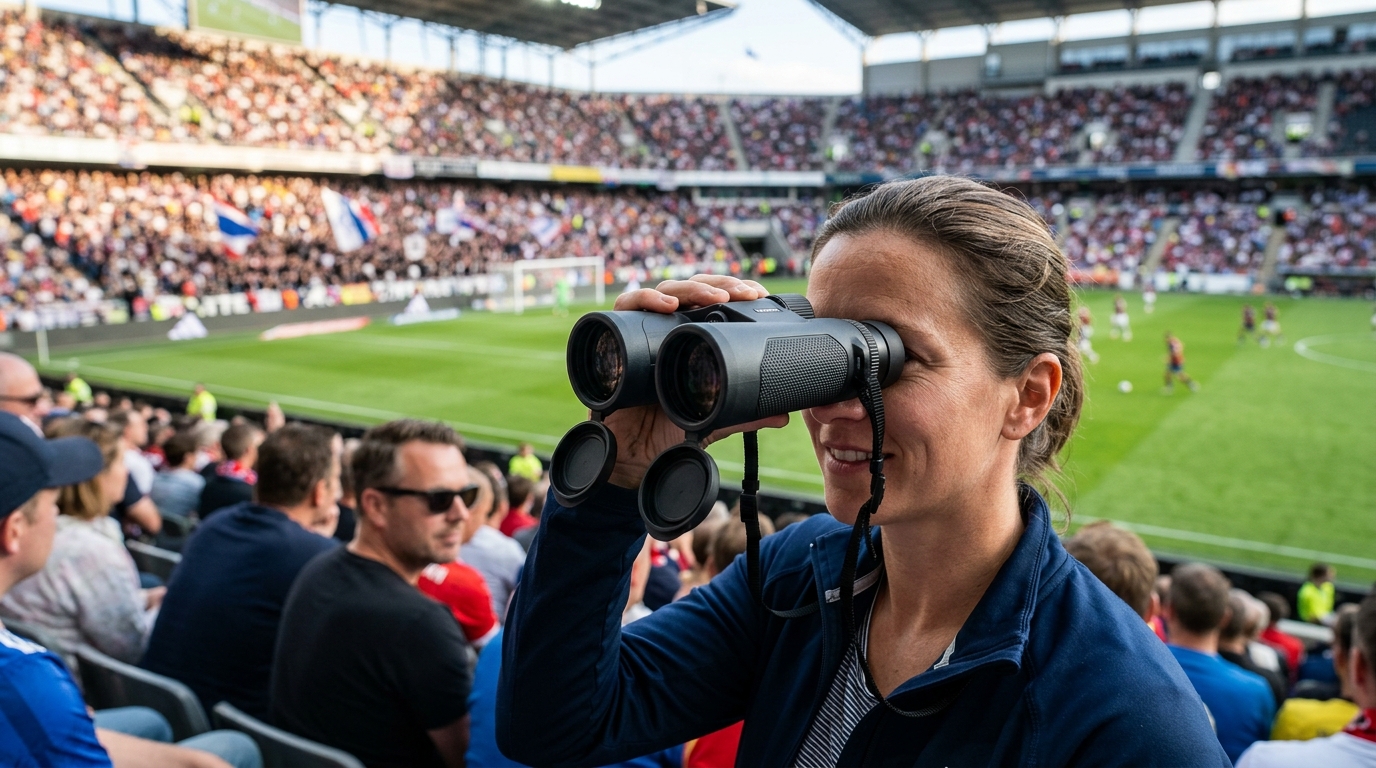
| Sports | 7x-8x | 25mm-42mm | Wide angle, image stabilization |
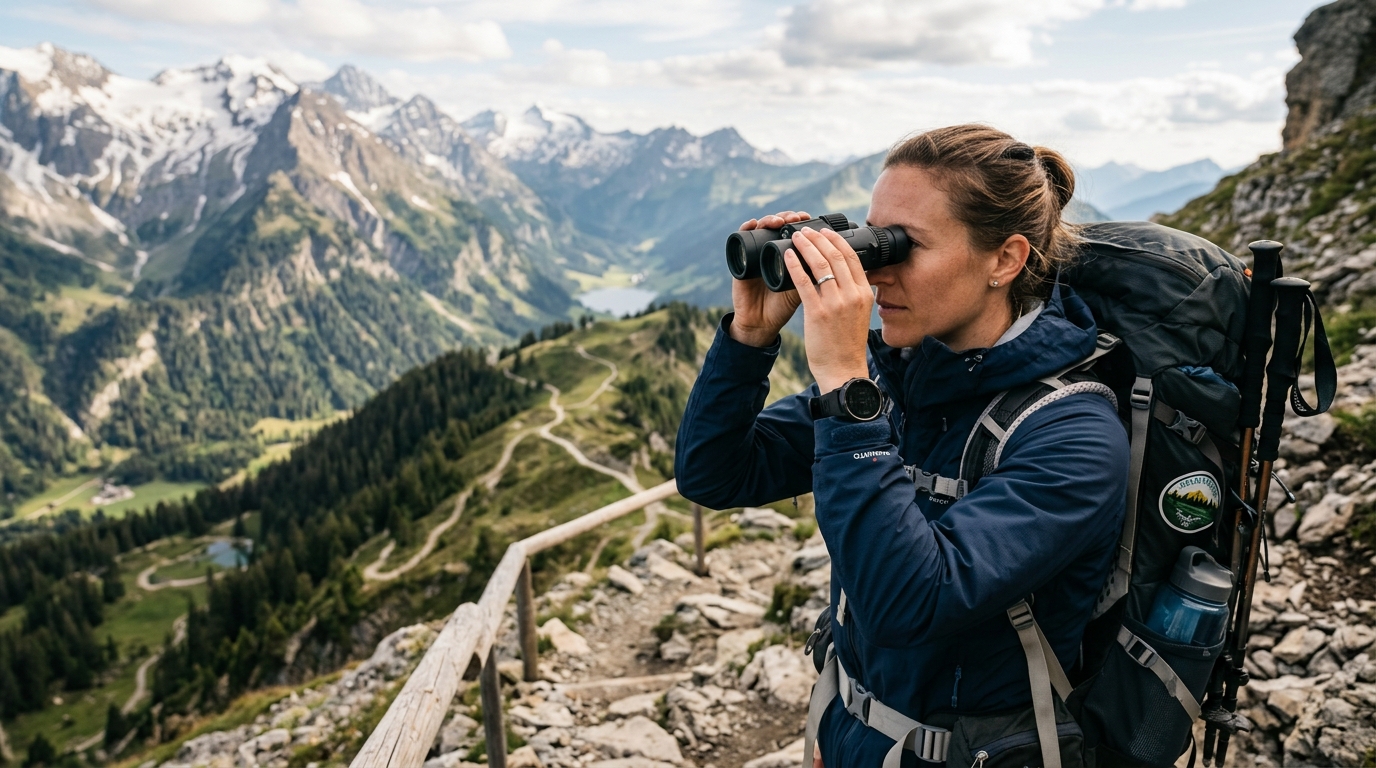
| Travel | 8x-10x | 20mm-28mm | Compact, lightweight, durable |
⏰ Time Saver: Don’t get caught up in marketing terms. Focus on magnification, objective lens, field of view, eye relief, and build quality – these determine 95% of performance.
✅ Pro Tip: Test binoculars before buying. Check for comfortable eye relief, smooth focus, and whether you can hold them steady at your chosen magnification.
The first number is magnification (how many times closer objects appear), the second is objective lens diameter in millimeters (how much light they gather). For example, 8×42 means 8x magnification with 42mm lenses.
BAK4 prisms are superior – they provide brighter images and sharper edges. BK7 prisms work well for casual use but show slightly reduced performance. BAK4 is worth the extra cost for serious viewing.
8x is perfect for most uses. 10x works if you have steady hands. 12x+ requires a tripod or image stabilization. More magnification isn’t always better – stability matters more than power.
Waterproof binoculars are completely sealed and can be submerged (usually to 1 meter). Weather-resistant handles light rain but isn’t fully sealed. Choose waterproof if you’ll use them in wet conditions.
Yes, but diminishing returns apply. $200-500 binoculars offer significant improvements over budget models. $1000+ models provide marginal gains that matter mostly to professionals and serious enthusiasts.
300+ feet at 1000 yards is ideal for birding. Wider fields help track moving birds and find subjects faster. Compact binoculars often have narrower fields – consider this trade-off.
Armed with this glossary, you can now decode any binocular specification sheet with confidence. Remember that the best binoculars balance your specific needs with optical quality – not necessarily the highest specifications.
For more detailed guidance on specific topics, check out our comprehensive guides on understanding binocular numbers, binocular components, and using binoculars with glasses.
The right binoculars become an extension of your eyes, revealing details invisible to the naked eye. Choose wisely, and they’ll provide years of discovery and enjoyment in the field.