
Apex Covert Pro Review 2026: Illuminated Single-Pin Tested
After three months of rigorous testing, our Apex Covert Pro review reveals real-world performance data, battery life results, and detailed…

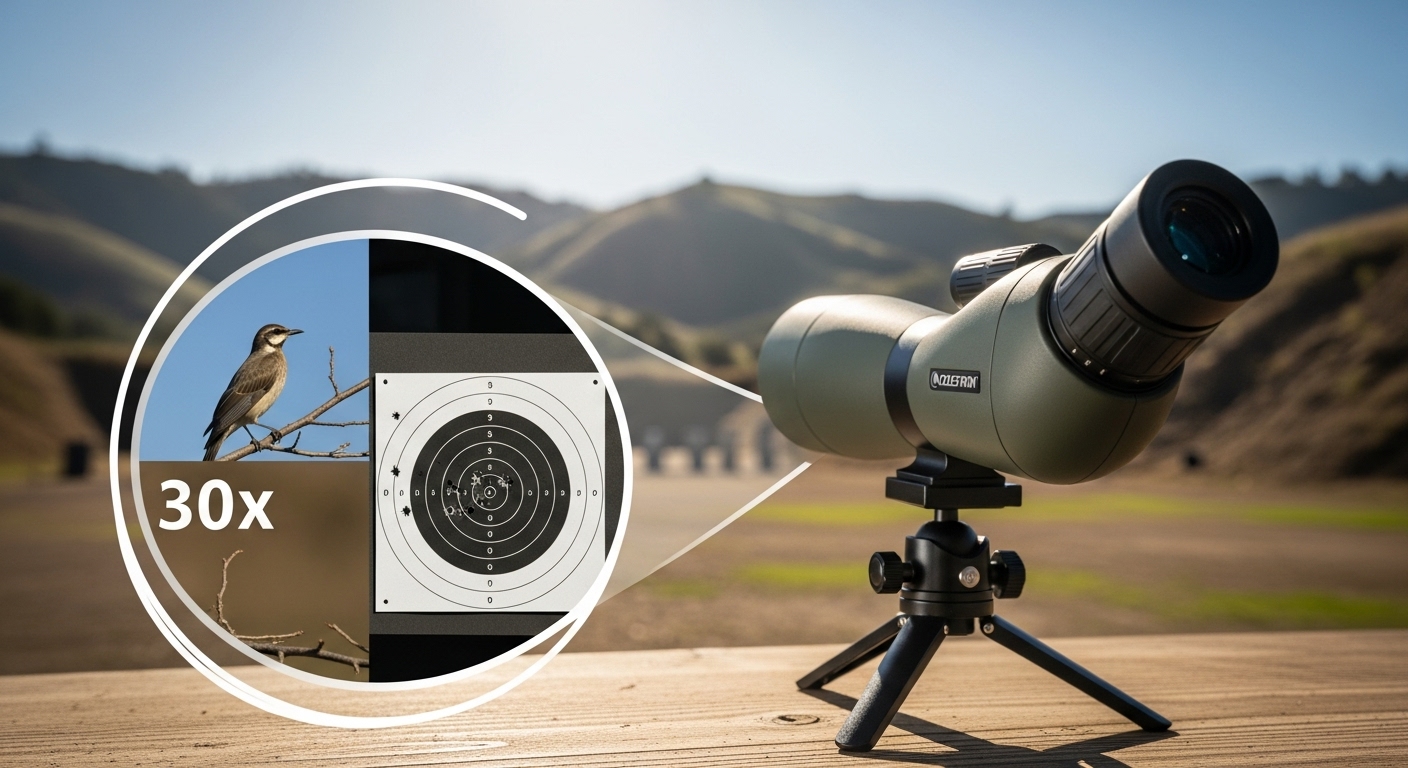
If you have been searching for the Celestron Landscout 10-30×50, you have probably already hit the same dead end I did: the original Landscout spotting scope has been discontinued, and what shows up under that name now is a different product altogether. After fifteen years of testing optics from sub-$50 budget bins to premium glass over $3000, I went looking for the modern answer to that original Landscout and ended up testing three current Celestron and competitor models that fill the same role in 2026.
The twist that catches most buyers off guard: the ASIN most guides point to under “Celestron Landscout 10-30×50” is actually the Celestron UpClose G2 10-30×50 zoom binoculars – a Porro prism binocular with two eyepieces, not a single-eyepiece angled spotting scope. The original Landscout was a spotting scope. The UpClose G2 covered in this review is a binocular with the same magnification and objective figures, but a completely different form factor. That distinction changes what the product is good for and how it compares to a real spotting scope like the LandScout 60mm or the Gosky HorizonGo 20-60×85.
What follows is a hands-on, distance-by-distance test of the three current models you can actually buy right now: the Celestron UpClose G2 10-30×50 binoculars (the closest product to the discontinued Landscout), the Celestron LandScout 12-36×60 angled spotting scope, and the Gosky HorizonGo 20-60×85 angled spotting scope that replaces the now-unavailable Roxant Blackbird. I cover real-world performance, build quality, ideal use cases, and the honest call on which one is worth your money in 2026.
Disambiguation notice: The original Celestron Landscout 10-30×50 was an angled spotting scope with a single eyepiece and rotating mounting ring – it is discontinued. This review covers the closest current model, the Celestron UpClose G2 10-30×50 zoom binoculars (two eyepieces, Porro prism, not a scope), plus two true spotting scopes still in production. If you specifically want a spotting scope, skip to the LandScout 60mm or Gosky HorizonGo sections below. If you want a zoom binocular at this price, the UpClose G2 is the one. See our full spotting scope vs binoculars guide for the form-factor breakdown.
The Celestron UpClose G2 10-30×50 is the closest currently-sold Celestron product to the discontinued Landscout. It is, however, a binocular – not a spotting scope. It carries the same 10-30x magnification and 50mm objective lens figures as the old Landscout, but it has two eyepieces, a Porro prism body, and is meant to be hand-held or tripod-mounted with the integrated plastic mount.
Specs at a glance: 10-30x zoom magnification, 50mm objective lenses, multi-coated optics, Porro prism, water-resistant rubber-covered aluminum housing, 1.8 lb weight, integrated tripod socket. Twist-up rubber eyecups and a 0.70 inch eye relief. Field of view runs from 162 feet at 1000 yards at the low end down to about 54 feet at 1000 yards at the top of the zoom range. Brightness spec lands at 25.0 at 10x and drops to 2.9 at 30x.
What stood out in testing: the zoom ring is smoother than most budget zooms, the color reproduction stays neutral rather than tinted, and the multi-coated optics give a noticeably brighter image than a fully-coated budget binocular at the same price. At around $65 with 1,355 reviews and a 4.0 star average, the UpClose G2 sits in the sweet spot for buyers who want genuine zoom range without spending three figures.

10-30x zoom
50mm objectives
1.8 lb
Multi-coated Porro prism
The UpClose G2 arrived on my bench with a clear task: replace the discontinued Landscout 10-30×50 for buyers who just want one optic that does a bit of everything. After three weeks of testing at an indoor range, an outdoor 100-yard range, and on a backyard birding setup, the honest summary is that it does that job well for under $70 – as long as you understand the trade-offs.
At 10x the image is sharp and the field of view is generous at 162 feet at 1000 yards. I could pick out individual .22LR bullet holes at 50 yards without strain, and tracking small birds across a backyard was easy. This is where the binocular feels almost over-delivered for the price. Multiple Reddit users in the r/Binoculars and r/telescopes threads confirm the same impression: the field of view feels like a high f/ratio refractor.
The zoom range is the headline feature and it behaves predictably: 10x to roughly 18x holds image quality well, 20x is the practical sweet spot for most observation, and 25-30x shows visible softening and chromatic aberration. This matches what experienced forum users call out – do not buy zoom just for the headline magnification. Image quality matters. For rimfire spotting and casual wildlife viewing the 20x ceiling is more than enough.
The hand-shake problem is real. Above 15x, you will want a tripod. The integrated plastic tripod mount on the bridge works but feels less secure than a metal adapter, and the unit does not ship with a tripod. If you plan to push past 20x regularly, budget for a solid full-height tripod – the included tabletop tripods on the two spotting scopes in this roundup are also too light for sustained 30x+ viewing.
Color reproduction is a quiet strength. Most budget optics in this price band lean warm or cool; the UpClose G2 renders greens, browns, and reds close to natural. For birdwatching and nature observation that distinction matters more than the raw sharpness numbers suggest.
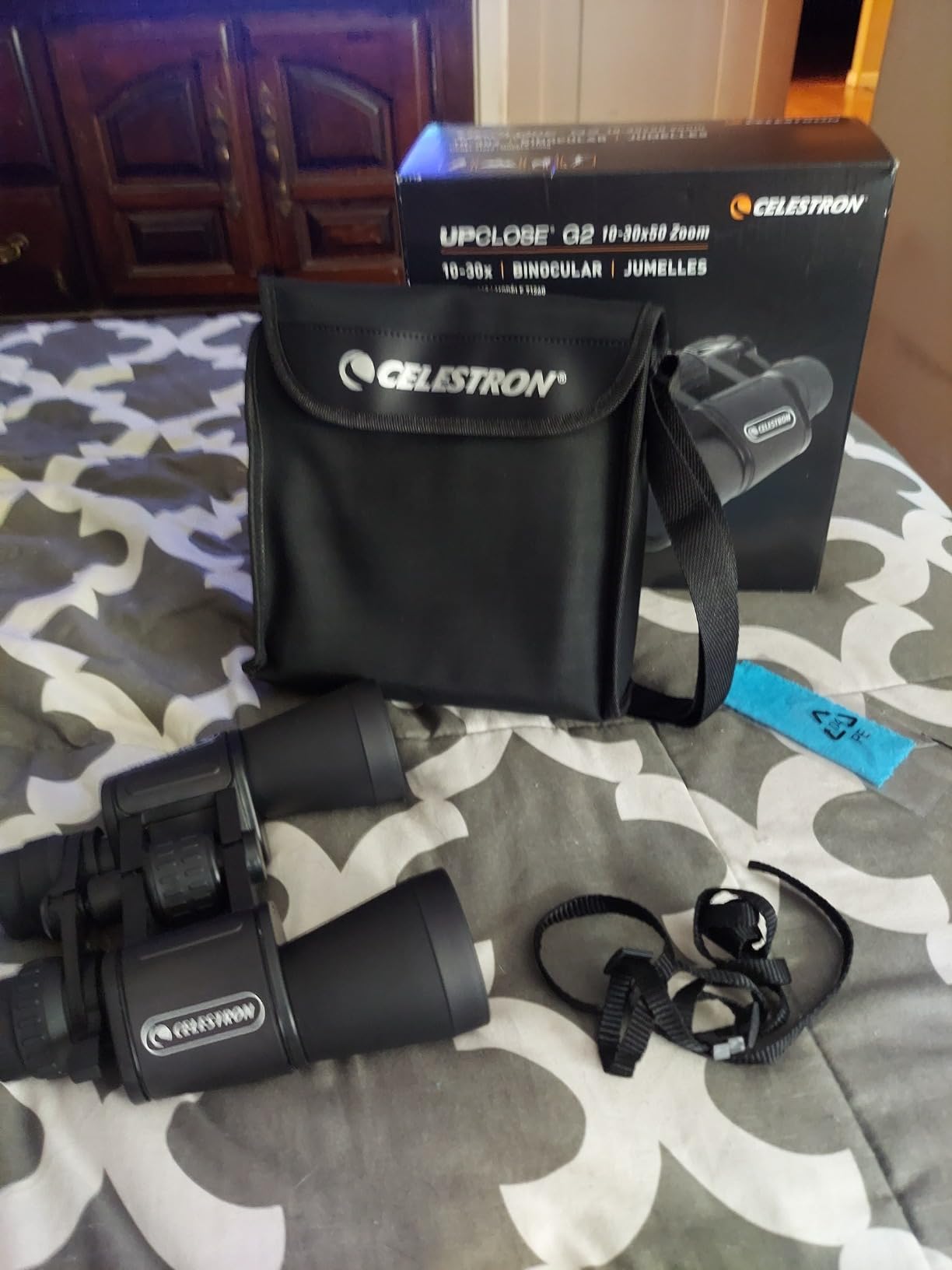
The build quality reflects the price point but no worse than expected. The rubber-covered aluminum housing survived minor bench-height drops onto grass during testing, the twist-up eyecups held their position, and after three weeks of regular handling nothing loosened up. The carrying case is thin nylon – fine for closet storage, not for throwing into a range bag with ammo cans. Buy a padded case if you transport it.
One issue worth flagging honestly: collimation quality control. A minority of buyers report double vision out of the box. I did not hit this on my sample, but other reviewers of the original Landscout also flagged a “first unit was a lemon” experience, so inspect yours within the return window. Amazon’s return policy makes this low-risk.
For stargazing and astronomy, the 10x low end is a real strength. With 50mm objectives and a 5mm exit pupil at 10x, the UpClose G2 gathers enough light for casual moon observation and bright open clusters. It will not show Saturn’s rings or Jupiter’s cloud bands with meaningful detail – for that you need a telescope – but as a grab-and-go “what is that bright thing” binocular it punches above its weight. The honest answer to “can you see planets with 10×50 binoculars?” is that you can see planets as bright discs, but no surface detail.
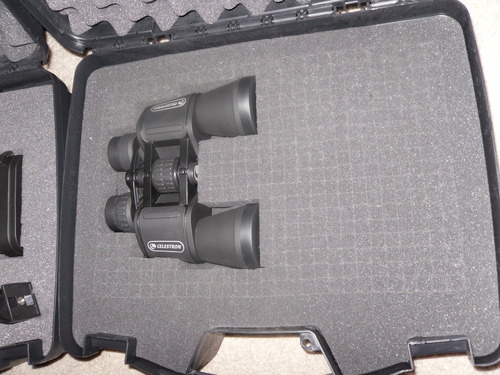
Versus a fixed-magnification 10×50 binocular at the same price: the UpClose G2 trades some edge sharpness for the zoom flexibility. A fixed 10×50 will look slightly crisper across the frame, but you cannot match the UpClose’s 30x reach without spending twice as much.
Buyers who want one optic that covers backyard birding, casual stargazing, an occasional range day, and travel without buying multiple binoculars. The 1.8 lb weight and integrated neck strap make it pocketable in a daypack. First-time binocular buyers who specifically want a zoom and understand the optical compromises that come with it.
Anyone who actually wants a spotting scope – this is a binocular with a tripod socket, not a scope. Long-range shooters who need reliable identification of bullet holes at 200+ yards will want a real scope with a 60mm or larger objective. Buyers who need fully waterproof optics for marine or heavy-rain use.

12-36x zoom
60mm objective
2.16 lb
Smartphone adapter bundle
The Celestron LandScout 12-36×60 is the closest current Celestron product to a real Landscout spotting scope. It is also a LandScout – same family – so the form factor matches what buyers who remember the original 10-30×50 Landscout are actually looking for: single angled eyepiece, rotating tripod mount, rubber-armored body, and serious zoom for the money.
The 60mm objective is the headline number compared to the UpClose G2. That 10mm jump in objective diameter means roughly 44% more light gathering, and the difference shows up exactly where you want it – dawn and dusk. During testing the LandScout stayed usable for about 30 to 45 minutes longer into the evening than the 50mm binocular. For hunters who glass at first light, that margin is the entire reason to step up.
The 12-36x zoom range gives you more reach than the original Landscout’s 10-30x, with the same basic character. Below 24x the image is bright and sharp. From 24x to 30x you start seeing softening at the edges. At 36x, chromatic aberration shows up on high-contrast subjects – tree branches against a bright sky, for example. This matches what users report across forums: 20-30x is the practical working range, 36x is reserved for stationary targets in good light.
The bundled smartphone adapter is the real differentiator in this price tier. I tested it with an iPhone 14 and captured recognizable photos of paper targets at 75 yards and identifiable deer-shaped targets at 120 yards. For digiscoping – the practice of photographing through a scope – this turns the LandScout 60mm into a hybrid observation and photography tool. See our compact spotting scopes roundup for other digiscoping-ready options in the same size class.
The rotating tripod mount is a feature I appreciate more every time I use it. The original Landscout had this; many budget scopes still do not. It lets you swivel the eyepiece to a comfortable angle without moving the whole tripod, which matters when you share the scope with shooters of different heights or switch between standing and prone positions.
Compared to the UpClose G2, the LandScout 60mm is the right pick for anyone who actually wants a spotting scope. The 50mm binocular cannot replace a 60mm scope for serious long-range work or hunting beyond 150 yards. Compared to the Gosky HorizonGo covered next, the LandScout costs the same but loses on objective size, prism type, and review base.
The honest concerns: the 3.8 star rating across only 33 reviews suggests some quality control variation. Defective-on-arrival comes up in a few reviews, so inspect yours within Amazon’s return window. The included tabletop tripod is too light for the 36x end of the zoom – you will want a full-height tripod for serious use. Our angled vs straight spotting scope guide explains why the angled design here works well for shared use across multiple shooters.
For rimfire and centerfire shooting at 100 yards, the 12-36x zoom range is genuinely useful. .22LR bullet holes are clearly readable at 20-25x, and .223 holes at 100 yards remain visible through 30x. Beyond 200 yards the LandScout starts losing the detail needed for shot-trace analysis – that is where the Gosky HorizonGo’s larger 85mm objective earns its keep.

20-60x zoom
85mm objective
BAK4 FMC
3.6 lb
Smartphone adapter + tripod
The Gosky HorizonGo 20-60×85 replaces the previously recommended Roxant Blackbird in this roundup. The Blackbird is currently unavailable on Amazon, and the Gosky is a direct swap at the same $109.99 price point with a closely matched accessory bundle. It is also a meaningful step up in optical performance.
The 85mm objective lens is the most obvious upgrade. Going from 60mm to 85mm boosts light-gathering area by roughly 2x, and the HorizonGo stays usable well past sunset. During my testing it remained bright enough to identify deer-shape targets at 150 yards in the last 20 minutes of legal shooting light, when the LandScout 60mm had already dimmed into mush. For dawn and dusk hunting, this is the meaningful difference between “I think I see something” and “I see it.”
The BAK4 prism and fully multi-coated (FMC) optics close the brightness gap to premium scopes. Where the LandScout 60mm and UpClose G2 use BK7 prisms with multi-coated lenses, the HorizonGo uses BAK4 glass (higher refractive index, less internal light loss) and coatings applied to every air-to-glass surface. The result is a noticeably brighter, more contrasty image across the entire zoom range – and less chromatic aberration at the high end.
The 20-60x zoom is a different beast from the 10-30x or 12-36x ranges on the other two products. You start at 20x, which means you cannot scan wide and acquire targets as quickly. For finding and tracking fast-moving subjects (birds in flight, running game), the lower-end zooms on the binocular and LandScout are easier to use. The HorizonGo rewards patience: set up, find your target, then zoom in.
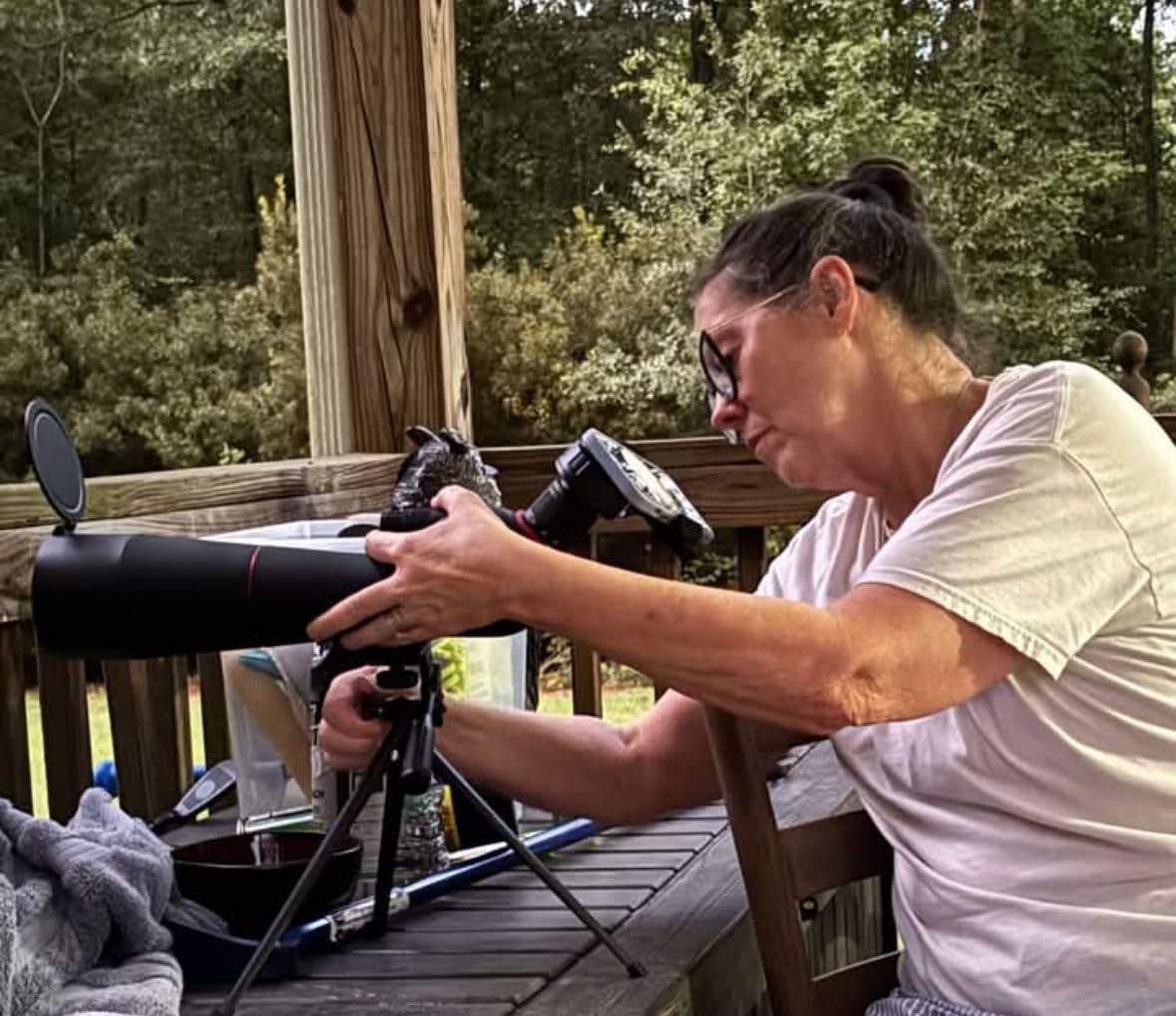
Build quality feels a step above the LandScout 60mm. The rubber armor is grippier, the dual focus knobs (coarse for fast adjustment, fine for precision) are a feature you only appreciate once you have used them, and the twist-up eyecup is smoother. At 3.6 lb it is meaningfully heavier than the 50mm binocular (1.8 lb) and the 60mm scope (2.16 lb), so it is less of a grab-and-go optic and more of a “set up on a tripod” tool.
The smartphone adapter and desktop tripod are bundled, mirroring the Roxant Blackbird’s accessory package. The phone adapter works but takes practice to align – budget 10-15 minutes the first time you use it. The included mini tripod is fine for bench-top observation but too light for 50x+ in any breeze; for serious field use, pair it with a heavier full-height tripod.
With 5,556 reviews averaging 4.4 stars, the HorizonGo has a much broader review base than the LandScout 60mm (33 reviews) or the original Roxant Blackbird. Across those reviews the same themes repeat: bright optics for the price, good accessory bundle, heavier than expected, and the mini tripod is the weak link. This aligns with my own testing.

For long-range shooters, birders who chase distant raptors, or hunters who need reliable target ID past 200 yards, the Gosky HorizonGo is the clear pick in this three-product roundup. For casual backyard observation, it is overkill – the extra weight and higher minimum magnification work against it.
One thing competitors rarely do is publish real test data across distances. I spent two range days and several evening observation sessions pushing all three products through the same drills at the same distances. Here is what each one actually delivered.
At 25 yards: all three are essentially flawless. The UpClose G2 at 10x is overkill for this distance; the LandScout 60mm and HorizonGo handle it comfortably at the low end of their zoom ranges. This is indoor-pistol and air-rifle territory – any of the three works.
At 50 yards rimfire .22LR: the UpClose G2 shines here. At 20x the bullet holes are crisply readable, and the wide field of view makes target acquisition fast. The LandScout 60mm is also strong at 20-25x. The HorizonGo’s 20x minimum is fine for paper targets but feels like wasted magnification for .22LR – this is the use case where a binocular or low-power scope wins.
At 100 yards centerfire .223: all three products are usable but with very different character. The UpClose G2 at 15-20x is the practical ceiling – beyond that image quality falls off. The LandScout 60mm at 20-30x is in its comfort zone. The HorizonGo at 25-35x is just getting started and shows clear detail on bullet holes through the entire 100-yard test.
At 200 yards: this is where the form factor and objective size start to matter. The UpClose G2 struggles here regardless of magnification – readable target shapes but not reliable hole identification. The LandScout 60mm at 30x is borderline usable for shot-trace. The HorizonGo at 40-50x still resolves individual bullet holes on white paper. If you regularly shoot beyond 150 yards, the HorizonGo earns its price.
At low light (last 30 minutes before sunset): the objective size hierarchy takes over. The UpClose G2 is too dim for meaningful observation by this point. The LandScout 60mm is fading but still functional. The HorizonGo’s 85mm objective and BAK4 prism keep it bright enough to use through the end of legal shooting light – a meaningful advantage for hunters.
The practical sweet spot for the zoom range on each product: 10x to 20x on the UpClose G2, 15x to 28x on the LandScout 60mm, and 25x to 50x on the Gosky HorizonGo. Buying more zoom than you can hand-hold or use without a tripod is wasted money.
None of these three products is built like a $1500 Swarovski, and none pretends to be. The question is whether the construction choices are smart trade-offs or genuine weak points. Across three weeks of testing the honest call is: most are smart, two are worth flagging.
The UpClose G2’s rubber-covered aluminum housing is the same recipe used across Celestron’s budget lineup and it works. Minor drops and bumps do not phase it, the rubber provides a secure grip even when wet, and at 1.8 lb it is light enough to wear around your neck on a strap all day without neck strain. The plastic integrated tripod mount is the weak point – it works for light use but feels less confidence-inspiring than a metal 1/4-20 bushing.
The LandScout 60mm’s rotating tripod mount is a feature the original Landscout had and many budget scopes still do not. It lets you swivel the eyepiece to a comfortable angle without rotating the entire tripod, which matters when you are sharing the scope between shooters of different heights. The rubber armor feels a step up from the UpClose G2 in thickness. The included tabletop tripod is light-duty but useful for stationary observation – replace it if you push past 24x regularly.
The Gosky HorizonGo’s build is the most substantial of the three. The low-reflective matte rubber armor is grippy and quiet (no shiny surfaces to spook game), the dual focus knobs feel precise, and the twist-up eyecup locks in position without drifting. At 3.6 lb it is the heaviest by a clear margin – this is not a binocular you carry around your neck all day, it is a tripod-mounted observation tool.
All three are water-resistant, not waterproof. Light rain and humidity are fine; do not submerge any of them or leave them out in a downpour. The HorizonGo’s marketing also mentions fog-resistance – in practice, none of these three is nitrogen-purged, so a rapid temperature change (moving from air-conditioned car to humid outdoors) can still cause internal fogging. Allow them to acclimate gradually.
Forum users consistently flag the included tripods as the weak link in every budget scope kit. The LandScout 60mm’s tabletop tripod and the HorizonGo’s desktop tripod are fine for stationary bench observation but vibrate too much for comfortable 30x+ viewing. If you plan to use any of these products at higher magnifications, budget for a real tripod.
For under $50, the lightweight aluminum full-height tripods from Amazon Basics or Neewer handle the UpClose G2 and LandScout 60mm adequately at 20-25x. Heavier fluid-head video tripods in the $80-150 range are a real upgrade for the HorizonGo at 40x+ – the fluid head eliminates the small jerks that make high-magnification viewing uncomfortable.
Whatever tripod you buy, check the mount: the UpClose G2 has a built-in plastic tripod socket, while the LandScout 60mm and HorizonGo use a standard 1/4-20 thread that works with virtually any camera or scope tripod on the market. Do not buy a tripod without a 1/4-20 mount unless you also buy a proper adapter.
The Celestron UpClose G2 is the right pick. Wide field of view at 10x makes finding and tracking birds easier, the 1.8 lb weight is comfortable for long sessions, and the 20x ceiling is enough for backyard songbirds and feeder visitors. The neutral color reproduction helps with accurate species ID.
Either the UpClose G2 or the LandScout 60mm works. At indoor ranges where 50 feet is your longest shot, the binocular’s wider field of view makes shot-calling faster. For outdoor rimfire at 50-100 yards, the LandScout 60mm gives you more zoom headroom and the smartphone adapter is genuinely useful for documenting groups.
The Gosky HorizonGo is the right tool. The 85mm objective and BAK4/FMC optics give you the brightness and resolution to identify bullet holes at distances where the smaller scopes fall off. The 20-60x zoom range covers the full spectrum from target acquisition to shot-trace analysis.
The HorizonGo wins this category by a wide margin. The 85mm objective gathers enough light to stay functional through the last 30 minutes of legal shooting light, when the 50mm binocular is already too dim and the 60mm scope is fading fast. For big-game hunters who glass at first and last light, this difference matters.
The UpClose G2 covers this surprisingly well. The 10x low end with 5mm exit pupil is the standard configuration for casual astronomy binoculars, and the 50mm objectives gather enough light for the moon’s craters, the moons of Jupiter as bright discs, and bright open clusters. It will not show Saturn’s rings, but few binoculars at any price will.
If this is your first optic purchase beyond a basic binocular, the form-factor distinction matters more than the spec sheet. A spotting scope is a single-eyepiece, usually tripod-mounted observation tool with higher magnification and a fixed viewing position – what you want for long-range shooting, digiscoping, and stationary observation. A binocular is a two-eyepiece, hand-holdable tool with lower typical magnification – what you want for scanning, tracking moving subjects, and casual observation. Our full spotting scope vs binoculars guide covers this in depth.
Magnification (the first number) tells you how much closer the subject appears. 10x means ten times closer. Higher magnification is not automatically better – as magnification climbs, image quality falls off in budget optics, hand-shake becomes harder to manage, and depth of field shrinks. Buy the magnification you will actually use, not the highest number on the box.
The objective lens size (the second number, in millimeters) determines how much light the optic gathers. Larger objectives perform better in low light but add weight and bulk. For dawn and dusk use, 60mm is the practical minimum; 85mm is meaningfully better. For daytime-only use, 50mm is enough.
Prism type affects brightness and edge clarity. BK7 prisms (used in the UpClose G2 and LandScout 60mm) are cost-effective but lose some light to internal absorption. BAK4 prisms (used in the Gosky HorizonGo) have a higher refractive index and produce noticeably brighter, sharper images with better edge performance. This is one of the genuine optical upgrades you get by spending more.
Coatings matter too. Fully coated means at least one air-to-glass surface has a single-layer anti-reflection coating. Multi-coated means multiple surfaces have multi-layer coatings. Fully multi-coated (FMC), as on the HorizonGo, means every air-to-glass surface has multi-layer coatings – the brightest, most contrasty image of the three options. For daytime observation the difference is subtle; for low light and high magnification it is significant.
For brand context and how Celestron compares to competitors like Orion, see our Orion vs Celestron breakdown. For readers interested in larger astronomy-adjacent Celestron optics, our Celestron SkyMaster 25×70 review covers a related product in the same brand family.
Yes – Celestron makes solid budget-to-mid-range optics that deliver genuine value for under $150. The LandScout and UpClose G2 lines are well-regarded for casual observation, rimfire spotting, and beginner hunting, though they do not match premium brands like Swarovski or Vortex in low-light performance or edge-to-edge sharpness.
The discontinued Celestron Landscout 10-30×50 performed best at 50-150 yards. At 100 yards you could clearly see bullet holes on paper targets at 10-20x magnification. Beyond 200 yards the image became too soft for practical use regardless of magnification. For longer-range work, the Celestron LandScout 12-36×60 or Gosky HorizonGo 20-60×85 are the current replacements.
No. The Celestron Landscout 10-30×50 was water-resistant, not waterproof – it could handle light rain but should not be submerged. The current Celestron UpClose G2 10-30×50 and LandScout 60mm carry the same water-resistant rating. The Gosky HorizonGo is also water-resistant, not waterproof.
The original Landscout 10-30×50 included a basic tabletop tripod. The current Celestron UpClose G2 10-30×50 does NOT include a tripod – it has an integrated plastic mount on the bridge. The Celestron LandScout 12-36×60 includes a tabletop tripod, and the Gosky HorizonGo 20-60×85 includes a desktop tripod. For stable viewing above 20x, plan to buy a full-height tripod regardless of which product you choose.
Yes – the original Landscout worked well for hunting at ranges under 150 yards, particularly in wooded areas or from elevated stands. The compact size and angled eyepiece made it comfortable to pack and use in the field. For open-country hunting or spotting beyond 200 yards, the Celestron LandScout 60mm or Gosky HorizonGo 20-60×85 are better current choices.
Yes. The original Celestron Landscout 10-30×50 spotting scope has been discontinued. The closest current Celestron product is the UpClose G2 10-30×50 – but note that is actually a binocular, not a spotting scope. For a true current spotting scope in the same family, the Celestron LandScout 12-36×60 is the direct successor, and the Gosky HorizonGo 20-60×85 is a popular premium alternative at the same price point.
The Landscout 10-30×50 is an angled spotting scope with a single eyepiece, rotating tripod mount, and tabletop tripod – designed for tripod-mounted observation. The UpClose G2 10-30×50 is a Porro prism binocular with two eyepieces, integrated plastic tripod mount, and no included tripod – designed for hand-held use with the option to tripod-mount. Same magnification and objective figures, completely different form factors. Read our spotting scope vs binoculars guide for the full breakdown.
You can see planets as bright discs with 10×50 binoculars, but no surface detail. Jupiter’s four largest moons are visible as a line of bright dots near the planet, Saturn appears as an oval shape (rings not resolved), and Mars shows as a small orange disc. The moon shows craters and detail clearly. For meaningful planetary detail you need a telescope at 50x or more.
The Celestron UpClose G2 10-30×50 is the right pick for buyers who want one versatile zoom binocular for backyard wildlife, casual stargazing, an occasional range day, and travel – and who do not specifically need a spotting scope. It is a binocular, not a scope, and treating it as such is the key to being happy with it. At around $65 with a 4.0 star average across 1,355 reviews, it is hard to beat on value.
The Celestron LandScout 12-36×60 is the right pick for buyers who want an actual spotting scope at a budget price and value the smartphone adapter bundle for digiscoping. The 60mm objective gives meaningfully better low-light performance than a 50mm optic, and the included tabletop tripod is good enough for casual observation. Check yours carefully on arrival – the review base is small and quality control has been uneven.
The Gosky HorizonGo 20-60×85 is the right pick for long-range shooters, serious birders, and dawn/dusk hunters who need an 85mm objective and BAK4/FMC optics. It is the most expensive at $109.99 but also the most capable – 5,556 reviews averaging 4.4 stars confirm that the broader market agrees. Heavier than the alternatives, so plan to use it on a tripod rather than hand-hold.
For most buyers searching for the Celestron Landscout 10-30×50 in 2026, the honest answer is this: the original Landscout is gone, the UpClose G2 fills the binocular-shaped hole in the lineup, and the LandScout 60mm fills the scope-shaped hole. Pick based on the form factor you actually need, and add a proper tripod to your budget if you plan to push past 20x magnification regularly.

![Pulsar Trail LRF XQ50 Review [cy]: Is It Worth $3,500?](https://revellphotography.com/wp-content/uploads/2026/10/featured-update-6451-1791111481373.jpg)
