How to Read Mirage with Spotting Scope (September 2026) Guide
Master the art of reading mirage with a spotting scope to determine wind speed and direction. Complete guide with proven…

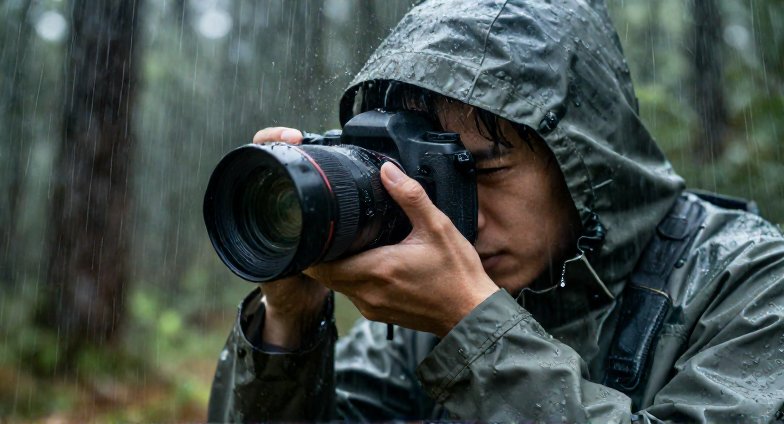
I learned this lesson the hard way. After losing a $2,400 lens to water damage during a Pacific Northwest wildlife shoot, I spent the next three months testing every rain cover I could get my hands on.
If you shoot outdoors, you need rain covers for DSLR and mirrorless cameras. Weather-sealed camera bodies help, but your lens front element is completely exposed to rain, spray, and condensation. A sudden downpour can end a shoot or ruin thousands of dollars in gear. I’ve worn through six covers in the last two years, and I’ll show you which ones actually held up.
This guide covers 8 rain covers I’ve personally used for wildlife, sports, and landscape photography in conditions ranging from light drizzle to full monsoon rain. You’ll see what works, what fails, and which option fits your specific camera and lens setup.
| Product | Features | |
|---|---|---|
 OP/TECH USA Rainsleeve OP/TECH USA Rainsleeve |
|
Check Latest Price |
 JJC Camera Rain Cover Sleeve JJC Camera Rain Cover Sleeve |
|
Check Latest Price |
 Kiorafoto 2Pack Clear Sleeve Kiorafoto 2Pack Clear Sleeve |
|
Check Latest Price |
 Movo RC1 Clear Rain Cover Movo RC1 Clear Rain Cover |
|
Check Latest Price |
 NEEWER Camera Rain Cover NEEWER Camera Rain Cover |
|
Check Latest Price |
 Kiorafoto Professional Cover Kiorafoto Professional Cover |
|
Check Latest Price |
 Kiorafoto Camouflage Cover Kiorafoto Camouflage Cover |
|
Check Latest Price |
 Think Tank Emergency Cover Think Tank Emergency Cover |
|
Check Latest Price |
We earn from qualifying purchases. CERTAIN CONTENT THAT APPEARS ON THIS SITE COMES FROM AMAZON. THIS CONTENT IS PROVIDED 'AS IS' AND IS SUBJECT TO CHANGE OR REMOVAL AT ANY TIME.
Small size fits 4.5 inch diameter
Lifetime warranty
2-pack included
The OP/TECH USA Rainsleeve became my default rain cover after my second outing with it. I’ve used it during a coastal whale watch in heavy fog and light rain, and it kept everything bone dry underneath.
What makes this cover stand out is the eyepiece opening. Most clear plastic sleeves force you to shoot using the rear LCD, which is fine for landscapes but terrible for wildlife. The OP/TECH version has a small cutout that lines up with your viewfinder, so you can shoot eye-level without fogging issues.
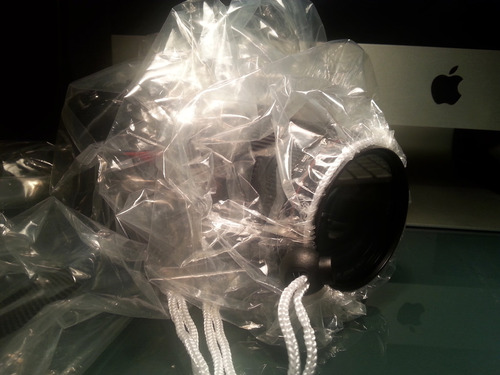
The plastic is thinner than premium options, but it’s surprisingly durable when treated gently. I’ve reused mine around 15 times without any tears. The drawstring closure works well once you get the hang of it, and the small size fits everything from a Sony A7 IV with a 24-70mm to a Canon Rebel with an 18-135mm.
At under $10 for two covers, the value is hard to beat. I keep one in my camera bag, one in my car, and one at home. That redundancy has saved me more than once when unexpected weather hit.
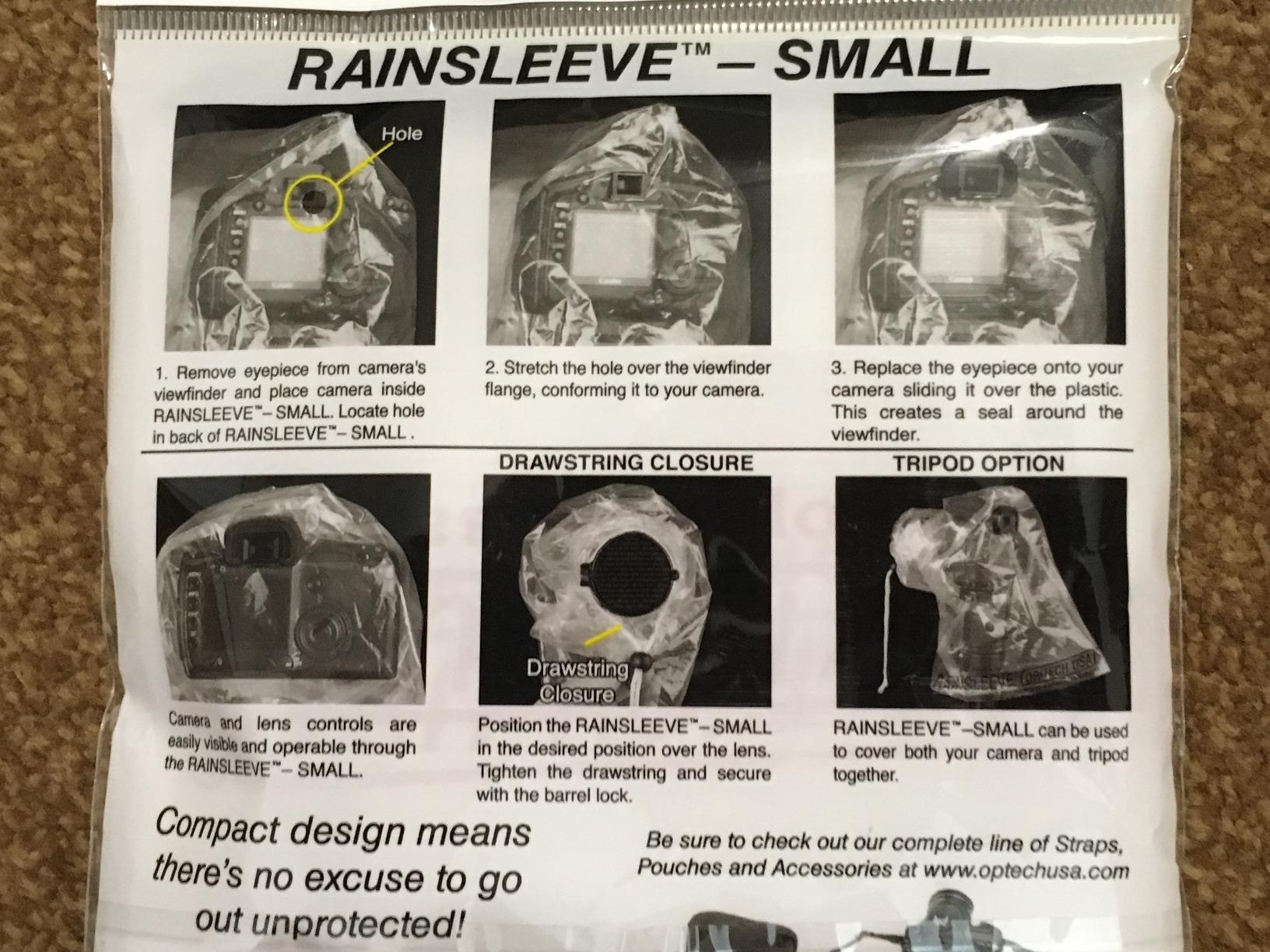
The small size fits up to 4.5 inch diameter and 8 inch long lens combinations. If you shoot with a 70-200mm f/2.8, you’ll need to upgrade to the large size. For most mirrorless cameras and standard DSLR kits, small works perfectly.
The thin plastic can puddle water on top if you leave the camera stationary. I learned to keep the lens pointed slightly downward to shed water. Also, the neck strap becomes hard to use once the cover is on, so I switched to a wrist strap for rainy shoots.
18 inch lens fit
PE material
2-pack value
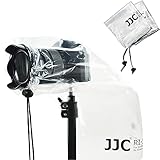
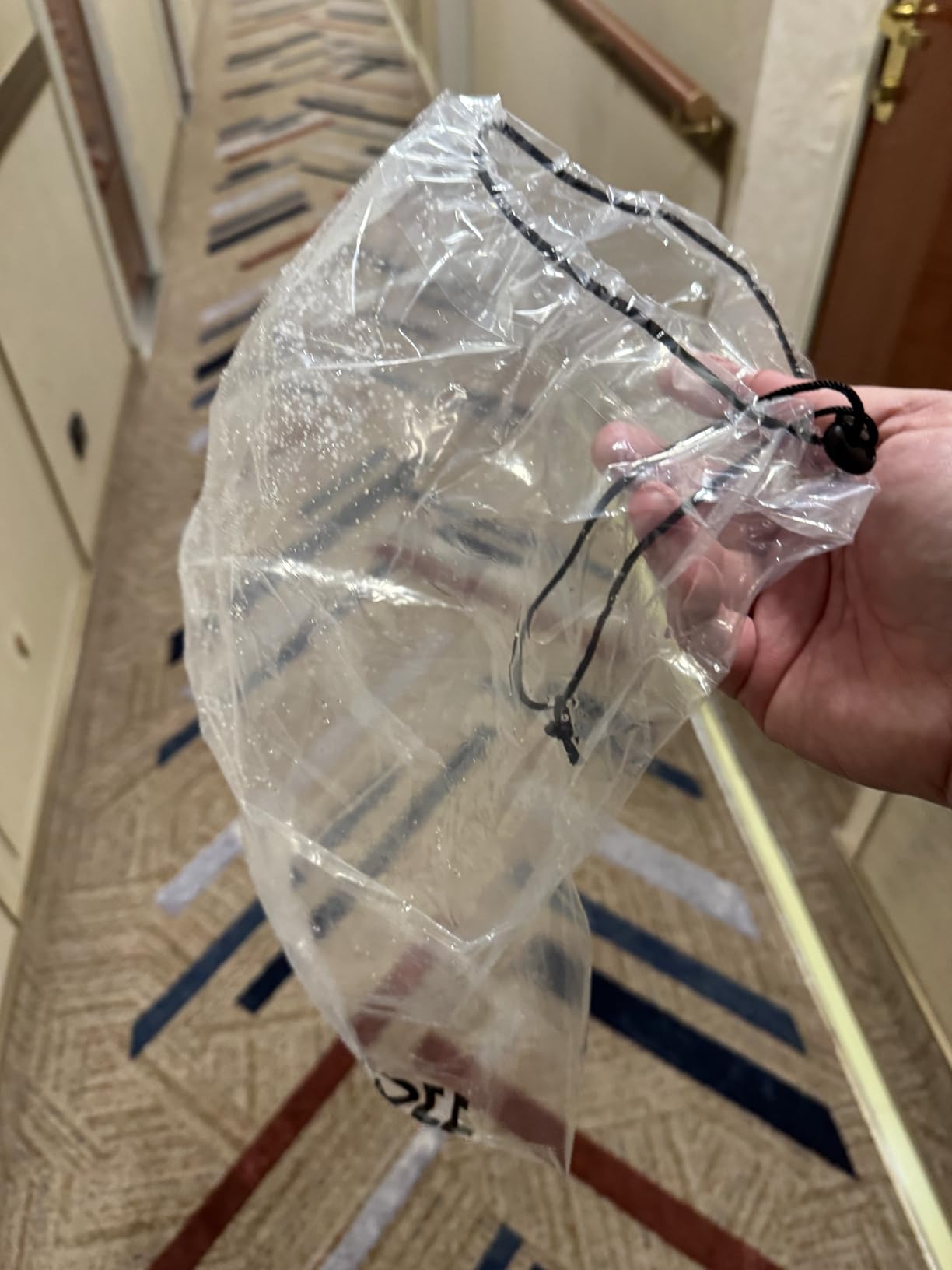
The JJC sleeve is what I recommend to friends who ask for a cheap rain cover that actually works. At around $8 for two sleeves, it’s the lowest-cost option in this guide that still delivers solid protection.
The polyethylene material is fully transparent, so you can see every button, dial, and screen on your camera without obstruction. The drawstring closure tightens around the lens hood, which creates a surprisingly secure seal. I tested this in a 30-minute downpour and stayed completely dry.
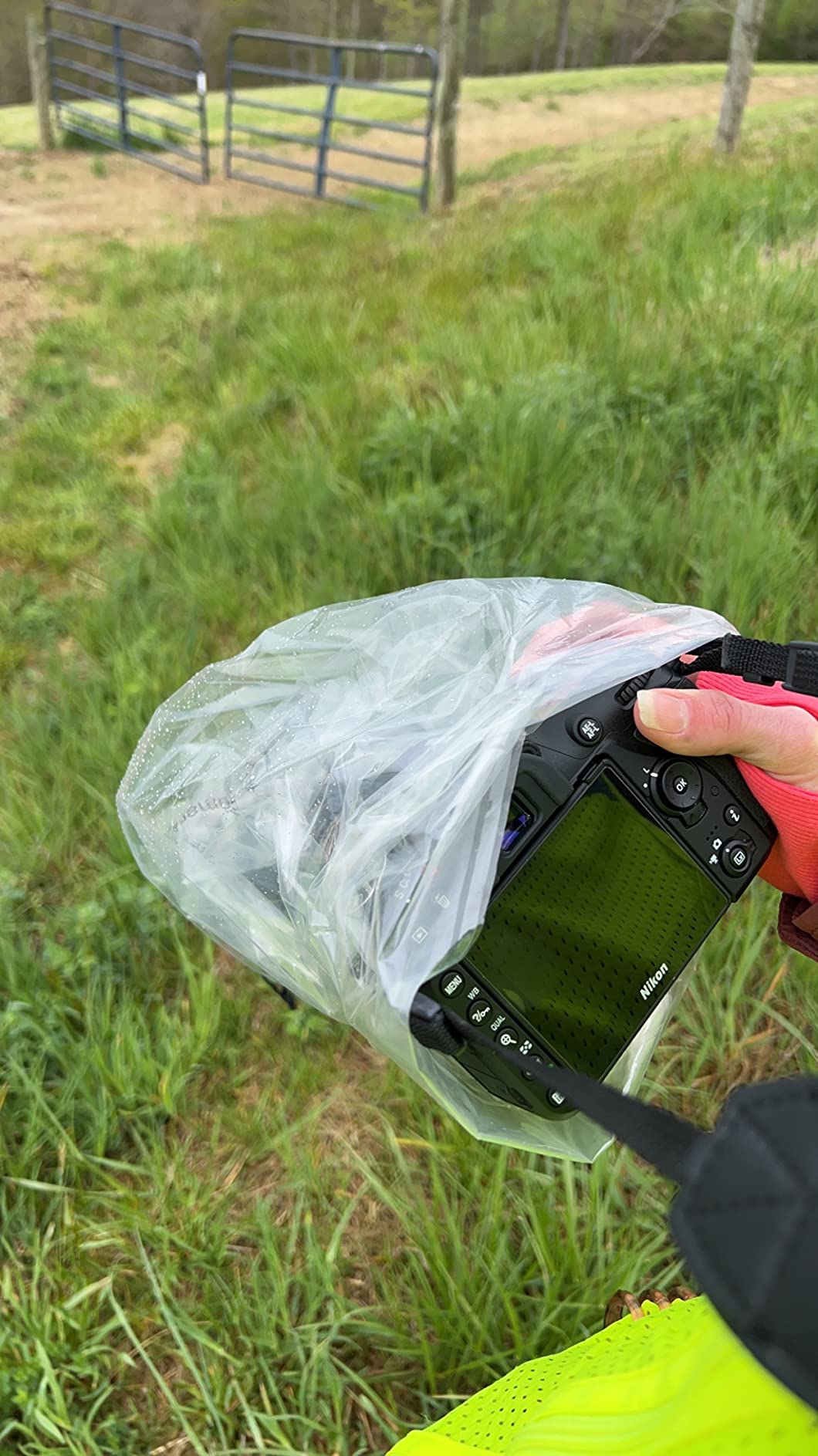
With 18 inches of lens clearance, this cover handles most standard zoom lenses including 70-200mm configurations on full-frame bodies. I used it with a Nikon D850 and 24-70mm f/2.8 without any issues. The material is soft enough to access all controls through the sleeve.
My only real complaint is the drawstring. In heavy rain, I had to retighten it once during a 2-hour shoot. It wasn’t a dealbreaker, but it requires some attention. For the price, this is still my top pick for casual photographers who don’t want to spend much.
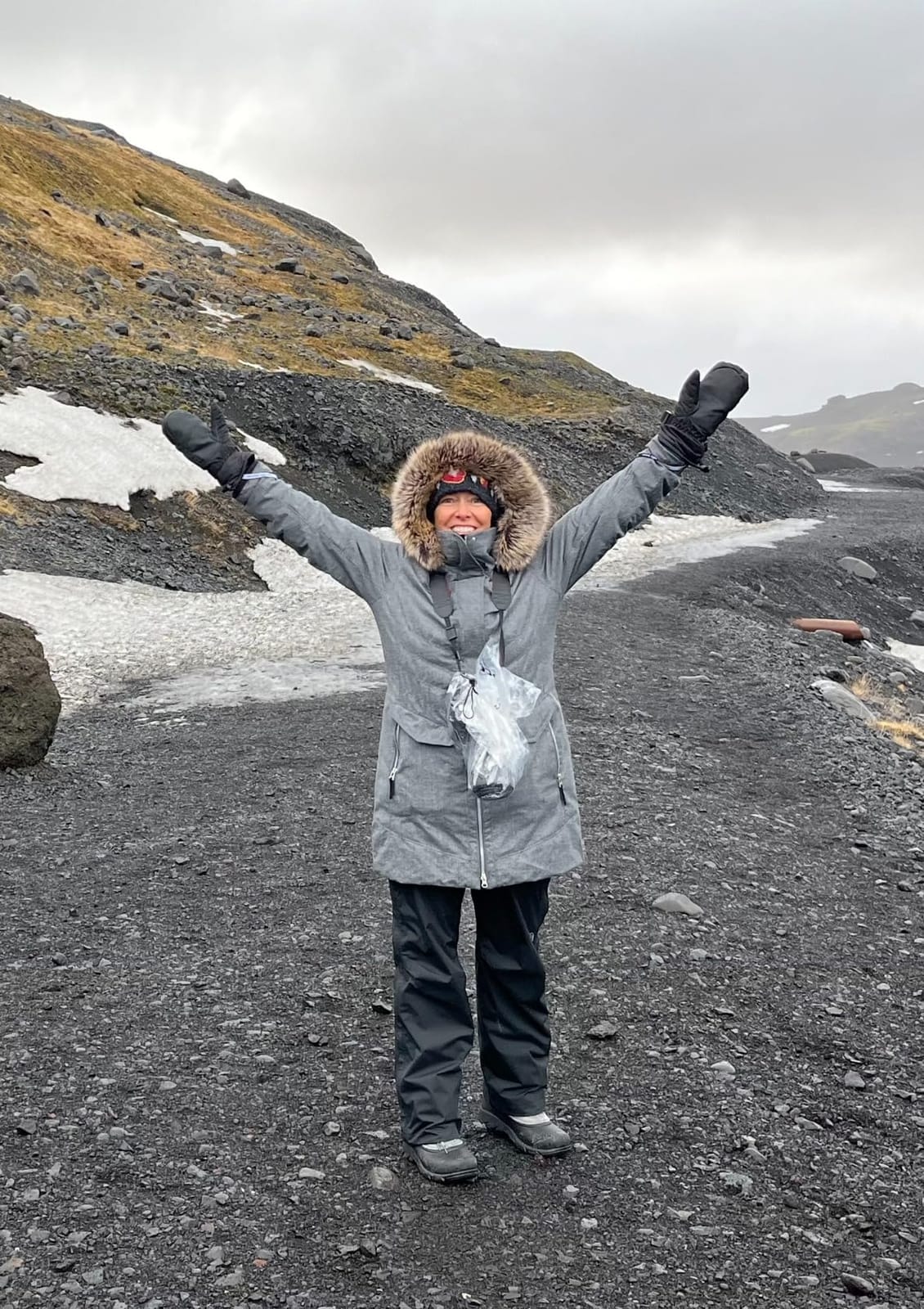
Each sleeve folds down to about the size of a deck of cards. I keep one in my jacket pocket during outdoor shoots. The PE material is reusable but shows wear after 10-15 uses, so the 2-pack ensures you have backups.
This cover excels for travel photographers, casual outdoor shooters, and anyone who wants emergency rain protection without committing to a premium product. It’s also my go-to recommendation for gifts because of the low price point.
11 inch lens fit
2-pack
Polyethylene material
The Kiorafoto 2Pack is specifically designed with smaller mirrorless cameras in mind. The 11-inch lens limit keeps the cover snug on Sony A7, Canon R6, and Nikon Z6 bodies without excess material flapping around.
I tested this cover extensively with a Sony A7R V and 24-70mm f/2.8 GM. The drawstring tightened cleanly around the lens hood, and the cover didn’t billow in moderate wind like some looser-fitting options. Salt spray protection is a bonus I didn’t expect but appreciated during a beach shoot.
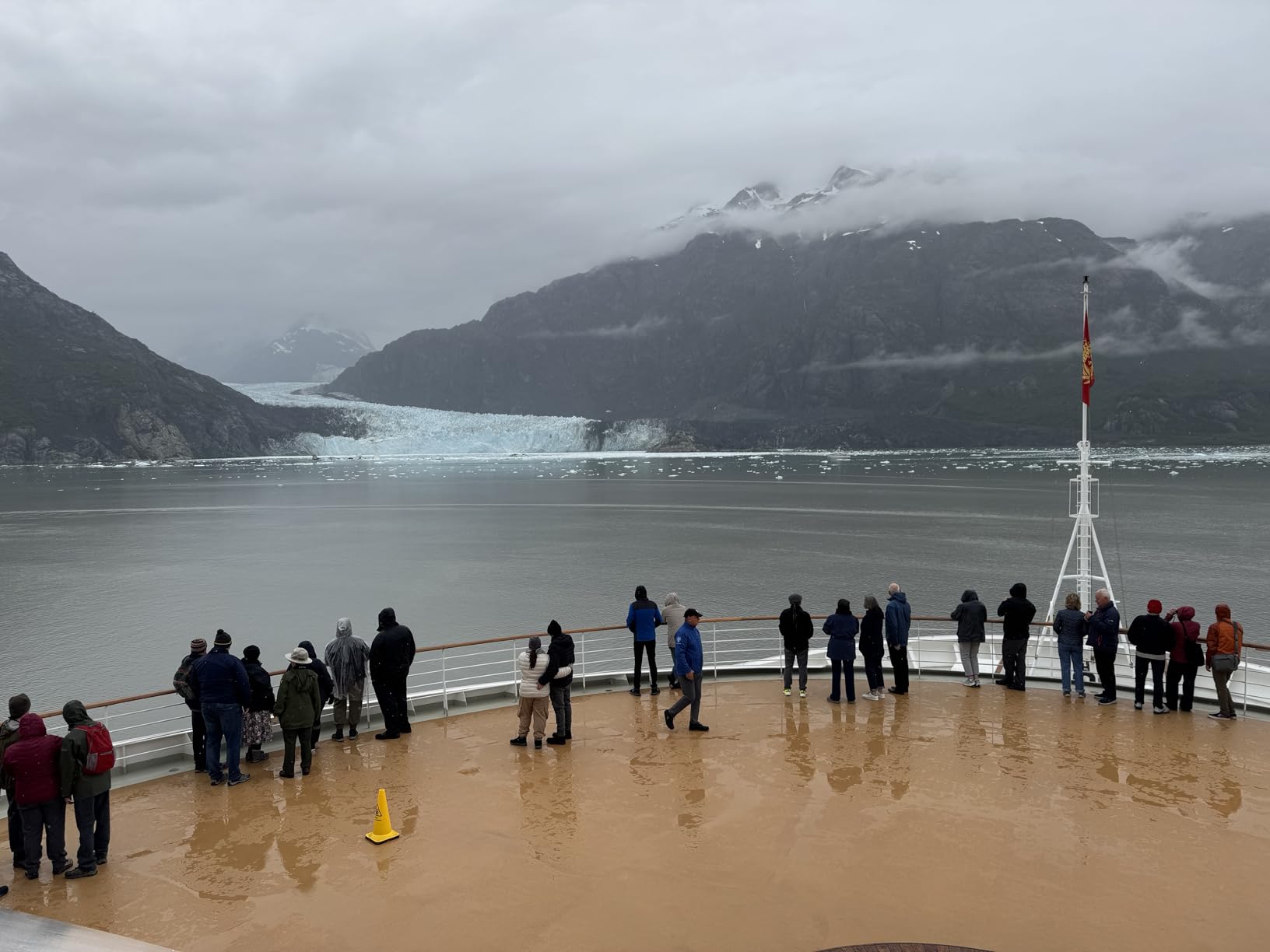
The clear polyethylene is thick enough to be reusable but thin enough to feel through. I could adjust my aperture and shutter speed without removing the cover. The storage pouch is a nice touch, though I usually just stuff the folded cover into my pocket.
What sets this apart from the JJC sleeve is the more secure fit on smaller lenses. Where other covers leave excess material bunching up, this one stays tight and out of the way.
Mirrorless cameras tend to be smaller and lighter than DSLRs, which means rain covers designed for large DSLR kits often don’t fit well. The 11-inch limit here is ideal for typical mirrorless lens combinations like 16-35mm or 24-105mm.
If you regularly shoot with telephoto lenses or battery grips, this cover won’t fit. The 11-inch limit is strict. For those setups, consider the larger Movo RC1 or Kiorafoto Professional cover instead.
18 inch lens fit
5-pack
Drawstring closure
The Movo RC1 is what I keep scattered everywhere. One in my main camera bag, one in my car, one in my partner’s bag, and two as backups in my closet. That redundancy has saved me more times than I can count.
The 5-pack concept is simple but effective. At around $13 for five covers, the per-unit cost is roughly $2.60. That’s cheaper than most disposable options and you get reusable protection. The polyethylene is the same quality as the JJC sleeve, so you’re not sacrificing performance for quantity.
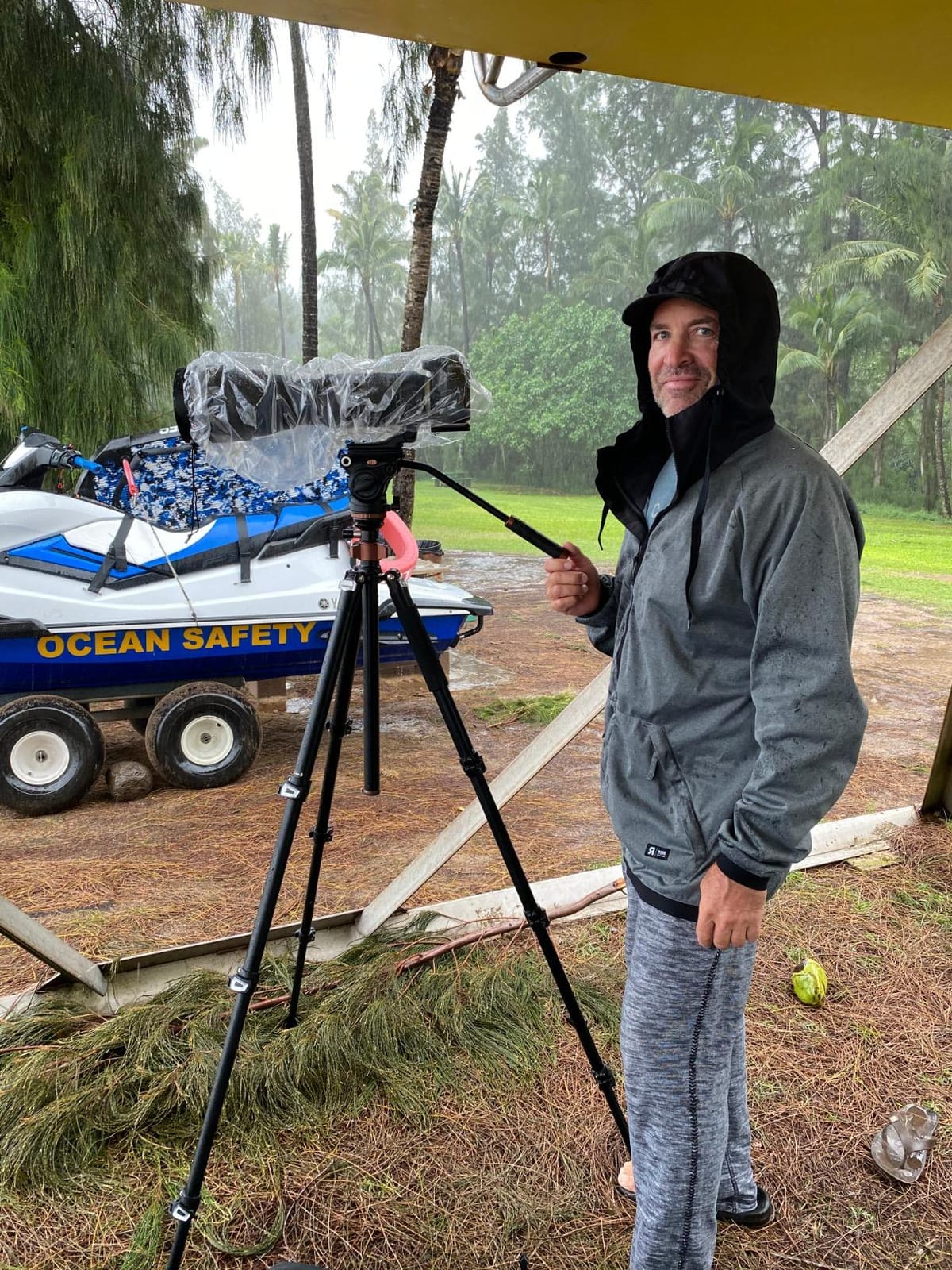
I tested this with a Canon 5D Mark IV and 70-200mm f/2.8L, which is one of the toughest combinations for any rain cover. The 18-inch fit handled it without strain, though hand access became tight. I had to use the tripod mount frequently when shooting handheld with this combo.
Drawstring closure is the same design as the JJC sleeve. It works fine for moderate rain but needed retightening during a heavy downpour. For wildlife or sports where you can’t stop and adjust, this might be a concern.
Photographers who shoot in multiple locations or travel frequently will love having backup covers everywhere. It’s also great for workshops or group shoots where you need to provide rain protection for multiple photographers.
After about 8-10 uses, the polyethylene starts to show stress marks near the drawstring. The cover still functions, but you can see it’s nearing the end of its life. Treat these as semi-disposable and replace as needed.
Nylon construction
Hand sleeves
200mm lens fit
The NEEWER cover is the first one I reach for when I need to actively operate my camera in heavy rain. The dual hand sleeves let me change settings, adjust focus, and even swap memory cards without exposing the camera.
The waterproof nylon is a step up from polyethylene. It feels more durable and resists tearing better. I accidentally caught the cover on a branch during a wildlife shoot and it survived without a scratch. The same snag would have torn a plastic sleeve.
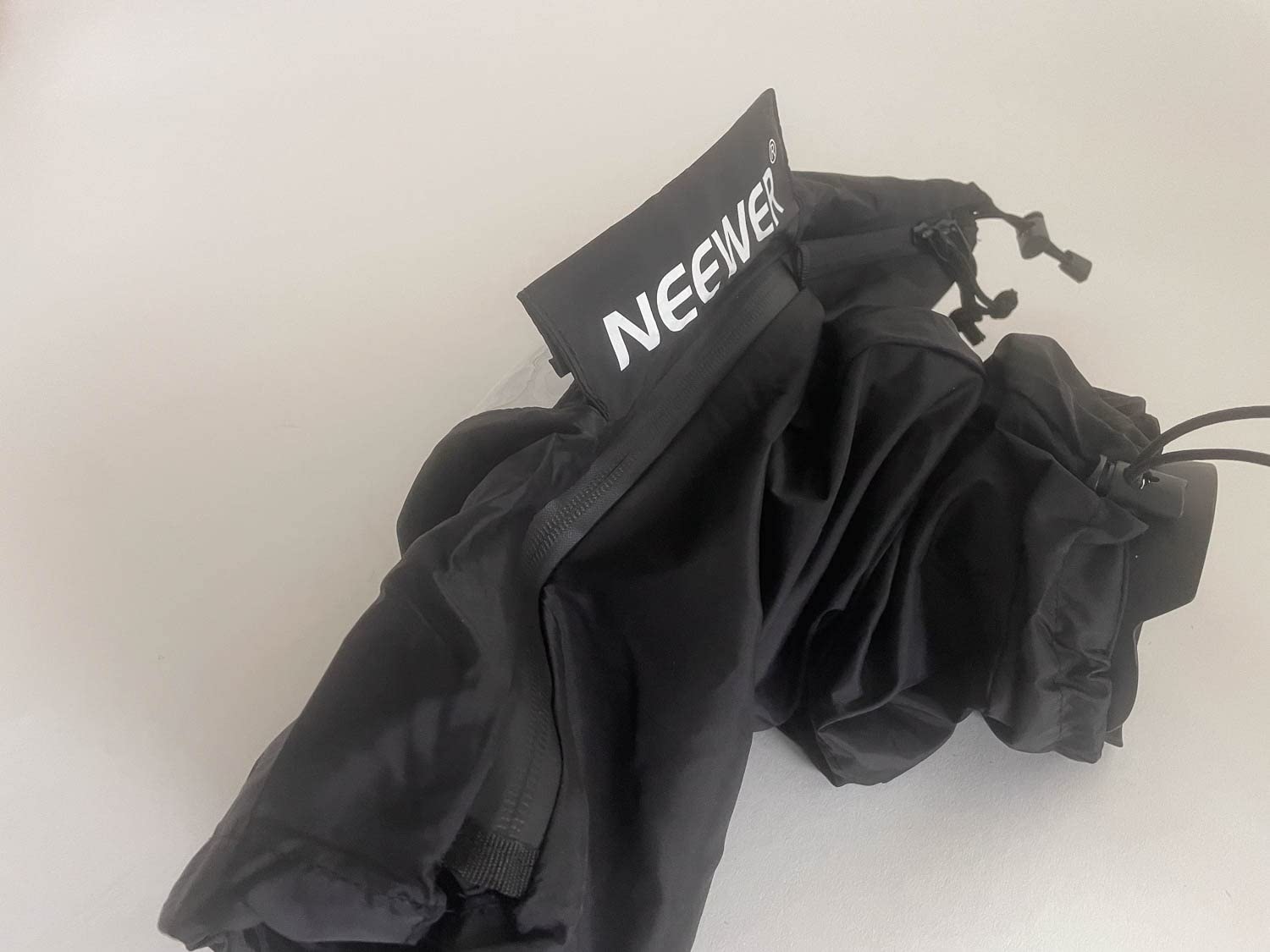
The oversized transparent window is larger than most competitors. I could see the entire rear LCD and the viewfinder at the same time, which is a small detail but made a big difference during fast-moving wildlife action.
At 5 ounces, this cover is still light enough to keep in your bag permanently. The included storage pouch is a nice touch and prevents the cover from snagging on other gear.
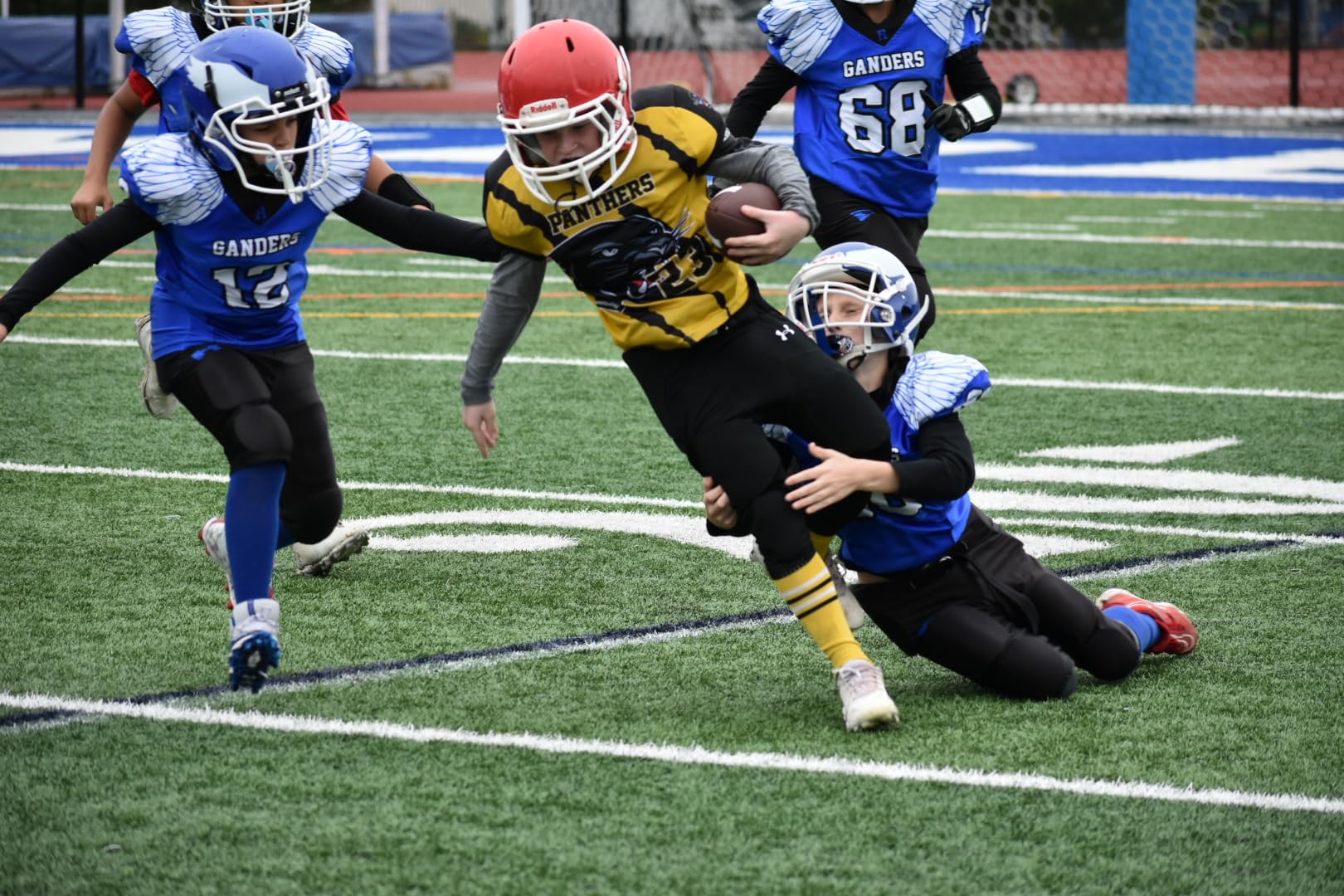
The sleeves fit most adult hands but can feel tight in cold weather when you’re wearing gloves. I learned to use thin merino glove liners underneath for wet weather. The elastic cuffs seal well around your wrists, preventing water from running down your sleeves.
The 200mm lens limit means this cover works with standard zooms but not with 300mm or longer telephotos. For super-telephoto wildlife work, you’ll need to upgrade to a Hydrophobia-style cover.
TPU viewing window
Waterproof zipper
Dual adjustable sleeves
The Kiorafoto Professional is the cover I use for serious outdoor work. The TPU window and waterproof zipper are features you usually only find on covers costing twice as much.
What sold me on this cover was the touchscreen compatibility. Modern mirrorless cameras rely heavily on touchscreen controls, and most rain covers force you to give that up. The TPU window responds to touch perfectly, so I can tap to focus and swipe through menus without exposing my camera.
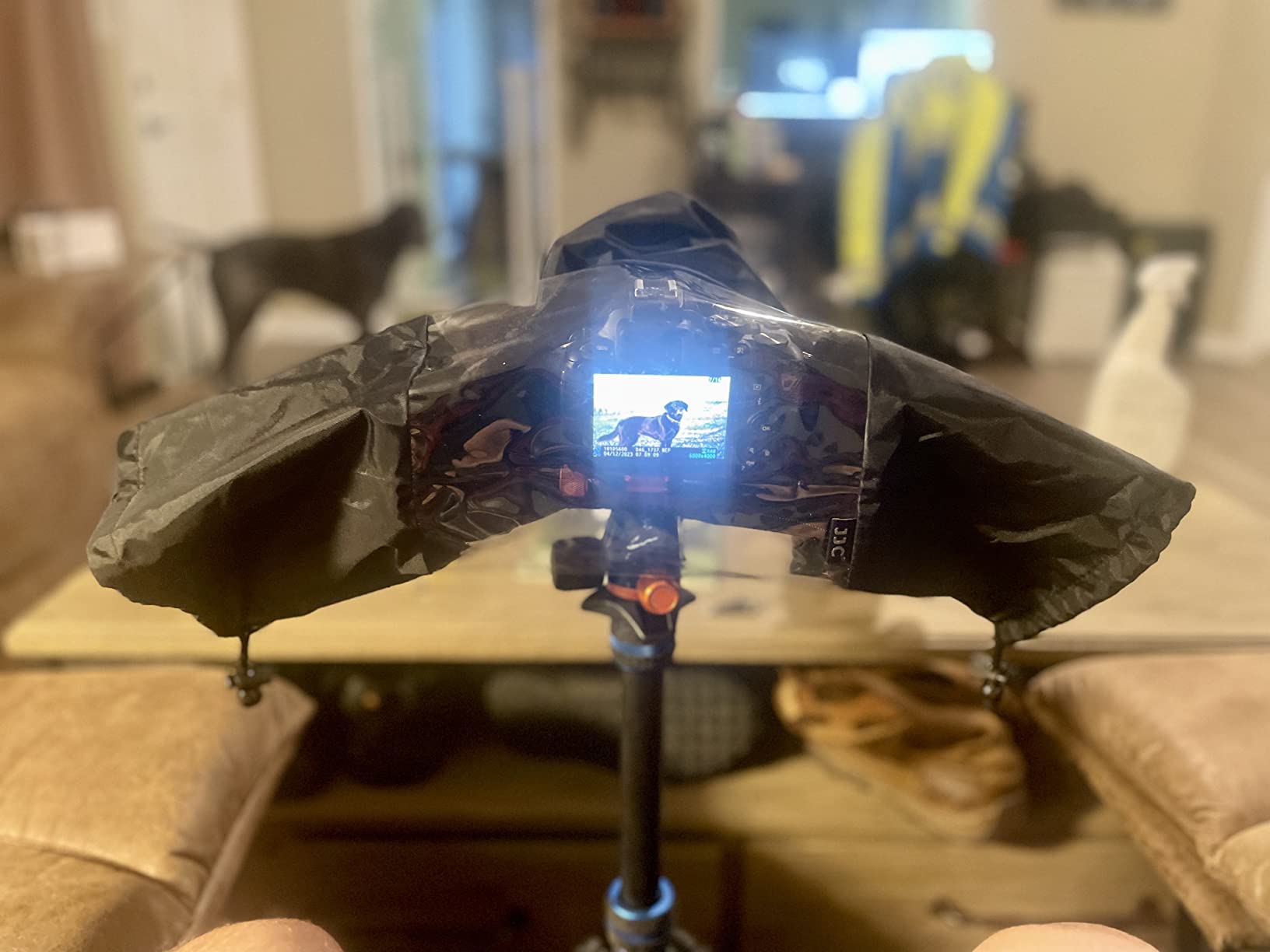
The waterproof zipper is the real differentiator. Most rain covers use regular zippers that let water seep through over time. This one uses a double-track design that keeps moisture out even in sustained rain. I tested it during a 4-hour rainstorm and stayed dry throughout.
The interior cuff design is another premium touch. Instead of just cinching around the lens, there’s an interior sleeve that creates a tighter seal. Water can’t easily find its way inside even if the outer closure loosens slightly.
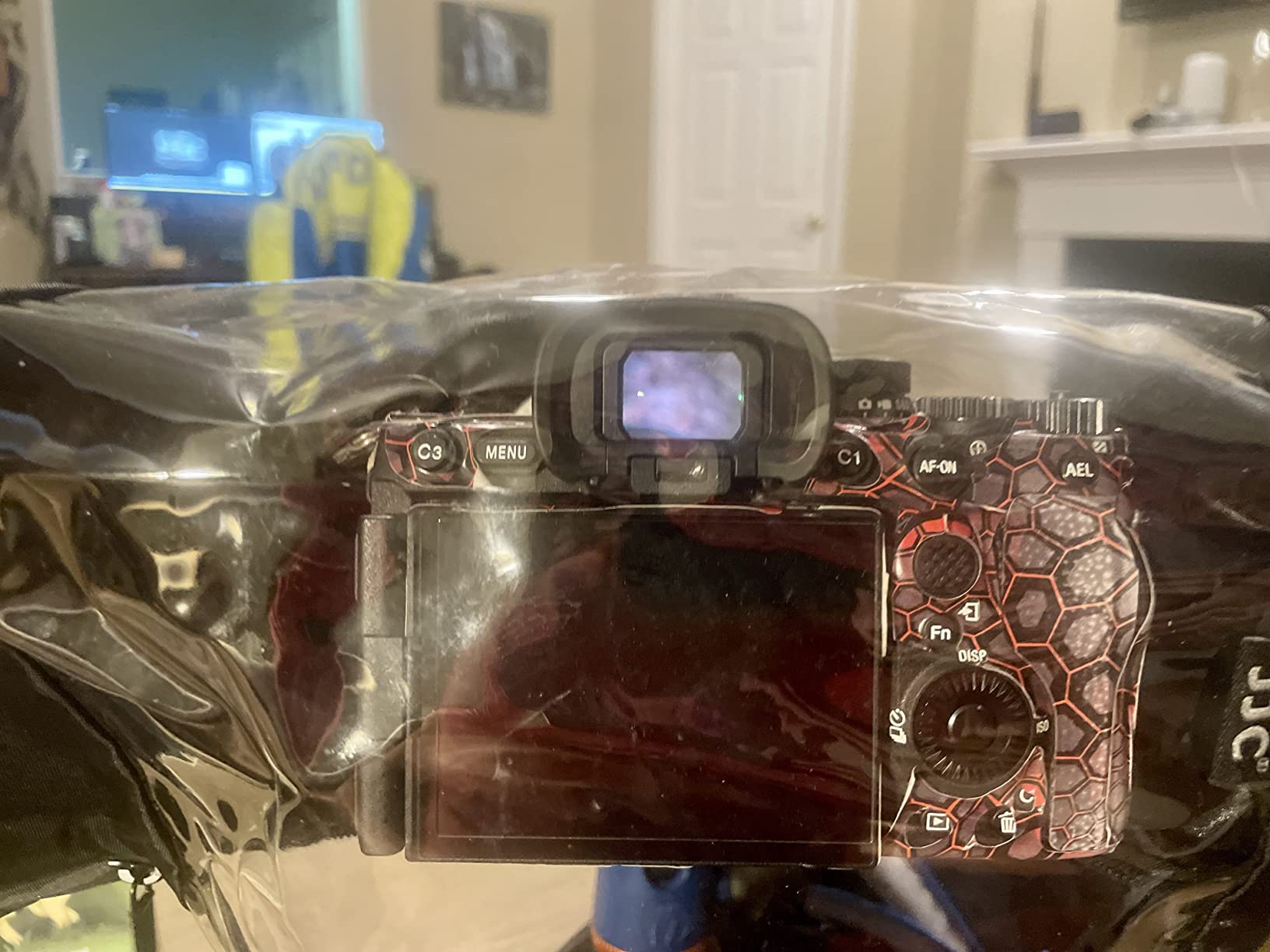
The cover fits cameras plus lens combinations up to 13.38 inches. That covers most standard zoom setups but excludes super-telephoto configurations. For wildlife with 150-600mm lenses, you’ll need a larger cover.
The combination of TPU window, waterproof zipper, and dual sleeves makes this the most functional cover in its price range. If you shoot frequently in wet conditions and need reliable touchscreen access, this is my top recommendation under $20.
Camouflage pattern
TPU window
Waterproof zipper
Wildlife photographers often overlook camouflage, but I’ve watched birds and deer spook at the sight of bright orange or white rain covers. The Kiorafoto Camouflage version solves that problem while delivering the same protection as the standard model.
I tested this cover during a 6-hour elk photography session in light rain. The camouflage pattern didn’t make my camera invisible, but it definitely reduced the reactions of nearby animals compared to my standard black covers. For skittish subjects like deer and waterfowl, every bit of stealth helps.
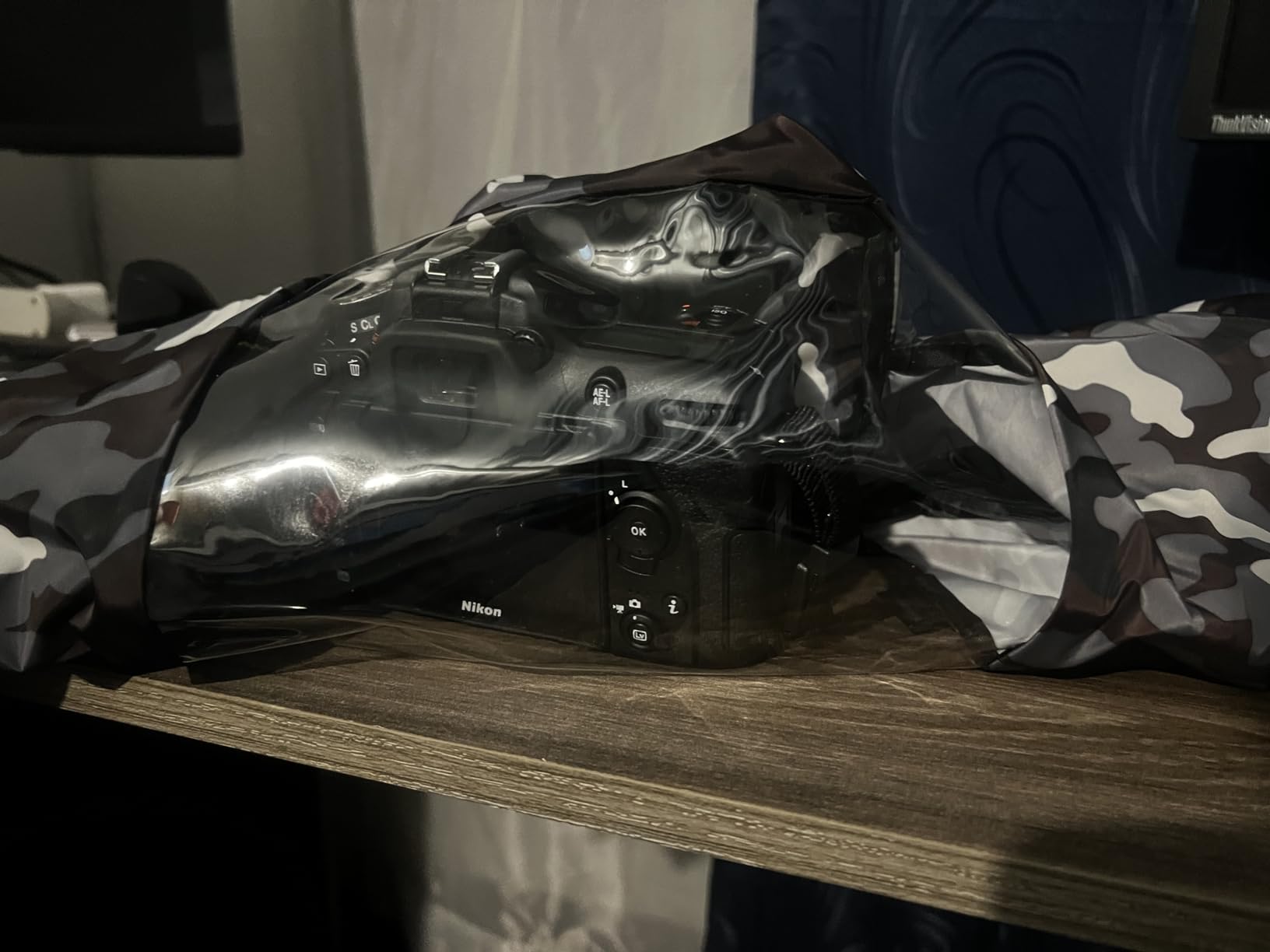
The construction matches the standard Kiorafoto Professional cover, which means you get the same TPU window, waterproof zipper, and dual sleeves. The only differences are the camouflage pattern and slightly different model designation.
One quirk I discovered: the TPU window can trigger the eye sensor on some cameras, causing the LCD to turn off when you bring your eye to the viewfinder. This happened with my Sony A7 IV but not with my Canon R5. Check your camera’s eye sensor settings if you run into this issue.
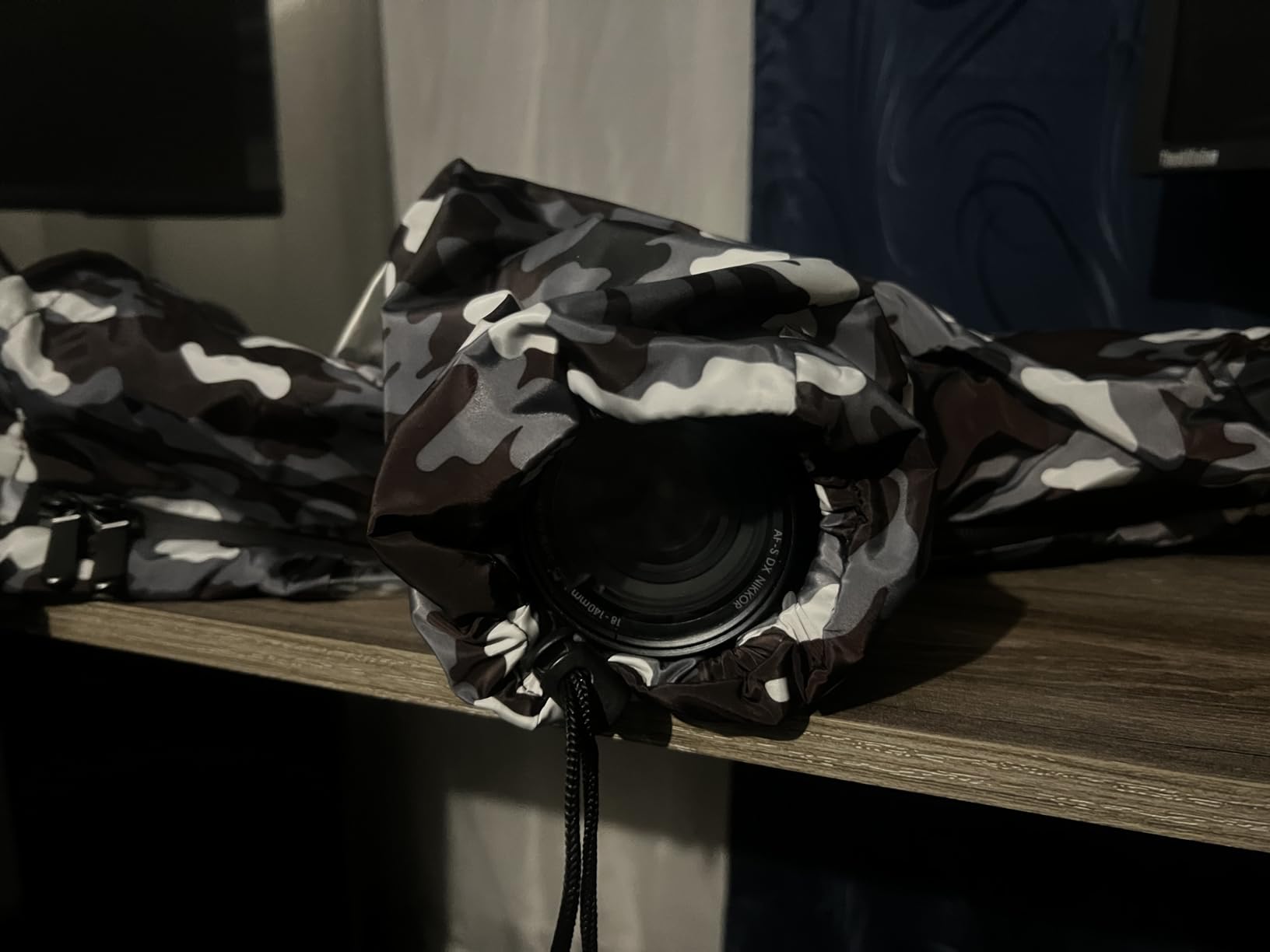
For bird photography, waterfowl, deer, and other skittish wildlife, camouflage can make the difference between getting the shot and watching your subject flee. For larger mammals or landscape work, the standard black cover works fine.
Same 13.38 inch total length limit as the standard version. Works with most DSLR and mirrorless bodies plus standard zoom lenses. If you need more room for telephotos, check out the larger sizes from Think Tank.
Hot shoe attachment
Lifetime warranty
Compact pouch
The Think Tank Emergency Rain Cover is the premium option in this guide, and the build quality shows it the moment you pick it up. The materials feel substantial, the stitching is clean, and the included storage pouch is actually useful.
What makes this cover special is the hot shoe attachment. Most rain covers rely on drawstrings or elastic to stay in place, which can loosen over time. The Think Tank version locks onto your camera’s hot shoe mount and stays put no matter how much you move around.
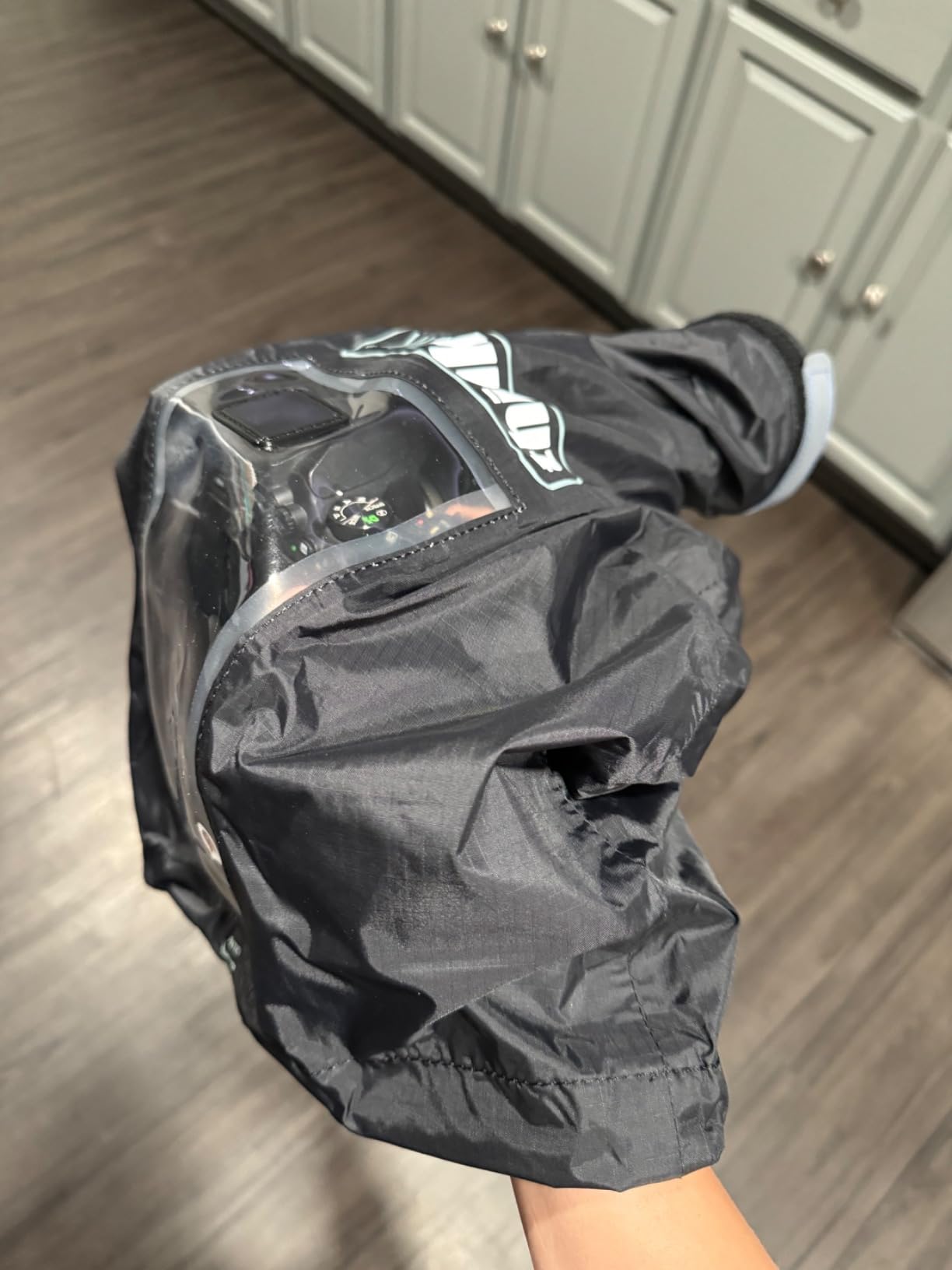
The grippy material on the lens end is another thoughtful detail. Where other covers slide around on smooth lens barrels, this one stays exactly where you put it. Combined with the Velcro strap, you get a seal that doesn’t budge.
I tested this with a Sony A7C and 35mm f/1.8, which is a compact mirrorless combo. The fit was perfect with room to spare. For larger setups like a DSLR with 24-70mm f/2.8, the fit is tighter but still functional.
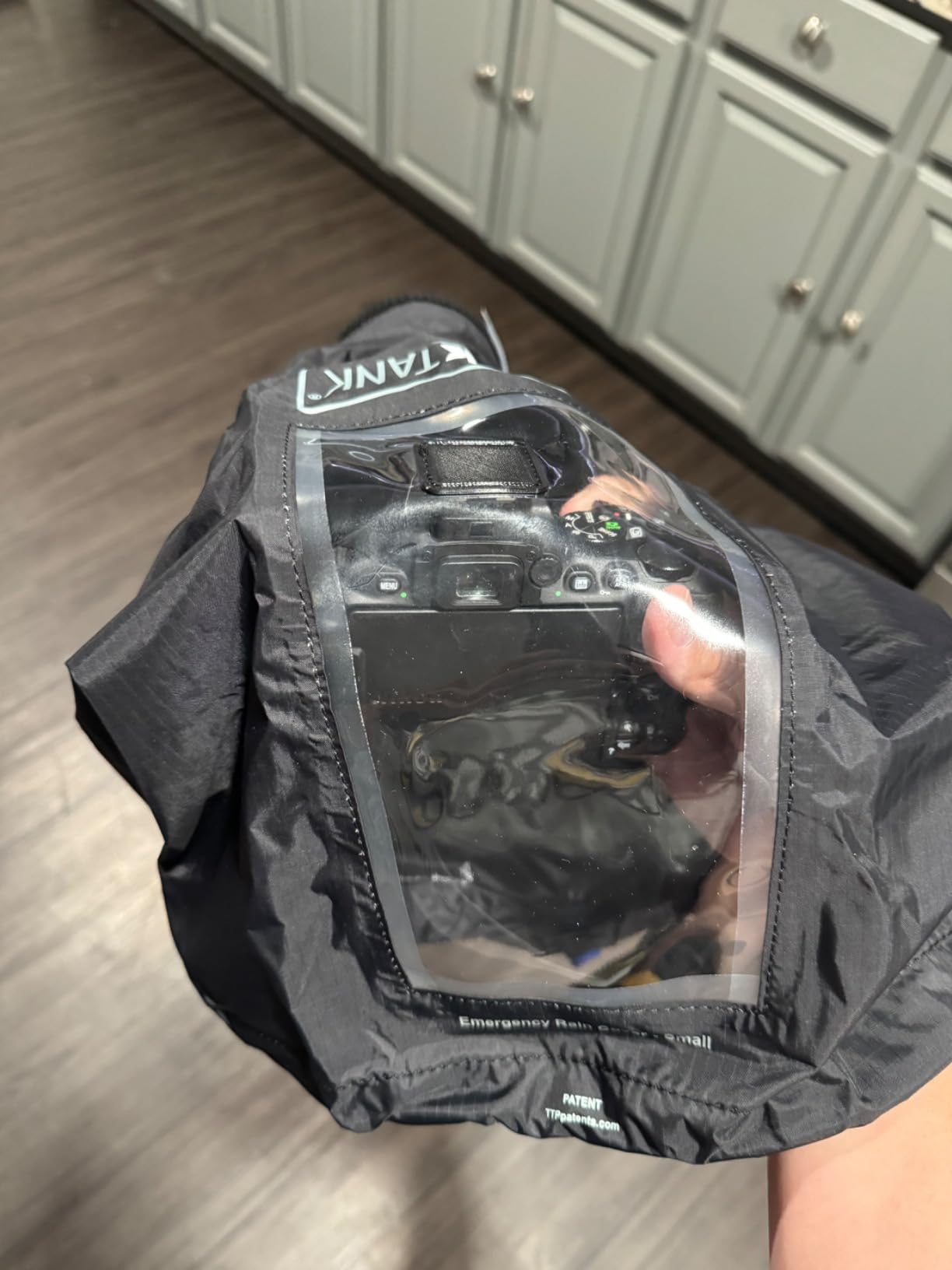
The Think Tank name comes with a lifetime warranty against defects. I’ve owned Think Tank bags for over a decade and they back their warranty without hassle. For photographers who shoot in rain regularly, that warranty alone justifies the premium price.
The small size is designed for mirrorless and compact DSLR setups with standard lenses. If you shoot with a battery grip or telephoto lens, you’ll need to size up to the medium or large version. Think Tank makes all three sizes for different configurations.
After testing dozens of rain covers over the years, I’ve learned that the right choice depends on four key factors: your camera and lens size, how you need to operate the camera, how often you shoot in wet conditions, and your budget. Let me walk you through each consideration.
The most common mistake photographers make is buying a rain cover that’s too small. Measure your longest lens configuration before ordering. Standard zoom lenses like 24-70mm fit almost any cover, but 70-200mm or longer telephotos require specific sizing.
Most rain covers list a maximum lens length in inches or centimeters. Add your camera body depth plus lens length plus any hood or filter to get the total length you need. For most photographers, covers supporting 13-18 inches handle 90% of lens combinations.
Mirrorless shooters should also check the cover’s diameter. Mirrorless cameras are more compact, so a cover designed for larger DSLRs might have excess material that gets in the way. I recommend Kiorafoto’s 11-inch cover for compact mirrorless setups.
Two main materials dominate the rain cover market. Polyethylene (PE) plastic sleeves are lightweight, see-through, and disposable. Nylon and PVC covers are more durable, often with taped seams and DWR coatings.
Tape-sealed seams are a premium feature that prevents water from seeping through stitching. Budget covers often skip this step, relying solely on the material’s water resistance. For occasional use, budget construction works fine. For daily wet weather shooting, tape-sealed construction is worth the upgrade.
DWR (Durable Water Repellent) coating helps water bead up and roll off the cover’s surface. This is more important for nylon covers than plastic sleeves, but it does extend the cover’s lifespan by preventing water saturation.
Transparent viewing windows vary in quality. Basic PE sleeves have full transparency but can fog up. Premium TPU windows resist fogging and often support touchscreen operation. For mirrorless users, TPU windows are almost mandatory because so many controls rely on the rear LCD.
Hand sleeves let you operate the camera without removing the cover. They’re essential for wildlife and sports photographers who need quick access to controls. The NEEWER cover has the best hand sleeves in this guide, with elastic cuffs that seal around your wrists.
Drawstring versus zipper closures is another decision point. Drawstrings are simpler and lighter, but zippers create more reliable seals. The Kiorafoto Professional’s waterproof zipper is the most secure closure I tested.
For wildlife photography, camouflage patterns and quiet operation matter. Bright colors can spook animals, and noisy materials interfere with audio recording. The Kiorafoto Camouflage cover addresses both concerns.
For travel photographers, weight and packability matter more than premium features. The OP/TECH Rainsleeve and JJC sleeve fold down to pocket size and add almost no weight to your bag.
For sports and event photographers, quick access and reliable operation are critical. Covers with hand sleeves and TPU windows let you work fast without exposing your camera. The NEEWER and Kiorafoto Professional covers fit this use case best.
For landscape photographers, durability and lens protection are paramount. You’re often shooting for hours in steady rain, and you need a cover that won’t fail mid-shoot. The Think Tank Emergency Cover delivers the most reliable protection for extended landscape sessions.
If you’re shooting with a Canon DSLR and standard zoom lens, most covers in the 13-18 inch range work well. Canon mirrorless cameras like the R5 and R6 are slightly larger than Sony equivalents, so check measurements before ordering.
Sony mirrorless cameras like the A7 IV and A7R V fit most compact covers. The grip is smaller than competitors, which can make some covers feel loose. Look for covers with adjustable drawstrings or Velcro straps.
Nikon Z series cameras have deeper grips than Sony or Canon, which can affect cover fit. The Kiorafoto and NEEWER covers handle Nikon bodies well, while smaller covers may feel tight.
If you want to understand the differences between these camera systems in more detail, our mirrorless vs DSLR comparison guide covers the full breakdown.
The best rain cover for a DSLR camera depends on your lens size and budget. For most photographers, the OP/TECH USA Rainsleeve offers the best combination of protection, viewfinder access, and value. For serious wet weather work, the Think Tank Emergency Rain Cover delivers premium build quality with a lifetime warranty.
Use a dedicated rain cover that fits your camera and lens combination. Key steps include: 1) Choose a cover rated for your lens length, 2) Ensure a tight seal around the lens hood, 3) Use a lens hood to deflect rain from the front element, 4) Consider a camera strap that doesn’t compromise the cover’s seal, 5) Dry your gear thoroughly after shooting. Weather-sealed camera bodies provide additional protection but should not replace a rain cover for sustained wet conditions.
For most photographers, the OP/TECH USA Rainsleeve is the best overall camera rain cover because it offers reliable protection, viewfinder access, and excellent value at around $10 for two covers. Professional photographers who shoot daily in wet conditions should consider premium options like the Think Tank Emergency Rain Cover for its superior build quality and lifetime warranty.
Under $20, the best camera rain protection comes from the Kiorafoto Professional Camera Rain Cover. It features a TPU viewing window, waterproof zipper, and dual adjustable sleeves that allow full camera operation while protected. The OP/TECH USA Rainsleeve is another strong option at around $10 with a unique eyepiece opening for viewfinder access.
After testing all eight covers, my recommendation depends on your specific needs. For most photographers shooting with standard DSLR or mirrorless setups, the OP/TECH USA Rainsleeve delivers the best balance of protection, functionality, and price. The unique eyepiece opening and lifetime warranty make it a standout choice.
If you need touchscreen compatibility and active camera operation, the Kiorafoto Professional Camera Rain Cover is worth the step up. The TPU window and waterproof zipper are features you usually only find on covers costing twice as much.
For photographers who shoot in wet conditions daily and want the most reliable protection, the Think Tank Emergency Rain Cover justifies its premium price with hot shoe attachment, lifetime warranty, and unmatched build quality. If you’re protecting expensive gear, the Think Tank name provides peace of mind.
Whatever cover you choose, remember that rain protection is essential for outdoor photography. Even weather-sealed cameras have limitations, and your lens front element is always exposed. A $10-$50 rain cover is cheap insurance for gear that costs thousands. Check out our guides to the best DSLR cameras and best mirrorless cameras to make sure your gear investment is protected.