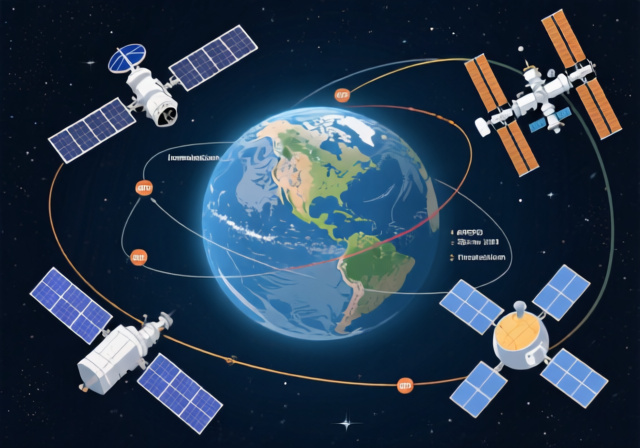
Satellites Facts: 20 Amazing Things You Should Know in 2026
Discover 20 fascinating satellite facts and learn how these amazing machines impact our daily lives, from GPS navigation to weather…

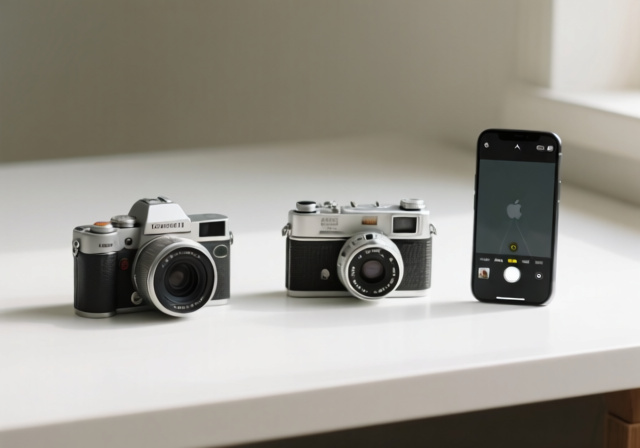
If you have walked into a camera shop or scrolled through TikTok in 2026, you already know something strange is happening. Phones keep getting more powerful, yet dedicated cameras are flying off shelves. Film is being manufactured in new factories for the first time in decades. And a new generation that grew up with infinite digital storage is paying premium prices for low-resolution, screen-free, sometimes blurry images.
Camera trends in 2026 are no longer just about megapixels and lens mounts. They are about identity, authenticity, and what kind of images we want to leave behind. The global digital camera market, valued at 7.16 billion dollars in 2023, is projected to reach 10.25 billion dollars by 2030, a 4.8 percent compound annual growth rate that tells a very different story than the “smartphones killed cameras” narrative we heard for a decade.
This guide breaks down the shifts driving that growth, the products defining the year, and the generational forces that make 2026 unlike any other moment in photography’s history. If you are a working pro, a hobbyist, or someone just curious about why cameras are cool again, you will find something here that changes how you think about your next shot.
By the Numbers: The Camera Market in 2026
Walk through any photography conversation online right now and five themes keep surfacing. Each one is reshaping what cameras get made, who buys them, and what “good photography” even means.
Key Takeaways: The 2026 camera market is defined by verified authenticity, screen-free simplicity, film-flavored digital tools, compact optics, and a generational rebellion against perfect-looking photos. These five forces overlap, and the products that succeed in 2026 tend to combine two or more of them.
Artificial intelligence has been working its way into cameras for years, but 2026 is the moment it becomes impossible to ignore. Subject-recognition autofocus, real-time exposure optimization, and generative editing tools are no longer premium extras; they are baseline expectations.
The most exciting thing I have seen in camera AI this year is not the auto-features. It is the rise of AI-verified imaging. Sony’s 2026 firmware updates for several Alpha bodies add cryptographic signing of every RAW and JPEG, using the C2PA Content Credentials standard. A photo carries a verifiable record of which camera made it, when, and what edits were applied. For photojournalists, courtroom evidence, and anyone tired of the deepfake question, this is a quiet but huge shift.
Computational Photography: The use of digital processing to enhance images beyond what traditional optics can capture, combining multiple exposures, AI algorithms, and sensor data to produce a single optimized frame.
Computational photography is also bridging the gap between phones and dedicated cameras in surprising ways. Mirrorless flagships now combine burst exposures, depth maps, and neural networks for noise reduction, often producing files that look closer to medium format than the small sensor inside would suggest. The iPhone 17 Pro Max and the Xiaomi 17 Ultra Leica Edition pushed these techniques even further this year, and traditional makers are answering back with smarter silicon and on-device AI accelerators.
On the editing side, AI has changed the production pipeline. Adobe’s generative tools can extend a frame, replace a sky, or match a color grade across hundreds of images in minutes. The result is a new kind of photographer: someone who spends less time in front of a computer and more time making decisions about what they actually want to say. AI in 2026 is not replacing creativity. It is removing the tedious work that used to get in the way of it.
Walk into a thrift store and you will see the same camera that sat on a shelf ignored for fifteen years suddenly wearing a 200 dollar price tag. That price tag tells you everything you need to know about where photography is heading.
The retro revolution has been building for a few years, but in 2026 it has crystallized into specific product categories. The Camp Snap 2 is a screen-free digital camera that mimics the simplicity of a disposable film camera, complete with a fixed-focus lens and a deliberate look. Kodak released the Charmera keychain camera, and the Polaroid Go Generation 3 has become the de facto instant camera for younger shooters. Yashica is back with quirky digital-and-film hybrids that lean into the analog aesthetic.
Why is this happening? I have spent more time than I care to admit reading threads on r/VintageDigitalCameras, and the answer users keep giving is the same: the early-2000s digital aesthetic feels different. The grain, the color shifts, the slightly soft focus, all of it looks like memory instead of an algorithm. One user put it well: “Cheap digicams from the early 2000s have a different sort of nostalgia for our generation.” That nostalgia is not just emotional; it is a creative choice.
Time Saver: You don’t have to spend hundreds on a vintage digicam to get the look. Start with film simulation modes on a Fujifilm X-series body or apps like Halide, and you can dial in a similar feel for a fraction of the cost.
Major manufacturers have noticed. Fujifilm’s X-series keeps selling out, and the new X Half is built almost entirely around the dial-in-an-analog-feel experience. Nikon Zf and Z fc cameras lean on retro dials and styling that pay homage to the FM and F3 bodies of decades past. Even Canon and Panasonic have retro-flavored models in their 2026 roadmaps. The tactile, intentional, slightly-slower experience of using a real camera is the product now, not a side effect of limited technology.
It is tempting to declare the smartphone-vs-camera debate over. Phones have won, the argument goes, and dedicated cameras are a niche for hobbyists. The data tells a more complicated story.
The iPhone 17 Pro Max and the iPhone 16 Pro, both still in active circulation, produce results that were professional-only a few years ago. The Xiaomi 17 Ultra Leica Edition pairs a one-inch type sensor with computational pipelines borrowed from camera research labs. For social media, travel snapshots, and quick family moments, a top-tier phone is genuinely enough.
But the same market research showing the digital camera industry growing toward 10.25 billion dollars by 2030 also shows that more people are buying two devices, not one. Phones handle the “always with you” job. Dedicated cameras handle the “intentional” job. The dedicated-camera market is being rebuilt around the work that phones cannot do well: large-sensor low-light, fast telephoto with real optical reach, professional video with manual audio, and the creative control that comes from physical dials and a real viewfinder.
Pro Tip: Sensor size still matters. A modern smartphone sensor is around 1/1.3 inch. A full-frame mirrorless body uses a sensor roughly 30 times larger in area. That gap is what gives dedicated cameras their low-light advantage, their shallow depth of field, and their headroom for cropping. It is also why “phone-free” cameras are suddenly a product category again.
The mirrorless-vs-DSLR split is the other half of this story. Google Trends data from late 2025 and 2026 shows mirrorless full-frame cameras decisively overtaking DSLRs in search interest and sales. The Phoblographer’s year-end analysis flagged full-frame mirrorless and zoom lenses as the dominant in-demand categories. If you are buying new in 2026, the choice is almost always a mirrorless body from Sony, Canon, Nikon, or Fujifilm, paired with a lens system that will be supported for the next decade.
One of the more interesting developments is “phone-free” photography, the idea that the best camera for a moment is sometimes one that cannot do anything else. The Camp Snap 2, Polaroid Go Generation 3, and Kodak Charmera exist because younger photographers want a device that does not pull them into apps, notifications, and editing. It is not a rejection of cameras. It is a rejection of the phone’s creeping capture of every other corner of life.
Content creation has matured into a serious product category in 2026. The cameras that succeed in this space are no longer point-and-shoots with a video mode. They are purpose-built tools designed around how creators actually work.
The workhorses are still the Sony ZV-1 II and ZV-E1, the Canon G7X Mark III, and the Fujifilm X100VI, all of which show up constantly in creator gear rundowns. They share a core set of features: flip-out screens, reliable face-and-eye autofocus, clean preamps for external microphones, and color science that flatters skin tones without grading. Add vertical video orientation as a first-class citizen, and you have the recipe that has defined this category for three years running.
The 2026 lineup adds some compelling new entries. The DJI Osmo Pocket 4P pairs a one-inch sensor with a three-axis gimbal in a body that fits in a coat pocket, which makes run-and-gun vlogging dramatically easier. The Insta360 Luna Ultra pushes modularity further, with swappable lenses and dual sensors for creators who want to switch between a wide action shot and a tighter cinematic frame without changing bodies. For more exploratory shooters, the astrophotography gear category has its own kind of momentum, with new all-in-one systems designed for one-handed night-sky capture.
Pro Tip: When choosing a content creation camera, prioritize audio quality. Many creators invest heavily in image quality but neglect sound, and bad audio will sink viewer retention faster than soft footage ever will.
What is most fascinating is how this category is bleeding back into traditional photography. Features that started in creator cameras, like live streaming over USB-C, automatic background blur, and direct cloud uploads, are now appearing on stills-focused bodies. The line between photographer and videographer is gone. The tools finally caught up.
Camera trends in 2026 cannot be understood without talking about the people buying cameras. Three generations, each with a different relationship to images, are simultaneously reshaping the market.
Gen Z photographers, born roughly 1997 to 2012, are the engine of the retro revival. They came of age looking at heavily filtered Instagram photos, and they are exhausted by it. Their preferred aesthetic embraces grain, blur, halation, and other “flaws” that older generations spent decades trying to eliminate. Film cameras, early-2000s digicams, and cameras with strong film simulation modes are their tools of choice. As photographer Casey Fatchett put it in a widely-shifted NPR segment, this generation is gravitating toward “the single use photo,” images that are imperfect, intentional, and feel like a specific moment rather than an optimized feed post.
Millennials, born 1981 to 1996, approach the same cameras with different priorities. They grew up during the transition from film to digital, and many of them have returned to photography as a mindful hobby. They are buying quality equipment that will last, investing in systems instead of gadgets, and they are the demographic most likely to spend serious money on a Hasselblad X2D II or a Ricoh GR IV. Their rebellion is not against smartphones; it is against the always-on attention economy. A real camera is a tool that asks for their full presence.
And then there is the cohort the photography world is only starting to talk about: Gen Alpha. Born from 2010 onward, the oldest Gen Alpha photographers are now 15 or 16, posting on TikTok, and they have a fundamentally different set of expectations. They have never known a world without AI, without C2PA verification, without computational film. They are the first generation to ask whether a photo is “real” as a baseline question, and they are the generation most likely to embrace AI-verified imaging, screen-free cameras, and wearable form factors. Brands that figure out Gen Alpha in 2026 will own the next decade of camera sales.
Forum Insight: Reddit users in r/generationology and r/VintageDigitalCameras are already debating whether the “physical media moment,” including film cameras, vinyl, and instant prints, is a lasting movement or a passing aesthetic. The strongest signal that it is here to stay: products like the Camp Snap 2 are selling out, and Polaroid is expanding manufacturing capacity for the first time in a decade.
The market impact is real. Camera companies can no longer succeed by selling technical specifications alone. The buying decisions in 2026 are emotional and aesthetic, and the brands that win are the ones that understand the generational motivations behind them. Retro designs, film simulation, simple interfaces, and tactile controls are not gimmicks. They are the features this generation of photographers actually wants.
Looking ahead from 2026, a few concrete products and technologies will define the next phase of photography. These are not vague predictions. They are the cameras and tools that are either shipping now or on confirmed roadmaps for late 2026 and 2026.
The Hasselblad X2D II is the most ambitious medium format body of the year, building on the X2D with faster autofocus, in-body stabilization rated for handheld long exposures, and tighter integration with Phocus Mobile for iPad-driven tethered workflows. If medium format is going mainstream, as the Phoblographer’s 2025 year-in-review suggested, this is the body that does it. On the smaller-format end, the Ricoh GR IV continues the cult-favorite street photography line with a redesigned 26mm-equivalent lens, improved high-ISO performance, and the same pocketable form factor that has made the GR series a favorite of documentary shooters for two decades.
For video and hybrid creators, the DJI Osmo Pocket 4P and the Insta360 Luna Ultra are the most interesting launches of the year. The Pocket 4P is the most refined pocket-gimbal camera DJI has made, with a one-inch sensor and a brighter lens. The Luna Ultra is Insta360’s first true creator flagship, with swappable optics and an AI-assisted editing app that makes reframing 360 footage almost automatic. Sony is also pushing its image verification technology deeper into its lineup, with the Alpha 1 II and A7 V both adding C2PA signing in 2026 firmware.
Beyond specific products, three longer-term shifts are worth watching. First, AI-verified imaging will move from a Sony-only feature to an industry standard. The C2PA coalition is growing, and consumers will start to expect signed images the way they expect HTTPS in a browser. Second, computational film will keep improving. Halide and similar apps are now joined by on-camera film simulation that goes beyond color profiles, including AI-trained grain, halation, and lens falloff models that are nearly indistinguishable from a real Portra frame. Third, sustainability and “buy it for life” thinking will keep influencing purchasing. The Phoblographer’s 2025 reader survey showed that repairability, firmware support windows, and modular accessories now rank above pure resolution on many buyers’ priority lists.
Looking Ahead: The single most important skill for photographers in 2026 is learning to work alongside AI without losing creative control. The cameras are getting smarter. The editing tools are getting more powerful. The verification systems are getting stricter. The photographers who thrive will be the ones who use these tools in service of a clear point of view, not in place of one.
Retro-style cameras from Fujifilm and Sony are trending heavily, along with content creation-focused cameras like the Sony ZV-1 II and DJI Osmo Pocket 4P. Film cameras and screen-free digital cameras like the Camp Snap 2 and Polaroid Go Generation 3 are also experiencing a major revival, especially among Gen Z photographers.
Gen Z photography trends emphasize authenticity over perfection, vintage aesthetics, film photography, and cameras that produce unique, non-digital-looking images. They reject overly processed smartphone photos in favor of grainy, imperfect images that feel genuine, intentional, and personal.
The Canon G7X Mark III, Sony ZV-1 II, Fujifilm X100VI, and vintage film cameras like the Canon AE-1 are popular on TikTok. Content creators also favor smartphones with cinematic modes, but there is growing interest in dedicated cameras like the DJI Osmo Pocket 4P and Insta360 Luna Ultra that offer more creative control.
Yes, dedicated cameras are experiencing a significant comeback in 2026. The global digital camera market is projected to grow from 7.16 billion dollars in 2023 to 10.25 billion dollars by 2030, driven by creators seeking authenticity, creative control, and alternatives to smartphone photography.
AI is transforming photography through automated editing, intelligent autofocus systems, computational imaging techniques, and AI-verified image provenance. In 2026, Sony and other manufacturers are using the C2PA standard to cryptographically sign every image, proving whether it is captured by a real camera or generated by AI.
Retro cameras offer tactile controls, unique image characteristics, and a deliberate shooting process that many photographers find refreshing. The vintage aesthetic they produce appeals to those seeking authenticity and individuality in an age of digital perfection, and it is driving demand for everything from 200 dollar point-and-shoots to modern Fujifilm X-series bodies.
Computational photography is the use of digital processing and AI algorithms to enhance images beyond what traditional optics can capture. It includes multi-frame noise reduction, depth mapping, simulated bokeh, and AI-driven scene recognition, and it is the reason modern phones can compete with dedicated cameras in many real-world situations.
Yes, digital cameras are worth buying in 2026 for anyone who wants creative control, better low-light performance, or a more intentional shooting experience. Mirrorless full-frame systems from Sony, Canon, Nikon, and Fujifilm are leading the market, and search interest in dedicated cameras continues to climb as Gen Z, millennials, and Gen Alpha drive a generational return to dedicated gear.
The photography landscape in 2026 offers more ways to make images, and more ways to think about them, than at any point in the last twenty years. Whether you are a working professional, a hobbyist returning to the craft, or someone picking up a camera for the first time, the trends covered in this guide give you a roadmap for what to buy, what to skip, and what to pay attention to.
My honest advice is to not get caught up in chasing every trend. The cameras that work best are the ones that fit how you actually shoot. If that means a vintage digicam with no screen and a fixed lens, embrace the constraints. If that means the latest AI-driven mirrorless flagship with C2PA verification built in, invest in the system that will grow with you. The best camera trend in 2026 is the one that helps you make the photos only you can make.
For more photography guides and tips that blend traditional craft with modern tools, the rest of the site has deeper dives into specific techniques and gear categories worth exploring as you plan your next move.

![Flower Photography Ideas: Complete Guide for Capturing Stunning Botanical Photos [cy]](https://revellphotography.com/wp-content/uploads/2026/09/featured-update-4128-1789145532922.jpg)
![Can Birds See At Night? [cy] Complete Guide to Avian Night Vision](https://revellphotography.com/wp-content/uploads/2026/09/featured-update-4039-1789143968631.jpg)