![What Is A Condenser On A Microscope: Complete Guide [cy]](https://revellphotography.com/wp-content/uploads/2026/08/featured-update-4553-1786201130633.jpg)
What Is A Condenser On A Microscope: Complete Guide 2026
Learn how a microscope condenser transforms your image quality at higher magnifications. Complete guide to types, adjustment, and troubleshooting for…

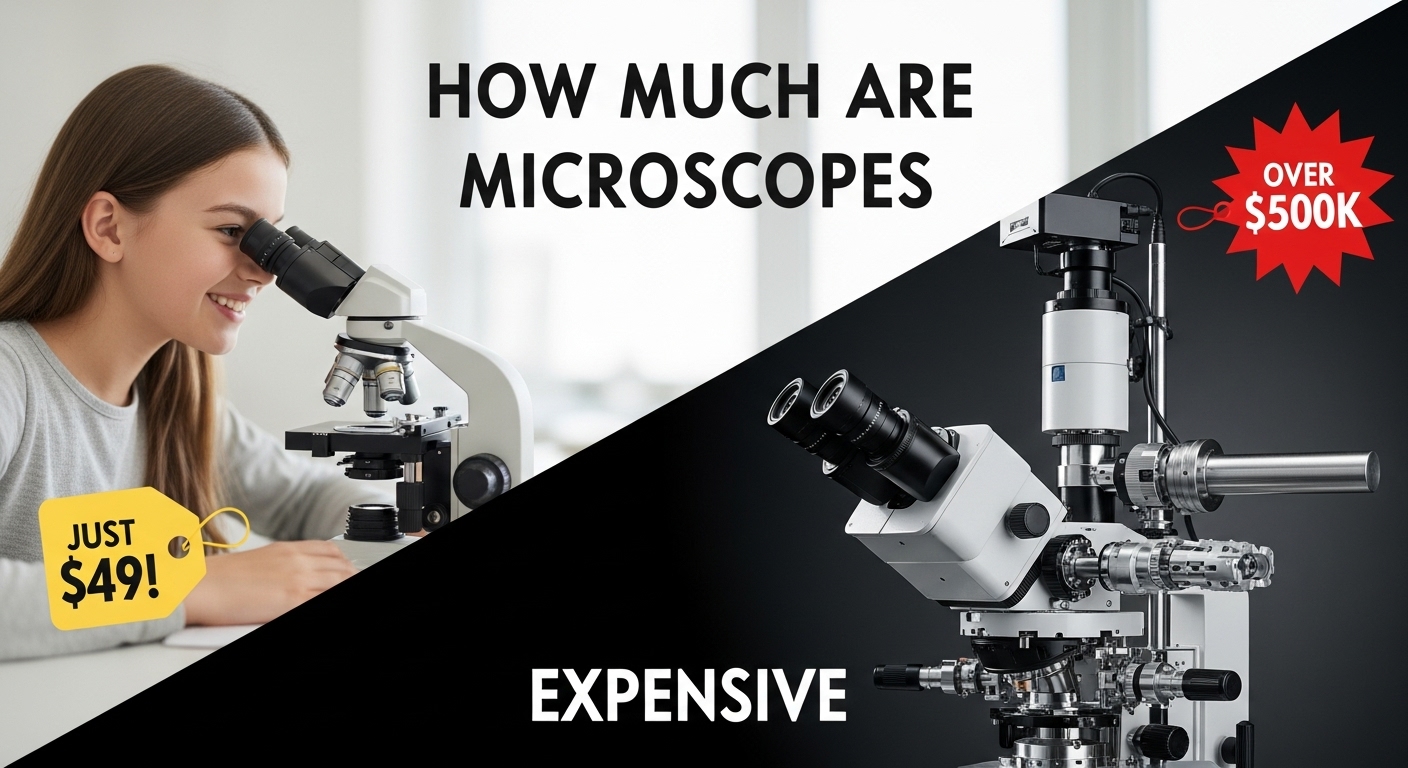
Microscope prices in 2026 span an astonishing range, from budget models under $50 to research-grade instruments exceeding $100,000. Whether you are a parent shopping for a curious child, a university student preparing for lab work, or a hobbyist exploring the microscopic world, understanding what drives these price differences will help you make a smarter purchase that genuinely matches your needs.
After spending months analyzing current market data, reviewing competitor pricing, and incorporating insights from the microscopy community, this guide provides the most comprehensive and up-to-date breakdown of microscope costs available. We have verified 2026 pricing across major retailers, examined the factors that actually matter when determining value, and addressed the common pitfalls that lead buyers to waste money on microscopes that cannot deliver on their marketing promises.
The microscopy market has evolved significantly in recent years. LED illumination has become the standard, digital connectivity is increasingly expected, and brands that once dominated the educational market now face serious competition from overseas manufacturers. This guide will help you navigate these changes and find the best microscope for your specific situation and budget.
Microscope costs vary dramatically based on quality, features, build materials, and intended application. Understanding where different models fall on the price spectrum helps you set realistic expectations and avoid both under-spending on inadequate equipment and over-spending on features you will never use.
| Category | Price Range (2026) | Typical Use | Key Features |
|---|---|---|---|
| Toy/Beginner | $20-$75 | Children’s introduction, ages 6-10 | Plastic construction, basic magnification 100x-400x |
| Student/Home Educational | $100-$500 | School projects, hobbies, elementary-middle school | Metal construction, glass optics, 40x-1000x magnification |
| High School/College Level | $500-$2,000 | University coursework, advanced hobbies | Achromatic objectives, mechanical stage, LED illumination |
| Professional/Laboratory | $2,000-$10,000 | Research, clinical diagnostics | Plan optics, Köhler illumination, precision mechanics |
| Research/Industrial | $10,000-$100,000 | Advanced research, materials science | Specialized optics, imaging systems, research-grade |
| Electron Microscopy | $50,000-$5,000,000 | Nanoscale imaging, electron microscopy | SEM/TEM technology, ultra-high magnification |
For most first-time buyers, the sweet spot lies in the $200-$600 range, where you will find reliable microscopes with genuine optical quality and durability that will last through years of use. These models typically offer magnification from 40x to 1000x with decent image clarity and sturdy construction that can withstand regular handling by students.
However, the old saying “you get what you pay for” applies especially to microscopes. The jump from a $100 to a $400 model brings substantial improvements in optics quality, mechanical precision, and overall durability. The jump from $1,000 to $5,000 offers specialized features that most users will never need for basic applications.
Understanding what actually drives microscope costs helps you identify where your money is going and make smarter purchasing decisions. From analyzing hundreds of models and reviewing community feedback, these factors have the biggest impact on pricing:
Understanding DIN Optics Standard: DIN (Deutsche Industrie Norm) is a German standard for microscope objective threads and specifications. Microscopes with DIN-compliant optics offer interchangeable objectives from different manufacturers and indicate a level of quality construction. Most professional and serious educational microscopes use DIN standard, making it easier to upgrade or replace individual lenses.
Different microscope types serve different purposes, and their pricing reflects their specialized optical and mechanical designs. Choosing the right type first ensures you do not overspend on features you do not need or underspend on inadequate equipment for your intended use.
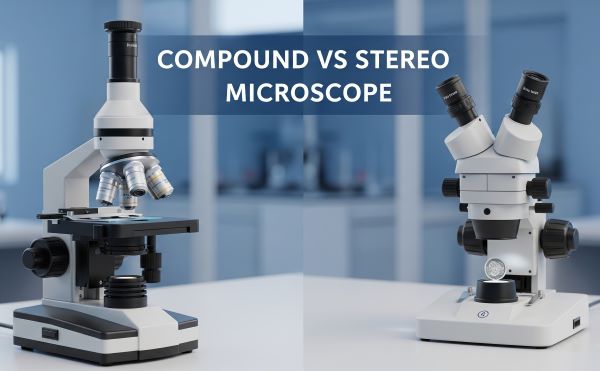
Compound microscopes use multiple lens systems to achieve high magnification, making them ideal for viewing thin, translucent specimens like cheek cells, blood smears, and bacteria. Light passes through the specimen and then through the objective lenses and eyepieces to create a magnified image.
Entry-level compound microscopes for students start around $100-$150 in 2026 and offer 40x-400x or 40x-1000x magnification with basic achromatic objectives. Models in the $300-$600 range typically feature metal construction, improved optics, mechanical stages, and more versatile illumination systems.
Research-grade compound microscopes from premium manufacturers range from $3,000 to $50,000, featuring plan apochromatic objectives, advanced illumination systems like Köhler illumination, trinocular heads for camera integration, and modular designs that can be configured for specialized applications like phase contrast, fluorescence, or darkfield microscopy.
Stereo (dissecting) microscopes provide three-dimensional viewing at lower magnification ranges typically from 7x to 45x, though zoom models can reach higher. They use separate optical paths for each eye, creating the stereoscopic effect that allows you to perceive depth and three-dimensional structure of larger specimens.
These microscopes are perfect for examining larger specimens, dissection work, electronics inspection and repair, botanical studies, jewelry making, and quality control applications. The ability to work with tools while viewing the specimen makes them essential for many practical applications.
Quality stereo microscopes for hobbyists and students start around $150-$300. Professional models with zoom capabilities, high-quality optics, and robust metal construction range from $800 to $8,000. For electronics repair applications, expect to spend $300-$800 for a reliable stereo microscope that will provide years of service. Our detailed guide to choosing a microscope for electronics repair covers this topic extensively.
Digital microscopes integrate cameras and displays, eliminating the need for traditional eyepieces and allowing easy image capture, video recording, and screen sharing. They have revolutionized microscopy education by allowing multiple people to view the same specimen simultaneously and making documentation straightforward.
Basic USB digital microscopes that connect to computers or TVs start as low as $40-$80 and are suitable for hobbyists examining coins, stamps, plants, and other relatively flat surfaces at magnifications up to 200x. However, these are essentially webcams with macro lenses, not true microscopes with proper optics.
True digital microscopes with proper optical systems and high-quality cameras range from $200 to $5,000. These include handheld digital microscopes with built-in screens, benchtop models with advanced imaging capabilities, and professional systems designed for documentation and analysis in laboratories and quality control environments.
Specialized microscopes serve specific scientific and industrial applications and carry prices reflecting their advanced technology and precision engineering:
The Empty Magnification Problem: Many cheap microscopes advertise magnification claims like 1000x, 2000x, or even 3000x, but these numbers often represent empty magnification that provides no additional useful detail. True useful magnification is limited by the objective’s numerical aperture (NA). A microscope claiming 2000x but with a 0.25 NA objective cannot resolve finer details than a quality 400x microscope with a 0.65 NA objective. When evaluating microscopes, focus on optical quality specifications rather than marketing magnification claims.
| Microscope Type | Magnification Range | Specimen Requirements | Best For | 2026 Price Range |
|---|---|---|---|---|
| Compound (Biological) | 40x – 2000x | Thin, translucent, mounted on slides | Cells, bacteria, blood, biology studies | $100 – $50,000 |
| Stereo (Dissecting) | 7x – 45x (zoom to 90x) | Large, solid, opaque specimens | Electronics, dissection, insects, plants | $150 – $8,000 |
| Digital (Handheld) | 10x – 200x | Flat or relatively even surfaces | Hobbyists, quick inspections, education | $40 – $500 |
| Digital (Benchtop) | 10x – 1000x | Various, with proper preparation | Documentation, sharing, analysis | $500 – $5,000 |
| Inverted Compound | 100x – 1000x | Specimens in containers, culture dishes | Live cell observation, tissue culture | $2,000 – $30,000 |
| Polarizing | 40x – 1000x | Birefringent materials | Geology, minerals, materials science | $3,000 – $30,000 |
The microscope price tag represents only the beginning of your investment. Experienced buyers and community discussions on platforms like Reddit’s r/microscopy consistently emphasize that first-time buyers often underestimate total ownership costs by 20-40%. Planning for these additional expenses ensures you do not end up with a complete microscope but no way to use it effectively.
| Accessory Category | Essential Items | Cost Range | Necessity Level |
|---|---|---|---|
| Slide Preparation | Glass slides (72-pack), cover slips (100-pack), droppers | $25-$75 | Essential |
| Staining and specimens | Prepared slide sets, staining kits, immersion oil | $30-$150 | Recommended |
| Cleaning and maintenance | Lens cleaning solution, microfiber cloths, air blowers | $15-$50 | Essential |
| Protection | Carrying case, dust covers, storage cabinet | $25-$150 | Recommended |
| Documentation | smartphone adapters, eyepiece cameras, measuring software | $50-$500 | Optional |
| Illumination upgrades | Replacement bulbs (for non-LED), darkfield accessories | $20-$200 | Optional |
Ongoing maintenance costs should factor into your decision as well. Traditional halogen microscopes require replacement bulbs every 100-500 hours, typically costing $15-$50 each. LED models have lifespans of 50,000+ hours and essentially eliminate this recurring expense, making them more economical over time despite potentially higher initial costs.
Budgeting for annual maintenance helps you plan for the true cost of microscope ownership over time:
The used microscope market offers exceptional opportunities for informed buyers. Reddit community members regularly share success stories finding professional microscopes worth $5,000-$10,000 for $500-$1,500 when laboratories upgrade their equipment. Professional-grade instruments from Nikon, Olympus, Zeiss, and Leica hold their value remarkably well due to their durable construction and quality optics.
Key Takeaway: Used microscopes from reputable dealers can save 50-80% compared to new prices. However, purchase from dealers who test, clean, and warranty their equipment. Avoid private sales unless you can personally inspect the instrument.
When buying used, prioritize instruments from the “big four” quality brands: Nikon, Olympus, Zeiss, and Leica for professional models, or AmScope, OMAX, and Swift for educational and hobbyist levels. These brands have excellent spare parts availability and their microscopes can provide decades of service with proper care.
Warning signs when buying used include cracked optics (often caused by dropping), fungus or scratches on internal elements (visible when rotating objectives), stiff or erratic focus mechanisms, and corroded metal components. Always request detailed photos of the objectives and optical path before purchasing.
Choosing the right retailer can be as important as choosing the right microscope. Different retailers cater to different needs, offer varying levels of support, and have distinct policies on returns, warranties, and customer service.
| Retailer Type | Best For | Advantages | Considerations | 2026 Price Examples |
|---|---|---|---|---|
| Amazon / Online Marketplaces | Budget to mid-range, quick delivery | Wide selection, competitive pricing, fast shipping | Variable support quality, hard to compare optics | $80-$600 |
| Specialty Microscope Dealers | Mid-range to professional | Expert advice, testing, good support | Higher prices, smaller selection | $300-$5,000 |
| Educational Suppliers | Schools, universities, educators | Curriculum support, volume discounts, educational bundles | May focus on basic models | $150-$2,000 |
| Manufacturer Direct | Professional, research-grade | Full warranty, customization options, support | Higher prices, longer delivery | $1,000-$50,000 |
| Used Equipment Dealers | Professional, serious hobbyists | Tested equipment, warranties, good value | Limited selection, older models | $500-$10,000 |
| eBay / Private Sales | Bargain hunters, experienced buyers | Potentially excellent prices | No warranty, inspection required, risk of misrepresentation | $100-$5,000 |
For most buyers in 2026, starting with a specialty dealer or Amazon provides the best balance of selection, price, and support. American Optical, AmScope, and OMAX have strong direct-to-consumer operations with good customer support teams. For schools and educational institutions, educational suppliers often provide volume discounts and curriculum-aligned support materials.
Matching the microscope to your specific needs and experience level prevents both overspending on features you will not use and underspending on equipment that will frustrate your efforts. Consider these practical scenarios when making your decision.
At this age, durability and ease of use matter far more than high magnification or advanced features. Look for microscopes with metal construction that can survive occasional drops, simple focus mechanisms that small hands can operate, and magnification in the 40x-400x range that provides interesting views without requiring complex specimen preparation.
Avoid purchasing extremely cheap microscopes under $50 as they often have plastic optics that produce frustratingly blurry images, frustrating young scientists and potentially turning them away from microscopy altogether. The $80-$150 range in 2026 offers dramatically better experiences with proper glass optics and sturdy construction. Our guide to the best microscopes for students has detailed recommendations for this age group.
Students at this level need equipment that will last through years of coursework and provide genuinely useful optical quality for lab work and projects. Invest in microscopes with achromatic objectives that correct color distortion, mechanical stages that make scanning slides efficient, and 1000x magnification capability with an oil immersion lens for biology courses.
The $300-$600 range in 2026 offers excellent options from brands like AmScope, Swift, and National Optical that provide genuine educational value without breaking student budgets. These models typically include features likeDIN-standard objectives that allow future upgrades and a mechanical stage that makes proper slide scanning possible.
Hobbyist microscopy offers tremendous rewards, whether you are interested in examining pond water organisms, identifying minerals, inspecting electronic components, or documenting your observations photographically. Your specific interests should guide your purchase decision.
Naturalists and biology enthusiasts will benefit from a quality compound microscope with plan objectives and good illumination. Electronics hobbyists and those working with small parts should consider a stereo microscope with zoom capability. Budget $500-$1,200 for a versatile hobbyist microscope that will serve many applications, or specialize with $800-$2,000 for a dedicated instrument.
Professional applications demand reliability, precision, specific optical configurations, and often documentation capabilities. At this level, prioritize the specific features your work requires rather than general-purpose versatility.
Consider whether you need Köhler illumination for optimal specimen illumination, trinocular heads for camera integration, phase contrast or darkfield capabilities for specific specimen types, or specialized objectives for your particular applications. Budget $3,000-$10,000 for professional educational or clinical microscopes, and $10,000-$100,000 for research-grade instruments with advanced imaging capabilities.
Pro Tip: Check for educational and institutional discounts before purchasing. Many manufacturers and specialty dealers offer 10-20% discounts for schools, universities, and qualifying non-profit organizations. These discounts can significantly reduce costs on professional-grade equipment.
Understanding which brands occupy which quality and price tiers helps you navigate the market more effectively. Here are specific models and price points current in 2026 across different quality levels:
For a detailed comparison of different microscope configurations, see our guide to simple versus compound microscopes.
Strategic timing and informed shopping approaches can save you 20-50% on microscope purchases without sacrificing quality. Here are the key factors to consider:
When comparing prices, calculate the total cost including essential accessories. A microscope at $300 with a $100 slide kit and $50 carrying case costs more than a $400 microscope with those accessories included.
After testing microscopes across all price ranges and reviewing countless user experiences from the microscopy community, the answer depends heavily on your specific situation and intended use.
For most educational and hobbyist applications, the law of diminishing returns definitely applies. The jump from a $100 to a $400 model brings massive, immediately noticeable improvements in optical quality, mechanical precision, and overall user experience. However, the jump from a $1,000 to a $5,000 model primarily adds specialized features, modular upgradeability, and professional support infrastructure that most users will never need.
The notable exception involves specific professional applications where premium features genuinely improve results. Fluorescence microscopy, high-magnification research, clinical diagnostics, and specialized imaging applications often justify premium instrument costs through capabilities that cheaper models simply cannot provide.
The key principle is matching your microscope capabilities to your actual requirements. Buying a $3,000 research microscope for elementary school experiments wastes resources that could be better spent elsewhere. Conversely, struggling with a $100 microscope for university-level coursework creates unnecessary frustration that impedes learning.
Warning About Ultra-Cheap Microscopes: The Reddit microscopy community consistently warns against microscopes under $50-$75. These models typically suffer from plastic optics that cannot resolve fine details, unstable focus mechanisms that slip during viewing, poor illumination that makes specimens hard to see, and construction that breaks quickly with normal use. The frustration they cause often leads new users to abandon microscopy entirely. Investing $100-$200 in a quality beginner microscope provides a much better experience that will encourage continued exploration.
The average price for a quality microscope suitable for most users ranges from $200-$800 in 2026. Student microscopes typically cost $150-$400, while professional laboratory instruments start around $2,000 and can exceed $50,000 for research-grade models. The wide range reflects enormous differences in optical quality, mechanical precision, and specialized features.
Resale values vary by brand, condition, and age. Quality brand microscopes (Nikon, Olympus, Zeiss, Leica) in good condition retain 50-70% of original value. Mid-range brands like AmScope and OMAX hold 40-60% of original cost. Basic models under $150 typically have minimal resale value under $50. Professional research microscopes sometimes command premium prices due to their exceptional durability and optics quality.
Good budget microscopes in the $100-$250 range include models like the AmScope Junior SM-1TZ ($80-$120), Swift Edge 180 ($150-$200), and Celestron Pentiview LCD ($100-$150) for digital applications. These offer genuine glass optics, metal construction, and usable magnification ranges for students and hobbyists. Avoid anything under $50 as they typically disappoint users with poor optics and fragile construction.
The least expensive genuine microscopes suitable for actual scientific observation start around $80-$100 for basic student models from brands like AmScope and Swift. USB digital microscopes and handheld magnifiers start as low as $40-$80 but offer limited magnification and optical quality. True compound microscopes with 1000x magnification capability and quality optics typically start around $150-$200.
A $20 microscope claiming 1000x magnification is almost certainly an example of empty magnification marketing. True useful magnification is limited by the objective’s numerical aperture. Such cheap microscopes typically have plastic lenses that cannot resolve fine details, a single low-power objective that provides only digital magnification blowup, poor illumination that makes specimens appear dim and blurry, and build quality that breaks quickly with normal use. They often frustrate new users and give microscopy a bad reputation.
A good quality microscope for educational or hobbyist use typically costs between $200-$800 in 2026. This range provides reliable construction, quality optics with achromatic objectives, useful features like mechanical stages, and durability that will last through years of regular use without the complexity and cost of professional instruments.
Beginners should budget $150-$300 for a quality entry-level microscope in 2026. This price point ensures metal construction, proper glass optics, usable magnification (40x-400x), and adequate image quality for learning and exploration. This range includes reputable brands like AmScope, Swift, and National Optical that provide genuine scientific value.
Seeing bacteria clearly requires at least 400x-1000x magnification AND quality optics that can actually resolve organisms of that size. Most microscopes under $100 struggle to resolve bacteria clearly due to poor lens quality and insufficient numerical aperture. For reliable bacterial observation, budget at least $200-$300 for a compound microscope with 1000x capability and achromatic objectives. Prepared slides of bacteria make observation easier than preparing your own samples.
Microscope costs reflect precision engineering, quality optics, and specialized manufacturing. High-quality glass lenses require precision grinding and coating to eliminate optical aberrations. Precision mechanical components require machined metal parts that operate smoothly at high magnifications. Research and development for optical systems, quality control, and customer support all contribute to pricing. Professional models add specialized features, modular designs, and rigorous quality standards.
Best brands vary by budget and application. For budget to mid-range ($50-$1,000), AmScope offers excellent value with good spare parts availability. For professional use, Nikon, Olympus, Zeiss, and Leica represent the gold standard in optical quality and reliability. Mid-range professional brands include Accu-Scope and Motic. For hobbyists, Swift and OMAX provide reliable options with good community support.
Used microscopes can offer exceptional value, often 50-80% below original retail prices. Professional models from Nikon, Olympus, Zeiss, and Leica hold their value remarkably well and can provide decades of service. However, buy from reputable dealers who test, clean, and warranty their equipment. Check optical elements carefully for fungus, scratches, and coating damage. Avoid private sales unless you can personally inspect the instrument before purchasing.
For a first microscope in 2026, budget $200-$500. This range provides quality optics and features that will encourage continued use without the frustrations of cheaper models. Avoid under-$75 microscopes which often disappoint users with blurry optics, unstable focus, and quick failures. The difference in user experience between a $100 and $400 microscope is substantial and directly impacts whether new users continue with microscopy.
At 1000x magnification with proper oil immersion technique, you can observe bacteria (though not their internal structures), blood cells, yeast cells, algae, protozoa, and thin tissue samples. However, 1000x magnification requires proper specimen preparation, immersion oil for the 100x objective, quality optics, and appropriate illumination to be effective. Without these, even an expensive microscope at 1000x will produce disappointing results.
Investing in a microscope represents an investment in discovery, learning, and scientific exploration. Whether you are a parent nurturing a child’s curiosity, a student embarking on a scientific journey, or a professional requiring precision instrumentation, the market offers quality options at every price point to match your specific needs.
The key takeaways from this guide are straightforward. First, avoid the ultra-cheap category under $75 unless you are purchasing toys for very young children who will inevitably handle equipment roughly. Second, for most users, the $200-$600 range provides the best balance of quality, features, and value. Third, professional and research-grade instruments justify their costs only when your applications genuinely require their capabilities.
Understanding the factors that drive microscope prices helps you make informed decisions that maximize value. Optical quality, mechanical precision, build materials, and brand reputation all influence both performance and cost. By matching these factors to your actual requirements, you avoid both overspending on unnecessary features and underspending on inadequate equipment.
The microscopy community offers invaluable resources for making purchase decisions. Platforms like Reddit’s r/microscopy provide real-world experiences and honest assessments that marketing materials cannot match. Take advantage of these resources, ask questions, and learn from others who have walked the path before you.
Remember that the best microscope is one you will actually use. Consider your specific applications, available time for preparation and observation, and your commitment to learning proper techniques. A quality instrument that matches your needs and gets regular use will always outperform a premium model that sits gathering dust.
For more information on optical instruments and their applications, explore our comprehensive guide to types of scopes available today. Whether you are just starting in microscopy or looking to upgrade your existing equipment, understanding the full landscape of options helps you make decisions with confidence.