![Still Life Photography Ideas: 25+ Creative Concepts for [cy]](https://revellphotography.com/wp-content/uploads/2026/09/featured-update-4501-1788825916610.jpg)
Still Life Photography Ideas: 25+ Creative Concepts for 2026
Discover 25+ creative still life photography ideas from beginner to advanced. Learn professional lighting techniques, composition fundamentals, and setup tips…

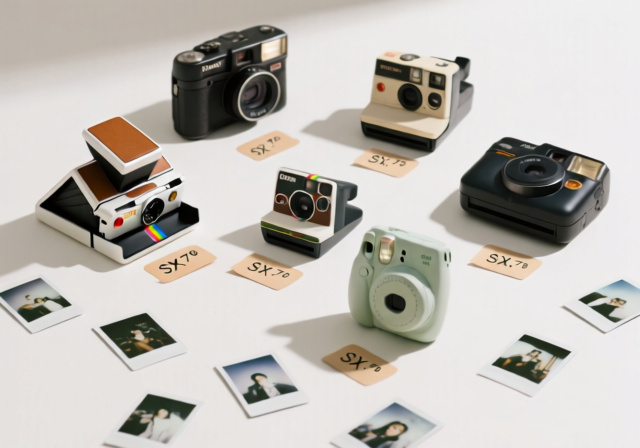
If you have typed “how much does a Polaroid camera cost” into a search bar recently, you have probably noticed the numbers have shifted. Polaroid refreshed most of its lineup in late 2026, and the entry-level price now sits closer to $90 instead of $70. At the top end, the flagship I-2 has crept toward $615.
Instant photography has gone through a strange boom over the past five years. Used SX-70s that used to sit in thrift store bins for $20 are now actively traded at $150 or more. Fujifilm keeps pushing Instax prices down. Polaroid keeps pushing film quality up. The result is a pricing landscape that rewards a little research before you swipe your card.
This guide covers exactly what you will pay for a new Polaroid in 2026, what vintage models actually trade for on the secondary market, where the cheapest legitimate deals hide, and how film costs stack up against the Instax alternative. I have refreshed every price range using live retail data from Polaroid.com, Walmart, Target, and Best Buy, plus real transaction data from eBay and the r/Polaroid community.
Quick Answer for 2026: A new Polaroid camera costs between $89.99 and $614.99. Entry-level Polaroid Go Generation 3 models start at $89.99, mid-range Polaroid Now and Now+ models run $88 to $164.99, and the professional Polaroid I-2 sits at $599.99 to $614.99. Vintage working Polaroid SX-70 cameras typically trade for $100 to $250, and film adds about $2.37 per photo.
Pricing for instant cameras breaks into four natural tiers, each aimed at a different buyer. Knowing which tier matches your habits is the fastest way to avoid overspending on features you will never use or underspending on a camera that frustrates you within a week.
| Camera Category | Price Range (2026) | Best For | Film Cost/Photo |
|---|---|---|---|
| Budget New (Polaroid Go Gen 3) | $89.99 – $109.99 | Gift buyers, casual users | $2.37 (i-Type) |
| Mid-Range New (Now Gen 3, Now+ Gen 3) | $88 – $164.99 | Everyday shooters, enthusiasts | $2.37 (i-Type) |
| Premium New (Polaroid Flip) | $234.99 | Serious hobbyists | $2.37 (i-Type) |
| Flagship (Polaroid I-2) | $599.99 – $614.99 | Professionals, collectors | $2.37 (i-Type) |
| Vintage Working (OneStep, SX-70, 600) | $40 – $250 | Collectors, style seekers | $2.37 (600 or SX-70 film) |
| Instax Alternative (Mini 12, Wide 400) | $70 – $200 | Budget buyers, frequent shooters | $1.00 – $1.10 |
Film pricing tells its own story. Polaroid i-Type film averages $19 for eight exposures, which works out to $2.37 per shot. Fujifilm Instax Mini film averages $20 for twenty exposures, or roughly $1.00 per shot. If you plan to shoot regularly, that gap can be worth hundreds of dollars a year.
Polaroid’s 2026 lineup consists of five current models, each positioned at a clear price point. The Generation 3 refresh updated autofocus and exposure algorithms across the Now family, and a brand-new entry-level Go was introduced during the cycle. Here is what each one actually costs right now and what you get for the money.
The Polaroid Go Generation 3 is the smallest analog instant camera Polaroid makes and the cheapest way to buy into the brand. It launched as a direct replacement for the Go Generation 2 and now retails at $89.99 from Polaroid.com, with bundles (camera plus one film pack) reaching $109.99 at Walmart and Target.
Despite the credit-card footprint, the Go Gen 3 keeps a self-timer, selfie mirror, double-exposure mode, and a rechargeable USB-C port. It shoots the smaller Go-format film, which measures roughly 2.6 by 2.1 inches, noticeably tinier than standard Polaroid frames. If pocketability matters more than print size, this is the one to grab.
The Polaroid Now Generation 3 is the everyday workhorse. The standard list price sits at $129.99 to $144.99 on Polaroid.com and Best Buy. Walmart routinely drops the Now Gen 3 Black to $88 on rollback, with bundle deals (camera plus 8-pack B&W film) at $129.00.
The Now Gen 3 uses a continuous autofocus three-lens system that picks the right optical path based on subject distance. It charges over USB-C, shoots full-size i-Type film, and weighs just over a pound. For a first-time buyer who wants reliable, fuss-free snapshots, this generation’s pricing makes it the best-value new Polaroid.
Step up to the Now+ Generation 3 ($149.99 to $164.99) and you add Bluetooth connectivity plus full app control through the Polaroid app. Aperture priority mode, manual exposure compensation, light painting, and remote triggering all become available from your phone.
The Now+ is the model most enthusiasts land on. Pricing has tightened compared to last year’s $149 to $220 range, and bundles (with double film packs) typically land at $179.99 during retail events. If you want creative controls without paying for the Flip or I-2, the Now+ Gen 3 hits a sweet spot.
The Polaroid Flip is the company’s current flagship for everyday consumers, priced at $234.99 across most retailers. The Flip introduces a folding clamshell design that protects the lens in transit, plus sonar-based autofocus that uses sound waves to lock focus at distances from roughly 0.4 meters to infinity.
Under the hood, a hyperfocal four-lens system delivers noticeably sharper results than the Now series, especially in low light. The Flip also gets a brighter flash, a tripod mount, and a larger internal battery. For someone who shoots weekly rather than monthly, the Flip justifies the premium over the Now+.
At the top of the lineup sits the Polaroid I-2, retailing for $599.99 on Polaroid.com and up to $614.99 at Best Buy. The I-2 is the only modern Polaroid with a genuine manual control system, including a 99mm f/14 lens with continuous autofocus, LiDAR-assisted distance metering, and full manual exposure.
The I-2 targets professional photographers and serious collectors who want the precision of a real camera wrapped in instant film. It uses i-Type and 600 film interchangeably, includes a built-in flash, and pairs with the Polaroid app for firmware updates. Unless you need LiDAR-assisted focusing, the I-2 is overkill for casual shooters.
Most first-time buyers underestimate film cost. Polaroid’s answer is the Everything Box and Starter Set, which bundles a camera with one or two film packs at a modest discount over buying everything separately. If you have ever seen the r/Polaroid complaint about “spending $200 before taking a single photo,” the Starter Set is the fix.
| Bundle Name | What’s Included | Typical Price (2026) |
|---|---|---|
| Go Gen 3 Starter Set | Camera + 1 Go film pack (8 shots) | $99.99 – $109.99 |
| Now Gen 3 Bundle | Camera + 1 i-Type pack (8 shots) | $129.00 – $159.99 |
| Travel Set | Camera + 2 film packs + carrying strap | $159.99 – $179.99 |
| Festival Set | Camera + 3 film packs + lanyard | $164.99 – $189.99 |
| Everything Box (limited edition) | Camera + 2 films + album + strap | $189.99 – $219.99 |
| Spectrum / MoMA / Thrasher Editions | Color-themed camera + 1 film pack | $164.99 – $189.99 |
The cheapest legitimate way to start with a new Polaroid is the Go Gen 3 Starter Set at around $99.99. That includes the camera and your first 8 shots, which is enough to learn the basics before committing to a larger film order. Most retailers price film packs at $19 to $21, so the bundle typically saves you $10 to $20 versus buying items individually.
Insider Tip: Polaroid Members get a permanent 10% discount on first orders and bundle purchases. Signing up is free and usually unlocks a one-time code that stacks with retail rollbacks at Walmart and Target.
The most common alternative to a new Polaroid is a Fujifilm Instax camera. Pricing often comes in $30 to $50 lower, and film is roughly half the per-shot cost. That gap has pushed many first-time buyers toward Instax, even when they specifically searched for a Polaroid. Here is how the two ecosystems compare in 2026.
| Factor | Polaroid (Now Gen 3, Flip, I-2) | Fujifilm Instax (Mini 12, Wide 400, Mini Evo) |
|---|---|---|
| Entry-level camera price | $89.99 (Go Gen 3) | $70 – $85 (Mini 12) |
| Mid-range camera price | $129.99 – $164.99 | $149.99 (Wide 400) |
| Premium camera price | $234.99 (Flip) | $199.99 – $235 (Mini Evo) |
| Flagship camera price | $599.99 – $614.99 (I-2) | No comparable flagship |
| Film cost per photo | $2.37 (i-Type, 8 shots) | $1.00 (Mini, 20 shots) – $1.10 (Wide, 20 shots) |
| Annual film cost (50 photos/month) | $1,422 | $600 – $660 |
| Print size | 3.5 x 4.25 in (full), 2.6 x 2.1 in (Go) | 2.4 x 1.8 in (Mini), 3.4 x 4.2 in (Wide) |
| Frame border | Classic white border, large | Thin border, multiple colors |
| Best for | Iconic look, larger prints | Affordability, shoot volume |
If your goal is the iconic square Polaroid frame with the thick white border, only a Polaroid delivers it. If your goal is to shoot three rolls a week without watching your bank account drain, Instax wins on cost-per-photo by a wide margin. The cameras themselves are competitive on price; the ongoing film cost is where the real difference lives.
Vintage Polaroid prices have climbed steadily since 2020, driven by nostalgia and the Impossible Project / Polaroid Originals revival of compatible film. Today’s secondary market is liquid and transparent, with sold listings on eBay giving a clear read on actual transaction values.
The Polaroid SX-70 remains the crown jewel. Working folding SLRs typically trade for $100 to $250, with mint, boxed, or fully serviced examples reaching $400 to $500 at specialty dealers. SX-70s use dedicated SX-70 film, which still sells for about $19 per pack of eight.
For budget buyers, OneStep and Impulse models offer solid value at $40 to $150. These workhorse cameras take 600 film, the most widely produced Polaroid film format, so you will never face a discontinued-film problem. Working examples under $75 still appear at estate sales and thrift stores, though online retail is now the dominant price-setter.
The Polaroid 600 series occupies a middle ground between vintage and modern. Prices range from $50 to $200 depending on condition and specific model variation. These are the safest vintage purchase because 600 film production is steady and predictable.
At the extreme end, the Polaroid 20×24 studio camera trades at auction for $10,000 to $30,000. It is functionally a piece of photographic equipment rather than a consumer camera, but it occasionally surfaces in collector guides and represents the ceiling for Polaroid valuations.
Special editions and rare colorways push values higher. Artist collaborations, MoMA editions, and unusual color variants regularly sell for two to three times the standard model’s price.
Film is where the real budget conversation lives. A $100 camera that costs $2.37 per shot becomes a much bigger investment than a $200 camera paired with cheaper film. Here is how the math plays out across usage tiers.
Polaroid i-Type film retails at $19 for eight exposures ($2.37 per photo). Polaroid 600 film for vintage cameras costs the same. Polaroid Go film for the Go Generation 3 runs about $19 for eight shots as well. Fujifilm Instax Mini film costs $20 for twenty shots ($1.00 per photo), and Instax Wide runs $22 for twenty shots ($1.10 per photo).
Polaroid’s subscription and membership programs soften this for repeat buyers. Members receive a permanent 10% discount on first orders and bundle purchases, and there are recurring subscription tiers that bundle film packs at roughly $15 per pack instead of $19 to $21. Bulk film purchases from authorized retailers can drop per-shot costs another 15 to 20%.
Over five years, a $130 Polaroid Now Gen 3 used at a moderate 50-photos-per-month rate costs roughly $7,240 total. The camera itself is only 2% of that figure. If that math surprises you, the Instax Mini 12 at $80 plus Instax Mini film totals about $3,100 over the same period, half the long-term cost.
Budget Strategy: If you want the Polaroid aesthetic but the film budget feels heavy, consider buying the Polaroid Now Gen 3 body and using it only for special occasions, while leaning on an Instax Mini 12 for everyday shooting.
The cheapest legitimate Polaroid camera in 2026 is the Go Gen 3 at $89.99 from Polaroid.com, often matched at Walmart. Bundle deals at Target and Best Buy can shave another $10 to $20 off when you include film. Amazon occasionally undercuts by a few dollars on the Now Gen 3, but third-party seller verification matters more there than on the official storefronts.
Polaroid.com is the safest place for warranty coverage, latest firmware, and access to limited-edition colorways. Members receive 10% off their first order plus bundle-only deals, and the site offers Klarna financing for higher-priced items like the Flip and I-2. Standard shipping is free over $75.
Walmart consistently posts the lowest prices on the Now Gen 3 in black ($88 on rollback versus $129.99 MSRP) and frequently runs bundle deals pairing the camera with 8-pack B&W film at $129. The retailer also stocks the I-2 when inventory is available, though stock fluctuates.
Target carries the Now Gen 3, Now+ Gen 3, and the Go Gen 3 with red-card discounts and frequent 5% off electronics promos. The Instax Mini 12 bundle runs $89.99 to $105.99 at Target for cross-shoppers comparing brands.
Best Buy is the most reliable source for the I-2 ($614.99) and often matches Polaroid.com on the Flip. Geek Squad protection plans are available for high-end purchases, which matters given the I-2’s $600+ price tag.
Amazon offers the widest selection and often the lowest non-rollback prices on the Now Gen 3, but stick to “Ships from and sold by Amazon.com” or directly from the Polaroid storefront for warranty protection. For vintage, eBay remains the dominant secondary marketplace. Always check sold listings rather than asking prices to understand actual transaction values, and request additional photos of any cosmetic wear before committing.
Local camera shops and pawn shops still surface working vintage cameras at meaningful discounts, but inventory is unpredictable. Estate sales and thrift stores occasionally turn up OneStep and Impulse models for under $50, though this has become rarer as the market has tightened.
Refurbished and open-box deals are worth watching for higher-end models. Polaroid.com sometimes offers certified refurbished I-2 units at $50 to $100 below retail with full warranty coverage.
A new Polaroid camera is worth between $89.99 and $614.99 in 2026, depending on the model. Vintage Polaroid OneStep cameras typically sell for $40 to $150, classic SX-70 models command $100 to $250 for working examples, and flagship I-2 cameras hold close to their $599.99 to $614.99 retail value.
Polaroid film costs about $2.37 per photo because each pack contains precise chemical reagents, multi-layer film sheets, and a built-in battery. Polaroid manufactures i-Type film in lower volumes than Fujifilm makes Instax, and the chemical dry-development process requires strict temperature and humidity controls. Smaller production scale plus complex chemistry equals higher per-shot pricing.
A Polaroid camera is worth buying if you value the iconic square print format, want the tactile experience of holding a physical photo seconds after pressing the shutter, and accept the higher per-shot film cost. If your priority is shooting volume and low ongoing cost, a Fujifilm Instax camera delivers better value.
Yes, Polaroid still manufactures new cameras including the Go Generation 3 ($89.99 to $109.99), Now Generation 3 ($88 to $144.99), Now+ Generation 3 ($149.99 to $164.99), Flip ($234.99), and I-2 ($599.99 to $614.99). They are available at Polaroid.com, Walmart, Target, Best Buy, and Amazon.
Working vintage Polaroid OneStep cameras typically sell for $40 to $150 depending on condition. SX-70 models command $100 to $250 for functional examples. New models retain 60 to 80% of retail price when gently used. Check recent eBay sold listings for your specific model to set a competitive asking price.
Walmart typically has the lowest new-Polaroid prices, with the Now Gen 3 dropping to $88 during rollback events. Polaroid.com offers member discounts of 10% and free shipping over $75. For vintage, eBay sold listings and local pawn shops often yield the best deals, though inventory is unpredictable.
After refreshing every price point against live 2026 retail data, the smartest first-time buyer purchases one of two cameras. If you want the authentic Polaroid experience with the largest print size and full app control, the Polaroid Now+ Generation 3 at $149.99 to $164.99 offers the best balance of capability and price. If pure affordability matters more than print size, the Polaroid Go Generation 3 Starter Set at $99.99 includes the camera and your first film pack, which is the cheapest legitimate entry point.
Budget an additional $40 to $60 for a second film pack and a basic protective case, and you are looking at a realistic $200 to $250 starting investment for a meaningful first experience. After that, plan for $15 to $25 per month in film if you shoot a pack or two monthly.
The Polaroid instant photography market in 2026 is healthier and more competitive than it has been in years. Prices are clearer, bundle options are better, and Generation 3 models finally solved the autofocus inconsistencies that plagued earlier versions. Pick the model that matches your real shooting habits, budget honestly for ongoing film costs, and you will avoid the most common regret that shows up on r/Polaroid: buying a camera and then realizing the film is the real budget.