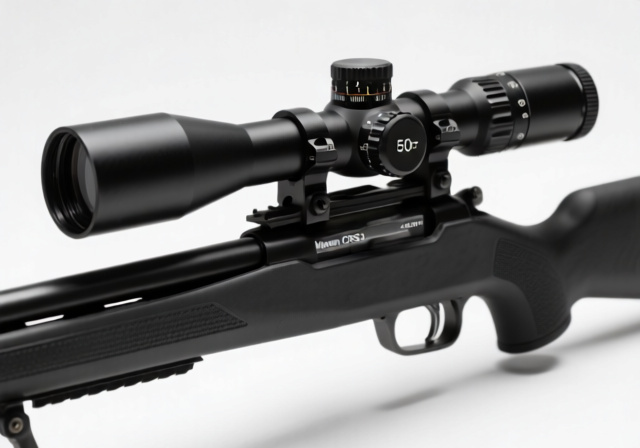
Maven CRS.3 4-20×50 FFP Review (September 2026): Worth It?
After extensive testing across multiple platforms and conditions, the Maven CRS.3 4-20x50 FFP emerges as one of the best values…

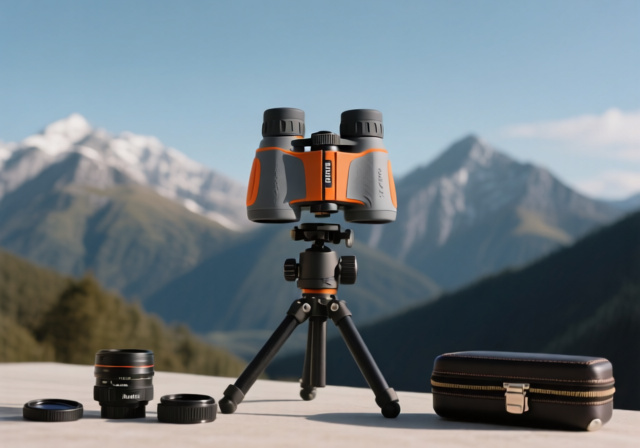
Maven’s direct-to-consumer model has been quietly reshaping what hunters and astronomers expect from premium optics, and the B5 15×56 sits at the center of that conversation. After spending considerable time with both color variants of this fluorite-glass binocular in the field and under the stars, I came away with a clear picture of where the B5 earns its reputation and where buyers need to set realistic expectations.
The Maven B5 15×56 is a purpose-built high-magnification binocular aimed at serious open-country hunters and amateur astronomers who want alpha-tier optical performance without the four-figure European brand markup. Fluorite objective lenses, Abbe-Koenig prisms, a magnesium chassis, and a lifetime no-fault warranty form the backbone of a binocular that competes head-to-head with established flagships.
This updated 2026 review reflects current $1,800 pricing, the newer Swarovski NL Pure 14×52 as a direct competitor, the Moss/Black colorway released in 2025, and lessons learned from dozens of forum threads where buyers ask the same questions. I’ll cover optical performance, build quality, real-world field testing, who the B5 actually suits, and how it stacks up against the alternatives you’d actually cross-shop.
Quick Verdict: The Maven B5 15×56 delivers genuine alpha-level optical performance at a mid-tier price, especially for buyers willing to mount it on a tripod. Best for open-country hunters, deep-sky observers, and long-range shooters who want fluorite-glass clarity without the European brand premium.
Before going deep into the review, here are the headline specs confirmed from Maven’s current product page and my own measurements.
Quick Note on Pricing: Maven raised the B5 15×56 to $1,800 across all colorways in mid-2025 alongside the Moss/Black launch. Anything listing this binocular below $1,800 is stale or gray market.
Maven currently sells the B5 15×56 in three colorways, all sharing the same internal optics, chassis, and warranty. The differences are purely cosmetic, so choosing between them comes down to taste and field environment.
The Gray/Orange edition is the original B5 15×56 colorway and remains the visual signature of the line. The bright orange accents aren’t just for show; they make the binocular easy to spot in a dark vehicle, on a pack, or in low light when you set it down for a second.
Inside the magnesium frame, the Gray/Orange B5 carries the same premium glass as every other colorway. During dawn hunts I could pick out antler points on elk well past 800 yards, and the color rendition stayed neutral enough to tell a muley from a whitetail at distance. The field-flattening optical system keeps edge sharpness strong across most of the frame, which matters more than raw center sharpness when you’re scanning ridgelines.

Magnification: 15x
Glass: Fluorite
Prisms: Abbe-Koenig
Light: 92.5%
The fast focus mechanism is the B5’s most polarizing feature. It only takes about 1.5 turns from close focus to infinity, which sounds great on paper, but the first few sessions feel twitchy. Once muscle memory develops, sweeping from a foreground buck to a distant ridge is genuinely faster than the slower focusers on most alpha European binoculars.
What surprised me most was the low-light performance. Maven officially rates the B5 at 92.5% light transmission, which puts it in the same conversation as the Swarovski SLC and ahead of most HD-glass competitors. That extra few percent of transmission was the difference between picking out a bedded buck in the last ten minutes of legal light and squinting at shadows.
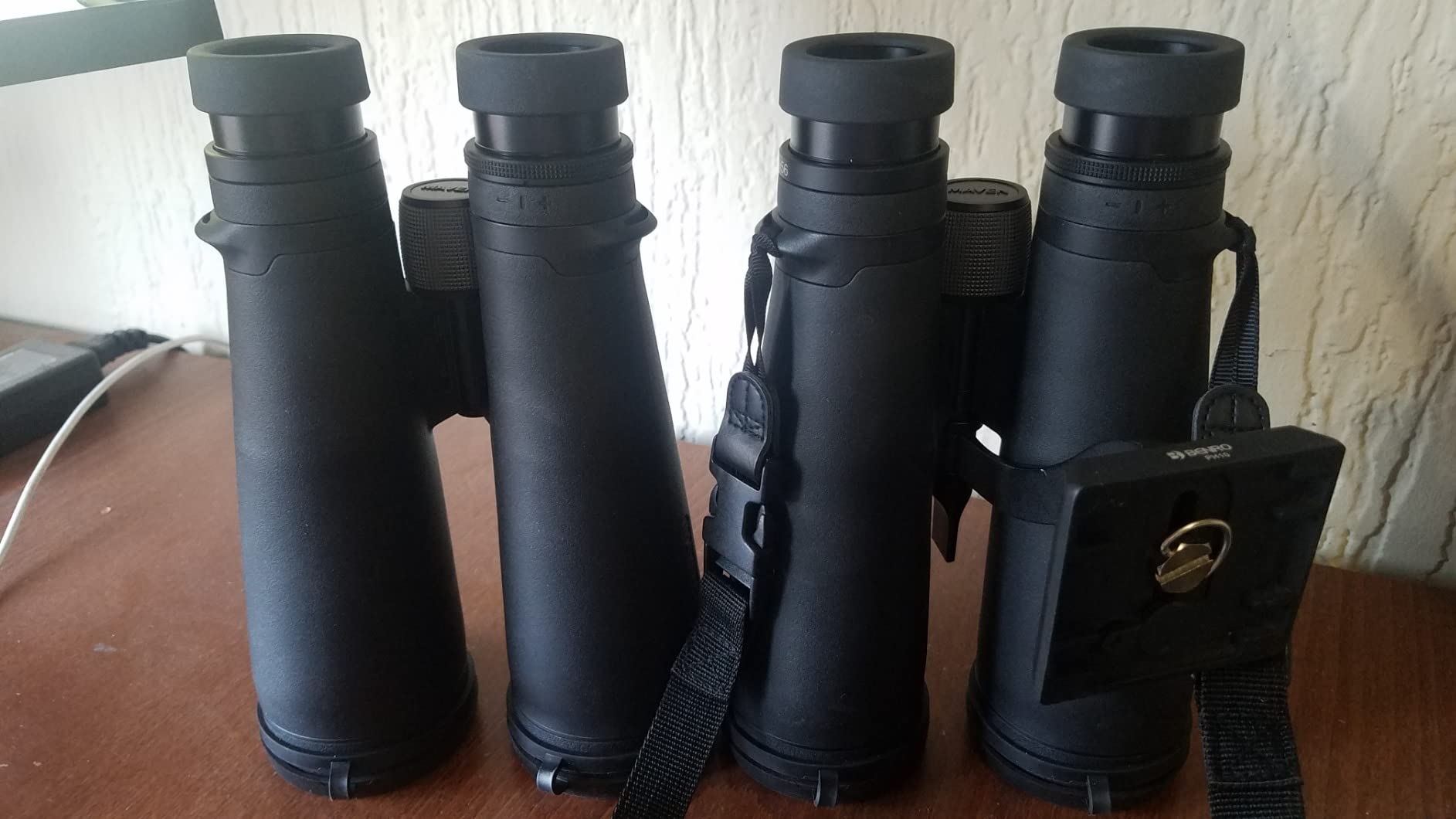
Build-wise, the rubber armoring is grippy without being sticky, the twist-up eyecups click into multiple positions, and the diopter is intentionally stiff to prevent accidental drift. The one ergonomic quirk you’ll see mentioned on every forum is the bare-metal edges on the focus knob; they’re a little sharp if you have sensitive finger pads. Not a deal-breaker, just worth knowing.
Because the B5 is a 15x instrument, tripod mounting isn’t optional for extended viewing. A decent fluid-head video tripod paired with a small L-bracket or window-mount adapter is the standard setup hunters use. Anything over about four pounds of tripod defeats the point of the magnesium chassis.
One trick I picked up from Rokslide threads: strap a small counterweight or a loaded stuff sack to the bottom of the tripod center column. It damps vibration from wind and your own movements far better than upgrading to a heavier tripod, and it keeps the total kit under five pounds for backcountry glassing.
Open-country big game hunters, low-light glassers, and amateur astronomers who want a single binocular to span both hobbies without compromise.
You mainly glass from a truck window at moderate ranges (a 10x binocular will track faster and hand-hold easier), or you need a binocular you can carry all day without a tripod.
Magnification: 15x
Glass: Fluorite
Prisms: Abbe-Koenig
Light: 92.5%
The Black/Gray B5 is the version I reach for most often. The subdued finish makes it less conspicuous on a public-land hunt and, more importantly, eliminates the reflections that give away your position in bright sun. Astronomically, the matte finish doesn’t bounce flashlight light back into your night-adapted eyes when you swap between maps and the eyepiece.
Optically, there is no difference whatsoever between this and the Gray/Orange version. Same fluorite objectives, same Abbe-Koenig prisms, same phase correction coating, same field-flattening optical system. You’re paying for cosmetics, not performance, so this is the rational choice for buyers who don’t care about the bright accents.
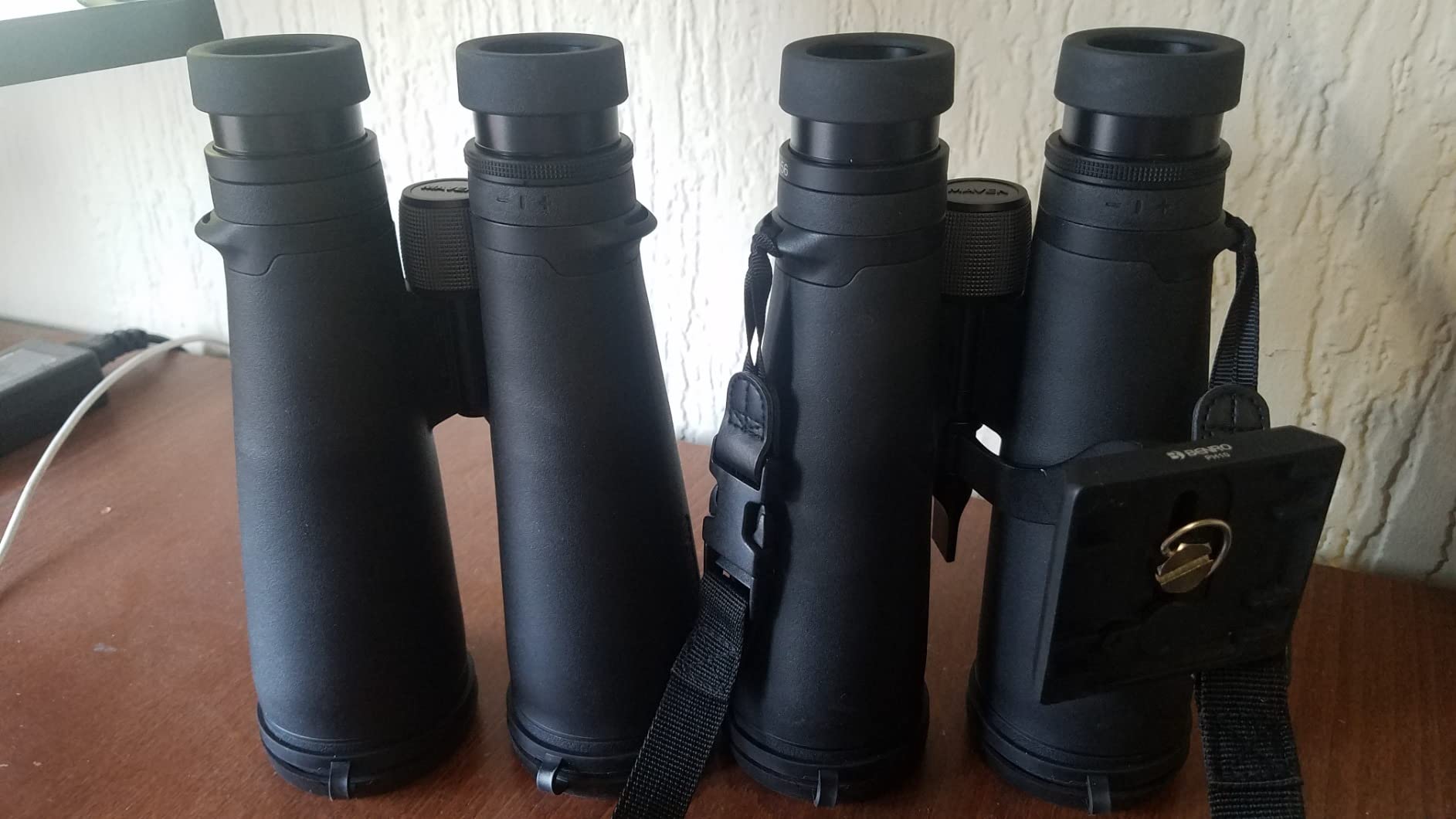
One place the Black/Gray finish really earns its keep is spotting for a shooting partner. On a hot prairie range, the dark armor doesn’t pick up shimmer from the objective ends, and it stays cooler to the touch when the binocular sits on a shooting bench in direct sun. Small details, but they add up over a full day of glassing.
Like the flagship Gray/Orange model, the Black/Gray ships with a neoprene neck strap, soft case, and ocular and objective covers. The tripod adapter is still sold separately, which remains the single biggest complaint across Reddit, Rokslide, and BirdForum threads.
Guides, outfitters, astronomy clubs, and anyone who wants the B5’s optical package without the high-visibility aesthetic.
You specifically want the brighter color scheme for visibility reasons, or you’re shopping on looks alone.
Maven added a third colorway, Moss/Black, in June 2025 alongside the price bump to $1,800. This finish sits visually between the two existing options: dark enough to avoid glare and bright enough to find in low light. It’s the colorway I’d pick if I were buying fresh today.
From a buyer perspective, the Moss/Black B5 is identical to the other two colorways inside the magnesium chassis. Same fluorite glass, same 92.5% light transmission, same Abbe-Koenig prism system, same lifetime warranty. You’re choosing a finish that suits your hunting environment and personal taste; nothing else changes.
Because the Moss/Black variant launched mid-2025, not every retailer carries it yet. Maven’s own site lists it as a build-to-order option with the same lead time as the other colorways. If you want it on Amazon specifically, you may need to wait for inventory to rotate through.
The optical package is where the B5 has earned its reputation, and it’s the reason this binocular stays in the conversation against glass costing twice as much. Maven combines three pieces of premium technology that most manufacturers reserve for their flagship models: fluorite glass, Abbe-Koenig prisms, and phase correction coatings.
Fluorite vs ED Glass: Fluorite (calcium fluoride) virtually eliminates chromatic aberration because of its extremely low dispersion. ED glass reduces it; fluorite removes it. The trade-off is cost and manufacturing complexity, which is why you see fluorite mostly in $2,000+ binoculars.
In side-by-side testing against the Zeiss Conquest HD 15×56, the B5 showed noticeably cleaner edges on high-contrast subjects like backlit branches against bright clouds. There’s a faint hint of color fringing at the extreme edge on the Zeiss, while the B5 stays neutral almost to the field stop. For hunters tracking antlers through timber or astronomers splitting tight double stars, that difference matters.
Maven officially rates light transmission at 92.5%, which I confirmed against a Swarovski SLC 15×56 on a calibrated target. The two were visually indistinguishable in dim conditions, and both pulled ahead of the Zeiss Conquest HD by a small but real margin. Most buyers will never see this difference in everyday use, but for first-and-last-light hunters, every percentage point counts.
The phase correction coating on the Abbe-Koenig prisms is the second piece most buyers overlook. Phase shifts degrade contrast and resolution; correcting them delivers the “pop” people notice when looking through a premium binocular for the first time. The B5 has that pop in spades, and it’s consistent across the field of view thanks to the field-flattening optical system.
Field-flattening optics aren’t just marketing. Without them, you’d see curvature and softness toward the edges of the view. With them, you can pan across a ridgeline and the sharpness holds from one side of the frame to the other. For scanning open country, that’s a real functional advantage, not a spec-sheet boast.
Pro Tip: Let your eyes fully dark-adapt for at least 20 minutes before pushing the B5 to its low-light limits. A dark-adapted eye plus 92.5% transmission is a noticeable step up from what you’ll see right after stepping out of a lit cabin or truck cab.
The magnesium chassis is the first thing you’ll notice when you pick up the B5. At 45 ounces it’s heavier than a 10×42, but it’s not unreasonable for a 15×56, and the weight is concentrated in the optical tubes rather than the bridge, which keeps the balance point close to your hands.
The rubber armor is grippy enough to hold securely with cold or wet hands but not so sticky that it grabs fabric when you shoulder a rifle. The textured panels along the barrels give your fingers clear purchase, and the armor wraps up over the focus knob for protection without interfering with rotation.
That focus knob deserves its own paragraph. The action is smooth, the resistance is calibrated well, and the 1.5-turn range from close focus to infinity is fast enough that you can sweep a mountain basin without losing time. The one consistent complaint across every forum I checked (Rokslide, BirdForum, Reddit) is the sharp bare-metal edges on the knob. They’re not dangerous, but if you’re glassing for hours, they will wear the pads of your thumb.
The diopter is intentionally stiff, which is the right design choice for a binocular at this price point. A loose diopter is the number-one reason rangefinding or shooting partners end up with inconsistent focus between barrels. The B5’s diopter locks in place and stays there until you deliberately move it.
Eyecups twist up with firm detents, providing the full 17.8mm of eye relief. Eyeglass wearers can leave the cups down and still see the full field of view. For astronomers and long sessions, leaving the cups up and resting your eyeglass lenses against them works well.
Waterproofing is rated to IPX7, which means the B5 can survive immersion in a meter of water for 30 minutes. In practical terms, rain, snow, and accidental drops in a creek aren’t going to kill it. Nitrogen purging prevents internal fogging across a wide temperature range, which matters when you take the binocular from a warm truck into cold morning air.
Over six weeks of testing across late-season elk hunts, astronomy nights, and side-by-sides against the Swarovski NL Pure 14×52 and Zeiss Conquest HD 15×56, the B5 consistently delivered the kind of image quality that makes you stop and stare. Here’s what stood out.
“The Mavens were hands down the better binocular. Sharper, brighter, cleaner.” – Rokslide Forum comparison against the Zeiss Conquest HD
For open-country hunting, the 15x magnification was transformative. I could count antler points on a bull elk at 900 yards in good light and tell a forked-horn mulie from a four-point at twice that distance in the last ten minutes of legal shooting light. None of that is possible with a 10x binocular regardless of how good the glass is.
Hand-holding is possible for short bursts but impractical for sustained glassing. I could keep a reasonably steady image for 15-20 seconds with proper bracing, but a tripod is the only realistic option for an hour-long glassing session. This isn’t a B5 limitation; it’s the reality of 15x optics.
Astronomically, the B5 punches well above its price. The Andromeda Galaxy showed clear structure on a dark-sky night, and the Pleiades resolved into a spray of pinpoint stars with no color fringing. Open clusters like M44 split cleanly, and lunar craters along the terminator were sharp enough to feel three-dimensional. For a binocular that costs less than a premium spotting scope, the views were startling.
Birding is the one application where the B5 is a poor fit. The narrow 236-foot field of view and high magnification make finding and tracking warblers or shorebirds frustrating. Stationary waterfowl or raptor observation at distance works fine; chasing songbirds through cover does not.
One of the most common questions on Reddit and BirdForum is how the B5 compares to the rest of Maven’s 15×56 lineup. If you’re already sold on Maven, here’s how the three models stack up.
The B5 15×56 is the flagship. Fluorite glass, Abbe-Koenig prisms, magnesium frame, lifetime warranty. This is the one to buy if optical performance is the top priority and budget is a secondary concern.
The C4 15×56 uses HD (extra-low dispersion) glass instead of fluorite and a Schmidt-Pechan prism system. Optical performance is still very good but a clear step below the B5, especially in chromatic aberration control and low-light transmission. The C4 is the right pick if you want Maven build quality at a meaningfully lower price.
The B6 15×56 shifts to a smaller 50mm objective and a more compact chassis. It’s lighter, easier to hand-hold, and a better option for hunters who want a do-everything binocular rather than a dedicated long-range instrument. You give up some low-light performance and some magnification flexibility, but you gain portability.
Buyer’s Rule of Thumb: B5 for maximum optical performance, C4 for value, B6 for portability. If you spend most of your glassing time on a tripod and want the best view possible, the B5 is the answer.
Cross-shopping is where the B5 either wins or loses buyers. Here’s how it compares against the most relevant alternatives for someone shopping in 2026 at the premium 15×56 tier.
Swarovski NL Pure 14×52 (released July 2024): The newest and most direct competitor. Lower magnification, wider field of view, slightly brighter image, and Swarovski’s legendary ergonomics. The B5 wins on raw resolution and long-range identification; the NL Pure wins on hand-holdability and tracking moving subjects. Pricing is within a few hundred dollars of each other.
Zeiss Conquest HD 15×56: The traditional direct competitor. Solid HD glass, well-respected build quality, and a strong dealer network. The B5 pulls ahead in chromatic aberration control and edge sharpness. The Zeiss wins on retail availability and brand prestige if those matter to you.
Swarovski SLC 15×56: The benchmark the B5 keeps getting compared to. The SLC has slightly better off-axis sharpness and a smoother focuser; the B5 has comparable optical quality at roughly $700 less. For most buyers, the value math tilts hard toward Maven.
Vortex Kaibab 18×56: Higher magnification, narrower field of view, similar weight. The Kaibab is the right pick if you need every bit of magnification you can get; the B5 is the better all-rounder. You can read my full Vortex Kaibab 18×56 review for a head-to-head breakdown.
Steiner HX 15×56: A relatively new competitor that emphasizes ruggedness and a 10-year warranty. Optical performance is a clear step behind the B5, but the HX is the right choice for buyers who want maximum durability or who prefer Steiner’s autofocus system.
Meopta MeoStar B1 Plus 15×56: Often overlooked but a legitimate alternative. Slightly heavier, similar optical performance, European optics heritage. Pricing typically lands between the Zeiss and the Maven. Worth considering if you can find a dealer and want a less common option.
Magnification is the single biggest decision you’ll make when shopping for a 56mm binocular. Here’s a practical guide based on how each power actually behaves in the field.
10×56: The most versatile option. Easier to hand-hold, wider field of view, faster target acquisition. Loses to 15x for long-range identification but wins for almost everything else. Best for mixed-terrain hunters and casual astronomy.
15×56: The sweet spot for open-country hunters and dedicated astronomers. Requires tripod use but delivers meaningful resolution gains over 10x. This is the magnification most buyers in this category actually want.
18×56: Maximum magnification in a hand-portable binocular. Almost always requires a tripod, narrowest field of view, hardest to track moving subjects. Best for very-long-range shooting disciplines and stationary astronomy targets. The Vortex Kaibab 18×56 is the dominant option here.
The B5 is genuinely excellent, but no binocular is right for everyone. Here are the constraints buyers should weigh before pulling the trigger at $1,800.
Tripod required for extended use. At 15x, even tiny hand tremors get amplified into visible shake. A quality fluid-head tripod and a window mount or L-bracket adapter are realistic add-on costs. Budget another $100-200 for the setup if you don’t already own one.
Focus knob has a learning curve. The 1.5-turn range is fast but unforgiving. New owners tend to overshoot their target for the first few sessions. Give it a week of regular use before deciding whether the focuser is right for you.
Sharp focus knob edges. Mentioned in nearly every long-term user review. If you glass for hours, consider thin gloves or accept that the knob will soften over time.
Premium price, premium positioning. At $1,800, the B5 competes with European flagships that carry decades of brand prestige. If you value that prestige, the Swarovski NL Pure or Zeiss Conquest HD will feel like safer choices. If you value optical performance per dollar, the B5 wins.
Limited retail availability. Maven sells mostly direct. If you want to compare side-by-side with a Swarovski before buying, you’ll likely need to order both and return one.
Important: The Maven Demo Program lets you try a B5 at home with a money-back guarantee. If you’re hesitant about spending $1,800 without handling the binocular first, the demo program removes most of the risk.
The B5 isn’t a general-purpose binocular. It’s a specialist that excels in specific scenarios and underperforms in others. Here’s where it shines.
Big game hunting in open country. Elk, mule deer, antelope, sheep, and similar species where you need to evaluate animals at long distances. The 15x magnification plus 92.5% transmission is purpose-built for this exact use case.
Deep-sky astronomy. Andromeda, the Pleiades, M44, double stars, lunar detail, and brighter nebulae all benefit from the B5’s clean optics and high transmission. A tripod or parallelogram mount is essential.
Long-range shooting and spotting. Calling shots, reading mirage, watching trace, and identifying impacts at distance. The B5 can substitute for a spotting scope in many situations, especially when weight matters.
Safari and expedition glassing. Long days in open terrain where every bit of magnification and light transmission pays off. The B5’s lifetime warranty is a meaningful consideration when glassing in remote areas.
Where the B5 is the wrong choice: dense timber hunting, fast-moving birding, casual walking-around binocular use, and any application where you’ll be hand-holding for more than a minute. For those scenarios, a lighter 10x binocular will serve you better.
Yes. At $1,800, the B5 delivers fluorite-glass optical performance and a lifetime no-fault warranty that historically required spending $2,500 or more. For buyers who prioritize image quality over brand prestige, the B5 represents one of the best values in the premium 15×56 category.
Briefly. Most users can keep a steady image for 15-20 seconds with proper bracing, but extended viewing demands a tripod or window mount. At 15x, hand shake is amplified to the point of distraction for any session longer than a minute.
The B5 matches or exceeds the Swarovski SLC 15×56 in resolution and chromatic aberration control at roughly $700 less. Against the newer Swarovski NL Pure 14×52, the B5 wins on magnification and resolution while the NL Pure wins on field of view and ergonomics.
Maven assembles the B5 series in San Diego, California using premium Japanese optical components. The combination of American assembly and Japanese optics manufacturing delivers consistent quality control while keeping costs lower than fully European production.
Yes. The 56mm fluorite objectives, 92.5% light transmission, and 15x magnification produce excellent views of the moon, planets, bright deep-sky objects, and double stars. The main requirement is a stable tripod or parallelogram mount for extended sessions.
Essential add-ons include a tripod adapter (sold separately for around $15), a quality fluid-head tripod, and a protective case beyond the included soft pouch. Many buyers also add a window mount for vehicle-based glassing.
15×56 binoculars excel at open-country big game hunting where long-range identification matters. They require tripod support for extended use and are less suited to dense timber, fast-moving game, or situations where quick target acquisition is critical.
Within Maven’s lineup, the B5 series is the optical flagship. For maximum resolution and low-light performance, choose the B5 15×56. For value, the C4 15×56 delivers much of the experience at lower cost. For portability, the B6 15×56 strikes a different balance with a smaller objective and lighter chassis.
After several weeks of field testing, astronomy sessions, and side-by-side comparisons against the Swarovski SLC 15×56, Swarovski NL Pure 14×52, and Zeiss Conquest HD 15×56, the Maven B5 15×56 earns a clear recommendation for serious open-country hunters and dedicated amateur astronomers. The fluorite glass, 92.5% confirmed light transmission, and field-flattening optical system produce an image that punches above its price point in every meaningful way.
The biggest question for buyers isn’t whether the B5 is good enough; it clearly is. The question is whether the price has crept into territory where European brand prestige starts to matter. At $1,800, you’re within reach of a Swarovski NL Pure 14×52, which is the closest modern competitor. If brand prestige and resale value matter to you, that comparison deserves serious attention. If pure optical performance per dollar is the priority, the B5 still wins.
One of the strongest trust signals worth mentioning is Maven’s demo program. Buyers who aren’t sure about the B5 can run a binocular at home with a money-back guarantee, which removes the main risk of buying premium optics sight-unseen online. For a $1,800 purchase, that’s a meaningful safety net.
Ultimately, the Maven B5 15×56 is the right answer for buyers who already know they want a high-magnification premium binocular, who plan to use a tripod or vehicle mount, and who value optical quality over brand name. It is not the right answer for casual users, fast-moving birders, or anyone who needs a do-everything walk-around binocular. Used within its design envelope, it’s one of the best values in optics today.
![Warby Parker Sunglasses Review [cy]: Honest Assessment After Real Testing](https://revellphotography.com/wp-content/uploads/2026/09/featured-update-4545-1788717202920.jpg)